More like The Time Dissolver
anchored on:science fictionmid 20th century
but
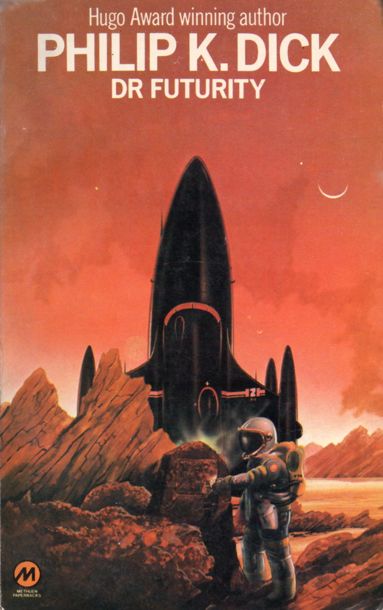
- Dr. Futurity
Philip K. Dickstandalone novel1960
similar byscience fictionour worldtime travel+2 more
Dr. Futurity is a 1960 science fiction novel by American writer Philip K. Dick. It is an expansion of his earlier short story "Time Pawn", which first saw publication in the summer 1954 issue of Thrilling Wonder Stories. Dr. Futurity was first published as a novel by Ace Books as one half of Ace Double D-421, bound dos-à-dos with John Brunner's Slavers of Space.
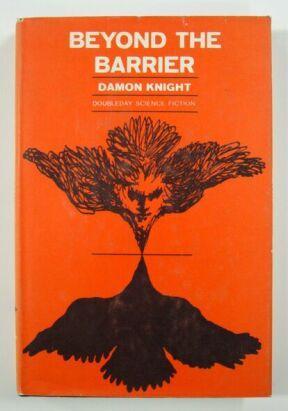
- Beyond the Barrier
Damon Knightstandalone novel1964
similar bymysteriousscience fictiontime travel+2 more
From the front flap of the Doubleday first edition: "Gordon Naismith was a physics professor at a large California university. The year was 1980, and by means of the university's duplicator he could personally teach in nine different classrooms simultaneously. Naismith was an average man in all but two respects: the reflexes were extraordinarily quick, and four years before in a plane crash he had lost all memory of his earlier life. Neither difference seemed important until one day a very unusual student in one of his classes asked a disturbing, extracurricular question: "Professor, what is a zug?" The question triggered a series of violent incidents, and soon Naismith himself, as well as the police, were beginning to wonder if the duplicator had reproduced him a tenth time. The answer lay ten thousand years in the future."
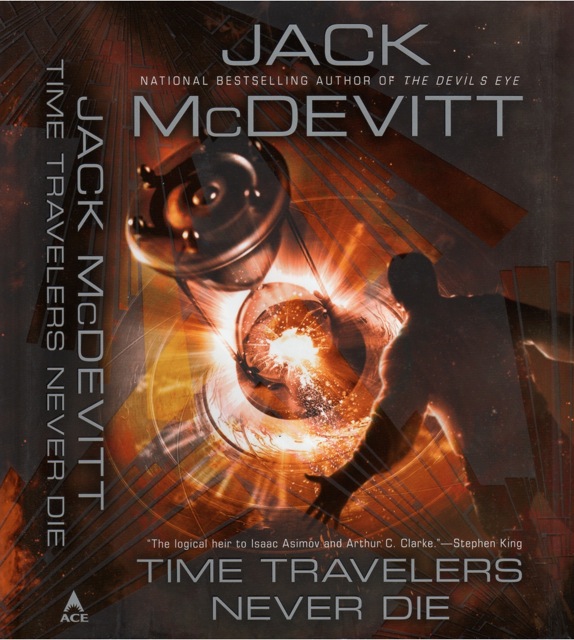
- Time Travelers Never Die
series2 books1996
similar byscience fictionour worldtime travel+1 more
Time Travelers Never Die started life as a Jack McDevitt novella in the mid-1990s (Hugo- and Nebula-nominated) before he expanded it into a full novel over a decade later; the novella and novel are two forms of the same story rather than a sequel. It follows a small circle of people who gain access to working time travel and use it to step into the past, in McDevitt's characteristic register of curious, history-minded science fiction.
- Foundation Universe
universe123 books1940
Start hereFoundation · Start here
similar byscience fiction+2 more
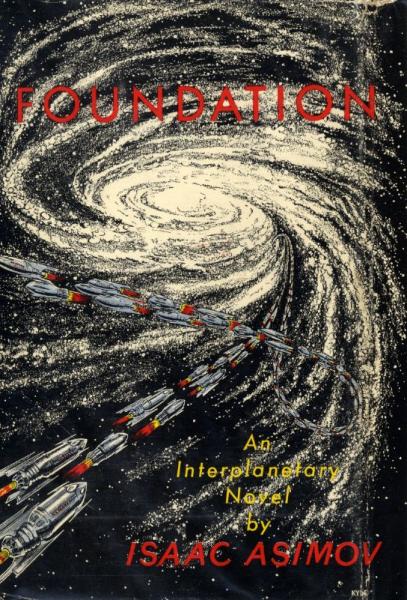
There is a science that reads the future of quadrillions the way an astronomer reads the orbits of stars. It is called psychohistory, and its equations foresee something the ruling Galactic Empire cannot admit: the throne is rotting, and thirty thousand years of barbarism are coming. One man, Hari Seldon, cannot stop the fall. He can only shorten it — by seeding a Foundation of scholars at the rim of the galaxy, a fragile institution built to carry knowledge across the dark and cut the interregnum to a single millennium. This is a universe told in the register of history itself: the long view, the calm of deep time, empires measured in centuries and men measured against them. The spine is Asimov's original trilogy — Foundation, Foundation and Empire, Second Foundation — followed decades later by the sequels Foundation's Edge and Foundation and Earth and the prequels Prelude to Foundation and Forward the Foundation. Late in life Asimov braided this in with his other future histories: the Robot novels of detective Elijah Baley and his humaniform partner R. Daneel Olivaw (The Caves of Steel, The Naked Sun, The Robots of Dawn, Robots and Empire) and the early Galactic Empire novels (Pebble in the Sky and its kin), until one continuous chronicle ran from the first thinking robots to the Second Empire. Other hands extend it — the Second Foundation Trilogy by Gregory Benford, Greg Bear, and David Brin, and shared-world spinoffs such as Robot City — so the corpus sprawls beyond a single author's tidy shelf. What distinguishes it is that the drama is intellectual: crises resolved by insight, nerve, and dialogue rather than fleets and blades, each turn hinging on the hidden logic of the Seldon Plan. Begin where readers have always begun — with Foundation, and the original trilogy in publication order. The rest opens outward from there.
- The Lincoln Hunters
Wilson Tuckerstandalone novel1958
similar byscience fictionmid 20th centuryour worldtime travel+1 more
The Lincoln Hunters is a 1958 science fiction novel by American writer Wilson Tucker.
- Time Traders
series7 books1958
similar byscience fictiontime travel+2 more
The Time Traders opens Andre Norton's Cold War-flavored science fiction series, following an American agent recruited to travel into the past and counter a Soviet operation built around ancient technology unearthed from a vanished civilization. Norton, later joined by collaborators Sherwood Smith and P. M. Griffin, expanded the sequence to seven novels published between 1958 and 2002, and revised the opening book herself in 2000. Like several of Norton's other series, it treats leftover technology from a long-gone ancient culture as its central plot engine.
- The House That Stood Still
A. E. van Vogtstandalone novel1950
similar bymysteriousscience fictionmid 20th centuryour world
A California estate lawyer takes a case involving a decaying mansion built atop a pre-Toltec stone structure, and discovers, following a secretive cult in the house, that the ancient foundation confers immortality on those who know how to use it. Drawn in through his attraction to a cult member, the lawyer learns the group possesses technology beyond its disguise, including spacecraft, and is preparing to relocate the house's stones off-world to escape a coming war. He finds himself trying to stop a catastrophe, expose an ancient secret, and win the woman's trust, all at once. A. E. van Vogt's blend of hardboiled mystery and cosmic science fiction.
- Cavor
series2 books1901
similar byscience fiction+1 more
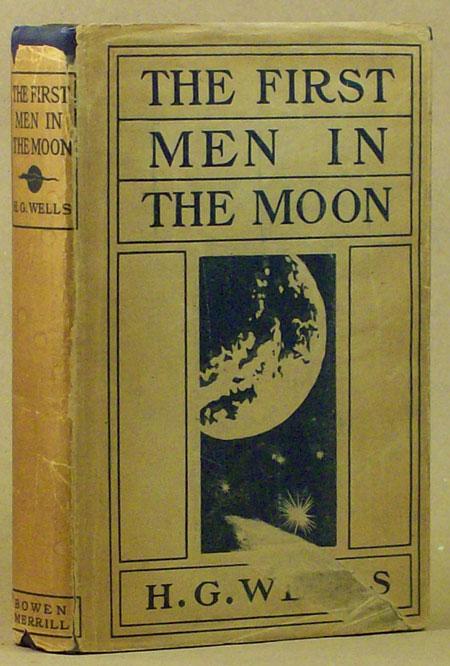
H. G. Wells's 1901 novel The First Men in the Moon is narrated by the businessman Bedford, who joins the reclusive scientist Cavor after Cavor invents cavorite, a gravity-blocking substance that carries the two men to the Moon. There they discover a vast underground civilization of insect-like Selenites, and the expedition that began as a hunt for lunar minerals turns into an encounter with an alien society. It is a standalone novel; later editions crediting Stephen Baxter add an introduction or afterword rather than a continuing story.
- Time Story
Stuart Gordonstandalone novel1972
similar bytime loopmysteriousscience fictionour worldtime travel
Her name was Hawisa. She died in 1992 in an effort to kill Kitson. Her name was Hawinda. She rished her life in 1996 to save Kitson His name was Kitson. He got away with the theft of the Moongem reactor stones His name was Denzil Amiss. As Twilight Journeyman 356, he couldn't get his hands on the Moongems But... Hawisa and Hawinda were the same person! Kitson and Amiss were the same person! (from the back cover of the DAW Books first American edition)
- Ossian's Ride
Fred Hoylestandalone novel1959
similar bymysteriousscience fictionmid 20th century+1 more
Ossian's Ride is a science fiction novel by British astrophysicist Fred Hoyle, published in 1959.
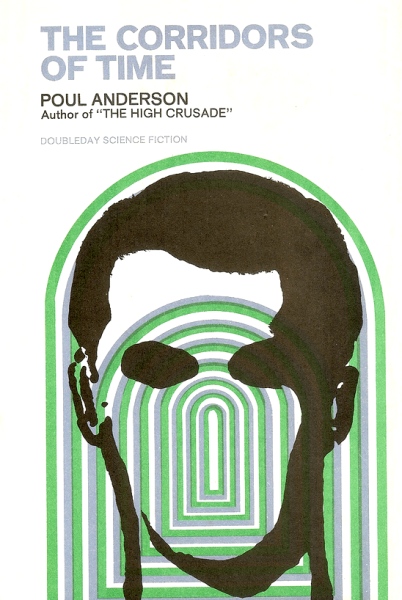
- The Corridors of Time
Poul Andersonstandalone novel1965
similar byscience fictionour worldtime travel+1 more
The Corridors of Time is a science fiction novel by the American writer Poul Anderson that was first published in 1965 as a serial in Amazing Stories, and as a book by Doubleday.
- Rewrite: Loops in the Timescape
Gregory Benfordstandalone novel2018
similar byscience fictionour worldtime travel+1 more
- Twilight Zone
universe40 books1960
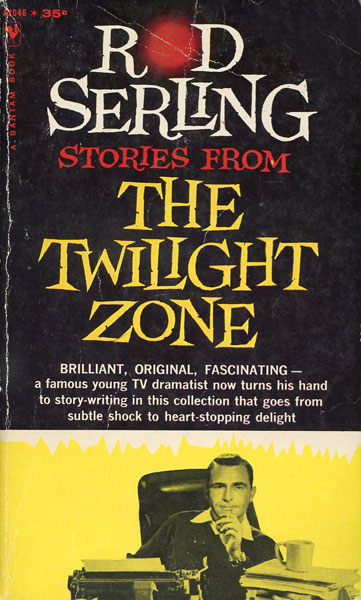
Start hereStories from the Twilight Zone · Start here
similar byour worldscience fiction+2 more
Picture, if you will, an ordinary person on an ordinary afternoon: a tired salesman, a frightened child, a man who wants only to be left alone. Somewhere between the streetlight and the front door, the rules quietly change. This is the Twilight Zone — not a place on any map but a middle ground between light and shadow, science and superstition, the pit of our fears and the summit of our knowledge. There is no continuing saga here, no cast to follow across the years. There is only the door, and the parable waiting on the far side of it. What the shelf holds is Rod Serling's anthology given the permanence of print. Serling turned his own teleplays into prose, the collections that open with Stories from the Twilight Zone, and the scripts survive alongside them — his and Richard Matheson's, the two hands that set the show's pulse. Around that core gather the story-collections of Walter B. Gibson, the volumes of new tales assembled by Carol Serling, standalone novels, and paired reissues: dozens of self-contained pieces, many writers under one banner. Read one or read forty. Each closes its own circle. The machinery is always the same and never predictable — a reasonable premise, a moral squeeze, a final turn that lands like a tap on the shoulder, sometimes cruel, sometimes merciful, always earned. Beneath the twist runs Serling's true subject: ordinary conscience under strain — prejudice, vanity, loneliness, the wish to go back. Begin where he began, with his own Stories from the Twilight Zone, then follow Matheson. There is no order to keep. You unlock this door with the key of imagination.
- Fantastic Voyage
series2 books1966
completed
similar byscience fiction+3 more
Fantastic Voyage (1966) is Isaac Asimov's novelization of the film about a submarine crew shrunk to microscopic size and injected into an injured scientist's body to repair damage from the inside. Asimov returned to the same premise of medical miniaturization in the unrelated 1987 novel Fantastic Voyage II: Destination Brain, which follows a different cast and plot rather than continuing the first book's story.
- Twilight Zone Collections
series8 books1960
part of Twilight Zone
similar byour worldmid 20th centuryscience fiction+1 more