Loreful
HomeDiscover
Search series, authors…⌘K
Loreful

Reading orders for SF/F series and shared universes — with your place kept in every one.

Explore

UniversesSeriesWorksAuthorsAtlas

Help

FAQAboutSite map

Account & legal

Sign inCreate accountPrivacyTerms

Data

Built on ISFDB, Wikipedia, Wikidata and Open Library. Curated reading orders carry their reasoning on the page; the rest follow publication order. Data sources & licenses

© Loreful · data: ISFDB · CC BY

More like The Underground Ghost

but

Mood

The mood the book leaves you in.

  • The reading experience is propelled by journeys, exploration, and physical risk; excitement and forward momentum dominate over dread or introspection.
  • Joy and loss are deliberately mixed; the resolution grants characters something real while taking something else away, leaving warmth and sorrow together.
  • The book demands work from the reader — dense prose, difficult structure, unfamiliar ideas, or morally uncomfortable material — as part of its intended effect.
  • Grim events, cruelty, or despair dominate the atmosphere, and the book does not soften them with comfort or comic relief.
  • The atmosphere is quietly unsettling — wrongness, unease, and the uncanny pervade the book without necessarily escalating into overt horror.
  • The book is built to move the reader; character feeling is foregrounded and major scenes aim at a strong emotional response.
  • Humor is a primary aim and the prose plays for laughs — comic situations, wit, or dialogue produce sustained comedy, not occasional levity.
  • The book insists that things can improve; effort and decency are shown to matter, and the arc bends toward better outcomes even through hardship.
  • The book teaches as it goes — real facts, history, science, or craft are conveyed in enough depth that learning is part of the reading experience.
  • The book is designed to uplift and motivate, presenting perseverance or achievement in a way that invites the reader to aspire or act.
  • The overall register is cheerful and easygoing; stakes are kept gentle and the book avoids dwelling on pain or dread.
  • Withheld information drives the experience; the book sustains enigmas and secrets the reader wants resolved, whatever its genre.
  • The book is contemplative and inward-looking, giving more weight to thought, memory, and meaning than to external events.
  • The book works as comfort reading — low tension, a soothing pace, and an atmosphere the reader can unwind in.
  • Grief, loss, or melancholy set the dominant register, and the book lets sorrow stand rather than resolving it into comfort.
  • Sustained suspense is the point; the book keeps the reader braced for what happens next through danger, pressure, or impending revelation.
  • Playful invention and charm define the register — fanciful conceits, light absurdity, and a narration that delights in its own oddity.

About

What the story runs on.

  • Stories centered on witches and the practice of witchcraft — covens, hedge magic, familiars, and the witch's place in her community.
  • Stories centered on wizards, mages, and other learned practitioners of magic as protagonists or masters.
  • Stories in which gods and deities act as characters — walking the world, meddling in mortal lives, or dying.
  • Stories structured as a quest — a journey undertaken to find, deliver, or destroy something of great import.
  • Stories in which staying alive against nature, catastrophe, or scarcity is the central problem.
  • Stories of lovers kept apart by law, family, faith, or station, where the obstacle to love is the plot.
  • Stories in which a friendship — its making, testing, or loss — is the emotional center.
  • Stories of growing up — a young protagonist crossing from childhood into adult knowledge and responsibility.
  • Stories about who a character truly is — self-discovery, doubled lives, and the search for a self.
  • Stories in which a buried family truth — hidden parentage, crimes, or shames — surfaces and reorders the present.
  • Stories driven by maneuvering for power — factions, conspiracies, and statecraft conducted in shadow.
  • Stories in which war itself is the subject — combat, occupation, and what warfare does to soldiers and civilians.

Shelf

Where it sits in the library.

    • Fiction built on magic or other supernatural elements that have no scientific explanation.
    • Secondary-world fantasy at large scale, where the fate of nations or the world turns on the protagonists' struggle.
    • Fantasy set in a recognizably modern city or contemporary world where the supernatural intrudes on everyday life.
    • Fantasy that blends in horror's atmosphere and imagery, keeping a fantastical frame around grim or frightening material.
    • Action-driven fantasy following warriors or rogues with personal stakes against sorcerous threats, rather than world-spanning conflicts.
    • Fantasy set in a real historical period or a close analogue of one, with magic woven into the era.
    • Fantasy in which protagonists cross from the ordinary world into another world through a portal or similar passage.
    • Fiction that retells or reworks a traditional fairy tale in a new form or setting.
    • Fantasy drawing directly on myths, legends, and folklore, retelling them or building on their figures and logic.
    • Fantasy of ghosts, vampires, shapeshifters, psychics, and similar phenomena, usually set in an otherwise ordinary world.
    • Fiction mixing science-fictional trappings with overtly magical or impossible elements in one setting.
    • Low-stakes fantasy emphasizing comfort, community, and everyday pleasures over conflict and peril.
    • Speculative fiction of pervasive moral ambiguity, violence, and cynicism that rejects heroic conventions — fantasy and SF alike.
      • Fiction that extrapolates from science and technology — future societies, space travel, or speculative inventions — within at least nominally natural laws.
      • Science fiction of interstellar scope — starships, galactic polities, and adventure across star systems.
      • Science fiction committed to scientific rigor, where technical plausibility constrains the story.
      • Science fiction centered on armed forces and warfare, told largely from a military point of view.
      • Science fiction of networked, corporate-dominated near futures, pairing high technology with social decay.
      • Science fiction styled on nineteenth-century steam-powered technology, often in a Victorian or pseudo-Victorian setting.
      • Fiction depicting an oppressive or catastrophic society, presented as a warning.
      • Fiction set after civilization's collapse, following survivors in the ruins of the old world.
      • Fiction in which characters move between past and future, and the mechanics or consequences of that travel drive the plot.
      • Fiction exploring a world where a historical event went differently and history diverged from ours.
      • Science fiction about humanity's first encounter and communication with an alien intelligence.
      • Science fiction in which extraterrestrial forces attack or occupy Earth and humanity resists.
      • Fiction whose primary aim is to frighten or unsettle the reader through dread, menace, or the monstrous.
      • Horror of vast, indifferent, incomprehensible entities before which humanity is insignificant, in the Lovecraft tradition.
      • Horror of decaying houses, buried family secrets, and oppressive atmosphere in the Gothic literary tradition.
      • Horror centered on hauntings and the returning dead.
      • Horror located in the mind — paranoia, obsession, and unreliable perception rather than external monsters.
      • Horror built around the reanimated dead and survival amid their outbreaks.
      • Horror defined by explicit, transgressive gore that refuses to cut away from violence.
      • Speculative fiction of the strange and uncanny that resists both natural explanation and standard genre categories.
      • Fiction organized around solving a crime or puzzle, typically following an investigator toward the identification of a culprit.
      • A puzzle-first mystery that lays out clues so the culprit's identity can be deduced before the reveal.
      • Crime fiction of moral ambiguity, fatalism, and hard-edged style, set among the corrupt and the doomed.
      • A mystery following the realistic routines of police work — forensics, interviews, and case-building.
      • A gentle mystery with an amateur sleuth, a small community, and violence kept off the page.
      • A mystery set in a past era, where the investigation works within that period's methods and society.
      • Fast-paced fiction driven by imminent danger, pursuit, or high-stakes conspiracy, built to sustain tension.
      • A thriller of espionage — agents, tradecraft, and intelligence services in conflict.
      • A thriller centered on lawyers and the courtroom, where litigation carries the suspense.
      • A thriller driven by detailed contemporary or near-future technology, often military or scientific.
      • A thriller whose tension comes from mental states and manipulation between characters rather than external action.
      • Fiction whose central plot is a romantic relationship and its development toward an emotionally satisfying resolution.
      • Romance in which one or both partners are supernatural beings, blending fantasy elements into the love story.
      • A fantasy-romance hybrid in which the romantic arc and the fantasy plot carry equal weight.
      • Romance set in a past era, with courtship shaped by the period's society and manners.
      • Romance set in the present day, without supernatural or historical elements.
      • Fiction set in a real past period, where the historical setting materially shapes characters and events.
        • General and literary fiction emphasizing prose style, character interiority, or formal ambition over genre plot conventions.
        • Fiction in a realistic world where magical events occur and are treated as ordinary, in the tradition of Latin American literature.
        • Fiction that ridicules people, institutions, or society in order to criticize them.
        • Fiction of dreamlike, irrational imagery and logic that breaks from realistic representation.
        • Fiction that plays with narrative convention through metafiction, fragmentation, and self-reference.
        • Fiction propelled by journeys, exploration, and physical peril, where action and survival carry the plot.
        • Adventure fiction of ships and seafaring — naval engagements, voyages, and life at sea.
        • Fiction of the American frontier West — gunmen, ranchers, and lawmen, typically in the late nineteenth century.
        • Fiction centered on soldiers, campaigns, and the experience of warfare, historical or imagined.
          • Fiction written primarily to amuse, using comedic situations, wit, or parody as its organizing principle.
            • Multi-generational fiction following a family or dynasty across decades, with inheritance and kinship as the through-line.
              • Fiction whose world runs on explicit game mechanics — levels, stats, and skills that characters can see and exploit.
                • Fiction about costumed or superpowered heroes and their conflicts with comparable villains.

                Practical

                How long a commitment, whether it stands alone, and whether it has finished.

                Tap a chip to ask for it · tap again to rule it out · once more to clear. Numbers show what would be left.

                • ER
                  Edgar Rice Burroughs' Pellucidar universe

                  series · 24 books · 1922

                  similar byunderground & caves+1 more

                • Cover of London Below
                  London Below

                  series · 5 books · 1996

                  similar byfantasyunderground & caves

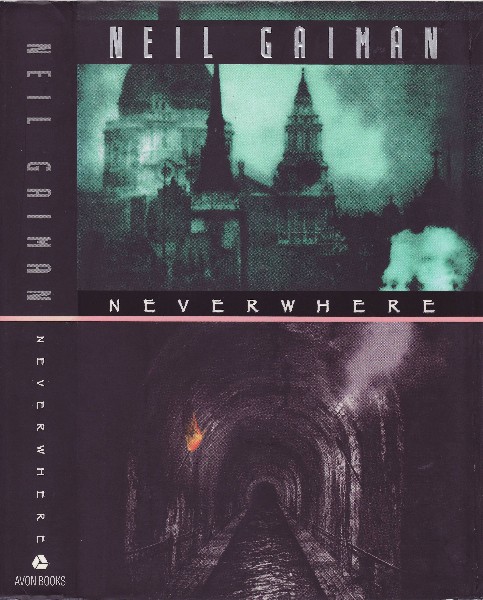
                  Neil Gaiman's Neverwhere (1996) follows Richard Mayhew, an ordinary Londoner who stops to help an injured girl and is pulled out of everyday London into London Below, a hidden, magical underworld of forgotten places and strange factions existing alongside the city he knew. The novel began life as a BBC television series before Gaiman reworked it into this stand-alone book.

                • Cover of Walter Goodwin
                  Walter Goodwin

                  series · 3 books · 1918

                  completed

                  similar byfantasy+1 more

                  The Moon Pool (1919) and The Metal Monster (1920) are connected fantasy-adventure novels by A. Merritt, both narrated by the same character, Dr. Walter Goodwin, as he encounters hidden ancient civilizations and forces beyond ordinary science. The Moon Pool began as two related stories serialized in All-Story Weekly before being combined into a novel, and its success led Merritt to send Goodwin into a second, similarly strange discovery in The Metal Monster the following year. The two books follow Goodwin from one uncanny expedition to the next rather than forming a tightly plotted continuing saga.

                • Cover of The Princess and the Goblin
                  The Princess and the Goblin

                  series · 2 books · 1871

                  completed

                  similar byfantasy

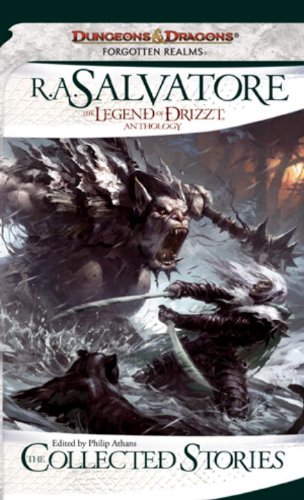
                • Cover of Forgotten Realms: The Legend of Drizzt
                  Forgotten Realms: The Legend of Drizzt

                  series · 39 books · 1988

                  part of Forgotten Realms

                  similar byfantasy+1 more

                  The Legend of Drizzt is a series of fantasy novels by R. A. Salvatore that began in 1988, and consists of 39 books as of August 15, 2023. They are based in the Forgotten Realms setting in the dimension of Abeir-Toril on the continent Faerûn in the Dungeons & Dragons universe currently published and owned by Wizards of the Coast. It combines the series The Dark Elf Trilogy, The Icewind Dale Trilogy, Legacy of the Drow, Paths of Darkness, The Hunter's Blades Trilogy, and other sets into an abridged compilation. Drizzt Do'Urden is the main character of most of the books.

                • Cover of Piranesi
                  Piranesi

                  Susanna Clarke · standalone novel · 2020

                  similar byfantasyunderground & caves

                  A man lives in a huge isolated labyrinthine building partially submerged in an ocean, together with another man and 13 skeletons, which is the only world he recalls.

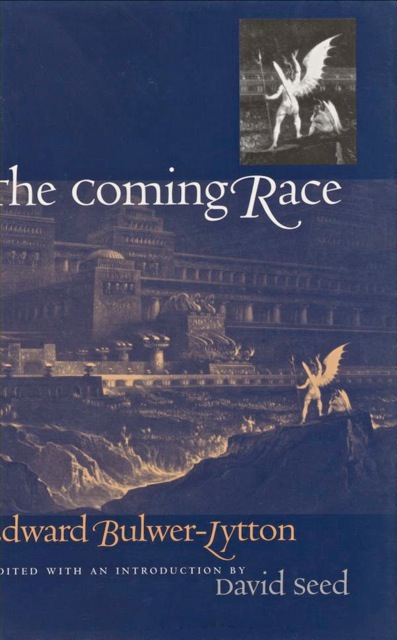
                • Cover of The Coming Race
                  The Coming Race

                  Edward Bulwer-Lytton · standalone novel · 1871

                  similar byunderground & caves+1 more

                  The Coming Race, an early science-fiction work, with its superman race the Vril-ya descended from the same ancestors as the great Aryan family, from which in varied streams has flowed the dominant civilization of the world spawned a occult secret society known as the Vril Society or Luminous Lodge - its philosphy and swastika symbol profoundly influenced the Nazis. Please Note: This book has been reformatted to be easy to read in true text, not scanned images that can sometimes be difficult to decipher. The Microsoft eBook has a contents page linked to the chapter headings for easy navigation. The Adobe eBook has bookmarks at chapter headings and is printable up to two full copies per year. Both versions are text searchable.

                • Cover of Underland Chronicles
                  Underland Chronicles

                  series · 5 books · 2003

                  similar byfantasyunderground & caves

                  The Underland Chronicles is a series of five epic fantasy novels by Suzanne Collins, first published between 2003 and 2007. It tells the story of a boy named Gregor and his adventures in the "Underland", a subterranean world located under New York City. The Underland is inhabited by humans who traveled below hundreds of years ago, along with various giant versions of creatures like bats, cockroaches, and rats. According to the author, the series involves many topics relating to war, including biological warfare, genocide, and military intelligence.

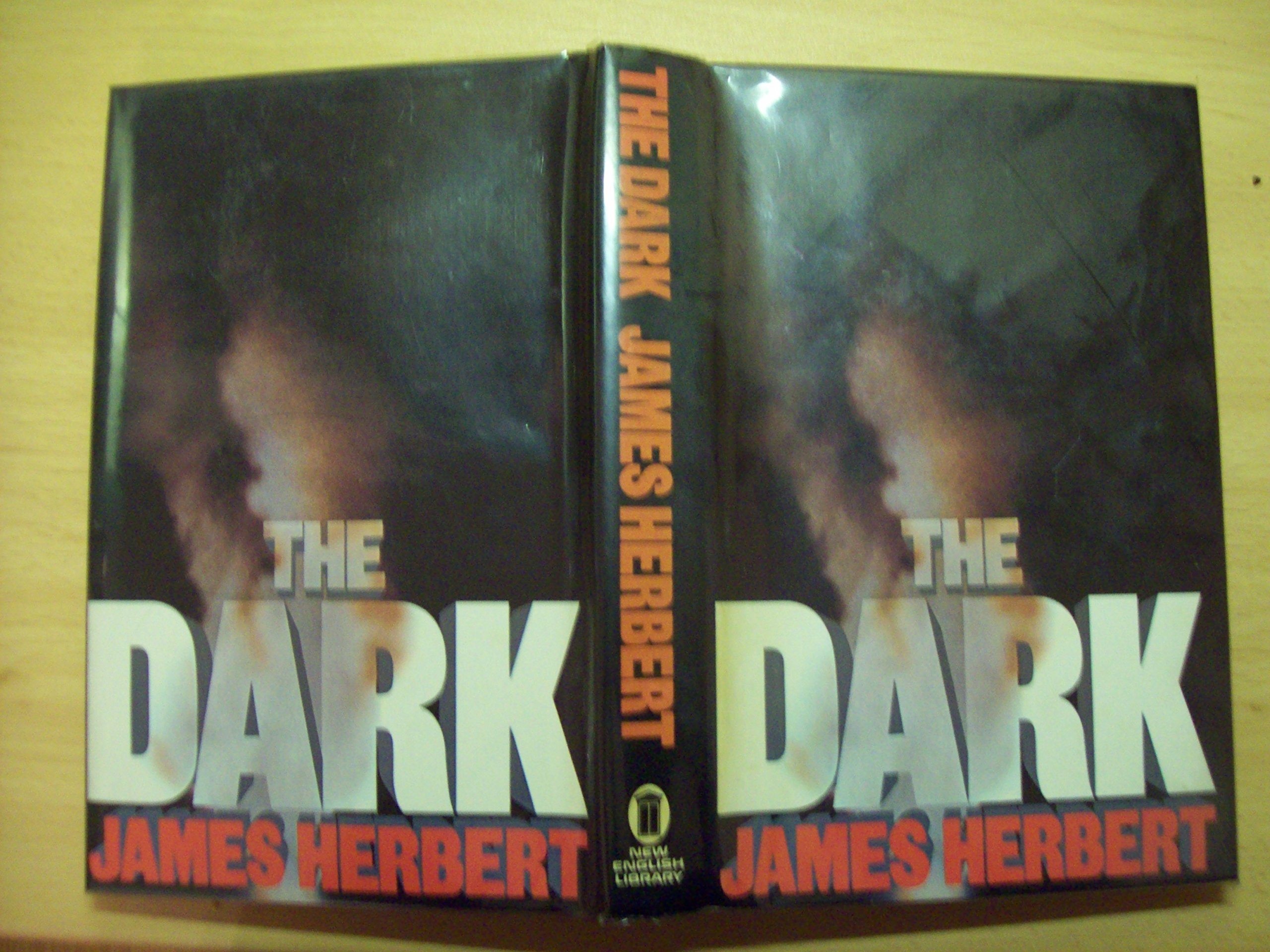
                • Cover of The Dark
                  The Dark

                  James Herbert · standalone novel · 1980

                  similar by+2 more

                  WorldCat: It came like a malignant shadow with seductive promises of power. And somewhere in the night, a small girl smiled as her mother burned. Asylum inmates slaughtered their attendants. In slimy tunnels, once-human creatures gathered. Madness raged as the lights began to fade and humanity was attacked by an ancient, unstoppable evil.

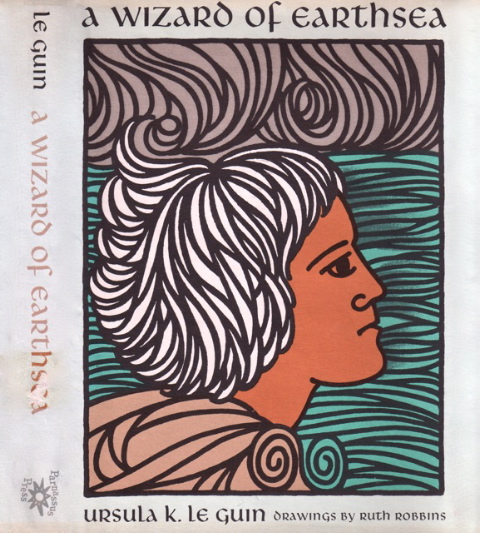
                • Cover of Earthsea Cycle
                  Earthsea Cycle

                  series · 18 books · 1964

                  completed

                  part of Earthsea

                  similar byfantasy

                  The Earthsea Cycle, also known as Earthsea, is a series of high fantasy books written by American author Ursula K. Le Guin. Beginning with A Wizard of Earthsea (1968), The Tombs of Atuan (1970), and The Farthest Shore (1972), the series was continued in Tehanu (1990), and Tales from Earthsea and The Other Wind. In 2018, all the novels and short stories were published in a single volume, The Books of Earthsea: The Complete Illustrated Edition, with artwork by Charles Vess.

                • Cover of Narnia
                  Narnia

                  series · 26 books · 1950

                  part of Narnia Universe

                  similar byfantasy

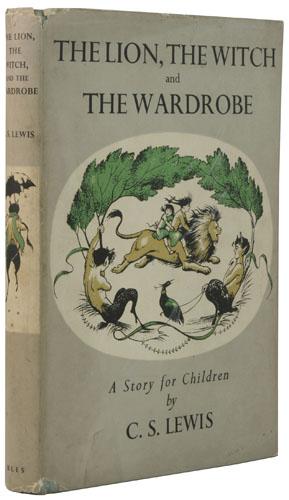
                  The Chronicles of Narnia is a series of seven portal fantasy novels by British author C. S. Lewis. Illustrated by Pauline Baynes and originally published between 1950 and 1956, the series is set in the fictional realm of Narnia, a fantasy world of magic, mythical beasts, and talking animals. It narrates the adventures of various children who play central roles in the unfolding history of the Narnian world. Except in The Horse and His Boy, the protagonists are all children from the real world who are magically transported to Narnia, where they are sometimes called upon by the lion Aslan to protect Narnia from evil. The books span the entire history of Narnia, from its creation in The Magician's Nephew to its eventual destruction in The Last Battle.

                • Cover of Ayesha
                  Ayesha

                  series · 8 books · 1886

                  similar byfantasy

                  The Ayesha books follow H. Rider Haggard's immortal sorceress-queen Ayesha, introduced in his 1887 novel She as the ruler of a hidden civilization who has waited millennia for her lost love to be reborn. Haggard continued her story in later novels, including the 1905 sequel Ayesha: The Return of She, which reunites her with characters from the first book, and further installments tracing her earlier history. Later reissues and retellings continue to build on the same character.

                • Cover of Darwath
                  Darwath

                  series · 7 books · 1982

                  similar byfantasy+1 more

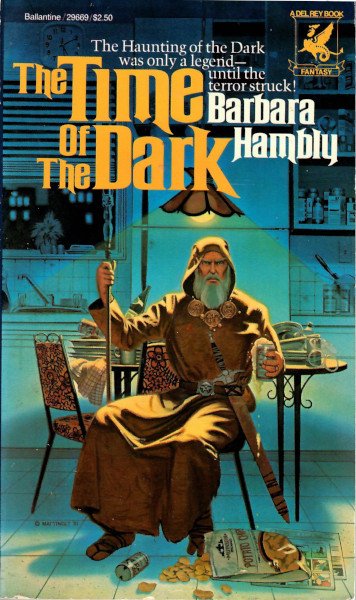
                  Darwath begins with two modern-day Californians pulled through a portal into a dying medieval world under siege from the Dark, shape-shifting monsters that hunt by night and are driving civilization underground. The Time of the Dark, The Walls of Air, and The Armies of Daylight make up the original trilogy; Barbara Hambly returned to the same characters decades later in Mother of Winter and Icefalcon's Quest. It's portal fantasy built around practical, unglamorous survival rather than chosen-one heroics.

                • Cover of Deptford Mice
                  Deptford Mice

                  series · 3 books · 1989

                  similar byfantasy+1 more

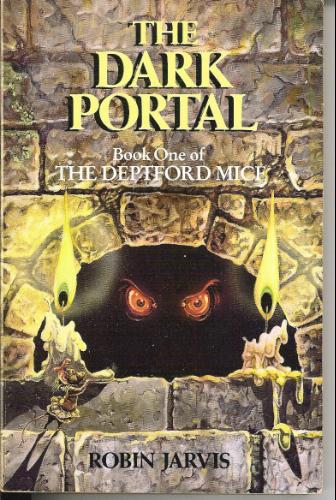
                  The Deptford Mice trilogy opens with The Dark Portal, following a young mouse named Audrey Brown and her friends as they fight Jupiter, the malevolent god the sewer rats of Deptford worship, in a dark fantasy pitched well past typical talking-animal fare. Robin Jarvis completed the trilogy with The Crystal Prison and The Final Reckoning within a year of the first book. The series has been continuously reissued since, most recently by Pushkin Children's Books from 2024 with new covers and illustrations.

                • Cover of Magisterium
                  Magisterium

                  series · 5 books · 2014

                  similar byfantasyunderground & caves

                  The Magisterium Series is a five-book children's fantasy series written by Holly Black and Cassandra Clare. It is their first collaboration. The series was acquired by Scholastic in April 2012. The first book, The Iron Trial, was published on September 9, 2014, and hit third on the New York Times Middle Grade Bestseller List. The series is set in an underground school where mages train apprentices to control the elements. The books are illustrated by Scott Fischer. The final book, The Golden Tower, was published on September 11, 2018.

                • Cover of The Spindlers
                  The Spindlers

                  Lauren Oliver · standalone novel · 2012

                  similar byfantasyunderground & caves

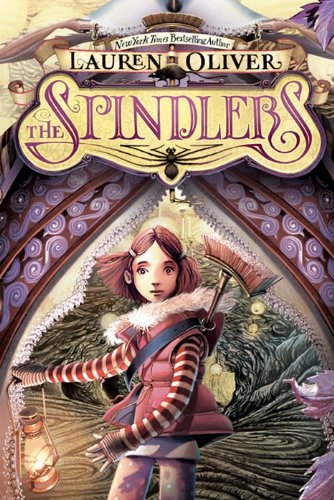
                  Accompanied by an eccentric, human-sized rat, Liza embarks on a perilous quest through an underground realm to save her brother, Patrick, whose soul has been stolen by the evilest of creatures--the spider-like spindlers.

                • Cover of The Ratbridge Chronicles
                  The Ratbridge Chronicles

                  series · 2 books · 2005

                  similar byfantasy+1 more

                • Cover of Flightless Falcon
                  Flightless Falcon

                  Mickey Zucker Reichert · standalone novel · 2000

                  similar byfantasy+1 more

                  From the flaps of the DAW first edition: "Set in a land of scattered rival cities, this is the story of a poignant and dangerous quest, the tale of a man manipulated into a mission against his will in the hopes of regaining the only thing of importance in his life - his family. Tamison had been a miner until the cave-in which killed his brother and father, and left him trapped behind a wall of rubble, cut off from light and life for what seemed like eternity. When he was finally rescued, Tamison was so traumatized by the experience that he was left with a paralyzing fear of venturing underground. With the passing years and the growth of his new family, Tamison was willing to turn his hand to any trade that would feed his wife and children. But in a realm where guilds ruled - and where his own guild could no longer support him - Tamison became more and more desperate as even jobs for unskilled guildless laborers became impossible to obtain. Eventually Tamison was forced to what once would have been unimaginable to him. But he had no other choice. Either he must steal food of see his family starve. Caught in the act, Tamison is sentenced to a chain gang. And when he was finally released, he discovered that his family had vanished. Searching for them, Tamison became so despondent that when a guard named Dallan claimed to know of their fate he was only too ready to listen. And when Dallan said that he, too, had had someone taken by the same villains, Tamison agreed to join forces with him. But before setting out on their quest, Tamison visited a fortune-teller, hoping to be told that his mission would prove successful. Instead of learning about his own destiny, Tamison found himself acquiring a new alley as Rifkah, the fortune-teller, suddenly discovered a pressing need to leave the city. Together the three set out for the rival trading town where Dallan was certain the people they sought were being held. Tamison's initial search had led him into an encounter with a thief, who now seemed determined to attach himself to their group, and the unlikely foursome soon concocted a daring plan to break into the seemingly impenetrable city. Yet even if they succeeded in this venture it might well prove their doom, for gaining entrance to the town did not mean that they would find what they sought - or survive to win free of the place again!"

                • Cover of The Actual Star
                  The Actual Star

                  Monica Byrne · standalone novel · 2021

                  similar by+2 more

                  [Publisher:] The Actual Star takes readers on a journey over two millennia and six continents–telling three powerful tales a thousand years apart, all of them converging in the same cave in the Belizean jungle. Braided together are the stories of a pair of teenage twins who ascend the throne of a Maya kingdom; a young American woman on a trip of self-discovery in Belize; and two dangerous charismatics vying for the leadership of a new religion and racing toward a confrontation that will determine the fate of the few humans left on Earth after massive climate change. In each era, a reincarnated trinity of souls navigates the entanglements of tradition and progress, sister and stranger, and love and hate–until all of their age-old questions about the nature of existence converge deep underground, where only in complete darkness can they truly see. The Actual Star is a feast of ideas about where humanity came from, where we are now, and where we're going–and how, in every age, the same forces that drive us apart also bind us together.

                • Cover of Prison Camp
                  Prison Camp

                  series · 3 books · 2020

                  part of Black Dagger

                  similar byfantasy+1 more

                  Prison Camp is a three-book arc within J. R. Ward's Black Dagger Brotherhood, the long-running paranormal romance series about vampire warriors defending their race against soulless enemies called lessers. The Jackal, The Wolf, and The Viper follow different members of that same vampire society rather than opening a new setting. It sits within a Brotherhood franchise that has run continuously since 2005.

                • Cover of The Green Child
                  The Green Child

                  Herbert Read · standalone novel · 1935

                  similar byfantasyunderground & caves

                  The Green Child is the only completed novel by the English anarchist poet and critic Herbert Read. Written in 1934 and first published by Heinemann in 1935, the story is based on the 12th-century legend of two green children who mysteriously appeared in the English village of Woolpit, speaking an apparently unknown language. Read described the legend in his English Prose Style, published in 1931, as "the norm to which all types of fantasy should conform".

                • Cover of Hollow Kingdom
                  Hollow Kingdom

                  series · 3 books · 2003

                  similar byfantasy+1 more

                  The Hollow Kingdom Trilogy is a fantasy trilogy written by Clare B. Dunkle. The series includes The Hollow Kingdom, Close Kin, In the Coils of the Snake and a number of short stories published on Dunkle's official website. The Hollow Kingdom won the 2004 Mythopoeic Fantasy Award for Children's Literature.
                • Cover of The Wombles
                  The Wombles

                  series · 6 books · 1968

                  completed

                  similar byfantasy+1 more

                • Cover of A Resurrection of Magic
                  A Resurrection of Magic

                  series · 2 books · 2007

                  completed

                  similar byfantasy+1 more