Loreful
HomeDiscover
Search series, authors…⌘K
Loreful

Reading orders for SF/F series and shared universes — with your place kept in every one.

Explore

UniversesSeriesWorksAuthorsAtlas

Help

FAQAboutSite map

Account & legal

Sign inCreate accountPrivacyTerms

Data

Built on ISFDB, Wikipedia, Wikidata and Open Library. Curated reading orders carry their reasoning on the page; the rest follow publication order. Data sources & licenses

© Loreful · data: ISFDB · CC BY

More like The Upper Berth

anchored on:horrorghost storiesat sea19th centuryeerietense+1 more

but

Mood

The mood the book leaves you in.

  • The reading experience is propelled by journeys, exploration, and physical risk; excitement and forward momentum dominate over dread or introspection.
  • Joy and loss are deliberately mixed; the resolution grants characters something real while taking something else away, leaving warmth and sorrow together.
  • The book demands work from the reader — dense prose, difficult structure, unfamiliar ideas, or morally uncomfortable material — as part of its intended effect.
  • Grim events, cruelty, or despair dominate the atmosphere, and the book does not soften them with comfort or comic relief.
  • The atmosphere is quietly unsettling — wrongness, unease, and the uncanny pervade the book without necessarily escalating into overt horror.
  • The book is built to move the reader; character feeling is foregrounded and major scenes aim at a strong emotional response.
  • Humor is a primary aim and the prose plays for laughs — comic situations, wit, or dialogue produce sustained comedy, not occasional levity.
  • The book insists that things can improve; effort and decency are shown to matter, and the arc bends toward better outcomes even through hardship.
  • The book teaches as it goes — real facts, history, science, or craft are conveyed in enough depth that learning is part of the reading experience.
  • The book is designed to uplift and motivate, presenting perseverance or achievement in a way that invites the reader to aspire or act.
  • The overall register is cheerful and easygoing; stakes are kept gentle and the book avoids dwelling on pain or dread.
  • Withheld information drives the experience; the book sustains enigmas and secrets the reader wants resolved, whatever its genre.
  • The book is contemplative and inward-looking, giving more weight to thought, memory, and meaning than to external events.
  • The book works as comfort reading — low tension, a soothing pace, and an atmosphere the reader can unwind in.
  • Grief, loss, or melancholy set the dominant register, and the book lets sorrow stand rather than resolving it into comfort.
  • Sustained suspense is the point; the book keeps the reader braced for what happens next through danger, pressure, or impending revelation.
  • Playful invention and charm define the register — fanciful conceits, light absurdity, and a narration that delights in its own oddity.

About

What the story runs on.

  • Stories in which extraterrestrial beings are central — as characters, cultures, or the object of the plot.
  • Stories structured as a quest — a journey undertaken to find, deliver, or destroy something of great import.
  • Stories in which staying alive against nature, catastrophe, or scarcity is the central problem.
  • Stories of lovers kept apart by law, family, faith, or station, where the obstacle to love is the plot.
  • Stories of growing up — a young protagonist crossing from childhood into adult knowledge and responsibility.
  • Stories about who a character truly is — self-discovery, doubled lives, and the search for a self.
  • Stories about mental unraveling — descent into madness, delusion, and minds at war with themselves.
  • Stories about mourning — living through the death of a loved one and what loss does to the survivors.
  • Stories in which a buried family truth — hidden parentage, crimes, or shames — surfaces and reorders the present.
  • Stories driven by maneuvering for power — factions, conspiracies, and statecraft conducted in shadow.
  • Stories in which war itself is the subject — combat, occupation, and what warfare does to soldiers and civilians.
  • Stories organized around investigating a killing — the case, the clues, and the pursuit of the killer, in any genre's clothing.

Shelf

Where it sits in the library.

    • Fiction built on magic or other supernatural elements that have no scientific explanation.
    • Secondary-world fantasy at large scale, where the fate of nations or the world turns on the protagonists' struggle.
    • Fantasy set in a recognizably modern city or contemporary world where the supernatural intrudes on everyday life.
    • Fantasy that blends in horror's atmosphere and imagery, keeping a fantastical frame around grim or frightening material.
    • Action-driven fantasy following warriors or rogues with personal stakes against sorcerous threats, rather than world-spanning conflicts.
    • Fantasy set in a real historical period or a close analogue of one, with magic woven into the era.
    • Fantasy in which protagonists cross from the ordinary world into another world through a portal or similar passage.
    • Fiction that retells or reworks a traditional fairy tale in a new form or setting.
    • Fantasy drawing directly on myths, legends, and folklore, retelling them or building on their figures and logic.
    • Fantasy of ghosts, vampires, shapeshifters, psychics, and similar phenomena, usually set in an otherwise ordinary world.
    • Fiction mixing science-fictional trappings with overtly magical or impossible elements in one setting.
    • Low-stakes fantasy emphasizing comfort, community, and everyday pleasures over conflict and peril.
    • Speculative fiction of pervasive moral ambiguity, violence, and cynicism that rejects heroic conventions — fantasy and SF alike.
      • Fiction that extrapolates from science and technology — future societies, space travel, or speculative inventions — within at least nominally natural laws.
      • Science fiction of interstellar scope — starships, galactic polities, and adventure across star systems.
      • Science fiction committed to scientific rigor, where technical plausibility constrains the story.
      • Science fiction centered on armed forces and warfare, told largely from a military point of view.
      • Science fiction of networked, corporate-dominated near futures, pairing high technology with social decay.
      • Science fiction styled on nineteenth-century steam-powered technology, often in a Victorian or pseudo-Victorian setting.
      • Fiction depicting an oppressive or catastrophic society, presented as a warning.
      • Fiction set after civilization's collapse, following survivors in the ruins of the old world.
      • Fiction in which characters move between past and future, and the mechanics or consequences of that travel drive the plot.
      • Fiction exploring a world where a historical event went differently and history diverged from ours.
      • Science fiction about humanity's first encounter and communication with an alien intelligence.
      • Science fiction in which extraterrestrial forces attack or occupy Earth and humanity resists.
      • Fiction whose primary aim is to frighten or unsettle the reader through dread, menace, or the monstrous.
      • Horror of vast, indifferent, incomprehensible entities before which humanity is insignificant, in the Lovecraft tradition.
      • Horror of decaying houses, buried family secrets, and oppressive atmosphere in the Gothic literary tradition.
      • Horror centered on hauntings and the returning dead.
      • Horror located in the mind — paranoia, obsession, and unreliable perception rather than external monsters.
      • Horror built around the reanimated dead and survival amid their outbreaks.
      • Horror defined by explicit, transgressive gore that refuses to cut away from violence.
      • Speculative fiction of the strange and uncanny that resists both natural explanation and standard genre categories.
      • Fiction organized around solving a crime or puzzle, typically following an investigator toward the identification of a culprit.
      • A puzzle-first mystery that lays out clues so the culprit's identity can be deduced before the reveal.
      • Crime fiction of moral ambiguity, fatalism, and hard-edged style, set among the corrupt and the doomed.
      • A mystery following the realistic routines of police work — forensics, interviews, and case-building.
      • A gentle mystery with an amateur sleuth, a small community, and violence kept off the page.
      • A mystery set in a past era, where the investigation works within that period's methods and society.
      • Fast-paced fiction driven by imminent danger, pursuit, or high-stakes conspiracy, built to sustain tension.
      • A thriller of espionage — agents, tradecraft, and intelligence services in conflict.
      • A thriller centered on lawyers and the courtroom, where litigation carries the suspense.
      • A thriller driven by detailed contemporary or near-future technology, often military or scientific.
      • A thriller whose tension comes from mental states and manipulation between characters rather than external action.
      • Fiction whose central plot is a romantic relationship and its development toward an emotionally satisfying resolution.
      • Romance in which one or both partners are supernatural beings, blending fantasy elements into the love story.
      • A fantasy-romance hybrid in which the romantic arc and the fantasy plot carry equal weight.
      • Romance set in a past era, with courtship shaped by the period's society and manners.
      • Romance set in the present day, without supernatural or historical elements.
      • Fiction set in a real past period, where the historical setting materially shapes characters and events.
        • General and literary fiction emphasizing prose style, character interiority, or formal ambition over genre plot conventions.
        • Fiction in a realistic world where magical events occur and are treated as ordinary, in the tradition of Latin American literature.
        • Fiction that ridicules people, institutions, or society in order to criticize them.
        • Fiction of dreamlike, irrational imagery and logic that breaks from realistic representation.
        • Fiction that plays with narrative convention through metafiction, fragmentation, and self-reference.
        • Fiction propelled by journeys, exploration, and physical peril, where action and survival carry the plot.
        • Adventure fiction of ships and seafaring — naval engagements, voyages, and life at sea.
        • Fiction of the American frontier West — gunmen, ranchers, and lawmen, typically in the late nineteenth century.
        • Fiction centered on soldiers, campaigns, and the experience of warfare, historical or imagined.
          • Fiction written primarily to amuse, using comedic situations, wit, or parody as its organizing principle.
            • Multi-generational fiction following a family or dynasty across decades, with inheritance and kinship as the through-line.
              • Fiction whose world runs on explicit game mechanics — levels, stats, and skills that characters can see and exploit.
                • Fiction about costumed or superpowered heroes and their conflicts with comparable villains.

                Practical

                How long a commitment, whether it stands alone, and whether it has finished.

                Tap a chip to ask for it · tap again to rule it out · once more to clear. Numbers show what would be left.

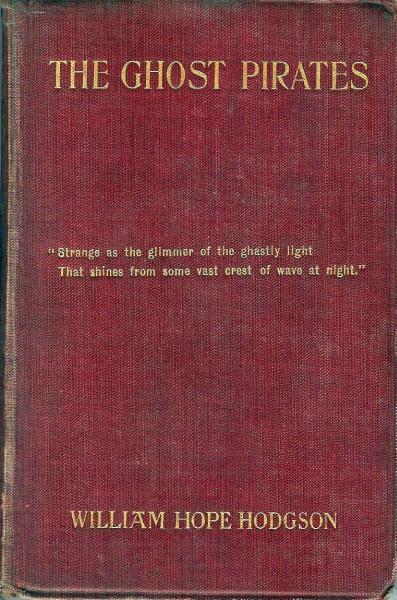
                • Cover of The Ghost Pirates
                  The Ghost Pirates

                  William Hope Hodgson · standalone novel · 1909

                  similar byat seaeeriehorrorfirst person

                  Jessop signs on to the sailing ship Mortzestus despite whispers about her reputation, and it isn't long before he understands why: strange shapes and stranger sounds begin plaguing the vessel, growing bolder and more frequent by the day. Some of the crew write it off as superstition or overwork, but Jessop, the story's sole survivor, recounting events after the fact, comes to suspect something worse than ghosts: a kind of presence that shares the ship's physical space from another dimension entirely, and is slowly forcing its way through. William Hope Hodgson's nautical horror novel builds dread less through incident than through mounting, unresolved wrongness.

                • Cover of The Woman in Black
                  The Woman in Black

                  series · 3 books · 1983

                  similar byeeriehorrorghost storiestense

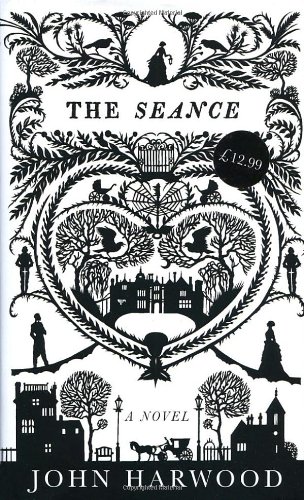
                • Cover of The Seance
                  The Seance

                  John Harwood · standalone novel · 2008

                  similar by19th centuryeeriehorrorghost stories+1 more

                  The Seance is a 2008 horror novel by John Harwood. Set in late 19th century London, it follows the story of Constance Langton who in an attempt to make her mother healthy again takes her to a séance only to result in tragic consequences. The Seance won the 2008 Aurealis Award for best horror novel.

                • Cover of The Lost Stradivarius
                  The Lost Stradivarius

                  J. Meade Falkner · standalone novel · 1895

                  similar by19th centuryeeriehorrorghost stories

                  The Lost Stradivarius (1895), by J. Meade Falkner, is a short horror novel about ghosts and the evil that can be invested in an object, in this case an extremely fine Stradivarius violin. It has been described as "one of Falkner's three celebrated novels" and as a "psychic romance".

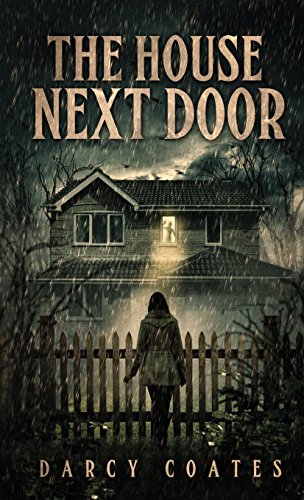
                • Cover of The House Next Door
                  The House Next Door

                  Darcy Coates · standalone novel · 2017

                  similar byeeriehorrorghost storiestensefirst person

                  I live next to a haunted house. I began to suspect something was wrong with the gothic building when its family fled in the middle of the night, the children screaming, the mother crying. They never came back to pack up their furniture. No family stays long. Animals avoid the place. Once, I thought I saw a woman’s silhouette pacing through the upstairs room… but that seems impossible; no one was living there at the time. A new occupant, Anna, has just moved in. I paid her a visit to warn her about the building. I didn’t expect us to become friends, but we did. And now that Marwick House is waking up, she’s asked me to stay with her. I never intended to become involved with the building or its vengeful, dead inhabitant. But now I have to save Anna… before it’s too late for the both of us.

                • Cover of The Terror
                  The Terror

                  Dan Simmons · standalone novel · 2007

                  similar by19th centuryat seatensehorror

                  The Terror is a 2007 novel by American author Dan Simmons. It is a fictionalized account of Captain Sir John Franklin's lost expedition, on HMS Erebus and HMS Terror, to the Arctic, in 1845–1848, to locate the Northwest Passage. In the novel, while Franklin and his crew are plagued by starvation and illness, and forced to contend with mutiny and cannibalism, they are stalked across the bleak Arctic landscape by a monster.

                • Cover of The Haunted Hotel
                  The Haunted Hotel

                  Wilkie Collins · standalone novel · 1878

                  similar by19th centuryeerietenseghost stories

                  Lord Montbarry breaks off his engagement to Agnes Lockwood and marries the Countess Narona, with whom he lives in a Venetian palace. When he dies, Agnes Lockwood becomes suspicious of the circumstances, and goes to Venice with other family members to investigate. Staying in Montbarry's former residence, they experience a haunting.

                • Cover of The Secret of Crickley Hall
                  The Secret of Crickley Hall

                  James Herbert · standalone novel · 2006

                  similar byeeriehorrorghost storiestense

                  The Secret of Crickley Hall is a 2006 supernatural thriller novel by the British writer James Herbert.

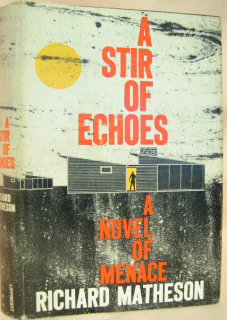
                • Cover of A Stir of Echoes
                  A Stir of Echoes

                  Richard Matheson · standalone novel · 1958

                  similar byeeriehorrortenseghost stories

                  A Stir of Echoes is a supernatural novel by American writer Richard Matheson, published in 1958. It served as the inspiration for the 1999 film Stir of Echoes.

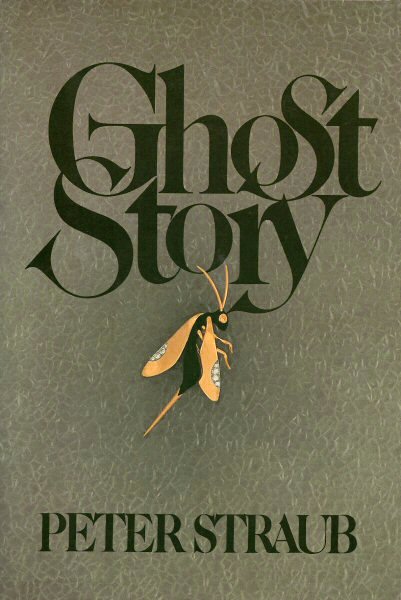
                • Cover of Ghost Story
                  Ghost Story

                  Peter Straub · standalone novel · 1979

                  similar byhorroreerietenseghost stories

                  Four prominent citizens of a small town in upstate New York who share guilt over something that happened in their youth are revisited late in life by a destructive evil force which uses their guilt as an opportunity to destroy them as well as the entire town.

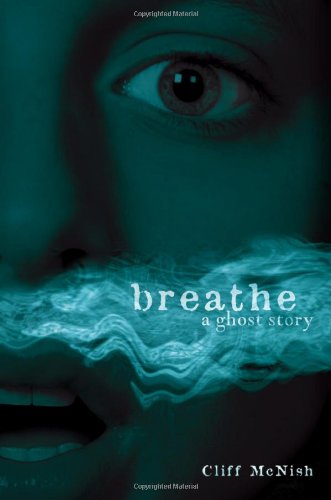
                • Cover of Breathe
                  Breathe

                  Cliff McNish · standalone novel · 2006

                  similar byeeriehorrorghost storiestense

                  Breathe: A Ghost Story is a novel by English author Cliff McNish published in 2006 as McNish's first stand-alone novel. It is about a group of ghost children trapped inside an old farmhouse by a malignant spirit known as the Ghost Mother. Twelve-year-old Jack, suffering from chronic asthma, has just moved into the old house with his widowed mother, and discovers that the Ghost Mother wants him to herself.

                • Cover of The Mist in the Mirror
                  The Mist in the Mirror

                  Susan Hill · standalone novel · 1992

                  similar by19th centuryeerieghost storieshorror

                  The Mist in the Mirror: A Ghost Story is a novel by Susan Hill. The novel is about a traveller called Sir James Monmouth and his pursuit of an explorer called Conrad Vane.

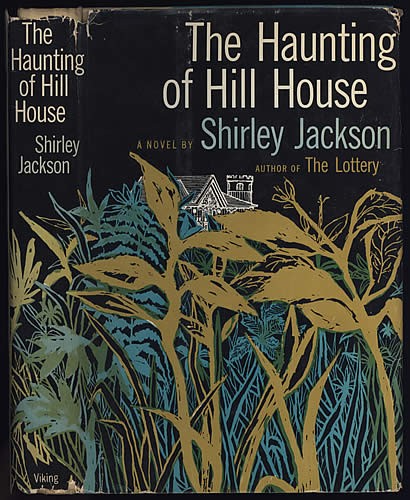
                • Cover of The Haunting of Hill House
                  The Haunting of Hill House

                  Shirley Jackson · standalone novel · 1959

                  similar byeeriehorrorghost stories+1 more

                  The Haunting of Hill House is a 1959 gothic horror novel by American author Shirley Jackson. It was a finalist for the National Book Award and has been made into two feature films, a play, and is the basis of a Netflix series.

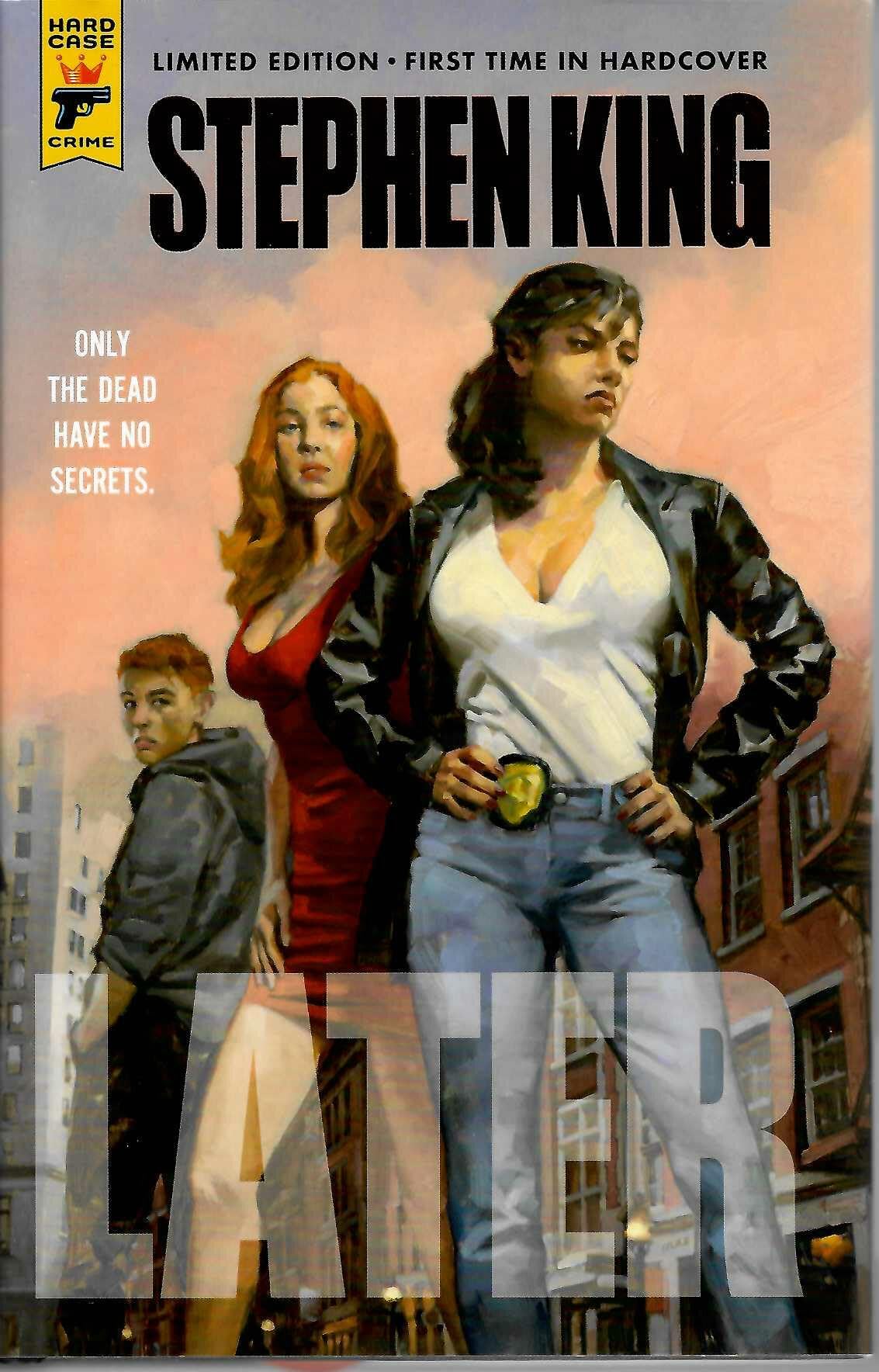
                • Cover of Later
                  Later

                  Stephen King · standalone novel · 2021

                  similar byhorroreerietenseghost storiesfirst person

                  A young boy, with the power of seeing and talking with the recently deceased, and his single mother try to avoid personal and financial disasters.

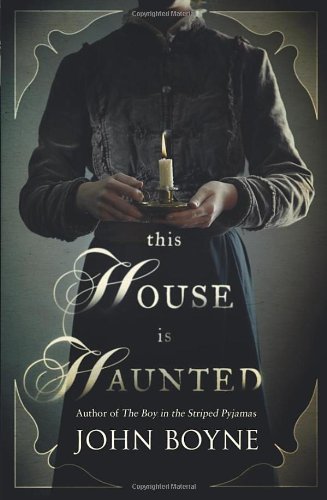
                • Cover of This House Is Haunted
                  This House Is Haunted

                  John Boyne · standalone novel · 2013

                  similar by19th centuryhorroreerieghost stories

                  This House Is Haunted is a novel written by Irish novelist John Boyne. It was first published in 2013 by Doubleday.

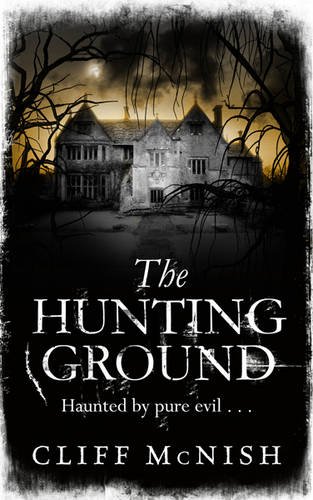
                • Cover of The Hunting Ground
                  The Hunting Ground

                  Cliff McNish · standalone novel · 2011

                  similar byeeriehorrorghost storiestense

                  When Elliott and his brother, Ben, move into the old and crumbling Glebe House they don't expect to find themselves sharing it with ghosts. But soon sinister events are unfolding. An old diary reveals glimpses of the mansion's past - and of a terrible tragedy. A mysterious woman talks to the dead. And evil lurks in the East Wing - a hideous labyrinth of passageways devised by a truly twisted mind. Can Elliott and his family escape the clutches of Glebe House? Or will they be trapped in the maze of corridors, forever hunted by the dead?

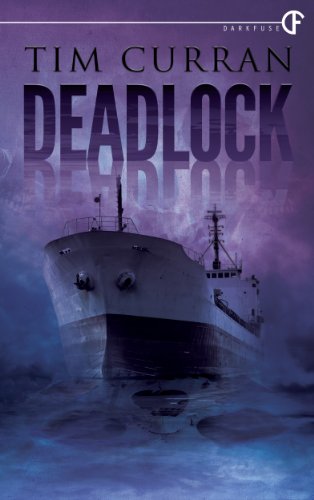
                • Cover of Deadlock
                  Deadlock

                  Tim Curran · standalone novel · 2014

                  similar byhorrorat seaeerietenseghost stories

                  "Charlie Petty is a man known for having ice water in his veins. He never backs down and is never shaken but unfortunately stirred up into the wrong crowd. As a degenerate gambler, his luck has run out and his debt has now come due. Charlie is offered a chance to clear his tab: simply stay alone on a ship overnight to prove to its owner and potential crew that it's not cursed nor haunted. Never mind the ship's history of suicide, violence, mutiny and murder. Or how the ship's past crews have gone missing or insane. The fact that no one has set foot on deck in darkness for years doesn't phase Charlie one bit. It sounds like easy money to bust up a superstition or two. Charlie thinks his luck is returning. Little does he know it's about to run out completely." – quoted from this books product page on Amazon.com as of 2015-05-21.

                • Cover of The House on Moon Creek Avenue
                  The House on Moon Creek Avenue

                  E. Reyes · standalone novel · 2020

                  similar byhorrorghost storieseerietense

                  ● "Cindy is a twenty-one-year-old single mother, retail worker, and college student. She inherits her grandmother's home on Moon Creek Avenue after she passes away. At first, the home is comfortable, nostalgic of Cindy's childhood at nana's, and her daughter enjoys the home, too. But soon, ghosts randomly appear day and night, doors open and close, a streak of bad luck begins, Cindy and her daughter have unsettling nightmares, and Cindy's mental state is pushed to the edge. When Cindy's video recording of paranormal activity goes viral on social media, she gets the attention of famous ghost hunters. Without anywhere else to turn, Cindy accepts their help." ― paraphrased from this book's product page on Amazon.com as of 2024-09-26.

                • Cover of Hell House
                  Hell House

                  Richard Matheson · standalone novel · 1971

                  similar byhorroreerietenseghost stories

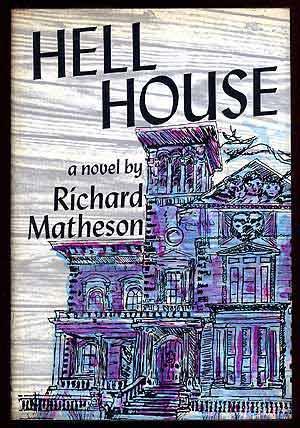
                  A dying millionaire wants proof, once and for all, of what happens after death, and hires physicist-turned-parapsychologist Dr. Lionel Barrett to spend a week investigating the Belasco House in Maine -- a mansion so thoroughly associated with atrocity that it's known simply as Hell House, where every previous investigation has ended in death or madness. Barrett brings his wife Edith along with two mediums, the spiritualist Florence Tanner and Benjamin Franklin Fischer, survivor of an earlier disastrous visit, whose scientific skepticism and spiritualist convictions clash from the first night inside. Richard Matheson's haunted-house novel, later filmed as The Legend of Hell House.

                • Cover of The Haunting of Blackwood House
                  The Haunting of Blackwood House

                  Darcy Coates · standalone novel · 2015

                  similar byeeriehorrorghost storiestense

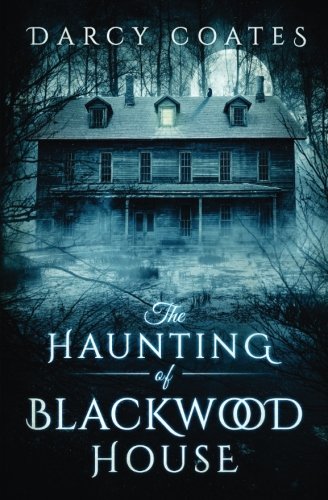
                  "Could you survive a week in a haunted house? Mara is the daughter of spiritualists. Her childhood was filled with séances, scam mediums and talk of ghostly presences. When Mara finally left her family's home, she vowed she would never allow superstition or false religion into her life again. Now she's ready to start over with her fiancé, Neil, in a world based on rationality and facts. But her past isn't ready to let her go just yet. Mara and Neil purchase Blackwood House, a derelict property outside of town. They're warned about strange occurrences in the crumbling building. Doors open by themselves, voices whisper in the night, bloody handprints appear on the walls, and cold spots linger in the basement, where the house's original owner was murdered. But Blackwood was dirt-cheap and came with a large plot of overgrown land. Mara loves her new home, and disregards the warnings. Because ghosts aren't real...are they?" – quoted from this book's product page on Amazon.com as of 2018-01-20.

                • Cover of The Haunting of Rookward House
                  The Haunting of Rookward House

                  Darcy Coates · standalone novel · 2017

                  similar byeeriehorrorghost storiestense

                  "She's always watching ... When Guy finds the deeds to a house in his mother's attic, it seems like an incredible stroke of luck. Sure, the building hasn't been inhabited in forty years and vines strangle the age-stained walls, but Guy is convinced he can clean it up and sell it. He'd be crazy to turn down free money. Right? The house is hours from any other habitation, and Guy can't get phone reception in the old building. He decides to camp there while he does repairs. Surely nothing too bad can happen in the space of a week. But there's a reason no one lives in Rookward House, and the dilapidated rooms aren't as empty as they seem...A deranged woman tormented a family in Rookward forty years before. Now her ghost clings to the building like rot. She's bitter, obsessive, and jealous...and once Guy has moved into her house, she has no intention of ever letting him leave." – quoted from this book's product page on Amazon.com as of 2018-01-20.

                • Cover of When Michael Calls
                  When Michael Calls

                  John Farris · standalone novel · 1967

                  similar byeeriehorrorghost storiestense

                  "Auntie Helen," the little boy sobbed, "I'm home, and nobody's here!" The phone trembled in Helen Connolly's hand. She could not believe her ears. This was her nephew, Michael Young, on the phone — Michael, who had been dead for sixteen years. Who was this mysterious caller? Could it really be Michael? And if so, what did he want?

                • Cover of The House on the Borderland
                  The House on the Borderland

                  William Hope Hodgson · standalone novel · 1908

                  similar byeeriehorrorfirst person

                  The House on the Borderland (1908) is a supernatural horror novel by British fantasist William Hope Hodgson. The novel is a hallucinatory account of a recluse's stay at a remote house, and his experiences of supernatural creatures and otherworldly dimensions.

                • Cover of The House Next Door
                  The House Next Door

                  Anne Rivers Siddons · standalone novel · 1978

                  similar byhorroreerietenseghost stories

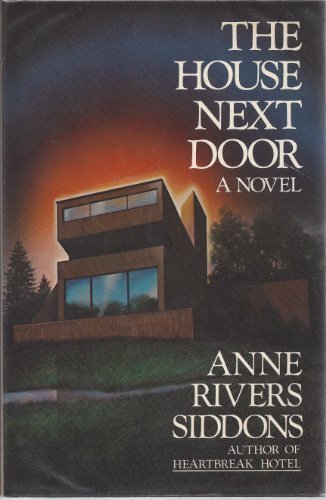
                  Thirtysomething Colquitt and Walter Kennedy live in a charming, peaceful suburb of newly bustling Atlanta, Georgia. Life is made up of enjoyable work, long, lazy weekends, and the company of good neighbors. Then, to their shock, construction starts on the vacant lot next door, a wooded hillside they'd believed would always remain undeveloped. Disappointed by their diminished privacy, Colquitt and Walter soon realize something more is wrong with the house next door. Surely the house can't be "haunted," yet it seems to destroy the goodness of every person who comes to live in it, until the entire heart of this friendly neighborhood threatens to be torn apart.