More like The Variable Man
anchored on:science fictionour worldtime travelpolitical intriguefar future
but
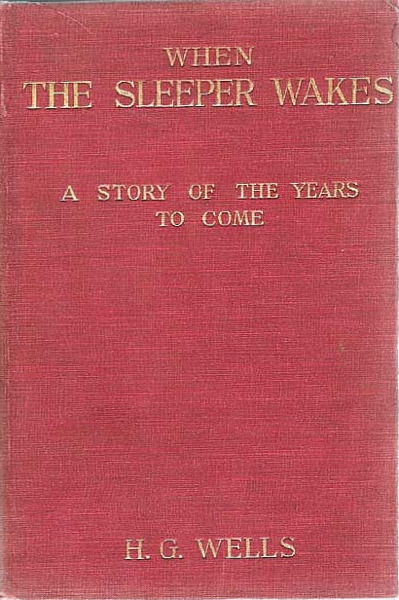
- When the Sleeper Wakes
H. G. Wellsstandalone novel1899
similar bytensepolitical intrigueour worldfar futurescience fictiontime travel
Graham, an insomniac Englishman in 1890s London, takes a course of sleep-inducing drugs and falls into a coma that lasts two centuries. He wakes in the year 2100 to find his investments have compounded, through a ruling body called the White Council, into effective ownership of most of the world's wealth and power, making him, on paper, humanity's master, and in practice, its prisoner, held under guard while the Council governs in his name. A rebel faction led by a man named Ostrog frees him, hoping to use his symbolic authority to spark an uprising against the Council. An early H. G. Wells dystopia about inherited power and manufactured consent.
- Dune
series20 books1963
part of Dune Universe
similar bypolitical intriguefar futurescience fiction+1 more
Frank Herbert's Dune Chronicles opens with 1965's Dune, set on the desert planet Arrakis where House Atreides takes control of the only source of the vital spice melange and young Paul Atreides is pulled into a struggle over its politics and religion. Herbert carried the story forward across five further novels — Dune Messiah, Children of Dune, God Emperor of Dune, Heretics of Dune, and Chapterhouse: Dune — following Paul's line over the following millennia, before Brian Herbert and Kevin J. Anderson later extended the saga. Many other editions of these six novels are omnibus and box-set repackagings rather than separate stories.
- Dune Universe
universe78 books1963
Start hereDune · Start here
similar bypolitical intriguefar futurescience fiction+1 more
Arrakis. Dune. The desert planet, where empire runs on a single substance: the spice melange, which folds space, prolongs life, and unlocks prescience, and which exists nowhere else in the known universe. Frank Herbert's saga is a meditation dressed as an adventure — feudal houses and a secret sisterhood, engineered messiahs and the patient ecology of a world without water, all turning on the terrible gravity of who commands the spice. It reads like scripture and schemes like a war room, ten thousand years hence, among people who have outlawed the thinking machine and made instruments of themselves instead. At its heart stand Herbert's original six — Dune, Dune Messiah, Children of Dune, God Emperor of Dune, Heretics of Dune, Chapterhouse: Dune — a single deepening arc across millennia, arguing the whole way between prophecy and free will. Around that spine his son Brian Herbert and Kevin J. Anderson have raised a vast prequel architecture: Prelude to Dune, tracing the great houses a generation before Paul; Legends of Dune, reaching back to the crusade that broke the machines; the Schools of Dune cycle on the founding of Bene Gesserit, Mentat, and Navigator; the Caladan Trilogy and Heroes of Dune filling years the originals left in shadow. Many hands, dozens of volumes, one desert. What sets Dune apart is its refusal of the simple: religion is manufactured, heroes are hazards, and the sand itself — worm, water, ecology — acts as a political power. Begin where the universe did, with Frank Herbert's Dune (1965), and read the original six in order; you need nothing else to feel the full weight. The prequels are a country to explore afterward, taken by era. Beginnings are delicate times.
- Maurai
series6 books1959
completed
similar bypolitical intrigueour worldfar futurescience fiction+2 more
The Maurai series is a series of short stories and a novel by Poul Anderson set in a resource depleted, post-apocalyptic earth several centuries in the future. The series is named after its most frequent protagonists, citizens of the Maurai Federation. The Maurai dominate the Pacific and Indian Oceans. Fearful of the social and ecological implications of a return to large-scale industrial society, they use their considerable might and covert resources to prevent other nations from developing nuclear power.
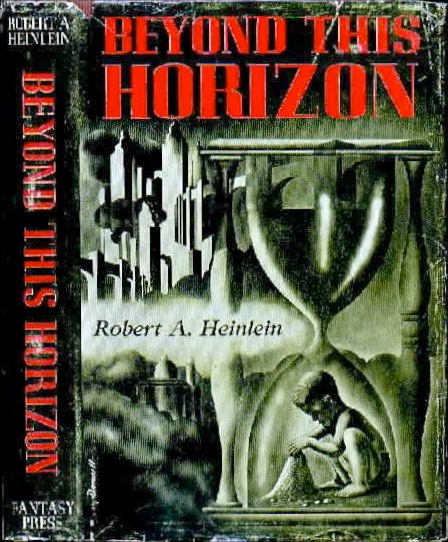
- Beyond This Horizon
Robert A. Heinleinstandalone novel1948
similar byour worldfar futurescience fiction+2 more
From the front flap of a 2001 Baen reprint: "Utopia has been achieved. For centuries, disease, hunger, poverty, and war have been things found only in the history tapes. And applied genetics has given men and women the bodies of athletes and a lifespan of over a century. They should all have been very happy... But Hamilton Felix is bored. And he is the culmination of a star line, each of his last thirty ancestors chosen for superior genes. Hamilton is, as far as genetics can produce one, the ultimate man. And this ultimate man can see no reason why the human race should survive, and has no intention of continuing the pointless comedy. However, Hamilton's life is about to become less boring. A secret cabal of revolutionaries who find utopia not just boring, but desperately in need of leaders who know just What Needs to be Done, are planning to revolt and put themselves in charge. Knowing of Hamilton's disenchantment with the modern world, they have recruited him to join their Glorious Revolution. Big mistake! The revolutionaries are about to find out that recruiting a superman was definitely not a good idea..."
- Moties
series4 books1974
part of CoDominium
similar bypolitical intriguefar futurescience fiction+2 more
Larry Niven and Jerry Pournelle's The Mote in God's Eye (1974) depicts humanity's first contact with an alien species, the Moties, set within the far-future interstellar setting of Pournelle's codominium future history. The Gripping Hand continues that first-contact crisis years later, and Outies, written by J. R. Pournelle, carries the story forward into a new generation. Together the three books trace an escalating encounter between human and Motie civilizations within the codominium universe.
- Solar Lottery
Philip K. Dickstandalone novel1955
similar bytensepolitical intriguefar futurescience fictionour world
Solar Lottery is a 1955 science fiction novel by American writer Philip K. Dick. It was his first published novel and contains many of the themes present in his later work. It was also published in altered form in the UK as World of Chance. The main story is about a man named Ted Benteley who lives in a strange world, dominated by percentages and the lottery. Lotteries are used to choose the next leader as well as a new assassin, whose job is to try to kill the leader or "Quizmaster". Everybody in society has the opportunity to be selected as a leader or an assassin. Benteley unexpectedly gets chosen to be a member of the committee trying to assassinate the new Quizmaster and he must decide what he is going to do.
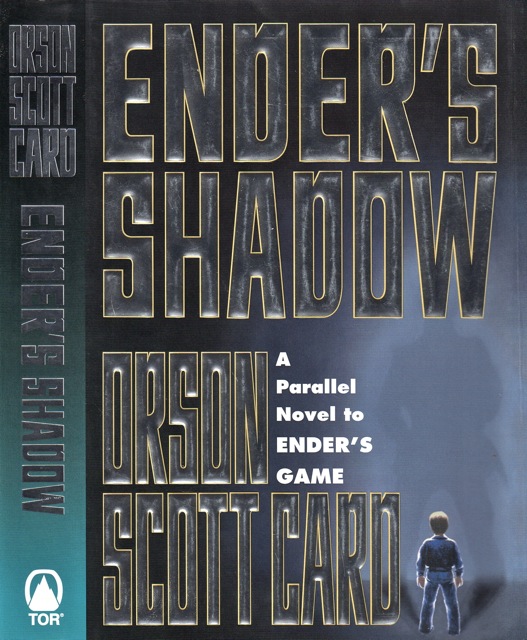
- Ender's Shadow
series5 books1999
part of Ender's Game Universe
similar bytensepolitical intriguefar futurescience fictionwar
Orson Scott Card's Ender's Shadow retells the events of Ender's Game from the perspective of Bean, a physically stunted but ferociously intelligent street child recruited into the same Battle School program as Ender Wiggin. It launches the Shadow series, which follows Bean and other secondary Battle School characters into the political aftermath of the Formic Wars back on Earth, running parallel to and eventually past the timeline of Card's main Ender Quintet.
- The Moon Is a Harsh Mistress
Robert A. Heinleinstandalone novel1966
similar bypolitical intriguefar futurescience fiction+1 more
A technician discovers that the massive computer that operates everything on Luna (a prison colony) has become self-aware. He befriends it, but when he accompanied a beautiful girl to a dissident meeting, he encounters people who want to throw off the yoke of their Earth rulers.
- Double Star
Robert A. Heinleinstandalone novel1956
similar bypolitical intriguefar futurescience fiction+1 more
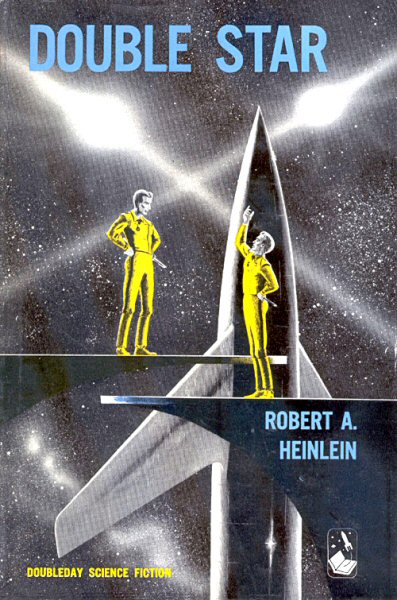
Lorenzo Smythe, the excellent yet unemployed actor, meets Dak Broadbent in a bar. Broadbent hires Lorenzo for an unspecified role, and hustles him onto a rocket ship. Broadbent turns out to be an assistant to the famous interplanetary politician and leader of the Expansionist party: John J. Bonforte. Bonforte, however, has been kidnapped by the political opposition on Mars, and due to Lorenzo's physical similarity to Bonforte, his staff wants Lorenzo to impersonate the politician for an important Martian ceremony.
- Janissaries
series4 books1979
similar bytensepolitical intriguefar futurescience fictionwar
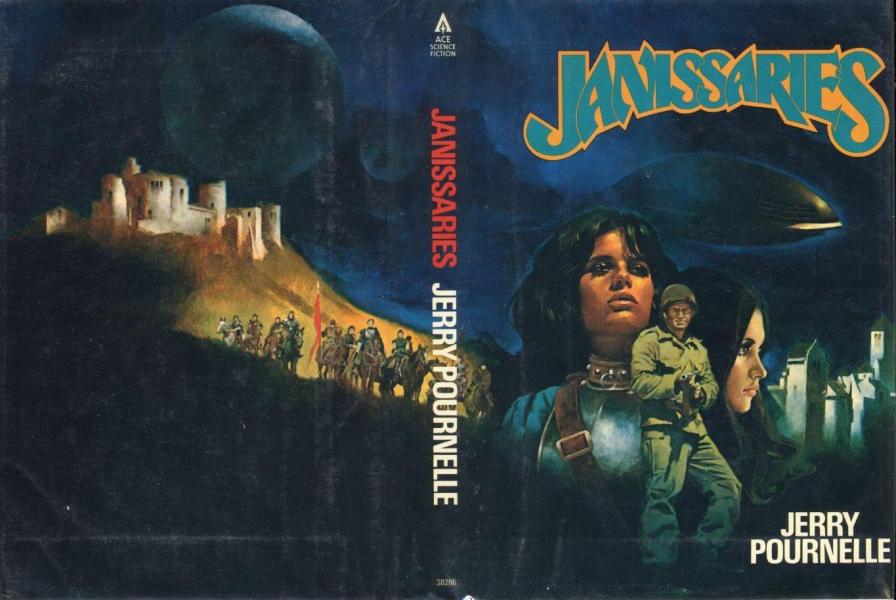
Janissaries are an American series of military and political-based science fiction novels are set in an interstellar confederation of races, in which humans are a slave race entrusted with military affairs and law enforcement. They were written by Jerry Pournelle, with Roland J. Green co-authoring the second two books.
- Honor Harrington
series14 books1993
part of Honorverse
similar bytensepolitical intriguefar futurescience fictionwar
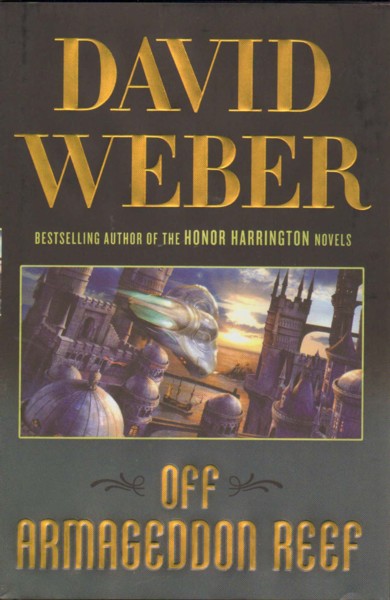
David Weber's Honor Harrington novels follow the title character's rise through the Manticoran navy in the 'Honorverse,' a space-opera setting built around Age-of-Sail-style naval combat, interstellar politics and a decades-long war between rival star nations. Beginning with On Basilisk Station, the core series runs to fourteen books, alongside spin-off subseries, prequels and shared-world anthologies also set in the Honorverse. It's one of the longest-running modern military science fiction series, published by Baen.
- Company Wars
series7 books1981
part of Alliance-Union Universe
similar bytensepolitical intriguefar futurescience fiction
Company Wars gathers the novels C. J. Cherryh set during the breakaway conflict between Earth's colonial Company and the newly independent Union, within her wider Alliance-Union future history. Anchored by the Hugo Award-winning Downbelow Station, the books follow different ships, stations, and crews caught on either side, from merchanter traders to military spacers, rather than a single continuing cast. Read in any order, they build up a picture of the political and economic pressure that reshapes Cherryh's larger Alliance-Union universe.
- Terra Ignota
series4 books2016
similar bypolitical intriguefar futurescience fictionour world+2 more
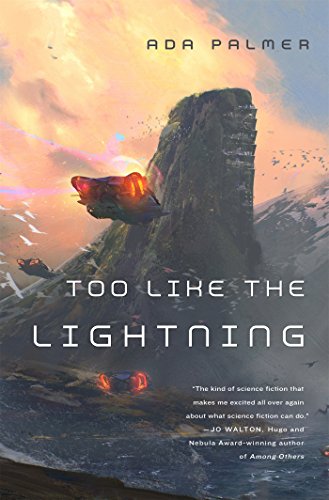
Terra Ignota is a quartet of science fiction and philosophical novels by the American author Ada Palmer. The series consists of Too Like the Lightning (2016), Seven Surrenders (2017), The Will to Battle (2017), and Perhaps the Stars (2021). After three centuries of a global near-utopia, a minor crime and a miracle child begin to unravel the social system and lead the world to technologically advanced total war. The first three books cover the events leading up to the war and the final book covers the war itself. The novels have won several awards, including a 2017 Compton Crook Award. The first novel was a finalist for the 2017 Hugo Award for Best Novel, and the series as a whole was a finalist for the 2022 Hugo Award for Best Series.
- Adiamante
L. E. Modesitt & Jr.standalone novel1996
similar bytensepolitical intrigueour worldfar futurescience fictionwar
From the flaps of the first edition: In the far future, Earth is just one planet inhabited by humanity, the capital of a long-abandoned interstellar empire. Having renounced the arrogance and pride of empire, the people of Earth have built a new society based on a rigid set of principles that stress environmental conservation and nonaggression. Slowly the planet is recovering from millennia of selfish exploitation and the destruction of wars. Suddenly a former colony's fleet of twelve warships built of nearly indestructible adiamante appears in orbit and tries to intimidate the people of Earth into submission. The people of Earth will not surrender, but their principles also don't allow them to take offensive measures until the fleet actually attacks. Ecktor deJanes is the newly appointed planetary coordinator and has the terrible responsibility of protecting the lives of all the Earth's inhabitants. Somehow he must maintain his society's principles while preventing the fleet from turning the planet into a lifeless call of rock.
- The War in the Air
H. G. Wellsstandalone novel1908
similar bytensepolitical intrigueour worldscience fictionwar
The War in the Air: And Particularly How Mr. Bert Smallways Fared While It Lasted is a military science fiction novel written by H. G. Wells and published in 1908.
- Vatta's War
series6 books2003
part of Vatta
similar bytensepolitical intriguefar futurescience fictionwar
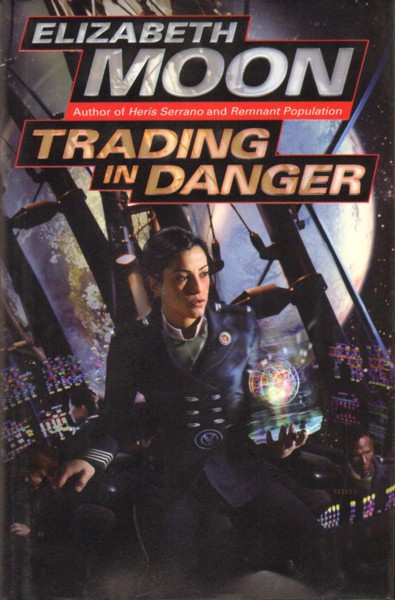
Vatta's War is a science fiction series by American writer Elizabeth Moon, comprising five books: Trading in Danger (2003), Marque and Reprisal, Engaging the Enemy (2006), Command Decision (2007), and Victory Conditions (2008). They have been characterized as military science fiction similar in style to the works of Lois McMaster Bujold, David Weber and Walter Jon Williams.
- Sten
series11 books1982
completed
similar bypolitical intriguefar futurescience fictionwar+1 more
The Sten Chronicles, also called The Sten Adventures, are a series of eight military science fiction and space opera novels by Chris Bunch and Allan Cole published from 1982 to 1993. The series was originally published by Del Rey and then re-released by Orbit.
- The Masks of Time
Robert Silverbergstandalone novel1968
similar bytensepolitical intrigueour worldscience fictiontime travel
From the back cover of the Ballantine first edition: "The year is 1999. The century is about to turn. The civilized world is prosperous but tense with fear about the still existing possibility of a major war. While in the large area that used called "underdeveloped" there is a hysterical conviction that the world will cone to an end with the arrival of the new century Into this explosive situation floats a creature calling himself Vornam-19 - and claiming to be a visitor from 1000 years in the future... The world is ready, indeed ripe, for a sign, an omen, a new cult. But no one realizes exactly what Vornaa-19 is in his own right."
- Termination Shock
Neal Stephensonstandalone novel2021
similar bytensepolitical intrigueour worldscience fiction+1 more
Termination Shock is a science fiction novel by American writer Neal Stephenson, published in 2021. The book is set in a near-future when climate change has significantly altered human society and follows the attempts of a solar geoengineering scheme. The novel focuses on the geopolitical and social consequences of the rogue fix for climate change, themes common in the growing climate fiction genre.
- Chanur
series7 books1982
part of Alliance-Union Universe
similar bytensepolitical intriguefar futurescience fiction
The Chanur novels are a series of five science fiction novels, forming three separate stories, written by American author C. J. Cherryh and published by DAW Books between 1982 and 1992. The first novel in the series is The Pride of Chanur (1982), which was nominated for both the Hugo and Locus Awards in 1983. The Pride of Chanur, originally a stand-alone story, was followed by the Chanur's Venture trilogy, Chanur's Venture (1984), which was shortlisted for a Locus Award in 1985; The Kif Strike Back (1985) and Chanur's Homecoming (1986). These were followed by a later sequel, Chanur's Legacy (1992). The five novels were also published in two omnibus editions: the first three in The Chanur Saga in 2000 and the next two in Chanur's Endgame in 2007.
- The Fall of Chronopolis
Barrington J. Bayleystandalone novel1974
similar bytensepolitical intriguefar futurescience fictiontime travelwar
From the back cover of the DAW first edition: "There is real time... and there is potential time. By controlling the difference, the Chronotic Empire came into existence and maintained itself over a thousand years of human history. Its Time Fleets, armadas of time-traveling fortresses, patrolled its temporal borders relentlessly, blotting out potential-time deviations, erasing errors of history that might undermine the empire. But nevertheless the empire's days were numbered, for somewhere in its own future was the century of the Hegemony, its implacable enemy. Barrington J. Bayley, author of COLLISION COURSE, once again demonstrates in this brilliantly different novel, his ability to weave unusual concepts of time with the human problems of the men and women caught up in the contradictions of a destiny no mortal could ever comprehend."
- Safehold
series11 books2006
similar bytensepolitical intriguefar futurescience fictionwar
Safehold is a science fiction book series by David Weber, currently consisting of ten titles, the latest released in January 2019. The series is mostly set around the 31st century, on a distant world dubbed "Safehold" where a group of humans are in hiding from the Gbaba, an alien enemy responsible for the end of all other human civilization.
- The Dosadi Experiment
Frank Herbertstandalone novel1977
similar bytensepolitical intriguefar futurescience fiction
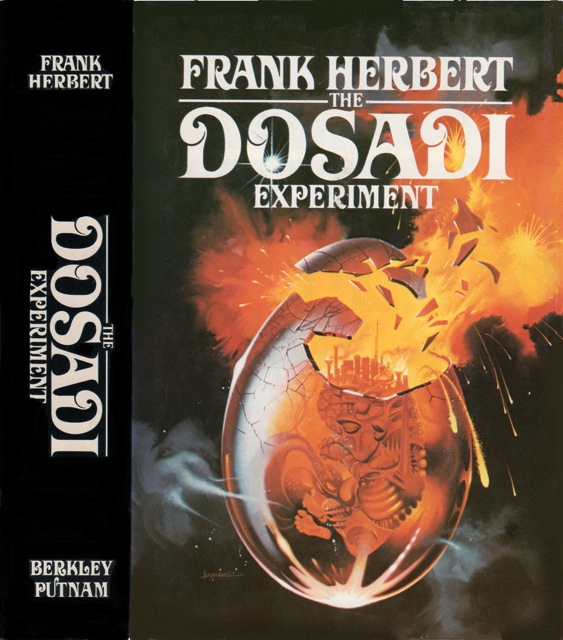
From the flaps of the Berkley Putnam first edition: "In his first new work of science fiction since the best-selling Children of Dune, Frank Herbert returns to his world of Whipping Star, and involves Jorj X. McKie, Saboteur Extraordinary, in a new intrigue. In Whipping Star, McKie discovered that some of the stars in the universe are actually intelligent, super-powerful beings, and was able to befriend one of them, the star Alcyone - affectionately known as Fannie Mae. As The Dosadi Experiment opens, McKie is assigned to investigate the planet Dosadi, which is isolated from the rest of the galaxy by a "god-wall," a barrier set up by one of the intelligent stars. Dosadi is rumored to be an experimental planet, and the experimenters are the froglike Gowachin, whose culture is founded upon a strange legal system in which McKie is the only human ever trained. He learns that humans and Gowachin have been placed on Dosadi, without their consent, for an experiment that could last centuries: an experiment in extreme overcrowding. But this monstrous plot is apparently out of control, and it seems the Gowachin may be prepared to destroy Dosadi rather than expose its secret, thus breaking the peace among the races, and starting the first interstellar war. But this is just the beginning. When McKie finally reaches Dosadi he discovers that the Dosadis have taken control of their own evolution and produced a competitive, highly evolved elite, of both humans and Gowachin, who have been able to extrapolate the existence of a universe beyond the god-wall and hate whoever has imprisoned them like this. They plan to break out and avenge themselves on the galaxy."