More like Things Not Seen
anchored on:science fiction
but
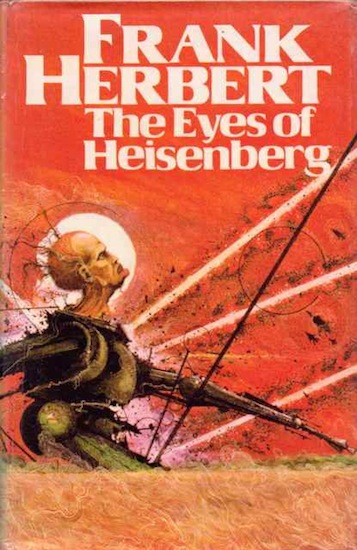
- The Eyes of Heisenberg
Frank Herbertstandalone novel1966
similar byscience fiction+2 more
Tens of thousands of years in the future, Earth is ruled by the Optimen, a genetically engineered aristocracy that has made itself functionally immortal, while ordinary people, the Folk, live under strict reproductive control. When Harvey and Lizbeth Durant arrive to have their embryo genetically screened, the examining doctor finds something in the child no one has seen in a very long time: real potential for both fertility and life span, traits the Optimen have arrogated to themselves. Rather than destroy the embryo as policy demands, the doctor hesitates, setting off a chain of surveillance, suspicion and resistance. A tightly wound Frank Herbert thriller about genetic caste and rebellion.
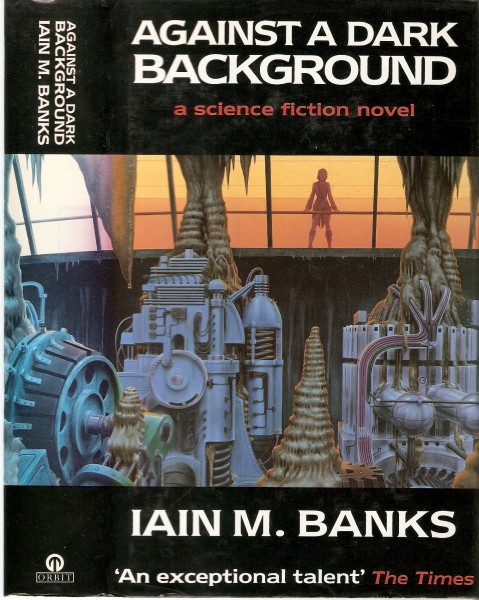
- Against a Dark Background
Iain M. Banksstandalone novel1993
similar byscience fiction+2 more
The daughter of an impoverished noble house and her squad of soldiers become thieves of antiquities; long after their retirement and separation she must assemble them again in order to find and steal the most powerful weapon ever created, or pay with her life.
- Dune
series20 books1963
part of Dune Universe
similar byscience fiction+1 more
Frank Herbert's Dune Chronicles opens with 1965's Dune, set on the desert planet Arrakis where House Atreides takes control of the only source of the vital spice melange and young Paul Atreides is pulled into a struggle over its politics and religion. Herbert carried the story forward across five further novels — Dune Messiah, Children of Dune, God Emperor of Dune, Heretics of Dune, and Chapterhouse: Dune — following Paul's line over the following millennia, before Brian Herbert and Kevin J. Anderson later extended the saga. Many other editions of these six novels are omnibus and box-set repackagings rather than separate stories.
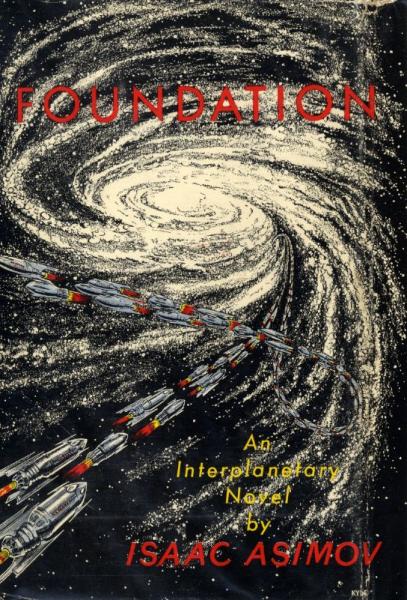
- Foundation Universe
universe123 books1940
Start hereFoundation · Start here
similar byscience fictionrobots
There is a science that reads the future of quadrillions the way an astronomer reads the orbits of stars. It is called psychohistory, and its equations foresee something the ruling Galactic Empire cannot admit: the throne is rotting, and thirty thousand years of barbarism are coming. One man, Hari Seldon, cannot stop the fall. He can only shorten it — by seeding a Foundation of scholars at the rim of the galaxy, a fragile institution built to carry knowledge across the dark and cut the interregnum to a single millennium. This is a universe told in the register of history itself: the long view, the calm of deep time, empires measured in centuries and men measured against them. The spine is Asimov's original trilogy — Foundation, Foundation and Empire, Second Foundation — followed decades later by the sequels Foundation's Edge and Foundation and Earth and the prequels Prelude to Foundation and Forward the Foundation. Late in life Asimov braided this in with his other future histories: the Robot novels of detective Elijah Baley and his humaniform partner R. Daneel Olivaw (The Caves of Steel, The Naked Sun, The Robots of Dawn, Robots and Empire) and the early Galactic Empire novels (Pebble in the Sky and its kin), until one continuous chronicle ran from the first thinking robots to the Second Empire. Other hands extend it — the Second Foundation Trilogy by Gregory Benford, Greg Bear, and David Brin, and shared-world spinoffs such as Robot City — so the corpus sprawls beyond a single author's tidy shelf. What distinguishes it is that the drama is intellectual: crises resolved by insight, nerve, and dialogue rather than fleets and blades, each turn hinging on the hidden logic of the Seldon Plan. Begin where readers have always begun — with Foundation, and the original trilogy in publication order. The rest opens outward from there.
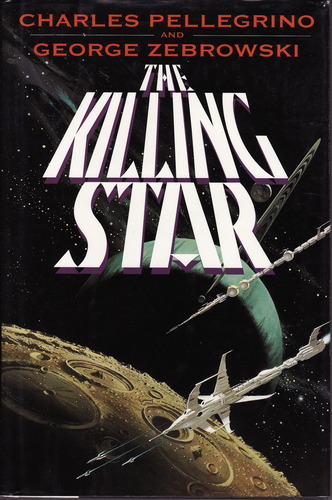
- The Killing Star
George Zebrowski & Charles Pellegrinostandalone novel1995
similar byscience fictioncloning+1 more
The Killing Star is a hard science fiction novel by American writers Charles R. Pellegrino and George Zebrowski, published in April 1995. It chronicles a sudden alien invasion in a late 21st century technological utopia, while covering several other speculative fiction ideas such as sublight interstellar travel, genetic cloning, virtual reality and advanced robotics.
- The City and the Stars
Arthur C. Clarkestandalone novel1956
similar byscience fiction+1 more
The City and the Stars is a science fiction novel by British writer Arthur C. Clarke, published in 1956. This novel is a complete rewrite of Clarke's earlier Against the Fall of Night, his first novel, which had been published in Startling Stories magazine in 1948 after being rejected by the editor of Astounding Science-Fiction, according to the author.
- Blade Runner Universe
series6 books1968
similar byscience fictionrobots
Philip K. Dick's 1968 novel Do Androids Dream of Electric Sheep? follows bounty hunter Rick Deckard as he tracks escaped androids through an irradiated, near-abandoned San Francisco, using the hunt to probe questions of empathy and what separates human from machine. The novel became the basis for Ridley Scott's 1982 film Blade Runner, and Marvel Comics later published an illustrated adaptation of that film. Together the two trace the story's path from prose original to screen and comic-page adaptation.
- The Door Into Summer
Robert A. Heinleinstandalone novel1957
similar byscience fictionrobots
From the first page of the Signet 6th printing: "An electronics engineer invents a wizard robot... only to find himself shanghaied by his ruthless partner and his gold-digging fiancee. The crafty pair forces him to submit to the "long sleep" - suspended animation for thirty years. But when he wakes up in the year 2000 A.D. the inventor makes a startling discovery. He learns that it is possible now to twist time forwards or backwards. And so he returns to the past bent on a mission... of revenge."
- Hardwired
series3 books1986
similar byscience fiction+1 more
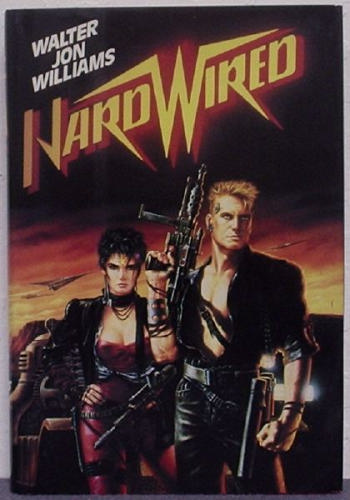
Walter Jon Williams' Hardwired (1986) is an early and influential cyberpunk novel. Voice of the Whirlwind, published three years later, is a loosely connected follow-up set in the same future, sharing its technological and political backdrop with a different cast of characters.
- Imperial Earth
Arthur C. Clarkestandalone novel1975
similar byscience fictioncloning
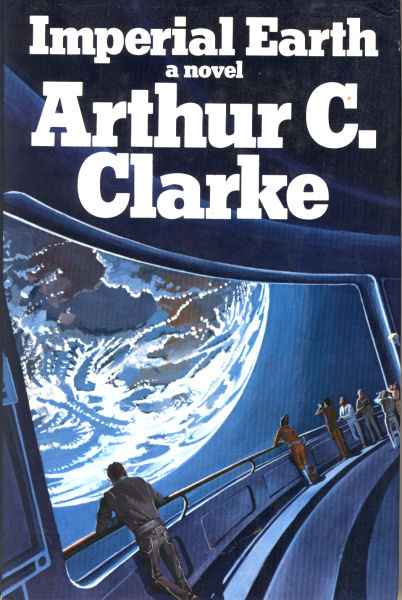
Imperial Earth is a science fiction novel by British writer Sir Arthur C. Clarke, published in 1975 by Gollancz Books. The plot follows the protagonist, Duncan Makenzie, on a trip to Earth from his home on Titan, in large part as a diplomatic visit to the U.S. for its quincentennial in 2276, but also to have a clone of himself produced. The book was published in time for the U.S. bicentennial in 1976.
- Nova
Samuel R. Delanystandalone novel1968
similar byscience fiction+1 more
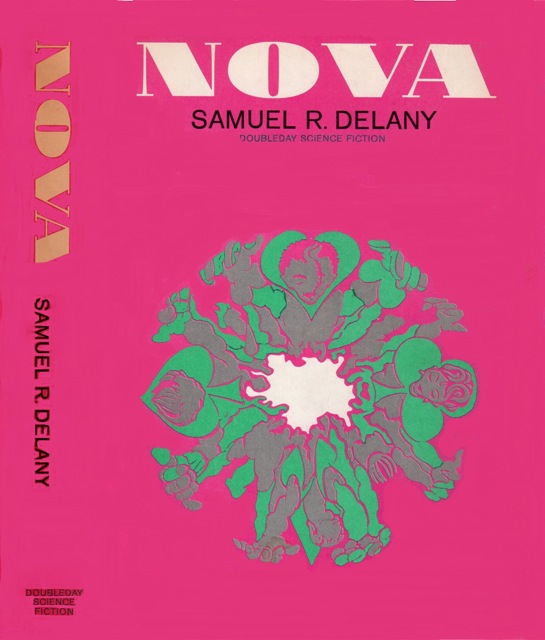
Nоva is a science fiction novel by American writer Samuel R. Delany published in 1968. The plot concerns the spaceship captain Lorq Von Ray's search for a nova, which will produce the essential power source Illyrion, and his vendetta with the Red family, who seek to kill him. Nominally space opera, it explores the politics and culture of a future where cyborg technology is universal, yet making major decisions can involve using tarot cards. It has strong mythological overtones, relating to both the Grail Quest and Jason's quest for the Golden Fleece.
- City
series19 books1944
completed
similar byscience fiction+1 more
City is Clifford D. Simak's fix-up novel, assembling eight linked stories originally published in Astounding Science Fiction during the 1940s and framed as legends dogs tell about a half-mythical creature called Man. It follows humanity's gradual abandonment of its cities and eventual departure from Earth, while the dogs left behind are surgically uplifted into a peaceable, speaking civilization of their own. The book won the International Fantasy Award in 1952.
- Forge of God
series2 books1987
completed
similar byscience fiction+1 more
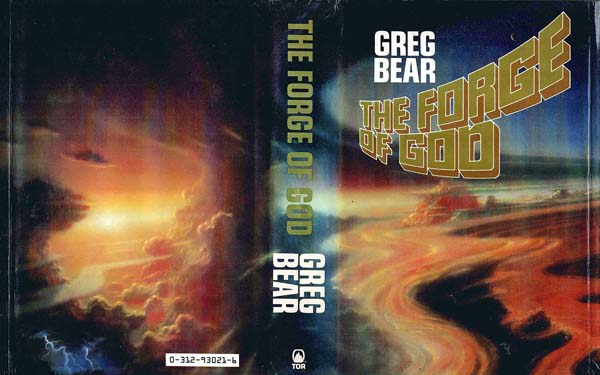
The Forge of God (1987) is Greg Bear's science fiction novel about Earth's discovery that it is the target of an incomprehensible, overwhelming alien attack, following scientists and ordinary people as they try to understand what is destroying the planet. Its 1992 sequel, Anvil of Stars, follows a group of young survivors sent on a mission of interstellar retaliation, continuing directly from the first book's ending.
- Man Plus
series2 books1976
similar byscience fictionrobots
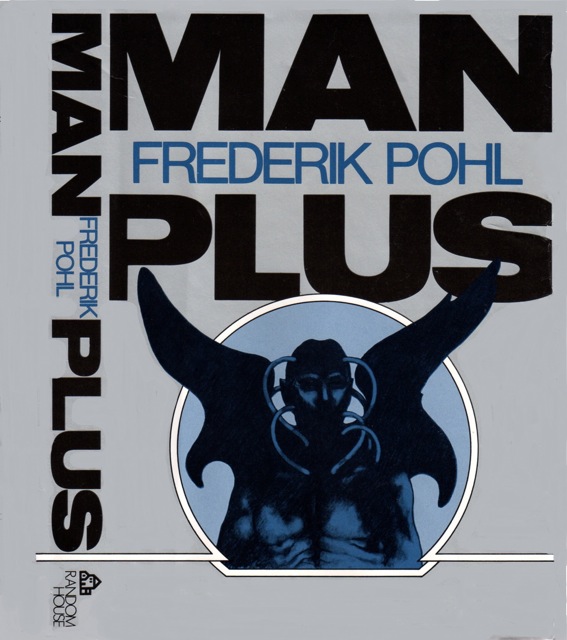
Frederik Pohl's Man Plus follows Roger Torraway, who is surgically and cybernetically rebuilt into a post-human organism able to survive unprotected on the Martian surface, as part of a crash program to colonize Mars ahead of a predicted global crisis. The 1976 novel, which won the Nebula Award, is a clinical, unsentimental look at what such a transformation costs a person's sense of self. Thomas T. Thomas wrote the sequel Mars Plus, continuing the story of the Martian colony years later.
- Roadmarks
Roger Zelaznystandalone novel1979
similar byscience fiction+1 more
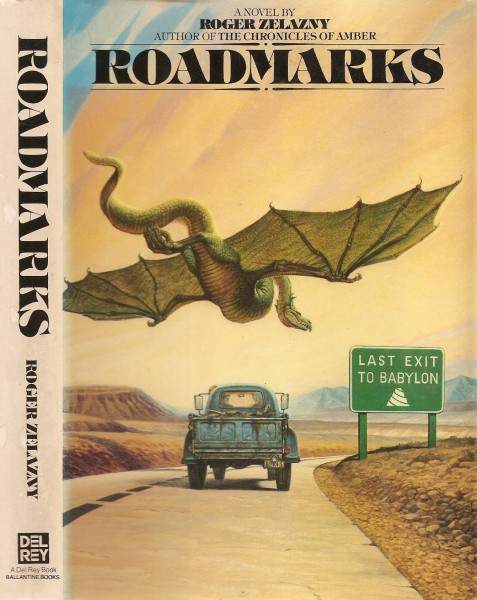
Roadmarks is a science fantasy novel by American author Roger Zelazny, written during the late 1970s and published in 1979.
- 2312
Kim Stanley Robinsonstandalone novel2012
similar byscience fiction+1 more
In the eponymous year, when Earth's ecology is degraded and humanity has settled throughout the solar system by terraforming and genetic engineering, mysterious disasters strike some human communities and an assortment of human types from throughout the system seek to find and eliminate the cause.
- Pandora
series4 books1966
similar byscience fiction+1 more
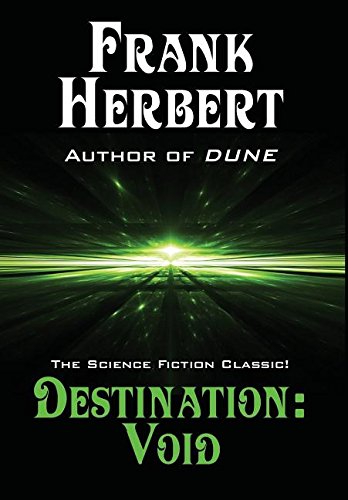
The Pandora Sequence opens with Frank Herbert's solo novel Destination: Void, in which a starship crew must jury-rig a working artificial consciousness after their vessel's control systems fail. Bill Ransom co-writes the three novels that follow, carrying the survivors to the world Pandora, where they must contend with both a manipulative machine intelligence and the planet's own hostile ecology. Across its four books the series moves from a claustrophobic ship-bound crisis to a generations-long struggle over faith, control, and survival on a dangerous new world.
- Ring Around the Sun
Clifford D. Simakstandalone novel1953
similar byscience fiction+1 more
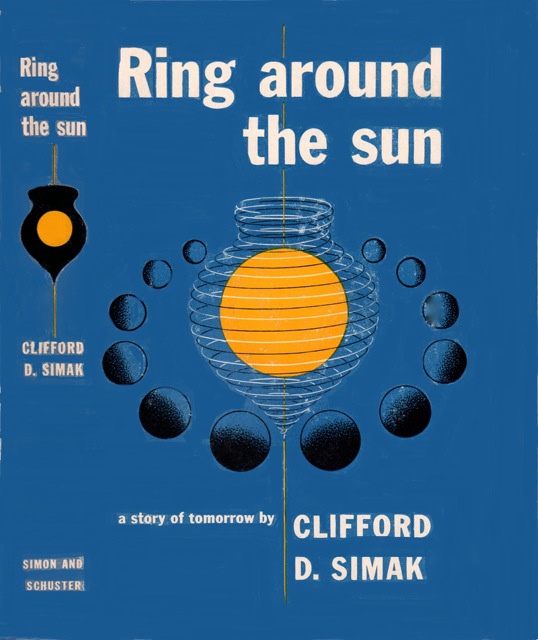
Ring Around the Sun is a science fiction novel by American writer Clifford D. Simak. Its anti-urban and pro-agrarian sentiments are typical of much of Simak's work.
- Lunar Chronicles
series15 books2011
similar byscience fiction+1 more
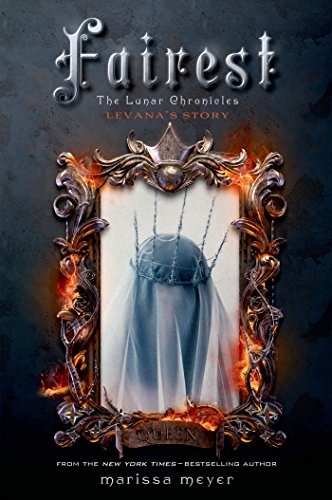
The Lunar Chronicles is a series of four young adult science fiction novels, a novella, and a short story collection written by American author Marissa Meyer and published by Feiwel & Friends. Each book entails a science fictional twist on a classic fairy tale, including "Cinderella", "Little Red Riding Hood", "Rapunzel", and "Snow White". Set in a futuristic world inhabited by various species and creatures, tensions are rising between Earth and its former colony Luna, while both attempt to manage an ongoing pandemic.
- The Light of Other Days
Arthur C. Clarke & Stephen Baxterstandalone novel2000
similar byscience fiction+1 more
An industrialist devises a technique to use tiny wormholes as light pipes to enable viewing of any event anywhere; and subsequently it becomes possible to use them to view any event in the past as well. The effects on society are enormous.
- Berserker (Fred Saberhagen)
series59 books1963
similar byscience fictionrobots
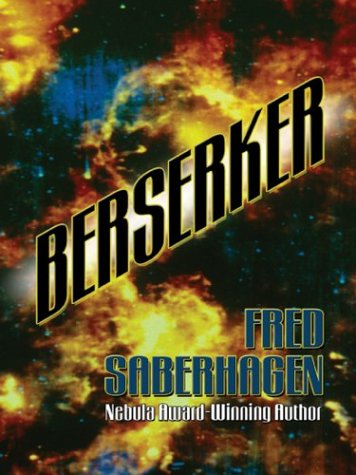
The Berserker series is a series of space opera science fiction short stories and novels by Fred Saberhagen, in which robotic self-replicating machines strive to destroy all life.
- The Goblin Reservation
Clifford D. Simakstandalone novel1968
similar byscience fiction+1 more
The Goblin Reservation is a 1968 science fiction novel by American writer Clifford D. Simak, featuring an educated Neanderthal, a biomechanical sabertooth tiger, aliens that move about on wheels, a man who time-travels using an unreliable device implanted in his brain, meeting a ghost, trolls, banshees, goblins, a dragon and even Shakespeare himself. The Goblin Reservation was a Hugo Award nominee in 1969 and was originally serialized in Galaxy Science Fiction magazine.
- Solar Lottery
Philip K. Dickstandalone novel1955
similar byscience fiction+1 more
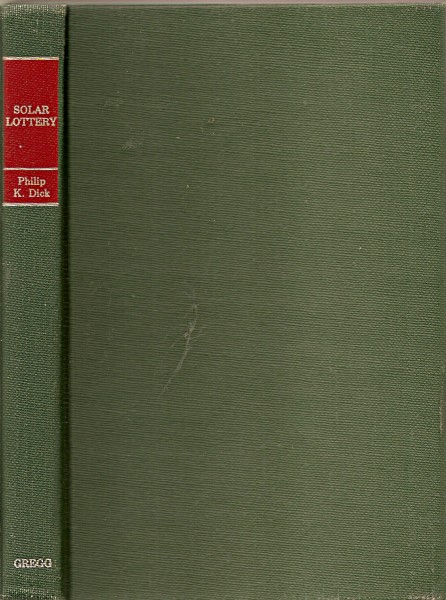
Solar Lottery is a 1955 science fiction novel by American writer Philip K. Dick. It was his first published novel and contains many of the themes present in his later work. It was also published in altered form in the UK as World of Chance. The main story is about a man named Ted Benteley who lives in a strange world, dominated by percentages and the lottery. Lotteries are used to choose the next leader as well as a new assassin, whose job is to try to kill the leader or "Quizmaster". Everybody in society has the opportunity to be selected as a leader or an assassin. Benteley unexpectedly gets chosen to be a member of the committee trying to assassinate the new Quizmaster and he must decide what he is going to do.