More like Throttle
anchored on:thriller & suspensesurvivalcontemporarytensehorrornorth america+1 more
but
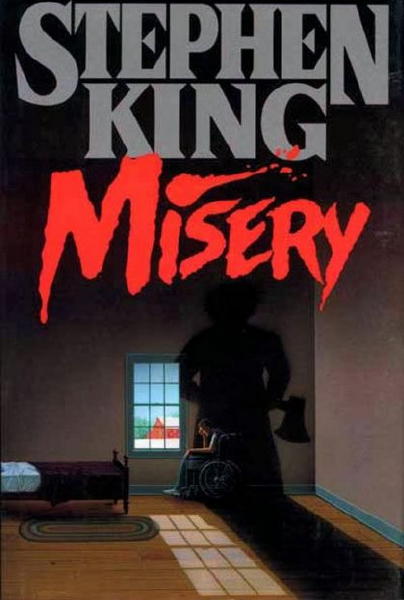
- Misery
Stephen Kingstandalone novel1987
similar bysurvivalcontemporarynorth americatensehorrorthriller & suspensedark
Novelist Paul Sheldon finishes the manuscript that will finally kill off Misery Chastain, the heroine who made his career, when a snowstorm sends his car off a Colorado road. He wakes with both legs shattered, in the care of Annie Wilkes, a former nurse and 'number one fan' with no intention of taking him to a hospital. Annie manages his pain with drugs he comes to depend on, and her moods swing between doting and violent. When she learns Misery doesn't survive his new manuscript, her reaction makes clear Paul isn't just her patient, he's her hostage. A Stephen King novel about a writer at his most devoted fan's mercy.
- Cell
Stephen Kingstandalone novel2006
similar bysurvivalcontemporarynorth americatensehorrordark
In Cell, King taps into readers fears of technological warfare and terrorism. Mobile phones deliver the apocalypse to millions of unsuspecting humans by wiping their brains of any humanity, leaving only aggressive and destructive impulses behind. Those without cell phones, like illustrator Clayton Riddell and his small band of "normies," must fight for survival, and their journey to find Clayton's estranged wife and young son rockets the book toward resolution.
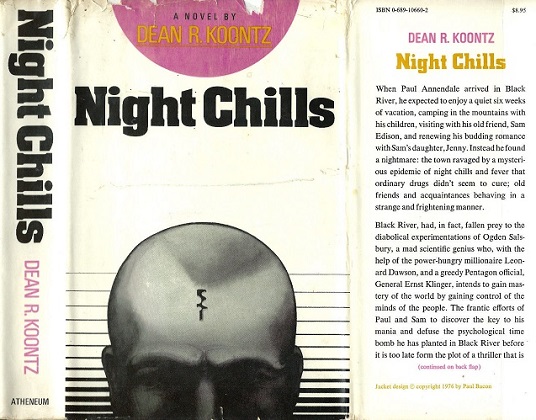
- Night Chills
Dean R. Koontzstandalone novel1976
similar bysurvivalcontemporarynorth americathriller & suspensetensedark+1 more
A single father and his 2 children, along with the father's love interest and her father, stumble upon a plot to perfect mind control via scientific means and must stop it before it is extended to everyone in the world.
- Under the Dome
Stephen Kingstandalone novel2009
similar bysurvivalcontemporarynorth americatensehorrordark
A small town in Maine finds itself suddenly cut off from the outside world by an impenetrable barrier, and the clash of personalities of the trapped people takes its inexorable devastating course.
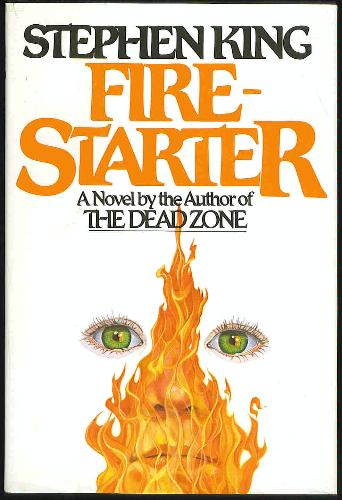
- Firestarter
Stephen Kingstandalone novel1980
similar bycontemporarynorth americatensethriller & suspensedark+2 more
WorldCat: Innocence and beauty ignite with evil and terror... First, a man and a woman are subjects of a top-secret government experiment designed to produce extraordinary psychic powers. Then, they are married and have a child. A daughter. Early on the daughter shows signs of a wild and horrifying force growing within her. Desperately, her parents try to train her to keep that force in check, to 'act normal'. Now the government wants its brainchild back for its own insane ends.
- The Institute
Stephen Kingstandalone novel2019
similar bysurvivalcontemporarynorth americatensehorrorthriller & suspensedark
The Institute is a 2019 American science fiction-horror novel by Stephen King, published by Scribner. The book follows twelve-year-old genius Luke Ellis. When his parents are murdered, he is kidnapped by intruders and awakens in the Institute, a facility that houses other abducted children who have telepathy or telekinesis. The Institute was published on September 10, 2019, and met with generally positive reviews.
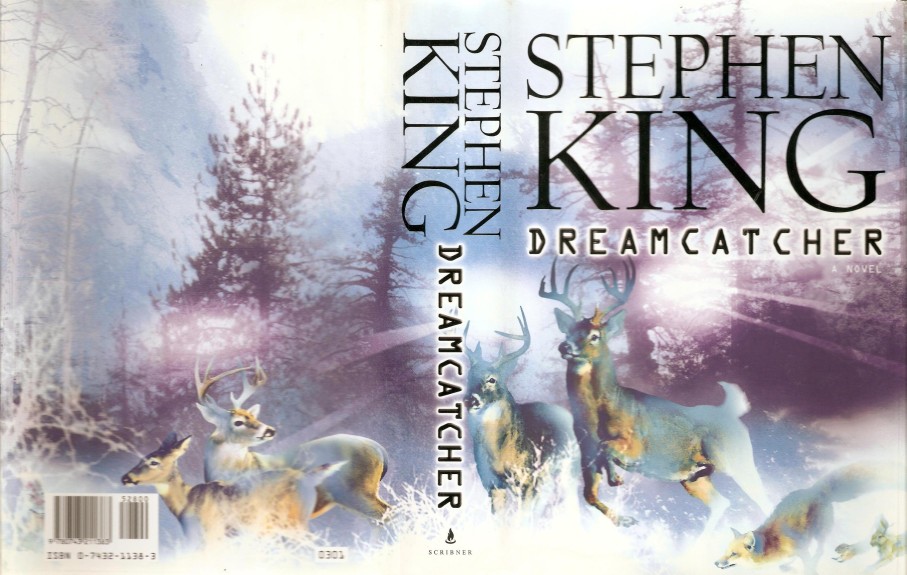
- Dreamcatcher
Stephen Kingstandalone novel2001
similar bysurvivalcontemporarynorth americatensehorrordark
Dreamcatcher is a 2001 science fiction horror novel by American writer Stephen King, featuring elements of body horror, suspense and alien invasion. The book, written in longhand, helped the author recuperate from a 1999 car crash, and was completed in half a year. According to the author in his afterword, the working title was Cancer. His wife, Tabitha King, persuaded him to change the title. A film adaptation was released in 2003.
- Jerusalem's Lot
series3 books1975
similar bycontemporarynorth americahorrordarktense+1 more
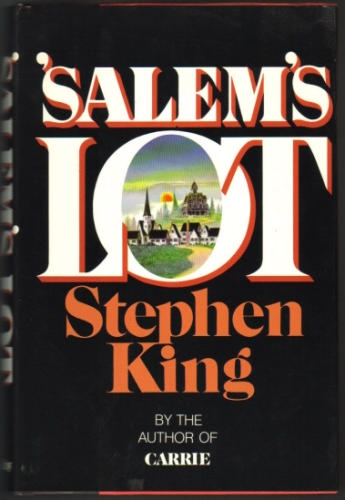
Stephen King's 1975 novel 'Salem's Lot follows writer Ben Mears as he returns to his childhood town of Jerusalem's Lot, Maine, only to discover that its residents are being turned into vampires by a newly arrived stranger. It transplants Gothic vampire horror into a small New England community, tracking that community's collapse under a supernatural siege. It is a single, self-contained novel.
- Red Sky
Nate Southardstandalone novel2010
similar bysurvivalcontemporarynorth americatensehorrorthriller & suspensedark
“When a bank job goes horrifically wrong, career criminal Danny Black leads his crew from El Paso into the deserts of New Mexico in a desperate bid for escape. With a psychopath and a hostage keeping a gutshot redneck company in the back seat, Danny soon finds himself with no choice but to hole up in an abandoned factory, the former home of Red Sky Manufacturing. Surrounded by nothing and no one, Danny thinks he may have finally found some breathing room, a chance to think and to plan. Danny and his crew aren't the only living things in Red Sky, though. Something waits in the abandoned factory's shadows, something horrible and violent. Something hungry. And when the sun drops, it will feast.” — quoted from this book's product page on Amazon.com as of 2013-06-13.
- The Girl Who Loved Tom Gordon
Stephen Kingstandalone novel1999
similar bysurvivalcontemporarynorth americatensehorror
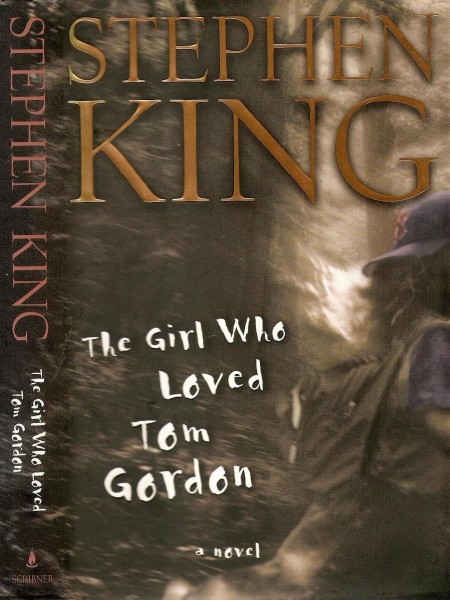
A nine year old girl becomes lost in the Maine forest while on a day hike with her family, and finds the strength to survive in her idolizing of the Red Sox closing pitcher.
- I Am Legend
Richard Mathesonstandalone novel1954
similar bysurvivalnorth americahorrordarktense
The last human survivor of the vampire epidemic has to maintain his defences against their onslaught, while attempting to research the cause and possibly solution to the plague. Robert Neville is the last living man on Earth... but he is not alone. Every other man, woman and child on the planet has become a vampire, and they are hungry for Neville's blood. By day he is the hunter, stalking the undead through the ruins of civilization. By night, he barricades himself in his home and prays for the dawn. How long can a man survive like this?
- Don't Move
Darren Wearmouth & James S. Murraystandalone novel2020
similar bysurvivalcontemporarynorth americatensehorrordark
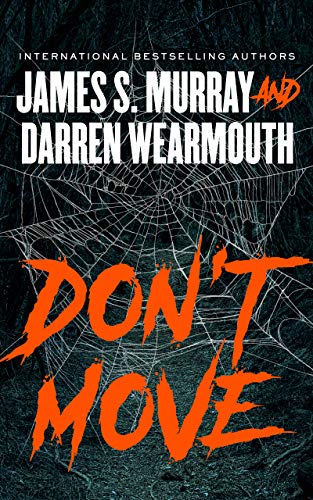
Don't Move is a horror novel written by James S. Murray and Darren Wearmouth. Published in 2020 by Blackstone Publishing, the story follows a widow named Megan Forrester who embarks on a camping trip with members of a local church. After becoming stranded in a West Virginian forest, they find themselves stalked by a giant prehistoric arachnid that hunts by sensing vibrations.
- Eat the Dark
Joe Schreiberstandalone novel2007
similar bysurvivalcontemporarynorth americatensehorrorthriller & suspensedark
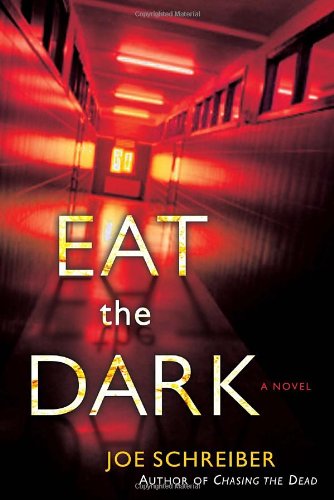
"A harrowing, up-all-night read with delicious scares at every turn. Joe Schreiber knows just what terrifies us, and his masterly skills are on full display."--Tess Gerritsen, author of The Bone Garden"One part noir, one part horror, one part the uniquely talented Joe Schreiber. Dark, chilling, scary--I couldn't put it down."--Peter Abrahams, author of Nerve DamageEscorted from prison under heavy guard, murderous psychopath Frank Snow is scheduled for an emergency brain scan at Tanglewood Memorial Hospital, an institution that is closing its doors after one final night of operation. But Snow has something far more terrifying planned. And once the lights go out, a fiendish game of hide-and-seek begins.Alone in the dark with a homicidal madman who knows their fears, their secrets, and their every move, MRI technician Mike Hughes, his wife and child, and the other unlucky souls trapped in the hospital have no choice but to duel with the devil incarnate. If they play by their stalker's twisted rules, some of them might just survive. But there's more to Frank Snow than the naked eye can see . . . or the sane mind can bear."Eat the Dark is a tight novel of terror. Well written, fast paced, with a grip like a claw. I loved it."--Joe R. Lansdale, author of The Bottoms"Reminiscent of Stephen King's early work, Eat the Dark is a terrifying, claustrophobic, bone-chilling, unputdownable masterpiece of suspense fiction. Human monster Frank Snow is a wonderful creation."--Jason Starr, author of The Follower"I didn't just Eat the Dark--I gorged on it. It's a master class in fast-moving, scary-as-sht storytelling."--Duane Swierczynski, author of Severance PackageFrom the Trade Paperback edition.
- The Running Man
Stephen Kingstandalone novel1982
similar bysurvivalnorth americatensethriller & suspensedark+1 more
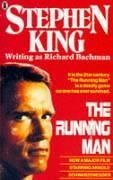
The Running Man is a dystopian thriller novel by American writer Stephen King, first published under the pseudonym Richard Bachman in 1982 as a paperback original. It was collected in 1985 in the omnibus The Bachman Books. The novel is set in a dystopian United States during the year 2025, in which the nation's economy is in ruins and world violence is rising. The story follows protagonist Ben Richards as he participates in the reality show The Running Man, in which contestants win money by evading a team of hitmen sent to kill them.
- Desperation/Regulators
series2 books1996
similar bysurvivalcontemporarynorth americahorrordarktense
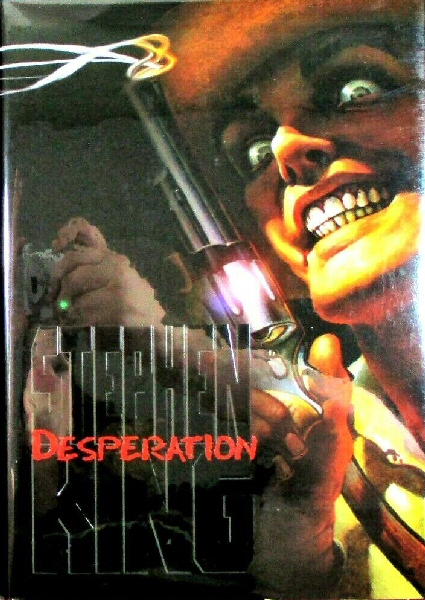
Stephen King published Desperation and The Regulators simultaneously in 1996, the first under his own name and the second under his Richard Bachman pseudonym. The two novels are mirror-universe companions: largely the same cast of characters appears in both, recast into different roles and circumstances, with each book's story driven by the same malevolent supernatural entity, Tak.
- Little Tall Island / In the Path of the Eclipse
series4 books1989
similar bysurvivalnorth americatensecontemporaryhorrordark+1 more
Stephen King set three otherwise separate books on or near the fictional Little Tall Island off the coast of Maine: Gerald's Game, about a woman handcuffed to a bed after her husband's fatal heart attack; Dolores Claiborne, a housekeeper's decades-spanning confession narrated in a single unbroken monologue; and Storm of the Century, a novelization of King's own miniseries about a stranger who arrives during a historic blizzard demanding a terrible price from the town. The first two novels share a real total solar eclipse as a pivotal, connecting event despite having otherwise unrelated plots and characters.
- Phantoms
Dean R. Koontzstandalone novel1983
similar bysurvivalcontemporarynorth americatensehorrordark
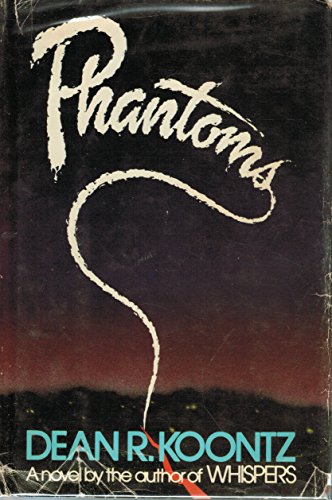
A doctor and her young sister find all the residents of their town have been brutally slaughtered by a giant intelligent synctial organism millions of years old, whose periodic emergences from its underground lair to feed cause events ranging from mass disappearances to mass extinctions. In order to defeat it and save humanity, they must outwit it.
- The Strain
series3 books2009
similar bysurvivalcontemporarynorth americatensehorrordark
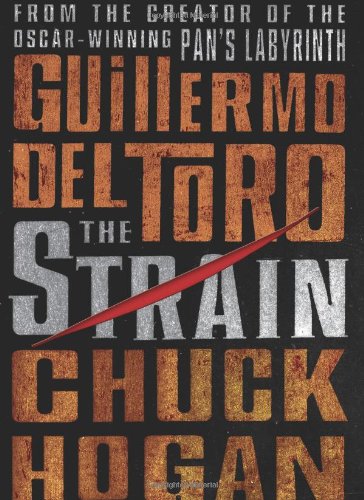
When a Boeing 777 lands at JFK Airport with nearly everyone aboard dead, CDC epidemiologist Ephraim Goodweather is called in and instead uncovers a vampiric plague beginning to spread through New York City. Guillermo del Toro and Chuck Hogan's The Strain trilogy follows Goodweather and Holocaust survivor Abraham Setrakian as they race to stop an ancient vampire, the Master, from subjugating humanity, while Goodweather also tries to keep his own family safe from the outbreak. The story runs across The Strain, The Fall, and The Night Eternal.
- Nightwing
Martin Cruz Smithstandalone novel1977
similar bysurvivalnorth americathriller & suspensetensehorrordark
Nightwing is a 1977 thriller novel by American author Martin Cruz Smith, who adapted it for a 1979 film with the same title directed by Arthur Hiller.
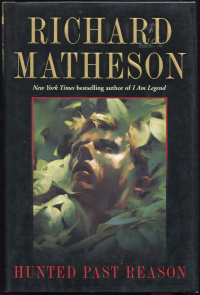
- Hunted Past Reason
Richard Mathesonstandalone novel2002
similar bysurvivalcontemporarynorth americathriller & suspensetensedark
"It was supposed to be just an ordinary camping trip, two old friends hiking through the wilderness toward a remote cabin in the woods of northern California. But the enforced isolation of the hike soon exposes long-hidden rivalries and resentments between the two men. The deeper they get into the primeval wilderness, and the farther from civilization, the greater the tension between them becomes—until the simmering hostility erupts into a terrifying life-or-death battle for survival! – quoted from the back cover of the Forge mass market paperback.
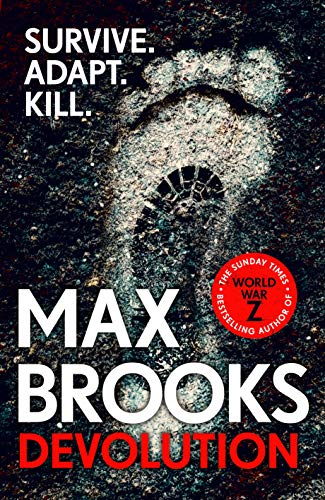
- Devolution
Max Brooksstandalone novel2020
similar bysurvivalcontemporarynorth americatensehorrordark
Devolution: A Firsthand Account of the Rainier Sasquatch Massacre is a fiction book by American author Max Brooks set in the Pacific Northwest. It chronicles the story of a small, isolated community of technology-dependent city dwellers who suddenly are cut off from the rest of the world after a volcanic eruption. In addition to lacking outdoor survival skills and resources, they find themselves under siege by a clan of Bigfoot. The book was optioned by Legendary Entertainment to become a film, around the same time the book began to be sold to the public in June 2020. It was also nominated for Locus Award's Best Horror Novel in 2021.
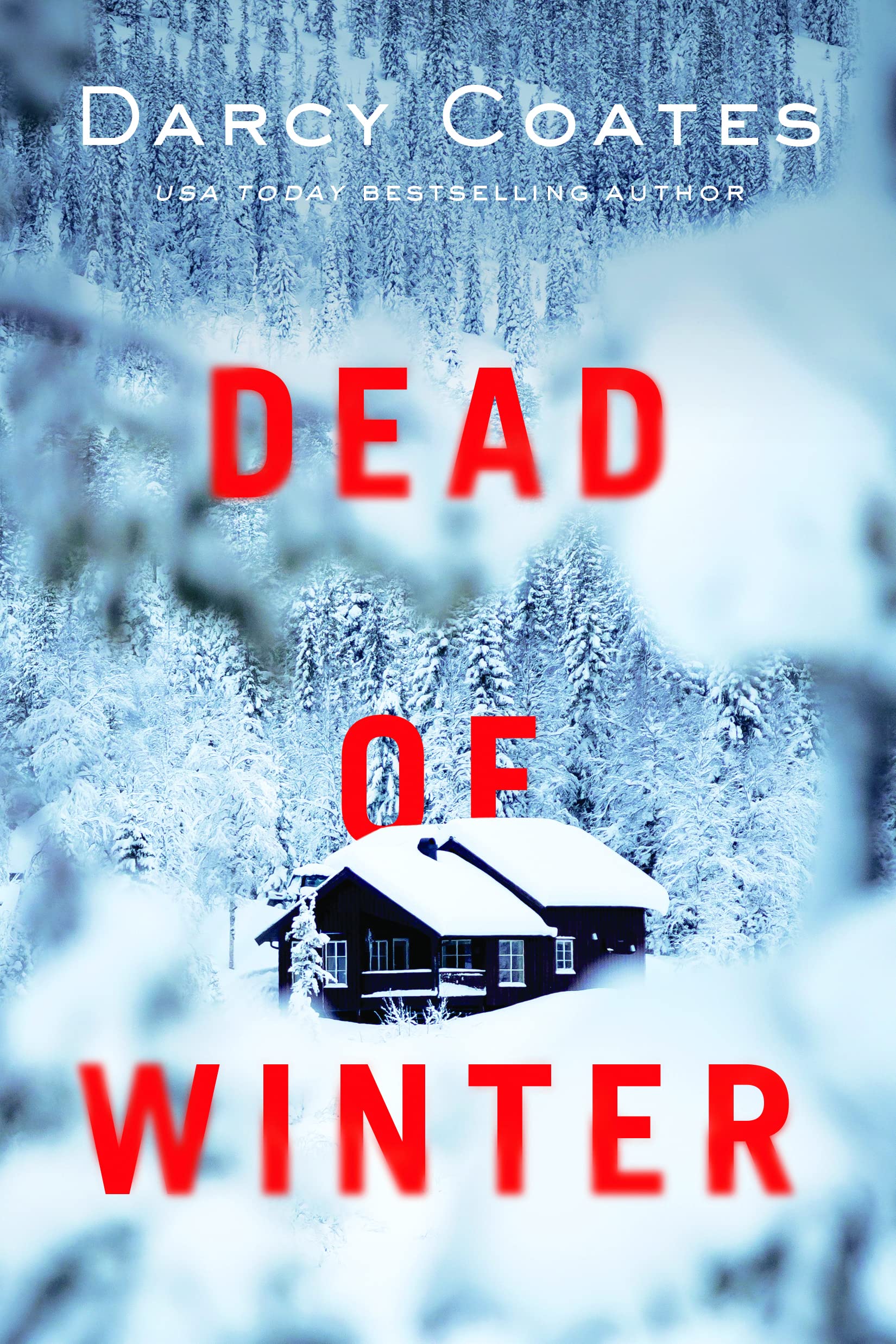
- Dead of Winter
Darcy Coatesstandalone novel2023
similar bysurvivalcontemporarynorth americatensehorrorthriller & suspensedark
When Christa joins a tour group heading deep into the snowy expanse of the Rocky Mountains, she's hopeful this will be her chance to put the ghosts of her past to rest. But when a bitterly cold snowstorm sweeps the region, the small group is forced to take shelter in an abandoned hunting cabin. Despite the uncomfortably claustrophobic quarters and rapidly dropping temperature, Christa believes they'll be safe as they wait out the storm. She couldn't be more wrong. Deep in the night, their tour guide goes missing...only to be discovered the following morning, his severed head impaled on a tree outside the cabin. Terrified, and completely isolated by the storm, Christa finds herself trapped with eight total strangers. One of them kills for sport...and they're far from finished. As the storm grows more dangerous and the number of survivors dwindles one by one, Christa must decide who she can trust before this frozen mountain becomes her tomb.
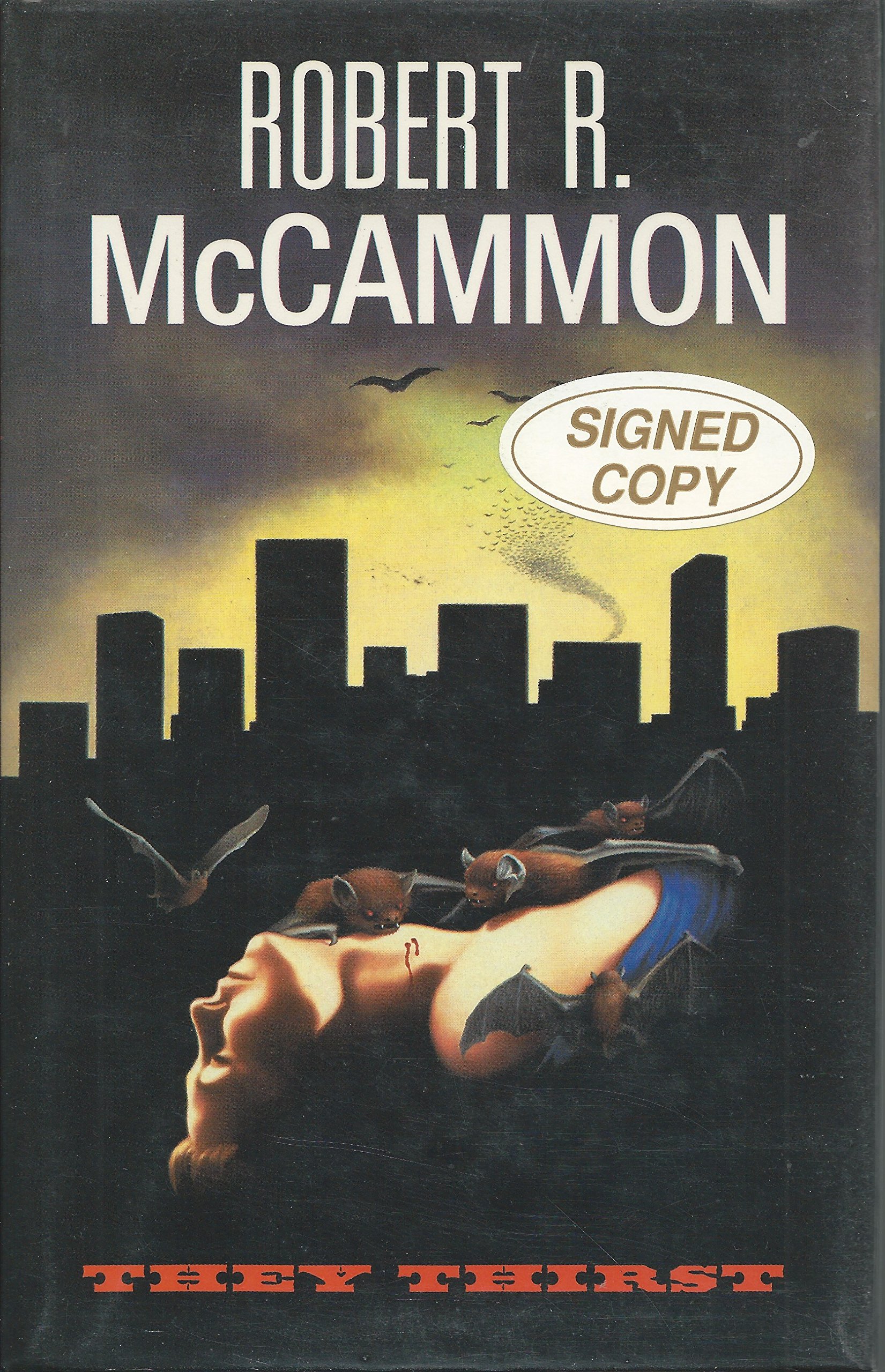
- They Thirst
series2 books1981
similar bysurvivalcontemporarynorth americahorrordarktense
In Robert R. McCammon's They Thirst, an ancient vampire prince arrives in Los Angeles and, in a matter of nights, begins turning the city into a stronghold for the undead, with Disneyland as an eerie staging ground for his conquest. A homicide detective, a reporter, and a small band of ordinary Angelenos piece together what's happening after a chilling séance warning, racing to stop the infestation before it spreads beyond the city. It's a large-canvas, multi-character vampire-apocalypse novel in the vein of McCammon's early horror work.
- The Andromeda Strain
series2 books1969
similar bysurvivalcontemporarytense+3 more
Michael Crichton's 1969 novel The Andromeda Strain follows a team of scientists racing to contain a lethal extraterrestrial microorganism that crash-lands in Arizona, told in the clinical, document-driven style that helped establish the techno-thriller genre. Daniel H. Wilson's authorized 2019 sequel The Andromeda Evolution revisits the same threat five decades later. Together the two books form a two-part outbreak story separated by a fifty-year gap in publication.