More like Through the Breach
anchored on:science fictionspace explorationspacefar futurespace operapirates+2 more
but
- Starman Jones
Robert A. Heinleinstandalone novel1953
similar byspace explorationadventurousfar futurescience fictionspace operaspacespaceshipother star systems
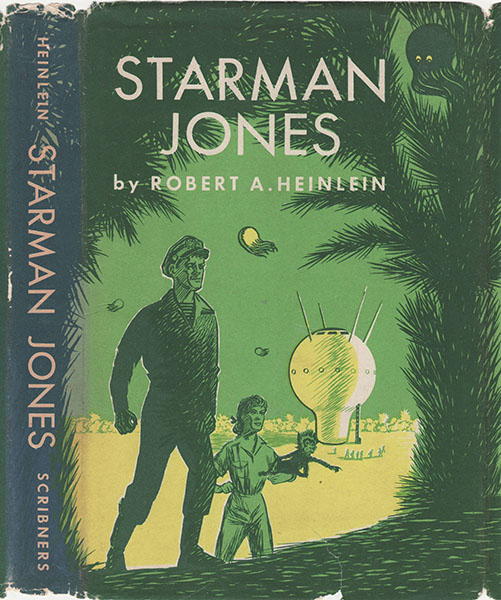
Starman Jones, a 1953 science fiction novel by Robert A. Heinlein, features a farm boy who wants to go to the stars. Charles Scribner's Sons published the book as part of the Heinlein juveniles series.
- Ringworld
series5 books1970
part of Known Space
similar byadventurousfar futurescience fictionspace explorationspace operaspaceother star systems
The Ringworld series is a series of science fiction novels written by American author Larry Niven. It is part of his Known Space series of stories. Its backdrop is the Ringworld, a giant artifact 3 million times the surface area of Earth circling a star. The series is composed of four standalone science fiction novels, the original award-winning book and its three sequels:1970: Ringworld 1979: The Ringworld Engineers 1996: The Ringworld Throne 2004: Ringworld's Children
- Revenger
series3 books2016
similar byadventurousfar futurescience fictionpiratesspace operaspaceother star systems+3 more
- Space Beagle
series5 books1939
completed
similar byfar futureadventurousscience fictionspace explorationspace operatensespacespaceship
The Voyage of the Space Beagle is a 1950 fix-up novel by A. E. van Vogt, stitched together from four previously published pulp stories into a single continuous account of the exploration ship Space Beagle's encounters with a series of dangerous alien life forms. Its episodic, crew-versus-monster structure reads as a loose sequence of adventures rather than one continuous plot.
- Mission to Universe
Gordon R. Dicksonstandalone novel1965
similar byspace explorationadventurousfar futurescience fictionspace operatensespaceother star systems
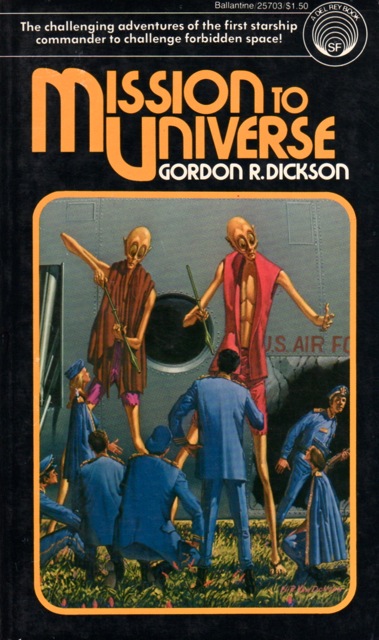
Forever and a day - Brigadier General Benjamin Shore ignores a Presidential command and launches a revolutionary phase ship and its crew on an incredible journey deep into uncharted regions toward Galactic Centerpoint... Investigating one planet after another in search of a habitable world, they encounter: the vicious vine-tigers, weasel-like pre-men, who live on an innocent looking planet lit by the sun of Polaris; the slim Gray-furs, a race possessing fantastic knowledge, yet strangely inept; and the giant conquerers, the Golden People, with their magnificent cities, and their deadly javelin guns... With half his crew lost, General Shore prepares to return to Earth, only to find his most formidable foe aboard the phase ship itself... (from the back cover of the Berkley first edition)
- Vatta's War
series6 books2003
part of Vatta
similar byadventurousfar futurescience fictionspace operatensespaceother star systems+1 more
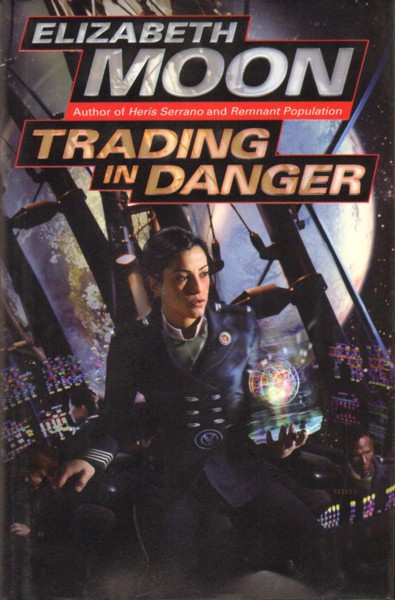
Vatta's War is a science fiction series by American writer Elizabeth Moon, comprising five books: Trading in Danger (2003), Marque and Reprisal, Engaging the Enemy (2006), Command Decision (2007), and Victory Conditions (2008). They have been characterized as military science fiction similar in style to the works of Lois McMaster Bujold, David Weber and Walter Jon Williams.
- Heechee
series19 books1972
completed
similar byfar futurescience fictionspace explorationspace operaspaceother star systems+1 more
The Heechee Saga, also known as the Gateway series, is a series of science fiction novels and short stories by Frederik Pohl. The Heechee are an advanced alien race that visited the Solar System hundreds of millennia ago and then mysteriously disappeared. They left behind bases containing artifacts, including working starships, which are discovered and exploited by humanity.
- The Final Architecture
series6 books2021
similar byadventurousfar futurescience fictionspace explorationspace operatensespaceother star systems
The Final Architecture is a series of science fiction novels by British writer Adrian Tchaikovsky. It contains the books Shards of Earth, Eyes of the Void, and Lords of Uncreation. The series focuses on a group of humans fighting against the mysterious Architects, who destroy inhabited planets. The series has been well-received critically, with Shards of Earth winning the 2021 BSFA Award for Best Novel. The entire series was a finalist for the 2024 Hugo Award for Best Series.
- Moties
series4 books1974
part of CoDominium
similar byfar futurescience fictionspace operaspaceother star systems+3 more
Larry Niven and Jerry Pournelle's The Mote in God's Eye (1974) depicts humanity's first contact with an alien species, the Moties, set within the far-future interstellar setting of Pournelle's codominium future history. The Gripping Hand continues that first-contact crisis years later, and Outies, written by J. R. Pournelle, carries the story forward into a new generation. Together the three books trace an escalating encounter between human and Motie civilizations within the codominium universe.
- Pip & Flinx
series18 books1972
part of Humanx Commonwealth
similar byadventurousfar futurescience fictionspace operaspaceother star systems+1 more
The Pip & Flinx novels follow Flinx, a young man with an unusual, mysterious origin, and his ever-present animal companion Pip, across Alan Dean Foster's Humanx Commonwealth setting. Beginning with The Tar-Aiym Krang (1972) — chronologically the second entry, since Foster later filled in Flinx's earlier life — the series grew to fifteen novels published between 1972 and 2017, mixing planetary adventure with a slowly unfolding personal mystery.
- Chanur
series7 books1982
part of Alliance-Union Universe
similar byadventurousfar futurescience fictionspace operatensespacespaceshipother star systems
The Chanur novels are a series of five science fiction novels, forming three separate stories, written by American author C. J. Cherryh and published by DAW Books between 1982 and 1992. The first novel in the series is The Pride of Chanur (1982), which was nominated for both the Hugo and Locus Awards in 1983. The Pride of Chanur, originally a stand-alone story, was followed by the Chanur's Venture trilogy, Chanur's Venture (1984), which was shortlisted for a Locus Award in 1985; The Kif Strike Back (1985) and Chanur's Homecoming (1986). These were followed by a later sequel, Chanur's Legacy (1992). The five novels were also published in two omnibus editions: the first three in The Chanur Saga in 2000 and the next two in Chanur's Endgame in 2007.
- Uplift Universe
universe13 books1980
Start hereUplift · Start here
similar byfar futurescience fictionadventurousspace operaspaceother star systems+2 more
No species, the Galactics insist, ever climbs to sapience alone. For a billion years the elder races have "uplifted" their chosen clients — reshaping some promising animal, gene by patient gene, into a thinking being, then binding it through long ages of indenture. Patron lifts client; client one day becomes patron; and every lineage traces back through the vast Galactic Library to the vanished Progenitors who began it all. Then a ragged band of primates arrives at the stars with no patron to claim them — wolflings, self-made, an affront to a hundred thousand years of law — and worse, these humans have already started uplifting neighbors of their own: the neo-dolphins and neo-chimpanzees of Earthclan. David Brin builds this galaxy across two trilogies. The first — Sundiver, the Hugo- and Nebula-winning Startide Rising, and the Hugo-winning The Uplift War — sends an expedition into the Sun, then follows the dolphin-crewed survey ship Streaker as it flees a discovery that sets fanatical star-clans at war, and a chimp-led resistance on an invaded colony world. The second sequence, Uplift Storm — Brightness Reef, Infinity's Shore, Heaven's Reach — descends to Jijo, a forbidden world where six fallen races hide as illegal settlers, and draws every loose thread toward a reckoning. Short fiction fills the margins. This is space opera with an ecologist's conscience: teeming with invented biologies, wry cross-species banter, and real unease about what we owe the minds we make. Begin with Startide Rising — the saga's beating heart, and readable on its own — or take Sundiver first and read straight through in publication order.
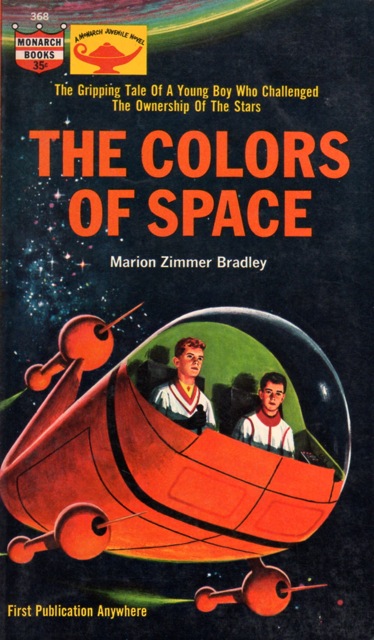
- The Colors of Space
Marion Zimmer Bradleystandalone novel1963
similar byadventurousfar futurescience fictionspace explorationspace operaspaceother star systems
The Lhari seem peaceful and friendly, but they go to some lengths to protect their monopoly on faster-than-light travel. One young man is sent to discover their secrets.
- Arcot, Morey and Wade
series7 books1930
completed
similar byadventurousfar futurespace explorationscience fictionspace operaspaceother star systems+1 more
Arcot, Morey and Wade collects John W. Campbell Jr.'s pulp-era stories, starting with The Black Star Passes, a fixup built from stories originally serialized in Amazing Stories during the early 1930s. The books follow the same trio of scientist-adventurers through escalating, gadget-driven space adventures typical of early Golden Age SF, continuing through Islands of Space and Invaders from the Infinite. It's foundational pulp science fiction, heavier on speculative engineering than characterization by later standards.
- Cosmic Engineers
Clifford D. Simakstandalone novel1950
similar byspace explorationadventurousfar futurescience fictionspace operaspace
Cosmic Engineers is a science fiction novel by American author Clifford D. Simak. It was published in 1950 by Gnome Press in an edition of 6,000 copies, of which 1,000 were bound in paperback for an armed forces edition. The novel was originally serialized in the magazine Astounding in 1939.
- Vatta
universe10 books2003
Start hereVatta's War · Start here
similar byfar futurescience fictionadventurousspace operatensespaceother star systems+1 more
Get kicked out of the Academy and the family still hands you a ship. That is the arithmetic Kylara Vatta lives by. Born into Vatta Transport, Ltd. — a dynasty of interstellar traders who reckon their honor in delivered cargo and honored contracts — Ky wants a soldier's commission and gets a merchant hull instead. Then someone starts murdering her relatives and burning the ledgers, and the daughter learns that a trade fleet, armed and angry, is its own kind of war. This is military science fiction run on a merchant's books. The core cycle, Vatta's War, moves in five volumes — Trading in Danger, Marque and Reprisal, Engaging the Enemy, Command Decision, Victory Conditions — as piracy, a sabotaged faster-than-light communications network, and a scattered family push Ky from cautious captain to fleet commander. The later duology Vatta's Peace (Cold Welcome, Into the Fire) drops her, older and decorated, into a colder survival ordeal on her own homeworld. Moon writes clean, competent, procedural: supply lines and boarding actions, chains of command, the cost of a signature on a bad contract. Expect capable women, hard decisions costed to the last credit, and space combat that respects physics and paperwork alike. Begin at the beginning — Trading in Danger — and read straight through in publication order; the arc is chronological and cumulative, no side doors required.
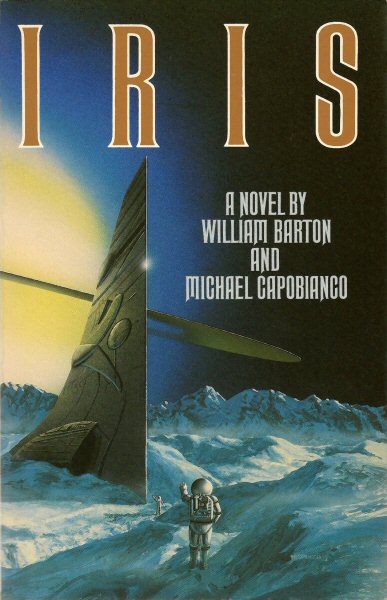
- Iris
William Barton & Michael Capobiancostandalone novel1990
similar byspace explorationadventurousfar futurescience fictionspace operaspaceother star systems+2 more
From the front flap of the Doubleday first edition: "From a future Earth ravaged by economic collapse to a rogue planet and its three enigmatic moons, from the familiarity of a colony ship to the heart - and mind - of a totally alien world, William Barton and Michael Capobianco take both the reader and the crew of the Deepstar on a daring odyssey of extraterrestrial exploration and dazzling alien contact. When the gas giant Iris approaches our solar system, the ten-member crew of the Deepstar, originally intending to colonize Titan, decide to change their course and make their new home on Ocypete, one of Iris's moons. It is only when they begin to explore their new surroundings that they discover the Artifact - an ancient alien spacecraft, empty, deserted, but still operational. As the group seeks an explanation for the mysterious ship, they find a frightening new reason to band together when one of their number is suddenly telepathically absorbed by the immense, living alien computer buried at the heart of Iris itself. The discoveries they make - and the battle they must fight - take them on a journey through inner and outer space, through the intricate mazes of the mind and the delicate pathways of the heart."
- Uplift
series5 books1980
part of Uplift Universe
similar byfar futurescience fictionadventurousspace operaspaceother star systems+2 more
David Brin's Uplift trilogy opens with Sundiver, sending human explorers into the Sun itself, then follows a dolphin-crewed starship on the run from hostile aliens in Startide Rising and a fight over the colony world Garth in The Uplift War. The books sit inside Brin's wider Uplift Universe, built on the idea that spacefaring "patron" species genetically engineer younger "client" species into full sapience, with humanity an anomaly that reached the stars without a patron of its own.
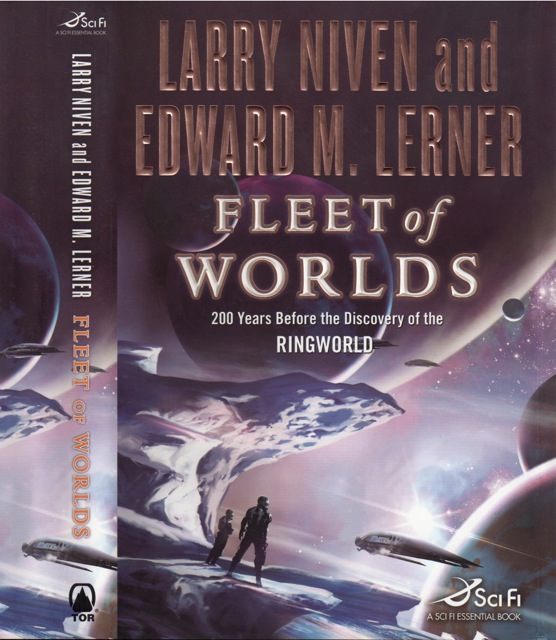
- Fleet of Worlds
series5 books2007
part of Known Space
similar byfar futurescience fictionspace explorationspace operaspaceother star systems+2 more
Fleet of Worlds opens a run of Known Space prequels co-written by Larry Niven and Edward M. Lerner, centered on the liberation of the human colony New Terra from the control of the Pierson's Puppeteers — the famously cowardly aliens who steer their fleet of five worlds away from any hint of danger. The series introduces a new Known Space species, the Gw'oth, across its run and eventually catches up to and continues past the original Ringworld novel in its fifth book, Fate of Worlds.
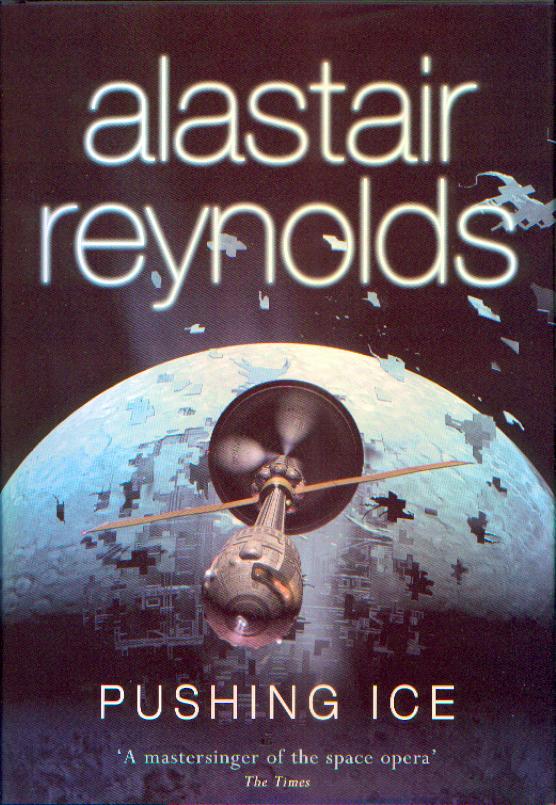
- Pushing Ice
Alastair Reynoldsstandalone novel2005
similar byspace explorationfar futurescience fictiontensespacespaceshipother star systems+1 more
When Saturn's moon Janus suddenly takes off into interstellar space, an ice mining spaceship sent to investigate finds itself swept along into distant space until it ends up trapped in a gigantic alien structure, wherein the crew must prepare to reside for the foreseeable future.
- Tunnel in the Sky
Robert A. Heinleinstandalone novel1955
similar byadventurousfar futurescience fictionspace explorationtenseother star systems+1 more
As the final test of a survivalist/explorer class, teenagers are dumped on an alien planet to use their skills while awaiting pickup. But something has gone wrong, and they find they are on their own.
- Old Man's War
series16 books2005
similar byadventurousfar futurescience fictionspace operaspaceother star systems+1 more
The Old Man's War series is a series of science fiction novels by John Scalzi. The first book in the series, Old Man's War, was first published in 2005 by Tor Books, and was nominated for the Hugo Award for Best Novel in 2006. In 2026 it was a finalist for the Hugo Award for Best Series.
- Nova
Samuel R. Delanystandalone novel1968
similar byadventurousfar futurescience fictionspace operaspaceother star systems+1 more
Nоva is a science fiction novel by American writer Samuel R. Delany published in 1968. The plot concerns the spaceship captain Lorq Von Ray's search for a nova, which will produce the essential power source Illyrion, and his vendetta with the Red family, who seek to kill him. Nominally space opera, it explores the politics and culture of a future where cyborg technology is universal, yet making major decisions can involve using tarot cards. It has strong mythological overtones, relating to both the Grail Quest and Jason's quest for the Golden Fleece.
- The Stars My Destination
Alfred Besterstandalone novel1956
similar byadventurousfar futurescience fictionspace operaspaceother star systems+1 more
When a passing spaceship refuses to rescue the lone survivor from the drifting wreck of another ship, he dedicates his life to discovering who made that decision and exacting his revenge, in the process altering human history and his own character.