More like Through the Ether
but
- Stephen King multiverse
universe46 books1967
Start hereThe Gunslinger · Start here
similar by+3 more
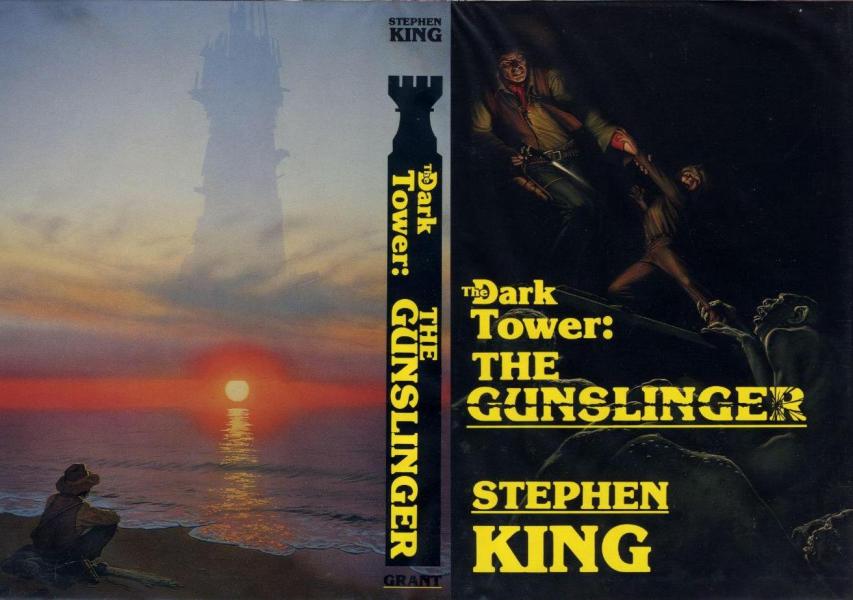
The man in black fled across the desert, and the gunslinger followed. So begins the long walk of Roland Deschain, last of an order of knight-errant pistoleers, across a land that has "moved on" — where the compass points drift, dead machines rot toward sentience, and the weave of what's real wears thin. His quest is the Dark Tower itself: a spire standing at the hub of every world that exists, the linchpin that holds all of them back from ruin. Roland's road runs eight volumes, from The Gunslinger through the closing Dark Tower, with the later, interleaved tale The Wind Through the Keyhole folding a story-within-a-story back into his youth. Along the way he draws a ka-tet — a fellowship bound by fate, not choosing — through doorways between worlds: a heroin-shackled New Yorker, a woman of two minds, a boy who dies twice. The Tower is also the secret axle around which the wider shelf of King's work turns; threads from The Stand, 'Salem's Lot and beyond wind quietly toward it. Expect a mongrel of Western, high fantasy, horror and decayed science fiction, told in a dusty, incantatory dialect all its own — ka, thankee-sai, the world that has moved on. This is King at his most mythic and most personal, a decades-spanning circle that rewards a patient reader. Begin at the beginning: The Gunslinger, then walk forward in publication order. There are other worlds than these — but this door opens first.
- Kairos
series11 books1962
completed
similar by+3 more
The Time Quintet is a science fantasy series of five young adult novels written by American author Madeleine L'Engle and made up of A Wrinkle in Time (1962), A Wind in the Door (1973), A Swiftly Tilting Planet (1978), Many Waters (1986), and An Acceptable Time (1989).
- Dracula
universe144 books1897
Start hereDracula · Start here
"Come freely. Go safely. And leave something of the happiness you bring" — so the Count greets his guest at the threshold of the Carpathians, and the great door shuts behind. Bram Stoker's Dracula (1897) is the wellspring of the modern vampire: the account of a centuries-old Transylvanian nobleman who quits his crumbling castle for the crowded lodging-houses of London, and the handful of ordinary people — a young solicitor, a doctor of the mad, a professor of stranger learning — who must piece together what he is before he makes the whole city his fold. It is told wholly in fragments: journal entries, letters, telegrams, ships' logs, phonograph cylinders, each hand recording only its own sliver of the dark. Around that single novel a whole crypt of continuations has grown, raised by many writers across a century. Fred Saberhagen's Dracula Sequence hands the Count the microphone, retelling the old events from his own wry, aggrieved lips and following him into later intrigues. Robert Lory's brisk 1970s Dracula Horror Series revives him as a reluctant weapon turned against fouler things; Peter Tremayne's trilogy reaches back along his bloodline; and further sequels, a Quincey Morris spin-off, and Dracula's Children carry the shadow onward. This is a loose shared world built upon a public-domain figure, not one governed continuity — each author remakes him as villain, antihero, or sympathetic narrator. Begin, always, with Stoker's original; the letters and the mounting dread stand entirely on their own. From there follow whichever door tempts you — Saberhagen's The Dracula Tape for the monster's own confession, Lory or Tremayne for tales that never glance back at the Borgo Pass again.
- Rosemary Reilly
series2 books1967
completed
similar bytense+3 more
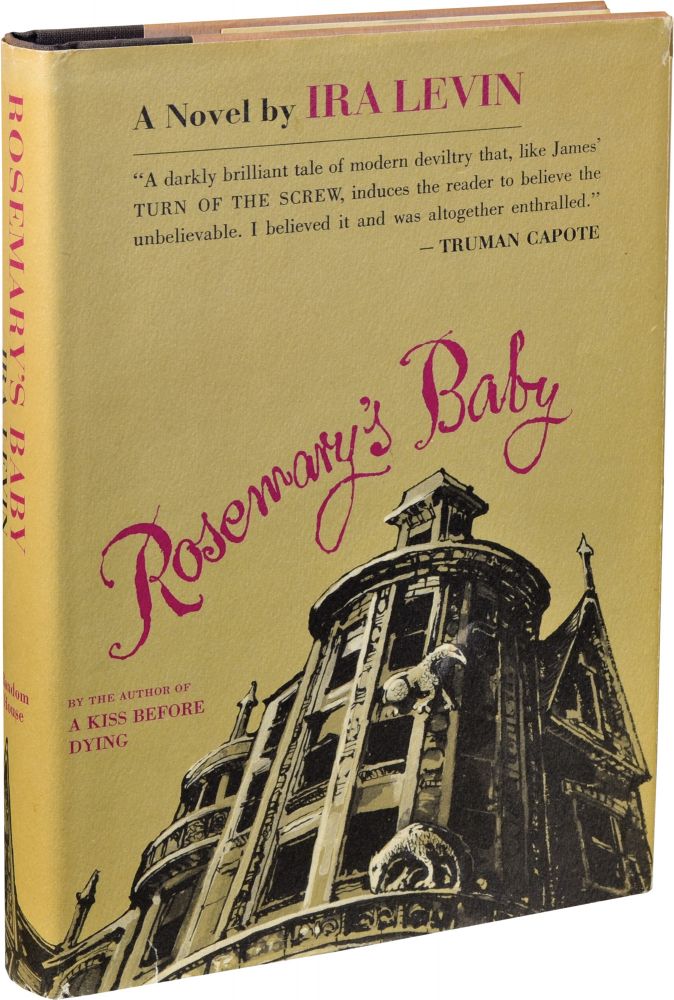
Rosemary's Baby follows a young wife in a Gothic Manhattan apartment building who grows increasingly convinced that her elderly neighbors, and even her own husband, are part of a conspiracy surrounding her pregnancy. Ira Levin returned to the character thirty years later in the 1997 sequel Son of Rosemary. Together the two novels form a short, self-contained horror series about faith, control, and motherhood.
- His Dark Materials Universe
universe13 books1995
Start hereHis Dark Materials · Start here
similar byfantasy+1 more
In a world like ours and unlike it, every human soul walks outside the body in the shape of an animal — a daemon, who speaks, who cannot be lied to, and who settles into one fixed form only when childhood ends. This is the country of His Dark Materials: a company of parallel worlds across which an invisible dust of consciousness drifts down upon the waking mind; where a Church that calls itself the Magisterium would sooner sever a child's soul than let that Dust be understood; and where a golden instrument, the alethiometer, answers true questions for anyone with the patience to read it. Philip Pullman's design stands in two trilogies and a scatter of shorter tales. His Dark Materials — Northern Lights (published in America as The Golden Compass), The Subtle Knife, and The Amber Spyglass — carries Lyra Belacqua from the rooftops of a shadow Oxford across the borders between worlds. The Book of Dust returns to that same territory: La Belle Sauvage looks back to Lyra as an infant carried through a great flood, while The Secret Commonwealth follows her grown and less certain into adulthood, with a concluding volume closing the arc. Around them sit slim companion books — Lyra's Oxford, Once Upon a Time in the North, Serpentine — and Nicholas Wright's stage adaptation, made with Pullman's blessing. The register is grave and luminous at once, its title lifted from Milton and its quarrel drawn from Blake: a story that takes the side of curiosity, love, and the physical world against any authority that would forbid them. It reads as adventure — armoured bears, aeronauts, knife-cut windows between skies — yet reasons like philosophy. Begin with Northern Lights / The Golden Compass and read the first trilogy through before turning to The Book of Dust, which deepens everything the first has already made you feel.
- The Dresden Files
series56 books2000
similar bycontemporary+3 more
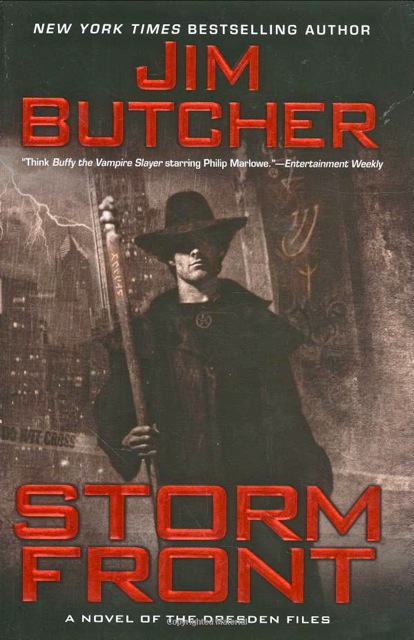
The Dresden Files is an urban fantasy series written by American author Jim Butcher. The novels are narrated from the first-person perspective of Harry Dresden, a private detective and wizard, as he investigates supernatural disturbances in contemporary Chicago. The first entry, Storm Front, was published in 2000 by Roc Books.
- Otherworld (Kelley Armstrong)
series100 books1996
similar byour worldcontemporary+2 more
Women of the Otherworld is Kelley Armstrong's long-running urban fantasy series about werewolves, witches, sorcerers, and other supernatural beings trying to pass as ordinary people in the contemporary world, told across thirteen novels plus assorted novellas published between 2001 and 2012. Each book tends to follow a different member of this hidden community while slowly building a shared, continuing world.
- Rivers of London
series32 books2011
similar bycontemporary+2 more
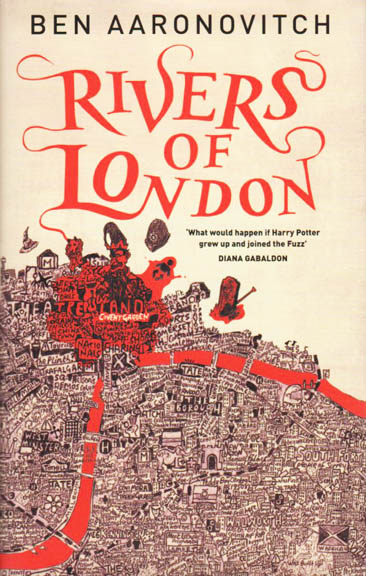
The Rivers of London series is a series of urban fantasy novels by English author Ben Aaronovitch, and comics/graphic novels by Aaronovitch and Andrew Cartmel, illustrated by Lee Sullivan.
- Richard Forthrast
series2 books2011
similar byour world+3 more
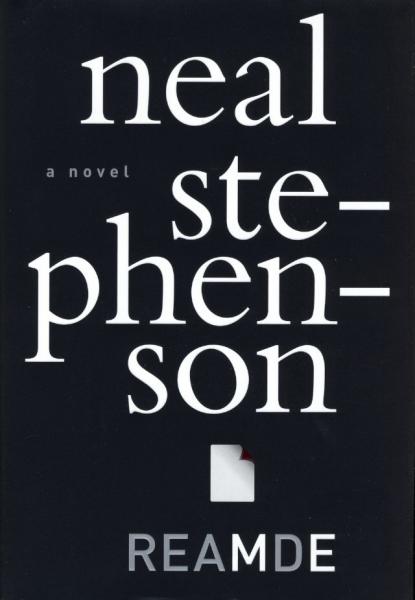
Neal Stephenson's Richard 'Dodge' Forthrast novels open with Reamde, a globe-spanning thriller that starts when ransomware inside an MMORPG economy pulls Richard's extended family into a real-world hostage crisis involving hackers, jihadists and Russian mobsters. The sequel Fall; or, Dodge in Hell shifts registers entirely, following Richard's digitally preserved mind after death into an afterlife simulation built from his scanned brain. The two books share a protagonist and family but differ sharply in genre and scale.
- The Hollows
series39 books2004
similar bycontemporary+2 more
The Hollows is a series of urban fantasy novels by Kim Harrison, originally published by HarperCollins Publishers and by Ace Books since 2020. The series includes 18 novels, numerous novellas and short stories, two graphic novels, and one compendium resource; a 19th novel, Absolute Demon, is forthcoming in 2027.
- Laundry Files
series22 books2004
similar bycontemporary+1 more
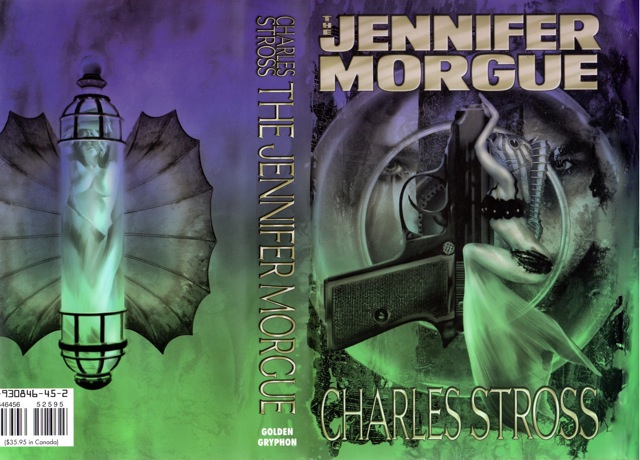
The Laundry Files is a series of novels by British writer Charles Stross. They mix the genres of Lovecraftian horror, spy thriller, science fiction, and workplace humour. Their main character for the first five novels is "Bob Howard", a one-time I.T. consultant turned occult field agent. Howard is recruited to work for the Q-Division of SOE, otherwise known as "the Laundry", the British government agency which deals with occult threats. "Magic" is described as being a branch of applied computation (mathematics), therefore computers and equations are just as useful as, and perhaps more potent than, classical spellbooks, pentagrams, and sigils for the purpose of influencing ancient powers and opening gates to other dimensions. These occult struggles happen largely out of view of the public, as the Laundry seeks to keep the methods for contacting such powers under wraps. There are also elements of dry humour and satirisation of bureaucracy.
- Meredith Gentry
series10 books2000
similar byour worldcontemporary+2 more
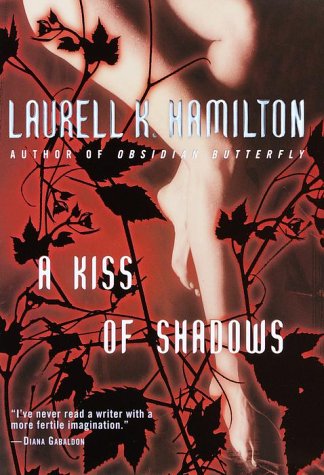
The Merry Gentry series is a series of urban fantasy novels by New York Times bestselling author Laurell K. Hamilton. The series is told through the lens of the titular character Meredith "Merry" Gentry, a faerie princess turned private investigator in a world where faeries exist and are known to the general public. The first book in the series, A Kiss of Shadows, was released by Del Rey on October 3, 2000. There are currently nine books in the series.
- Spiderwick
universe17 books2003
Start hereSpiderwick Chronicles · Start here
similar byfantasycontemporary+1 more
Do not read this book. So warns the note bound into Arthur Spiderwick's Field Guide to the Fantastical World Around You — which is exactly why Jared Grace opens it, and why the hidden world opens onto him. Move into a crumbling family estate with your mother, your twin brother, and your fencing-champion sister, and you may find the walls already occupied: a testy house brownie, goblins with a taste for cats, and an ogre named Mulgarath who wants the Guide for himself. Holly Black writes and Tony DiTerlizzi draws this small, densely illustrated world across two linked cycles. The Spiderwick Chronicles runs five slim volumes — The Field Guide, The Seeing Stone, Lucinda's Secret, The Ironwood Tree, and The Wrath of Mulgarath — a single mounting emergency told at a breathless clip. Beyond the Spiderwick Chronicles carries the danger south to swampy Florida across three more books, where new children meet giants, nixies, and a wyrm stirring underground. The companion Field Guide itself catalogues every sprite and troll in loving naturalist detail. The pleasure here is the specimen-collector's: faerie treated as a taxonomy to be sketched, labelled, and survived, cozy domestic scale shot through with real teeth. Begin with The Field Guide and read straight through in publication order — the five originals first, then the Beyond trilogy. Slender enough to finish in an afternoon, sharp enough to send you checking the cupboard afterward.
- House of Night
series20 books2007
similar byfantasycontemporary+1 more
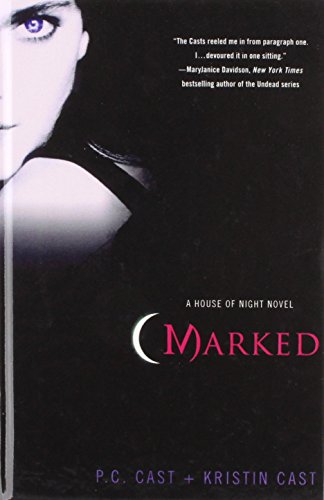
House of Night is a series of young adult vampire-themed fantasy novels by American author P. C. Cast and her daughter Kristin Cast. It follows the adventures of Zoey Redbird, a 16-year-old girl who is "marked", becomes a fledgling vampyre and is required to attend the House of Night boarding school in Tulsa, Oklahoma. Books in the series have been on the New York Times Best Seller list for 63 weeks and have sold over seven million copies in North America, and more than ten million books worldwide, in 39 countries.
- Pym
series5 books1838
similar by+3 more
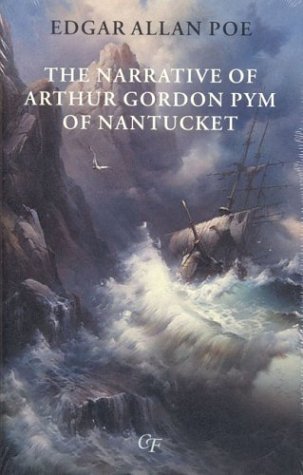
Edgar Allan Poe's The Narrative of Arthur Gordon Pym of Nantucket (1838), his only complete novel, sends a young stowaway through shipwreck, mutiny, and cannibalism toward an increasingly strange voyage to the South Pole that breaks off on a mysterious, unexplained image. Jules Verne wrote an unauthorized 1897 sequel, An Antarctic Mystery, resolving Poe's cliffhanger in more rationalist terms, while Mat Johnson's 2011 novel Pym uses Poe's original as the springboard for a satirical modern story about race.
- Spiderwick Chronicles
series14 books2003
part of Spiderwick
similar byfantasycontemporary+1 more
Holly Black and Tony DiTerlizzi's Spiderwick Chronicles follow the three Grace children after they move into the run-down Spiderwick Estate and discover a hidden field guide to the fantastical creatures living around them. Their new knowledge draws them into escalating conflicts with dangerous faeries, building to a confrontation with the shapeshifting ogre Mulgarath, who wants the guide's secrets to conquer both the human and faerie worlds.
- The Blue Ant Trilogy
series3 books2003
similar bycontemporary+2 more
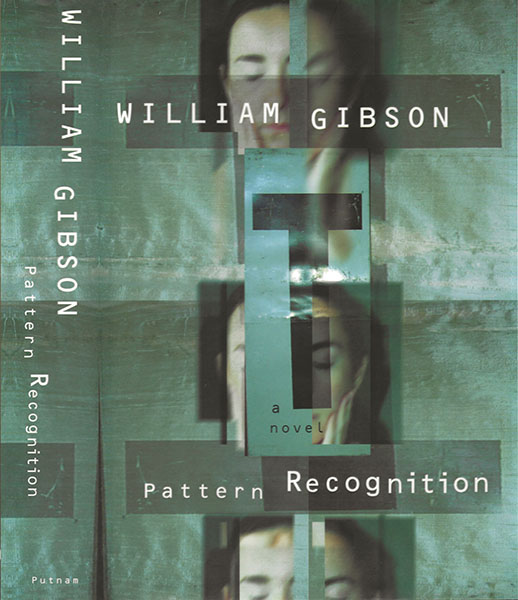
Hubertus Bigend is a fictional character appearing in the third trilogy of novels of science fiction and literary author William Gibson. Bigend is the antihero of Gibson's Pattern Recognition (2003), Spook Country (2007) and Zero History (2010). In an interview Gibson says "I've always had a sense of Bigend as someone who presents himself as though he knows what's going on, but who in fact doesn't. It's just my sense of the subtext of the character: he's bullshitting himself, at the same time as he's bullshitting all of us."
- October Daye
series42 books2009
similar bycontemporary+2 more
October Daye is a New York Times Best Selling series of urban fantasy novels by American author Seanan McGuire. They follow October "Toby" Daye, a half-fae changeling and reluctant hero of the realm.
- Rose Madder
Stephen Kingstandalone novel1995
similar byfantasytenseour worldcontemporary
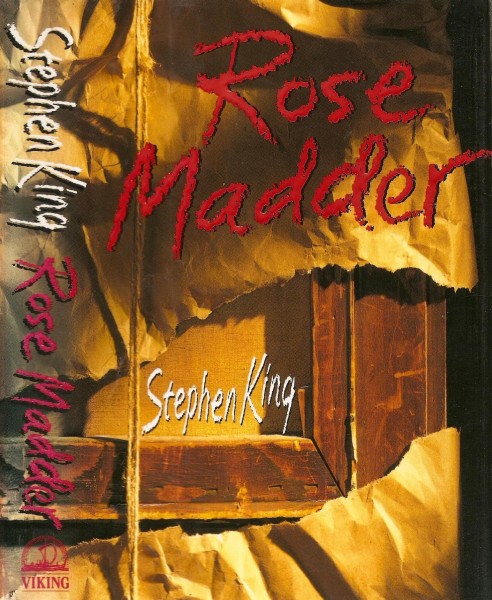
Rose Madder is a horror/fantasy novel by American writer Stephen King, published in 1995. It deals with the effects of domestic violence and, unusually for a King novel, relies for its fantastic element on Greek mythology. In his memoir, On Writing, King states that Rose Madder and Insomnia are "stiff, trying-too-hard novels."
- Carpathian
series48 books1999
similar byour worldcontemporary+1 more
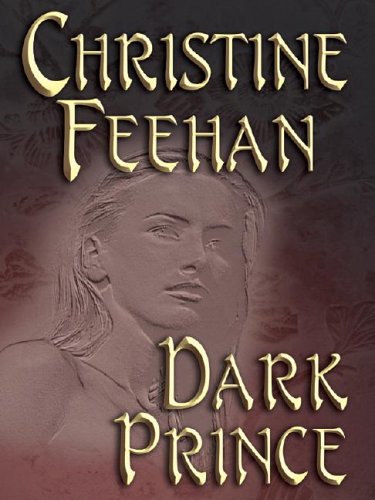
Carpathian is Christine Feehan's long-running paranormal romance series about an ancient, near-immortal species who slowly lose color and feeling until they find a lifemate who restores both. Starting with Dark Prince in 1999, each book pairs a different Carpathian hunter with a human or gifted heroine, moving between the Carpathian Mountains and modern settings worldwide as the couple confronts vampires and other supernatural threats. It has grown to dozens of novels and novellas and is still being added to.
- Johnny Dixon and the Professor
series13 books1983
similar bycontemporary+2 more
Johnny Dixon is a fictional American boy featured in a series of twelve children's gothic horror novels, 1983 to 1999, written by John Bellairs or his successor Brad Strickland. In each book, 12-year-old Johnny and his group of friends face and overcome evil forces usually bent on ending the world. Alternatively, Johnny Dixon is the book series.
- The Secrets of the Immortal Nicholas Flamel
series15 books2007
similar byfantasyour worldcontemporary
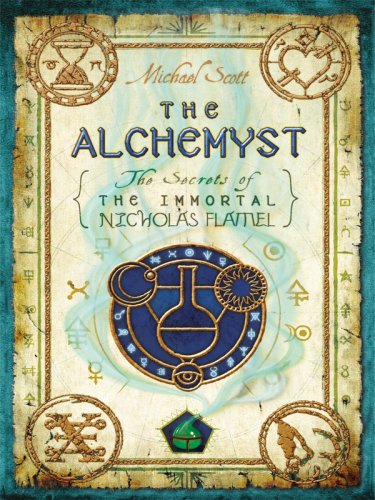
The Secrets of the Immortal Nicholas Flamel is a series of six fantasy novels written by Irish author Michael Scott, completed in 2012. The first book in the series, The Alchemyst, was released in 2007, and the sequels were released at the rate of one per year, concluding with The Enchantress in 2012. The cover artist for the series is Michael Wagner.
- Southern Reach Trilogy
series4 books2014
similar byour worldcontemporary+2 more
The Southern Reach Series is a series of novels by the American author Jeff VanderMeer first published in 2014—Annihilation, Authority, Acceptance, and Absolution. The series takes its name from the secret agency that is central to the plot. In 2013, Paramount Pictures bought the movie rights for the series, and a film adaptation of Annihilation was made with Alex Garland as writer-director. The film was released in 2018. The most recent book in the series, Absolution, was released on 22 October 2024.