More like Thunderbird
anchored on:science fictionspace explorationnorth americanear futurefirst contactaliens+4 more
but
- Starplex
Robert J. Sawyerstandalone novel1996
similar bynear futurescience fictionmysterioustensefirst contactaliensspace explorationother star systems+1 more
The only novel of its year to be nominated for both the Hugo and Nebula Awards. Starplex won Canada's Aurora Award for best novel of the year. For nearly twenty years Earth's space exploration had exploded outward, thanks to a series of mysterious, artificial wormholes. No one knows who created these interstellar passages, yet they have brought the far reaches of space immediately close. For Starplex Director Keith Lansing, too close. Discovery is superseding understanding. And when an unknown vessel — with no windows, no seams, and no visible means of propulsion — arrives through a new wormhole, an already battle-scarred Starplex could be the starting point of a new interstellar war . . . ROBERT J. SAWYER has won the Hugo, Nebula, John W. Campbell Memorial, Seiun, and Aurora Awards, all for best science fiction novel of the year. His novels include Hominids, Rollback, Wake, and FlashForward (basis for the TV series).
- Ancient Shores
series3 books1996
similar bynear futurescience fictionmysteriousnorth americaalienspolitical intrigue+4 more
- Have Space Suit - Will Travel
Robert A. Heinleinstandalone novel1958
similar bynear futurescience fictiontensealiensspace explorationnorth america+2 more
From the back cover of the Del Rey 9th printing: "Skyjacked - Everything happened at once. One minute Kip Russell was walking about in his own backyard, testing out an old space suit and dreaming about going to the moon - and the next he was out cold and the captive of an insidious space pirate. The whole thing seemed like a very bad dream until he discovered he wasn't the only prisoner on board. Then the reality of the situation became inescapable. He - along with the daughter of a world-renowned scientist and a beautiful creature from an alien planet - had been skyjacked by a monstrous extraterrestrial and they were on their way to the Moon... a journey toward a fate worse than death!"
- All Judgment Fled
James Whitestandalone novel1968
similar bynear futurescience fictionmysterioustensefirst contactaliensspace exploration
From the front flap of the Rapp first edition: It is the spring of 1978 and a gigantic alien spaceship has entered the solar system and taken up an orbit some sixty million miles from the Sun. The Ship neither signals nor replies in any detectable fashion to signals directed towards it. Silently and, some think, implacably, it orbits like some tremendous battleship cruising off the coast of a tiny, backward island. Inevitably there are natives on the island whose curiosity outweighs their fear and six men in two tiny sophisticated dug-out canoes go out to satisfy their curiosity... All Judgment Fled is not another story about super heroes solving alien communications problems with the aid of super scientific and infallible translation devices. Instead it concerns the reactions of six very ordinary people to what is probably the most extraordinary situation of all - the first meeting with an extraterrestrial race.
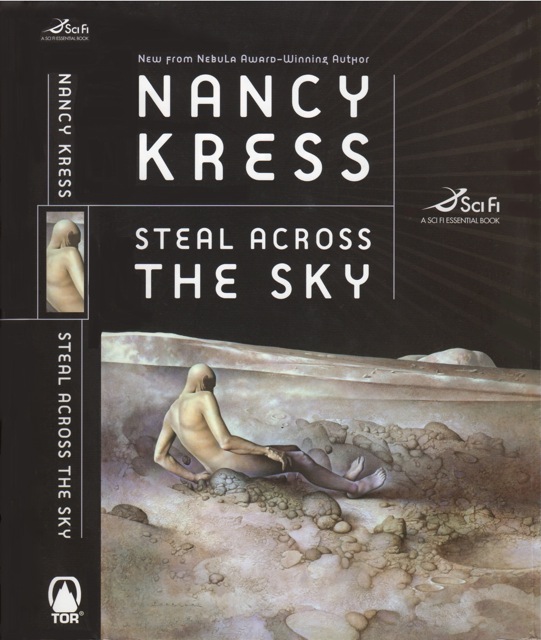
- Steal Across the Sky
Nancy Kressstandalone novel2009
similar bynear futurescience fictionmysteriousfirst contactaliensspace explorationother star systems+1 more
The aliens appeared one day, built a base on the moon, and put an ad on the internet. At first, everyone thought it was a joke. But it wasn't. This is the story of three volunteers who answered that ad, and what they found on Kular A and Kular B.
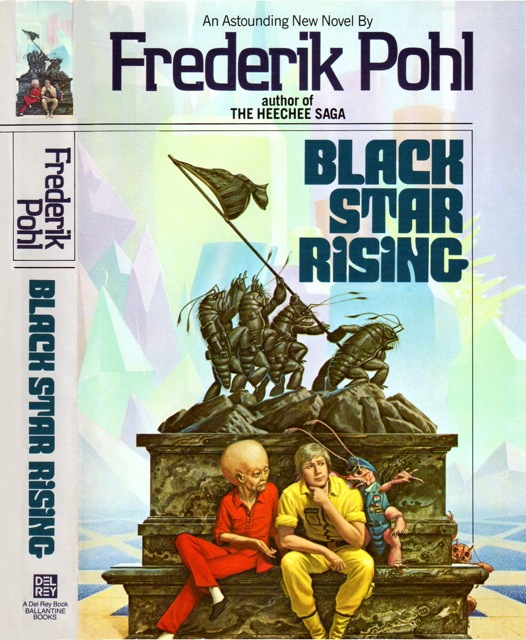
- Black Star Rising
Frederik Pohlstandalone novel1985
similar bynear futurescience fictiontensefirst contactnorth americaalienscolonialism
Black Star Rising, published in 1986, is a dystopian science fiction novel by American author Frederik Pohl. It is about a post-nuclear war future in which a conquered United States becomes a Chinese farming colony. The main character is an American who the Chinese send to meet a race of warlike aliens who come to Earth.
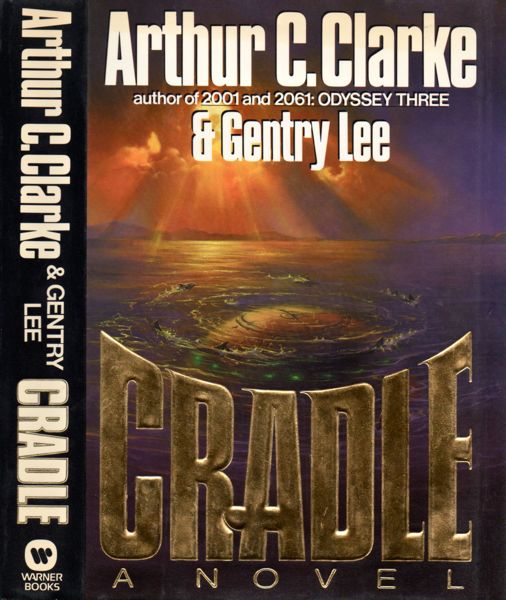
- Cradle
Arthur C. Clarke & Gentry Leestandalone novel1988
similar bynear futurescience fictionmysteriousfirst contactnorth americaaliens
Cradle is a 1988 science fiction novel by Arthur C. Clarke and Gentry Lee. The premise of the novel is the contact between a few humans from the Miami area in 1994 and the super robots of a damaged space ship submerged off the Florida coast. Telecommunication advances such as videotelephones and highly efficient underwater scanning equipment used in the story bridge from the everyday, real-life aspects of the setting toward the near future, bespeaking technological progress.
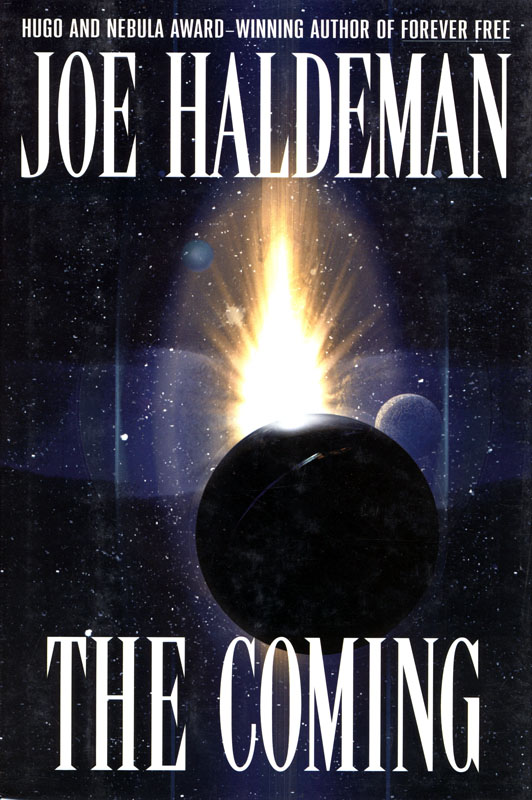
- The Coming
Joe Haldemanstandalone novel2000
similar bynear futurescience fictiontensefirst contactalienspolitical intriguenorth america
An astronomy professor in Florida in a mid-21st century suffering from climate change and international hostilities detects an apparent interstellar vehicle headed directly for earth at near light speed but decelerating dramatically; it transmits the message "We're coming". The effect this discovery has on her, those close to her, and the surrounding circles of contacts is followed, as the impending event plays out on the larger stage of national and international affairs until it comes to an unpredictable ending. The dedication page says in part "The author gratefully acknowledges the influence of James Gunn's beautiful novel The Listeners, on this book."
- The Gates of Heaven
Paul Preussstandalone novel1980
similar bynear futurescience fictionmysterioustensefirst contactaliensspace explorationother star systems
"At Project cyclops, a room filled with scientists and military personnel is plunged into stunned silence. Above the crackling static coming from the star Tau Ceti, they hear a voice. A human voice." - from back cover
- Stranger in a Strange Land
Robert A. Heinleinstandalone novel1961
similar byscience fictionnear futurefirst contactaliensnorth america
Stranger in a Strange Land is a 1961 science fiction novel by the American author Robert A. Heinlein. It tells the story of Valentine Michael Smith, a human who comes to Earth in early adulthood after being born on the planet Mars and raised by Martians, and explores his interaction with and eventual transformation of Terran culture.
- Moties
series4 books1974
part of CoDominium
similar byscience fictionfirst contactaliensother star systemspolitical intrigue+2 more
Larry Niven and Jerry Pournelle's The Mote in God's Eye (1974) depicts humanity's first contact with an alien species, the Moties, set within the far-future interstellar setting of Pournelle's codominium future history. The Gripping Hand continues that first-contact crisis years later, and Outies, written by J. R. Pournelle, carries the story forward into a new generation. Together the three books trace an escalating encounter between human and Motie civilizations within the codominium universe.
- Great North Road
Peter F. Hamiltonstandalone novel2012
similar bynear futurescience fictionmysterioustenseother star systems+2 more
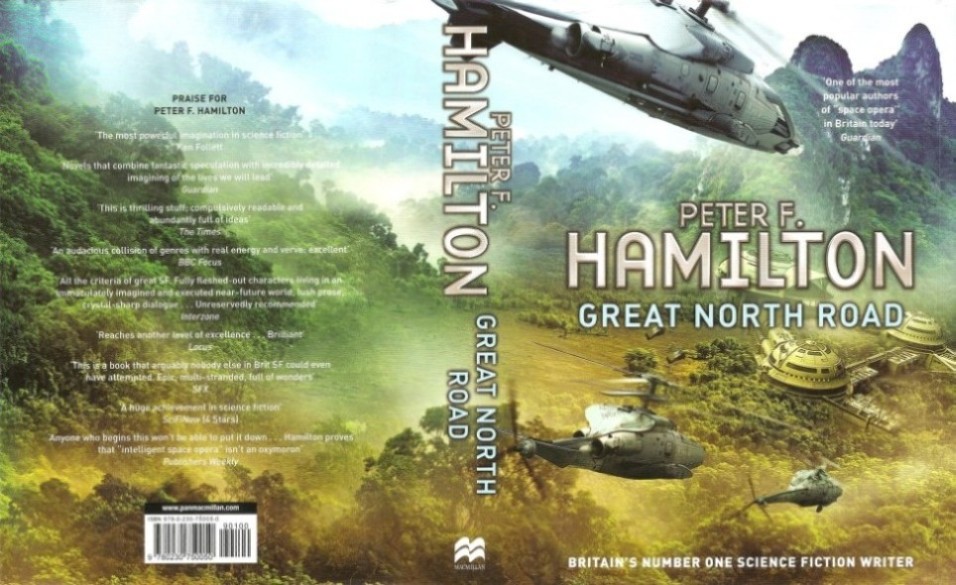
Great North Road is a science fiction novel by Peter F. Hamilton. It was first published in 2012 by Macmillan. Jonathan Wright of SFX magazine said, "Peter F Hamilton’s latest novel may be a standalone tale, but it’s a thuddingly imposing 1,100 pages in length. Not that it seems that way when you’re reading it. Balancing a multi-stranded plot, different exotic locales and a huge cast of characters, Hamilton plunges us straight into a murder mystery set in a near-future Newcastle, a city now adjacent to a portal to another world, the tropical St Libra."
- The Winds of Altair
Ben Bovastandalone novel1973
similar bynear futurescience fictiontensefirst contactaliensother star systems
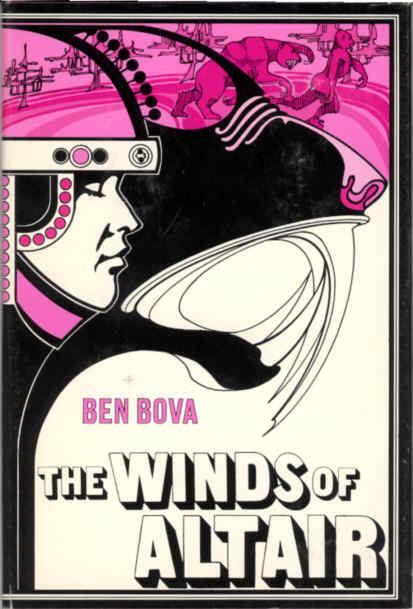
From back cover Tor trade paperback May 1983: MORALITY VS. SURVIVAL... Even before the human scientists arrived at the sixth planet of Altair they knew they had their work cut out for them. Star probes had long before informed them that Altair VI had flourishing ecology with one very tough beast at the top of the food chain, a beast that would have to be dealt with before the human colony ships arrived. What they didn't know was that the beast was not only tough, it was as smart as a man -- and that the only human capable of real communication with the wolfcats of Altair would want to become one...
- Childhood's End
Arthur C. Clarkestandalone novel1953
similar byscience fictionnear futurefirst contactaliens+2 more
Childhood's End is a 1953 science fiction novel by the British author Arthur C. Clarke. The story follows a peaceful alien invasion of Earth by mysterious Overlords, whose arrival begins decades of apparent utopia under indirect alien rule, at the cost of human identity and culture.
- Pushing Ice
Alastair Reynoldsstandalone novel2005
similar byscience fictiontensespace explorationfirst contactaliensother star systems
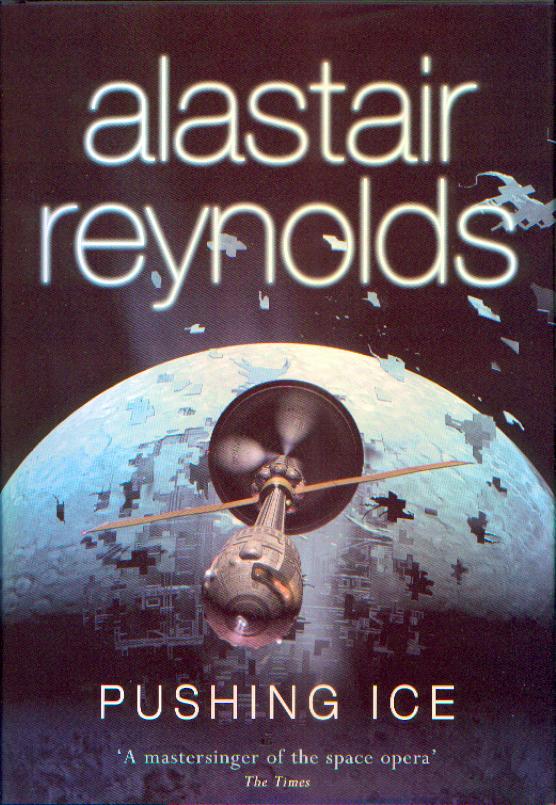
When Saturn's moon Janus suddenly takes off into interstellar space, an ice mining spaceship sent to investigate finds itself swept along into distant space until it ends up trapped in a gigantic alien structure, wherein the crew must prepare to reside for the foreseeable future.
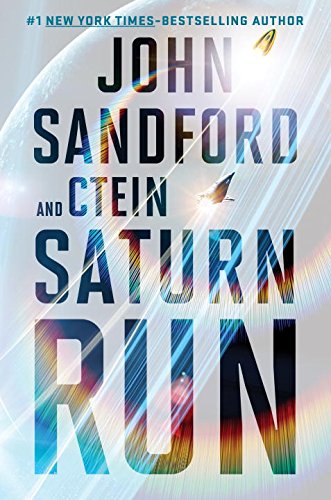
- Saturn Run
Ctein & John Sandfordstandalone novel2015
similar bynear futurescience fictiontensespace explorationfirst contactalienspolitical intrigue
"The year is 2066. A Caltech intern inadvertently notices an anomaly from a space telescope--something is approaching Saturn, and decelerating. Space objects don't decelerate. Spaceships do. A flurry of top-level government meetings produces the inescapable conclusion: Whatever built that ship is at least one hundred years ahead in hard and soft technology, and whoever can get their hands on it exclusively and bring it back will have an advantage so large, no other nation can compete. A conclusion the Chinese definitely agree with when they find out. The race is on, and a remarkable adventure begins..."--
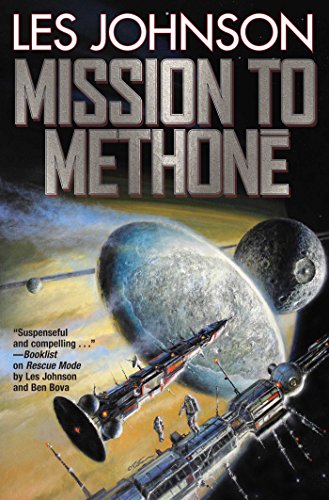
- Mission to Methone
Les Johnsonstandalone novel2018
similar bynear futurescience fictionmysterioustensefirst contactaliensspace exploration
"The year is 2065 and an accidental encounter in space leads to the discovery that we are not alone and that our continued existence may be in jeopardy. Chris Holt, working at the Space Resources Corp., discovers that one of the asteroids he surveying for mining is actually a derelict spaceship. What Earth doesn't know is that across the galaxy, a war has been underway for millennia. A war between alien civilizations that have very different ideas about what should be done about emerging spacefaring civilizations like our own. The artificial intelligence resident in the derelict has been in our solar system since before the dawn of human civilization, watching, waiting and keeping quiet lest the war return and wipe out humanity"--
- The World Jones Made
Philip K. Dickstandalone novel1956
similar bynear futurescience fictiontensepolitical intriguenorth america+2 more
The World Jones Made is a 1956 science fiction novel by American writer Philip K. Dick, examining notions of precognition, humanity, and politics. It was first published by Ace Books as one half of Ace Double D-150, bound dos-à-dos with Agent of the Unknown by Margaret St. Clair.The story takes place after a nuclear war in which society is dominated by relativism, which rejects absolute truths and preaches tolerance as the highest principle. The mutant Floyd Jones, who can see into the future, plans to overthrow the system and colonise space. The story ends with the defeat of Jones, whose plans fail despite his ability to see the future due to the immutability of fate.
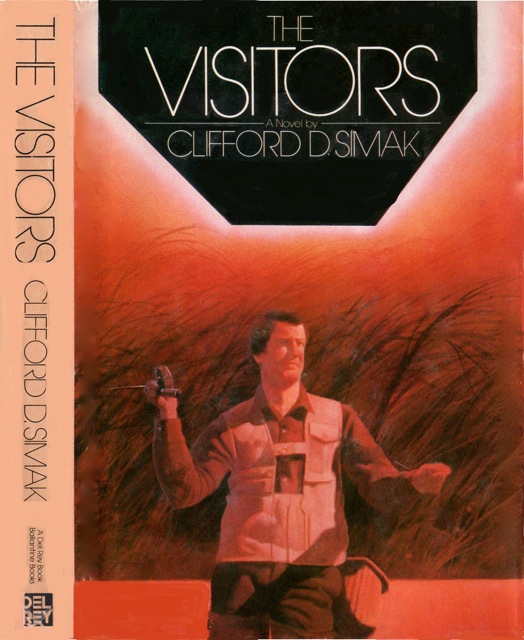
- The Visitors
Clifford D. Simakstandalone novel1980
similar byscience fictionmysterioustensefirst contactaliensnorth america
WorldCat: Intelligent, alien creatures arrive on Earth from outer space, threatening world stability and presaging the destruction of civilization.
- Sparrow
series2 books1996
similar bynear futurescience fictionfirst contactaliensother star systems+2 more
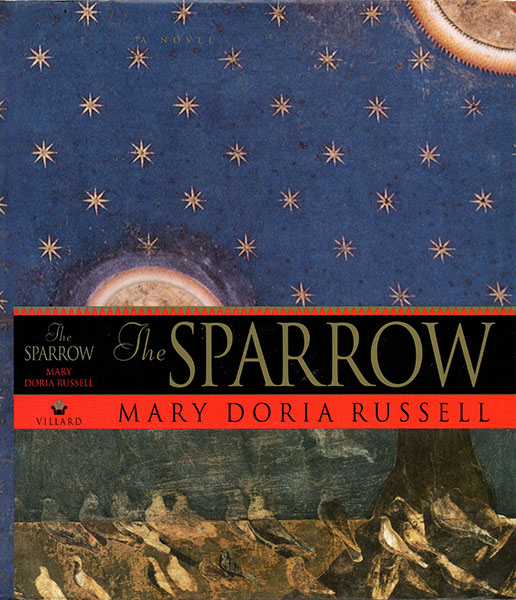
Mary Doria Russell's The Sparrow (1996) follows a Jesuit-led mission to the planet Rakhat after radio signals from Alpha Centauri reveal it hosts intelligent life, alternating between the expedition and the traumatized return of its sole survivor, Father Emilio Sandoz, as he tries to explain what happened. The sequel Children of God (1998) follows Sandoz back to Rakhat and continues working out the theological and political fallout of first contact between humans and the planet's two native species.
- The Themis Files
series3 books2015
similar byscience fictiontensemysteriousaliens+4 more
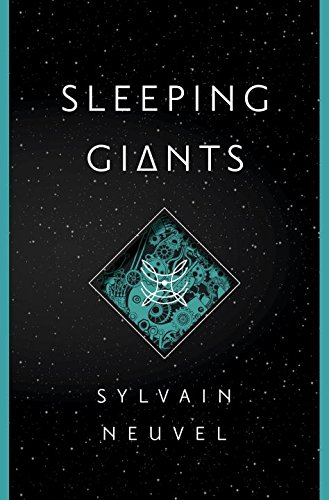
Sylvain Neuvel's Themis Files opens when a girl falls into a hole in South Dakota and lands on the palm of a giant metal hand buried underground; the trilogy picks up years later as she leads the team trying to determine what the hand is part of and why it's there. Sleeping Giants and its sequels are told almost entirely through interview transcripts conducted by an unnamed, evasive interrogator, giving the series a documentary, oral-history feel unusual for first-contact SF. The mystery escalates from an archaeological puzzle into a question of who else is looking for the same answer.
- The Steps of the Sun
Walter Tevisstandalone novel1983
similar bynear futurescience fictiontensespace explorationpolitical intriguenorth america+1 more
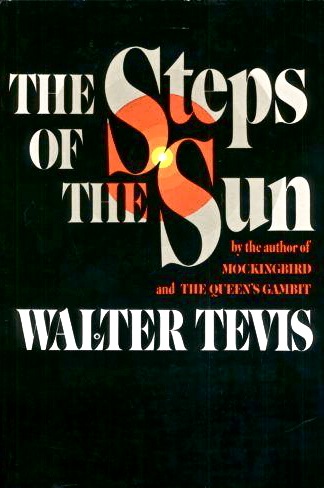
The Steps of the Sun is a 1983 science fiction novel by the American author Walter Tevis. It is about a future energy crisis, and a world in which China has become the leading superpower.
- The Ceres Solution
Bob Shawstandalone novel1981
similar bynear futurescience fictiontensealiensspace explorationother star systems+2 more
From the back cover of the DAW first U.S. printing: "This is the gripping story of the collision between two vastly different human civilizations. One is Earth in the early 21st century, rushing toward self-inflicted nuclear doom. The other is the distant world of Mollan, whose inhabitants have achieved great longevity and the power to transport themselves instantly from star to star. Bob Shaw's novel unfolds a tale which spans thousands of years and the reaches of interstellar space. On Earth's side, there is Denny Hargate, whose indomitable courage drives him to alter the course of history. On their side is the Gretana ty Iltha, working on Earth as a secret observer, who dreams of returning to the delights of her world's high society, but who gets caught up in a cosmic train of events leading to an explosive climax."
- Project Hail Mary
Andy Weirstandalone novel2021
similar bynear futurescience fictionfirst contactaliensspace exploration+1 more
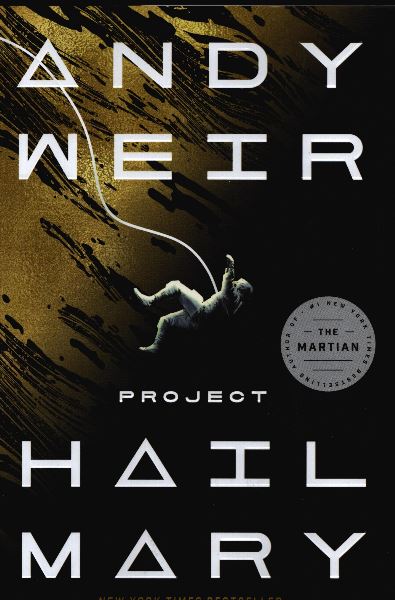
Project Hail Mary is a 2021 hard science fiction novel by American writer Andy Weir. It centers on science teacher and former biologist Ryland Grace, who wakes up aboard a spacecraft, afflicted with amnesia.