More like Time Sight
anchored on:fantasymiddle grade
but
- The Dark Is Rising
series5 books1965
similar byfantasycontemporaryadventurous+3 more
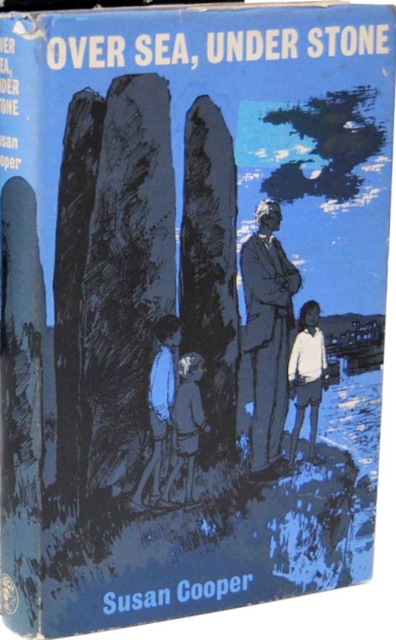
The Dark Is Rising Sequence is a series of five contemporary fantasy novels for older children and young adults that were written by the British author Susan Cooper and published from 1965 to 1977. The first book in the series, Over Sea, Under Stone, was originally conceived as a stand-alone novel, and the sequence gets its name from the second novel in the series, The Dark Is Rising. The Dark Is Rising Sequence is used as an overarching title in several omnibus, boxed-set, and coordinated editions; but the title of The Dark Is Rising is also used for the whole series.
- His Dark Materials Universe
universe13 books1995
Start hereHis Dark Materials · Start here
similar bycoming of agefantasyadventurous+1 more
In a world like ours and unlike it, every human soul walks outside the body in the shape of an animal — a daemon, who speaks, who cannot be lied to, and who settles into one fixed form only when childhood ends. This is the country of His Dark Materials: a company of parallel worlds across which an invisible dust of consciousness drifts down upon the waking mind; where a Church that calls itself the Magisterium would sooner sever a child's soul than let that Dust be understood; and where a golden instrument, the alethiometer, answers true questions for anyone with the patience to read it. Philip Pullman's design stands in two trilogies and a scatter of shorter tales. His Dark Materials — Northern Lights (published in America as The Golden Compass), The Subtle Knife, and The Amber Spyglass — carries Lyra Belacqua from the rooftops of a shadow Oxford across the borders between worlds. The Book of Dust returns to that same territory: La Belle Sauvage looks back to Lyra as an infant carried through a great flood, while The Secret Commonwealth follows her grown and less certain into adulthood, with a concluding volume closing the arc. Around them sit slim companion books — Lyra's Oxford, Once Upon a Time in the North, Serpentine — and Nicholas Wright's stage adaptation, made with Pullman's blessing. The register is grave and luminous at once, its title lifted from Milton and its quarrel drawn from Blake: a story that takes the side of curiosity, love, and the physical world against any authority that would forbid them. It reads as adventure — armoured bears, aeronauts, knife-cut windows between skies — yet reasons like philosophy. Begin with Northern Lights / The Golden Compass and read the first trilogy through before turning to The Book of Dust, which deepens everything the first has already made you feel.
- Lewis Barnavelt
series12 books1973
similar byfantasycontemporarymiddle grade+3 more
Lewis Barnavelt is a lonely orphan who moves in with his uncle Jonathan, an amateur wizard, in a rambling old house that turns out to hide a doomsday clock built into its walls by a previous, malevolent owner. John Bellairs introduced the character in The House with a Clock in Its Walls (1973), illustrated by Edward Gorey, and after Bellairs's death Brad Strickland continued the series from his notes and outlines for most of its later volumes. It blends gothic horror atmosphere with a gentler, more whimsical strain of children's fantasy.
- Chrestomanci
series12 books1977
completed
similar byfantasycontemporarymiddle grade+2 more
Chrestomanci, sometimes branded The Worlds of Chrestomanci, is a heptalogy of children's fantasy books written by British author Diana Wynne Jones, published from 1977 to 2006. In the context of the parallel universe setting of the books, Chrestomanci refers to both the British government office that is responsible for supervising the use of magic and Chrestomanci Castle in southern England, which is both residence and headquarters.
- Spiderwick Chronicles
series14 books2003
part of Spiderwick
similar byfantasycontemporarymiddle grade+1 more
Holly Black and Tony DiTerlizzi's Spiderwick Chronicles follow the three Grace children after they move into the run-down Spiderwick Estate and discover a hidden field guide to the fantastical creatures living around them. Their new knowledge draws them into escalating conflicts with dangerous faeries, building to a confrontation with the shapeshifting ogre Mulgarath, who wants the guide's secrets to conquer both the human and faerie worlds.
- Five Children Universe
series27 books1902
completed
similar byfantasy+3 more
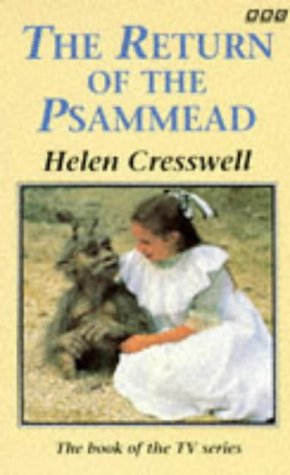
Two separate modern continuations of E. Nesbit's Psammead stories were written decades apart by different authors: Helen Cresswell's The Return of the Psammead (1992) brings the wish-granting sand fairy back for a new set of children, while Kate Saunders's Five Children on the Western Front (2014) follows the now-grown Lamb and his siblings as the First World War arrives, in a more somber sequel to Nesbit's original trilogy. Neither book is by Nesbit herself, and the two have no direct connection to each other beyond both drawing on her creation. Later writers have kept returning to Nesbit's premise long after her own trilogy ended.
- The Keys to the Kingdom
series7 books2003
similar byfantasyadventurousmiddle grade+2 more
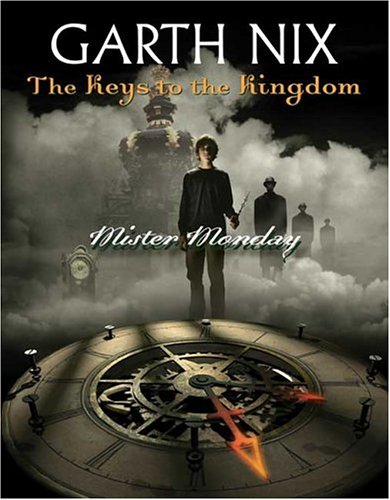
The Keys to the Kingdom is a fantasy-adventure book series written by Garth Nix, comprising seven books published between 2003 and 2010. The series chronicles the adventures of a boy named Arthur, who becomes involved with a magical world called the 'House'; he is on a quest to take back the House from seven antagonistic 'Trustees'.
- Kairos
series11 books1962
completed
similar by+4 more
The Time Quintet is a science fantasy series of five young adult novels written by American author Madeleine L'Engle and made up of A Wrinkle in Time (1962), A Wind in the Door (1973), A Swiftly Tilting Planet (1978), Many Waters (1986), and An Acceptable Time (1989).
- The Indian in the Cupboard
series5 books1980
completed
similar bycoming of agefantasycontemporaryadventurousmiddle grade
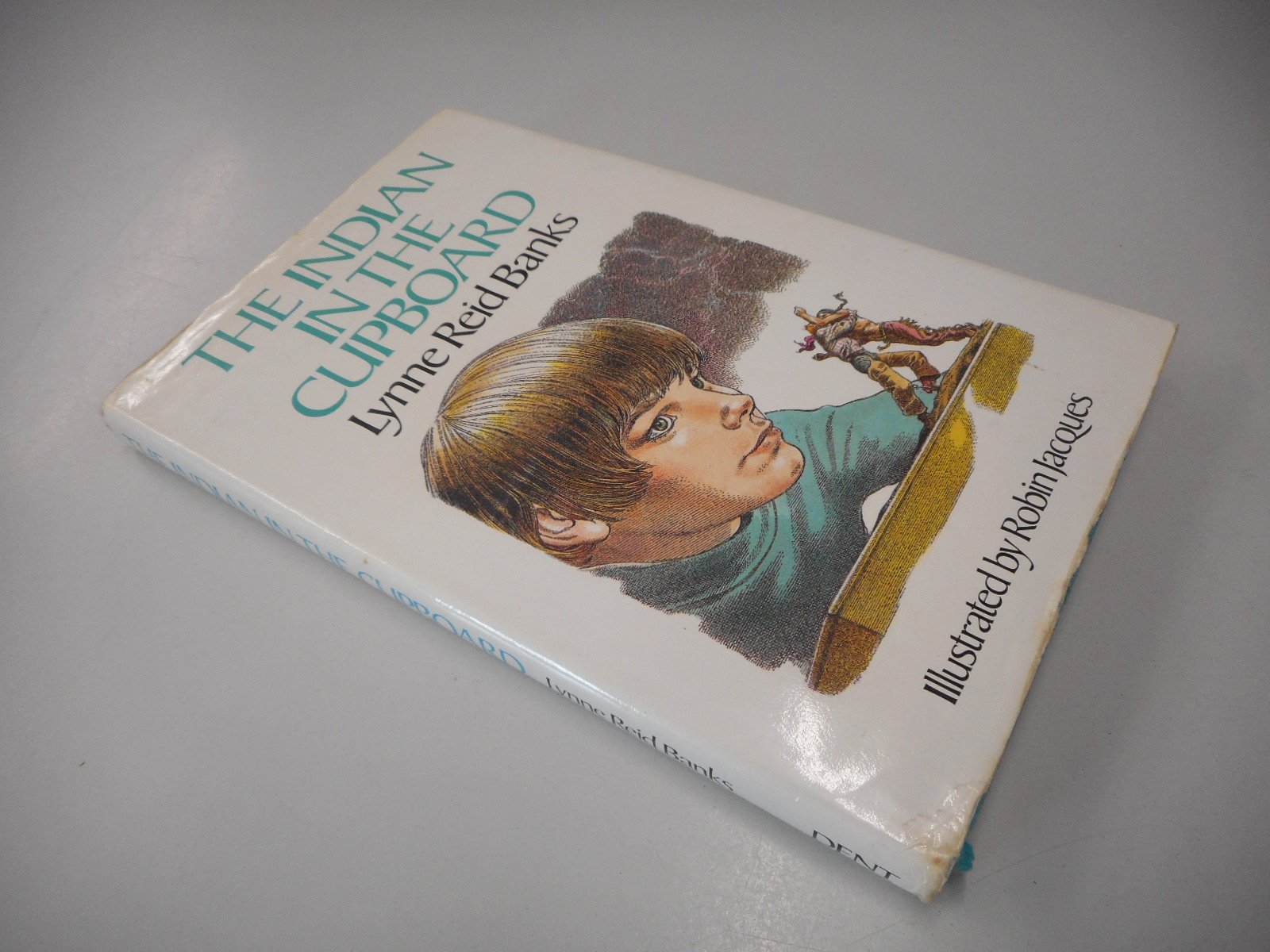
Lynne Reid Banks' Indian in the Cupboard series begins with the 1980 children's novel in which a boy discovers that an old cupboard can bring his plastic toy figures to life. The low-fantasy series, which inspired a 1995 film adaptation, continues across Return of the Indian, The Secret of the Indian, The Mystery of the Cupboard, and The Key to the Indian.
- Spiderwick
universe17 books2003
Start hereSpiderwick Chronicles · Start here
similar byfantasycontemporarymiddle grade+1 more
Do not read this book. So warns the note bound into Arthur Spiderwick's Field Guide to the Fantastical World Around You — which is exactly why Jared Grace opens it, and why the hidden world opens onto him. Move into a crumbling family estate with your mother, your twin brother, and your fencing-champion sister, and you may find the walls already occupied: a testy house brownie, goblins with a taste for cats, and an ogre named Mulgarath who wants the Guide for himself. Holly Black writes and Tony DiTerlizzi draws this small, densely illustrated world across two linked cycles. The Spiderwick Chronicles runs five slim volumes — The Field Guide, The Seeing Stone, Lucinda's Secret, The Ironwood Tree, and The Wrath of Mulgarath — a single mounting emergency told at a breathless clip. Beyond the Spiderwick Chronicles carries the danger south to swampy Florida across three more books, where new children meet giants, nixies, and a wyrm stirring underground. The companion Field Guide itself catalogues every sprite and troll in loving naturalist detail. The pleasure here is the specimen-collector's: faerie treated as a taxonomy to be sketched, labelled, and survived, cozy domestic scale shot through with real teeth. Begin with The Field Guide and read straight through in publication order — the five originals first, then the Beyond trilogy. Slender enough to finish in an afternoon, sharp enough to send you checking the cupboard afterward.
- The Sisters Grimm
series9 books2005
similar byfantasycontemporaryadventurousmiddle grade+2 more
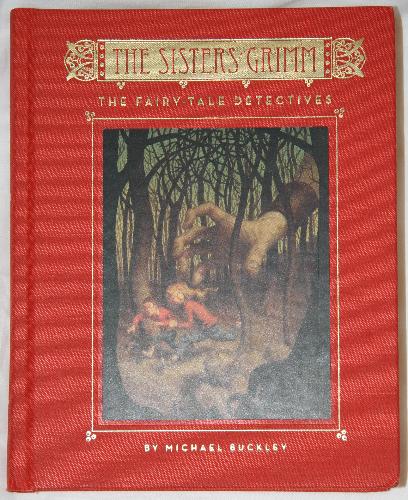
The Sisters Grimm is a children's fantasy series written by Michael Buckley and illustrated by Peter Ferguson. The series is partially based on the works and lives of the Brothers Grimm, with the titular protagonists, Sabrina Grimm and Daphne Grimm, being their fictional descendants, and the supporting cast featuring many characters from the Grimms’ collection of fairytales.
- The Hobbit
series2 books1937
completed
part of Tolkien's legendarium
similar byfantasyadventurousmiddle grade+1 more
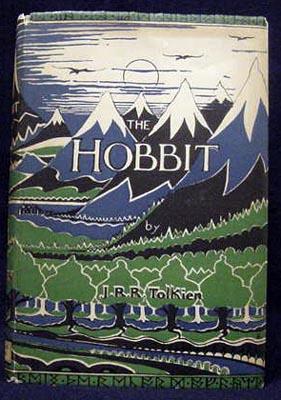
The Hobbit (1937) is J. R. R. Tolkien's children's fantasy novel following the reluctant burglar Bilbo Baggins, who joins a company of dwarves and the wizard Gandalf on a journey to reclaim treasure guarded by the dragon Smaug. It stands as a complete adventure on its own, but shares its setting with the rest of Tolkien's legendarium and leads into the events of The Lord of the Rings.
- Magisterium
series5 books2014
similar bycoming of agefantasyadventurousmiddle grade+1 more
The Magisterium Series is a five-book children's fantasy series written by Holly Black and Cassandra Clare. It is their first collaboration. The series was acquired by Scholastic in April 2012. The first book, The Iron Trial, was published on September 9, 2014, and hit third on the New York Times Middle Grade Bestseller List. The series is set in an underground school where mages train apprentices to control the elements. The books are illustrated by Scott Fischer. The final book, The Golden Tower, was published on September 11, 2018.
- Liddy
series3 books2005
similar byfantasycontemporarymiddle grade+3 more
Kate Thompson's The New Policeman opens what's often called the Liddy series: in the Irish town of Kinvara, teenage J.J. Liddy discovers that time is leaking out of the human world and into Tir na nÓg, the land of the fairies, threatening to unravel both realms. The Last of the High Kings and The White Horse Trick continue the Liddy family's entanglement with that fairy world.
- Fionavar Universe
series5 books1984
similar byfantasycontemporary+2 more
Ysabel is a 2007 standalone contemporary fantasy novel by Guy Gavriel Kay, following teenager Ned Marriner as he stumbles into a centuries-old rivalry playing out around the cathedral of Aix-en-Provence. It marked Kay's turn toward urban fantasy and briefly brings back two adult characters from his earlier Fionavar Tapestry trilogy, though it is not itself part of that trilogy and can be read on its own.
- Miss Peregrine's Peculiar Children
series19 books2011
similar byfantasy+3 more
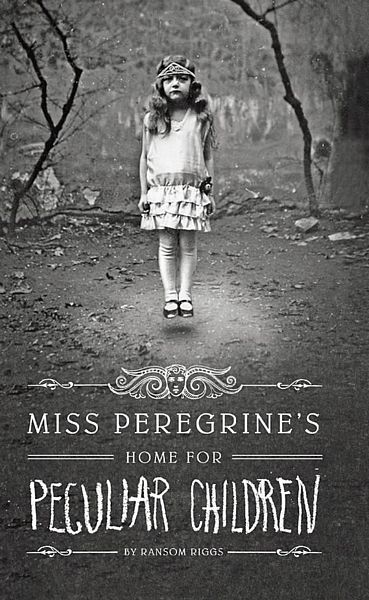
Ransom Riggs' Miss Peregrine's Peculiar Children series follows Jacob Portman, who discovers that his late grandfather's tall tales were true after he travels to a Welsh island and finds an orphanage of 'peculiar' children with extraordinary gifts, kept safe in a time loop by the shapeshifting Miss Peregrine, one of the bird-formed Ymbrynes. He and the children must evade hollowgast and their wight handlers, monsters born of a catastrophic experiment. The first trilogy follows Jacob's introduction to peculiardom and its dangers; a second trilogy shifts the action to the United States. The books are illustrated throughout with vintage found photographs.
- His Dark Materials
series8 books1995
part of His Dark Materials Universe
similar bycoming of agefantasyadventurous+1 more
His Dark Materials is a trilogy of fantasy novels by Philip Pullman consisting of Northern Lights, The Subtle Knife (1997), and The Amber Spyglass (2000). It follows the coming of age of two children, Lyra Belacqua and Will Parry, as they wander through a series of parallel universes. The novels have won a number of awards, including the Carnegie Medal in 1995 for Northern Lights and the 2001 Whitbread Book of the Year for The Amber Spyglass. In 2003, the trilogy was ranked third on the BBC's The Big Read poll.
- Magids
series2 books1997
completed
similar byfantasycontemporarymysterious
Deep Secret follows Rupert Venables, a junior Magid — one of a hidden order of magical agents who quietly steer worlds toward or away from magic — tasked with finding Earth's replacement senior Magid at, of all places, a science-fiction convention, while also trying to restore an assassinated emperor's rightful heir in another world entirely. Diana Wynne Jones's Magids series continues with The Merlin Conspiracy, following a different young magic-user into the same multiverse of worlds under the Magids' watch.
- Alderley
series4 books1960
similar byfantasycontemporary+2 more
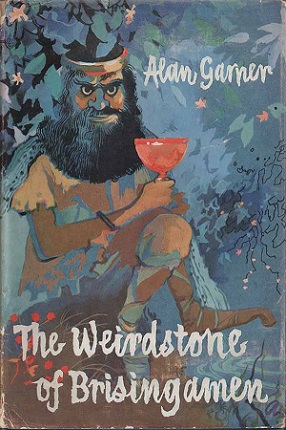
Alan Garner's Alderley books begin with The Weirdstone of Brisingamen (1960) and The Moon of Gomrath (1963), children's fantasies set around the real Cheshire hill of Alderley Edge and drawn from its local legends. Garner returned to the same setting and characters decades later in Boneland (2012), a far darker novel for adults in which the now-grown Colin, afflicted with amnesia covering his entire childhood, tries to piece together what really happened to him and his sister. The three books span most of Garner's writing life rather than forming one continuous trilogy.
- Peter Pan Universe
universe112 books1902
Start herePeter Pan · Start here
similar byfantasy+2 more
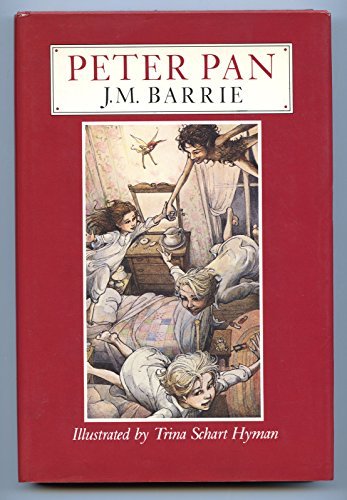
Second star to the right, and straight on till morning — and there it is, the island that every child dreams once and then, growing up, contrives to forget. Neverland: mermaids in the lagoon, a ticking crocodile with a clock in its belly, a pirate nursing his severed hand, and above it all the boy who will not grow up, forever flying, forever heartless in the lovely careless way that only children are. It begins with J. M. Barrie — the 1904 stage play, the chapters of Kensington Gardens, and the novel Peter and Wendy that fixed Peter, Wendy, Tinker Bell, Hook and the Lost Boys in place. From that small window a wide world has flown. Dave Barry and Ridley Pearson supply the how-it-all-began in their Starcatchers books, chasing falling starstuff aboard a doomed ship to explain why one orphan came to fly and never age. A whole bright shelf tends Tinker Bell's Pixie Hollow — the Disney Fairies and Fairy Haven tales, Kiki Thorpe's Never Girls — while Heidi Schulz hands the wheel to Hook's own daughter, and stranger, dimmer corners carry the island into far darker weather. Many hands, one archipelago; no single map governs them all. What sets it apart is the sweetness with a blade in it — wonder shadowed always by the ache of leaving, of mothers who keep the window open and children who fly home too late. Newcomers should begin where it began, with Barrie's Peter and Wendy, then, for the origin, take the Starcatchers books in their own order. The rest of Neverland waits, as it always does, for whoever still remembers how to reach it.
- James and the Giant Peach
Roald Dahlstandalone novel1961
similar bycoming of agefantasycontemporaryadventurous
James and the Giant Peach is a children's novel written in 1961 by British author Roald Dahl. The first edition, published by Alfred Knopf, featured illustrations by Nancy Ekholm Burkert. There have been re-illustrated versions of it over the years, drawn by Michael Simeon, Emma Chichester Clark, Lane Smith and Quentin Blake. It was adapted into a film of the same name in 1996 which was directed by Henry Selick, and a musical in 2010.
- American Gods
series10 books1999
similar byfantasycontemporary+1 more
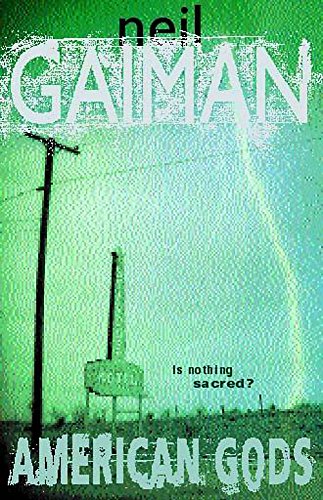
Neil Gaiman's American Gods (2001) follows Shadow Moon, an ex-convict who takes a job as bodyguard to a mysterious drifter who is secretly the Norse god Odin, and is drawn into a brewing conflict between the old immigrant gods of myth and the new gods of media, technology, and modern American life. Gaiman's 2005 novel Anansi Boys is set in the same mythological world and shares the trickster god Mr. Nancy, but follows a different protagonist and story, making it a loose companion rather than a direct sequel.