More like Touch
anchored on:science fictionnorth americacontemporaryyoung adultpsychic powersrebellion and revolution+2 more
but
- The Hunger Games
series3 books2008
part of The Hunger Games Universe
similar byscience fictiontensenorth americarebellion and revolutionyoung adultfirst person
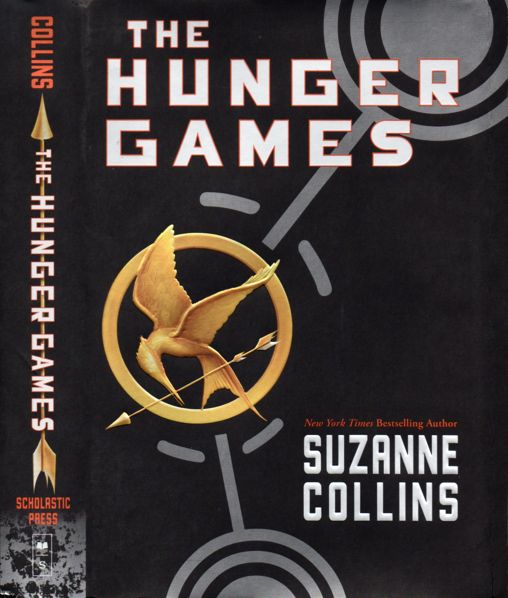
The Hunger Games is a series of young adult dystopian novels written by American author Suzanne Collins. The series consists of a trilogy that follows teenage protagonist Katniss Everdeen, as well as two prequels. The Hunger Games universe is a dystopia set in Panem, a post-apocalyptic North American country consisting of the wealthy Capitol and 12 districts in varying states of poverty. As punishment for rebellion, the Capitol hosts an annual battle royale competition called The Hunger Games. Each of the 12 districts must send two children between the ages of 12 and 18 to participate, and the last surviving child is dubbed the victor.
- Jumper
series6 books1992
similar byscience fictiontensecontemporarypsychic powersadventurousfirst person+2 more
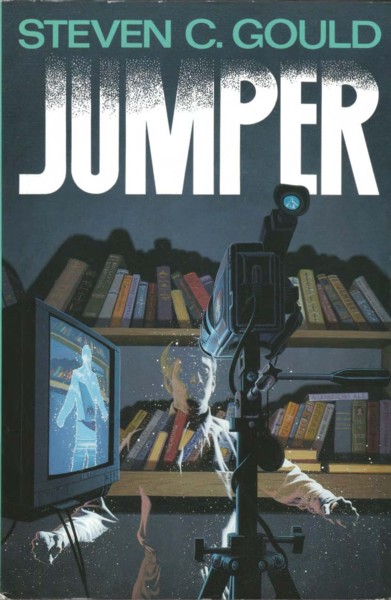
Jumper follows David Rice, a teenager who discovers he can teleport anywhere he's been and uses the power to escape an abusive home, only to find that ability alone doesn't solve the harder problems of finding his absent mother, building an honest relationship, or staying off the radar of people who'd exploit him. Steven Gould's series continues across Reflex, Impulse, and Exo, later following his and his wife's daughter as a second-generation jumper. A 2008 film loosely adapted the first novel.
- The Hunger Games Universe
universe5 books2008
Start hereThe Hunger Games · Start here
similar byscience fictiontensenorth americarebellion and revolutionyoung adult+1 more
Panem, they call it now — a nation raised on the drowned bones of North America, a glittering Capitol ringed by twelve districts it once starved into obedience. Every year the Capitol collects its debt in children: two tributes from each district, drawn by lottery, dropped into an engineered arena, and made to kill one another on live television while the whole country is required to watch. This is the Hunger Games — entertainment, punishment, and government at once. Suzanne Collins tells it in a compact, unified body of work. The founding trilogy — The Hunger Games, Catching Fire, and Mockingjay — follows Katniss Everdeen, a girl from the coal-mining District 12 who volunteers in her sister's place and becomes something the Capitol never scripted. Two prequels reach back into the same machinery: The Ballad of Songbirds and Snakes traces a young Coriolanus Snow long before he is President, and Sunrise on the Reaping returns to District 12 a generation ahead of Katniss. Begin with the trilogy, in order — it is Katniss's voice, close and present-tense, that makes Panem breathe, and the prequels land hardest once you know how her story ends. Beneath the spectacle sits one steady, uncomfortable question: who profits when we agree to look away.
- Firestarter
Stephen Kingstandalone novel1980
similar byscience fictiontensenorth americacontemporarypsychic powers
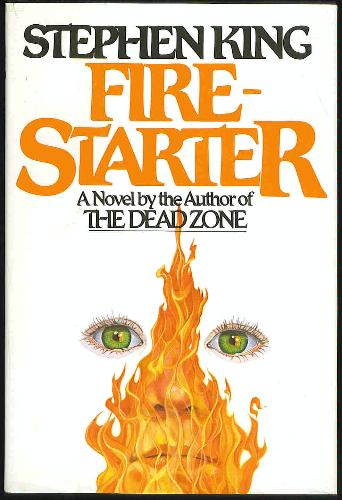
WorldCat: Innocence and beauty ignite with evil and terror... First, a man and a woman are subjects of a top-secret government experiment designed to produce extraordinary psychic powers. Then, they are married and have a child. A daughter. Early on the daughter shows signs of a wild and horrifying force growing within her. Desperately, her parents try to train her to keep that force in check, to 'act normal'. Now the government wants its brainchild back for its own insane ends.
- The Handmaid's Tale
series3 books1985
similar byscience fictiontensenorth americarebellion and revolution+1 more
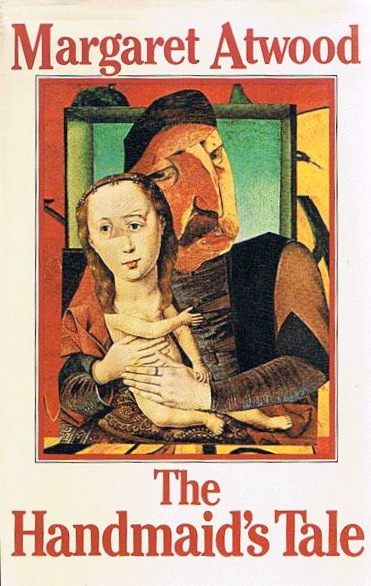
The Handmaid's Tale is Margaret Atwood's 1985 novel set in Gilead, a totalitarian theocracy that has overthrown the United States and forces fertile women into reproductive servitude as Handmaids; it is narrated by one such woman, Offred. Atwood returned to the world in her 2019 sequel The Testaments, set fifteen years later and narrated by three women, including the regime's Aunt Lydia. Together the two novels move from Gilead's grip on power toward the first cracks in it.
- Have Space Suit - Will Travel
Robert A. Heinleinstandalone novel1958
similar byscience fictiontensenorth americaadventurousyoung adultfirst person
From the back cover of the Del Rey 9th printing: "Skyjacked - Everything happened at once. One minute Kip Russell was walking about in his own backyard, testing out an old space suit and dreaming about going to the moon - and the next he was out cold and the captive of an insidious space pirate. The whole thing seemed like a very bad dream until he discovered he wasn't the only prisoner on board. Then the reality of the situation became inescapable. He - along with the daughter of a world-renowned scientist and a beautiful creature from an alien planet - had been skyjacked by a monstrous extraterrestrial and they were on their way to the Moon... a journey toward a fate worse than death!"
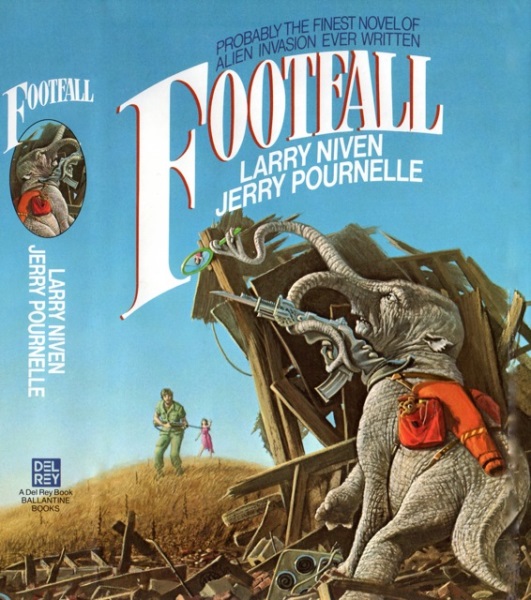
- Footfall
Larry Niven & Jerry Pournellestandalone novel1985
similar byscience fictiontensecontemporarynorth america+1 more
When aliens travel to Earth from Alpha Centauri, differences between alien and human psychology result in an unprovoked invasion, and the resulting resistance results in the aliens' use of a devastating weapon.
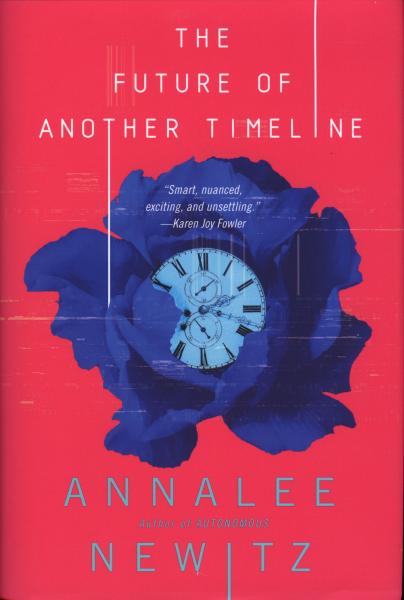
- The Future of Another Timeline
Annalee Newitzstandalone novel2019
similar byscience fictiontensenorth americacontemporaryrebellion and revolutionadventurous
The Future of Another Timeline is a 2019 science fiction novel by Annalee Newitz. The feminist time-travel adventure follows Tess, a professional time traveler, geoscientist, and secretly a member of the Daughters of Harriet (Tubman), who are working to make the future better for women.
- Dying Inside
Robert Silverbergstandalone novel1972
similar byscience fictionnorth americacontemporarypsychic powersfirst person
Dying Inside is a 1972 science fiction novel by American writer Robert Silverberg. It was first serialized in Galaxy in 1972 and published in book form by Charles Scribner's Sons later that year. The novel follows David Selig, a middle-aged telepath in contemporary New York City, as the mind-reading ability that has shaped his life begins to disappear.
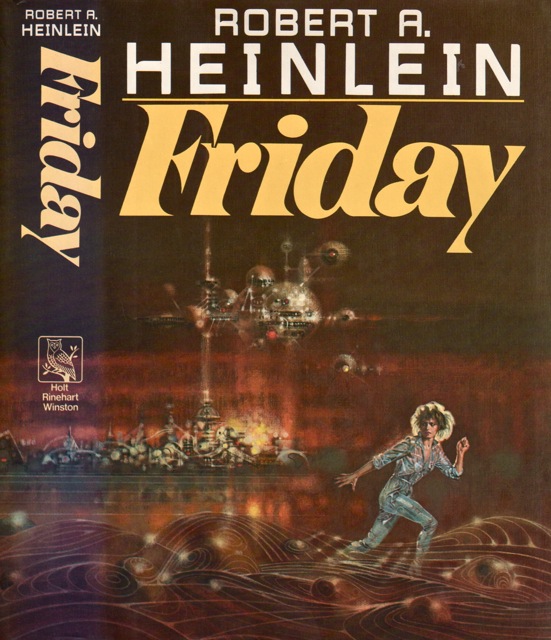
- Friday
Robert A. Heinleinstandalone novel1982
similar byscience fictiontensenorth americaadventurousfirst person
Friday is a 1982 science fiction novel by American writer Robert A. Heinlein. It is the story of a female "artificial person", the eponymous Friday, genetically engineered to be stronger, faster, smarter, and generally better than normal humans. Artificial humans are widely resented, and much of the story deals with Friday's struggle both against prejudice and to conceal her enhanced attributes from other humans. The story is set in a Balkanized 21st century, in which the nations of the North American continent have been split up into a number of smaller states.
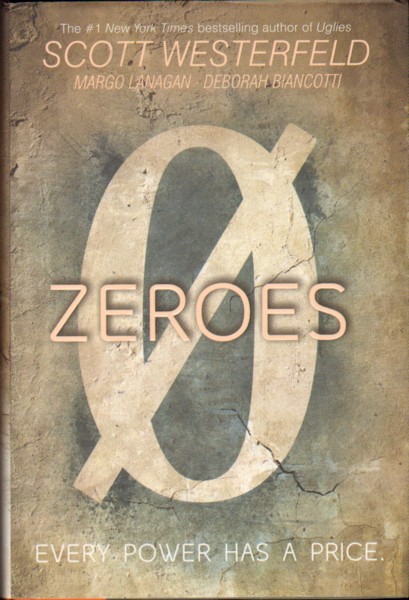
- Zeroes
series3 books2015
similar byscience fictionnorth americapsychic powerscontemporaryadventurousyoung adult+1 more
- Little Brother
series7 books2008
similar byscience fictiontensenorth americacontemporary+2 more
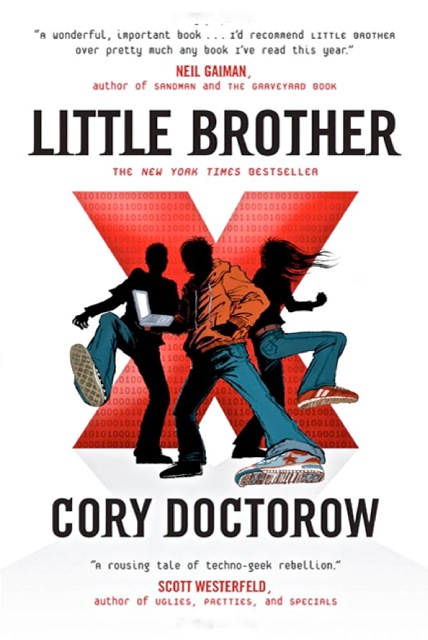
Cory Doctorow's Little Brother follows Marcus, a San Francisco teenager who builds a covert mesh network, the Xnet, to organize resistance after the Department of Homeland Security uses a terrorist attack as pretext for mass surveillance and civil-rights violations. Homeland continues Marcus's fight years later, and Attack Surface completes the trilogy; a companion story, 'Lawful Interception,' and other short pieces extend the same near-future world. Throughout, the series doubles as a working explanation of the surveillance and cryptography tools its characters use.
- Watchers
Dean R. Koontzstandalone novel1987
similar byscience fictiontensenorth americacontemporaryadventurous
This probably qualifies as a science-based adventure rather than a science fiction novel. The premise, and only speculative fiction element, is that a U.S. government funded laboratory creates a golden retriever that's as intelligent as a human for use in intelligence gathering and also creates a monkey hybrid that's intended for a military police dog role and as a killing machine on battlefields. The animals escape and the story plays out as a straight adventure novel with a good chunk of romance thrown in.
- The Terminal Man
Michael Crichtonstandalone novel1972
similar byscience fictiontensenorth americacontemporary
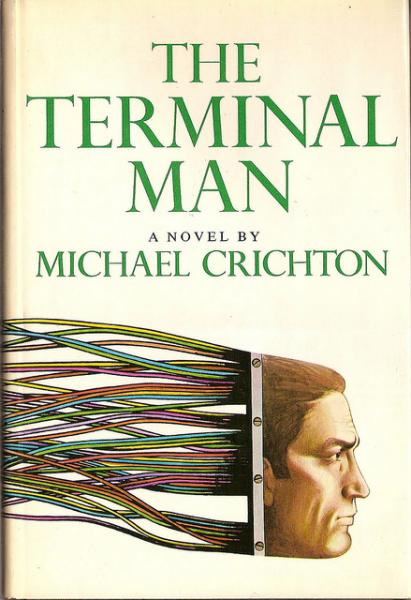
The Terminal Man is a novel by American writer Michael Crichton. It is his second novel under his own name, his 12th overall, and is about the dangers of mind control. It was published in April 1972 and also serialized in Playboy in March, April, and May 1972. In 1974, it was made into a film of the same name.
- Blue Light
Walter Mosleystandalone novel1998
similar byscience fictiontensenorth americacontemporarypsychic powers
Blue Light is a science fiction novel by American writer Walter Mosley, published in 1998 by Little Brown & Co.
- Hellstrom's Hive
Frank Herbertstandalone novel1973
similar byscience fictiontensenorth americacontemporary
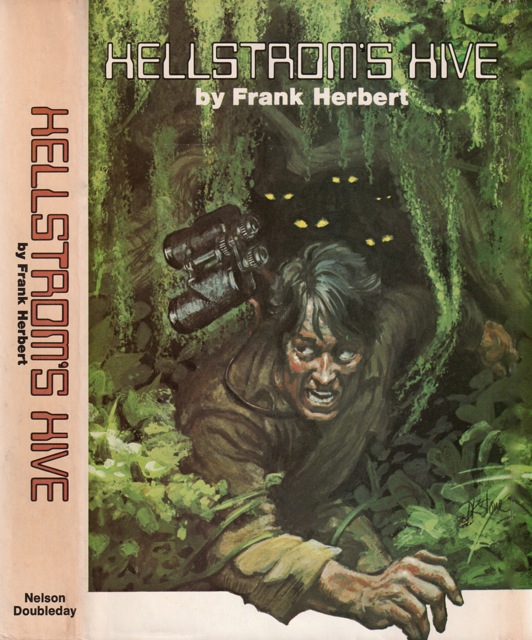
Hellstrom's Hive is a 1973 science fiction novel by Frank Herbert. It is about a secret group of humans who model their lives upon social insects and the unsettling events that unfold after they are discovered by a deep undercover agency of the U.S. government.
- Kindred
Octavia E. Butlerstandalone novel1979
similar byscience fictiontensenorth americafirst person+1 more
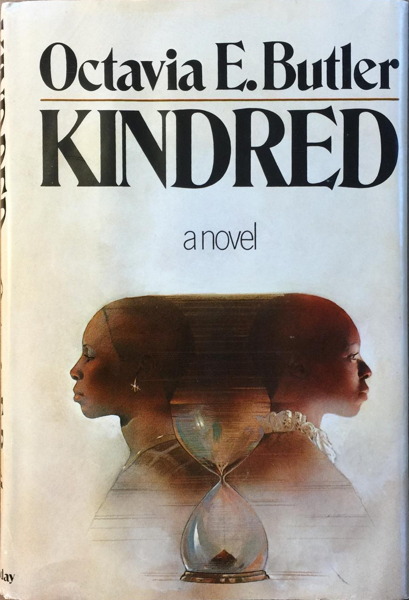
Kindred (1979) is a novel by American writer Octavia E. Butler that incorporates time travel and is modeled on slave narratives. Widely popular, it has frequently been chosen as a text by community-wide reading programs and book organizations, and for high school and college courses.
- Tripods
series4 books1967
completed
similar byscience fictiontenserebellion and revolutionyoung adult+1 more
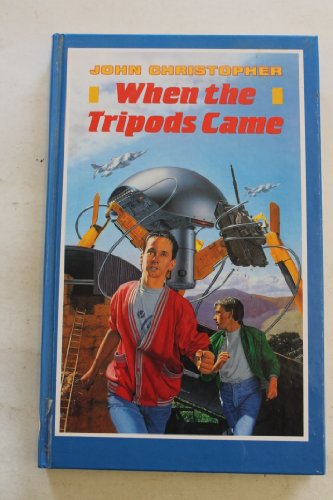
The Tripods is a series of young adult science fiction novels by John Christopher. The series takes place in a post-apocalyptic world where humanity is enslaved by "Tripods"—gigantic three-legged walking machines piloted by an alien race later identified as the "Masters". The first two books were the basis of a science fiction TV series, produced in the United Kingdom in the 1980s.
- The Andromeda Strain
series2 books1969
similar byscience fictiontensecontemporary+1 more
Michael Crichton's 1969 novel The Andromeda Strain follows a team of scientists racing to contain a lethal extraterrestrial microorganism that crash-lands in Arizona, told in the clinical, document-driven style that helped establish the techno-thriller genre. Daniel H. Wilson's authorized 2019 sequel The Andromeda Evolution revisits the same threat five decades later. Together the two books form a two-part outbreak story separated by a fifty-year gap in publication.
- The Darkest Minds
series8 books2012
similar byscience fictionnorth americatensepsychic powersyoung adult+1 more
- Heroes: Saving Charlie
Aury Wallingtonstandalone novel2007
similar byscience fictionnorth americacontemporarypsychic powersadventurous+1 more
Saving Charlie is a novel written by Aury Wallington and published by Del Rey Books, based on the television series Heroes. It was released in the United States on December 26, 2007. It was made with the full cooperation of the show's creators, although its canonicity about the television series has not yet been established.
- Dreamcatcher
Stephen Kingstandalone novel2001
similar byscience fictiontensecontemporarynorth america+1 more
Dreamcatcher is a 2001 science fiction horror novel by American writer Stephen King, featuring elements of body horror, suspense and alien invasion. The book, written in longhand, helped the author recuperate from a 1999 car crash, and was completed in half a year. According to the author in his afterword, the working title was Cancer. His wife, Tabitha King, persuaded him to change the title. A film adaptation was released in 2003.
- Legend (Marie Lu)
series5 books2011
similar byscience fictiontensenorth americarebellion and revolutionyoung adult+1 more
Marie Lu's Legend follows two teenagers from opposite ends of a divided, war-torn future society — one a celebrated young military prodigy, the other a hunted fugitive — whose paths collide and gradually complicate what each believed about the system that shaped them. The story continues through Prodigy and Champion, with a fourth book, Rebel, added years after the original trilogy closed; Lu has cited the film Les Misérables among her inspirations for its shape.