Loreful
HomeDiscover
Search series, authors…⌘K
Loreful

Reading orders for SF/F series and shared universes — with your place kept in every one.

Explore

UniversesSeriesWorksAuthorsAtlas

Help

FAQAboutSite map

Account & legal

Sign inCreate accountPrivacyTerms

Data

Built on ISFDB, Wikipedia, Wikidata and Open Library. Curated reading orders carry their reasoning on the page; the rest follow publication order. Data sources & licenses

© Loreful · data: ISFDB · CC BY

More like True Son

anchored on:science fictionpsychic powerssecondary worldwartense

but

Mood

The mood the book leaves you in.

  • The reading experience is propelled by journeys, exploration, and physical risk; excitement and forward momentum dominate over dread or introspection.
  • Joy and loss are deliberately mixed; the resolution grants characters something real while taking something else away, leaving warmth and sorrow together.
  • The book demands work from the reader — dense prose, difficult structure, unfamiliar ideas, or morally uncomfortable material — as part of its intended effect.
  • Grim events, cruelty, or despair dominate the atmosphere, and the book does not soften them with comfort or comic relief.
  • The atmosphere is quietly unsettling — wrongness, unease, and the uncanny pervade the book without necessarily escalating into overt horror.
  • The book is built to move the reader; character feeling is foregrounded and major scenes aim at a strong emotional response.
  • Humor is a primary aim and the prose plays for laughs — comic situations, wit, or dialogue produce sustained comedy, not occasional levity.
  • The book insists that things can improve; effort and decency are shown to matter, and the arc bends toward better outcomes even through hardship.
  • The book teaches as it goes — real facts, history, science, or craft are conveyed in enough depth that learning is part of the reading experience.
  • The book is designed to uplift and motivate, presenting perseverance or achievement in a way that invites the reader to aspire or act.
  • The overall register is cheerful and easygoing; stakes are kept gentle and the book avoids dwelling on pain or dread.
  • Withheld information drives the experience; the book sustains enigmas and secrets the reader wants resolved, whatever its genre.
  • The book is contemplative and inward-looking, giving more weight to thought, memory, and meaning than to external events.
  • The book works as comfort reading — low tension, a soothing pace, and an atmosphere the reader can unwind in.
  • Grief, loss, or melancholy set the dominant register, and the book lets sorrow stand rather than resolving it into comfort.
  • Sustained suspense is the point; the book keeps the reader braced for what happens next through danger, pressure, or impending revelation.
  • Playful invention and charm define the register — fanciful conceits, light absurdity, and a narration that delights in its own oddity.

About

What the story runs on.

  • Stories in which extraterrestrial beings are central — as characters, cultures, or the object of the plot.
  • Stories about venturing into space to explore — survey missions, astronauts, and the frontier of the unknown beyond Earth.
  • Stories structured as a quest — a journey undertaken to find, deliver, or destroy something of great import.
  • Stories in which staying alive against nature, catastrophe, or scarcity is the central problem.
  • Stories of lovers kept apart by law, family, faith, or station, where the obstacle to love is the plot.
  • Stories in which a friendship — its making, testing, or loss — is the emotional center.
  • Stories of growing up — a young protagonist crossing from childhood into adult knowledge and responsibility.
  • Stories about who a character truly is — self-discovery, doubled lives, and the search for a self.
  • Stories in which a buried family truth — hidden parentage, crimes, or shames — surfaces and reorders the present.
  • Stories driven by maneuvering for power — factions, conspiracies, and statecraft conducted in shadow.
  • Stories in which war itself is the subject — combat, occupation, and what warfare does to soldiers and civilians.
  • Stories organized around investigating a killing — the case, the clues, and the pursuit of the killer, in any genre's clothing.

Shelf

Where it sits in the library.

    • Fiction built on magic or other supernatural elements that have no scientific explanation.
    • Secondary-world fantasy at large scale, where the fate of nations or the world turns on the protagonists' struggle.
    • Fantasy set in a recognizably modern city or contemporary world where the supernatural intrudes on everyday life.
    • Fantasy that blends in horror's atmosphere and imagery, keeping a fantastical frame around grim or frightening material.
    • Action-driven fantasy following warriors or rogues with personal stakes against sorcerous threats, rather than world-spanning conflicts.
    • Fantasy set in a real historical period or a close analogue of one, with magic woven into the era.
    • Fantasy in which protagonists cross from the ordinary world into another world through a portal or similar passage.
    • Fiction that retells or reworks a traditional fairy tale in a new form or setting.
    • Fantasy drawing directly on myths, legends, and folklore, retelling them or building on their figures and logic.
    • Fantasy of ghosts, vampires, shapeshifters, psychics, and similar phenomena, usually set in an otherwise ordinary world.
    • Fiction mixing science-fictional trappings with overtly magical or impossible elements in one setting.
    • Low-stakes fantasy emphasizing comfort, community, and everyday pleasures over conflict and peril.
    • Speculative fiction of pervasive moral ambiguity, violence, and cynicism that rejects heroic conventions — fantasy and SF alike.
      • Fiction that extrapolates from science and technology — future societies, space travel, or speculative inventions — within at least nominally natural laws.
      • Science fiction of interstellar scope — starships, galactic polities, and adventure across star systems.
      • Science fiction committed to scientific rigor, where technical plausibility constrains the story.
      • Science fiction centered on armed forces and warfare, told largely from a military point of view.
      • Science fiction of networked, corporate-dominated near futures, pairing high technology with social decay.
      • Science fiction styled on nineteenth-century steam-powered technology, often in a Victorian or pseudo-Victorian setting.
      • Fiction depicting an oppressive or catastrophic society, presented as a warning.
      • Fiction set after civilization's collapse, following survivors in the ruins of the old world.
      • Fiction in which characters move between past and future, and the mechanics or consequences of that travel drive the plot.
      • Fiction exploring a world where a historical event went differently and history diverged from ours.
      • Science fiction about humanity's first encounter and communication with an alien intelligence.
      • Science fiction in which extraterrestrial forces attack or occupy Earth and humanity resists.
      • Fiction whose primary aim is to frighten or unsettle the reader through dread, menace, or the monstrous.
      • Horror of vast, indifferent, incomprehensible entities before which humanity is insignificant, in the Lovecraft tradition.
      • Horror of decaying houses, buried family secrets, and oppressive atmosphere in the Gothic literary tradition.
      • Horror centered on hauntings and the returning dead.
      • Horror located in the mind — paranoia, obsession, and unreliable perception rather than external monsters.
      • Horror built around the reanimated dead and survival amid their outbreaks.
      • Horror defined by explicit, transgressive gore that refuses to cut away from violence.
      • Speculative fiction of the strange and uncanny that resists both natural explanation and standard genre categories.
      • Fiction organized around solving a crime or puzzle, typically following an investigator toward the identification of a culprit.
      • A puzzle-first mystery that lays out clues so the culprit's identity can be deduced before the reveal.
      • Crime fiction of moral ambiguity, fatalism, and hard-edged style, set among the corrupt and the doomed.
      • A mystery following the realistic routines of police work — forensics, interviews, and case-building.
      • A gentle mystery with an amateur sleuth, a small community, and violence kept off the page.
      • A mystery set in a past era, where the investigation works within that period's methods and society.
      • Fast-paced fiction driven by imminent danger, pursuit, or high-stakes conspiracy, built to sustain tension.
      • A thriller of espionage — agents, tradecraft, and intelligence services in conflict.
      • A thriller centered on lawyers and the courtroom, where litigation carries the suspense.
      • A thriller driven by detailed contemporary or near-future technology, often military or scientific.
      • A thriller whose tension comes from mental states and manipulation between characters rather than external action.
      • Fiction whose central plot is a romantic relationship and its development toward an emotionally satisfying resolution.
      • Romance in which one or both partners are supernatural beings, blending fantasy elements into the love story.
      • A fantasy-romance hybrid in which the romantic arc and the fantasy plot carry equal weight.
      • Romance set in a past era, with courtship shaped by the period's society and manners.
      • Romance set in the present day, without supernatural or historical elements.
      • Fiction set in a real past period, where the historical setting materially shapes characters and events.
        • General and literary fiction emphasizing prose style, character interiority, or formal ambition over genre plot conventions.
        • Fiction in a realistic world where magical events occur and are treated as ordinary, in the tradition of Latin American literature.
        • Fiction that ridicules people, institutions, or society in order to criticize them.
        • Fiction of dreamlike, irrational imagery and logic that breaks from realistic representation.
        • Fiction that plays with narrative convention through metafiction, fragmentation, and self-reference.
        • Fiction propelled by journeys, exploration, and physical peril, where action and survival carry the plot.
        • Adventure fiction of ships and seafaring — naval engagements, voyages, and life at sea.
        • Fiction of the American frontier West — gunmen, ranchers, and lawmen, typically in the late nineteenth century.
        • Fiction centered on soldiers, campaigns, and the experience of warfare, historical or imagined.
          • Fiction written primarily to amuse, using comedic situations, wit, or parody as its organizing principle.
            • Multi-generational fiction following a family or dynasty across decades, with inheritance and kinship as the through-line.
              • Fiction whose world runs on explicit game mechanics — levels, stats, and skills that characters can see and exploit.
                • Fiction about costumed or superpowered heroes and their conflicts with comparable villains.

                Practical

                How long a commitment, whether it stands alone, and whether it has finished.

                Tap a chip to ask for it · tap again to rule it out · once more to clear. Numbers show what would be left.

                • Cover of The Tribe (Ambelin Kwaymullina)
                  The Tribe (Ambelin Kwaymullina)

                  series · 3 books · 2012

                  similar bytensesecondary worldscience fictionpsychic powersyoung adult+3 more

                • Cover of The Lost Regiment
                  The Lost Regiment

                  series · 9 books · 1990

                  similar byscience fictiontenseadventuroussecondary worldwar+1 more

                  William R. Forstchen's Lost Regiment series begins with Rally Cry, in which a Civil War Union regiment is swept onto a distant world where humans transplanted from many eras and cultures are farmed as food by an alien race. Arriving with nineteenth-century gunpowder weapons and organized tactics, the regiment's survivors fight to build a defensible nation and turn the war back on their captors, a conflict that escalates across nine novels of technology, politics, and generations.

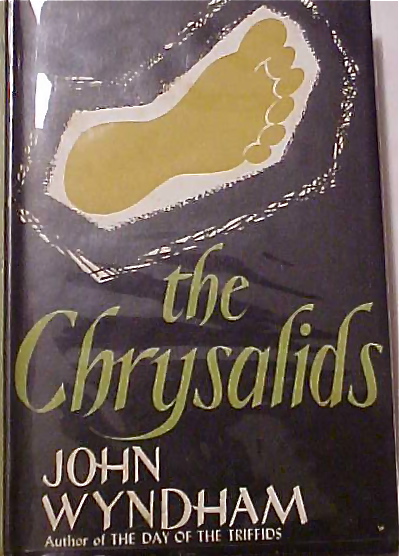
                • Cover of The Chrysalids
                  The Chrysalids

                  John Wyndham · standalone novel · 1955

                  similar byscience fictiontensesecondary worldpsychic powers+1 more

                  The Chrysalids is a science fiction novel by British writer John Wyndham, first published in 1955 by Michael Joseph. It is the least typical of Wyndham's major novels, but regarded by some as his best. An early manuscript version was entitled Time for a Change.

                • Cover of The Courier's Daughter Trilogy
                  The Courier's Daughter Trilogy

                  series · 3 books · 2012

                  similar bytensescience fictionsecondary worldyoung adultdystopia+2 more

                  The Courier's Daughter Trilogy is C. J. Redwine's YA fantasy series: Defiance (2012), Deception and Deliverance. Set in a walled, post-collapse city ruled by rigid survival laws, it follows a young woman searching for her missing father against the city's authorities and the monstrous forces beyond its walls. The trilogy follows one continuous search and its fallout across all three books.

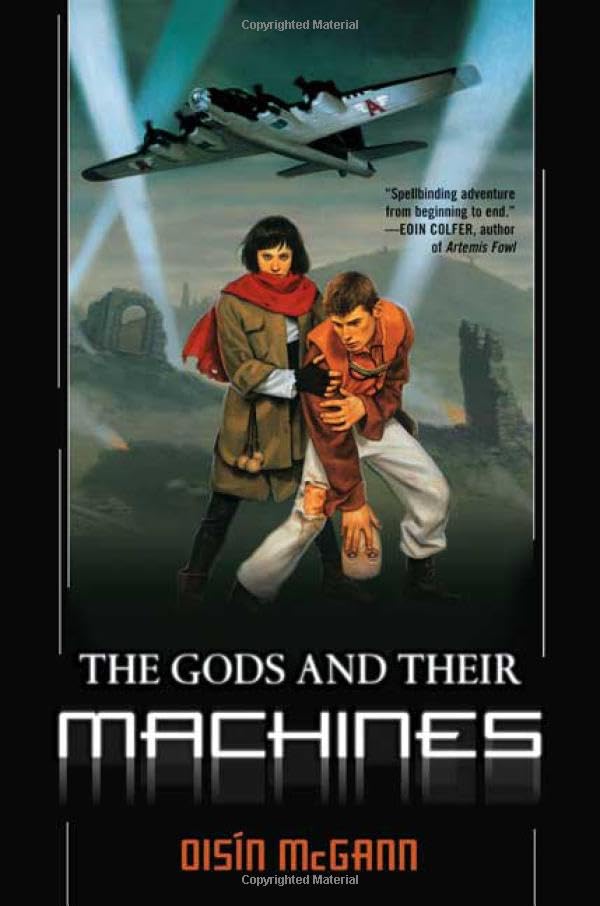
                • Cover of The Gods and Their Machines
                  The Gods and Their Machines

                  Oisin McGann · standalone novel · 2004

                  similar byscience fictiontensesecondary worldadventurouswaryoung adult+1 more

                  Trainee fighter pilot Chamus Aranson makes an emergency landing in enemy territory and his survival depends on Riadni, a tomboy who wants to become a soldier despite her nation's oppression of women, as Benyan, one of her countrymen, prepares to become a martyr dedicated to killing Chamus's grandfather.

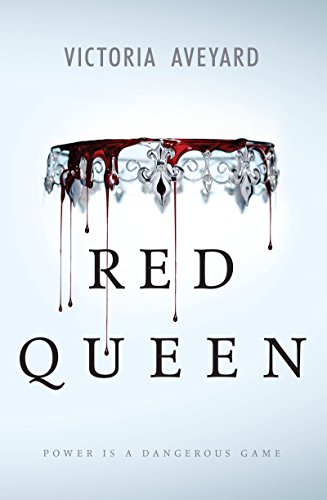
                • Cover of Red Queen
                  Red Queen

                  series · 14 books · 2015

                  similar bytensesecondary worldyoung adultdystopiarebellion and revolution+1 more

                  Red Queen is set in a world split between Reds, an oppressed servant class, and Silvers, a ruling class with superhuman abilities, where a Red girl discovers she has Silver-like powers of her own and is forced into the royal court to hide what she is. Victoria Aveyard's debut novel opens a four-book main sequence - Red Queen, Glass Sword, King's Cage, War Storm - plus the interstitial novella Cruel Crown and the epilogue novella Broken Throne. It's YA dystopian fantasy built around a class-based magic system and a slow-burn political rebellion.

                • Cover of The Psi Chronicles
                  The Psi Chronicles

                  series · 3 books · 2012

                  similar byscience fictionsecondary worldpsychic powersmiddle grade+4 more

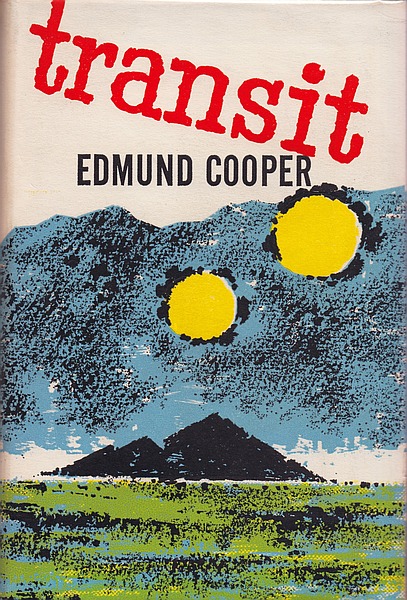
                • Cover of Transit
                  Transit

                  Edmund Cooper · standalone novel · 1964

                  similar byscience fictiontensesecondary worldadventurous

                  Transit... to another world. As a human being - an Earthman - Richard Avery was not particularly successful. He was mediocre as a teacher, and a failure as an artist. The rewards of Earth had passed him by. Still... Earth was home. It was where he belonged, where he could at least go his way unnoticed. Until that afternoon in Kensington Gardens, and that gleaming, hypnotic crystal that transported him - instantaneously - to a new and alien world. He was not alone, at least. There were three other Earth people marooned with him, all without a hint of the location or reason. And four more oddly assorted individuals would have been hard to imagine... Together, they faced sudden, savage onslaughts from an unknown foe. Together, they faced a fantastic implacable environment. And alone, they faced themselves - for to win, or even to survive, they had to re-discover what it meant to be human... (from the back cover of the Lancer first American edition)

                • Cover of A Song of Ice and Fire
                  A Song of Ice and Fire

                  series · 14 books · 1996

                  part of World of Ice and Fire

                  similar bysecondary worldwar+2 more

                  A Song of Ice and Fire is a series of high fantasy novels by the American author George R. R. Martin. Martin began writing the first volume, A Game of Thrones, in 1991, and published it in 1996. Martin, who originally envisioned the series as a trilogy, has released five out of seven planned volumes. The most recent entry in the series, A Dance with Dragons, was published in 2011. Since then, Martin has been working on the sixth novel, titled The Winds of Winter. A seventh novel, A Dream of Spring, is planned to follow.

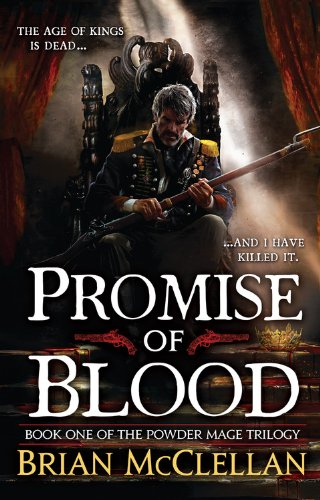
                • Cover of The Powder Mage
                  The Powder Mage

                  universe · 19 books · 2013

                  Start hereThe Powder Mage Trilogy · Start here

                  similar bysecondary worldtensewar+2 more

                  Load your powder, and pray your sorcery outruns their cannon. Here the age of kings is ending at musket-point: a world where black powder is not merely fired but eaten, and the men and women called powder mages snort a pinch of it to burn a trance across the battlefield — igniting an enemy's cartridges from a mile off, bending a bullet mid-flight, reading a room by the taste of the air. Against them stand the Privileged, glove-fingered sorcerers of the old order who summon fire and frost, and above both, gods who have not finished walking the earth. Brian McClellan builds this flintlock world across two linked trilogies. The Powder Mage Trilogy — Promise of Blood, The Crimson Campaign, The Autumn Republic — opens with a field marshal's coup against a rotten monarchy and the invasion, revolution, and divine reckoning that follow. Gods of Blood and Powder — Sins of Empire, Wrath of Empire, Blood of Empire — crosses the ocean a decade on to the colonial frontier of Fatrasta, where old soldiers, spies, and a heretic goddess collide. A run of novellas and short stories fills the corners between. Expect grapeshot and gunsmoke, siege lines and back-alley intrigue, generals and con men given equal weight. Begin at Promise of Blood and read in publication order — the trilogies run in sequence, and the short work is seasoning, not prerequisite.

                • Cover of The Powder Mage Trilogy
                  The Powder Mage Trilogy

                  series · 15 books · 2013

                  part of The Powder Mage

                  similar bysecondary worldtensewar+2 more

                  The Powder Mage trilogy is a series of epic fantasy novels written by American author Brian McClellan. It consists of the novels Promise of Blood (2013), The Crimson Campaign (2014) and The Autumn Republic (2015). In 2014, Promise of Blood received the Morningstar Award for Best Fantasy Newcomer. Several short stories and novellas set in the world of The Powder Mage trilogy have been published, as well as an additional trilogy called Gods of Blood and Powder.

                • Cover of Restoree
                  Restoree

                  Anne McCaffrey · standalone novel · 1967

                  similar byscience fictiontenseadventurous

                  Torn from Earth by a bizarre and nameless black force, Sara has no idea where she is or why she inhabits a beautiful new body. Controlled by brutal guards and tamed by terror, she can not comprehend her role as a nurse for a man who appears to be an idiot. She discovers that the planet she had been brought to was Lothar and that the man she was caring for was its Regent, Sara knows the restorees had to escape. When they do, they become fugitives on a world of multiple evils. (adapted from the back cover of the Baen edition)

                • Cover of The Internment Chronicles
                  The Internment Chronicles

                  series · 5 books · 2013

                  similar byscience fictiontensesecondary worldyoung adultdystopia+2 more

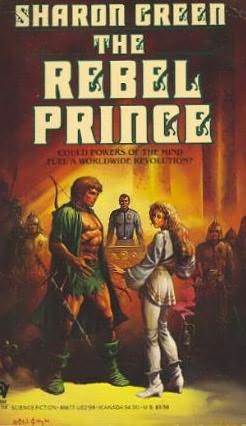
                • Cover of The Rebel Prince
                  The Rebel Prince

                  Sharon Green · standalone novel · 1987

                  similar byscience fictiontensesecondary worldpsychic powersdystopiarebellion and revolution

                  Pawn - or Power? - On the world of Plateau, telepathy has become the prime source of power, an unopposable weapon with which the ruling elite, the Uppers, can keep an oppressed population under strict control. But when Regan, a daughter of aristocrats, fails to claim her telepathic heritage, she becomes a mere pawn in her father's deadly political games, married off to Gareth, the very man who unbeknownst to Regan's father, is the leader of a secretly building resistance movement. And suddenly, discovering the key to her dormant powers becomes vital. For only through telepathy can the rebels hope to overcome their cruel telepathic overlords. (from the back cover of the DAW Books first edition)

                • Cover of The Codex Alera
                  The Codex Alera

                  series · 6 books · 2004

                  similar bytensesecondary worldadventurouswar

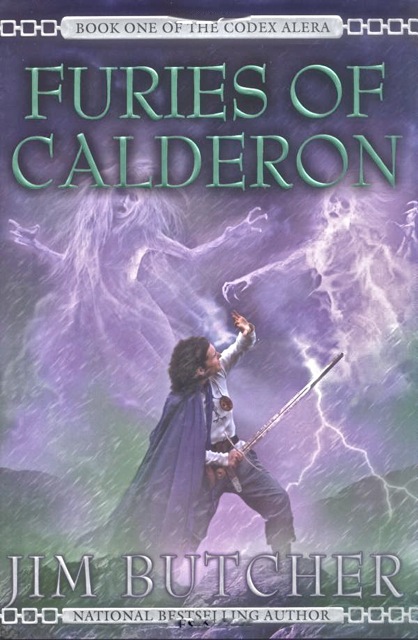
                  Furies of Calderon opens The Codex Alera in a Rome-flavored fantasy world where nearly everyone commands elemental spirits called furies, except Tavi, a teenager with none, whose resourcefulness becomes the series' recurring answer to raw magical power. Jim Butcher's six-book series, continuing through Academ's Fury, Cursor's Fury, Captain's Fury, Princeps' Fury, and First Lord's Fury, builds from small-scale political maneuvering into full-scale war.

                • Cover of The Lord of the Rings
                  The Lord of the Rings

                  series · 13 books · 1954

                  part of Tolkien's legendarium

                  similar bysecondary world+2 more

                  The Lord of the Rings is an epic high fantasy novel written by the English author and scholar J. R. R. Tolkien. Set in Middle-earth, the story began as a sequel to Tolkien's 1937 children's book The Hobbit but eventually developed into a much larger work. Written in stages between 1937 and 1949, The Lord of the Rings is one of the best-selling books ever written, with over 150 million copies sold.

                • Cover of The Pledge
                  The Pledge

                  series · 3 books · 2011

                  similar bytensesecondary worldscience fictionyoung adultdystopiarebellion and revolution+1 more

                • Cover of The Obernewtyn Chronicles
                  The Obernewtyn Chronicles

                  series · 9 books · 1987

                  similar byscience fictionpsychic powerssecondary worldyoung adult+2 more

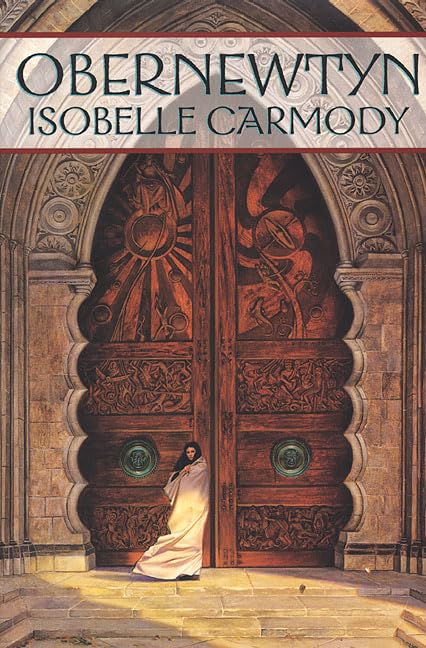
                  The Obernewtyn Chronicles is a series of science fiction and fantasy novels by Australian author Isobelle Carmody. The series has a post apocalyptic setting and depicts a world long after its destruction by a global nuclear holocaust.

                • Cover of The Farsala Trilogy / The Book of Sorahb
                  The Farsala Trilogy / The Book of Sorahb

                  series · 3 books · 2003

                  similar bysecondary worldtensewaryoung adult+2 more

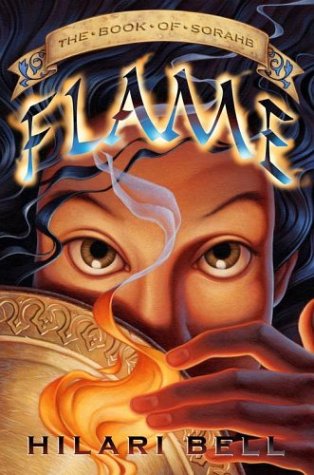
                  The Farsala Trilogy is a series of three fantasy novels by Hilari Bell that includes Fall of a Kingdom, Rise of a Hero, and Forging the Sword.

                • Cover of The Bridge Kingdom
                  The Bridge Kingdom

                  series · 7 books · 2018

                  similar bysecondary worldtensewar+3 more

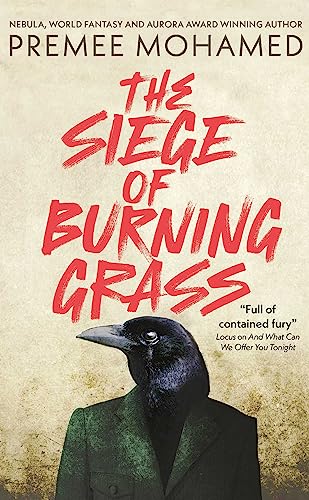
                • Cover of The Siege of Burning Grass
                  The Siege of Burning Grass

                  Premee Mohamed · standalone novel · 2024

                  similar byscience fictiontensesecondary worldwardystopiarebellion and revolution

                  The Empires of Varkal and Med’ariz have always been at war. Alefret, the founder of Varkal’s pacifist resistance, was bombed and maimed by his own government, locked up in a secret prison and tortured by a ‘visionary’ scientist. But now they’re offering him a chance of freedom. Ordered to infiltrate one of Med’ariz’s flying cities, obeying the bloodthirsty zealot Qhudur, he must find fellow anti-war activists in the enemy’s population and provoke them into an uprising against their rulers. He should refuse to serve the warmongers, but what if he could end this pointless war once and for all? Is that worth compromising his own morals and the principles of his fellow resistance members?

                • DT
                  Dragon Trilogies

                  series · 6 books · 1988

                  similar bysecondary worldtense+2 more

                  The Dragon Prince and Dragon Star trilogies comprise six connected fantasy novels written by Melanie Rawn. The Dragon Prince trilogy focuses on Prince Rohan of the Desert and his Sunrunner wife, Sioned, while the Dragon Star trilogy focuses on their son, Pol. The Dragon Prince trilogy consists of novels Dragon Prince, The Star Scroll, and Sunrunner's Fire. The books in the Dragon Star trilogy are Stronghold, The Dragon Token, and Skybowl.

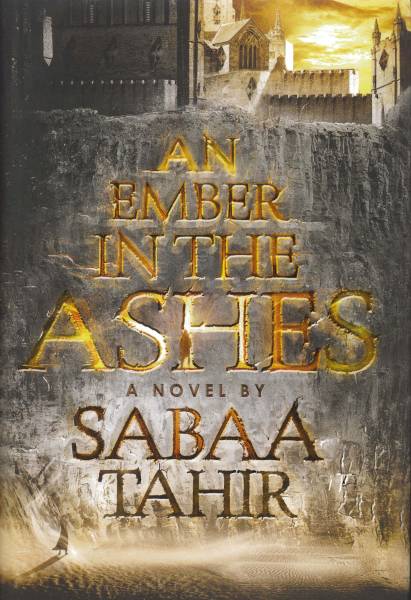
                • Cover of An Ember in the Ashes
                  An Ember in the Ashes

                  series · 4 books · 2015

                  similar bytensesecondary worldyoung adultrebellion and revolution+1 more

                  An Ember in the Ashes, set in a fantasy world modeled on ancient Rome, alternates between Laia, who spies on a brutal military academy for rebels in exchange for help freeing her imprisoned brother, and Elias, one of that academy's most skilled soldiers trying to break free of the empire he's been raised to serve. Sabaa Tahir's quartet, continuing through A Torch Against the Night, A Reaper at the Gates, and A Sky Beyond the Storm, follows the two toward a reckoning with the empire that trained one of them to enforce it.

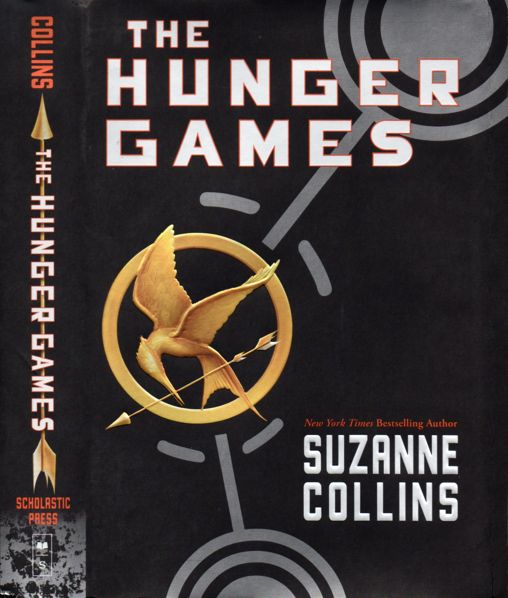
                • Cover of The Hunger Games
                  The Hunger Games

                  series · 3 books · 2008

                  part of The Hunger Games Universe

                  similar byscience fictiontenseyoung adultdystopiarebellion and revolution+1 more

                  The Hunger Games is a series of young adult dystopian novels written by American author Suzanne Collins. The series consists of a trilogy that follows teenage protagonist Katniss Everdeen, as well as two prequels. The Hunger Games universe is a dystopia set in Panem, a post-apocalyptic North American country consisting of the wealthy Capitol and 12 districts in varying states of poverty. As punishment for rebellion, the Capitol hosts an annual battle royale competition called The Hunger Games. Each of the 12 districts must send two children between the ages of 12 and 18 to participate, and the last surviving child is dubbed the victor.