More like Unit 77: Broken
anchored on:science fiction
but
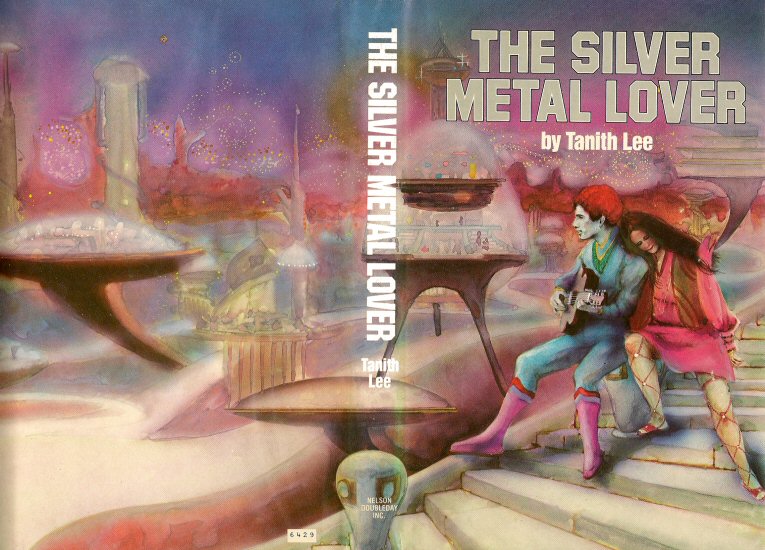
- Silver Metal Lover
series2 books1981
completed
similar byemotionalscience fictionour worldrobotsidentitynear futureromance
The S.I.L.V.E.R. series is a fantasy novel series by Tanith Lee. The Silver Metal Lover, published in 1981, is the first in the series. Metallic Love, published in 2005, is the second novel.
- The Host
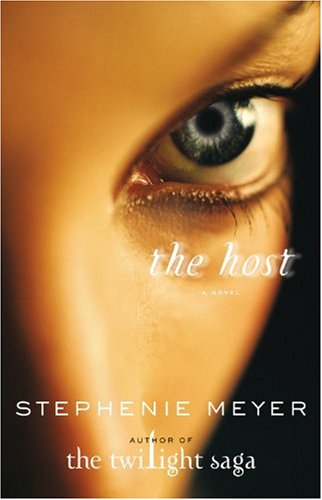
Stephenie Meyerstandalone novel2008
similar byemotionalscience fictionour worldidentitynear futureromance
The earth has been invaded by a species that take over the minds of their human hosts while leaving their bodies intact, and most of humanity has succumbed. But Melanie Stryder refuses to fade away. Wanderer, the invading "soul" who has been given Melanie's body, knew about the challenges of living inside a human: the overwhelming emotions, the too vivid memories. But there was one difficulty Wanderer didn't expect: the former tenant of her body refusing to relinquish possession of her mind. Melanie fills Wanderer's thoughts with visions of the man Melanie loves--Jared, a human who still lives in hiding. Unable to separate herself from her body's desires, Wanderer yearns for a man she's never met. As outside forces make Wanderer and Melanie unwilling allies, they set off to search for the man they both love.--From publisher description.
- Foundation Universe
universe123 books1940
Start hereFoundation · Start here
similar byscience fictionrobots+1 more
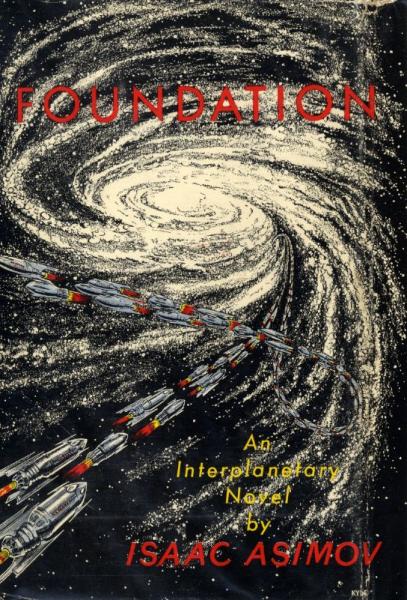
There is a science that reads the future of quadrillions the way an astronomer reads the orbits of stars. It is called psychohistory, and its equations foresee something the ruling Galactic Empire cannot admit: the throne is rotting, and thirty thousand years of barbarism are coming. One man, Hari Seldon, cannot stop the fall. He can only shorten it — by seeding a Foundation of scholars at the rim of the galaxy, a fragile institution built to carry knowledge across the dark and cut the interregnum to a single millennium. This is a universe told in the register of history itself: the long view, the calm of deep time, empires measured in centuries and men measured against them. The spine is Asimov's original trilogy — Foundation, Foundation and Empire, Second Foundation — followed decades later by the sequels Foundation's Edge and Foundation and Earth and the prequels Prelude to Foundation and Forward the Foundation. Late in life Asimov braided this in with his other future histories: the Robot novels of detective Elijah Baley and his humaniform partner R. Daneel Olivaw (The Caves of Steel, The Naked Sun, The Robots of Dawn, Robots and Empire) and the early Galactic Empire novels (Pebble in the Sky and its kin), until one continuous chronicle ran from the first thinking robots to the Second Empire. Other hands extend it — the Second Foundation Trilogy by Gregory Benford, Greg Bear, and David Brin, and shared-world spinoffs such as Robot City — so the corpus sprawls beyond a single author's tidy shelf. What distinguishes it is that the drama is intellectual: crises resolved by insight, nerve, and dialogue rather than fleets and blades, each turn hinging on the hidden logic of the Seldon Plan. Begin where readers have always begun — with Foundation, and the original trilogy in publication order. The rest opens outward from there.
- The Mad Scientist's Daughter
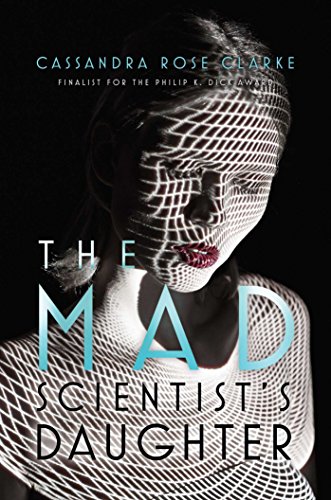
Cassandra Rose Clarkestandalone novel2013
similar byscience fictionour worldnear future+1 more
- Library of America P. K. Dick Collection
series9 books1962
completed
similar byscience fictionnear future+2 more
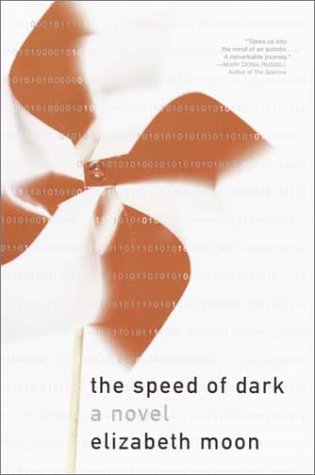
- The Speed of Dark
Elizabeth Moonstandalone novel2002
similar byemotionalscience fictionour worldidentitynear future
From the Penguin Random House website In the near future, disease will be a condition of the past. Most genetic defects will be removed at birth; the remaining during infancy. Lou Arrendale, a high-functioning autistic adult, is a member of the lost generation, born at the wrong time to reap the rewards of medical science. He lives a low-key, independent life. But then he is offered a chance to try a brand-new experimental "cure" for his condition. With this treatment Lou would think and act and be just like everyone else. But if he was suddenly free of autism, would he still be himself? Would he still love the same classical music — with its complications and resolutions? Would he still see the same colors and patterns in the world—shades and hues that others cannot see? Most important, would he still love Marjory, a woman who may never be able to reciprocate his feelings? Now Lou must decide if he should submit to a surgery that might completely change the way he views the world ... and the very essence of who he is.
- Patternist
series6 books1976
completed
similar byscience fiction+2 more
The Patternist series is a group of science fiction novels by Octavia E. Butler that detail a secret history continuing from the Ancient Egyptian period to the far future that involves telepathic mind control and an extraterrestrial plague. A profile of Butler in Black Women in America notes that the themes of the series include "racial and gender-based animosity, the ethical implications of biological engineering, the question of what it means to be human, ethical and unethical uses of power, and how the assumption of power changes people."
- Blade Runner Universe
series6 books1968
similar byscience fictionrobotsidentitynear future+1 more
Philip K. Dick's 1968 novel Do Androids Dream of Electric Sheep? follows bounty hunter Rick Deckard as he tracks escaped androids through an irradiated, near-abandoned San Francisco, using the hunt to probe questions of empathy and what separates human from machine. The novel became the basis for Ridley Scott's 1982 film Blade Runner, and Marvel Comics later published an illustrated adaptation of that film. Together the two trace the story's path from prose original to screen and comic-page adaptation.
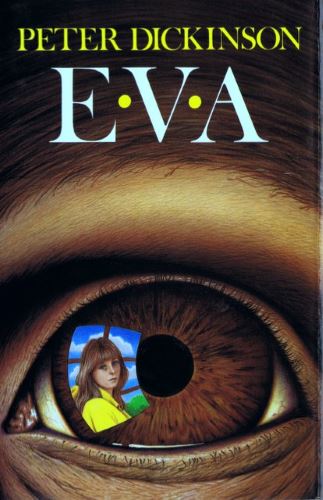
- Eva
Peter Dickinsonstandalone novel1988
similar byemotionalscience fictionour worldidentitynear future
From the back cover: "Thirteen-year-old Eva wakes up in the hospital unable to remember anything since the picnic on the beach. Her mother leans over the bed and begins to explain. A traffic accident, a long coma... But there is something, Eva senses, she is not being told, some other price she must pay to be alive at all. What have they done, with their amazing medical technology, to save her?"
- Matched
series3 books2010
similar byscience fiction+5 more
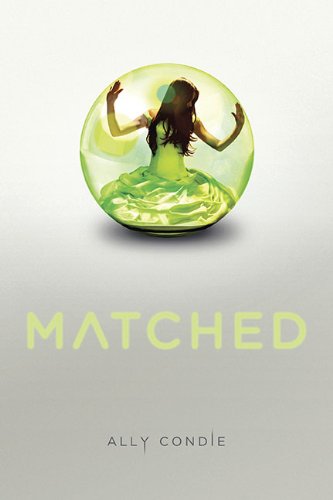
Ally Condie's dystopian trilogy follows Cassia, a teenager in a rigidly controlled Society that assigns citizens' spouses, careers, and even manner of death, after a glitch shows her a second face at her own Matching ceremony. Across Matched, Crossed, and Reached, her quiet doubt about the Society's choices grows into open resistance against the system that shaped her whole life.
- Juliette / Shatter Me
series16 books2011
similar byscience fictionnear future+4 more
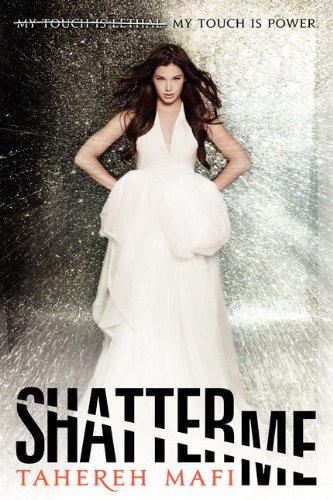
Tahereh Mafi's Shatter Me series follows Juliette, a teenager whose touch is lethally dangerous, in a dystopian future. The debut novel, Shatter Me (2011), is written in a fragmented, diary-like style with crossed-out lines reflecting its narrator's state of mind; the series has since grown to seven novels plus five companion novellas.
- Stranger in a Strange Land
Robert A. Heinleinstandalone novel1961
similar byscience fictionour worldidentitynear future
Stranger in a Strange Land is a 1961 science fiction novel by the American author Robert A. Heinlein. It tells the story of Valentine Michael Smith, a human who comes to Earth in early adulthood after being born on the planet Mars and raised by Martians, and explores his interaction with and eventual transformation of Terran culture.
- The Wild Robot
series4 books2016
similar byscience fictionrobotsnear future+2 more
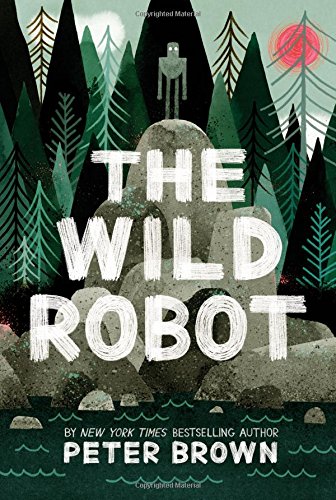
Peter Brown's 2016 novel follows a robot washed ashore on a remote island who ends up raising an orphaned gosling, adapting to wild island life among animals unused to her presence. It was later adapted into the 2024 animated film of the same name. The Wild Robot Escapes and The Wild Robot Protects continue the same character's story across the rest of the trilogy.
- Lunar Chronicles
series15 books2011
similar byscience fiction+1 more
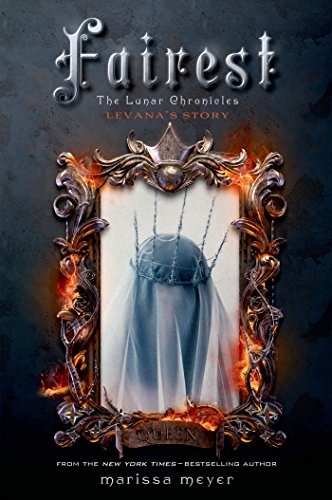
The Lunar Chronicles is a series of four young adult science fiction novels, a novella, and a short story collection written by American author Marissa Meyer and published by Feiwel & Friends. Each book entails a science fictional twist on a classic fairy tale, including "Cinderella", "Little Red Riding Hood", "Rapunzel", and "Snow White". Set in a futuristic world inhabited by various species and creatures, tensions are rising between Earth and its former colony Luna, while both attempt to manage an ongoing pandemic.
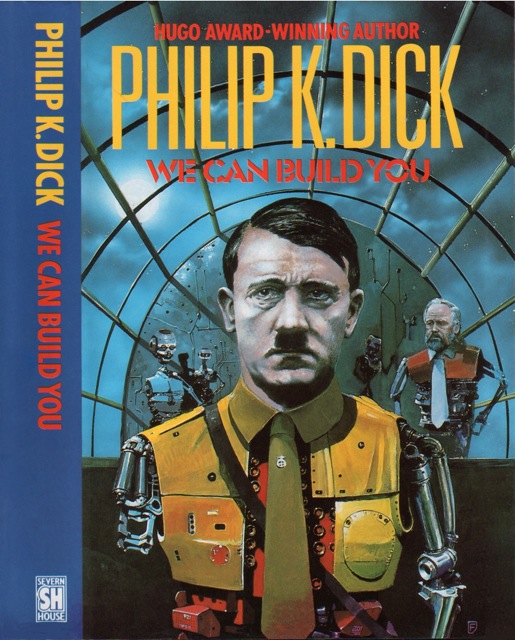
- We Can Build You
Philip K. Dickstandalone novel1972
similar byscience fictionour worldrobotsidentitynear future
We Can Build You is a 1972 science fiction novel by American writer Philip K. Dick. Written in 1962 as The First in Our Family, it remained unpublished until appearing in serial form as A. Lincoln, Simulacrum in the November 1969 and January 1970 issues of Amazing Stories magazine, re-titled by editor Ted White. The novel was issued as a mass market paperback original by DAW Books in 1972, its final title provided by publisher Donald A. Wollheim. Its first hardcover edition was published in Italy in 1976, and Vintage issued a trade paperback in 1994.
- Renegades (Marissa Meyer)
series3 books2017
similar byscience fictionour worldidentitynear future+1 more
Renegades is set in Gatlon City after a civil war between the superheroic Renegades and the villainous Anarchists, and follows Nova, a young woman with the power to put people to sleep by touch, as she infiltrates the Renegades as a spy for her uncle's Anarchists and falls for Adrian, the adopted son of the Renegades' leaders. Marissa Meyer's trilogy, continuing through Archenemies and Supernova, plays the two factions' history against the leads' divided loyalties; Meyer has said she doesn't plan to extend the series further.
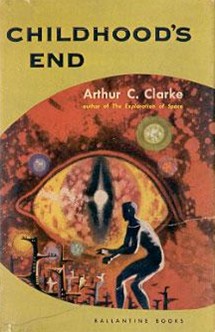
- Childhood's End
Arthur C. Clarkestandalone novel1953
similar byscience fictionour worldidentitynear future
Childhood's End is a 1953 science fiction novel by the British author Arthur C. Clarke. The story follows a peaceful alien invasion of Earth by mysterious Overlords, whose arrival begins decades of apparent utopia under indirect alien rule, at the cost of human identity and culture.
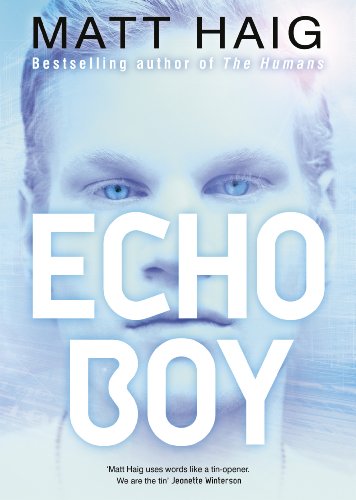
- Echo Boy
Matt Haigstandalone novel2014
similar byemotionalscience fictionour worldrobotsidentitynear future
Set In the future where global warming has caused drastic changes to the world. Technology has improved and almost every home has its own echo (humanlike androids) to do menial work. Main character Audrey's father is against the use of echoes and taught her to maintain her humanity. But then she meets Daniel an echo who can actually feel. When Audrey finds herself in dangerous situation Daniel is determined to save her.
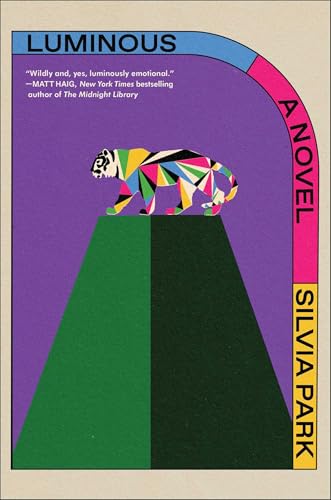
- Luminous
Silvia Parkstandalone novel2025
similar byemotionalscience fictionrobotsidentitynear future
Luminous is a 2025 science fiction novel by Silvia Park. It follows three siblings, two human and one robotic, in a near-future reunified Korea. The novel received critical praise for its exploration of the nature of humanity with relationship to robots.
- The Best of All Possible Worlds Universe
series3 books2013
similar byscience fiction+4 more
The Best of All Possible Worlds, the opener of this loose sequence by Karen Lord, follows survivors of a destroyed alien civilization as they search other worlds for compatible communities to join, told with more interest in culture and relationships than action. The Galaxy Game and The Blue, Beautiful World continue Lord's character-driven exploration of the same universe's societies, power politics, and cross-cultural understanding, without following a single continuous plot.
- The Dreaming Jewels
Theodore Sturgeonstandalone novel1950
similar byemotionalscience fictionour worldidentity
The Dreaming Jewels (1950), also known as The Synthetic Man, is a science fiction novel by American writer Theodore Sturgeon. It was his first published novel.