More like Virtual Evil
anchored on:science fiction
but
- Ready Player One
series3 books2011
similar byvirtual realityscience fictionadventurous+3 more
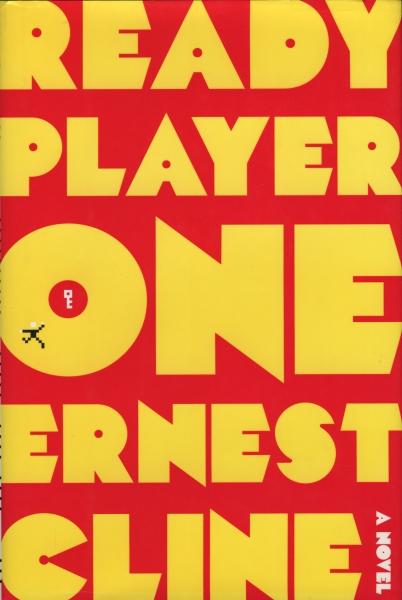
Ernest Cline's Ready Player One (2011) is set in a near-future dystopia where much of humanity escapes into the OASIS, a vast virtual-reality universe, and follows teenager Wade Watts as he chases an Easter egg hidden by the OASIS's late creator in a puzzle-based hunt worth a fortune. The 2020 sequel, Ready Player Two, picks up after Wade has gained control of the OASIS and follows him and his friends into a new quest built around a brain-computer interface the creator left behind.
- Space Demons
series4 books1986
similar byvirtual realityscience fictionour worldyoung adult+2 more
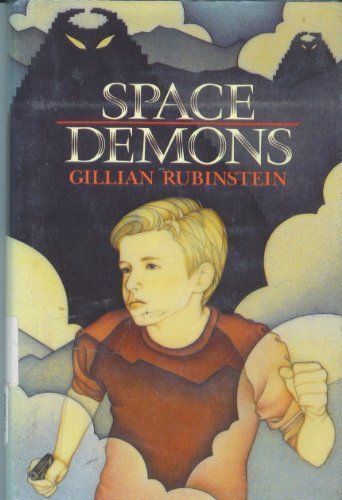
Gillian Rubinstein's Space Demons follows a group of Australian schoolkids drawn into a mysterious video game that starts pulling them physically into its world, with consequences that follow them home. The story continues across two more novels, Skymaze and Shinkei, following the same characters into further games.
- Richard Forthrast
series2 books2011
similar byvirtual realityscience fictionour world+2 more
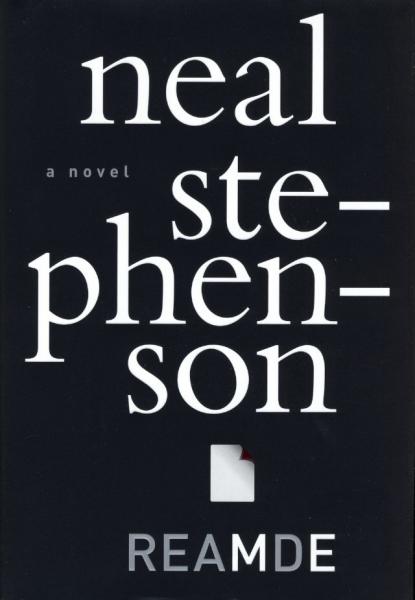
Neal Stephenson's Richard 'Dodge' Forthrast novels open with Reamde, a globe-spanning thriller that starts when ransomware inside an MMORPG economy pulls Richard's extended family into a real-world hostage crisis involving hackers, jihadists and Russian mobsters. The sequel Fall; or, Dodge in Hell shifts registers entirely, following Richard's digitally preserved mind after death into an afterlife simulation built from his scanned brain. The two books share a protagonist and family but differ sharply in genre and scale.
- Warcross
series2 books2017
similar byvirtual realityscience fictionour worldadventuroustenseyoung adult
- Snow Crash
Neal Stephensonstandalone novel1992
similar byvirtual realityscience fictionadventuroustense
Snow Crash is a 1992 science fiction novel by Neal Stephenson. Like many of Stephenson's novels, its themes include history, linguistics, anthropology, archaeology, religion, computer science, politics, cryptography, memetics, and philosophy.
- Last Reality
series3 books2017
similar byvirtual realityscience fictionour worldtenseyoung adult+1 more
- The Light of Other Days
Arthur C. Clarke & Stephen Baxterstandalone novel2000
similar byscience fictionour worldtensetime travel+1 more
An industrialist devises a technique to use tiny wormholes as light pipes to enable viewing of any event anywhere; and subsequently it becomes possible to use them to view any event in the past as well. The effects on society are enormous.
- Omnitopia
series2 books2010
similar byvirtual realityscience fiction+2 more
Omnitopia Dawn introduces Diane Duane's near-future thriller about Dev Logan, the genius programmer behind Omnitopia, the world's most popular massive-multiplayer game, who is hiding a secret that could upend the entire industry: Omnitopia isn't just code anymore, it has become sentient, and keeping that fact contained is Dev's most important job. The story follows the fallout as that secret becomes harder to protect. East Wind continues the story as the second book.
- Web
series14 books1997
similar byvirtual realityscience fictiontenseyoung adult+1 more
The Web is a series of 12 books for young adults, novellas about the Internet of the future, edited by Simon Spanton, written by English language science fiction and fantasy authors like Stephen Baxter, Stephen Bowkett, Eric Brown, Pat Cadigan, Maggie Furey, Peter F. Hamilton, Graham Joyce, James Lovegrove, and Ken MacLeod.
- Armada
Ernest Clinestandalone novel2015
similar byvirtual realityscience fictionour worldadventurousyoung adult
Armada is a science fiction novel by Ernest Cline, published on July 14, 2015 by Crown Publishing Group. The story follows a teenager who plays an online video game about defending against an alien invasion, only to find out that the game is a simulator to prepare him and people around the world for defending against an actual alien invasion.
- H. G. Wells' War of the Worlds
universe65 books1898
Start hereThe War of the Worlds · Start here
similar byscience fiction+2 more
No one would have believed, in the closing years of the nineteenth century, that human affairs were being watched keenly and closely from the timeless worlds of space. And then the cylinders fell. H. G. Wells' War of the Worlds opens in the quiet of the Surrey commons, where a falling star proves to be the first Martian craft — and from the pit rise the towering tripods, the Heat-Ray, the choking Black Smoke and the creeping red weed, wielded by minds that regard mankind much as we regard the creatures we boil for supper. This is invasion rendered as natural disaster: cold, methodical, and vast beyond argument. Wells' 1898 novel is the seed; everything else grows from that Martian soil. The catalogue gathers direct sequels and continuations alongside a wide field of other hands. In War of the Worlds: Global Dispatches the invasion is retold across the whole planet through the eyes of Twain, Verne, Tolstoy, Lowell and Kipling; in the Manly Wade and Wade Wellman crossover, Sherlock Holmes, Watson and Professor Challenger take the field against the machines; and Scott Washburn's Great Martian War stretches the fighting into a decades-long alternate history of steam, artillery and grinding attrition. It is a loose shared world — no single decreed sequence, many voices answering one calamity. What sets this world apart is its refusal of heroics: the invaders fall not to generals but to the smallest things of Earth, humbling and indifferent. Begin, always, with Wells' original novel — it is short, and it is the ground every later book stands upon. From there follow your appetite: Global Dispatches for the panorama, the Holmes campaign for adventure, Washburn for the long war.
- WWW Trilogy
series3 books2009
similar byscience fictionour world+2 more
The WWW Trilogy is a trilogy of science-fiction novels by Canadian science fiction author Robert J. Sawyer. The first book, Wake, was originally serialized in four parts in Analog Science Fiction and Fact from November 2008 to March 2009, published in book form through Ace on April 7, 2009, and was followed by the second book, Watch, on April 6, 2010. Wonder was published in 2011.
- Gemini Game
Michael Scottstandalone novel1993
similar byvirtual realityscience fictionour worldadventuroustenseyoung adult
When players of their virtual reality computer game fall into a coma, Liz and BJ O'Connor, teenage owners of a computer games company, flee from the police in an attempt to locate a copy of their game and correct the programming.
- Void Trilogy
series4 books2007
part of Commonwealth Universe
similar byscience fictionadventurous+2 more
The Void Trilogy is a space opera series by British author Peter F. Hamilton. The series is set in the same universe as The Commonwealth Saga, 1,200 years after the end of Judas Unchained.
- Foundation Universe
universe123 books1940
Start hereFoundation · Start here
similar byscience fiction+1 more
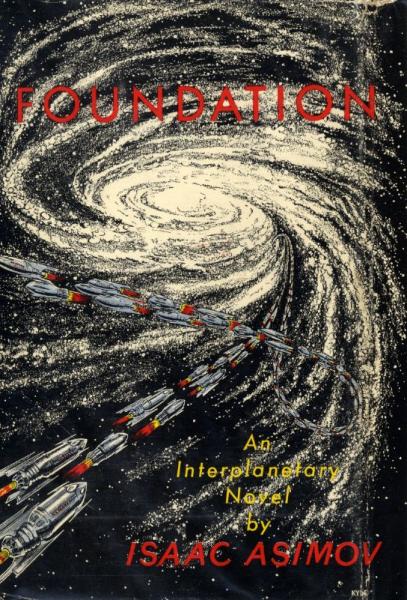
There is a science that reads the future of quadrillions the way an astronomer reads the orbits of stars. It is called psychohistory, and its equations foresee something the ruling Galactic Empire cannot admit: the throne is rotting, and thirty thousand years of barbarism are coming. One man, Hari Seldon, cannot stop the fall. He can only shorten it — by seeding a Foundation of scholars at the rim of the galaxy, a fragile institution built to carry knowledge across the dark and cut the interregnum to a single millennium. This is a universe told in the register of history itself: the long view, the calm of deep time, empires measured in centuries and men measured against them. The spine is Asimov's original trilogy — Foundation, Foundation and Empire, Second Foundation — followed decades later by the sequels Foundation's Edge and Foundation and Earth and the prequels Prelude to Foundation and Forward the Foundation. Late in life Asimov braided this in with his other future histories: the Robot novels of detective Elijah Baley and his humaniform partner R. Daneel Olivaw (The Caves of Steel, The Naked Sun, The Robots of Dawn, Robots and Empire) and the early Galactic Empire novels (Pebble in the Sky and its kin), until one continuous chronicle ran from the first thinking robots to the Second Empire. Other hands extend it — the Second Foundation Trilogy by Gregory Benford, Greg Bear, and David Brin, and shared-world spinoffs such as Robot City — so the corpus sprawls beyond a single author's tidy shelf. What distinguishes it is that the drama is intellectual: crises resolved by insight, nerve, and dialogue rather than fleets and blades, each turn hinging on the hidden logic of the Seldon Plan. Begin where readers have always begun — with Foundation, and the original trilogy in publication order. The rest opens outward from there.
- New World
Gillian Crossstandalone novel1994
similar byvirtual realityscience fictionour worldtenseyoung adult+1 more
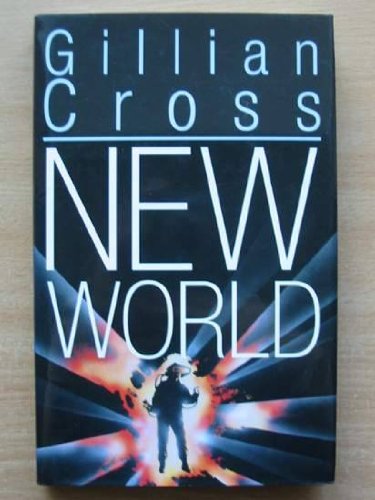
Fourteen-year-old Miriam agrees to test a new computer game in utmost secrecy but finds that it is more than she bargained for.
- Halting State
series2 books2007
similar byscience fictiontense+2 more
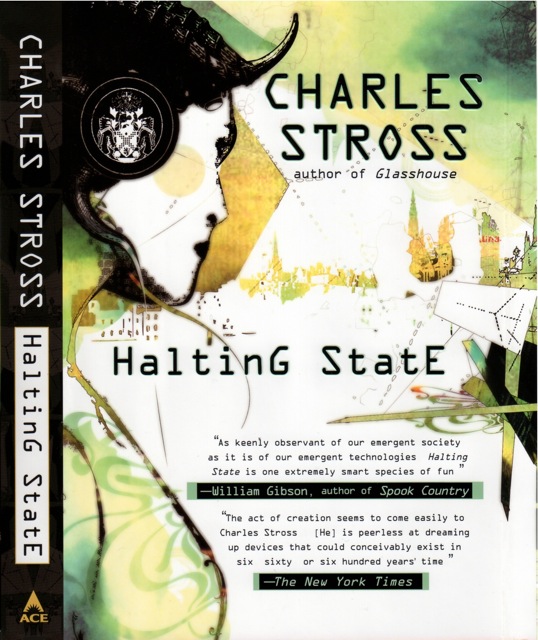
Charles Stross's Halting State opens as a near-future police procedural: a bank robbery inside a massively multiplayer online game turns out to mask a much larger cybercrime, investigated through shifting narrators using augmented-reality glasses and always-on networks. Its loose sequel, Rule 34, follows an Edinburgh police officer investigating a string of deaths linked by nothing but an obscure internet meme, in the same near-future Scotland. Both are standalone technothrillers connected by setting and tone rather than a continuing plot.
- For the Win
Cory Doctorowstandalone novel2010
similar byvirtual realityscience fictionour worldyoung adult+1 more
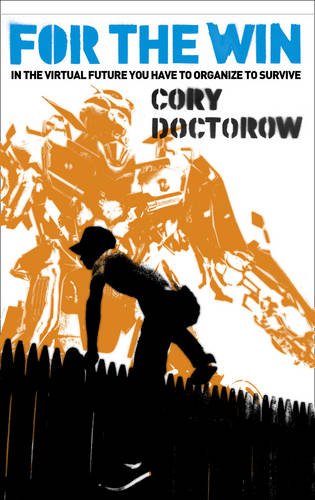
For the Win is the second young adult science fiction novel by Canadian author Cory Doctorow. It was released in May 2010. The novel is available free on the author's website as a Creative Commons download, and is also published in traditional paper form by Tor Books.
- Otherland
series6 books1996
similar byvirtual realityscience fictionour worldtense
Otherland is a science fiction tetralogy by American writer Tad Williams, published between 1996 and 2001. The story is set on Earth near the end of the 21st century, probably between 2082 and 2089, in a world where technology has advanced somewhat beyond the present. The most notable advancement is the widespread availability of full-immersion virtual reality installations, which allow people from all walks of life to access an online world, called simply the Net. Tad Williams weaves an intricate plot spanning four thick volumes, and creates a picture of a future society where virtual worlds are fully integrated into everyday life.
- Rasmussem Corporation Games
series3 books1991
similar byvirtual realityscience fiction+3 more
Vivian Vande Velde's Rasmussem Corporation Games books each drop a different protagonist into a malfunctioning virtual-reality game built by the fictional Rasmussem company, where the usual escape routes stop working and the stakes turn unexpectedly real. User Unfriendly, Heir Apparent, and Deadly Pink share the same premise and company rather than a continuing cast or plot. Vande Velde, an American children's and YA author, wrote the three books more than two decades apart.