Loreful
HomeDiscover
Search series, authors…⌘K
Loreful

Reading orders for SF/F series and shared universes — with your place kept in every one.

Explore

UniversesSeriesWorksAuthorsAtlas

Help

FAQAboutSite map

Account & legal

Sign inCreate accountPrivacyTerms

Data

Built on ISFDB, Wikipedia, Wikidata and Open Library. Curated reading orders carry their reasoning on the page; the rest follow publication order. Data sources & licenses

© Loreful · data: ISFDB · CC BY

More like Virtuous Vampires

anchored on:vampiresshort story cyclefantasyhorrorour worldcontemporary+1 more

but

Mood

The mood the book leaves you in.

  • The reading experience is propelled by journeys, exploration, and physical risk; excitement and forward momentum dominate over dread or introspection.
  • Joy and loss are deliberately mixed; the resolution grants characters something real while taking something else away, leaving warmth and sorrow together.
  • The book demands work from the reader — dense prose, difficult structure, unfamiliar ideas, or morally uncomfortable material — as part of its intended effect.
  • Grim events, cruelty, or despair dominate the atmosphere, and the book does not soften them with comfort or comic relief.
  • The atmosphere is quietly unsettling — wrongness, unease, and the uncanny pervade the book without necessarily escalating into overt horror.
  • The book is built to move the reader; character feeling is foregrounded and major scenes aim at a strong emotional response.
  • Humor is a primary aim and the prose plays for laughs — comic situations, wit, or dialogue produce sustained comedy, not occasional levity.
  • The book insists that things can improve; effort and decency are shown to matter, and the arc bends toward better outcomes even through hardship.
  • The book teaches as it goes — real facts, history, science, or craft are conveyed in enough depth that learning is part of the reading experience.
  • The book is designed to uplift and motivate, presenting perseverance or achievement in a way that invites the reader to aspire or act.
  • The overall register is cheerful and easygoing; stakes are kept gentle and the book avoids dwelling on pain or dread.
  • Withheld information drives the experience; the book sustains enigmas and secrets the reader wants resolved, whatever its genre.
  • The book is contemplative and inward-looking, giving more weight to thought, memory, and meaning than to external events.
  • The book works as comfort reading — low tension, a soothing pace, and an atmosphere the reader can unwind in.
  • Grief, loss, or melancholy set the dominant register, and the book lets sorrow stand rather than resolving it into comfort.
  • Sustained suspense is the point; the book keeps the reader braced for what happens next through danger, pressure, or impending revelation.
  • Playful invention and charm define the register — fanciful conceits, light absurdity, and a narration that delights in its own oddity.

About

What the story runs on.

  • Stories in which extraterrestrial beings are central — as characters, cultures, or the object of the plot.
  • Stories structured as a quest — a journey undertaken to find, deliver, or destroy something of great import.
  • Stories in which staying alive against nature, catastrophe, or scarcity is the central problem.
  • Stories of lovers kept apart by law, family, faith, or station, where the obstacle to love is the plot.
  • Stories in which a friendship — its making, testing, or loss — is the emotional center.
  • Stories of growing up — a young protagonist crossing from childhood into adult knowledge and responsibility.
  • Stories about who a character truly is — self-discovery, doubled lives, and the search for a self.
  • Stories about mourning — living through the death of a loved one and what loss does to the survivors.
  • Stories in which a buried family truth — hidden parentage, crimes, or shames — surfaces and reorders the present.
  • Stories driven by maneuvering for power — factions, conspiracies, and statecraft conducted in shadow.
  • Stories in which war itself is the subject — combat, occupation, and what warfare does to soldiers and civilians.
  • Stories organized around investigating a killing — the case, the clues, and the pursuit of the killer, in any genre's clothing.

Shelf

Where it sits in the library.

    • Fiction built on magic or other supernatural elements that have no scientific explanation.
    • Secondary-world fantasy at large scale, where the fate of nations or the world turns on the protagonists' struggle.
    • Fantasy set in a recognizably modern city or contemporary world where the supernatural intrudes on everyday life.
    • Fantasy that blends in horror's atmosphere and imagery, keeping a fantastical frame around grim or frightening material.
    • Action-driven fantasy following warriors or rogues with personal stakes against sorcerous threats, rather than world-spanning conflicts.
    • Fantasy set in a real historical period or a close analogue of one, with magic woven into the era.
    • Fantasy in which protagonists cross from the ordinary world into another world through a portal or similar passage.
    • Fiction that retells or reworks a traditional fairy tale in a new form or setting.
    • Fantasy drawing directly on myths, legends, and folklore, retelling them or building on their figures and logic.
    • Fantasy of ghosts, vampires, shapeshifters, psychics, and similar phenomena, usually set in an otherwise ordinary world.
    • Fiction mixing science-fictional trappings with overtly magical or impossible elements in one setting.
    • Low-stakes fantasy emphasizing comfort, community, and everyday pleasures over conflict and peril.
    • Speculative fiction of pervasive moral ambiguity, violence, and cynicism that rejects heroic conventions — fantasy and SF alike.
      • Fiction that extrapolates from science and technology — future societies, space travel, or speculative inventions — within at least nominally natural laws.
      • Science fiction of interstellar scope — starships, galactic polities, and adventure across star systems.
      • Science fiction committed to scientific rigor, where technical plausibility constrains the story.
      • Science fiction centered on armed forces and warfare, told largely from a military point of view.
      • Science fiction of networked, corporate-dominated near futures, pairing high technology with social decay.
      • Science fiction styled on nineteenth-century steam-powered technology, often in a Victorian or pseudo-Victorian setting.
      • Fiction depicting an oppressive or catastrophic society, presented as a warning.
      • Fiction set after civilization's collapse, following survivors in the ruins of the old world.
      • Fiction in which characters move between past and future, and the mechanics or consequences of that travel drive the plot.
      • Fiction exploring a world where a historical event went differently and history diverged from ours.
      • Science fiction about humanity's first encounter and communication with an alien intelligence.
      • Science fiction in which extraterrestrial forces attack or occupy Earth and humanity resists.
      • Fiction whose primary aim is to frighten or unsettle the reader through dread, menace, or the monstrous.
      • Horror of vast, indifferent, incomprehensible entities before which humanity is insignificant, in the Lovecraft tradition.
      • Horror of decaying houses, buried family secrets, and oppressive atmosphere in the Gothic literary tradition.
      • Horror centered on hauntings and the returning dead.
      • Horror located in the mind — paranoia, obsession, and unreliable perception rather than external monsters.
      • Horror built around the reanimated dead and survival amid their outbreaks.
      • Horror defined by explicit, transgressive gore that refuses to cut away from violence.
      • Speculative fiction of the strange and uncanny that resists both natural explanation and standard genre categories.
      • Fiction organized around solving a crime or puzzle, typically following an investigator toward the identification of a culprit.
      • A puzzle-first mystery that lays out clues so the culprit's identity can be deduced before the reveal.
      • Crime fiction of moral ambiguity, fatalism, and hard-edged style, set among the corrupt and the doomed.
      • A mystery following the realistic routines of police work — forensics, interviews, and case-building.
      • A gentle mystery with an amateur sleuth, a small community, and violence kept off the page.
      • A mystery set in a past era, where the investigation works within that period's methods and society.
      • Fast-paced fiction driven by imminent danger, pursuit, or high-stakes conspiracy, built to sustain tension.
      • A thriller of espionage — agents, tradecraft, and intelligence services in conflict.
      • A thriller centered on lawyers and the courtroom, where litigation carries the suspense.
      • A thriller driven by detailed contemporary or near-future technology, often military or scientific.
      • A thriller whose tension comes from mental states and manipulation between characters rather than external action.
      • Fiction whose central plot is a romantic relationship and its development toward an emotionally satisfying resolution.
      • Romance in which one or both partners are supernatural beings, blending fantasy elements into the love story.
      • A fantasy-romance hybrid in which the romantic arc and the fantasy plot carry equal weight.
      • Romance set in a past era, with courtship shaped by the period's society and manners.
      • Romance set in the present day, without supernatural or historical elements.
      • Fiction set in a real past period, where the historical setting materially shapes characters and events.
        • General and literary fiction emphasizing prose style, character interiority, or formal ambition over genre plot conventions.
        • Fiction in a realistic world where magical events occur and are treated as ordinary, in the tradition of Latin American literature.
        • Fiction that ridicules people, institutions, or society in order to criticize them.
        • Fiction of dreamlike, irrational imagery and logic that breaks from realistic representation.
        • Fiction that plays with narrative convention through metafiction, fragmentation, and self-reference.
        • Fiction propelled by journeys, exploration, and physical peril, where action and survival carry the plot.
        • Adventure fiction of ships and seafaring — naval engagements, voyages, and life at sea.
        • Fiction of the American frontier West — gunmen, ranchers, and lawmen, typically in the late nineteenth century.
        • Fiction centered on soldiers, campaigns, and the experience of warfare, historical or imagined.
          • Fiction written primarily to amuse, using comedic situations, wit, or parody as its organizing principle.
            • Multi-generational fiction following a family or dynasty across decades, with inheritance and kinship as the through-line.
              • Fiction whose world runs on explicit game mechanics — levels, stats, and skills that characters can see and exploit.
                • Fiction about costumed or superpowered heroes and their conflicts with comparable villains.

                Practical

                How long a commitment, whether it stands alone, and whether it has finished.

                Tap a chip to ask for it · tap again to rule it out · once more to clear. Numbers show what would be left.

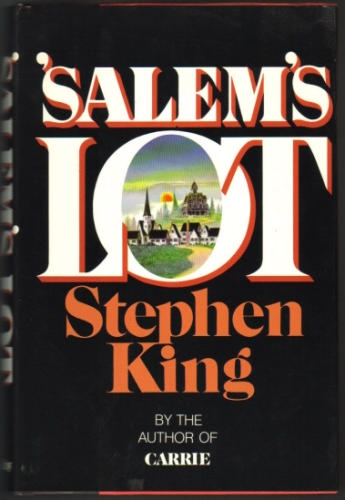
                • Cover of Jerusalem's Lot
                  Jerusalem's Lot

                  series · 3 books · 1975

                  similar byvampiresdarkour worldcontemporaryhorroreerie

                  Stephen King's 1975 novel 'Salem's Lot follows writer Ben Mears as he returns to his childhood town of Jerusalem's Lot, Maine, only to discover that its residents are being turned into vampires by a newly arrived stranger. It transplants Gothic vampire horror into a small New England community, tracking that community's collapse under a supernatural siege. It is a single, self-contained novel.

                • Cover of The Vampire Chronicles
                  The Vampire Chronicles

                  series · 15 books · 1976

                  completed

                  similar byvampiresdarkour worldcontemporaryhorror+1 more

                  The Vampire Chronicles is a series of Gothic vampire novels and a media franchise, created by American author Anne Rice, that revolves around the fictional character Lestat de Lioncourt, a French nobleman turned into a vampire in the 18th century.

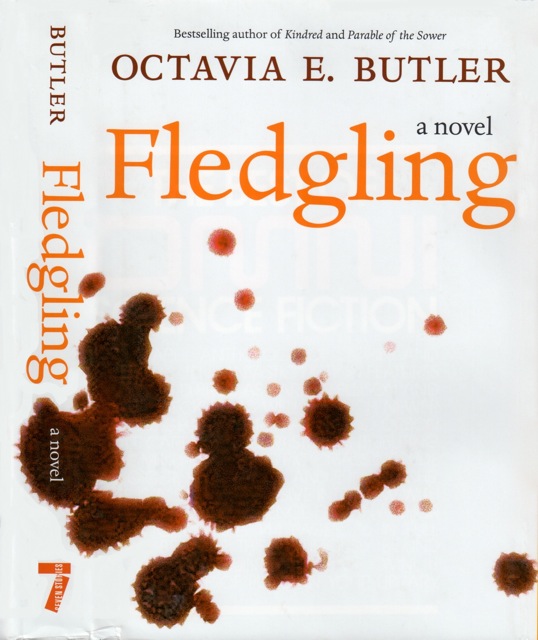
                • Cover of Fledgling
                  Fledgling

                  Octavia E. Butler · standalone novel · 2005

                  similar byvampiresdarkour worldcontemporaryfantasy+1 more

                  Fledgling is a science fiction vampire novel by American writer Octavia E. Butler, published in 2005. It was the author's final book published before her death in 2006.

                • Cover of Blood Opera
                  Blood Opera

                  series · 3 books · 1992

                  completed

                  similar byvampiresdarkcontemporaryhorrorfantasy+2 more

                  The Blood Opera Sequence is a thriller/horror novel series by English writer Tanith Lee. The series consists of three novels: Dark Dance, Personal Darkness, and Darkness, I.

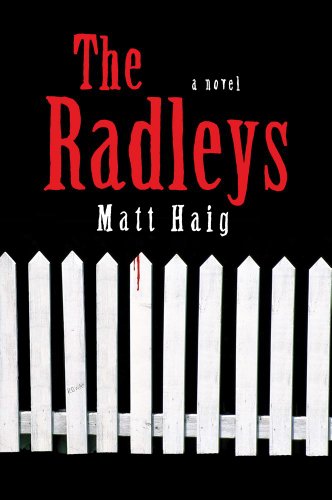
                • Cover of The Radleys
                  The Radleys

                  Matt Haig · standalone novel · 2010

                  similar byvampiresdarkour worldcontemporaryfantasy

                  The Radleys is a paranormal fantasy novel for young adults by Matt Haig, published 1 July 2010 by Canongate Books.

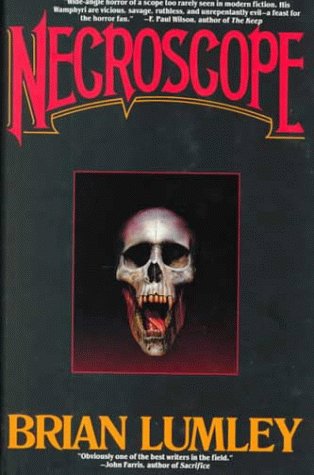
                • Cover of Necroscope
                  Necroscope

                  series · 26 books · 1982

                  completed

                  similar byvampiresdarkcontemporaryhorror+1 more

                  Brian Lumley's Necroscope opens an eighteen-book horror saga (1982-2017) centered on Harry Keogh, a man who can speak with the dead. Harry turns that gift against Thibor Ferenczy, a vampire buried since the Middle Ages, and against Ferenczy's agent Boris Dragosani, a Soviet spy who has learned to tear secrets from corpses in pursuit of world domination. Later volumes follow Harry's descendants and successors through further wars against the vampiric Wamphyri, across sequel trilogies and story collections.

                • Cover of I Am Legend
                  I Am Legend

                  Richard Matheson · standalone novel · 1954

                  similar byvampiresdarkour worldhorror

                  The last human survivor of the vampire epidemic has to maintain his defences against their onslaught, while attempting to research the cause and possibly solution to the plague. Robert Neville is the last living man on Earth... but he is not alone. Every other man, woman and child on the planet has become a vampire, and they are hungry for Neville's blood. By day he is the hunter, stalking the undead through the ruins of civilization. By night, he barricades himself in his home and prays for the dawn. How long can a man survive like this?

                • Cover of Love in Vein
                  Love in Vein

                  series · 2 books · 1994

                  similar byvampiresdarkour worldcontemporaryhorrorshort story cycle

                • Cover of Bite
                  Bite

                  Richard Laymon · standalone novel · 1996

                  similar byvampiresdarkour worldcontemporaryhorror

                  It's almost midnight. Cat's on the bed, facedown and naked. She's Sam's former girlfriend, the only woman he's ever loved. Sam's in the closet, with a hammer in one hand and a wooden stake in the other. Together they wait as the clock ticks down because ... the vampire is coming.When Cat first appeared at Sam's door he couldn't believe his eyes. He hadn't seen her in ten years, but he'd never forgotten her. Not for a second. But before this night is through, Sam will enter a nightmare of blood and fear that he'll never be able to forget -- no matter how hard he tries.

                • Cover of White Is for Witching
                  White Is for Witching

                  Helen Oyeyemi · standalone novel · 2009

                  similar byvampiresdarkour worldcontemporaryhorroreerie

                  White Is for Witching is a 2009 novel by British author Helen Oyeyemi. The novel, Oyeyemi's third, won a 2010 Somerset Maugham Award. Combining elements of ghost, vampire, and haunted house stories, White Is for Witching concerns a twin named Miranda and her relationship with the sentient, xenophobic house she inhabits. A French translation was published as Le Blanc va aux sorcières in 2011.

                • Cover of The Coldest Girl in Coldtown
                  The Coldest Girl in Coldtown

                  series · 2 books · 2009

                  similar byvampiresdarkour worldcontemporaryfantasy

                • Cover of Sunshine
                  Sunshine

                  Robin McKinley · standalone novel · 2003

                  similar byvampiresour worldcontemporaryfantasy+1 more

                  From the front flap of the Berkley HB first edition: "There are places in the world where darkness rules, where it's unwise to walk. Sunshine knew that. But there hadn't been any trouble out at the lake for years, and she needed a place to be alone for a while. Unfortunately, she wasn't alone. She never heard them coming. Of course you don't, when they're vampires. They took her clothes and sneakers. They dressed her in a long red gown. And they shackled her to the wall of an abandoned mansion - within easy reach of a figure stirring in the moonlight. She knows that he is a vampire. She knows that she's to be his dinner, and that when he is finished with her, she will be dead. Yet, as dawn breaks, she finds that he has not attempted to harm her. And now it is he who needs her to help him survive the day..."

                • Cover of Bod Owens
                  Bod Owens

                  series · 3 books · 2007

                  similar byour worldcontemporaryfantasyeerie+2 more

                  The Graveyard Book follows Nobody "Bod" Owens, a toddler who escapes the murder of his family and is raised among the ghosts of an old English graveyard, absorbing their otherworldly customs while a threat from his past waits beyond the gates. Neil Gaiman's 2008 novel won both the Newbery and Carnegie Medals, and illustrator P. Craig Russell later adapted it into a two-volume graphic novel. Bod's story spans the original novel and that graphic-novel retelling rather than continuing in a prose sequel.

                • Cover of Anita Blake
                  Anita Blake

                  series · 42 books · 1993

                  similar byvampirescontemporarydark+2 more

                  Anita Blake: Vampire Hunter is a series of urban fantasy novels, short stories, and comic books by Laurell K. Hamilton. The books have sold more than six million copies; many have made The New York Times Best Seller list.

                • Cover of Den of Shadows (Amelia Atwater-Rhodes)
                  Den of Shadows (Amelia Atwater-Rhodes)

                  series · 9 books · 1999

                  similar byvampiresdarkour worldcontemporary+1 more

                • Cover of Hunger (Whitley Strieber)
                  Hunger (Whitley Strieber)

                  series · 3 books · 1981

                  similar byvampiresour worldcontemporarydarkhorror

                  Whitley Strieber's The Hunger centers on Miriam Blaylock, a beautiful, wealthy vampire who takes human lovers and transforms them into vampire-human hybrids, feeding off them across centuries. Two later novels, The Last Vampire and Lilith's Dream, continue Miriam's story into the modern era.

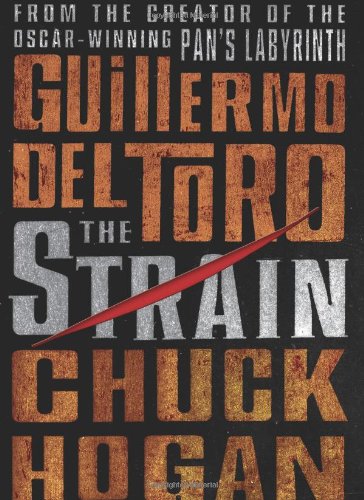
                • Cover of The Strain
                  The Strain

                  series · 3 books · 2009

                  similar byvampiresdarkcontemporaryhorror

                  When a Boeing 777 lands at JFK Airport with nearly everyone aboard dead, CDC epidemiologist Ephraim Goodweather is called in and instead uncovers a vampiric plague beginning to spread through New York City. Guillermo del Toro and Chuck Hogan's The Strain trilogy follows Goodweather and Holocaust survivor Abraham Setrakian as they race to stop an ancient vampire, the Master, from subjugating humanity, while Goodweather also tries to keep his own family safe from the outbreak. The story runs across The Strain, The Fall, and The Night Eternal.

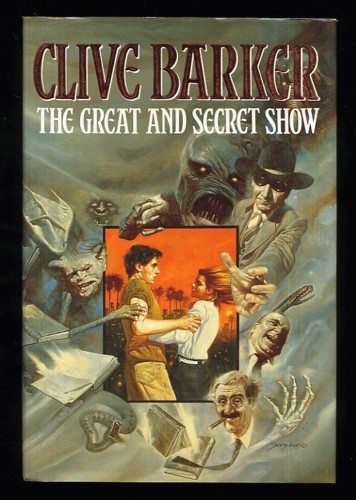
                • Cover of Book of the Art
                  Book of the Art

                  series · 3 books · 1989

                  similar bydarkcontemporaryfantasyhorroreerie+1 more

                  The Art was meant to be a trilogy about a hidden order guarding the boundary between our world and Quiddity, a dream-sea shared by all sleeping minds, but Clive Barker only completed two of its three volumes. The Great and Secret Show follows a decades-long feud between two men who discover Quiddity's power - one seeking to harness it, the other to protect it - with consequences that distort reality itself; Everville continues the story a generation later. The planned third volume was never published.

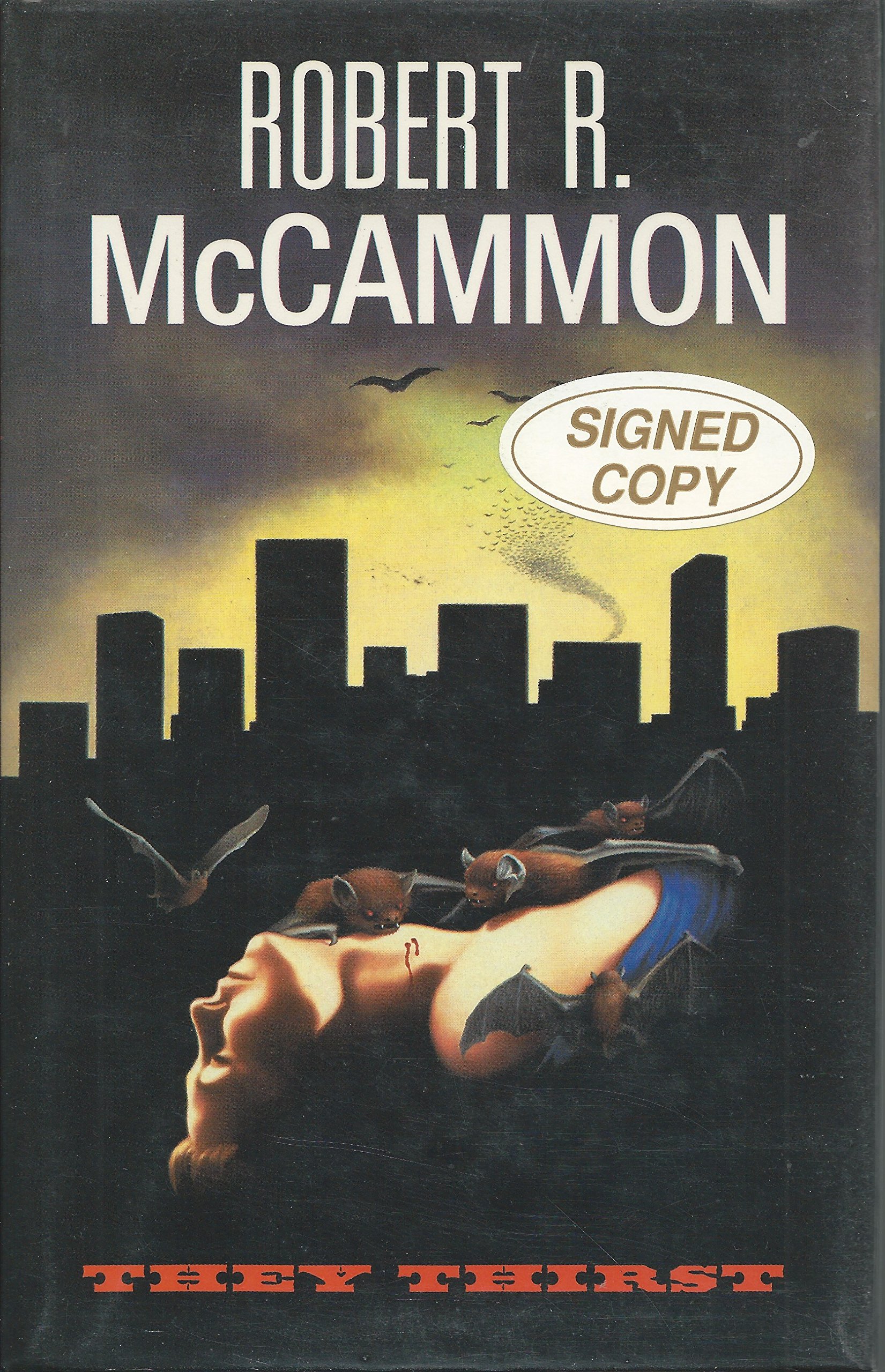
                • Cover of They Thirst
                  They Thirst

                  series · 2 books · 1981

                  similar byvampiresdarkcontemporaryhorror

                  In Robert R. McCammon's They Thirst, an ancient vampire prince arrives in Los Angeles and, in a matter of nights, begins turning the city into a stronghold for the undead, with Disneyland as an eerie staging ground for his conquest. A homicide detective, a reporter, and a small band of ordinary Angelenos piece together what's happening after a chilling séance warning, racing to stop the infestation before it spreads beyond the city. It's a large-canvas, multi-character vampire-apocalypse novel in the vein of McCammon's early horror work.

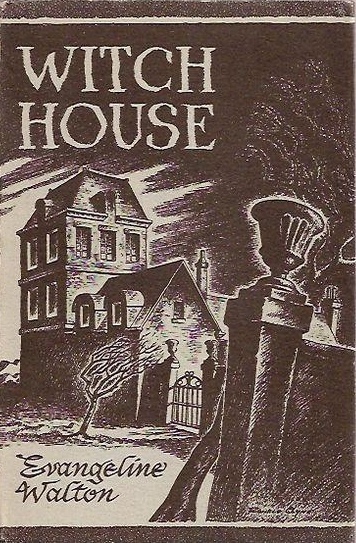
                • Cover of Witch House
                  Witch House

                  Evangeline Walton · standalone novel · 1945

                  similar bydarkour worldcontemporaryfantasyhorroreerie

                  Witch House is a fantasy novel by American writer Evangeline Walton. It was published in 1945 by Arkham House in an edition of 3,000 copies. It was the first full-length novel to be published by Arkham House and was listed as the initial book in the Library of Arkham House Novels of Fantasy and Terror. An expanded version, with a newly written 20,000-word prologue, was published in England in 1950. In 2013, Centipede Press issued the first American edition of this revised version, also including previously unpublished writings by Walton and several of her short stories.

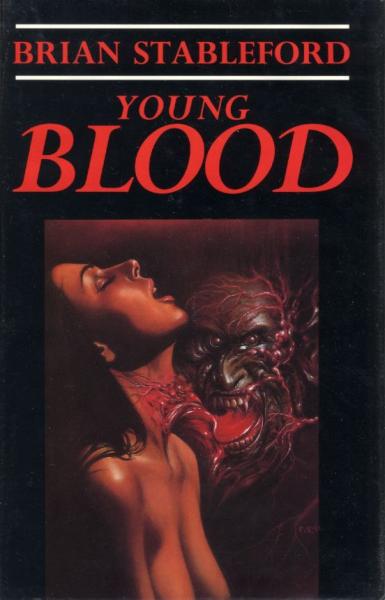
                • Cover of Young Blood
                  Young Blood

                  Brian Stableford · standalone novel · 1992

                  similar byvampiresdarkour worldcontemporaryfantasy

                  A vampire who calls himself Maldureve comes out of the shadowy borderlands of existence in response to the unvoiced desires of philosophy student Anne Charet. By choosing to see him she gives him substance; after feeding him, she too begins to hunger for blood. Maldureve becomes Anne's lover and mentor but he cannot protect her against his own enemies, mysterious creatures of light who call themselves owls because they believe that theirs is the highest wisdom of all. Anne's boyfriend, psychologist Gil Molari, worries about her health and state of mind, although he knows nothing about his supernatural rival. His anxiety is magnified when he becomes convinced that one of the mind-altering viruses with which he works has escaped from the laboratory. Gil refuses to believe in Maldureve but his refusal to believe cannot save him from becoming the victim of a fierce hunger that he cannot satisfy, which drives him in the end to an unendurable extreme.Anne believes that her experiences are entirely real; Gil believes that his are the products of an infectious madness. Whichever of them is right, they are both in deadly danger, and so is everyone around them. Once they have started on their strange journey, there is no way back. But what can possibly lie ahead of them, when death itself no longer seems to be an end?

                • Cover of Books of Blood
                  Books of Blood

                  series · 10 books · 1984

                  similar bydarkour worldcontemporaryhorrorshort story cycle+1 more

                  Books of Blood is a series of six horror fiction anthologies collecting original stories written by English author, playwright, and filmmaker Clive Barker in 1984 and 1985. Known primarily for writing stage plays beforehand, Barker gained a wider audience and fanbase through this anthology series, leading to a successful career as a novelist. Originally presented as six volumes, the anthologies were subsequently re-published in two omnibus editions containing three volumes each. Each volume contains four, five or six stories. The Volume 1–3 omnibus contained a foreword by Barker's fellow Liverpudlian horror writer Ramsey Campbell. Author Stephen King praised Books of Blood, leading to a quote from him appearing on the first US edition of the book: "I have seen the future of horror and his name is Clive Barker."

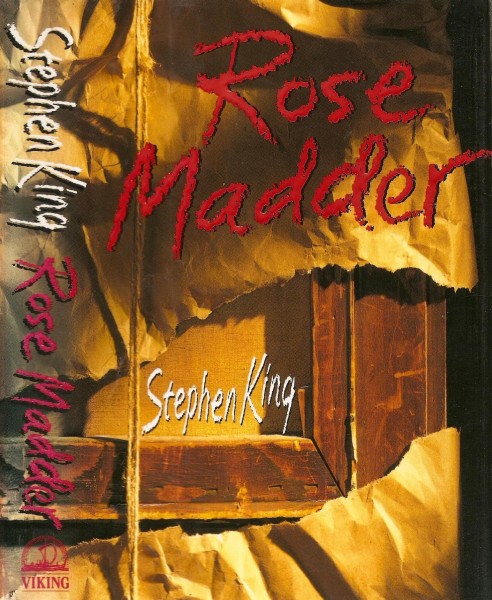
                • Cover of Rose Madder
                  Rose Madder

                  Stephen King · standalone novel · 1995

                  similar bydarkour worldcontemporaryfantasyhorror

                  Rose Madder is a horror/fantasy novel by American writer Stephen King, published in 1995. It deals with the effects of domestic violence and, unusually for a King novel, relies for its fantastic element on Greek mythology. In his memoir, On Writing, King states that Rose Madder and Insomnia are "stiff, trying-too-hard novels."

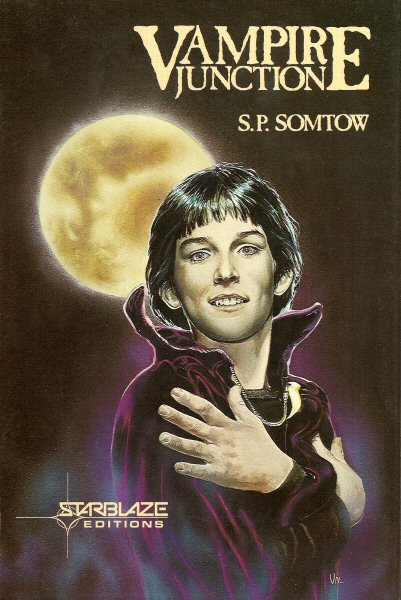
                • Cover of Valentine
                  Valentine

                  series · 6 books · 1984

                  similar byvampirescontemporarydarkour world+2 more

                  S. P. Somtow's Valentine sequence begins with Vampire Junction, centered on Timmy Valentine, a child rock star who is secretly a 2,000-year-old vampire performing to sold-out arenas. The horror plays out through a fragmented, media-saturated style meant to echo the look of music television and splatter film rather than gothic tradition. Later books follow the same character further into his impossibly long, publicly visible unlife.