Loreful
HomeDiscover
Search series, authors…⌘K
Loreful

Reading orders for SF/F series and shared universes — with your place kept in every one.

Explore

UniversesSeriesWorksAuthorsAtlas

Help

FAQAboutSite map

Account & legal

Sign inCreate accountPrivacyTerms

Data

Built on ISFDB, Wikipedia, Wikidata and Open Library. Curated reading orders carry their reasoning on the page; the rest follow publication order. Data sources & licenses

© Loreful · data: ISFDB · CC BY

More like Vulcanization

anchored on:19th centuryscience fictionalternate historycolonialismafrica

but

Mood

The mood the book leaves you in.

  • The reading experience is propelled by journeys, exploration, and physical risk; excitement and forward momentum dominate over dread or introspection.
  • Joy and loss are deliberately mixed; the resolution grants characters something real while taking something else away, leaving warmth and sorrow together.
  • The book demands work from the reader — dense prose, difficult structure, unfamiliar ideas, or morally uncomfortable material — as part of its intended effect.
  • Grim events, cruelty, or despair dominate the atmosphere, and the book does not soften them with comfort or comic relief.
  • The atmosphere is quietly unsettling — wrongness, unease, and the uncanny pervade the book without necessarily escalating into overt horror.
  • The book is built to move the reader; character feeling is foregrounded and major scenes aim at a strong emotional response.
  • Humor is a primary aim and the prose plays for laughs — comic situations, wit, or dialogue produce sustained comedy, not occasional levity.
  • The book insists that things can improve; effort and decency are shown to matter, and the arc bends toward better outcomes even through hardship.
  • The book teaches as it goes — real facts, history, science, or craft are conveyed in enough depth that learning is part of the reading experience.
  • The book is designed to uplift and motivate, presenting perseverance or achievement in a way that invites the reader to aspire or act.
  • The overall register is cheerful and easygoing; stakes are kept gentle and the book avoids dwelling on pain or dread.
  • Withheld information drives the experience; the book sustains enigmas and secrets the reader wants resolved, whatever its genre.
  • The book is contemplative and inward-looking, giving more weight to thought, memory, and meaning than to external events.
  • The book works as comfort reading — low tension, a soothing pace, and an atmosphere the reader can unwind in.
  • Grief, loss, or melancholy set the dominant register, and the book lets sorrow stand rather than resolving it into comfort.
  • Sustained suspense is the point; the book keeps the reader braced for what happens next through danger, pressure, or impending revelation.
  • Playful invention and charm define the register — fanciful conceits, light absurdity, and a narration that delights in its own oddity.

About

What the story runs on.

  • Stories in which a machine intelligence — an AI, computer mind, or sentient program — is a central character or the story's driving problem.
  • Stories in which extraterrestrial beings are central — as characters, cultures, or the object of the plot.
  • Stories driven by deliberate modification of genomes — designer organisms, engineered humans, and the consequences of remaking life.
  • Stories about venturing into space to explore — survey missions, astronauts, and the frontier of the unknown beyond Earth.
  • Stories about minds with paranormal abilities — telepathy, telekinesis, precognition, empathy — and how societies handle those who have them.
  • Stories in which staying alive against nature, catastrophe, or scarcity is the central problem.
  • Stories of growing up — a young protagonist crossing from childhood into adult knowledge and responsibility.
  • Stories about who a character truly is — self-discovery, doubled lives, and the search for a self.
  • Stories driven by maneuvering for power — factions, conspiracies, and statecraft conducted in shadow.
  • Stories about rising against rulers — uprisings, resistance movements, and revolutions and their aftermaths.
  • Stories in which war itself is the subject — combat, occupation, and what warfare does to soldiers and civilians.
  • Stories organized around investigating a killing — the case, the clues, and the pursuit of the killer, in any genre's clothing.

Shelf

Where it sits in the library.

    • Fiction built on magic or other supernatural elements that have no scientific explanation.
    • Secondary-world fantasy at large scale, where the fate of nations or the world turns on the protagonists' struggle.
    • Fantasy set in a recognizably modern city or contemporary world where the supernatural intrudes on everyday life.
    • Fantasy that blends in horror's atmosphere and imagery, keeping a fantastical frame around grim or frightening material.
    • Action-driven fantasy following warriors or rogues with personal stakes against sorcerous threats, rather than world-spanning conflicts.
    • Fantasy set in a real historical period or a close analogue of one, with magic woven into the era.
    • Fantasy in which protagonists cross from the ordinary world into another world through a portal or similar passage.
    • Fiction that retells or reworks a traditional fairy tale in a new form or setting.
    • Fantasy drawing directly on myths, legends, and folklore, retelling them or building on their figures and logic.
    • Fantasy of ghosts, vampires, shapeshifters, psychics, and similar phenomena, usually set in an otherwise ordinary world.
    • Fiction mixing science-fictional trappings with overtly magical or impossible elements in one setting.
    • Low-stakes fantasy emphasizing comfort, community, and everyday pleasures over conflict and peril.
    • Speculative fiction of pervasive moral ambiguity, violence, and cynicism that rejects heroic conventions — fantasy and SF alike.
      • Fiction that extrapolates from science and technology — future societies, space travel, or speculative inventions — within at least nominally natural laws.
      • Science fiction of interstellar scope — starships, galactic polities, and adventure across star systems.
      • Science fiction committed to scientific rigor, where technical plausibility constrains the story.
      • Science fiction centered on armed forces and warfare, told largely from a military point of view.
      • Science fiction of networked, corporate-dominated near futures, pairing high technology with social decay.
      • Science fiction styled on nineteenth-century steam-powered technology, often in a Victorian or pseudo-Victorian setting.
      • Fiction depicting an oppressive or catastrophic society, presented as a warning.
      • Fiction set after civilization's collapse, following survivors in the ruins of the old world.
      • Fiction in which characters move between past and future, and the mechanics or consequences of that travel drive the plot.
      • Fiction exploring a world where a historical event went differently and history diverged from ours.
      • Science fiction about humanity's first encounter and communication with an alien intelligence.
      • Science fiction in which extraterrestrial forces attack or occupy Earth and humanity resists.
      • Fiction whose primary aim is to frighten or unsettle the reader through dread, menace, or the monstrous.
      • Horror of vast, indifferent, incomprehensible entities before which humanity is insignificant, in the Lovecraft tradition.
      • Horror of decaying houses, buried family secrets, and oppressive atmosphere in the Gothic literary tradition.
      • Horror centered on hauntings and the returning dead.
      • Horror located in the mind — paranoia, obsession, and unreliable perception rather than external monsters.
      • Horror built around the reanimated dead and survival amid their outbreaks.
      • Horror defined by explicit, transgressive gore that refuses to cut away from violence.
      • Speculative fiction of the strange and uncanny that resists both natural explanation and standard genre categories.
      • Fiction organized around solving a crime or puzzle, typically following an investigator toward the identification of a culprit.
      • A puzzle-first mystery that lays out clues so the culprit's identity can be deduced before the reveal.
      • Crime fiction of moral ambiguity, fatalism, and hard-edged style, set among the corrupt and the doomed.
      • A mystery following the realistic routines of police work — forensics, interviews, and case-building.
      • A gentle mystery with an amateur sleuth, a small community, and violence kept off the page.
      • A mystery set in a past era, where the investigation works within that period's methods and society.
      • Fast-paced fiction driven by imminent danger, pursuit, or high-stakes conspiracy, built to sustain tension.
      • A thriller of espionage — agents, tradecraft, and intelligence services in conflict.
      • A thriller centered on lawyers and the courtroom, where litigation carries the suspense.
      • A thriller driven by detailed contemporary or near-future technology, often military or scientific.
      • A thriller whose tension comes from mental states and manipulation between characters rather than external action.
      • Fiction whose central plot is a romantic relationship and its development toward an emotionally satisfying resolution.
      • Romance in which one or both partners are supernatural beings, blending fantasy elements into the love story.
      • A fantasy-romance hybrid in which the romantic arc and the fantasy plot carry equal weight.
      • Romance set in a past era, with courtship shaped by the period's society and manners.
      • Romance set in the present day, without supernatural or historical elements.
      • Fiction set in a real past period, where the historical setting materially shapes characters and events.
        • General and literary fiction emphasizing prose style, character interiority, or formal ambition over genre plot conventions.
        • Fiction in a realistic world where magical events occur and are treated as ordinary, in the tradition of Latin American literature.
        • Fiction that ridicules people, institutions, or society in order to criticize them.
        • Fiction of dreamlike, irrational imagery and logic that breaks from realistic representation.
        • Fiction that plays with narrative convention through metafiction, fragmentation, and self-reference.
        • Fiction propelled by journeys, exploration, and physical peril, where action and survival carry the plot.
        • Adventure fiction of ships and seafaring — naval engagements, voyages, and life at sea.
        • Fiction of the American frontier West — gunmen, ranchers, and lawmen, typically in the late nineteenth century.
        • Fiction centered on soldiers, campaigns, and the experience of warfare, historical or imagined.
          • Fiction written primarily to amuse, using comedic situations, wit, or parody as its organizing principle.
            • Multi-generational fiction following a family or dynasty across decades, with inheritance and kinship as the through-line.
              • Fiction whose world runs on explicit game mechanics — levels, stats, and skills that characters can see and exploit.
                • Fiction about costumed or superpowered heroes and their conflicts with comparable villains.

                Practical

                How long a commitment, whether it stands alone, and whether it has finished.

                Tap a chip to ask for it · tap again to rule it out · once more to clear. Numbers show what would be left.

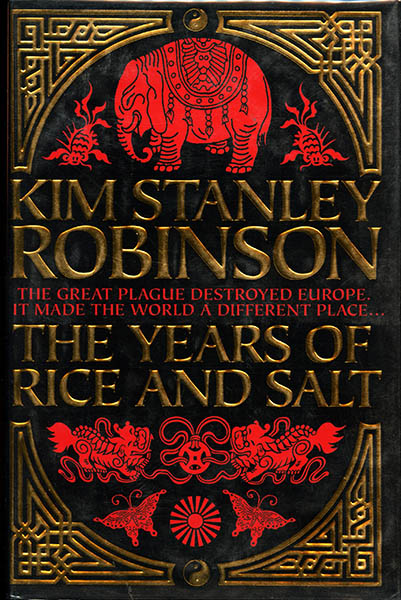
                • Cover of The Years of Rice and Salt
                  The Years of Rice and Salt

                  Kim Stanley Robinson · standalone novel · 2002

                  similar bycolonialismchallengingscience fictionalternate history

                  What if the Black Death had killed nearly everyone in Europe instead of a third of it? Kim Stanley Robinson opens on that premise with a Mongol scout named Bold, who finds a Hungarian city emptied by plague and only narrowly escapes execution meant to contain the contagion; sold into slavery, he ends up serving aboard a Chinese treasure fleet alongside a young African companion. From there the novel follows a recurring cast of souls, reincarnated across centuries and identifiable book to book by the first letter of their names, through an alternate history in which Islamic and Chinese civilizations, not a devastated Europe, shape the world's future.

                • Cover of The Old Drift
                  The Old Drift

                  Namwali Serpell · standalone novel · 2019

                  similar bycolonialismchallengingafricascience fiction+1 more

                  The Old Drift is a 2019 historical fiction and science fiction novel by Zambian author Namwali Serpell. Set in Northern Rhodesia/Zambia, it is Serpell's debut novel and follows the lives of three interwoven families in three generations. It won the 2020 Anisfield-Wolf Book Award as well as the Arthur C. Clarke Award.

                • Cover of Homer Crawford
                  Homer Crawford

                  series · 5 books · 1972

                  completed

                  similar bycolonialismafricascience fiction+1 more

                • Cover of Babel, or, The Necessity of Violence: An Arcane History of the Oxford Translators' Revolution
                  Babel, or, The Necessity of Violence: An Arcane History of the Oxford Translators' Revolution

                  R. F. Kuang · standalone novel · 2022

                  similar bycolonialismchallenging19th century

                  Babel, or The Necessity of Violence: An Arcane History of the Oxford Translators' Revolution is a 2022 novel of speculative fiction by R. F. Kuang set in a fantastical version of Oxford in 1830s England. Thematically similar to The Poppy War (2018–20), Kuang's first book series, the book criticizes British imperialism, racism and capitalism, and the complicity of academia, knowledge, and language in perpetuating and enabling them.

                • Cover of Bilalistan
                  Bilalistan

                  series · 2 books · 2002

                  similar bycolonialism19th centuryalternate historyscience fiction+1 more

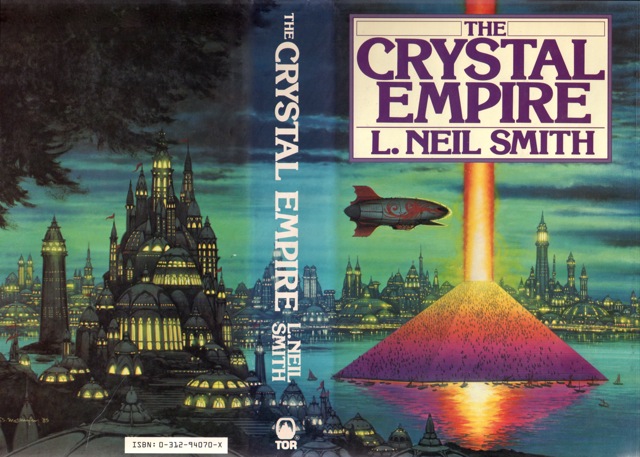
                • Cover of The Crystal Empire
                  The Crystal Empire

                  L. Neil Smith · standalone novel · 1986

                  similar bycolonialismscience fictionalternate history+1 more

                  The Crystal Empire is a 1986 novel by American science fiction and alternate history writer L. Neil Smith. It is set in an alternate universe that shares with Kim Stanley Robinson's The Years of Rice and Salt, Robert Silverberg's The Gate of Worlds and Harry Turtledove's In High Places a point of divergence where the Black Death kills much more of Europe's population than it did in reality, opening the way for a Muslim conquest of Europe. The plague also decimates the Mongol Empire, allowing a Mughal power to arise in the Far East in its place.

                • Cover of Lord Tyger
                  Lord Tyger

                  Philip José Farmer · standalone novel · 1970

                  similar bycolonialismscience fiction+1 more

                  What if Tarzan had been written by William S. Burroughs instead of Edgar Rice Burroughs? A rich, insane, old racist attempts to raise a white Lord of the Jungle, but things don't turn out that way, and the product of this obsession and the jungle he is supposed to become Lord over must live with the consequences.

                • Cover of Salt
                  Salt

                  Adam Roberts · standalone novel · 2000

                  similar bycolonialismchallengingscience fiction

                  Salt is a novel by British science fiction author Adam Roberts.

                • Cover of Herland
                  Herland

                  series · 2 books · 1915

                  completed

                  similar bycolonialism+2 more

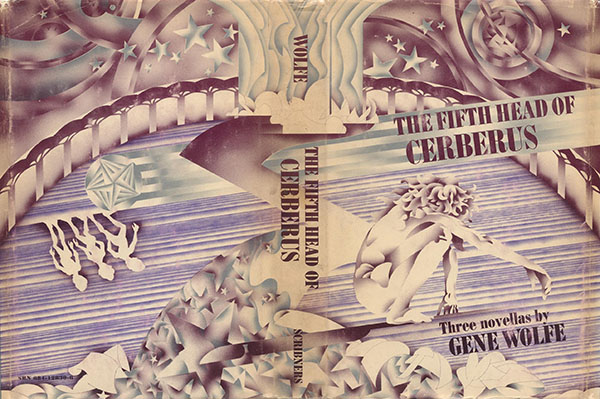
                • Cover of The Fifth Head of Cerberus
                  The Fifth Head of Cerberus

                  series · 4 books · 1972

                  similar byscience fiction+2 more

                • Cover of Kirinyaga
                  Kirinyaga

                  series · 12 books · 1988

                  completed

                  similar bycolonialismscience fiction+2 more

                  Kirinyaga: A Fable of Utopia is a science fiction novel published in 1998 by Mike Resnick. It is a series of parables about one man's attempt to preserve traditional African culture on a terraformed utopia.

                • Cover of Ada or Ardor: A Family Chronicle
                  Ada or Ardor: A Family Chronicle

                  Vladimir Nabokov · standalone novel · 1969

                  similar bychallenging19th centuryalternate historyscience fiction

                  An alternate-world novel by the celebrated author of "Lolita" in which North America is a 19th- and early 20th-century province of Russia still ruled by Tsars.

                • Cover of Air
                  Air

                  Geoff Ryman · standalone novel · 2004

                  similar bycolonialismchallengingscience fiction

                  Air, also known as Air: Or, Have Not Have, is a 2005 novel by Geoff Ryman. It won the British Science Fiction Association Award, the James Tiptree, Jr. Award, and the Arthur C. Clarke Award, and was on the short list for the Philip K. Dick Award in 2004, the Nebula Award in 2005, and the John W. Campbell Memorial Award in 2006.

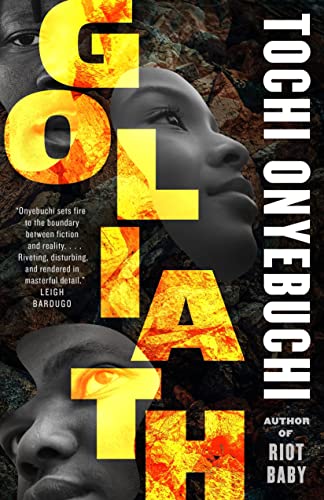
                • Cover of Goliath
                  Goliath

                  Tochi Onyebuchi · standalone novel · 2022

                  similar bycolonialismchallengingscience fiction

                  Goliath is a 2022 science fiction novel by Nigerian American writer Tochi Onyebuchi. It is his first adult science fiction novel and it was first published in New York on January 25, 2022, by Tor Books.

                • Cover of Pennterra
                  Pennterra

                  Judith Moffett · standalone novel · 1987

                  similar bycolonialismscience fiction+1 more

                  Pennterra is a science fiction novel by American author Judith Moffett, first published in 1987. Isaac Asimov wrote an introduction for the book and published it under his "Isaac Asimov Presents" series. Pennterra was reprinted in 2009 by Fantastic Books, an imprint of Warren Lapine's Wilder Publications.

                • Cover of Milton in America
                  Milton in America

                  Peter Ackroyd · standalone novel · 1996

                  similar bycolonialismalternate history+1 more

                  An alternate history novel in which the 17th Century English writer, John Milton, emigrates to America to escape the wrath of the royalists for his Puritan views. He is elected leader of a Puritan colony in New England and leads it in a war against a Catholic colony. A tale of religious intolerance.

                • Cover of A Different Flesh
                  A Different Flesh

                  series · 8 books · 1985

                  similar byscience fictionalternate history+2 more

                  Harry Turtledove's A Different Flesh is a collection of linked alternate-history stories imagining a North America where Homo erectus survived alongside Ice Age megafauna into the modern era, taking the ecological and historical place occupied by Native American civilizations in our own timeline. The linked stories follow European contact, exploitation, and study of these surviving hominids across centuries of altered American history, from early colonization through more recent settings. It's anthropological alternate history more concerned with what contact does to the newly "discovered" species than with conventional adventure plotting.

                • Cover of The Vorrh
                  The Vorrh

                  series · 3 books · 2012

                  completed

                  similar byafrica19th century+2 more

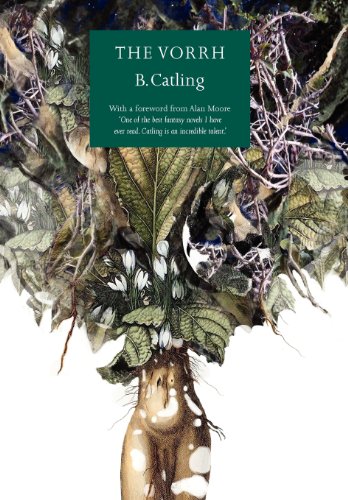
                  The Vorrh is B. Catling's dark historical fantasy set around an immense, possibly sentient forest on the edge of a colonial African city, examining colonialism, mythology, and guilt through a cast of characters drawn toward and altered by it. Alan Moore's foreword helped drive attention to the book on its international 2015 re-release. Catling continued the story across two more books, The Erstwhile and The Cloven.

                • Cover of Burton Cole
                  Burton Cole

                  series · 2 books · 2011

                  similar bycolonialismafricaalternate history

                • J
                  Jess

                  H. Rider Haggard · standalone novel · 1887

                  similar bycolonialism19th centuryafrica

                  Jess is a novel by British writer H. Rider Haggard, set in South Africa.

                • Cover of Sin of Origin
                  Sin of Origin

                  John Barnes · standalone novel · 1988

                  similar bycolonialismscience fiction+1 more

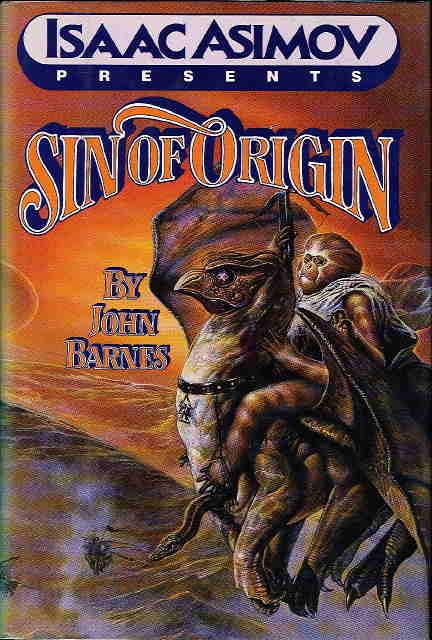
                  From the front flap of the Congdon & Weed first printing: "In the distant future, the planet Randall becomes the focus of human exploration. Not even Earth before its end boasted the existence of three such highly developed intelligent species. Forming an interdependent triumvirate being, the griffinlike "wingpersons," the multiarmed "handpersons," and the telepathic "handsnakes" find their ancient alliance threatened by missionaries who want to bring the Randallans peacefully into the Christian commonwealth. After more than a millennium of peaceful coexistence, the Randallans once again begin to fight among themselves because the human teachings undermine key cultural doctrines that united them. Brother Hauskyld Gomez and Dr. Clio Yeremenko, a Communist xenist stowaway, join forces with a captain of the Templars (whose reputation for planetary "domestication" is infamous) and with the High Kings of Randall to bring about a tenuous peace Thus begins their remarkable friendship with Kuf, a xhu'gha griffin, one who is not part of a triple. Kuf converts to Christianity after being commanded to meet with the missionaries; he later becomes a prisoner because of his newfound beliefs, then is appointed ambassador. And that is only the beginning for this wise, sad creature."

                • Cover of Pastwatch
                  Pastwatch

                  series · 2 books · 1996

                  similar bycolonialismscience fictionalternate history

                  Pastwatch: The Redemption of Christopher Columbus (1996) is a science fiction novel by American writer Orson Scott Card, the first in a proposed Pastwatch series. The book's focus is the life and activities of explorer Christopher Columbus. Much of the action deals with a group of scientists from the future who travel back to the 15th century in order to change the pattern of European contact with the Americas. These alternate with chapters describing Columbus' career and his efforts to obtain backing to his project of travelling across the ocean - much of which can be considered as historical fiction.

                • Cover of The Lovelock Version
                  The Lovelock Version

                  Maurice Shadbolt · standalone novel · 1980

                  similar bycolonialism19th century+1 more

                  The Lovelock Version is a long historical novel by New Zealand writer Maurice Shadbolt that calls into question the interpretation of the past through the narrative process. Published in Auckland and London in 1980 and in New York in 1981, it won the New Zealand Book Award for Fiction and the James Wattie Award.

                • Cover of Through Darkest Europe
                  Through Darkest Europe

                  Harry Turtledove · standalone novel · 2018

                  similar bychallengingscience fictionalternate history+1 more

                  Through Darkest Europe is an alternate history novel by Harry Turtledove. The book is set in an alternate present in which Islamic countries form a prosperous, democratic and progressive First World, while underdeveloped Christian countries suffer from religious fanaticism.