More like Vulpheous
anchored on:science fictionother star systemsfar futurealiensmysterious
but
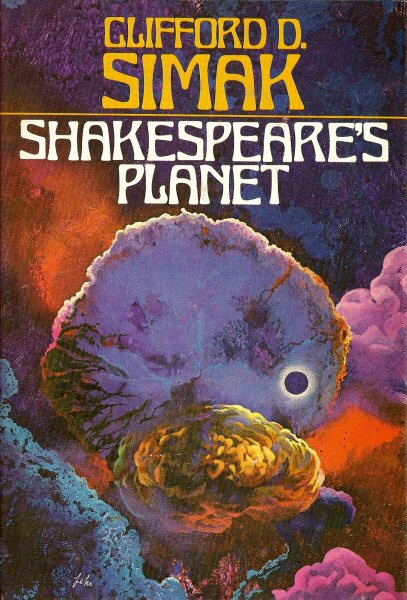
- Shakespeare's Planet
Clifford D. Simakstandalone novel1976
similar byaliensscience fictionmysteriousother star systemsfar futurereflective
Woken after a thousand-year voyage meant to find humanity a new home, Carter Horton finds his ship stranded for good, tended by the disembodied minds of three volunteers who gave up their bodies to fly it. Outside waits a world already crowded with strangers: a robot named Nicodemus, and an alien called the Carnivore who claims to have known a human, once, called Shakespeare, and to have arrived here through a tunnel across time. As more travelers arrive through that same tunnel, Horton has to work out what kind of planet he has actually landed on. A standalone novel from Clifford D. Simak.
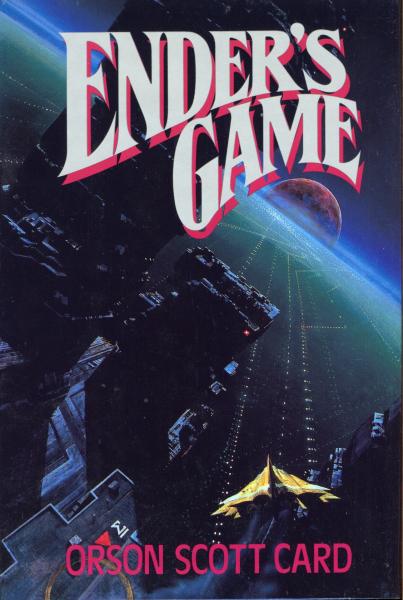
- Ender Wiggin
series14 books1977
part of Ender's Game Universe
similar byaliensscience fictionfar futureother star systems+1 more
Orson Scott Card's Ender's Game (1985, expanded from his 1977 novella) follows child prodigy Andrew "Ender" Wiggin as he is recruited into a military training program built to prepare Earth's defenses for an anticipated third war against an insectoid alien species known as the Formics. The saga continues years later through Speaker for the Dead and Xenocide, following an older Ender as he confronts the moral weight of his role in that earlier conflict, and concludes the core arc in Children of the Mind, with Ender in Exile filling in the years between the first two books. Set within the wider Ender's Game universe, the series shifts from military coming-of-age story to slower, more philosophical science fiction as it progresses.
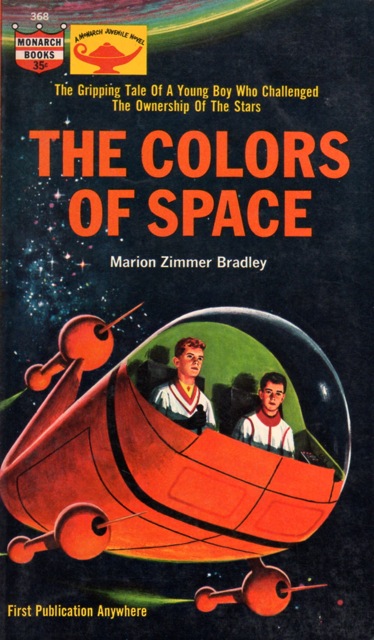
- The Colors of Space
Marion Zimmer Bradleystandalone novel1963
similar byaliensscience fictionmysteriousother star systemsfar future
The Lhari seem peaceful and friendly, but they go to some lengths to protect their monopoly on faster-than-light travel. One young man is sent to discover their secrets.
- Ringworld
series5 books1970
part of Known Space
similar byaliensscience fictionother star systemsfar future+1 more
The Ringworld series is a series of science fiction novels written by American author Larry Niven. It is part of his Known Space series of stories. Its backdrop is the Ringworld, a giant artifact 3 million times the surface area of Earth circling a star. The series is composed of four standalone science fiction novels, the original award-winning book and its three sequels:1970: Ringworld 1979: The Ringworld Engineers 1996: The Ringworld Throne 2004: Ringworld's Children
- Heechee
series19 books1972
completed
similar byaliensscience fictionfar futureother star systems+1 more
The Heechee Saga, also known as the Gateway series, is a series of science fiction novels and short stories by Frederik Pohl. The Heechee are an advanced alien race that visited the Solar System hundreds of millennia ago and then mysteriously disappeared. They left behind bases containing artifacts, including working starships, which are discovered and exploited by humanity.
- Doorways in the Sand
Roger Zelaznystandalone novel1976
similar byaliensscience fictionmysteriousfar futureother star systems
Doorways in the Sand is a science fiction novel by American writer Roger Zelazny. Featuring both detective fiction and comic elements, it was originally published in serial form in the magazine Analog Science Fiction and Science Fact; the hardcover edition was first published in 1976 and the paperback in 1977. Zelazny wrote the whole story in one draft, with no rewrites, and it subsequently became one of his five favorites among his own work. Doorways in the Sand was nominated for the Nebula and Hugo awards.
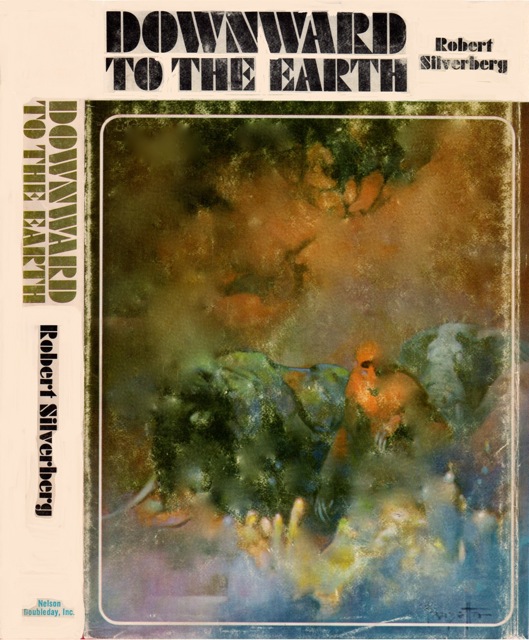
- Downward to the Earth
Robert Silverbergstandalone novel1969
similar byaliensscience fictionother star systemsfar futurereflective
Edmund Gunderson was the Terran administrator of the colony world of Belzagor, and he returns to it after it has gained independence, feeling a sense of guilt for the way he has treated its dominant species, the elephant-like nildoror, whose animalistic appearance had kept Gunderson from taking them seriously as sentient beings. On his return, he feels a new sense of kinship with the natives, perhaps more than for the Terran tourists. The nildoror undergo a process of rebirth, and Gunderson's greatest guilt comes from having denied rebirth to seven nildoror to make them help him repair flood damage.(From Wikipedia)
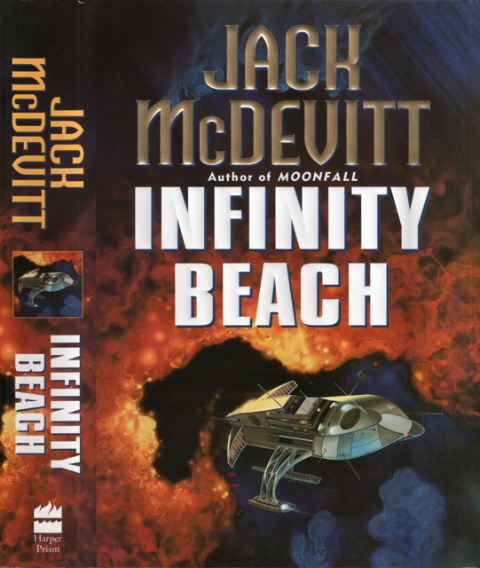
- Infinity Beach
Jack McDevittstandalone novel2000
similar byaliensscience fictionmysteriousother star systemsfar future+1 more
Infinity Beach is a 2000 science fiction novel by Jack McDevitt. It is a story of a first contact between human and alien civilizations.
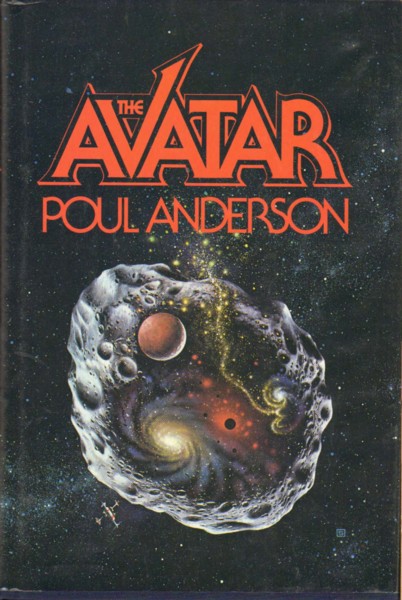
- The Avatar
Poul Andersonstandalone novel1978
similar byaliensscience fictionmysteriousfar futureother star systems
After humanity discovers portals that transport a space vessel through time and space, a crew which has visited the planet of another species returns to Earth, only to find a political faction in power which seeks to conceal this knowledge in the name of social stability. With the aid of the political opposition, they escape and journey through the portal in search of knowledge, and perhaps even to meet those who created the portal system.
- Moties
series4 books1974
part of CoDominium
similar byaliensscience fictionfar futureother star systems
Larry Niven and Jerry Pournelle's The Mote in God's Eye (1974) depicts humanity's first contact with an alien species, the Moties, set within the far-future interstellar setting of Pournelle's codominium future history. The Gripping Hand continues that first-contact crisis years later, and Outies, written by J. R. Pournelle, carries the story forward into a new generation. Together the three books trace an escalating encounter between human and Motie civilizations within the codominium universe.
- Naked to the Stars
Gordon R. Dicksonstandalone novel1961
similar byaliensscience fictionmysteriousother star systemsfar future
The subject of the cosmic soldier has become a matter of concern for the science fiction reader. With the award-winning success of The Forever War, and with the great classic novels of Gordon R. Dickson's genetically bred mercenaries, the Dorsai, it is clear that the role of a fighter in a universe of expanding technology and competing alien intelligences is on science fiction's orders of the day. Gordon R. Dickson has been the master of that field, and his novel, Naked to the Stars, is one of his masterpieces. Long out of print, it is the story of a star soldier who, during a battle against a non-human foe on a far planet, somehow lost sixteen hours from his memory. Discharged for the potential danger those lost hours might have programmed, Cal Truant made it his fixation to uncover the mystery buried in his mind - to find out what had happened in those missing hours - and block the peril it might present to his fellow troopers, to his war command, and to the planet for which they fought - Earth.
- Embassytown
China Miévillestandalone novel2011
similar byaliensscience fictionmysteriousother star systemsfar future
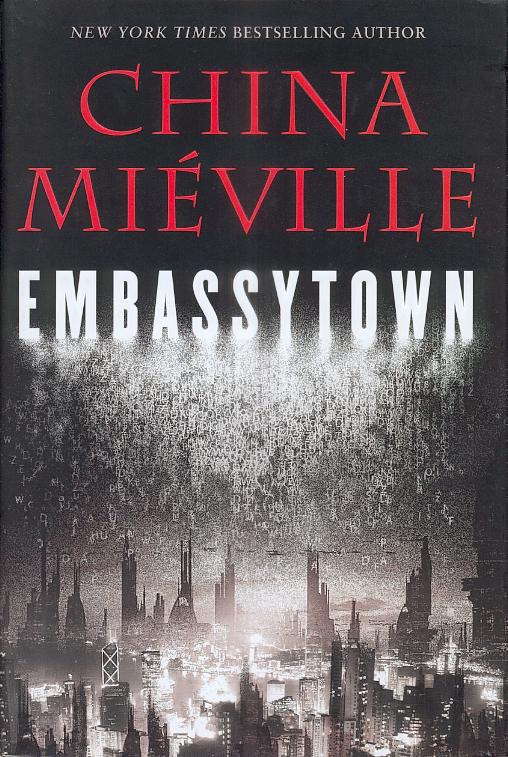
In the far future, humans have colonized a distant planet, home to the enigmatic Ariekei, sentient beings famed for a language unique in the universe, one that only a few altered human ambassadors can speak. Avice Benner Cho, a human colonist, has returned to Embassytown after years of deep-space adventure. She cannot speak the Ariekei tongue, but she is an indelible part of it, having long ago been made a figure of speech, a living simile in their language. When distant political machinations deliver a new ambassador to Arieka, the fragile equilibrium between humans and aliens is violently upset. Catastrophe looms, and Avice is torn between competing loyalties—to a husband she no longer loves, to a system she no longer trusts, and to her place in a language she cannot speak yet speaks through her.
- Sirius Five
series2 books1969
completed
similar byaliensscience fictionother star systemsfar future+1 more
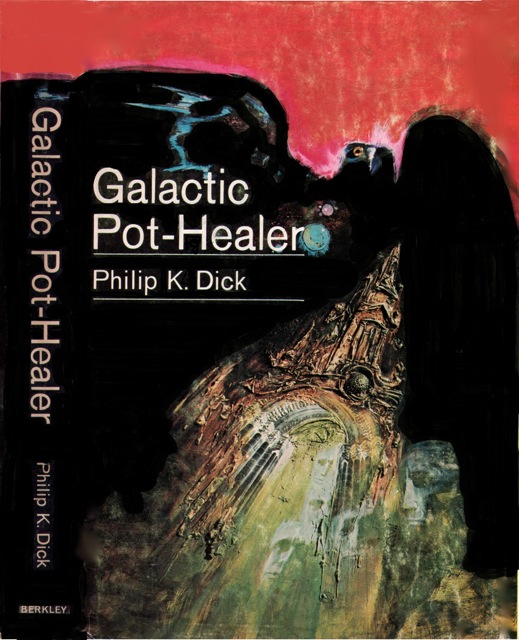
Philip K. Dick's Galactic Pot-Healer (1969) follows Joe Fernwright, an unemployed pot-mender on a future Earth, recruited by the alien Glimmung to help raise a sunken cathedral on the planet Sirius 5, mixing surreal comic adventure with questions about fate and the value of effort when success is never guaranteed. Dick's earlier young-adult manuscript Nick and the Glimmung, unpublished until 1988, shares the Glimmung character and other elements with it, suggesting he reworked the same creature across two very different books.
- Destiny Doll
Clifford D. Simakstandalone novel1971
similar byaliensscience fictionmysteriousother star systemsfar future
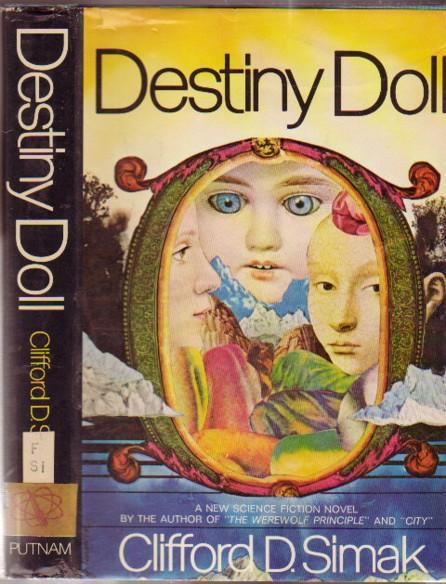
A group of space travelers is trapped on a planet that lured them to land. The story involves their adventures on the planet and the discovery of friendly aliens, robots, and not-so-friendly life forms. There is the alternate reality possibility toward the end of the story.
- Academy / Priscilla (Hutch) Hutchins
series16 books1983
similar byaliensscience fictionfar futureother star systems+1 more
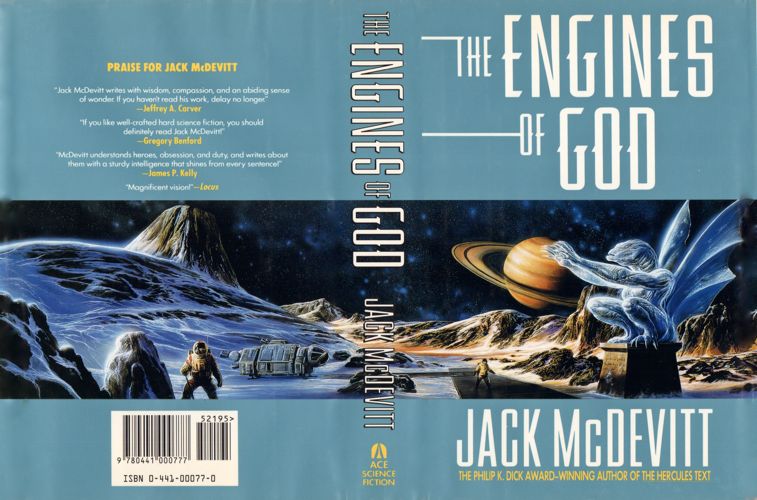
Jack McDevitt's Academy novels follow Priscilla 'Hutch' Hutchins, a starship pilot turned administrator, across a series of archaeological mysteries involving vanished alien civilizations and inexplicable ancient artifacts scattered through human space. Beginning with The Engines of God, the series treats deep time and the near-total absence of intelligent alien life as its central mystery, favoring slow-burn discovery over action. McDevitt returned to Hutch across three decades of publication.
- Masters of Everon
Gordon R. Dicksonstandalone novel1979
similar byaliensscience fictionmysteriousother star systemsfar future
Jef Robini was heading for Everon with a highly controversial cargo. For eight years on Earth Jef had tried to rear the maolot cub which was the final legacy from his brother. But the maolot had failed to grow into the giant cat that was Everon's largest and most dangerous life-form. And now Jef was returning the creature to its natural home, the colonized planet of Everon. He knew the planet was barren. And that he'd have to fight to survive. But nothing had prepared him for the incomprehensible strangeness, the mind-blasting wonder of the true Masters of Everon.
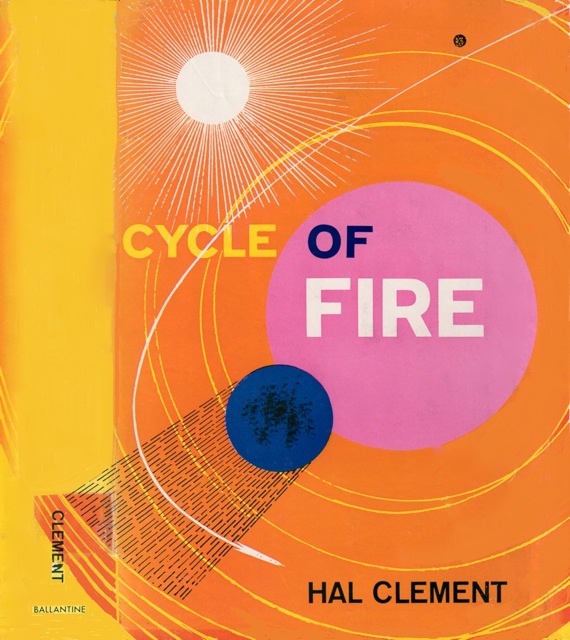
- Cycle of Fire
Hal Clementstandalone novel1957
similar byaliensscience fictionother star systemsfar futurereflective
After his ship crashed on the inhospitable planet Abyorman, Nils Kruger had spent weeks wandering across the face of the planet.suffering from blistering heat, the searing cold of an alien climate. Now he had found a fellow wanderer, Dar, an alien castaway. They may both die. The human opts to do something about it. Dar, who knows the time of his death in advance, opts to do nothing. Which of them is right? Perhaps both
- Hainish
series33 books1964
completed
similar byscience fictionfar futureother star systemsreflective+1 more
The Hainish Cycle consists of a number of science fiction novels and stories by Ursula K. Le Guin. The cycle is set in a future history that features civilizations of human beings on planets orbiting a number of nearby stars, including Terra ("Earth"); these humans are contacting each other for the first time and establishing diplomatic relations, as well as setting up a confederacy under the guidance of the oldest of the human worlds, the peaceful planet Hain. In this history, human beings did not evolve on Earth, but they were instead the result of interstellar colonies planted by Hain in the distant past, after which interstellar travel ceased for an extended period. Some of the human races have new genetic traits, a result of ancient Hainish experiments in genetic engineering; this includes people who can dream while awake, and a world of hermaphroditic people who only enter active sexuality once per month, not knowing which sex will manifest in them. In keeping with Le Guin's narrative approach, she uses varied social and environmental settings to explore the anthropological and sociological outcomes of human evolution in those environments. The author often discounted the characterization of a so-called "Hainish Cycle".
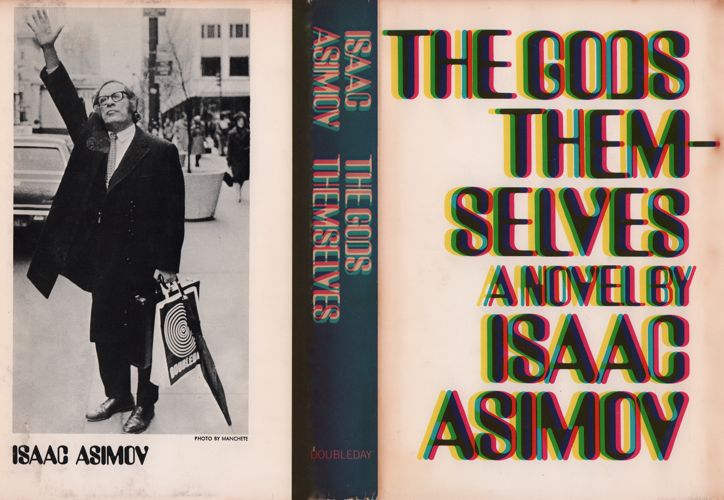
- The Gods Themselves
Isaac Asimovstandalone novel1972
similar byaliensscience fictionfar futureother star systems
The Gods Themselves is a 1972 science fiction novel written by Isaac Asimov, and his first original novel in fifteen years. It won the Nebula Award for Best Novel in 1972, and the Hugo Award for Best Novel in 1973.
- Incandescence
Greg Eganstandalone novel2008
similar byaliensscience fictionmysteriousother star systemsfar future
Incandescence is a 2008 science fiction novel by Australian author Greg Egan. The book is based on the idea that the theory of general relativity could be discovered by a pre-industrial civilisation.
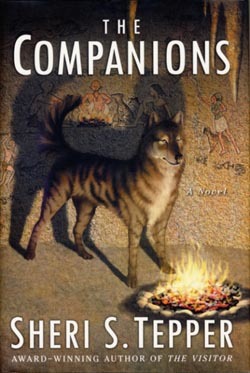
- The Companions
Sheri S. Tepperstandalone novel2003
similar byaliensscience fictionmysteriousother star systemsfar future
Three planets in deep space were named by their human discoverers to reflect their environments: lush and foreboding Jungle, which swallowed up an exploratory team; Stone, phenomenally rich in rare ore; and Moss, the most enigmatic -- and dangerous -- of the trio.Joining her half-brother Paul, the famed linguist, on a two-person scientific expedition, Jewel Delis has come to Moss to observe the phenomenon of dancing light and to help decipher the strange musical "language" that accompanies it. But there are other mysteries alive on this exotic world covered in ever-shifting vegetation -- and something more than illuminations has enticed her away from a disastrously overpopulated homeworld to seek answers at the universe's unexplored edge. For Jewel herself is a question mark with a radical agenda that will put her at perilous odds with her planet's ruling powers -- and with the inscrutable alien races she encounters -- as she risks all for justice for the endangered beasts of the Earth.
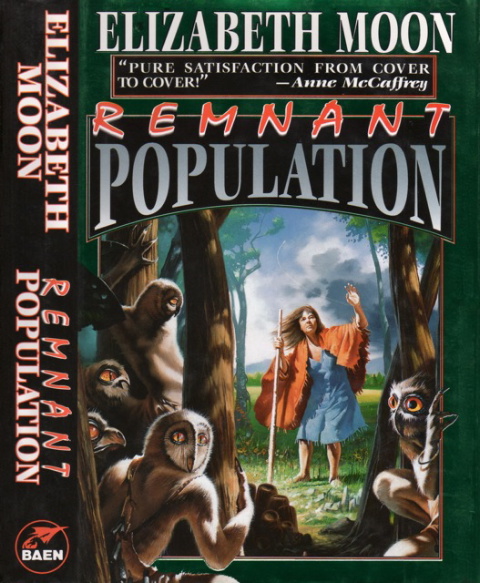
- Remnant Population
Elizabeth Moonstandalone novel1996
similar byaliensscience fictionother star systemsfar futurereflective
From the dust jacket front flap of the Baen first edition: Alone at last... People had always told Ofelia what to do; for once she was going to do what she wanted. She refused to get on the cryo ships, refused to leave the only world she could call home. And when they finally came for her, she hid, not that the authorities looked all that hard for one crazy old woman. Now Ofelia is alone, content to live with no more demands on her self or her time, the only remaining settler on an abandoned planet. The new settlers arrive. At first she fears that they have come to reoccupy the settlement she has come to think of as hers - but they land far away. And as Ofelia secretly listens, they are slaughtered to the last child by stone-age aliens no one knew were there. Now it will be up to Ofelia to save the aliens from Earth's wrath...
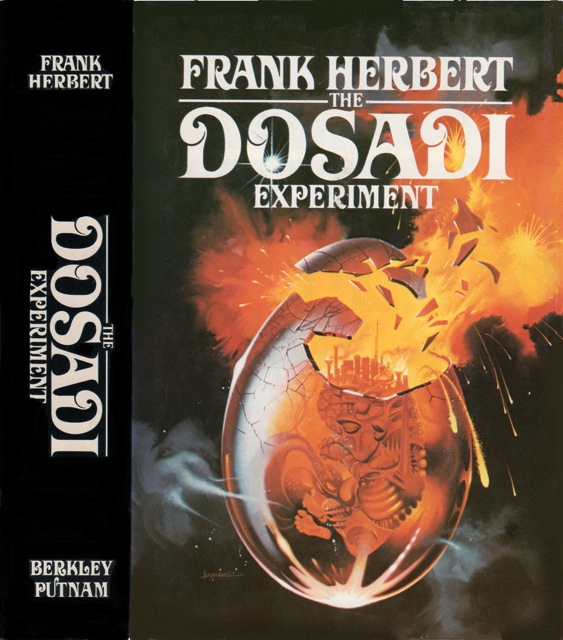
- The Dosadi Experiment
Frank Herbertstandalone novel1977
similar byaliensscience fictionother star systemsfar future
From the flaps of the Berkley Putnam first edition: "In his first new work of science fiction since the best-selling Children of Dune, Frank Herbert returns to his world of Whipping Star, and involves Jorj X. McKie, Saboteur Extraordinary, in a new intrigue. In Whipping Star, McKie discovered that some of the stars in the universe are actually intelligent, super-powerful beings, and was able to befriend one of them, the star Alcyone - affectionately known as Fannie Mae. As The Dosadi Experiment opens, McKie is assigned to investigate the planet Dosadi, which is isolated from the rest of the galaxy by a "god-wall," a barrier set up by one of the intelligent stars. Dosadi is rumored to be an experimental planet, and the experimenters are the froglike Gowachin, whose culture is founded upon a strange legal system in which McKie is the only human ever trained. He learns that humans and Gowachin have been placed on Dosadi, without their consent, for an experiment that could last centuries: an experiment in extreme overcrowding. But this monstrous plot is apparently out of control, and it seems the Gowachin may be prepared to destroy Dosadi rather than expose its secret, thus breaking the peace among the races, and starting the first interstellar war. But this is just the beginning. When McKie finally reaches Dosadi he discovers that the Dosadis have taken control of their own evolution and produced a competitive, highly evolved elite, of both humans and Gowachin, who have been able to extrapolate the existence of a universe beyond the god-wall and hate whoever has imprisoned them like this. They plan to break out and avenge themselves on the galaxy."
- As on a Darkling Plain
Ben Bovastandalone novel1972
similar byaliensscience fictionmysteriousfar futureother star systems
Humanity has explored the solar system and is in the beginnings of interstellar exploration. However, as the explorations proceed it becomes more and more apparent that people from Earth have already been there before. Was the Earth a spacefaring planet in prehistory and had that civilization been wiped out by aliens from elsewhere so that the people of Earth had to start all over again. The discovery of the remnants of an Earth colony in orbit around Sirius seems to confirm that supposition. There is alsoa large machine that is still functioning in the solar system.