More like Wait Until Dawn
anchored on:contemporaryghost storiesnorth america
but
- If You Could See Me Now
Peter Straubstandalone novel1976
similar byeeriegrief and lossghost storiescontemporarynorth america
If You Could See Me Now is a horror novel by American author Peter Straub. It is his third novel and his second work of gothic or supernatural fiction. The book was published by Jonathan Cape in June 1977 – the same London publisher who published Julia in 1976. Coward, McCann & Geoghegan published an American edition also in June 1977.
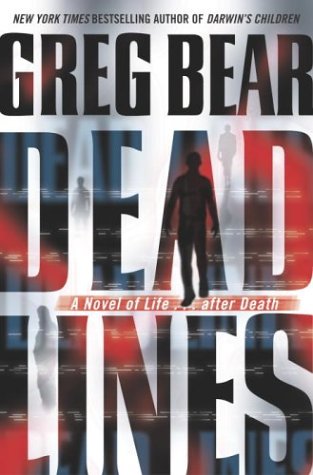
- Dead Lines
Greg Bearstandalone novel2004
similar byeeriegrief and lossghost storiescontemporarynorth america
From the flaps of the Ballantine first edition: "For the last two years, Peter Russell has mourned the death of one of his twin daughters - who was just ten when she was murdered. Recent news of his best friend's fatal heart attack has now come as another devastating blow. Divorced, despondent, and going nowhere in his career, Peter fears his life is circling the drain. Then Trans comes along. The brainchild of an upstart telecom company, Trans is (as its name suggests) a transcendent marvel, a sleek, handheld interpersonal communication device capable of flawless operation anywhere in the world, at any time. "A cell phone, but not" - transmitting with crystal clarity across a newly discovered, never-utilized bandwidth... and poised to spark a new-technology revolution. When its creators offer Peter a position on their team, it should be a golden opportunity for him. If only he wasn't seemingly going mad. Everywhere Peter turns, inexplicable apparitions are walking before him or reaching out in torment. After a chilling encounter with his own lost child he begins to grasp the terrifying truth: Trans is a Pandora's box that has tapped into a frequency not of this world... but of the next. And now, via this open channel to oblivion, the dead have gained access to the living. For Peter, and for humankind, a long shadowy night of the soul has descended, bringing with it the stuff of a horrifying nightmare from which they may never awaken."
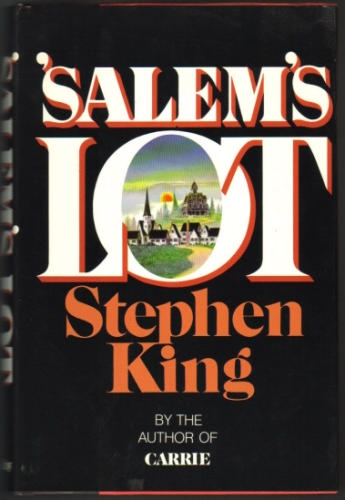
- Jerusalem's Lot
series3 books1975
similar byeeriegrief and losscontemporarynorth america
Stephen King's 1975 novel 'Salem's Lot follows writer Ben Mears as he returns to his childhood town of Jerusalem's Lot, Maine, only to discover that its residents are being turned into vampires by a newly arrived stranger. It transplants Gothic vampire horror into a small New England community, tracking that community's collapse under a supernatural siege. It is a single, self-contained novel.
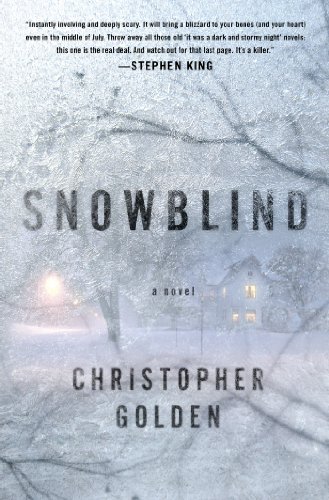
- Snowblind
Christopher Goldenstandalone novel2014
similar byeeriegrief and lossghost storiescontemporarynorth america
"SNOWBLIND is a thrilling contemporary ghost story with both horror and heart. The small New England town of Coventry is haunted by its memories of a deadly winter... in which loved ones were lost, families torn apart, and a town buried in a terrible blizzard. Now, twelve years later, the people plagued by their memories of that storm are haunted once again as a new storm approaches, promising to wreak new havoc. Old ghosts trickle back, and this storm will prove even more terrifying and deadly than the last. With richly textured characters, scarred and haunted by the ghosts of those they loved most, Snowblind reinvents the ghost story for today's world. Spellbinding in scope and rooted deeply in classic storytelling, Christopher Golden has written a chilling masterpiece that is the best work of his career and a standout supernatural thriller"--
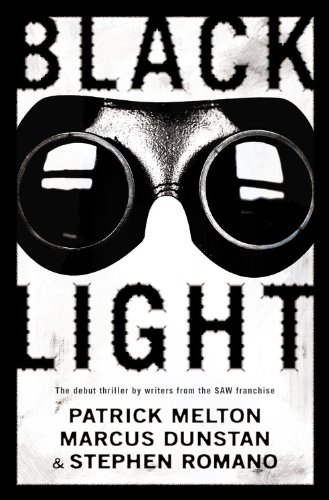
- Black Light
Patrick Melton, Marcus Dunstan & Stephen Romanostandalone novel2011
similar byeerieghost storiescontemporarynorth americapsychic powers+1 more
A psychic for hire, who disposes of malignant ghosts by absorbing them then excreting them, in the process experiences enhanced spiritual vision, the "Black light". He is hired by an enormously wealthy and powerful industrialist to defend the trial run of a bullet train from Los Angeles to Las Vegas, which passes through an area of the desert particularly notorious for powerfully evil ghost presences; the same area which took the lives of his father and mother when he was a child.
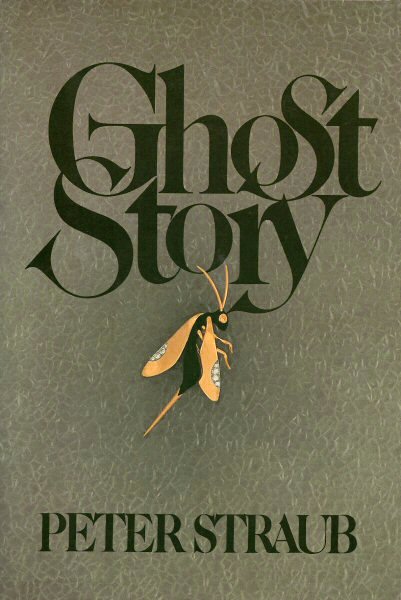
- Ghost Story
Peter Straubstandalone novel1979
similar byeeriegrief and lossghost storiesnorth america
Four prominent citizens of a small town in upstate New York who share guilt over something that happened in their youth are revisited late in life by a destructive evil force which uses their guilt as an opportunity to destroy them as well as the entire town.
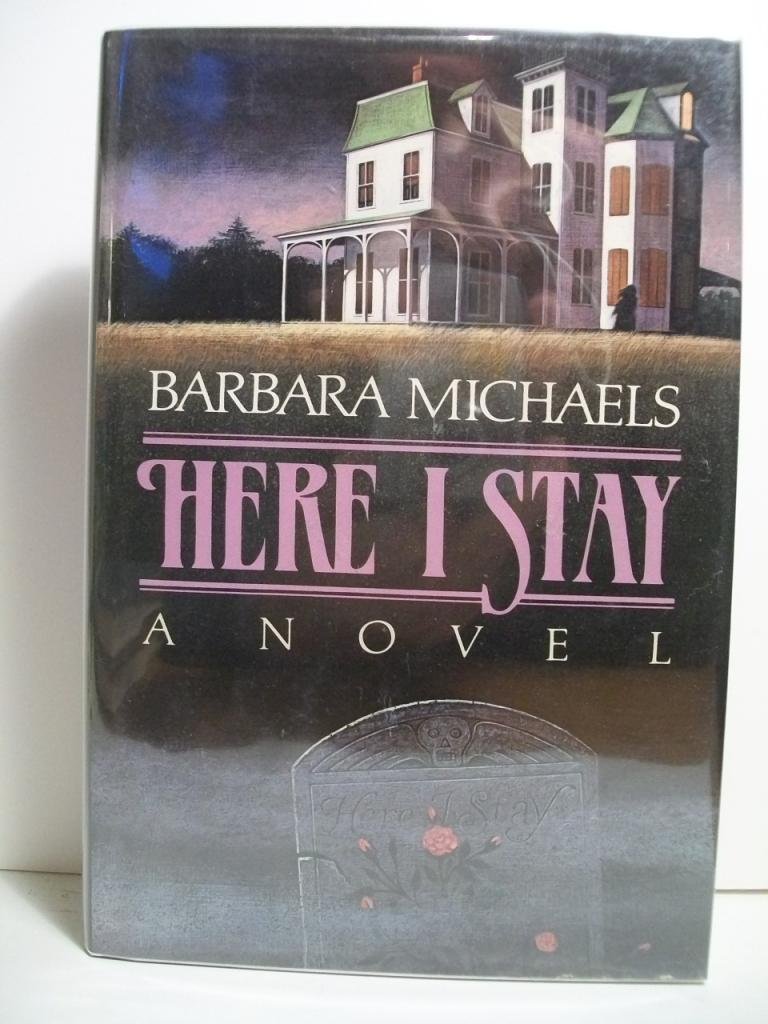
- Here I Stay
Barbara Michaelsstandalone novel1983
similar byeerieghost storiescontemporarynorth america+1 more
Andrea Torgesen is certain that hard work is exactly what her younger brother Jim needs to help him recover from the trauma of a serious car accident—and turning a decrepit old mansion into a beautiful country inn seems to be the perfect project. But unearthly voices and eerie visions haunt Jim from almost the first instant he sets foot in the dreary old house. And his strange obsession with a long-neglected graveyard is most troubling to his concerned sibling. There is evil in this place where the unthinkable is possible—a terrifying force that Andrea and Jim must confront . . . or forfeit their lives.
- Midnight Bayou
Nora Robertsstandalone novel2001
similar byeeriegrief and lossghost storiescontemporarynorth america
A novel set deep in the bayou of Louisiana--where the only witness to a long-ago tragedy is a once-grand house... Declan Fitzgerald had always been the family maverick, but even he couldn't understand his impulse to buy a dilapidated mansion on the outskirts of New Orleans. All he knew was that ever since he first saw Manet Hall, he'd been enchanted-and obsessed-with it. So when the opportunity to buy the house comes up, Declan jumps at the chance to live out a dream. Determined to restore Manet Hall to its former splendor, Declan begins the daunting renovation room by room, relying on his own labor and skills. But the days spent in total isolation in the empty house take a toll. He is seeing visions of days from a century past, and experiencing sensations of terror and nearly unbearable grief-sensations not his own, but those of a stranger. Local legend has it that the house is haunted, and with every passing day Declan's belief in the ghostly presence grows. Only the companionship of alluring Angelina Simone can distract him from the mysterious happenings in the house, but Angelina too has her own surprising connection to Manet Hall-a connection that will help Declan uncover a secret that's been buried for a hundred years.
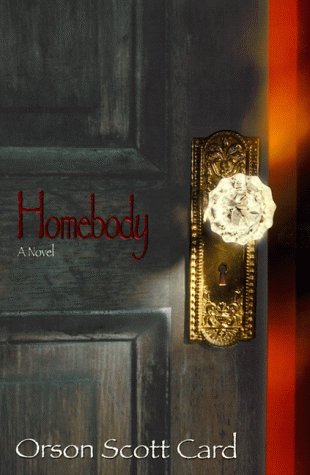
- Homebody
Orson Scott Cardstandalone novel1998
similar byeeriegrief and lossghost storiescontemporarynorth america
Homebody (1998) is a horror novel by American writer Orson Scott Card. It takes place in modern-day America.
- A Fine and Private Place
Peter S. Beaglestandalone novel1960
similar bygrief and lossghost storiescontemporary+1 more
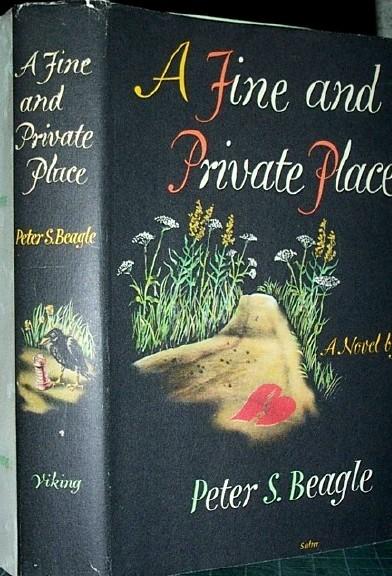
A Fine and Private Place is a fantasy novel by American writer Peter S. Beagle, the first of his major fantasies. It was first published in hardcover by Viking Press on May 23, 1960, followed by a trade paperback from Delta the same year. Frederick Muller Ltd. published the first United Kingdom hardcover in 1960, and a regular paperback followed from Corgi in 1963. The first U.S. mass market paperback publication was by Ballantine Books in 1969. The Ballantine edition was reprinted numerous times through 1988. More recently it has appeared in trade paperback editions from Souvenir Press (1997), Roc (1999), and Tachyon Publications (2007). The work has also appeared with other works by Beagle in the omnibus collections The Fantasy Worlds of Peter S. Beagle (1978) and The Last Unicorn / A Fine and Private Place (1991). It has also been translated into Japanese, German, Russian, Czech, Hungarian, Portuguese, Korean, Spanish, Italian, and Romanian.
- The Shining
series5 books1977
similar bynorth americacontemporarypsychic powers+2 more
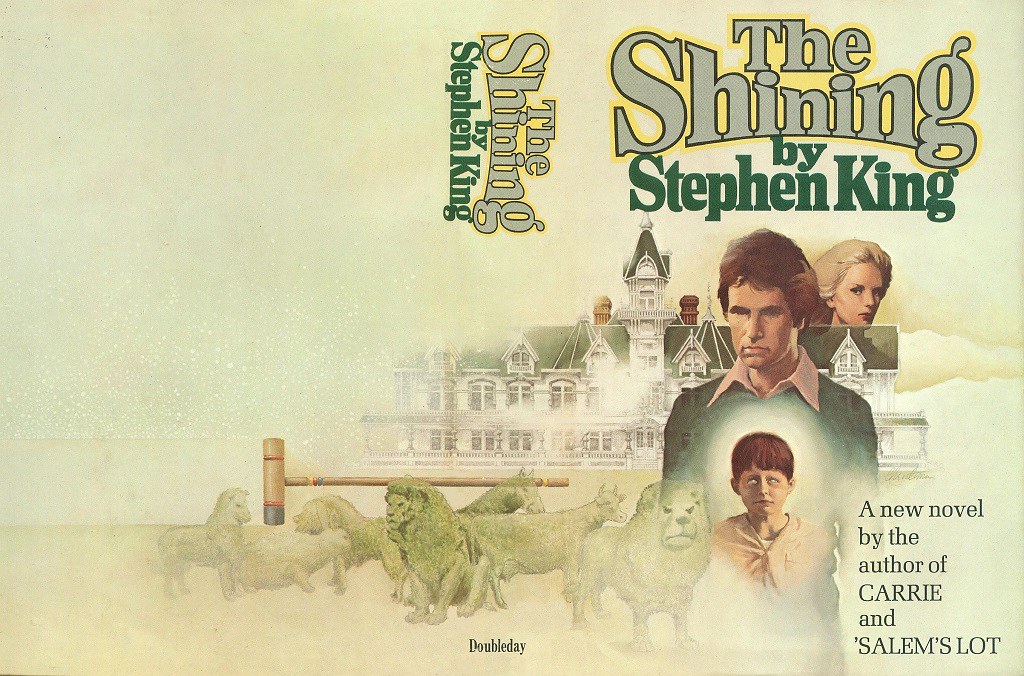
Stephen King's 1977 novel The Shining follows the Torrance family as winter caretakers of the isolated, malevolent Overlook Hotel, where father Jack is gradually consumed by the hotel's influence while his young son Danny's psychic "shining" draws its attention. Doctor Sleep (2013) picks up the story decades later, following Danny as an adult still marked by that childhood ordeal. Together the two form a horror duology spanning nearly forty years of real-world publication.
- Pet Sematary
Stephen Kingstandalone novel1983
similar byeeriegrief and losscontemporarynorth america
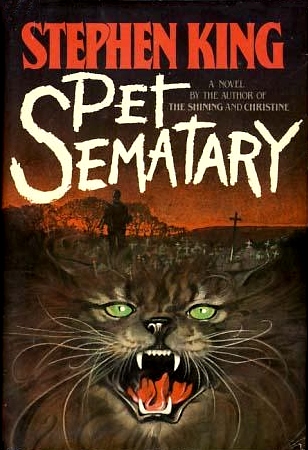
Pet Sematary is a 1983 horror novel by American writer Stephen King. It tells the story of a family moving to Maine and settling closer to a pet cemetery in the woods, which is home to a terrifying force that brings death and sorrow. The novel was nominated for a World Fantasy Award for Best Novel in 1984, and adapted into two films: one in 1989 and another in 2019 as well as several spinoffs.
- Floating Staircase
Ronald Malfistandalone novel2010
similar byeerieghost storiescontemporarynorth america+1 more
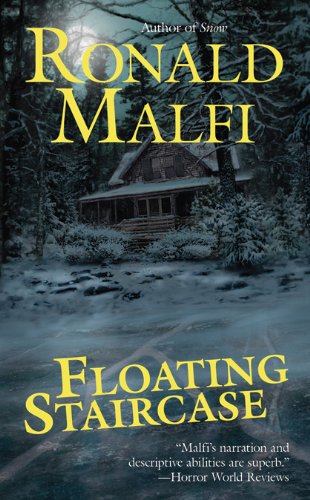
Floating Staircase is a ghost story/mystery novel by American writer Ronald Malfi. It was published in 2011 by Medallion Press, with a limited edition hardcover collectors edition from Thunderstorm Books, which contained an original author's "Afterward" not in the paperback novel. The novel was nominated by the Horror Writers Association for a Bram Stoker Award for Best Novel, and it won a Gold IPPY Award for best horror novel of 2011.
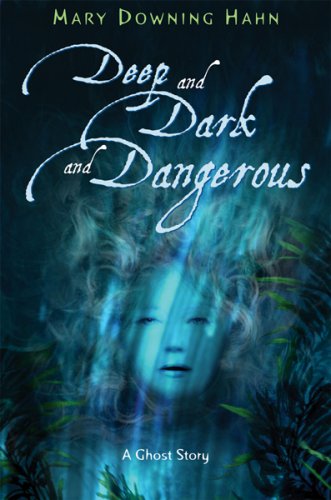
- Deep and Dark and Dangerous
Mary Downing Hahnstandalone novel2007
similar byeerieghost storiescontemporarynorth america+1 more
A 13 year old girl visiting with her aunt and cousin at the family summer home stumbles upon a secret her mother and aunt have been hiding for 30 years.
- Wildwood Road
Christopher Goldenstandalone novel2005
similar byeerieghost storiescontemporarynorth america+1 more
Michael and Jillian Dansky seemed to have it all--a happy marriage, two successful careers, a bright future. But late one October evening, all that changed. Driving home from a Halloween masquerade, Michael momentarily nods off behind the wheel--and wakes to find nothing is the same.Standing by his car is the little girl he came within a breath of running down. She leads Michael to her "home," an empty house haunted by whispers, and sends him away with a haunting whisper of her own: "come find me." But in the weeks to follow, it's clear that someone--or some thing--doesn't want Michael to find her: ominous figures in grey coats with misshapen faces are following him everywhere. And then Jillian wakes one morning replaced by a cold, cruel, vindictive woman Michael hardly recognizes as his wife. Michael must now search not only for the lost girl, but for a way to find the Jillian he's always loved, and to do so he must return to where the nightmare began. Down an isolated lane where he'll find them, or die trying.From the Trade Paperback edition.
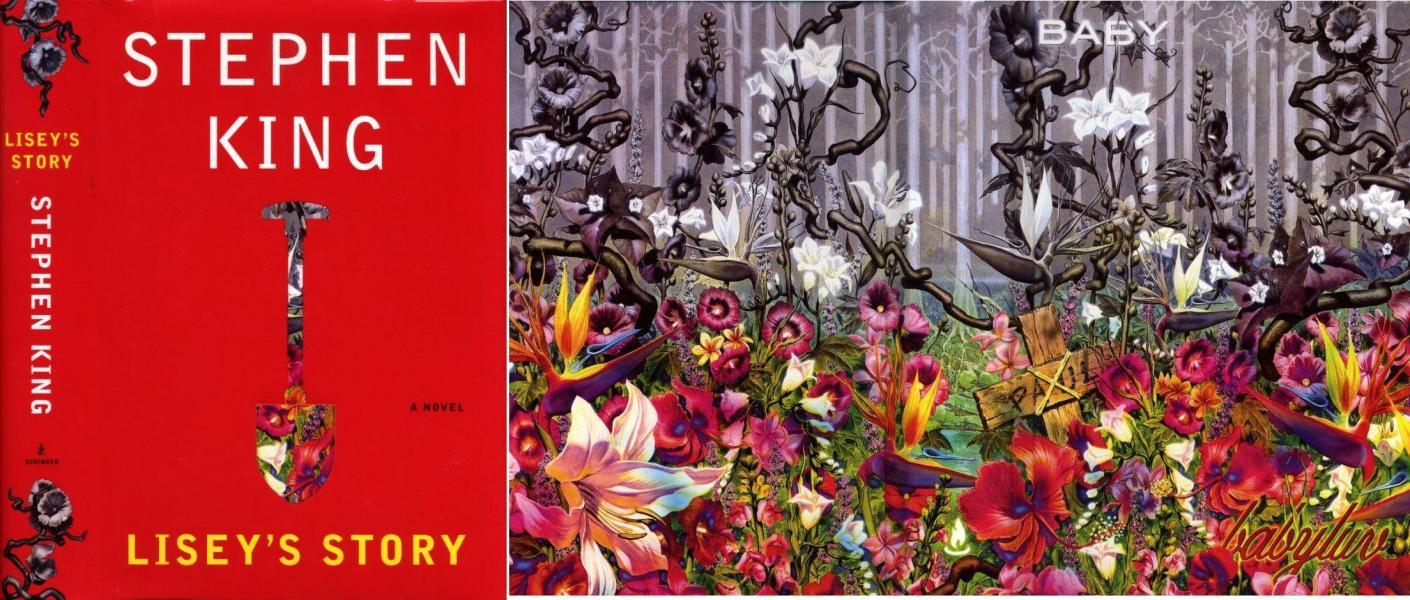
- Lisey's Story
Stephen Kingstandalone novel2006
similar byeeriegrief and losscontemporarynorth america+1 more
When the widow of a successful author is targeted by a psychopath, she must make use of the ability to shift to a parallel world, which she learned from her husband.
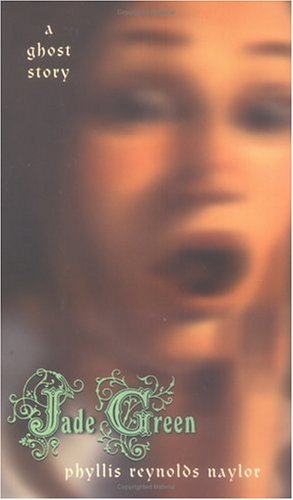
- Jade Green: A Ghost Story
Phyllis Reynolds Naylorstandalone novel2000
similar byeeriegrief and lossghost storiescontemporarynorth america
While living with her uncle in a house haunted by the ghost of a young woman, recently orphaned Judith Sparrow wonders if her one small transgression causes mysterious happenings.
- Mickelsson's Ghosts
John Gardnerstandalone novel1982
similar byghost storiescontemporarynorth america+2 more
Mickelsson's Ghosts, published in 1982, is American writer John Gardner's ninth novel. It was the final novel published during Gardner’s lifetime.
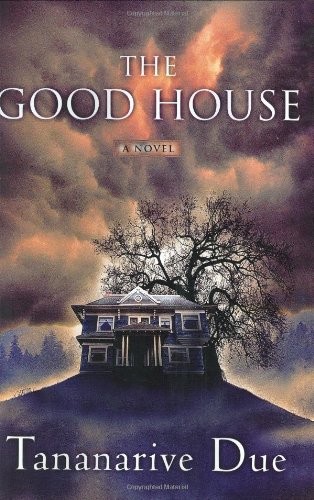
- The Good House
Tananarive Duestandalone novel2003
similar byeeriegrief and lossghost storiescontemporarynorth america
The Good House is a horror novel by American writer Tananarive Due, first published in 2003 by Atria Books. The story follows Angela Toussaint as she returns to her late grandmother's home in Sacajawea, Washington.
- The Old Willis Place
Mary Downing Hahnstandalone novel2004
similar byeerieghost storiescontemporarynorth america+1 more
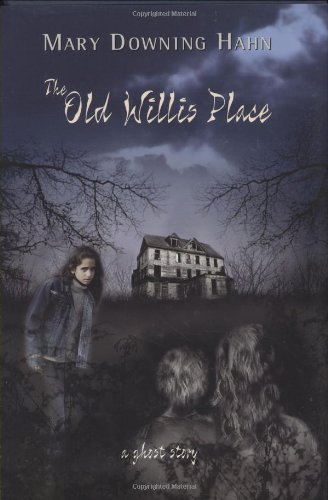
The Old Willis Place: A Ghost Story is a children's novel written by Mary Downing Hahn. It was first published in 2004 and is found in 9,001 libraries.
- Too Bright to See
Kyle Lukoffstandalone novel2021
similar byeeriegrief and lossghost storiescontemporarynorth america
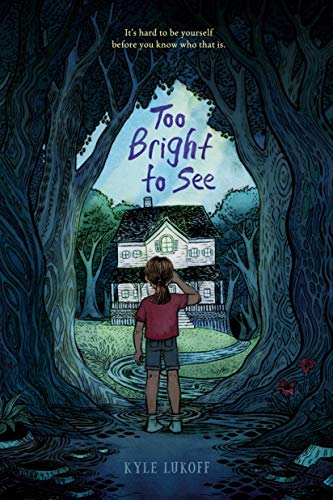
Too Bright to See is a middle grade ghost novel written by Kyle Lukoff and published on April 20, 2021, by Dial Books. It tells the story of Bug, a transgender boy who lives in a haunted house, as he tries to understand a message a ghost is trying to send him.
- Anna Korlov
series2 books2011
similar byghost storiescontemporary+3 more
Kendare Blake's YA horror duology follows Cas Lowood, who has spent three years continuing his late father's work of hunting and dispatching violent ghosts, until he meets Anna, a ghost far more dangerous, and more sympathetic, than any he's faced. Anna Dressed in Blood and its sequel Girl of Nightmares follow Cas as his professional detachment gives way to a bond that complicates everything he thought he knew about his calling.
- The Haunting of Willow House
Anthony M. Strongstandalone novel2017
similar byeeriegrief and lossghost storiescontemporarynorth america
● "When author Andrew Whelan and his children move from Boston to a house in the country, they think it will be a new start. Grieving the loss of his wife in an auto accident the year before, Andrew hopes that the rural setting will help bring them together again and finally allow them to heal. But the old house hides a terrifying secret, an injustice perpetrated long ago during the time of the Salem witch trials. A restless spirit haunts Willow House, a supernatural force with one thing on its mind. Soon the family find themselves pitted against an evil entity that will stop at nothing to exact revenge for an age old grudge." ― quoted from this book's Amazon product page as of 2021-11-12.
- Hell House
Richard Mathesonstandalone novel1971
similar byeerieghost storiescontemporarynorth america+1 more
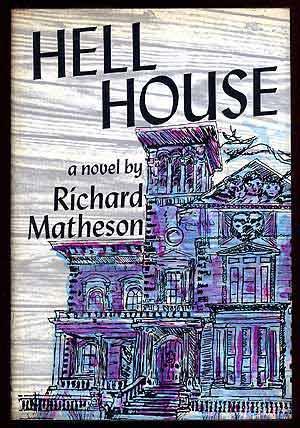
A dying millionaire wants proof, once and for all, of what happens after death, and hires physicist-turned-parapsychologist Dr. Lionel Barrett to spend a week investigating the Belasco House in Maine -- a mansion so thoroughly associated with atrocity that it's known simply as Hell House, where every previous investigation has ended in death or madness. Barrett brings his wife Edith along with two mediums, the spiritualist Florence Tanner and Benjamin Franklin Fischer, survivor of an earlier disastrous visit, whose scientific skepticism and spiritualist convictions clash from the first night inside. Richard Matheson's haunted-house novel, later filmed as The Legend of Hell House.