Loreful
HomeDiscover
Search series, authors…⌘K
Loreful

Reading orders for SF/F series and shared universes — with your place kept in every one.

Explore

UniversesSeriesWorksAuthorsAtlas

Help

FAQAboutSite map

Account & legal

Sign inCreate accountPrivacyTerms

Data

Built on ISFDB, Wikipedia, Wikidata and Open Library. Curated reading orders carry their reasoning on the page; the rest follow publication order. Data sources & licenses

© Loreful · data: ISFDB · CC BY

More like Warmarked

but

Mood

The mood the book leaves you in.

  • The reading experience is propelled by journeys, exploration, and physical risk; excitement and forward momentum dominate over dread or introspection.
  • Joy and loss are deliberately mixed; the resolution grants characters something real while taking something else away, leaving warmth and sorrow together.
  • The book demands work from the reader — dense prose, difficult structure, unfamiliar ideas, or morally uncomfortable material — as part of its intended effect.
  • Grim events, cruelty, or despair dominate the atmosphere, and the book does not soften them with comfort or comic relief.
  • The atmosphere is quietly unsettling — wrongness, unease, and the uncanny pervade the book without necessarily escalating into overt horror.
  • The book is built to move the reader; character feeling is foregrounded and major scenes aim at a strong emotional response.
  • Humor is a primary aim and the prose plays for laughs — comic situations, wit, or dialogue produce sustained comedy, not occasional levity.
  • The book insists that things can improve; effort and decency are shown to matter, and the arc bends toward better outcomes even through hardship.
  • The overall register is cheerful and easygoing; stakes are kept gentle and the book avoids dwelling on pain or dread.
  • Withheld information drives the experience; the book sustains enigmas and secrets the reader wants resolved, whatever its genre.
  • The book is contemplative and inward-looking, giving more weight to thought, memory, and meaning than to external events.
  • Grief, loss, or melancholy set the dominant register, and the book lets sorrow stand rather than resolving it into comfort.
  • Sustained suspense is the point; the book keeps the reader braced for what happens next through danger, pressure, or impending revelation.
  • Playful invention and charm define the register — fanciful conceits, light absurdity, and a narration that delights in its own oddity.

About

What the story runs on.

  • Stories in which dragons — as monsters, mounts, or characters in their own right — are central.
  • Stories centered on wizards, mages, and other learned practitioners of magic as protagonists or masters.
  • Stories in which demons or devils — infernal beings, their bargains, possessions, and hierarchies — drive the plot.
  • Stories in which gods and deities act as characters — walking the world, meddling in mortal lives, or dying.
  • Stories structured as a quest — a journey undertaken to find, deliver, or destroy something of great import.
  • Stories that turn on objects of power — enchanted weapons, rings, and relics sought, wielded, or destroyed.
  • Stories about those who track and kill monsters for a living or a calling, and the cost of the trade.
  • Stories in which staying alive against nature, catastrophe, or scarcity is the central problem.
  • Stories of growing up — a young protagonist crossing from childhood into adult knowledge and responsibility.
  • Stories driven by the pursuit of vengeance for a wrong, and what the pursuit costs the avenger.
  • Stories driven by maneuvering for power — factions, conspiracies, and statecraft conducted in shadow.
  • Stories in which war itself is the subject — combat, occupation, and what warfare does to soldiers and civilians.

Shelf

Where it sits in the library.

    • Fiction built on magic or other supernatural elements that have no scientific explanation.
    • Secondary-world fantasy at large scale, where the fate of nations or the world turns on the protagonists' struggle.
    • Fantasy set in a recognizably modern city or contemporary world where the supernatural intrudes on everyday life.
    • Fantasy that blends in horror's atmosphere and imagery, keeping a fantastical frame around grim or frightening material.
    • Action-driven fantasy following warriors or rogues with personal stakes against sorcerous threats, rather than world-spanning conflicts.
    • Fantasy set in a real historical period or a close analogue of one, with magic woven into the era.
    • Fantasy in which protagonists cross from the ordinary world into another world through a portal or similar passage.
    • Fiction that retells or reworks a traditional fairy tale in a new form or setting.
    • Fantasy drawing directly on myths, legends, and folklore, retelling them or building on their figures and logic.
    • Fantasy of ghosts, vampires, shapeshifters, psychics, and similar phenomena, usually set in an otherwise ordinary world.
    • Fiction mixing science-fictional trappings with overtly magical or impossible elements in one setting.
    • Low-stakes fantasy emphasizing comfort, community, and everyday pleasures over conflict and peril.
    • Speculative fiction of pervasive moral ambiguity, violence, and cynicism that rejects heroic conventions — fantasy and SF alike.
      • Fiction that extrapolates from science and technology — future societies, space travel, or speculative inventions — within at least nominally natural laws.
      • Science fiction of interstellar scope — starships, galactic polities, and adventure across star systems.
      • Science fiction centered on armed forces and warfare, told largely from a military point of view.
      • Fiction set after civilization's collapse, following survivors in the ruins of the old world.
      • Fiction in which characters move between past and future, and the mechanics or consequences of that travel drive the plot.
      • Fiction exploring a world where a historical event went differently and history diverged from ours.
      • Science fiction about humanity's first encounter and communication with an alien intelligence.
      • Fiction whose primary aim is to frighten or unsettle the reader through dread, menace, or the monstrous.
      • Horror of decaying houses, buried family secrets, and oppressive atmosphere in the Gothic literary tradition.
      • Horror centered on hauntings and the returning dead.
      • Horror located in the mind — paranoia, obsession, and unreliable perception rather than external monsters.
      • Horror built around the reanimated dead and survival amid their outbreaks.
      • Horror defined by explicit, transgressive gore that refuses to cut away from violence.
      • Speculative fiction of the strange and uncanny that resists both natural explanation and standard genre categories.
      • Fiction organized around solving a crime or puzzle, typically following an investigator toward the identification of a culprit.
      • A mystery set in a past era, where the investigation works within that period's methods and society.
      • Fast-paced fiction driven by imminent danger, pursuit, or high-stakes conspiracy, built to sustain tension.
      • A thriller whose tension comes from mental states and manipulation between characters rather than external action.
      • Fiction whose central plot is a romantic relationship and its development toward an emotionally satisfying resolution.
      • Romance in which one or both partners are supernatural beings, blending fantasy elements into the love story.
      • A fantasy-romance hybrid in which the romantic arc and the fantasy plot carry equal weight.
      • Romance set in a past era, with courtship shaped by the period's society and manners.
      • Romance set in the present day, without supernatural or historical elements.
      • Fiction set in a real past period, where the historical setting materially shapes characters and events.
        • General and literary fiction emphasizing prose style, character interiority, or formal ambition over genre plot conventions.
        • Fiction that ridicules people, institutions, or society in order to criticize them.
        • Fiction propelled by journeys, exploration, and physical peril, where action and survival carry the plot.
        • Fiction of the American frontier West — gunmen, ranchers, and lawmen, typically in the late nineteenth century.
        • Fiction centered on soldiers, campaigns, and the experience of warfare, historical or imagined.
          • Fiction written primarily to amuse, using comedic situations, wit, or parody as its organizing principle.
            • Fiction whose world runs on explicit game mechanics — levels, stats, and skills that characters can see and exploit.
              • Fiction about costumed or superpowered heroes and their conflicts with comparable villains.

              Practical

              How long a commitment, whether it stands alone, and whether it has finished.

              Tap a chip to ask for it · tap again to rule it out · once more to clear. Numbers show what would be left.

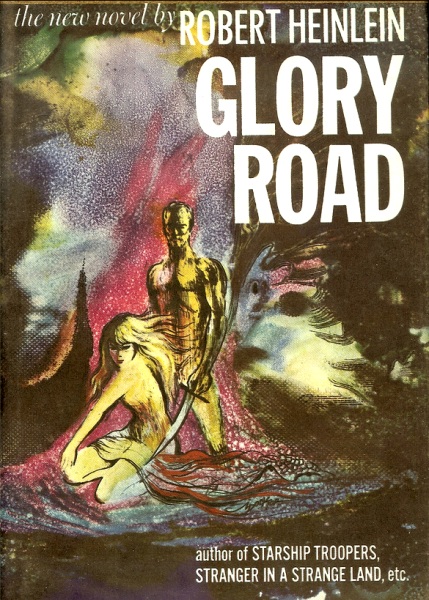
              • Cover of Glory Road
                Glory Road

                series · 2 books · 1963

                similar by+1 more

              • Cover of Gor
                Gor

                series · 41 books · 1966

                similar bysword and sorcery

                Gor is the fictional setting for a series of sword and planet novels written by philosophy professor John Lange, writing as John Norman. The setting was first described in the 1966 novel Tarnsman of Gor. The series is inspired by science fantasy pulp fiction works by Edgar Rice Burroughs, such as the Barsoom series. It also includes erotica and philosophical content. The Gor series repeatedly depicts men abducting and physically and sexually brutalizing women, who grow to enjoy their submissive state. According to The Encyclopedia of Science Fiction, Norman's "sexual philosophy" is "widely detested", but the books have inspired a Gorean subculture.

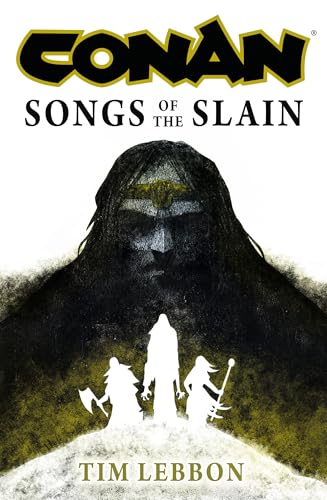
              • Cover of Conan Universe
                Conan Universe

                series · 205 books · 1932

                part of Hyborian Age

                similar bysword and sorcery

                The Conan books are sword and sorcery fantasies featuring the character of Conan the Cimmerian originally created by Robert E. Howard. Written by numerous authors and issued by numerous publishers, they include both novels and short stories, the latter assembled in various combinations over the years by the several publishers. The character has proven durably popular, resulting in Conan stories being produced after Howard's death by such later writers as Poul Anderson, Leonard Carpenter, Lin Carter, L. Sprague de Camp, Roland J. Green, John C. Hocking, Robert Jordan, Sean A. Moore, Björn Nyberg, Andrew J. Offutt, Steve Perry, John Maddox Roberts, Harry Turtledove, and Karl Edward Wagner. Some of these writers finished incomplete Conan manuscripts by Howard, or rewrote Howard stories which originally featured different characters. Most post-Howard Conan stories, however, are completely original works. In total, more than fifty novels and dozens of short stories featuring the Conan character have been written by authors other than Howard. This article describes and discusses notable book editions of the Conan stories.

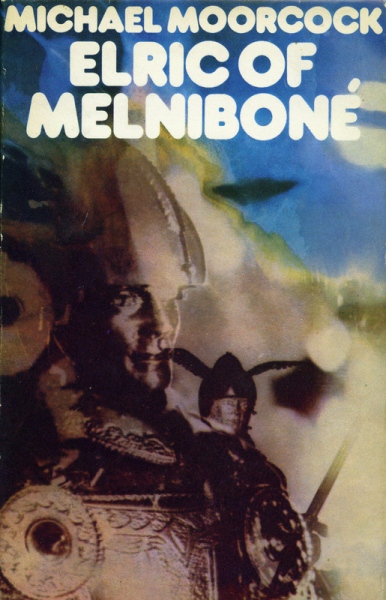
              • Cover of The Elric Saga
                The Elric Saga

                series · 72 books · 1961

                part of Moorcock's Multiverse

                similar by+1 more

                The Elric Saga is Michael Moorcock's sequence of sword-and-sorcery novels about Elric, the frail, sorcery-dependent last emperor of the ancient island empire of Melniboné, who abandons his throne to wander a violent, magic-soaked world carrying a sentient, soul-drinking black sword. Core entries such as Elric of Melniboné, The Sailor on the Seas of Fate, and Stormbringer trace his path toward a self-destructive destiny, and Elric was later folded into Moorcock's wider Eternal Champion multiverse, of which this saga is one strand.

              • C
                Corum

                series · 6 books · 1971

                part of Moorcock's Multiverse

                similar by+1 more

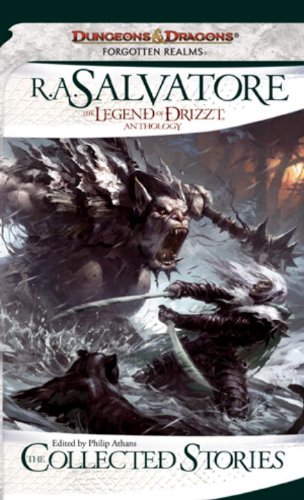
              • Cover of Forgotten Realms: The Legend of Drizzt
                Forgotten Realms: The Legend of Drizzt

                series · 39 books · 1988

                part of Forgotten Realms

                similar by+1 more

                The Legend of Drizzt is a series of fantasy novels by R. A. Salvatore that began in 1988, and consists of 39 books as of August 15, 2023. They are based in the Forgotten Realms setting in the dimension of Abeir-Toril on the continent Faerûn in the Dungeons & Dragons universe currently published and owned by Wizards of the Coast. It combines the series The Dark Elf Trilogy, The Icewind Dale Trilogy, Legacy of the Drow, Paths of Darkness, The Hunter's Blades Trilogy, and other sets into an abridged compilation. Drizzt Do'Urden is the main character of most of the books.

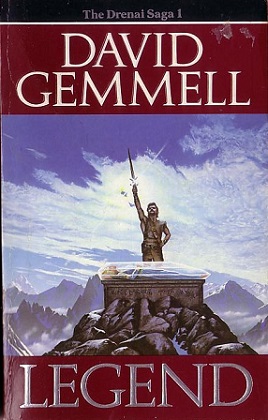
              • Cover of The Drenai Saga
                The Drenai Saga

                series · 15 books · 1984

                completed

                similar by+1 more

                David Andrew Gemmell was a British author of heroic fantasy, best known for his debut novel, Legend. A former journalist and newspaper editor, Gemmell had his first work of fiction published in 1984. He went on to write over thirty novels. Gemmell's works display violence, yet also explore themes of honour, loyalty and redemption. There is always a strong heroic theme but nearly always the heroes are flawed in some way. With over one million copies sold, his work continues to sell worldwide.

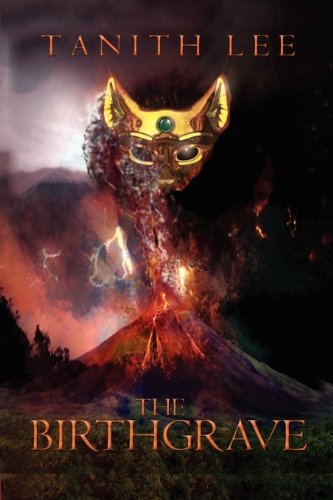
              • Cover of Birthgrave
                Birthgrave

                series · 3 books · 1975

                completed

                similar by+1 more

                Tanith Lee's Birthgrave trilogy (The Birthgrave, Vazkor Son of Vazkor, Quest for the White Witch, 1975-1978) opens with an amnesiac woman waking inside a volcano with no memory of who she is, and follows her journey through a brutal, quasi-medieval world in search of her identity, wielding strange powers she doesn't understand along the way. She eventually learns she is one of the last of the Old Ones, an ancient, nearly extinct people, and must reckon with the harm her own vanished civilization once did.

              • Cover of Eric Brighteyes
                Eric Brighteyes

                series · 2 books · 1891

                similar by+1 more

                H. Rider Haggard's Eric Brighteyes is a Viking-age saga set in 10th-century Iceland, following the golden-eyed warrior Eric Thorgrimursson's doomed love for Gudruda against a backdrop of clan rivalry, sorcery, and blood feud after the sorceress Swanhild and the chieftain Ospakar both move against the match. Written in 1891 in the style of the Old Norse sagas Haggard admired, it stood alone for nearly a century until Mildred Downey Broxon, writing under a Norse pen name, continued the story in the 1979 sequel Eric Brighteyes #2: A Witch's Welcome.

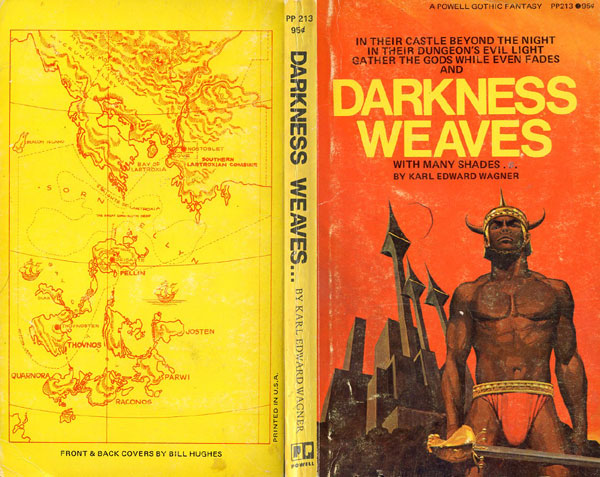
              • Cover of Kane
                Kane

                series · 25 books · 1970

                completed

                similar bysword and sorcery

                Kane is a fictional character created by American author Karl Edward Wagner, who is the protagonist of three novels and about 20 short stories published between 1970 and 1985. Most Kane tales are sword and sorcery with strong elements of gothic horror and set in a grim, pre-medieval world which is nonetheless ancient and rich in history. In some of Wagner's later stories, Kane appears in the present day—for example, as a drug dealer in "Lacunae" and as a somewhat suspect publishing magnate in "At First Just Ghostly".

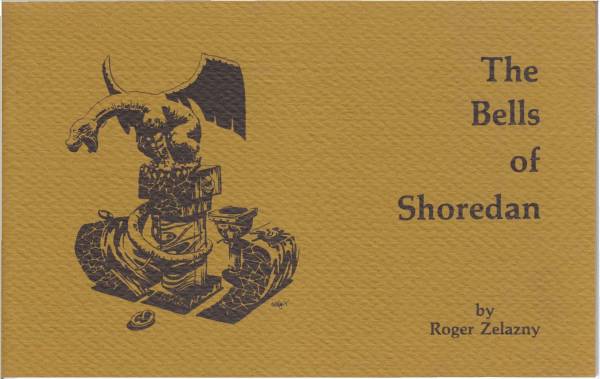
              • Cover of Dilvish
                Dilvish

                series · 13 books · 1965

                completed

                similar bysword and sorcery

                Centuries ago, the half-elf warrior Dilvish tried to stop a dark sorcerer named Jelerak from completing a terrible ritual, and paid for it by being turned to stone and having his soul cast into Hell. Roger Zelazny's Dilvish the Damned stories bring him back when the people he once protected need him again, reuniting him with his strange metal steed Black for a string of sword-and-sorcery adventures built around his long-delayed vengeance against Jelerak. The tales run as short, episodic quests rather than one continuous plot.

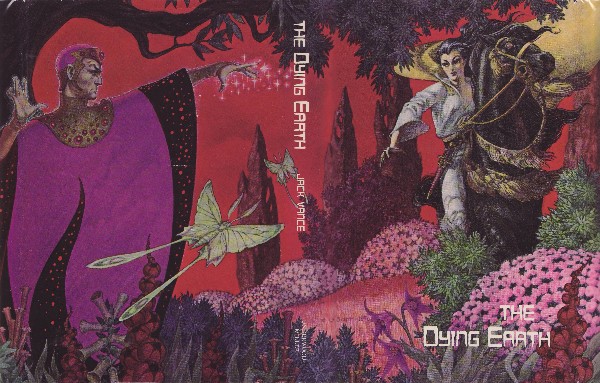
              • Cover of Dying Earth
                Dying Earth

                series · 27 books · 1950

                similar by+1 more

                Dying Earth is a speculative fiction series by the American author Jack Vance, comprising four books originally published from 1950 to 1984. Some have been called picaresque. The series includes short story collections, fix-ups, and novels.

              • Cover of Kull of Valusia
                Kull of Valusia

                series · 26 books · 1929

                completed

                part of Hyborian Age

                similar bysword and sorcery

                Kull of Atlantis or Kull the Conqueror is a fictional character created by American writer Robert E. Howard. The character was more introspective than Howard's subsequent creation, Conan the Barbarian, whose first appearance was in a rewritten version of a rejected Kull story.

              • Cover of Lyra
                Lyra

                series · 5 books · 1982

                similar by+1 more

                Patricia C. Wrede's Lyra novels are a set of fantasy books beginning with Shadow Magic (1982) and continuing through Daughter of Witches, The Harp of Imach Thyssel, Caught in Crystal, and The Raven Ring, later collected together as The Lyra Novels.

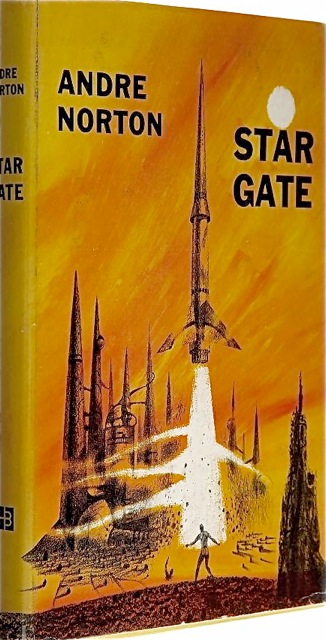
              • Cover of Star Gate
                Star Gate

                Andre Norton · standalone novel · 1958

                similar bysword and sorcery

                Star Gate is a science fantasy novel by American writer Andre Norton, published by Harcourt, Brace & Company in 1958. The story is science fiction with a blend of sword and sorcery, mingling technologically advanced humans from Earth with the human natives of the far-off world of Gorth and a native culture that has achieved the development level of medieval Europe.

              • Cover of The Lords of Dus
                The Lords of Dus

                series · 4 books · 1980

                similar by+1 more

                The Lords of Dus is Lawrence Watt-Evans' debut fantasy quartet, opening with The Lure of the Basilisk (1980) and continuing through The Seven Altars of Dusarra, The Sword of Bheleu, and The Book of Silence, all set in the same fantasy world.

              • Cover of Brak the Barbarian
                Brak the Barbarian

                series · 16 books · 1963

                completed

                similar bysword and sorcery

                John Jakes's Brak the Barbarian follows his own wandering barbarian swordsman, Brak, through sword-and-sorcery adventures modeled on the pulp tradition of the 1930s and '40s but original to Jakes rather than adapted from an earlier author. The character's stories were published across several collections and short novels from the 1960s into 1980.

              • Cover of Green Star Rises
                Green Star Rises

                series · 5 books · 1972

                completed

                similar bysword and sorcery

                Linwood Vrooman Carter was an American author of science fiction and fantasy, as well as an editor and critic. He usually wrote as Lin Carter; known pseudonyms include H. P. Lowcraft and Grail Undwin. In the 1970s he was editor of the Ballantine Adult Fantasy series, which introduced readers to many overlooked classics of the fantasy genre.

              • Cover of Tiger and Del
                Tiger and Del

                series · 10 books · 1985

                similar bysword and sorcery

                Jennifer Roberson's fantasy series pairs Tiger, a desert-born sword-dancer from the south, with Del, a Northern swordswoman trained in her own tradition of blade-magic, as reluctant partners across a hostile borderland. Beginning with Sword-Dancer and continuing across six numbered novels, the series follows their partnership, and eventual romance, through decades of adventures and shifting political stakes.

              • Cover of Sun Wolf and Starhawk
                Sun Wolf and Starhawk

                series · 7 books · 1984

                similar bysword and sorcery

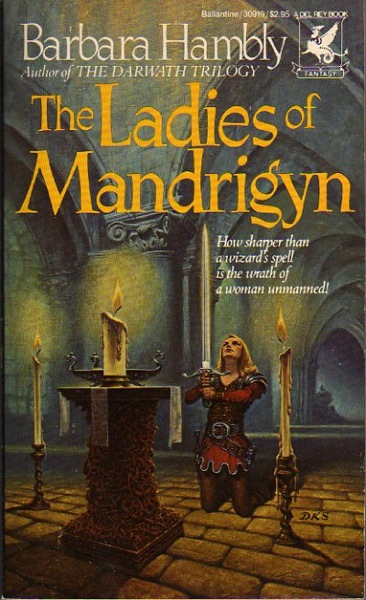
                Barbara Hambly's series begins with the city of Mandrigyn conquered and its men enslaved in the mines of the wizard-king Altiokis, forcing surviving noblewoman Sheera Galernas to kidnap the mercenary captain Sun Wolf and press him into training the city's women as fighters. Sun Wolf's partnership with his lieutenant Starhawk carries across The Ladies of Mandrigyn, The Witches of Wenshar, and further volumes as both are drawn deeper into magic neither originally wanted.

              • Cover of Pusadian
                Pusadian

                series · 9 books · 1951

                completed

                similar bysword and sorcery

                The Pusadian series is a sequence of fantasy stories by L. Sprague de Camp, begun in the early 1950s and written under the influence of Robert E. Howard's Conan stories. The series, also known as the Poseidonis series, prefigured the numerous sword & sorcery settings of the 1960s and 1970s.

              • Cover of Solomon Kane
                Solomon Kane

                series · 39 books · 1928

                similar bysword and sorcery

                Solomon Kane is a fictional character created by the pulp-era writer Robert E. Howard. A late-16th-to-early-17th century Puritan, Solomon Kane is a somber-looking man who wanders the world with no apparent goal other than to vanquish evil in all its forms. His adventures, published mostly in the pulp magazine Weird Tales, often take him from Europe to the jungles of Africa and back.

              • Cover of Neveryon
                Neveryon

                series · 19 books · 1979

                similar bysword and sorcery

                Return to Nevèrÿon is a series of eleven sword and sorcery stories by Samuel R. Delany, originally published in four volumes during the years 1979–1987. Those volumes are:Tales of Nevèrÿon Neveryóna, or: The Tale of Signs and Cities Flight from Nevèrÿon Return to Nevèrÿon

              • Cover of Novaria
                Novaria

                series · 6 books · 1968

                completed

                similar by+1 more

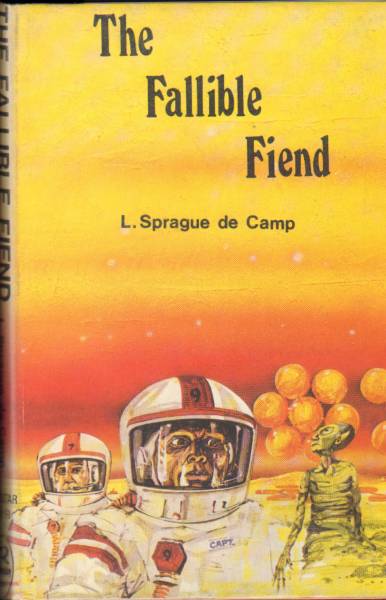
                The Novarian series is a sequence of fantasy stories by L. Sprague de Camp, published between 1968 and 1989. The series contains some of de Camp's most innovative works of fantasy, featuring explorations of various political systems, an inversion of the "rags to royalty" pattern characteristic of much heroic fantasy, a satiric look at the foibles of humanity through the eyes of a demon, and a consistently wry and ironic take on conventions of the genre that plays out by taking them to their logical conclusions. Another singular feature of the series is its frequent use of folk tales integrated into the plot to painlessly convey something of the background and history of the invented world. This device obviates the need for lengthy appendices, as in The Lord of the Rings.