More like Warrior Queen
but
- Narnia
series26 books1950
part of Narnia Universe
similar byfantasyadventuroussecondary world
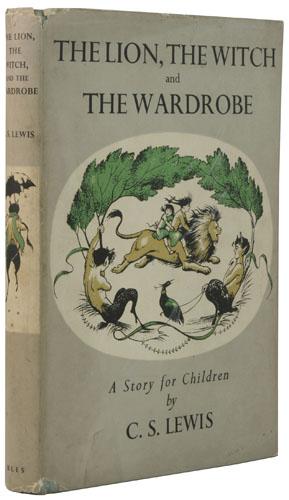
The Chronicles of Narnia is a series of seven portal fantasy novels by British author C. S. Lewis. Illustrated by Pauline Baynes and originally published between 1950 and 1956, the series is set in the fictional realm of Narnia, a fantasy world of magic, mythical beasts, and talking animals. It narrates the adventures of various children who play central roles in the unfolding history of the Narnian world. Except in The Horse and His Boy, the protagonists are all children from the real world who are magically transported to Narnia, where they are sometimes called upon by the lion Aslan to protect Narnia from evil. The books span the entire history of Narnia, from its creation in The Magician's Nephew to its eventual destruction in The Last Battle.
- His Dark Materials Universe
universe13 books1995
Start hereHis Dark Materials · Start here
similar byfantasyadventurousparallel universe+1 more
In a world like ours and unlike it, every human soul walks outside the body in the shape of an animal — a daemon, who speaks, who cannot be lied to, and who settles into one fixed form only when childhood ends. This is the country of His Dark Materials: a company of parallel worlds across which an invisible dust of consciousness drifts down upon the waking mind; where a Church that calls itself the Magisterium would sooner sever a child's soul than let that Dust be understood; and where a golden instrument, the alethiometer, answers true questions for anyone with the patience to read it. Philip Pullman's design stands in two trilogies and a scatter of shorter tales. His Dark Materials — Northern Lights (published in America as The Golden Compass), The Subtle Knife, and The Amber Spyglass — carries Lyra Belacqua from the rooftops of a shadow Oxford across the borders between worlds. The Book of Dust returns to that same territory: La Belle Sauvage looks back to Lyra as an infant carried through a great flood, while The Secret Commonwealth follows her grown and less certain into adulthood, with a concluding volume closing the arc. Around them sit slim companion books — Lyra's Oxford, Once Upon a Time in the North, Serpentine — and Nicholas Wright's stage adaptation, made with Pullman's blessing. The register is grave and luminous at once, its title lifted from Milton and its quarrel drawn from Blake: a story that takes the side of curiosity, love, and the physical world against any authority that would forbid them. It reads as adventure — armoured bears, aeronauts, knife-cut windows between skies — yet reasons like philosophy. Begin with Northern Lights / The Golden Compass and read the first trilogy through before turning to The Book of Dust, which deepens everything the first has already made you feel.
- His Dark Materials
series8 books1995
part of His Dark Materials Universe
similar byfantasyadventurousparallel universe+1 more
His Dark Materials is a trilogy of fantasy novels by Philip Pullman consisting of Northern Lights, The Subtle Knife (1997), and The Amber Spyglass (2000). It follows the coming of age of two children, Lyra Belacqua and Will Parry, as they wander through a series of parallel universes. The novels have won a number of awards, including the Carnegie Medal in 1995 for Northern Lights and the 2001 Whitbread Book of the Year for The Amber Spyglass. In 2003, the trilogy was ranked third on the BBC's The Big Read poll.
- The Lord of the Rings
series13 books1954
part of Tolkien's legendarium
similar bysecondary world+2 more
The Lord of the Rings is an epic high fantasy novel written by the English author and scholar J. R. R. Tolkien. Set in Middle-earth, the story began as a sequel to Tolkien's 1937 children's book The Hobbit but eventually developed into a much larger work. Written in stages between 1937 and 1949, The Lord of the Rings is one of the best-selling books ever written, with over 150 million copies sold.
- Stephen King multiverse
universe46 books1967
Start hereThe Gunslinger · Start here
similar by+3 more
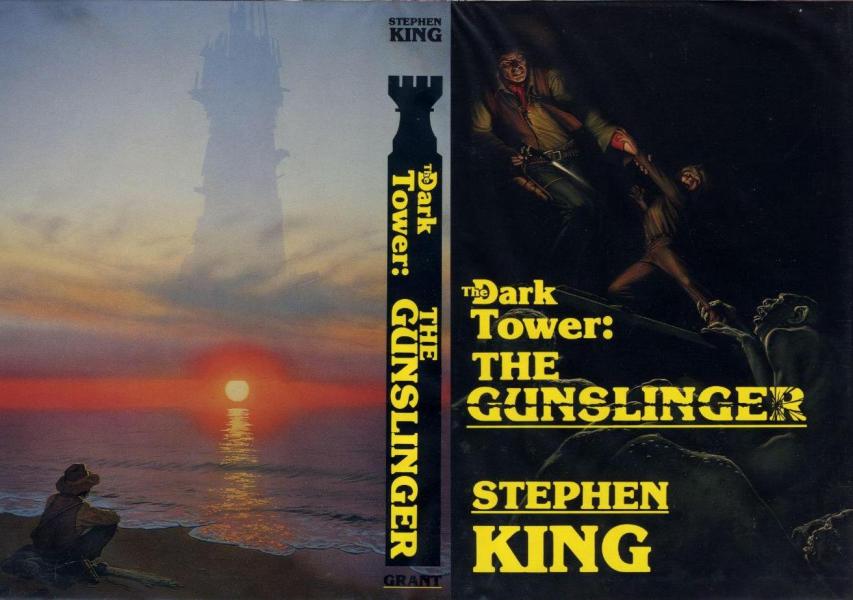
The man in black fled across the desert, and the gunslinger followed. So begins the long walk of Roland Deschain, last of an order of knight-errant pistoleers, across a land that has "moved on" — where the compass points drift, dead machines rot toward sentience, and the weave of what's real wears thin. His quest is the Dark Tower itself: a spire standing at the hub of every world that exists, the linchpin that holds all of them back from ruin. Roland's road runs eight volumes, from The Gunslinger through the closing Dark Tower, with the later, interleaved tale The Wind Through the Keyhole folding a story-within-a-story back into his youth. Along the way he draws a ka-tet — a fellowship bound by fate, not choosing — through doorways between worlds: a heroin-shackled New Yorker, a woman of two minds, a boy who dies twice. The Tower is also the secret axle around which the wider shelf of King's work turns; threads from The Stand, 'Salem's Lot and beyond wind quietly toward it. Expect a mongrel of Western, high fantasy, horror and decayed science fiction, told in a dusty, incantatory dialect all its own — ka, thankee-sai, the world that has moved on. This is King at his most mythic and most personal, a decades-spanning circle that rewards a patient reader. Begin at the beginning: The Gunslinger, then walk forward in publication order. There are other worlds than these — but this door opens first.
- The Hobbit
series2 books1937
completed
part of Tolkien's legendarium
similar byfantasyadventuroussecondary world
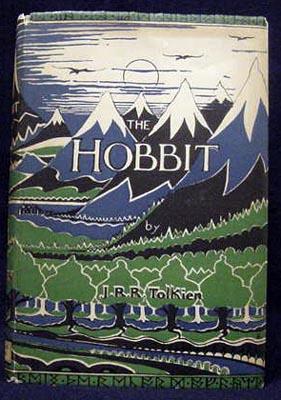
The Hobbit (1937) is J. R. R. Tolkien's children's fantasy novel following the reluctant burglar Bilbo Baggins, who joins a company of dwarves and the wizard Gandalf on a journey to reclaim treasure guarded by the dragon Smaug. It stands as a complete adventure on its own, but shares its setting with the rest of Tolkien's legendarium and leads into the events of The Lord of the Rings.
- Peter Pan Universe
universe112 books1902
Start herePeter Pan · Start here
similar byfantasy
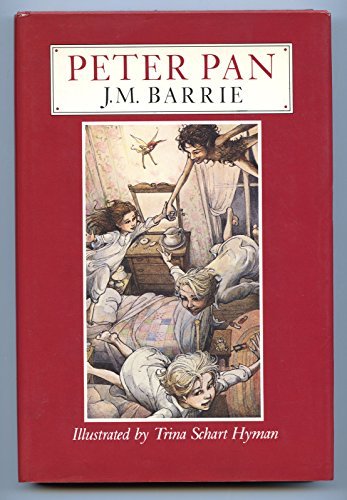
Second star to the right, and straight on till morning — and there it is, the island that every child dreams once and then, growing up, contrives to forget. Neverland: mermaids in the lagoon, a ticking crocodile with a clock in its belly, a pirate nursing his severed hand, and above it all the boy who will not grow up, forever flying, forever heartless in the lovely careless way that only children are. It begins with J. M. Barrie — the 1904 stage play, the chapters of Kensington Gardens, and the novel Peter and Wendy that fixed Peter, Wendy, Tinker Bell, Hook and the Lost Boys in place. From that small window a wide world has flown. Dave Barry and Ridley Pearson supply the how-it-all-began in their Starcatchers books, chasing falling starstuff aboard a doomed ship to explain why one orphan came to fly and never age. A whole bright shelf tends Tinker Bell's Pixie Hollow — the Disney Fairies and Fairy Haven tales, Kiki Thorpe's Never Girls — while Heidi Schulz hands the wheel to Hook's own daughter, and stranger, dimmer corners carry the island into far darker weather. Many hands, one archipelago; no single map governs them all. What sets it apart is the sweetness with a blade in it — wonder shadowed always by the ache of leaving, of mothers who keep the window open and children who fly home too late. Newcomers should begin where it began, with Barrie's Peter and Wendy, then, for the origin, take the Starcatchers books in their own order. The rest of Neverland waits, as it always does, for whoever still remembers how to reach it.
- Barsoom
series53 books1917
similar byadventurous
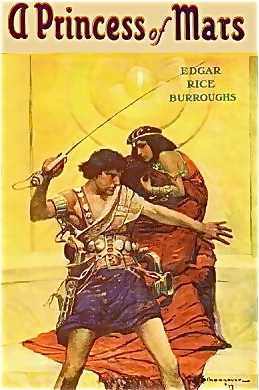
Barsoom is a fictional representation of the planet Mars created by American pulp fiction author Edgar Rice Burroughs. The first Barsoom tale was serialized as Under the Moons of Mars in pulp magazine The All-Story from February to July 1912 and published compiled as a novel as A Princess of Mars in 1917. It features John Carter, a late-19th-century American Confederate veteran who is mysteriously transported from Earth to the dying world of Mars where he meets and romances the beautiful Martian princess Dejah Thoris. Ten sequels followed over the next three decades, further extending his vision of Barsoom and adding other characters.
- Earthsea Cycle
series18 books1964
completed
part of Earthsea
similar byfantasysecondary world
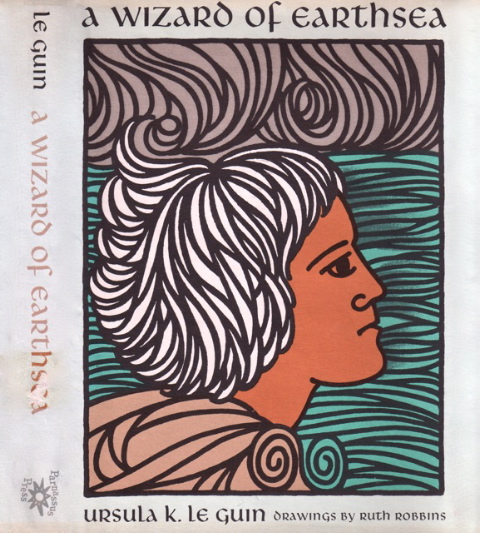
The Earthsea Cycle, also known as Earthsea, is a series of high fantasy books written by American author Ursula K. Le Guin. Beginning with A Wizard of Earthsea (1968), The Tombs of Atuan (1970), and The Farthest Shore (1972), the series was continued in Tehanu (1990), and Tales from Earthsea and The Other Wind. In 2018, all the novels and short stories were published in a single volume, The Books of Earthsea: The Complete Illustrated Edition, with artwork by Charles Vess.
- Kairos
series11 books1962
completed
similar by+2 more
The Time Quintet is a science fantasy series of five young adult novels written by American author Madeleine L'Engle and made up of A Wrinkle in Time (1962), A Wind in the Door (1973), A Swiftly Tilting Planet (1978), Many Waters (1986), and An Acceptable Time (1989).
- Apprentice Adept
series7 books1980
similar byadventurousparallel universe+2 more
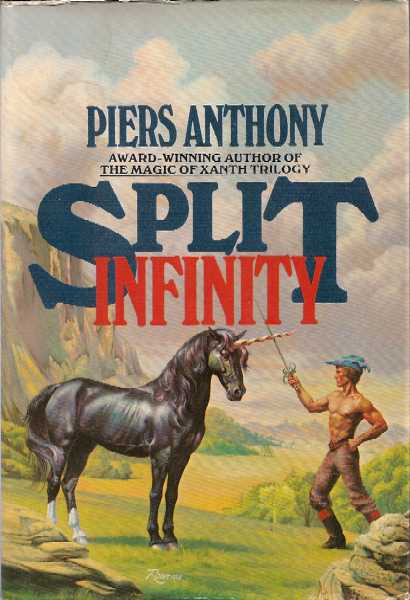
Apprentice Adept is a heptalogy of fantasy and science fiction novels written by English American author Piers Anthony. The series takes place on Phaze and Proton, two worlds occupying the same space in two different dimensional planes. Phaze is a lush planet of magic, where Proton is a barren mining planet of science. As the series opens, each person born on Phaze and Proton has an alternate self living on the other world. But if a person on either world lacks a duplicate, he can cross to the other through an energy "curtain" that circumscribes each frame.
- Three Hearts and Three Lions
series3 books1961
similar byfantasyadventuroussecondary world
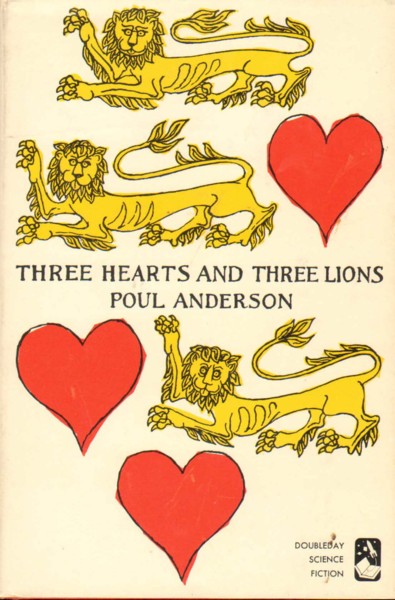
Three Hearts and Three Lions (1961, expanded from a 1953 novella) follows Holger Carlsen, a Danish resistance fighter wounded fighting the Nazis, who wakes in a medieval world of knights, dragons, and sorcery drawn from Carolingian legend. Poul Anderson wrote it as a self-contained portal fantasy; the later story Three Lilies and Three Leopards, by Harry Turtledove and Tad Williams, is a tribute piece published in an anniversary anthology rather than a true narrative sequel.
- A Song of Ice and Fire
series14 books1996
part of World of Ice and Fire
similar byfantasysecondary world
A Song of Ice and Fire is a series of high fantasy novels by the American author George R. R. Martin. Martin began writing the first volume, A Game of Thrones, in 1991, and published it in 1996. Martin, who originally envisioned the series as a trilogy, has released five out of seven planned volumes. The most recent entry in the series, A Dance with Dragons, was published in 2011. Since then, Martin has been working on the sixth novel, titled The Winds of Winter. A seventh novel, A Dream of Spring, is planned to follow.
- Enchanted Pilgrimage
Clifford D. Simakstandalone novel1975
similar byfantasyadventuroussecondary world+1 more
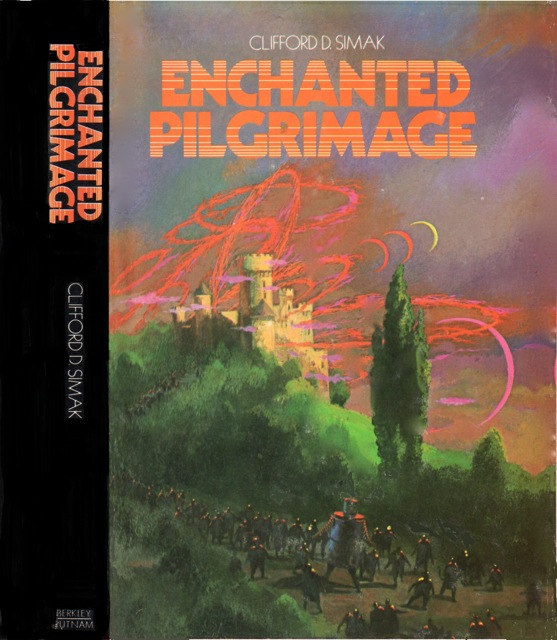
A scholar at a remote university stumbles onto a manuscript that hints at forgotten secrets buried in the Wasteland, a blighted region where magic and monsters still linger at the edge of an otherwise rational world. Setting out to track the manuscript's truth to its source, he gathers a company of odd fellow travelers along the way -- the kind of companions a quest like this tends to attract -- each with their own stake in what they might find. Clifford D. Simak folds his familiar pastoral, faintly melancholy tone into a full-blown fantasy quest, blending scholarly curiosity with old magic. A standalone fantasy novel by Clifford D. Simak.
- Roadmarks
Roger Zelaznystandalone novel1979
similar byadventurous+2 more
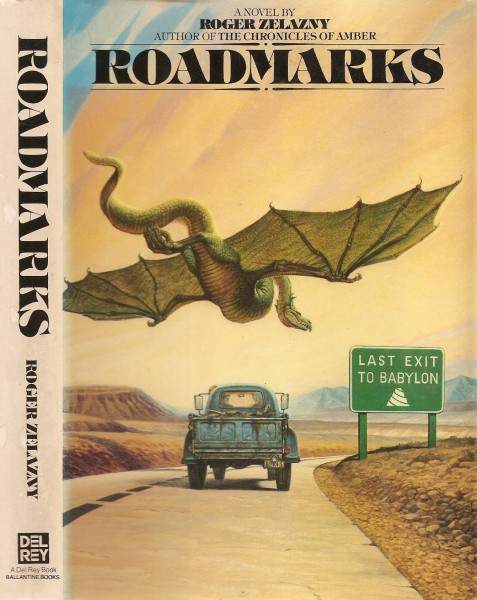
Roadmarks is a science fantasy novel by American author Roger Zelazny, written during the late 1970s and published in 1979.
- Discworld
universe84 books1983
Start hereGuards! Guards! · Start here
similar byfantasysecondary world
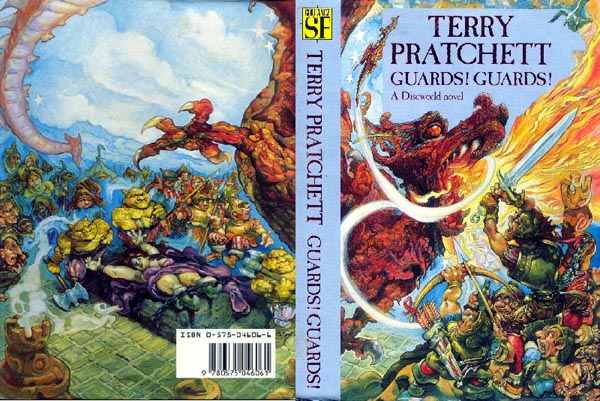
The Disc is flat. It rides on the backs of four elephants, who in turn stand on the shell of Great A'Tuin, a turtle ten thousand miles long, swimming through space toward nowhere in particular. Magic works here, usually badly. Death speaks IN SMALL CAPITALS and rides a horse called Binky. It looks like a fantasy world and behaves like ours with the safety catch off: a mirror held up to bureaucracy, belief, newspapers, money, war, and the ridiculous, stubborn business of being a person. One hand shaped all of it — Terry Pratchett — across forty-one novels and a shelf of companions, maps, and the Science of Discworld books. The world is braided from strands you can pick up on their own. Rincewind, the cowardly wizard, flees across the Disc (The Colour of Magic). The witches of Lancre, led by the formidable Granny Weatherwax, mind everyone's business (Equal Rites, Wyrd Sisters). Death takes on an apprentice (Mort). The City Watch polices grimy Ankh-Morpork under Commander Vimes (Guards! Guards!). A reformed swindler is given honest work at swordpoint (Going Postal), and young Tiffany Aching learns witching alongside the tiny, larcenous Nac Mac Feegle (The Wee Free Men). Standalones like Small Gods sit apart. The trick of it is that the farce turns, mid-joke, into something that catches in the throat, with footnotes that argue back at the page. Newcomers are gently steered away from the beginning: the early Rincewind books spoof a genre you needn't have read. Enter instead by whichever strand calls — Guards! Guards! for the Watch, Mort for Death, Wyrd Sisters for the witches, Small Gods entirely alone, or The Wee Free Men for the sharpest single thread. Open any door and the whole Disc opens with it.
- Watership Down
series21 books1972
completed
similar byfantasyadventurous+1 more
Watership Down is Richard Adams's 1972 novel following a group of rabbits who flee the destruction of their warren and cross the English countryside of Hampshire in search of a new home, developing over the journey a full rabbit culture of language, proverbs, and mythology. Adams returned to the same world in 1996 with Tales from Watership Down, a collection of nineteen short stories mixing rabbit folklore with further adventures of characters from the novel.
- Zimiamvian Trilogy
series4 books1922
completed
similar byfantasysecondary world
The Zimiamvian Trilogy is a series of fantasy novels by English author E. R. Eddison.Mistress of Mistresses (1935) A Fish Dinner in Memison (1941) The Mezentian Gate (1958)
- Eternal Champion
series6 books1962
part of Moorcock's Multiverse
similar byfantasyadventuroussecondary world+1 more
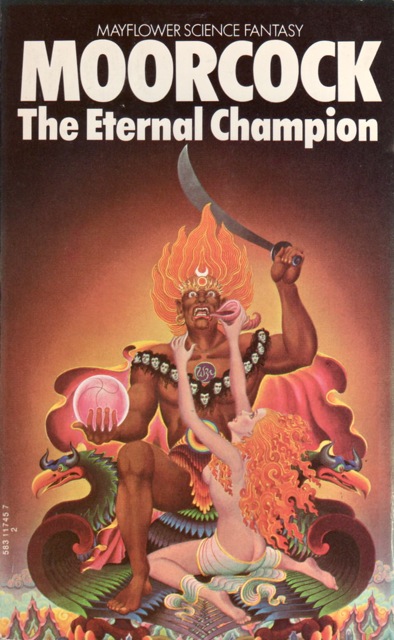
The Eternal Champion introduces Erekosë, a modern man drawn out of his own life to become a warrior fated to fight across many worlds and identities — the seed of Michael Moorcock's whole multiverse concept, in which the same doomed hero recurs under different names. First published as a 1962 novella and expanded to a novel in 1970, it heads a trilogy completed by Phoenix in Obsidian and The Dragon in the Sword; within the wider moorcocks-multiverse this is the sequence that names and anchors the Eternal Champion idea itself.
- Shannara
universe50 books1977
Start hereWord and the Void · The very beginning of the timeline
similar byfantasysecondary world+1 more
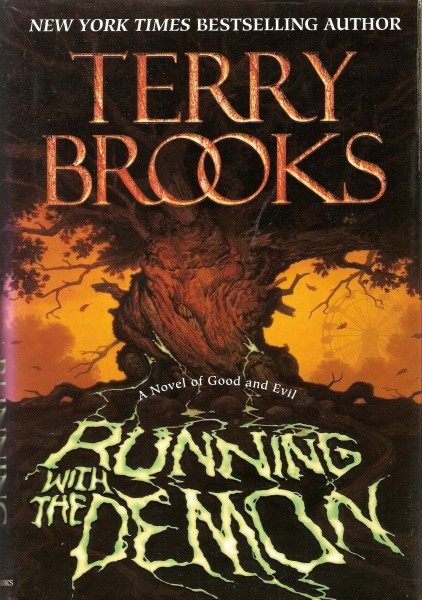
Long after the world we know has burned itself to slag in the Great Wars, the Four Lands rise green over the bones of the old age. Science is a forbidden memory; magic has come back into the world, and with it the old divisions — Men, Elves, Dwarves, Trolls, and Gnomes, each Race a splinter of what humanity became. This is the far-future Earth of Shannara, where the ruins buried beneath the soil are ours, and the only keepers of the vanished knowledge are the Druids of Paranor, who wake once a generation to meet the darkness rising again. Terry Brooks opened the Four Lands in 1977 with The Sword of Shannara and has charted its history for four decades since — a legendarium ordered not by throne but by a single bloodline, the Ohmsfords, each generation inheriting an Elfstone, a blade, or a wishsong when the age demands a hero. The original trilogy gives way to the Heritage of Shannara, the Voyage of the Jerle Shannara, the High Druid, Dark Legacy, Defenders, and the concluding Fall of Shannara; the Genesis of Shannara books reach back to the apocalypse itself, and the Word and the Void trilogy back further still, into a demon-haunted version of our own present that is the root of everything after. In 2025 Brooks passed the histories to Delilah S. Dawson to carry forward. What sets these books apart is their long memory: a world where every triumph is provisional, where the same evil returns wearing a fresh shape each age, and magic always exacts its price. The reading is warm and headlong — questing companies, old talismans, journeys across a mapped and named wilderness — shadowed by the knowledge that all of it stands on the wreckage of a former world. Enter as readers first did: with The Sword of Shannara, then onward in publication order. The chronological path, beginning with Word and the Void, rewards a second journey, once the Four Lands already feel like home.