More like When Shadows Fall
anchored on:secondary world
but
- Thomas Covenant the Unbeliever
series11 books1977
similar bysecondary worlddarkfantasyepic fantasy+1 more
The Chronicles of Thomas Covenant is a series of ten high fantasy novels written by American author Stephen R. Donaldson. The series began as a trilogy, The Chronicles of Thomas Covenant the Unbeliever. This was followed by another trilogy, The Second Chronicles of Thomas Covenant, and finally a tetralogy, The Last Chronicles of Thomas Covenant.
- A Song of Ice and Fire
series14 books1996
part of World of Ice and Fire
similar bywarsecondary worlddarkfantasyepic fantasy+2 more
A Song of Ice and Fire is a series of high fantasy novels by the American author George R. R. Martin. Martin began writing the first volume, A Game of Thrones, in 1991, and published it in 1996. Martin, who originally envisioned the series as a trilogy, has released five out of seven planned volumes. The most recent entry in the series, A Dance with Dragons, was published in 2011. Since then, Martin has been working on the sixth novel, titled The Winds of Winter. A seventh novel, A Dream of Spring, is planned to follow.
- The Grisha
series9 books2012
part of Grishaverse
similar bychosen onesecondary worldfantasyepic fantasy+2 more
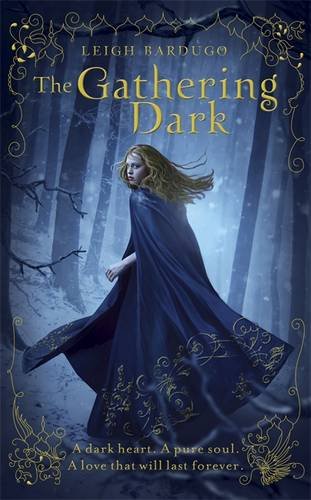
Leigh Bardugo is an American fantasy author. She is best known for her young adult Grishaverse novels, which include the Shadow and Bone trilogy and the Six of Crows and King of Scars duologies. She also received acclaim for her paranormal fantasy adult debut, Ninth House. The Shadow and Bone and Six of Crows series have been adapted into Shadow and Bone by Netflix, and Ninth House will be adapted by Amazon Studios; Bardugo is an executive producer on both works.
- Malazan
universe36 books1999
Start hereMalazan Book of the Fallen · Start here
similar bywarsecondary worlddarkepic fantasy+3 more
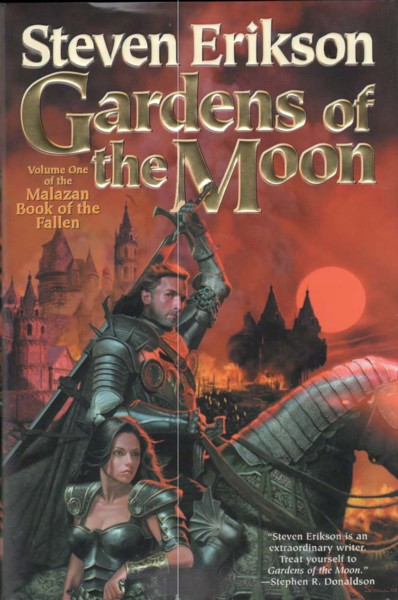
Pity the historian who tries to map this world; pity more the god who thinks he rules it. The Malazan Empire marches across continents on the boots of its common soldiers, and above them move Ascendants — mortals grown into something like gods, and gods worn thin as old coin. Magic is drawn from Warrens, roads of power threaded through reality; the dead keep their grudges; and every empire, however vast, is a wager against time. This is epic fantasy told from the mud, where a sapper cracking a joke weighs as much as an immortal settling a feud older than the human race. The world began as a tabletop campaign two friends built in the 1980s, and it still moves by two hands. Steven Erikson's ten-volume Malazan Book of the Fallen is the spine — Gardens of the Moon, Deadhouse Gates, Memories of Ice, on through The Crippled God — each book a near-standalone campaign that only later reveals how it locks together. Ian C. Esslemont walks the same years from a different vantage in his Novels of the Malazan Empire (Night of Knives, Return of the Crimson Guard onward). Around them stand the prequels: Erikson's Kharkanas Trilogy, archaic and elegiac, chronicling a doomed elder people, and Esslemont's brisker Path to Ascendancy, following two adventurers before they became legends. Erikson's Witness sequence carries the tale forward, and novellas of the genial necromancers Bauchelain and Korbal Broach supply the gallows comedy. Nothing is explained to you; comprehension is earned, and that is the pleasure. The themes run deep — compassion set against cruelty, the toll empires charge, civilizations that fall and are mourned. Begin where the saga does, with Erikson's Gardens of the Moon, and read the ten in publication order; the prequels are for the already-initiated. Trust that confusion is the price of entry.
- Malazan Book of the Fallen
series20 books1999
part of Malazan
similar bywarsecondary worlddarkfantasyepic fantasydark fantasy+1 more
The Malazan Book of the Fallen is a series of epic fantasy novels written by the Canadian author Steven Erikson. The series, published by Bantam Books in the U.K. and Tor Books in the U.S., consists of ten volumes, beginning with Gardens of the Moon (1999) and concluding with The Crippled God (2011). Erikson's series presents the narratives of a large cast of characters spanning thousands of years across multiple continents.
- Thomas Cale
series4 books2010
similar bywarsecondary worlddarkdark fantasy+3 more
Paul Hoffman's Thomas Cale series opens with The Left Hand of God, following a boy raised by a brutal religious military order who escapes into a wider world he's been kept ignorant of. The subsequent books, The Last Four Things, The Beating of His Wings, and The White Devil, follow Cale as the skills that order trained into him make him useful, and dangerous, to larger powers. It's a bleak, war-driven coming-of-age arc rather than a conventional chosen-one fantasy.
- The Circle of the World
universe29 books2006
Start hereThe Blade Itself · Start here
similar bysecondary worldfantasy+4 more
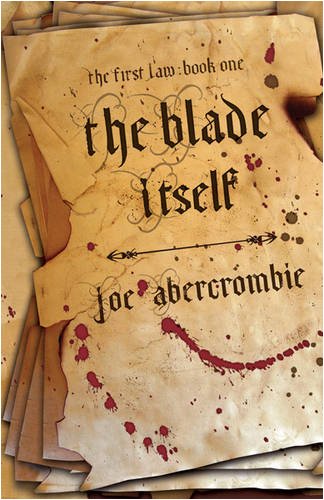
You want heroes? Best look elsewhere. The Circle of the World has kings and wizards and famous barbarians enough, but scratch any of them and you'll find a coward, a schemer, or a killer who's simply better at it than the rest. This is Joe Abercrombie's fantasy world: a grimy, blood-soaked continent where the fat and corrupt Union squats between the savage North and the scheming South, and where every noble cause turns out to have a knife hidden behind it. It opens with the First Law trilogy — The Blade Itself, Before They Are Hanged, Last Argument of Kings — following a crippled torturer with a razor wit, a weary Northman who would dearly like to stop fighting and can't, and a bald old wizard whose plans run older and colder than anyone guesses. Three self-contained standalones share the same ground and a familiar face or two: Best Served Cold takes its revenge across sunlit, murderous Styria; The Heroes crushes a whole war into three days over one worthless hill; Red Country rides the frontier. Short pieces (Sharp Ends) fill the gaps, and a generation on, the Age of Madness trilogy drags the old survivors into an age of factories, mobs, and revolution. What sets it apart is the honesty of its cynicism — close, sardonic points of view, gallows humour, and a flat refusal to let anyone stay clean. Violence carries a cost here; victory rarely settles anything; the wheel just turns and grinds someone new under it. Abercrombie recommends reading in publication order, and it's the right call: begin with The Blade Itself and let the world curdle around you. You have to be realistic about these things.
- The Lord of the Rings
series13 books1954
part of Tolkien's legendarium
similar bysecondary worldepic fantasy+2 more
The Lord of the Rings is an epic high fantasy novel written by the English author and scholar J. R. R. Tolkien. Set in Middle-earth, the story began as a sequel to Tolkien's 1937 children's book The Hobbit but eventually developed into a much larger work. Written in stages between 1937 and 1949, The Lord of the Rings is one of the best-selling books ever written, with over 150 million copies sold.
- The Riftwar Universe
universe44 books1982
Start hereRiftwar Saga · Start here
similar bysecondary worldfantasyepic fantasy+2 more
On the world of Midkemia a tear opens in the air itself, a rift hung between stars, and through it march the armies of an empire from another world entirely. So begins the chronicle Raymond E. Feist has kept for three decades: the tale of Pug, a castle kitchen boy apprenticed to a magician on the very day the invasion lands, and of Tomas, his friend, who inherits the armor and the ancient fury of a dead dragon-lord. Around these two the Riftwar Cycle turns, widening book by book from one besieged frontier keep into the whole history of a world of kingdoms, guilds, thieves' dens and mage-towers. The cycle runs to roughly thirty novels, gathered into arcs a newcomer can enter and finish on their own. The founding Riftwar Saga (Magician, Silverthorn, A Darkness at Sethanon) sets the board; the Serpentwar Saga, Krondor's Sons and the Conclave of Shadows carry the story down the generations; the Darkwar, Demonwar and Chaoswar sagas bring it toward its close. Crossing the rift to the rival world of Kelewan, Feist and Janny Wurts wrote the Empire trilogy, opening with Daughter of the Empire, a court intrigue told wholly from the invaders' side and for many the finest thing here. Shorter Legends of the Riftwar and the game-born Riftwar Legacy fill the corners; later still, Feist opens an altogether new world in the Firemane books. Feist writes fantasy in its most companionable key: apprentices who grow into archmages, tavern boys who become spies and dukes, a world you return to the way you return to an old inn. The mood is adventure before dread, friendship and rank and hard-won craft, wars that cost something, all of it rendered plainly and at a gallop. Begin where it began, with Magician, then follow the arcs in the order they were written, and the rift will carry you the rest of the way.
- Demon Wars
series4 books1997
part of Corona
similar bysecondary worlddarkfantasyepic fantasy+2 more
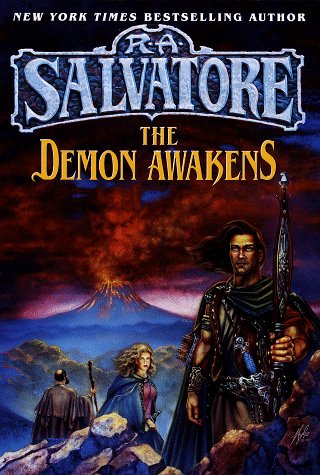
The DemonWars Saga is a series of high fantasy novels by R. A. Salvatore. It is set in the world of Corona, primarily in the kingdoms of Honce-the-Bear and Behren, and amongst the nomadic To-gai-ru. The series is separated into two trilogies connected by a single book, Mortalis. The saga has an accompanying roleplaying game entitled Demon Wars.
- An Ember in the Ashes
series4 books2015
similar bysecondary worldtensefantasyepic fantasy+2 more
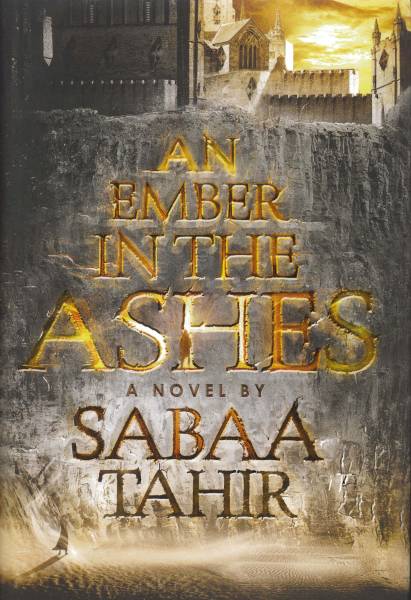
An Ember in the Ashes, set in a fantasy world modeled on ancient Rome, alternates between Laia, who spies on a brutal military academy for rebels in exchange for help freeing her imprisoned brother, and Elias, one of that academy's most skilled soldiers trying to break free of the empire he's been raised to serve. Sabaa Tahir's quartet, continuing through A Torch Against the Night, A Reaper at the Gates, and A Sky Beyond the Storm, follows the two toward a reckoning with the empire that trained one of them to enforce it.
- Cosmere
universe54 books2005
Start hereThe Final Empire · Start here
similar bysecondary worldfantasyepic fantasy+2 more
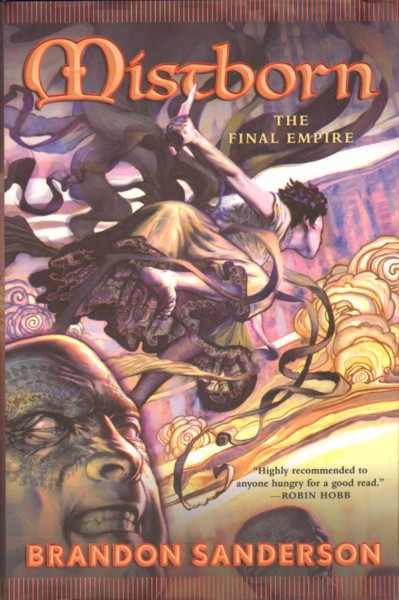
Before the worlds, there was Adonalsium, and then there was not. A god shattered into sixteen Shards of raw creative power, and those who seized them carried their fragments across the void to seed new planets, new peoples, new ways of working the impossible. The Cosmere is the one universe those Shards made: a scattering of worlds that seem, at first, to share nothing but a sky, until you notice the same law running quietly beneath each of them, and the same silent traveler passing through their margins. Every world keeps its own book and its own magic. On Scadrial, the Mistborn cycle burns metals into power: a self-contained trilogy of thieves and tyranny, followed by a second era that drags the same world into gunslinging early industry. On storm-battered Roshar, The Stormlight Archive raises its vast, ongoing epic around knights, spren, and oaths spoken aloud. Elsewhere stand the shorter keystones: Elantris, a city of fallen gods; Warbreaker, a tale of returned dead and living color; White Sand, told in graphic-novel form under the twin suns of Taldain. Threaded between them run the novellas, from Tress of the Emerald Sea and Yumi and the Nightmare Painter to The Sunlit Man and the pieces gathered in Arcanum Unbounded, where the hidden connections surface most plainly. All of it is the design of one hand, Brandon Sanderson, working a single pattern across two decades. What sets this universe apart is its faith in rules: magic here is a system, lawful and learnable, so discovery feels less like wonder handed down than like physics worked out. The cross-connections reward the patient reader, a symbol here, a name there, one immortal wanderer everywhere, but no book demands you have read another first. Newcomers do best entering through Mistborn: The Final Empire, the most self-contained doorway, or the standalone Elantris or Warbreaker; readers who prefer their epics vast can begin with The Way of Kings. The deeper links, and the novellas that expose them, wait for whenever you are ready to look.
- The Ancestor
series4 books2017
similar bysecondary worlddarkfantasyepic fantasydark fantasy+3 more
The Book of the Ancestor trilogy is a series of three fantasy novels by Mark Lawrence. It comprises Red Sister (2017), Grey Sister (2018), and Holy Sister (2019). The three novels tell the story of Nona Grey, a peasant girl with mystical abilities. Red Sister was nominated for the 2018 David Gemmell Awards for Fantasy.
- Narnia
series26 books1950
part of Narnia Universe
similar bysecondary worldfantasy+3 more
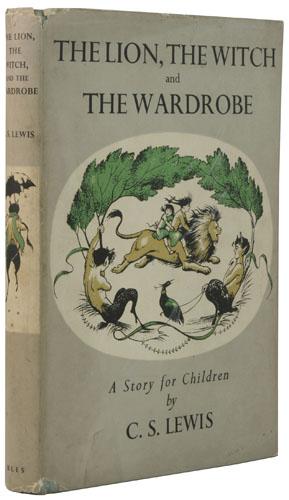
The Chronicles of Narnia is a series of seven portal fantasy novels by British author C. S. Lewis. Illustrated by Pauline Baynes and originally published between 1950 and 1956, the series is set in the fictional realm of Narnia, a fantasy world of magic, mythical beasts, and talking animals. It narrates the adventures of various children who play central roles in the unfolding history of the Narnian world. Except in The Horse and His Boy, the protagonists are all children from the real world who are magically transported to Narnia, where they are sometimes called upon by the lion Aslan to protect Narnia from evil. The books span the entire history of Narnia, from its creation in The Magician's Nephew to its eventual destruction in The Last Battle.
- Riftwar Saga
series7 books1982
part of The Riftwar Universe
similar bywarsecondary worldfantasyepic fantasy
The Riftwar Saga is Raymond E. Feist's debut fantasy trilogy, opening with Magician, in which an orphaned apprentice named Pug is swept up when otherworldly invaders emerge through a dimensional rift into the frontier kingdom of Midkemia. Silverthorn and A Darkness at Sethanon carry the resulting war to its close, and the trilogy became the founding entry of Feist's much larger Riftwar Cycle.
- Rigante
series4 books1998
completed
similar bywarsecondary worlddarkfantasyepic fantasy+2 more
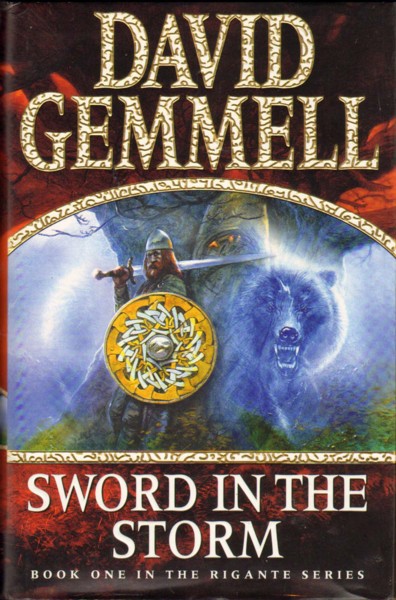
Sword in the Storm opens David Gemmell's Rigante sequence, following Connavar, a young tribesman of the Rigante people whose homeland faces both internal clan conflict and the looming threat of a technologically superior empire modeled on Rome. The series spans generations of the Rigante across four novels, mixing Gemmell's trademark heroic-fantasy action with Celtic-flavored history. It was published between 1998 and 2002.
- Dragon Age (Bioware RPG tie-in)
series21 books2009
similar bysecondary worldfantasyepic fantasy+3 more
These tie-in novels expand BioWare's Dragon Age video game series into prose, mostly written by the games' own lead writers, and are set in the same dark-fantasy world of Thedas. The Stolen Throne and The Calling serve as prequels filling in the backstory of characters central to the first game, while later books such as Asunder and The Masked Empire tie more directly into the plots and politics of the sequels. They are written for players wanting deeper lore rather than as standalone entry points to the setting.
- Legacy of Orisha
series3 books2018
similar bysecondary worldfantasyepic fantasy+4 more
Tomi Adeyemi's Legacy of Orïsha trilogy opens with Children of Blood and Bone, following Zélie, a girl from a persecuted caste of former magic-users, on a quest to restore magic to a kingdom that outlawed and hunted her people. Children of Virtue and Vengeance and Children of Anguish and Anarchy continue the fallout of that restoration as new factions fight over who gets to wield the returned power. The series draws on West African mythology and languages for its magic system and setting.
- The Nikolai Duology
series2 books2019
part of Grishaverse
similar bywarsecondary worlddarktensefantasyepic fantasy+1 more
Leigh Bardugo's Nikolai Duology picks up Nikolai Lantsov and Zoya Nazyalensky from her earlier Grishaverse trilogy set in Ravka, now dealing with the kingdom's fallout as king and general, and adds Nina Zenik from the Six of Crows spin-off working a mission out of Ketterdam. King of Scars and its sequel Rule of Wolves tie together threads from across the wider Grishaverse rather than starting fresh, raising the stakes to a hidden threat inside Nikolai himself. It functions as the convergence point for Bardugo's separate Grishaverse story lines.
- Shannara
universe50 books1977
Start hereWord and the Void · The very beginning of the timeline
similar bysecondary worldfantasyepic fantasy+1 more
Long after the world we know has burned itself to slag in the Great Wars, the Four Lands rise green over the bones of the old age. Science is a forbidden memory; magic has come back into the world, and with it the old divisions — Men, Elves, Dwarves, Trolls, and Gnomes, each Race a splinter of what humanity became. This is the far-future Earth of Shannara, where the ruins buried beneath the soil are ours, and the only keepers of the vanished knowledge are the Druids of Paranor, who wake once a generation to meet the darkness rising again. Terry Brooks opened the Four Lands in 1977 with The Sword of Shannara and has charted its history for four decades since — a legendarium ordered not by throne but by a single bloodline, the Ohmsfords, each generation inheriting an Elfstone, a blade, or a wishsong when the age demands a hero. The original trilogy gives way to the Heritage of Shannara, the Voyage of the Jerle Shannara, the High Druid, Dark Legacy, Defenders, and the concluding Fall of Shannara; the Genesis of Shannara books reach back to the apocalypse itself, and the Word and the Void trilogy back further still, into a demon-haunted version of our own present that is the root of everything after. In 2025 Brooks passed the histories to Delilah S. Dawson to carry forward. What sets these books apart is their long memory: a world where every triumph is provisional, where the same evil returns wearing a fresh shape each age, and magic always exacts its price. The reading is warm and headlong — questing companies, old talismans, journeys across a mapped and named wilderness — shadowed by the knowledge that all of it stands on the wreckage of a former world. Enter as readers first did: with The Sword of Shannara, then onward in publication order. The chronological path, beginning with Word and the Void, rewards a second journey, once the Four Lands already feel like home.
- The Codex Alera
series6 books2004
similar bywarsecondary worldtensefantasyepic fantasy+1 more
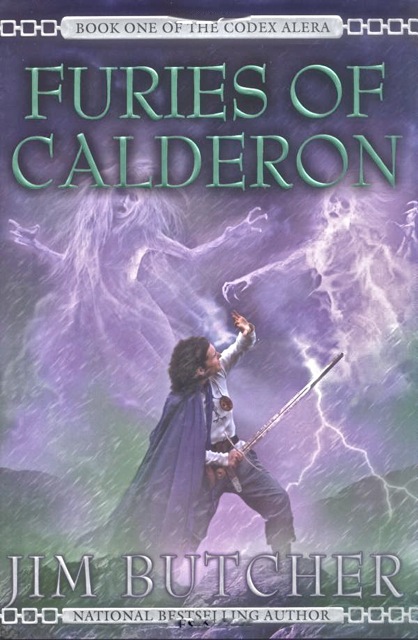
Furies of Calderon opens The Codex Alera in a Rome-flavored fantasy world where nearly everyone commands elemental spirits called furies, except Tavi, a teenager with none, whose resourcefulness becomes the series' recurring answer to raw magical power. Jim Butcher's six-book series, continuing through Academ's Fury, Cursor's Fury, Captain's Fury, Princeps' Fury, and First Lord's Fury, builds from small-scale political maneuvering into full-scale war.
- Guardians of Ga'hoole
series17 books2003
similar bywarsecondary worldfantasyepic fantasy
Guardians of Ga'Hoole is a fantasy book series written by Kathryn Lasky and published by Scholastic. The series contains a total of 16 books, and although it was originally intended to conclude with the 2008 publication of The War of the Ember, it has a prequel, The Rise of a Legend, published in 2013. Apart from the main series, there are a few more books and spin-offs set in the same universe. The first three books of the series were adapted into the 2010 animated 3D film Legend of the Guardians: The Owls of Ga'Hoole, directed by Zack Snyder.