More like Widowmaker
anchored on:epic fantasysecondary worldwizardspolitical intriguetense
but
- A Song of Ice and Fire
series14 books1996
part of World of Ice and Fire
similar byepic fantasysecondary worldpolitical intriguefantasy+2 more
A Song of Ice and Fire is a series of high fantasy novels by the American author George R. R. Martin. Martin began writing the first volume, A Game of Thrones, in 1991, and published it in 1996. Martin, who originally envisioned the series as a trilogy, has released five out of seven planned volumes. The most recent entry in the series, A Dance with Dragons, was published in 2011. Since then, Martin has been working on the sixth novel, titled The Winds of Winter. A seventh novel, A Dream of Spring, is planned to follow.
- The Lord of the Rings
series13 books1954
part of Tolkien's legendarium
similar byepic fantasysecondary world+3 more
The Lord of the Rings is an epic high fantasy novel written by the English author and scholar J. R. R. Tolkien. Set in Middle-earth, the story began as a sequel to Tolkien's 1937 children's book The Hobbit but eventually developed into a much larger work. Written in stages between 1937 and 1949, The Lord of the Rings is one of the best-selling books ever written, with over 150 million copies sold.
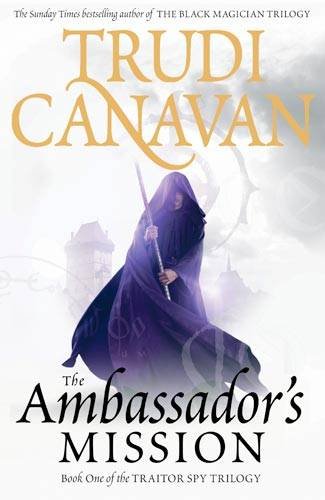
- The Traitor Spy Trilogy
series3 books2010
part of Kyralia series
similar bysecondary worldepic fantasywizardspolitical intrigueadventurousfantasy+2 more
Trudi Canavan is an Australian writer of fantasy novels, best known for her best-selling fantasy trilogies The Black Magician and Age of the Five. While establishing her writing career she worked as a graphic designer. She completed her third trilogy, The Traitor Spy trilogy, in August 2012 with The Traitor Queen. Subsequently, Canavan has written a series called Millennium's Rule, with a completely new setting consisting of multiple worlds which characters can cross between. Though originally planned as a trilogy, a fourth and final book in the Millennium's Rule series was published.
- Dragon Trilogies
series6 books1988
similar byepic fantasysecondary worldtensepolitical intriguefantasy+1 more
The Dragon Prince and Dragon Star trilogies comprise six connected fantasy novels written by Melanie Rawn. The Dragon Prince trilogy focuses on Prince Rohan of the Desert and his Sunrunner wife, Sioned, while the Dragon Star trilogy focuses on their son, Pol. The Dragon Prince trilogy consists of novels Dragon Prince, The Star Scroll, and Sunrunner's Fire. The books in the Dragon Star trilogy are Stronghold, The Dragon Token, and Skybowl.
- The Codex Alera
series6 books2004
similar byepic fantasytensesecondary worldpolitical intrigueadventurousfantasy
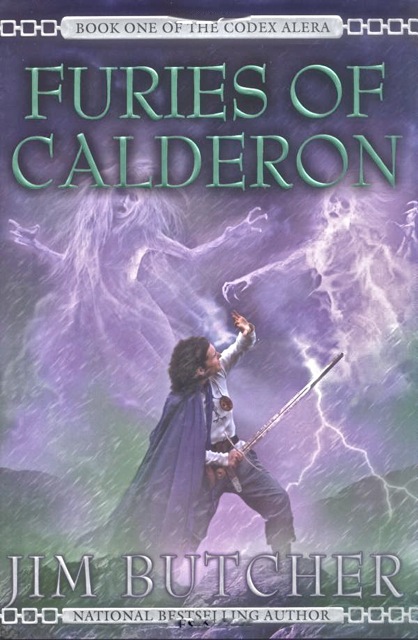
Furies of Calderon opens The Codex Alera in a Rome-flavored fantasy world where nearly everyone commands elemental spirits called furies, except Tavi, a teenager with none, whose resourcefulness becomes the series' recurring answer to raw magical power. Jim Butcher's six-book series, continuing through Academ's Fury, Cursor's Fury, Captain's Fury, Princeps' Fury, and First Lord's Fury, builds from small-scale political maneuvering into full-scale war.
- The Powder Mage
universe19 books2013
Start hereThe Powder Mage Trilogy · Start here
similar byepic fantasysecondary worldtensepolitical intriguefantasy+1 more
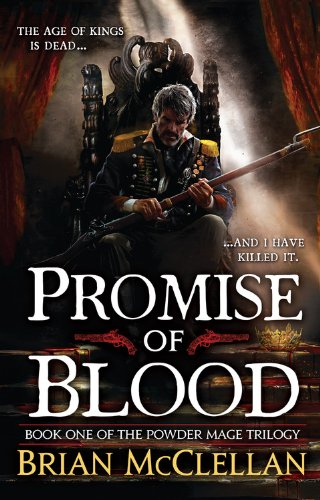
Load your powder, and pray your sorcery outruns their cannon. Here the age of kings is ending at musket-point: a world where black powder is not merely fired but eaten, and the men and women called powder mages snort a pinch of it to burn a trance across the battlefield — igniting an enemy's cartridges from a mile off, bending a bullet mid-flight, reading a room by the taste of the air. Against them stand the Privileged, glove-fingered sorcerers of the old order who summon fire and frost, and above both, gods who have not finished walking the earth. Brian McClellan builds this flintlock world across two linked trilogies. The Powder Mage Trilogy — Promise of Blood, The Crimson Campaign, The Autumn Republic — opens with a field marshal's coup against a rotten monarchy and the invasion, revolution, and divine reckoning that follow. Gods of Blood and Powder — Sins of Empire, Wrath of Empire, Blood of Empire — crosses the ocean a decade on to the colonial frontier of Fatrasta, where old soldiers, spies, and a heretic goddess collide. A run of novellas and short stories fills the corners between. Expect grapeshot and gunsmoke, siege lines and back-alley intrigue, generals and con men given equal weight. Begin at Promise of Blood and read in publication order — the trilogies run in sequence, and the short work is seasoning, not prerequisite.
- The Powder Mage Trilogy
series15 books2013
part of The Powder Mage
similar byepic fantasysecondary worldtensepolitical intrigue+2 more
The Powder Mage trilogy is a series of epic fantasy novels written by American author Brian McClellan. It consists of the novels Promise of Blood (2013), The Crimson Campaign (2014) and The Autumn Republic (2015). In 2014, Promise of Blood received the Morningstar Award for Best Fantasy Newcomer. Several short stories and novellas set in the world of The Powder Mage trilogy have been published, as well as an additional trilogy called Gods of Blood and Powder.
- The Riftwar Universe
universe44 books1982
Start hereRiftwar Saga · Start here
similar byepic fantasysecondary worldfantasy+3 more
On the world of Midkemia a tear opens in the air itself, a rift hung between stars, and through it march the armies of an empire from another world entirely. So begins the chronicle Raymond E. Feist has kept for three decades: the tale of Pug, a castle kitchen boy apprenticed to a magician on the very day the invasion lands, and of Tomas, his friend, who inherits the armor and the ancient fury of a dead dragon-lord. Around these two the Riftwar Cycle turns, widening book by book from one besieged frontier keep into the whole history of a world of kingdoms, guilds, thieves' dens and mage-towers. The cycle runs to roughly thirty novels, gathered into arcs a newcomer can enter and finish on their own. The founding Riftwar Saga (Magician, Silverthorn, A Darkness at Sethanon) sets the board; the Serpentwar Saga, Krondor's Sons and the Conclave of Shadows carry the story down the generations; the Darkwar, Demonwar and Chaoswar sagas bring it toward its close. Crossing the rift to the rival world of Kelewan, Feist and Janny Wurts wrote the Empire trilogy, opening with Daughter of the Empire, a court intrigue told wholly from the invaders' side and for many the finest thing here. Shorter Legends of the Riftwar and the game-born Riftwar Legacy fill the corners; later still, Feist opens an altogether new world in the Firemane books. Feist writes fantasy in its most companionable key: apprentices who grow into archmages, tavern boys who become spies and dukes, a world you return to the way you return to an old inn. The mood is adventure before dread, friendship and rank and hard-won craft, wars that cost something, all of it rendered plainly and at a gallop. Begin where it began, with Magician, then follow the arcs in the order they were written, and the rift will carry you the rest of the way.
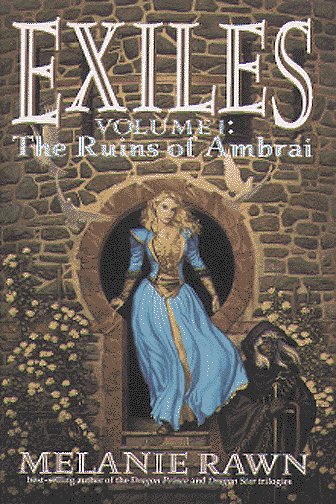
- Exiles (Melanie Rawn)
series3 books1994
similar byepic fantasysecondary worldpolitical intrigue+6 more
Melanie Rawn is an American author of fantasy literature. She received a BA in history from Scripps College and worked as a teacher and editor before becoming a writer.
- Boreal Moon
series3 books2003
completed
similar byepic fantasysecondary worldtensepolitical intrigue+3 more
- Fortress (C. J. Cherryh)
series5 books1995
similar byepic fantasysecondary worldwizardspolitical intrigueadventurousfantasy+1 more
Fortress is a series of fantasy novels by American writer C. J. Cherryh, published by HarperCollins. They are set in a medieval fantasy world with a 15th-century feel and feature magic, sorcery, medieval warfare, politics and other elements common to the high fantasy subgenre. The first book in the series, Fortress in the Eye of Time, was published in 1995 and followed by Fortress of Eagles in 1998, Fortress of Owls in 1999, Fortress of Dragons in 2000 and Fortress of Ice in 2006. The books are all sub-titled "A Galasien novel".
- The Kingdoms of Thorn and Bone
series4 books2003
similar byepic fantasysecondary worldpolitical intriguefantasy+3 more
The Kingdoms of Thorn and Bone is the name of a fantasy novel series by Gregory Keyes, written between 2003 and 2008. They follow the story of Anne Dare, descendant of Virginia Dare, a famed ruler who used her magic to aid the kingdom of Crotheny. Her descendants rule the kingdom until a traitorous plot to overthrow them leads to tragedy.
- Lightbringer
series5 books2010
similar byepic fantasysecondary world+4 more
The Black Prism introduces Gavin Guile, the Prism — supreme religious and political authority over the Seven Satrapies, and the only person able to draft every color of magical light into solid, structural "luxin" — as an uprising and a hidden family secret both threaten to unravel the fragile peace he's built. Brent Weeks's five-book Lightbringer series pushes its chromaturgy magic system toward its physical and moral limits: drafters who overuse their color eventually "break the halo" and turn into monsters called wights.
- Sparhawk
universe6 books1989
Start hereElenium · Start here
similar byepic fantasysecondary worldadventurousfantasy+2 more
Sir Sparhawk is not a young man, and he has little patience for the pageantry his order pretends to. A Pandion Knight of the militant Elene Church, he rides home from a long exile to find his kingdom rotten with intrigue and his young queen, Ehlana, poisoned — kept alive only inside a shell of living crystal. To wake her he must find Bhelliom, a jewel with the power to remake the world or unmake it. So begins a long ride across the continent of Eosia. This is warm, character-first epic fantasy from David Eddings, told across two trilogies. The Elenium — The Diamond Throne, The Ruby Knight, The Sapphire Rose — pits Sparhawk against a corrupt church and a hungry elder god. The Tamuli — Domes of Fire, The Shining Ones, The Hidden City — carries him east into the vast Tamul Empire, where older enemies stir. Around him gathers a quarrelsome company: the Styric sorceress Sephrenia, the thief-boy Talen, the plain-spoken squire Kurik, and a small, imperious goddess who plays a set of pipes and always, somehow, gets her way. The pleasure here is the talk — grizzled knights trading dry insults between miracles and murders, a hero who solves as many problems with patience as with a sword. It never reaches for grimness or grand obscurity; it wants your good company for a long journey. Newcomers begin with The Diamond Throne and read the six in order: the Elenium stands whole on its own before the Tamuli widens the map.
- Millennium's Rule
series4 books2014
similar byepic fantasysecondary world+5 more
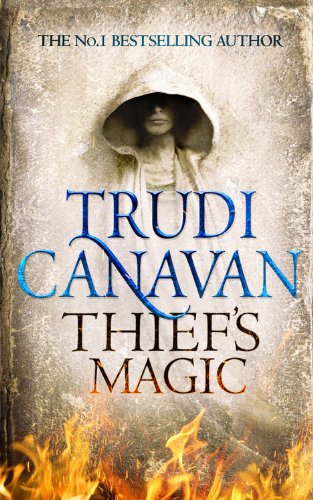
Millennium's Rule is set across multiple worlds that only certain travelers can cross between, opening with Tyen, an archaeology student who unearths a sentient, centuries-old book named Vella, and Rielle, a dyer's daughter hiding forbidden magical talent in a society ruled by priests who forbid it. Trudi Canavan follows both of them as their discoveries chip away at what their worlds have taught them about magic, history, and who holds power. The series runs Thief's Magic, Angel of Storms, and Successor's Promise.
- Hierarchy
series2 books2023
similar byepic fantasytensesecondary worldpolitical intrigueadventurous
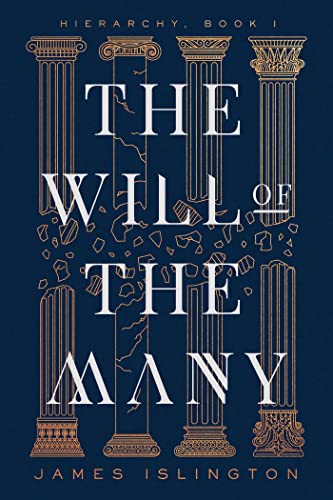
James Islington's Hierarchy series opens with The Will of the Many, set in the Catenan Republic, an empire built on 'Will' — citizens' personal strength and drive, ceded upward to those in power. Its protagonist infiltrates the empire's most prestigious academy under a false identity to investigate a murder and search for a hidden weapon, refusing to surrender his own Will to the empire that killed his family. The Strength of the Few continues the story as book two.
- The Saga of Recluce
series48 books1991
similar byepic fantasysecondary worldpolitical intriguewizardsfantasy+1 more
The Saga of Recluce is a series of fantasy novels written by L. E. Modesitt Jr. The initial novel in the series, The Magic of Recluce, was published in 1991. The series is still in publication with the latest novel published in June 2026. In 2015 Modesitt stated that the (then) 20 novels in the Recluce series had sold nearly three million copies.
- Elenium
series3 books1989
completed
part of Sparhawk
similar byepic fantasysecondary worldadventurousfantasy+1 more
The Elenium is a series of fantasy novels by American writer David Eddings. The series consists of three volumes: The Diamond Throne, The Ruby Knight, and The Sapphire Rose. The series is followed by The Tamuli. The Elenium is Eddings' third fantasy series.
- Black Wolves Trilogy
series1 book2015
similar byepic fantasytensesecondary worldpolitical intriguefantasy+1 more
- The Traitor Son Cycle
series5 books2012
similar byepic fantasysecondary worldtensepolitical intrigue+3 more
- The Hobbit
series2 books1937
completed
part of Tolkien's legendarium
similar bysecondary worldepic fantasyadventurousfantasy+1 more
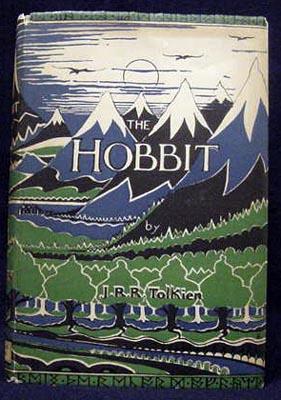
The Hobbit (1937) is J. R. R. Tolkien's children's fantasy novel following the reluctant burglar Bilbo Baggins, who joins a company of dwarves and the wizard Gandalf on a journey to reclaim treasure guarded by the dragon Smaug. It stands as a complete adventure on its own, but shares its setting with the rest of Tolkien's legendarium and leads into the events of The Lord of the Rings.
- The Acacia Trilogy
series3 books2007
similar byepic fantasysecondary worldpolitical intriguefantasy+2 more
Acacia: The War with the Mein begins with an empire's ruling Akaran children fleeing after assassins from an exiled people kill their father, scattering the heirs into a wider world whose comfortable myths — and the drug trade and slavery underwriting the empire's peace — turn out to be far uglier than they were raised to believe. David Anthony Durham's trilogy, continuing through The Other Lands and The Sacred Band, follows the siblings as each confronts a different piece of the empire's hidden machinery.
- The White Mists of Power
Kristine Kathryn Ruschstandalone novel1991
similar bytensesecondary worldepic fantasypolitical intrigueadventurousfantasy
Synopsis -An innocent excited boy, a prince and heir, takes his first journey to the city. It is like nothing he imagined. Hands pound against his carriage: voices call for a coin, Sir just one, spare me some money, sir, I haven’t eaten in days. The streets teem with merchants in velvet robes, magicians, half mad preachers, with life and colour and noise. He doesn’t want to miss any of it. But it is the last journey of his life as a prince. Soon he will be abandoned and declared dead. Soon with survival and what will be the driving force of his life: the quest to recover his stolen inheritance, his usurped throne. His home. A story of cities and palaces, of power hungry lords and ladies scheming inside a magically threatened land...Intricate, compelling.
- Seven Realms Universe
series8 books2009
similar byepic fantasysecondary worldadventurouspolitical intrigue+3 more