Loreful
HomeDiscover
Search series, authors…⌘K
Loreful

Reading orders for SF/F series and shared universes — with your place kept in every one.

Explore

UniversesSeriesWorksAuthorsAtlas

Help

FAQAboutSite map

Account & legal

Sign inCreate accountPrivacyTerms

Data

Built on ISFDB, Wikipedia, Wikidata and Open Library. Curated reading orders carry their reasoning on the page; the rest follow publication order. Data sources & licenses

© Loreful · data: ISFDB · CC BY

More like Yesteryear

anchored on:science fictiontime travelfar futurecoming of ageidentitygrief and loss+3 more

but

Mood

The mood the book leaves you in.

  • The reading experience is propelled by journeys, exploration, and physical risk; excitement and forward momentum dominate over dread or introspection.
  • Joy and loss are deliberately mixed; the resolution grants characters something real while taking something else away, leaving warmth and sorrow together.
  • The book demands work from the reader — dense prose, difficult structure, unfamiliar ideas, or morally uncomfortable material — as part of its intended effect.
  • Grim events, cruelty, or despair dominate the atmosphere, and the book does not soften them with comfort or comic relief.
  • The atmosphere is quietly unsettling — wrongness, unease, and the uncanny pervade the book without necessarily escalating into overt horror.
  • The book is built to move the reader; character feeling is foregrounded and major scenes aim at a strong emotional response.
  • Humor is a primary aim and the prose plays for laughs — comic situations, wit, or dialogue produce sustained comedy, not occasional levity.
  • The book insists that things can improve; effort and decency are shown to matter, and the arc bends toward better outcomes even through hardship.
  • The book teaches as it goes — real facts, history, science, or craft are conveyed in enough depth that learning is part of the reading experience.
  • The book is designed to uplift and motivate, presenting perseverance or achievement in a way that invites the reader to aspire or act.
  • The overall register is cheerful and easygoing; stakes are kept gentle and the book avoids dwelling on pain or dread.
  • Withheld information drives the experience; the book sustains enigmas and secrets the reader wants resolved, whatever its genre.
  • The book is contemplative and inward-looking, giving more weight to thought, memory, and meaning than to external events.
  • The book works as comfort reading — low tension, a soothing pace, and an atmosphere the reader can unwind in.
  • Grief, loss, or melancholy set the dominant register, and the book lets sorrow stand rather than resolving it into comfort.
  • Sustained suspense is the point; the book keeps the reader braced for what happens next through danger, pressure, or impending revelation.
  • Playful invention and charm define the register — fanciful conceits, light absurdity, and a narration that delights in its own oddity.

About

What the story runs on.

  • Stories in which extraterrestrial beings are central — as characters, cultures, or the object of the plot.
  • Stories about venturing into space to explore — survey missions, astronauts, and the frontier of the unknown beyond Earth.
  • Stories structured as a quest — a journey undertaken to find, deliver, or destroy something of great import.
  • Stories in which staying alive against nature, catastrophe, or scarcity is the central problem.
  • Stories of lovers kept apart by law, family, faith, or station, where the obstacle to love is the plot.
  • Stories in which a friendship — its making, testing, or loss — is the emotional center.
  • Stories of growing up — a young protagonist crossing from childhood into adult knowledge and responsibility.
  • Stories about who a character truly is — self-discovery, doubled lives, and the search for a self.
  • Stories about mourning — living through the death of a loved one and what loss does to the survivors.
  • Stories in which a buried family truth — hidden parentage, crimes, or shames — surfaces and reorders the present.
  • Stories driven by maneuvering for power — factions, conspiracies, and statecraft conducted in shadow.
  • Stories in which war itself is the subject — combat, occupation, and what warfare does to soldiers and civilians.

Shelf

Where it sits in the library.

    • Fiction built on magic or other supernatural elements that have no scientific explanation.
    • Secondary-world fantasy at large scale, where the fate of nations or the world turns on the protagonists' struggle.
    • Fantasy set in a recognizably modern city or contemporary world where the supernatural intrudes on everyday life.
    • Fantasy that blends in horror's atmosphere and imagery, keeping a fantastical frame around grim or frightening material.
    • Action-driven fantasy following warriors or rogues with personal stakes against sorcerous threats, rather than world-spanning conflicts.
    • Fantasy set in a real historical period or a close analogue of one, with magic woven into the era.
    • Fantasy in which protagonists cross from the ordinary world into another world through a portal or similar passage.
    • Fiction that retells or reworks a traditional fairy tale in a new form or setting.
    • Fantasy drawing directly on myths, legends, and folklore, retelling them or building on their figures and logic.
    • Fantasy of ghosts, vampires, shapeshifters, psychics, and similar phenomena, usually set in an otherwise ordinary world.
    • Fiction mixing science-fictional trappings with overtly magical or impossible elements in one setting.
    • Low-stakes fantasy emphasizing comfort, community, and everyday pleasures over conflict and peril.
    • Speculative fiction of pervasive moral ambiguity, violence, and cynicism that rejects heroic conventions — fantasy and SF alike.
      • Fiction that extrapolates from science and technology — future societies, space travel, or speculative inventions — within at least nominally natural laws.
      • Science fiction of interstellar scope — starships, galactic polities, and adventure across star systems.
      • Science fiction committed to scientific rigor, where technical plausibility constrains the story.
      • Science fiction centered on armed forces and warfare, told largely from a military point of view.
      • Science fiction of networked, corporate-dominated near futures, pairing high technology with social decay.
      • Science fiction styled on nineteenth-century steam-powered technology, often in a Victorian or pseudo-Victorian setting.
      • Fiction depicting an oppressive or catastrophic society, presented as a warning.
      • Fiction set after civilization's collapse, following survivors in the ruins of the old world.
      • Fiction in which characters move between past and future, and the mechanics or consequences of that travel drive the plot.
      • Fiction exploring a world where a historical event went differently and history diverged from ours.
      • Science fiction about humanity's first encounter and communication with an alien intelligence.
      • Science fiction in which extraterrestrial forces attack or occupy Earth and humanity resists.
      • Fiction whose primary aim is to frighten or unsettle the reader through dread, menace, or the monstrous.
      • Horror of vast, indifferent, incomprehensible entities before which humanity is insignificant, in the Lovecraft tradition.
      • Horror of decaying houses, buried family secrets, and oppressive atmosphere in the Gothic literary tradition.
      • Horror centered on hauntings and the returning dead.
      • Horror located in the mind — paranoia, obsession, and unreliable perception rather than external monsters.
      • Horror built around the reanimated dead and survival amid their outbreaks.
      • Horror defined by explicit, transgressive gore that refuses to cut away from violence.
      • Speculative fiction of the strange and uncanny that resists both natural explanation and standard genre categories.
      • Fiction organized around solving a crime or puzzle, typically following an investigator toward the identification of a culprit.
      • A puzzle-first mystery that lays out clues so the culprit's identity can be deduced before the reveal.
      • Crime fiction of moral ambiguity, fatalism, and hard-edged style, set among the corrupt and the doomed.
      • A mystery following the realistic routines of police work — forensics, interviews, and case-building.
      • A gentle mystery with an amateur sleuth, a small community, and violence kept off the page.
      • A mystery set in a past era, where the investigation works within that period's methods and society.
      • Fast-paced fiction driven by imminent danger, pursuit, or high-stakes conspiracy, built to sustain tension.
      • A thriller of espionage — agents, tradecraft, and intelligence services in conflict.
      • A thriller centered on lawyers and the courtroom, where litigation carries the suspense.
      • A thriller driven by detailed contemporary or near-future technology, often military or scientific.
      • A thriller whose tension comes from mental states and manipulation between characters rather than external action.
      • Fiction whose central plot is a romantic relationship and its development toward an emotionally satisfying resolution.
      • Romance in which one or both partners are supernatural beings, blending fantasy elements into the love story.
      • A fantasy-romance hybrid in which the romantic arc and the fantasy plot carry equal weight.
      • Romance set in a past era, with courtship shaped by the period's society and manners.
      • Romance set in the present day, without supernatural or historical elements.
      • Fiction set in a real past period, where the historical setting materially shapes characters and events.
        • General and literary fiction emphasizing prose style, character interiority, or formal ambition over genre plot conventions.
        • Fiction in a realistic world where magical events occur and are treated as ordinary, in the tradition of Latin American literature.
        • Fiction that ridicules people, institutions, or society in order to criticize them.
        • Fiction of dreamlike, irrational imagery and logic that breaks from realistic representation.
        • Fiction that plays with narrative convention through metafiction, fragmentation, and self-reference.
        • Fiction propelled by journeys, exploration, and physical peril, where action and survival carry the plot.
        • Adventure fiction of ships and seafaring — naval engagements, voyages, and life at sea.
        • Fiction of the American frontier West — gunmen, ranchers, and lawmen, typically in the late nineteenth century.
        • Fiction centered on soldiers, campaigns, and the experience of warfare, historical or imagined.
          • Fiction written primarily to amuse, using comedic situations, wit, or parody as its organizing principle.
            • Multi-generational fiction following a family or dynasty across decades, with inheritance and kinship as the through-line.
              • Fiction whose world runs on explicit game mechanics — levels, stats, and skills that characters can see and exploit.
                • Fiction about costumed or superpowered heroes and their conflicts with comparable villains.

                Practical

                How long a commitment, whether it stands alone, and whether it has finished.

                Tap a chip to ask for it · tap again to rule it out · once more to clear. Numbers show what would be left.

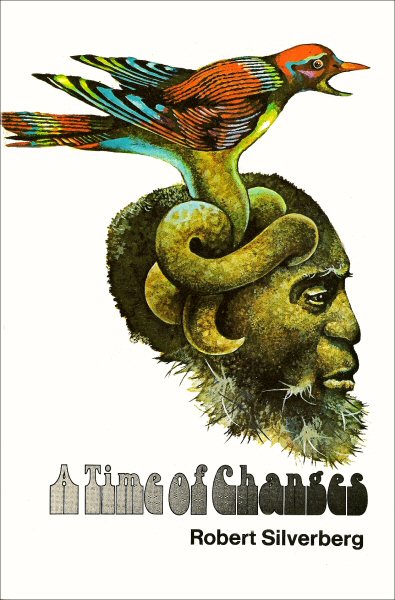
                • Cover of A Time of Changes
                  A Time of Changes

                  Robert Silverberg · standalone novel · 1971

                  similar byfar futureother star systemsscience fictionreflectiveidentity+1 more

                  A Time of Changes is a 1971 science fiction novel by American writer Robert Silverberg. It won the Nebula Award for that year, and was also nominated for the 1972 Hugo and Locus Awards.

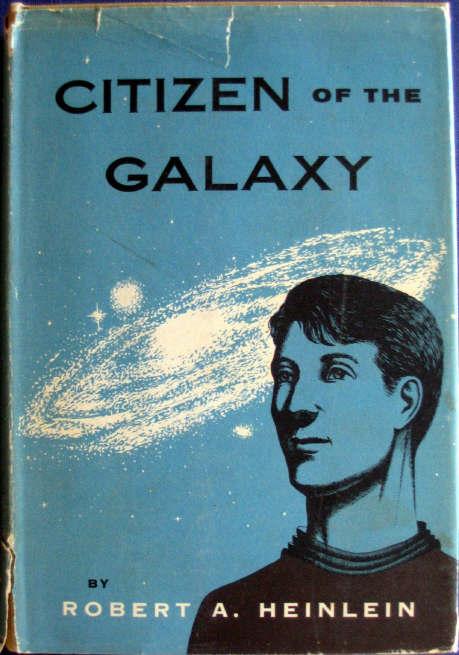
                • Cover of Citizen of the Galaxy
                  Citizen of the Galaxy

                  Robert A. Heinlein · standalone novel · 1957

                  similar byfar futureother star systemsscience fictioncoming of ageidentity

                  On a planet far distant from Earth, a lame beggar buys a young boy slave who has forgotten his origins. The beggar is more than he seems, and gives the boy an extensive education while employing him as an observer of activity in their city. Years later, the beggar is captured by the government, and the youth must escape the planet.

                • Cover of Ender Wiggin
                  Ender Wiggin

                  series · 14 books · 1977

                  part of Ender's Game Universe

                  similar byother star systemsfar futurescience fiction+3 more

                  Orson Scott Card's Ender's Game (1985, expanded from his 1977 novella) follows child prodigy Andrew "Ender" Wiggin as he is recruited into a military training program built to prepare Earth's defenses for an anticipated third war against an insectoid alien species known as the Formics. The saga continues years later through Speaker for the Dead and Xenocide, following an older Ender as he confronts the moral weight of his role in that earlier conflict, and concludes the core arc in Children of the Mind, with Ender in Exile filling in the years between the first two books. Set within the wider Ender's Game universe, the series shifts from military coming-of-age story to slower, more philosophical science fiction as it progresses.

                • Cover of Hainish
                  Hainish

                  series · 33 books · 1964

                  completed

                  similar byfar futureother star systemsscience fictionreflective

                  The Hainish Cycle consists of a number of science fiction novels and stories by Ursula K. Le Guin. The cycle is set in a future history that features civilizations of human beings on planets orbiting a number of nearby stars, including Terra ("Earth"); these humans are contacting each other for the first time and establishing diplomatic relations, as well as setting up a confederacy under the guidance of the oldest of the human worlds, the peaceful planet Hain. In this history, human beings did not evolve on Earth, but they were instead the result of interstellar colonies planted by Hain in the distant past, after which interstellar travel ceased for an extended period. Some of the human races have new genetic traits, a result of ancient Hainish experiments in genetic engineering; this includes people who can dream while awake, and a world of hermaphroditic people who only enter active sexuality once per month, not knowing which sex will manifest in them. In keeping with Le Guin's narrative approach, she uses varied social and environmental settings to explore the anthropological and sociological outcomes of human evolution in those environments. The author often discounted the characterization of a so-called "Hainish Cycle".

                • Cover of The City and the Stars
                  The City and the Stars

                  Arthur C. Clarke · standalone novel · 1956

                  similar byfar futureother star systemsscience fictionreflective+1 more

                  The City and the Stars is a science fiction novel by British writer Arthur C. Clarke, published in 1956. This novel is a complete rewrite of Clarke's earlier Against the Fall of Night, his first novel, which had been published in Startling Stories magazine in 1948 after being rejected by the editor of Astounding Science-Fiction, according to the author.

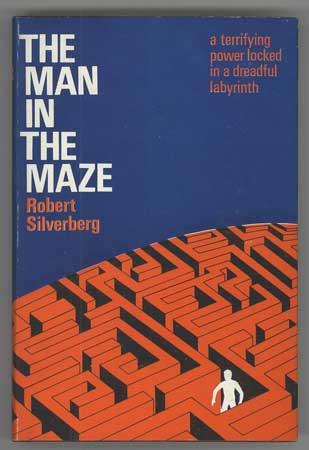
                • Cover of The Man in the Maze
                  The Man in the Maze

                  Robert Silverberg · standalone novel · 1969

                  similar byfar futureother star systemsscience fictionreflectiveidentity

                  The Man in the Maze is a science fiction novel by American writer Robert Silverberg, originally serialized in the magazine Worlds of If in April and May 1968, and published in bookstores the following year. It tells the tale of a man rendered incapable of interacting normally with other human beings by his uncontrollable psychic abilities. The novel is inspired by Sophocles' play Philoctetes, with the roles of Odysseus, Neoptolemus and Philoctetes played by Boardman, Rawlins, and Muller, respectively.

                • Cover of Triton
                  Triton

                  Samuel R. Delany · standalone novel · 1976

                  similar byfar futureother star systemsscience fictionreflectiveidentity

                  Trouble on Triton: An Ambiguous Heterotopia (1976) is a science fiction novel by American writer Samuel R. Delany. It was nominated for the 1976 Nebula Award for Best Novel, and was shortlisted for a retrospective James Tiptree, Jr. Award in 1995. It was originally published under the shorter title Triton.

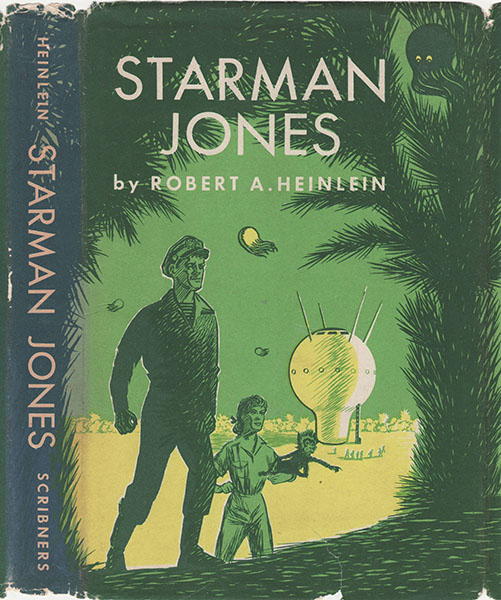
                • Cover of Starman Jones
                  Starman Jones

                  Robert A. Heinlein · standalone novel · 1953

                  similar byfar futureother star systemsscience fictioncoming of age+1 more

                  Starman Jones, a 1953 science fiction novel by Robert A. Heinlein, features a farm boy who wants to go to the stars. Charles Scribner's Sons published the book as part of the Heinlein juveniles series.

                • Cover of Singer from the Sea
                  Singer from the Sea

                  Sheri S. Tepper · standalone novel · 1999

                  similar byfar futureother star systemsscience fictionreflectivecoming of age+1 more

                  An accomplished student and heiress to a great title, Genevieve has been carefully instructed in the Covenants, the inflexible laws governing women of her class. But as her fate approaches, she begins to question the ties that bind her.

                • Cover of Wyrms
                  Wyrms

                  Orson Scott Card · standalone novel · 1987

                  similar byfar futureother star systemsscience fictionreflectiveidentity

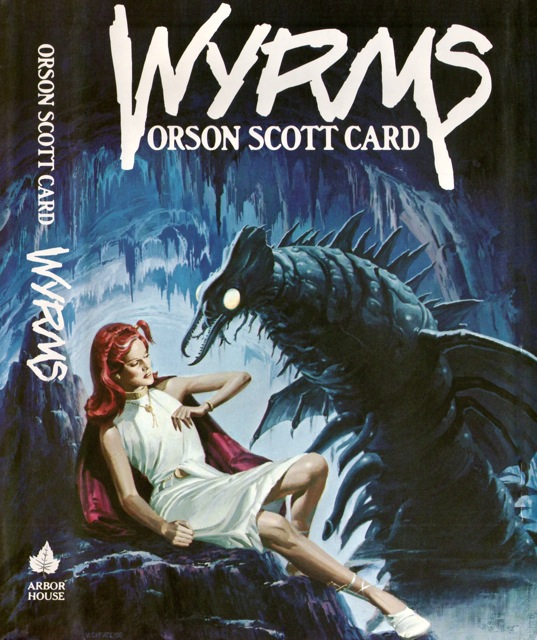
                  Wyrms (1987) is a science fiction novel by American writer Orson Scott Card. The story examines desire, wisdom, and human will. Card describes a version of the tri-partite soul, similar to that articulated by Plato in the Republic.

                • Cover of Teixcalaan
                  Teixcalaan

                  series · 2 books · 2019

                  similar byfar futureother star systemsscience fictionreflectiveidentity

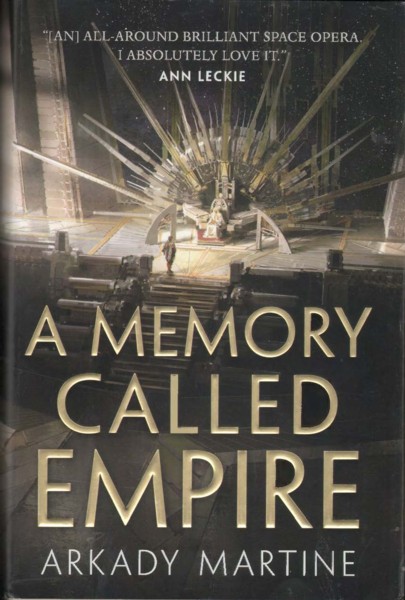
                  Arkady Martine's space opera duology follows Mahit Dzmare, ambassador from the small, independent Lsel Station, as she arrives in the vast Teixcalaanli Empire to investigate her predecessor's death and finds herself caught up in the empire's own succession crisis. A Memory Called Empire and A Desolation Called Peace pair court intrigue with Mahit's conflicted, outsider fascination with an empire she can't help admiring.

                • Cover of Imperial Galaxy
                  Imperial Galaxy

                  series · 2 books · 2012

                  similar byfar futureother star systemsscience fictioncoming of ageidentity

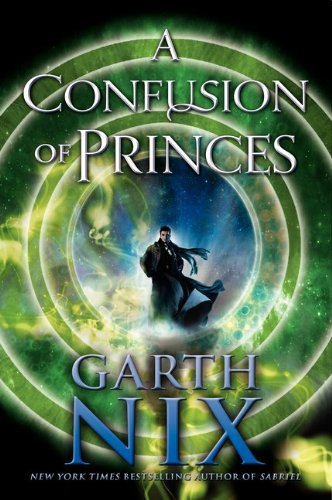
                  Prince Khemri has spent his life as one of ten thousand princes bred and trained by a sprawling galactic empire, expecting eventual rule -- until he learns just how disposable princes actually are, and how routinely they're assassinated by their own siblings. Garth Nix's A Confusion of Princes follows Khemri through the empire's ruthless military, its secret intelligence service, and a deadly, decades-long competition to determine who might one day take the throne. It's a single, self-contained space opera rather than an ongoing series.

                • Cover of Imperial Radch
                  Imperial Radch

                  series · 7 books · 2012

                  part of Radchaai Universe

                  similar byfar futureother star systemsscience fictionidentity+1 more

                  Ann Leckie's Imperial Radch trilogy (Ancillary Justice, Ancillary Sword, Ancillary Mercy, 2013-2015) follows Breq, the sole surviving fragment of an AI that once inhabited both a troop-transport starship and dozens of soldier bodies, now alone and hunting for revenge inside the vast, expansionist Radch empire. Breq's quest widens across the trilogy into a conflict with the empire's own fractured ruler, and the books use her alien difficulty perceiving gender to unsettle the space-opera conventions around her.

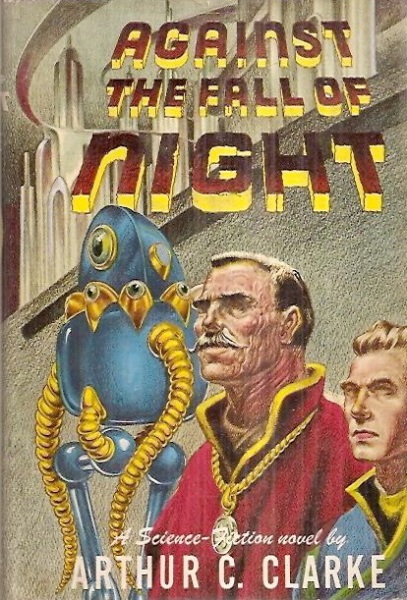
                • Cover of Against the Fall of Night
                  Against the Fall of Night

                  series · 2 books · 1953

                  similar byfar futureother star systemsscience fictionreflective

                  Against the Fall of Night is Arthur C. Clarke's 1953 novel of a stagnant, climate-controlled city called Diaspar a billion years in Earth's future, where a young man named Alvin becomes the first in living memory to want to leave it. Clarke later rewrote the book more expansively as The City and the Stars, and in 1990 Gregory Benford wrote Beyond the Fall of Night, an authorized sequel continuing on from this original, shorter version's ending.

                • Cover of Dune
                  Dune

                  series · 20 books · 1963

                  part of Dune Universe

                  similar byfar futureother star systemsscience fiction+1 more

                  Frank Herbert's Dune Chronicles opens with 1965's Dune, set on the desert planet Arrakis where House Atreides takes control of the only source of the vital spice melange and young Paul Atreides is pulled into a struggle over its politics and religion. Herbert carried the story forward across five further novels — Dune Messiah, Children of Dune, God Emperor of Dune, Heretics of Dune, and Chapterhouse: Dune — following Paul's line over the following millennia, before Brian Herbert and Kevin J. Anderson later extended the saga. Many other editions of these six novels are omnibus and box-set repackagings rather than separate stories.

                • Cover of How to Live Safely in a Science Fictional Universe
                  How to Live Safely in a Science Fictional Universe

                  Charles Yu · standalone novel · 2010

                  similar byfar futurescience fictionreflectiveidentitytime travel+1 more

                  How to Live Safely in a Science Fictional Universe is a 2010 novel by Taiwanese-American writer Charles Yu. The novel revolves around a search for a father and the father-son relationship. It also includes themes about life and how we live especially with respect to time, memories, and creation of the self.

                • Cover of Don't Bite the Sun
                  Don't Bite the Sun

                  series · 2 books · 1976

                  completed

                  similar byfar futurescience fictionidentityreflective+3 more

                • Cover of Francis Sandow
                  Francis Sandow

                  series · 5 books · 1968

                  similar byfar futureother star systemsscience fiction+3 more

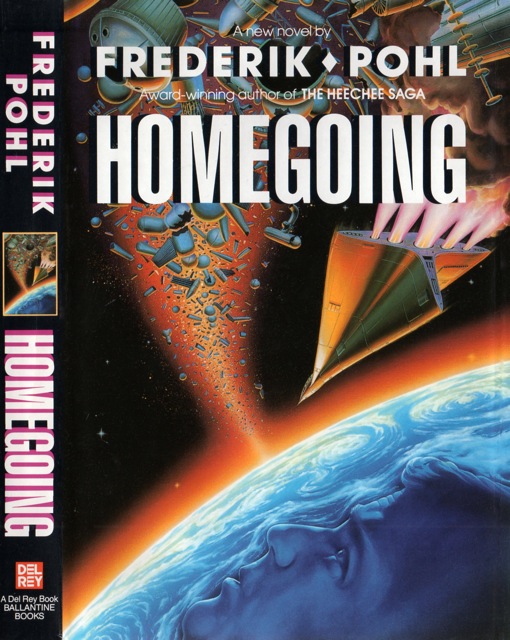
                • Cover of Homegoing
                  Homegoing

                  Frederik Pohl · standalone novel · 1989

                  similar byfar futureother star systemsscience fictionreflectiveidentity

                  Homegoing is a science fiction novel by American author Frederik Pohl, first published in 1989 by Del Rey Books. The novel was one of the nominees for the Locus SF Award, one of the awards of the Hugo Awards.

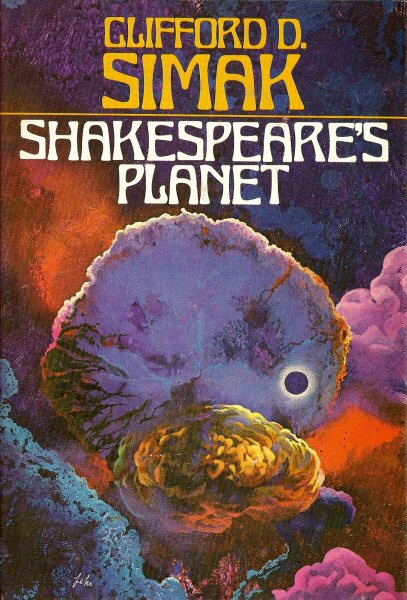
                • Cover of Shakespeare's Planet
                  Shakespeare's Planet

                  Clifford D. Simak · standalone novel · 1976

                  similar byfar futureother star systemsscience fictionreflective+1 more

                  Woken after a thousand-year voyage meant to find humanity a new home, Carter Horton finds his ship stranded for good, tended by the disembodied minds of three volunteers who gave up their bodies to fly it. Outside waits a world already crowded with strangers: a robot named Nicodemus, and an alien called the Carnivore who claims to have known a human, once, called Shakespeare, and to have arrived here through a tunnel across time. As more travelers arrive through that same tunnel, Horton has to work out what kind of planet he has actually landed on. A standalone novel from Clifford D. Simak.

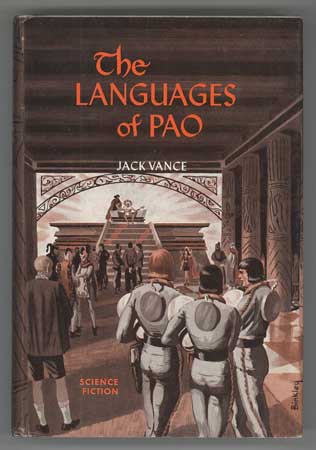
                • Cover of The Languages of Pao
                  The Languages of Pao

                  Jack Vance · standalone novel · 1958

                  similar byfar futureother star systemsscience fictionreflective+1 more

                  The Languages of Pao is a science fiction novel by American writer Jack Vance, first published in 1958, based on the Sapir–Whorf hypothesis, which asserts that a language's structure and grammar construct the perception and consciousness of its speakers. In the novel, the placid people from the planet Pao rely on other planets for technological innovations and manufactured goods and they do not resist when an invading force occupies the land and levies heavy taxes. To expel the aggressors and make the planet more independent, three new languages are introduced. A scientific language induces its speakers to innovate more; a well-ordered language encourages its speakers to be industrious; and a warlike language induces competitiveness and aggression. The new languages change the culture and Pao ousts their overlords and develops a sophisticated modern economy.

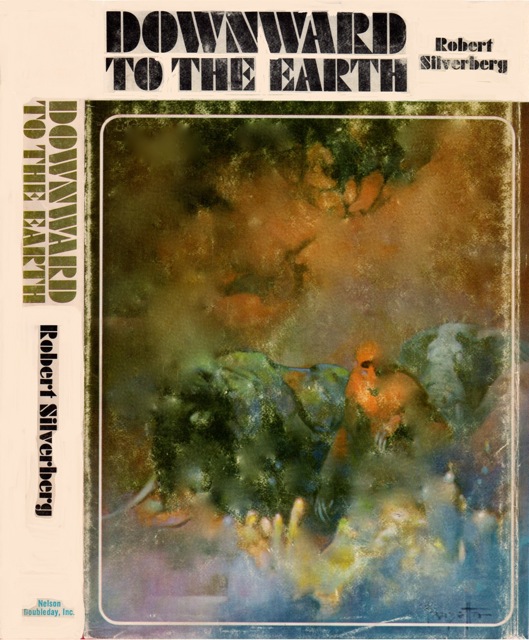
                • Cover of Downward to the Earth
                  Downward to the Earth

                  Robert Silverberg · standalone novel · 1969

                  similar byfar futureother star systemsscience fictionreflective

                  Edmund Gunderson was the Terran administrator of the colony world of Belzagor, and he returns to it after it has gained independence, feeling a sense of guilt for the way he has treated its dominant species, the elephant-like nildoror, whose animalistic appearance had kept Gunderson from taking them seriously as sentient beings. On his return, he feels a new sense of kinship with the natives, perhaps more than for the Terran tourists. The nildoror undergo a process of rebirth, and Gunderson's greatest guilt comes from having denied rebirth to seven nildoror to make them help him repair flood damage.(From Wikipedia)

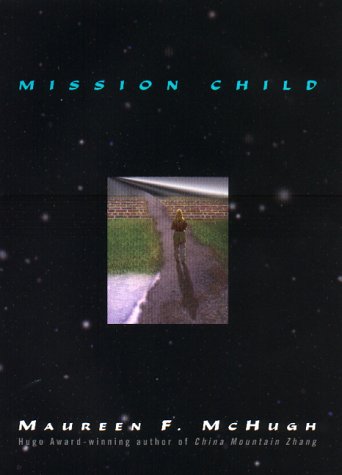
                • Cover of Mission Child
                  Mission Child

                  Maureen F. McHugh · standalone novel · 1998

                  similar byfar futureother star systemsscience fictionreflectiveidentity+1 more

                  Mission Child is a science fiction novel by Maureen F. McHugh. Set on a once-forgotten colony planet, it follows the life of Janna, the titular mission child, who witnesses the massacre of her loved ones and is displaced time and again as her world is radically changed by contact with new colonists from Earth. The novel explores the impacts of colonization on colonized peoples, the estranging power of technology, and Janna's gender identity as she disguises herself as a young man, takes on a new name, and over time comes to identify as neither a man nor a woman.

                • Cover of Flowers for Algernon
                  Flowers for Algernon

                  Daniel Keyes · standalone novel · 1966

                  similar byscience fictionemotionalcoming of ageidentity+1 more

                  A man with a low IQ becomes the subject of an experimental medical procedure which raises his IQ well over genius level.