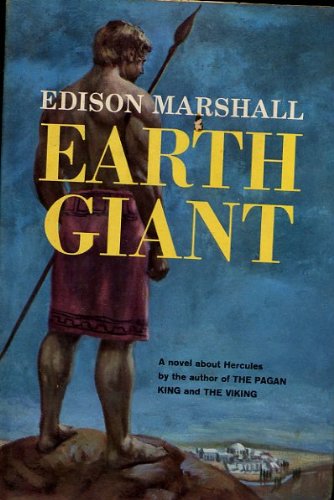
The hero of this novel is Heracles, who in Roman myth was Hercules - born in the first year of the Trojan War, fated to become the greatest figure of the heroic age when Greece was ruled by scores of jealous kings, when weapons were made of gleaming bronze and diadems made of gold. At the age of five, Heracles crushed in his chubby fists the spade-shaped heads of two messengers of death that had invaded his bed of sheepskins. Who was this child? What was the source of his seemingly supernatural strength? Here the reader divines Heracles as a force compared to nature's, yet one who worshiped beauty with the typical passion of the ancient Greek, whose strength and greatness stemmed from the vital earth he loved. The twelve great labors Heracles undertook in order to free his countrymen from the yoke of a tyrant king are portrayed as entirely believable, none transcending the humanly possible, despite their strangeness. They are labors which embrace high adventure, feats of primitive engineering, long voyages - once a ghastly conflict with an evil force horrible almost beyond telling, again a search for the Augean Stables that unearthed instead a lost temple of ineffable beauty. There is a descent into an extinct volcano, where a woman wails "for her demon lover", and finally what seemed to be a passage into dim silent Hades. As the climax of this novel, Heracles performs a thirteenth labor, resolving his deeply personal story - the thrilling mystery of his paternity, the right or wrong of his choice between two sisters, the unmasking of a Medusa close to his life, and the unfolding of the prophecies of a wild-eyed young shepherdess, Ismene, who hard bargained with him for his love. (adapted from the flaps of the first edition dust jacket)
Source · ISFDB CC BY 4.0