More like Aftermath
anchored on:science fictionaliensspacefar futurespace operawar+3 more
but
- Xan-Sskarn War
series1 book2010
similar byfar futurealiensscience fictiondarktensewarspace operaspace+2 more
- The Final Architecture
series6 books2021
similar byfar futurealiensscience fictiontensewarspace operaspaceother star systems+1 more
The Final Architecture is a series of science fiction novels by British writer Adrian Tchaikovsky. It contains the books Shards of Earth, Eyes of the Void, and Lords of Uncreation. The series focuses on a group of humans fighting against the mysterious Architects, who destroy inhabited planets. The series has been well-received critically, with Shards of Earth winning the 2021 BSFA Award for Best Novel. The entire series was a finalist for the 2024 Hugo Award for Best Series.
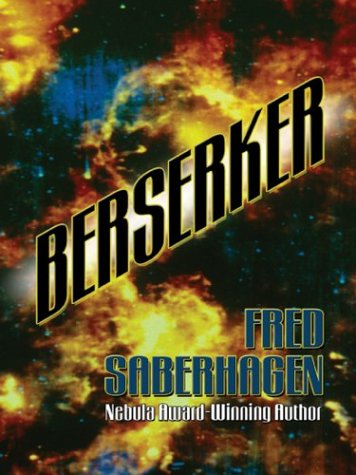
- Berserker (Fred Saberhagen)
series59 books1963
similar byfar futurescience fictiontensespace operawarspaceother star systems+2 more
The Berserker series is a series of space opera science fiction short stories and novels by Fred Saberhagen, in which robotic self-replicating machines strive to destroy all life.
- Moties
series4 books1974
part of CoDominium
similar byfar futurescience fictionaliensspace operaspaceother star systems+2 more
Larry Niven and Jerry Pournelle's The Mote in God's Eye (1974) depicts humanity's first contact with an alien species, the Moties, set within the far-future interstellar setting of Pournelle's codominium future history. The Gripping Hand continues that first-contact crisis years later, and Outies, written by J. R. Pournelle, carries the story forward into a new generation. Together the three books trace an escalating encounter between human and Motie civilizations within the codominium universe.
- Man-Kzin Wars
series84 books1986
part of Known Space
similar byfar futurealiensscience fictiontensewarspaceother star systems+1 more
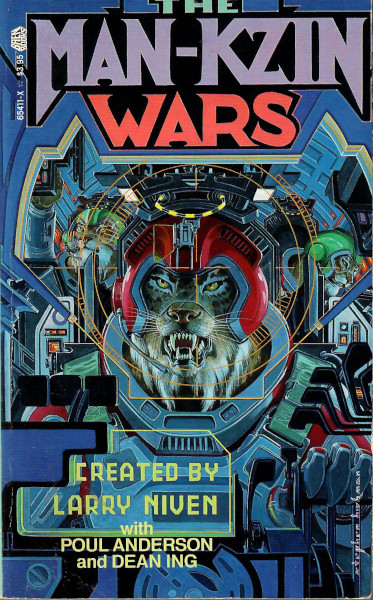
The Man–Kzin Wars is the name of a series of military science fiction anthologies as well as the name of the first book in the series. The short stories detail the eponymous conflicts between mankind and the Kzinti, set in Larry Niven's Known Space universe. However, Niven himself has written only a small number of the stories; most were written by other science fiction writers, as Niven opened this part of the Known Space to collaboration in the form of a shared universe. The cover art for the books in the series is created by Stephen Hickman.
- The Dosadi Experiment
Frank Herbertstandalone novel1977
similar byfar futurescience fictiontensealiensspace operaother star systemssurvival+1 more
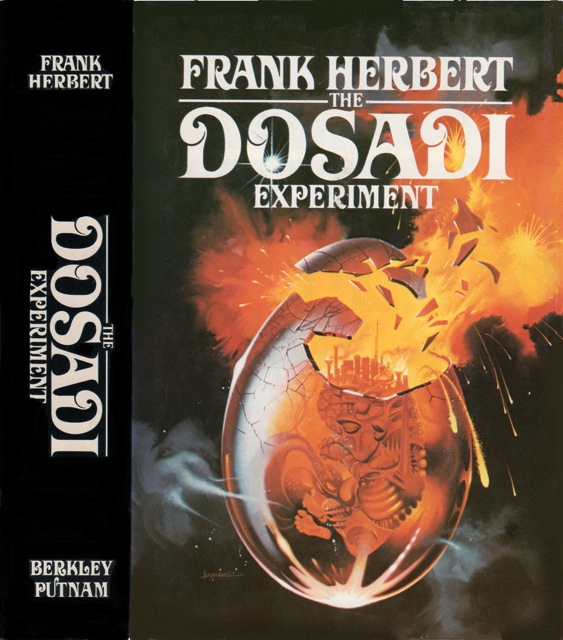
From the flaps of the Berkley Putnam first edition: "In his first new work of science fiction since the best-selling Children of Dune, Frank Herbert returns to his world of Whipping Star, and involves Jorj X. McKie, Saboteur Extraordinary, in a new intrigue. In Whipping Star, McKie discovered that some of the stars in the universe are actually intelligent, super-powerful beings, and was able to befriend one of them, the star Alcyone - affectionately known as Fannie Mae. As The Dosadi Experiment opens, McKie is assigned to investigate the planet Dosadi, which is isolated from the rest of the galaxy by a "god-wall," a barrier set up by one of the intelligent stars. Dosadi is rumored to be an experimental planet, and the experimenters are the froglike Gowachin, whose culture is founded upon a strange legal system in which McKie is the only human ever trained. He learns that humans and Gowachin have been placed on Dosadi, without their consent, for an experiment that could last centuries: an experiment in extreme overcrowding. But this monstrous plot is apparently out of control, and it seems the Gowachin may be prepared to destroy Dosadi rather than expose its secret, thus breaking the peace among the races, and starting the first interstellar war. But this is just the beginning. When McKie finally reaches Dosadi he discovers that the Dosadis have taken control of their own evolution and produced a competitive, highly evolved elite, of both humans and Gowachin, who have been able to extrapolate the existence of a universe beyond the god-wall and hate whoever has imprisoned them like this. They plan to break out and avenge themselves on the galaxy."
- Chanur
series7 books1982
part of Alliance-Union Universe
similar byfar futurealiensscience fictiontensespace operaspaceother star systems
The Chanur novels are a series of five science fiction novels, forming three separate stories, written by American author C. J. Cherryh and published by DAW Books between 1982 and 1992. The first novel in the series is The Pride of Chanur (1982), which was nominated for both the Hugo and Locus Awards in 1983. The Pride of Chanur, originally a stand-alone story, was followed by the Chanur's Venture trilogy, Chanur's Venture (1984), which was shortlisted for a Locus Award in 1985; The Kif Strike Back (1985) and Chanur's Homecoming (1986). These were followed by a later sequel, Chanur's Legacy (1992). The five novels were also published in two omnibus editions: the first three in The Chanur Saga in 2000 and the next two in Chanur's Endgame in 2007.
- Rise of the Jain
series3 books2018
part of Polity
similar byfar futuretensealiensscience fictionwarspace operaspaceother star systems+1 more
- Armor
John Steakleystandalone novel1984
similar byfar futurescience fictiondarktensealienswarother star systems
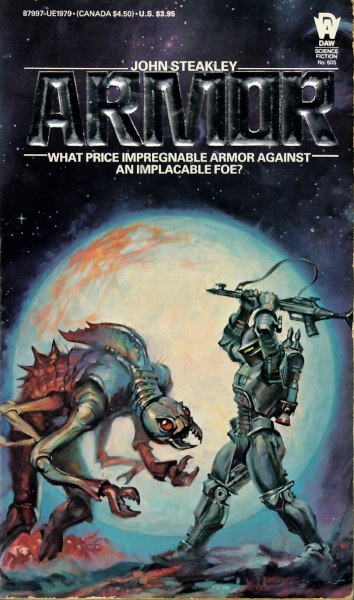
Armor is a military science fiction novel by John Steakley. It features the military use of exoskeletons and insect-like alien enemies but concentrates on the psychological effects of violence on human beings.
- Forge of God
series2 books1987
completed
similar byaliensscience fictiondarktensesurvival+4 more
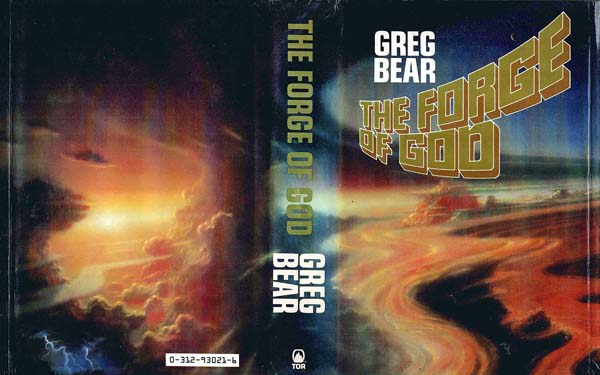
The Forge of God (1987) is Greg Bear's science fiction novel about Earth's discovery that it is the target of an incomprehensible, overwhelming alien attack, following scientists and ordinary people as they try to understand what is destroying the planet. Its 1992 sequel, Anvil of Stars, follows a group of young survivors sent on a mission of interstellar retaliation, continuing directly from the first book's ending.
- Dune Universe
universe78 books1963
Start hereDune · Start here
similar byfar futurescience fictionspace operaother star systems+2 more
Arrakis. Dune. The desert planet, where empire runs on a single substance: the spice melange, which folds space, prolongs life, and unlocks prescience, and which exists nowhere else in the known universe. Frank Herbert's saga is a meditation dressed as an adventure — feudal houses and a secret sisterhood, engineered messiahs and the patient ecology of a world without water, all turning on the terrible gravity of who commands the spice. It reads like scripture and schemes like a war room, ten thousand years hence, among people who have outlawed the thinking machine and made instruments of themselves instead. At its heart stand Herbert's original six — Dune, Dune Messiah, Children of Dune, God Emperor of Dune, Heretics of Dune, Chapterhouse: Dune — a single deepening arc across millennia, arguing the whole way between prophecy and free will. Around that spine his son Brian Herbert and Kevin J. Anderson have raised a vast prequel architecture: Prelude to Dune, tracing the great houses a generation before Paul; Legends of Dune, reaching back to the crusade that broke the machines; the Schools of Dune cycle on the founding of Bene Gesserit, Mentat, and Navigator; the Caladan Trilogy and Heroes of Dune filling years the originals left in shadow. Many hands, dozens of volumes, one desert. What sets Dune apart is its refusal of the simple: religion is manufactured, heroes are hazards, and the sand itself — worm, water, ecology — acts as a political power. Begin where the universe did, with Frank Herbert's Dune (1965), and read the original six in order; you need nothing else to feel the full weight. The prequels are a country to explore afterward, taken by era. Beginnings are delicate times.
- The Alliance Trilogy
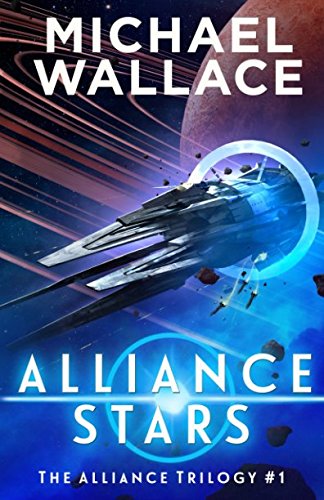
series3 books2018
part of Blackbeard
similar byfar futurealiensscience fictiontensewarspace operaspaceother star systems+1 more
- Dune
series20 books1963
part of Dune Universe
similar byfar futurescience fictionspace operaother star systems+2 more
Frank Herbert's Dune Chronicles opens with 1965's Dune, set on the desert planet Arrakis where House Atreides takes control of the only source of the vital spice melange and young Paul Atreides is pulled into a struggle over its politics and religion. Herbert carried the story forward across five further novels — Dune Messiah, Children of Dune, God Emperor of Dune, Heretics of Dune, and Chapterhouse: Dune — following Paul's line over the following millennia, before Brian Herbert and Kevin J. Anderson later extended the saga. Many other editions of these six novels are omnibus and box-set repackagings rather than separate stories.
- Hour of the Horde
Gordon R. Dicksonstandalone novel1970
similar byfar futurealiensscience fictiontensewarspace operaspace+1 more
Annihilating everything before it, a horde of monstrous space travellers were advancing through the stars. And Earth lay in their route. To defend their home planets, the worlds that lay in the path of the monsters created a super defense force, asking each planet to contribute one especially talented warrior to help turn the invaders away. Miles Vander was Earth's man, but when he arrived at the rendezvous point he found that he was included in the special task force of the less civilized defenders. But in the contest of advanced nuclear weaponry and computer strategy, it turned out to be Vander's group that had the special independent qualities and the raw courage to meet the challenge most effectively. (from the back cover of the DAW Books first printing)
- Death's Head (David Gunn)
series3 books2007
similar byfar futurescience fictiondarktensewarspace operaspace+1 more
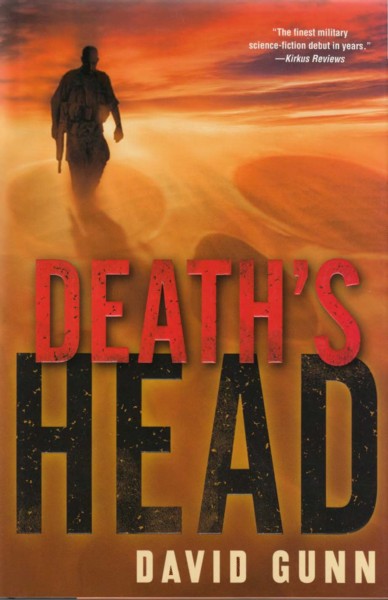
Death's Head is a noir military science fiction series written by David Gunn. The series follows the antihero Sven Tveskoeg, an ex-sergeant of The Legion, in service to the Octovian Empire.
- Providence
Max Barrystandalone novel2020
similar byfar futurescience fictiontensealienswarspace operaspacesurvival+1 more
Providence is the sixth novel by Australian science fiction author Max Barry. It was published in March 2020 by Putnam.
- Slow Train to Arcturus
Eric Flint & Dave Freerstandalone novel2008
similar byfar futurealiensscience fictiontensespace operaspaceother star systemssurvival+1 more
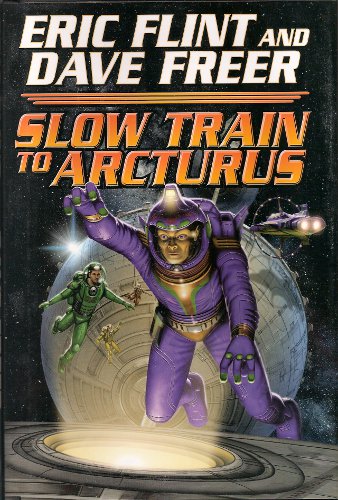
Sending a spaceship to rendezvous with an enormous vessel made up of a series of globular habitats approaching its star system, the aliens find a savage race calling themselves "humans" who promptly slaughter the exploration team, except for a single survivor who escapes to another habitat, where he finds more friendly humans whose help he requires to get back to his own ship.
- Wolfling
Gordon R. Dicksonstandalone novel1969
similar byfar futurealiensscience fictiontensespace operaspaceother star systems+1 more
From the flaps of the Baen/SFBC edition: "Is Earth merely the lost colony of a superior race? - She was well over six feet tall, and beautiful in a sculpted, abstract way. She had skin the color of white onyx, and her eyes... her eyes were large and feline - a startling lemon yellow in color. She was the Princess Afuan, one of the High-born, and she had chosen the Earthman Kim Keil to return to the Throne World with her - for she had decided that his performance in the bull-ring might amuse the Emperor. She didn't know that Jim was a bull-fighter only by virtue of six months' intensive training, nor that the bull was programmed - his behavior following and impressively fierce but unswerving pattern. Jim was just another wolfling to Afuan - a lesser being from a backward colony world. Jim, however, was keenly aware that he was playing a role, one which might prove to be extremely dangerous. Up until 10 years earlier, when their first ship had reached Alpha Centauri, the people of Earth hadn't even known that the vast Empire of human-occupied worlds existed. The discovery had been a profound shock. Had we evolved independently? Or were we merely descendants of the Empire's first space pioneers - a lost colony found at last, perhaps with devastating consequences? That's what Jim Keil had to find out. Chosen from among numerous highly qualified candidates - an anthropologist trained, mentally and physically, beyond the limits of his profession - it was his mission to observe the Throne World and the High-born... to determine whether or not they posed a threat to Earth. One thing was apparent from the start. The High-born were superior beings - physically taller and stronger than other humans, endowed with faster reflexes, superior mental capacity... and extraordinary technological resources. Their contempt for the new wolfling in their midst was open, their intrigues complex. An enormous gulf separated the people of the Throne World from Earthlings. But that gulf was not so wide that Jim couldn't recognize an enemy when he met one. Clearly, if he remained merely a passive observer of the High-born, he'd never survive among them."
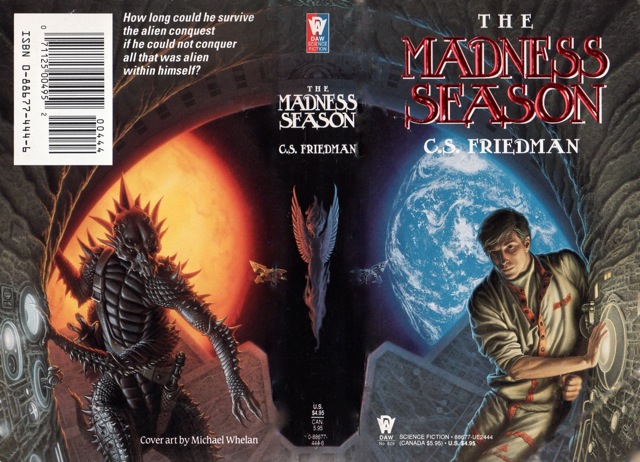
- The Madness Season
C. S. Friedmanstandalone novel1990
similar byfar futurealiensscience fictiontensespace operaspaceother star systems+2 more
The alien within - He'd had so many names over the centuries, so many new identities that he could scarcely remember who he had originally been. Now his name was Daetrin, a name given by the alien conquerors of humankind, the Tyr. Three hundred years had passed since the Tyr conquered the people of Earth as they had previously overcome numerous races throughout the galaxy. In their victory they had taken the very heart out of the human race, isolating the true individualists, the geniuses, all the people who represented the hopes, dreams, and discoveries of the future, and imprisoning them in dome colonies on planets hostile to human life. There the Tyr, a race which itself shared a unified gestalt mind, had left these gifted individuals to work on projects which would, the conquerors hoped, reveal all of human kind's secrets to them. Yet Daetrin's secret was one no scientist had ever uncovered, for down through the years he had succeeded in burying it so well that he had even hidden his real nature from himself. But, taken into custody by the Tyr, there was no longer any place left for Daetrin to run, no new name and life for him to assume. Now he would at last be forced to confront the truth about himself - and if he failed, not just Daetrin but all humans would pay the price... (from the first page of the DAW Books first edition)
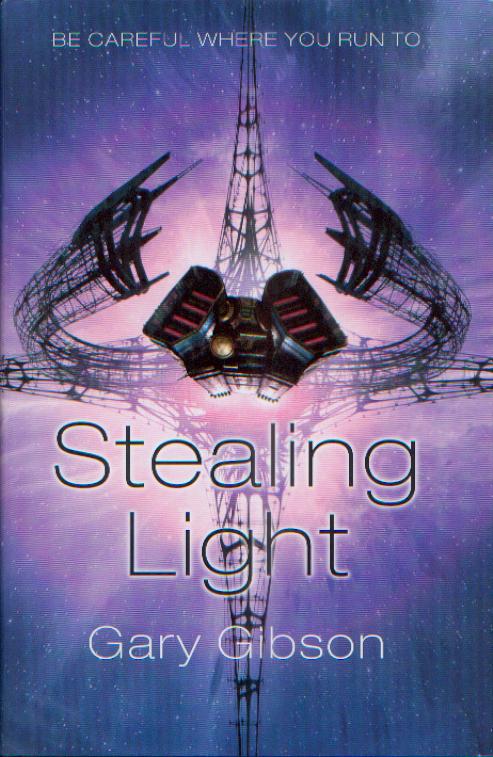
- Shoal Sequence
series4 books2007
similar byfar futurescience fictiontensealiensspace operaspaceother star systems+1 more
Gary Gibson's Shoal Sequence opens with Stealing Light, set two centuries into humanity's uneasy dependence on the Shoal, an alien race that alone holds the secret of faster-than-light travel. Military pilot Dakota Merrick, having witnessed the Shoal's atrocities, is drawn into events around a derelict starship that threaten to upend that arrangement across the four-book series.
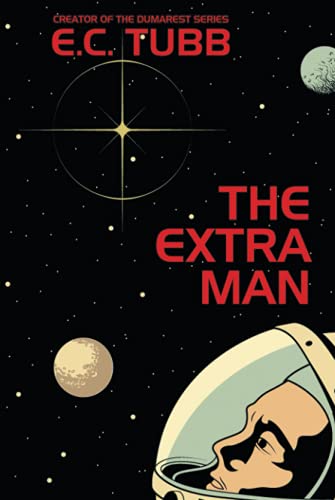
- The Extra Man
E. C. Tubbstandalone novel1954
similar byfar futurealiensscience fictiontensewarspace operaspaceother star systems+1 more
The galaxy is at war between the oxygen-breathing Terran Federation of worlds and the Ginzoes, chlorine-breathing aliens. An Earth ship is captured in battle by the Ginzoes, and its crew learns that the aliens have a newly developed catalyst. This can liberate chlorine from the sea -which, for the Ginzoes, would convert Terran worlds into suitable environments. The catalyst will be used unless the Terran Federation declares peace within fifty days. Fifty days to save Mankind...or fifty days to doom!
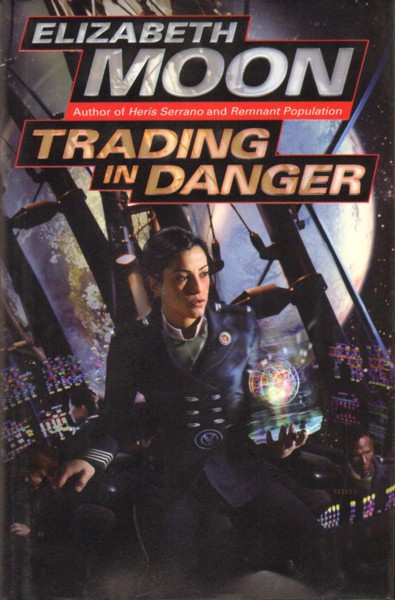
- Vatta's War
series6 books2003
part of Vatta
similar byfar futurescience fictiontensespace operawarspaceother star systems
Vatta's War is a science fiction series by American writer Elizabeth Moon, comprising five books: Trading in Danger (2003), Marque and Reprisal, Engaging the Enemy (2006), Command Decision (2007), and Victory Conditions (2008). They have been characterized as military science fiction similar in style to the works of Lois McMaster Bujold, David Weber and Walter Jon Williams.
- The Deep Wide Black
series2 books2017
similar byfar futurealiensscience fictiondarktensewarspace operaspace+1 more
- Space Beagle
series5 books1939
completed
similar byfar futurescience fictionalienstensespace operaspace+1 more
The Voyage of the Space Beagle is a 1950 fix-up novel by A. E. van Vogt, stitched together from four previously published pulp stories into a single continuous account of the exploration ship Space Beagle's encounters with a series of dangerous alien life forms. Its episodic, crew-versus-monster structure reads as a loose sequence of adventures rather than one continuous plot.