Loreful
HomeDiscover
Search series, authors…⌘K
Loreful

Series-first reading tracker: what you've read, what's next, and what you're missing.

Explore

UniversesSeriesWorksAuthorsAtlas

Help

FAQAboutSite map

Account & legal

Sign inCreate accountPrivacyTerms

Data

Built on ISFDB, Wikipedia, Wikidata and Open Library. Every reading order is hand-picked, with a rationale on the page. Data sources & licenses

© Loreful · data: ISFDB · CC BY

More like Alien Plot

anchored on:short story cyclefantasyscience fictionaliensotherworld

but

Mood

The mood the book leaves you in.

  • The reading experience is propelled by journeys, exploration, and physical risk; excitement and forward momentum dominate over dread or introspection.
  • Joy and loss are deliberately mixed; the resolution grants characters something real while taking something else away, leaving warmth and sorrow together.
  • The book demands work from the reader — dense prose, difficult structure, unfamiliar ideas, or morally uncomfortable material — as part of its intended effect.
  • Grim events, cruelty, or despair dominate the atmosphere, and the book does not soften them with comfort or comic relief.
  • The atmosphere is quietly unsettling — wrongness, unease, and the uncanny pervade the book without necessarily escalating into overt horror.
  • The book is built to move the reader; character feeling is foregrounded and major scenes aim at a strong emotional response.
  • Humor is a primary aim and the prose plays for laughs — comic situations, wit, or dialogue produce sustained comedy, not occasional levity.
  • The book insists that things can improve; effort and decency are shown to matter, and the arc bends toward better outcomes even through hardship.
  • The book teaches as it goes — real facts, history, science, or craft are conveyed in enough depth that learning is part of the reading experience.
  • The book is designed to uplift and motivate, presenting perseverance or achievement in a way that invites the reader to aspire or act.
  • The overall register is cheerful and easygoing; stakes are kept gentle and the book avoids dwelling on pain or dread.
  • Withheld information drives the experience; the book sustains enigmas and secrets the reader wants resolved, whatever its genre.
  • The book is contemplative and inward-looking, giving more weight to thought, memory, and meaning than to external events.
  • The book works as comfort reading — low tension, a soothing pace, and an atmosphere the reader can unwind in.
  • Grief, loss, or melancholy set the dominant register, and the book lets sorrow stand rather than resolving it into comfort.
  • Sustained suspense is the point; the book keeps the reader braced for what happens next through danger, pressure, or impending revelation.
  • Playful invention and charm define the register — fanciful conceits, light absurdity, and a narration that delights in its own oddity.

About

What the story runs on.

  • Stories in which extraterrestrial beings are central — as characters, cultures, or the object of the plot.
  • Stories about venturing into space to explore — survey missions, astronauts, and the frontier of the unknown beyond Earth.
  • Stories structured as a quest — a journey undertaken to find, deliver, or destroy something of great import.
  • Stories in which staying alive against nature, catastrophe, or scarcity is the central problem.
  • Stories of lovers kept apart by law, family, faith, or station, where the obstacle to love is the plot.
  • Stories in which a friendship — its making, testing, or loss — is the emotional center.
  • Stories of growing up — a young protagonist crossing from childhood into adult knowledge and responsibility.
  • Stories about who a character truly is — self-discovery, doubled lives, and the search for a self.
  • Stories driven by maneuvering for power — factions, conspiracies, and statecraft conducted in shadow.
  • Stories about rising against rulers — uprisings, resistance movements, and revolutions and their aftermaths.
  • Stories in which war itself is the subject — combat, occupation, and what warfare does to soldiers and civilians.
  • Stories organized around investigating a killing — the case, the clues, and the pursuit of the killer, in any genre's clothing.

Shelf

Where it sits in the library.

    • Fiction built on magic or other supernatural elements that have no scientific explanation.
    • Secondary-world fantasy at large scale, where the fate of nations or the world turns on the protagonists' struggle.
    • Fantasy set in a recognizably modern city or contemporary world where the supernatural intrudes on everyday life.
    • Fantasy that blends in horror's atmosphere and imagery, keeping a fantastical frame around grim or frightening material.
    • Action-driven fantasy following warriors or rogues with personal stakes against sorcerous threats, rather than world-spanning conflicts.
    • Fantasy set in a real historical period or a close analogue of one, with magic woven into the era.
    • Fantasy in which protagonists cross from the ordinary world into another world through a portal or similar passage.
    • Fiction that retells or reworks a traditional fairy tale in a new form or setting.
    • Fantasy drawing directly on myths, legends, and folklore, retelling them or building on their figures and logic.
    • Fantasy of ghosts, vampires, shapeshifters, psychics, and similar phenomena, usually set in an otherwise ordinary world.
    • Fiction mixing science-fictional trappings with overtly magical or impossible elements in one setting.
    • Low-stakes fantasy emphasizing comfort, community, and everyday pleasures over conflict and peril.
    • Speculative fiction of pervasive moral ambiguity, violence, and cynicism that rejects heroic conventions — fantasy and SF alike.
      • Fiction that extrapolates from science and technology — future societies, space travel, or speculative inventions — within at least nominally natural laws.
      • Science fiction of interstellar scope — starships, galactic polities, and adventure across star systems.
      • Science fiction committed to scientific rigor, where technical plausibility constrains the story.
      • Science fiction centered on armed forces and warfare, told largely from a military point of view.
      • Science fiction of networked, corporate-dominated near futures, pairing high technology with social decay.
      • Science fiction styled on nineteenth-century steam-powered technology, often in a Victorian or pseudo-Victorian setting.
      • Fiction depicting an oppressive or catastrophic society, presented as a warning.
      • Fiction set after civilization's collapse, following survivors in the ruins of the old world.
      • Fiction in which characters move between past and future, and the mechanics or consequences of that travel drive the plot.
      • Fiction exploring a world where a historical event went differently and history diverged from ours.
      • Science fiction about humanity's first encounter and communication with an alien intelligence.
      • Science fiction in which extraterrestrial forces attack or occupy Earth and humanity resists.
      • Fiction whose primary aim is to frighten or unsettle the reader through dread, menace, or the monstrous.
      • Horror of vast, indifferent, incomprehensible entities before which humanity is insignificant, in the Lovecraft tradition.
      • Horror of decaying houses, buried family secrets, and oppressive atmosphere in the Gothic literary tradition.
      • Horror centered on hauntings and the returning dead.
      • Horror located in the mind — paranoia, obsession, and unreliable perception rather than external monsters.
      • Horror built around the reanimated dead and survival amid their outbreaks.
      • Horror defined by explicit, transgressive gore that refuses to cut away from violence.
      • Speculative fiction of the strange and uncanny that resists both natural explanation and standard genre categories.
      • Fiction organized around solving a crime or puzzle, typically following an investigator toward the identification of a culprit.
      • A puzzle-first mystery that lays out clues so the culprit's identity can be deduced before the reveal.
      • Crime fiction of moral ambiguity, fatalism, and hard-edged style, set among the corrupt and the doomed.
      • A mystery following the realistic routines of police work — forensics, interviews, and case-building.
      • A gentle mystery with an amateur sleuth, a small community, and violence kept off the page.
      • A mystery set in a past era, where the investigation works within that period's methods and society.
      • Fast-paced fiction driven by imminent danger, pursuit, or high-stakes conspiracy, built to sustain tension.
      • A thriller of espionage — agents, tradecraft, and intelligence services in conflict.
      • A thriller centered on lawyers and the courtroom, where litigation carries the suspense.
      • A thriller driven by detailed contemporary or near-future technology, often military or scientific.
      • A thriller whose tension comes from mental states and manipulation between characters rather than external action.
      • Fiction whose central plot is a romantic relationship and its development toward an emotionally satisfying resolution.
      • Romance in which one or both partners are supernatural beings, blending fantasy elements into the love story.
      • A fantasy-romance hybrid in which the romantic arc and the fantasy plot carry equal weight.
      • Romance set in a past era, with courtship shaped by the period's society and manners.
      • Romance set in the present day, without supernatural or historical elements.
      • Fiction set in a real past period, where the historical setting materially shapes characters and events.
        • General and literary fiction emphasizing prose style, character interiority, or formal ambition over genre plot conventions.
        • Fiction in a realistic world where magical events occur and are treated as ordinary, in the tradition of Latin American literature.
        • Fiction that ridicules people, institutions, or society in order to criticize them.
        • Fiction of dreamlike, irrational imagery and logic that breaks from realistic representation.
        • Fiction that plays with narrative convention through metafiction, fragmentation, and self-reference.
        • Fiction propelled by journeys, exploration, and physical peril, where action and survival carry the plot.
        • Adventure fiction of ships and seafaring — naval engagements, voyages, and life at sea.
        • Fiction of the American frontier West — gunmen, ranchers, and lawmen, typically in the late nineteenth century.
        • Fiction centered on soldiers, campaigns, and the experience of warfare, historical or imagined.
          • Fiction written primarily to amuse, using comedic situations, wit, or parody as its organizing principle.
            • Multi-generational fiction following a family or dynasty across decades, with inheritance and kinship as the through-line.
              • Fiction whose world runs on explicit game mechanics — levels, stats, and skills that characters can see and exploit.
                • Fiction about costumed or superpowered heroes and their conflicts with comparable villains.

                Practical

                How long a commitment, whether it stands alone, and whether it has finished.

                Tap a chip to ask for it · tap again to rule it out · once more to clear. Numbers show what would be left.

                • The Goblin Reservation

                  Clifford D. Simak · standalone novel · 1968

                  similar byalienswhimsicalfantasyscience fiction

                  The Goblin Reservation is a 1968 science fiction novel by American writer Clifford D. Simak, featuring an educated Neanderthal, a biomechanical sabertooth tiger, aliens that move about on wheels, a man who time-travels using an unreliable device implanted in his brain, meeting a ghost, trolls, banshees, goblins, a dragon and even Shakespeare himself. The Goblin Reservation was a Hugo Award nominee in 1969 and was originally serialized in Galaxy Science Fiction magazine.

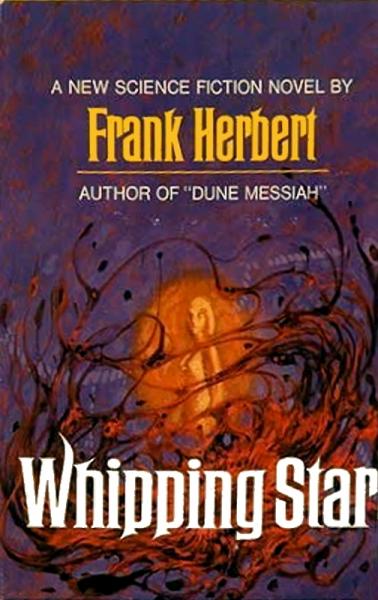
                • Whipping Star

                  Frank Herbert · standalone novel · 1970

                  similar byaliensscience fiction+1 more

                  From Amazon: In the far future, humankind has made contact with numerous other species: Gowachin, Laclac, Wreaves, Pan Spechi, Taprisiots, and Caleban, and has helped to form the ConSentiency to govern among the species. After suffering under a tyrannous pure democracy, the sentients of the galaxy find the need for a Bureau of Sabotage (BuSab) to slow the wheels of government, thereby preventing it from legislating recklessly. BuSab is allowed to sabotage and harass the governmental, administrative, and economic powers in the ConSentiency. Private citizens must not be harassed, and vital functions of society are also exempt. Jorj X. McKie is a born troublemaker who has become one of BuSab's best agents. Drafted for the impossible task of establishing meaningful communication with an utterly alien entity who defies understanding, McKie finds himself racing against time to prevent a mad billionairess from wiping out all life in the ConSentiency.

                • The Phantom Tollbooth

                  Norton Juster · standalone novel · 1961

                  similar bywhimsicalotherworldfantasy

                  A journey through a land where Milo learns the importance of words and numbers provides a cure for his boredom.

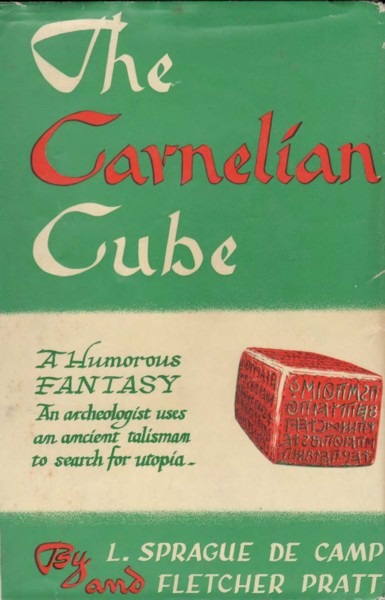
                • The Carnelian Cube

                  L. Sprague de Camp & Fletcher Pratt · standalone novel · 1948

                  similar byotherworldfantasyscience fiction+1 more

                  The Carnelian Cube is a science-fantasy novel by American writers L. Sprague de Camp and Fletcher Pratt. It was first published in hardcover by Gnome Press in 1948, and in paperback by Lancer Books in 1967. An E-book edition was published by Gollancz's SF Gateway imprint on September 29, 2011 as part of a general release of de Camp's works in electronic form. It has also been translated into Italian and German.

                • Flatland

                  series · 2 books · 1884

                  similar byotherworldscience fiction+1 more

                  Edwin A. Abbott's 1884 novella Flatland: A Romance of Many Dimensions imagines a two-dimensional world of geometric beings, using its narrator's brush with higher dimensions as both a mathematical thought experiment and a satire of Victorian social rank. Ian Stewart's 2001 Flatterland follows a descendant of that narrator on a tour of stranger geometries, from curved and multidimensional space to relativity, as a knowing homage to Abbott's original. Together they pair a Victorian mathematical classic with its modern sequel.

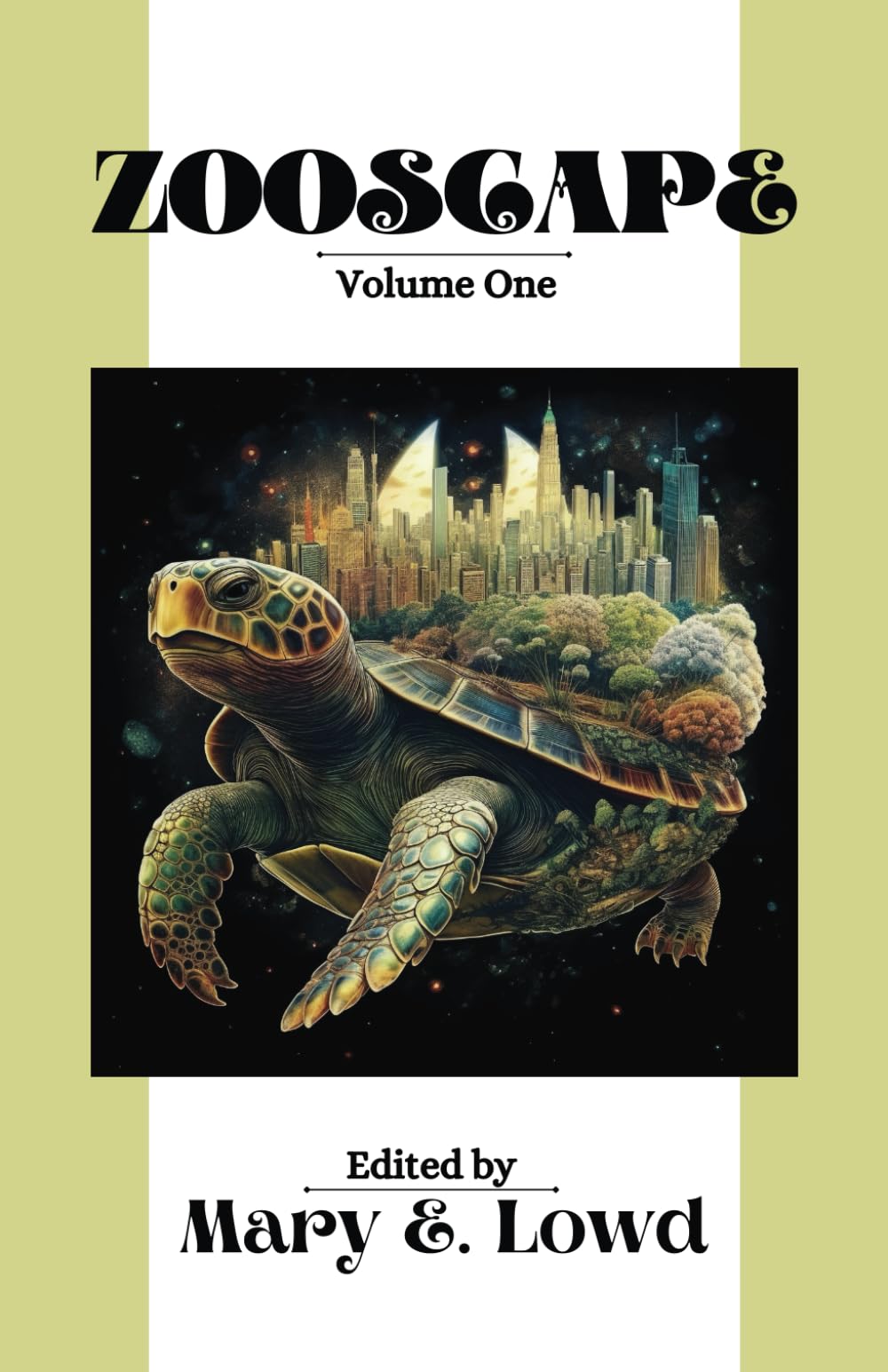
                • Zooscape Reprints

                  series · 4 books · 2023

                  similar bywhimsicalfantasyscience fictionshort story cycle+2 more

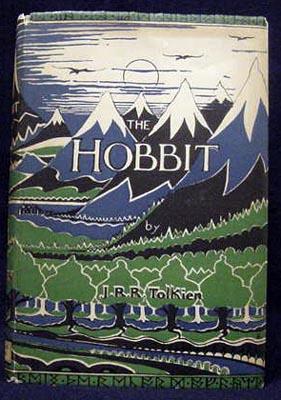
                • The Hobbit

                  series · 2 books · 1937

                  completed

                  part of Tolkien's legendarium

                  similar bywhimsicalfantasy

                  The Hobbit (1937) is J. R. R. Tolkien's children's fantasy novel following the reluctant burglar Bilbo Baggins, who joins a company of dwarves and the wizard Gandalf on a journey to reclaim treasure guarded by the dragon Smaug. It stands as a complete adventure on its own, but shares its setting with the rest of Tolkien's legendarium and leads into the events of The Lord of the Rings.

                • At the Back of the North Wind

                  series · 2 books · 1869

                  similar bywhimsicalfantasy+1 more

                • Trot and Cap'n Bill

                  series · 4 books · 1911

                  similar bywhimsicalfantasy+1 more

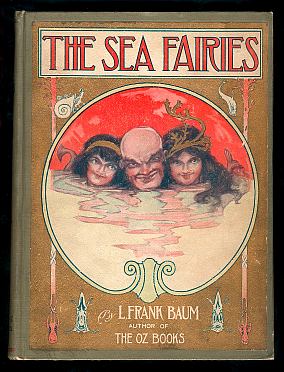
                  L. Frank Baum's Trot and Cap'n Bill duology (The Sea Fairies, 1911; Sky Island, 1912) follows Californian girl Trot and her one-legged sailor companion Cap'n Bill through undersea fairy kingdoms and then to a fantastical island divided between light and dark peoples. Baum conceived it as a rival series to his own Oz books, but both characters were eventually folded into Oz continuity and reappear as regulars in later Oz novels.

                • Shadow Castle

                  Marian Cockrell · standalone novel · 1945

                  similar bywhimsicalotherworldfantasy

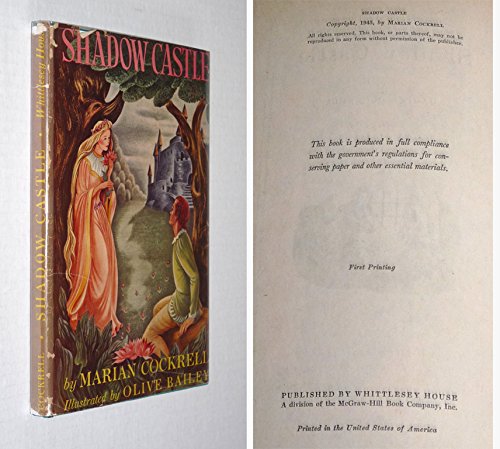
                  In the middle of a deep forest is an enchanted valley and a castle where only shadows live, shadows of kings and queens who have waited for hundreds of years for the spell cast upon them to be broken. One day, a girl named Lucy follows a little dog through a tunnel into the valley and meets the mysterious red-haired Michael, who takes her into the shadow world to meet Prince Mika and his mortal wife Gloria, their children and their children's children, and learn the magic that will lift the spell.

                • Silverlock

                  series · 2 books · 1949

                  completed

                  similar bywhimsicalfantasy+1 more

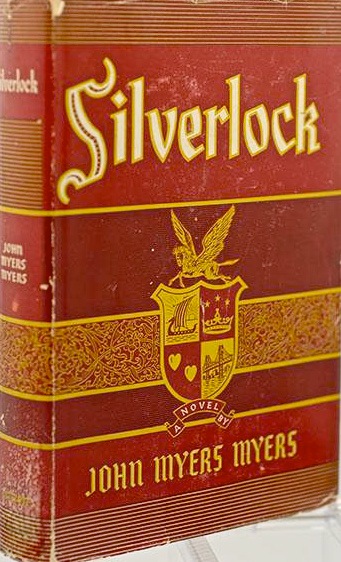
                  John Myers Myers' Silverlock follows A. Clarence Shandon, an emotionally numbed businessman shipwrecked and washed ashore in the Commonwealth of Letters, a fantastical realm populated entirely by characters out of history, myth, and literature. Guided by the enigmatic Golias, who nicknames him Silverlock, Shandon stumbles picaresquely from one literary encounter to the next - meeting figures like Beowulf, Robin Hood, Don Quixote, and Hamlet - and is transformed by the journey. A belated sequel, The Moon's Fire-Eating Daughter, followed in 1981.

                • Lieut. Gullivar Jones: His Vacation

                  Edwin L. Arnold · standalone novel · 1905

                  similar byaliensfantasyscience fiction+1 more

                  Lieut. Gullivar Jones: His Vacation is a novel by English writer Edwin Lester Arnold, combining elements of fantasy and science fiction, first published in 1905. Its mediocre reception led Arnold to stop writing fiction. It has since become his best-known work, and is considered important in the development of 20th century science fiction in that it is a precursor and possible inspiration to Edgar Rice Burroughs's classic A Princess of Mars (1917), which spawned the planetary romance aka 'sword and planet' genre. Ace Books reprinted Arnold's novel in paperback in 1964, retitling it Gulliver [sic] of Mars. A more recent Bison Books edition (2003) was issued as Gullivar of Mars, adapting the Ace title to Arnold's spelling.

                • The Magic City

                  E. Nesbit · standalone novel · 1910

                  similar bywhimsicalotherworldfantasy

                  Publisher's description: An extremely unhappy 10-year-old magically escapes into a city he has built out of books, chessmen, candlesticks, and other household items.

                • The Legend of Frog

                  series · 3 books · 2014

                  similar byaliensfantasy+2 more

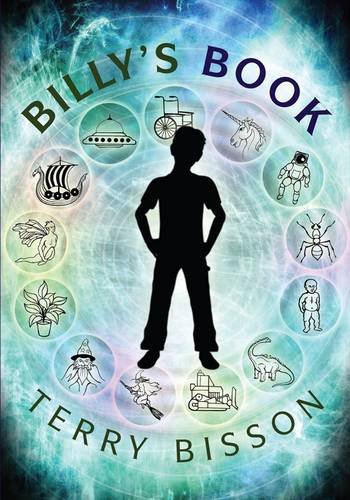
                • Billy

                  series · 15 books · 2005

                  completed

                  similar bywhimsicalfantasyscience fictionshort story cycle+1 more

                • The Enchanted Island of Yew: Whereon Prince Marvel Encountered the High Ki of Twi and Other Surprising People

                  L. Frank Baum · standalone novel · 1903

                  similar bywhimsicalotherworldfantasy

                  A fairy is transformed into a human prince for one year while he and his friends have many adventures.

                • Alien Art

                  Gordon R. Dickson · standalone novel · 1973

                  similar byaliensscience fiction+1 more

                  From 2002 hc copyright page: On the planet Arcadia, a young man and woman and a swamp otter join together to haul the otter's eleven hundred pound statue overland to meet the deadline of a prospective buyer from another planet.

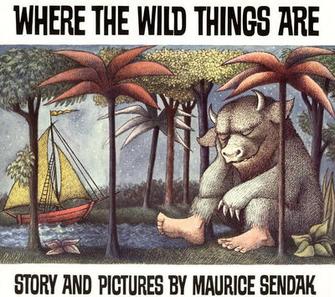
                • Where the Wild Things Are

                  series · 2 books · 1963

                  similar bywhimsicalotherworldfantasy

                  The Wild Things (2009) is Dave Eggers's novel adaptation of his own screenplay for the Where the Wild Things Are film, itself based on Maurice Sendak's classic 1963 picture book about a boy named Max who sails to an island of monstrous creatures. Eggers expands Sendak's brief story into a full novel while keeping its outline intact.

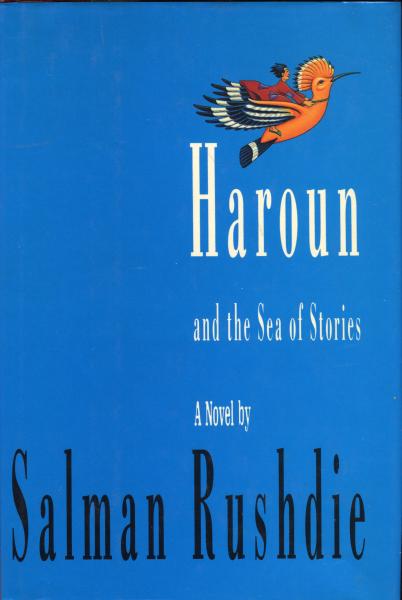
                • Kathasaritsagara (Salman Rushdie)

                  series · 2 books · 1990

                  similar bywhimsicalfantasy+1 more

                  Salman Rushdie's Haroun and the Sea of Stories follows a boy who sets out to restore his storyteller father's lost gift by traveling to the source of all stories, a fable Rushdie wrote for his own son while in hiding after the fatwa against him. Its sequel, Luka and the Fire of Life, written more than a decade later for his second son, sends Haroun's younger brother on a parallel quest to save their father's life.

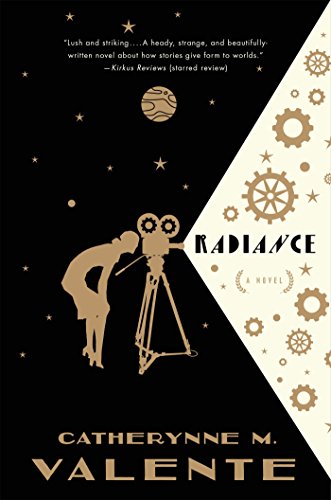
                • Radiance

                  Catherynne M. Valente · standalone novel · 2015

                  similar byaliensscience fiction+1 more

                  Severin Unck's father is a famous director of Gothic romances in an alternate 1986 in which talking movies are still a daring innovation due to the patent-hoarding Edison family. Rebelling against her father's films of passion, intrigue, and spirits from beyond, Severin starts making documentaries, traveling through space and investigating the levitator cults of Neptune and the lawless saloons of Mars. For this is not our solar system, but one drawn from classic science fiction in which all the planets are inhabited and we travel through space on beautiful rockets. Severin is a realist in a fantastic universe. But her latest film, which investigates the disappearance of a diving colony on a watery Venus populated by island-sized alien creatures, will be her last. Though her crew limps home to earth and her story is preserved by the colony's last survivor, Severin will never return.

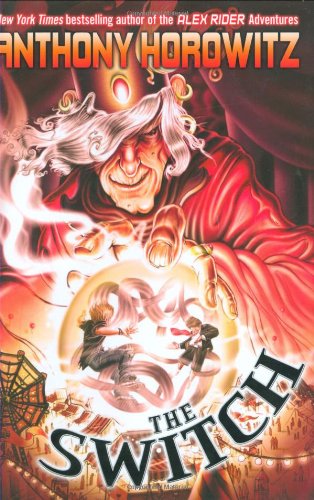
                • The Switch

                  Anthony Horowitz · standalone novel · 2009

                  similar byotherworldfantasy+1 more

                  For Tad Spencer, only son of a fabulously wealthy businessman, every day is like Christmas. He lives in a mansion, has a maid, servants, every toy imaginable. He has it all—until the day he wishes he was someone else.Suddenly, Tad wakes up as Bob Snarby, trapped in a filthy and corrupt carnival world inhabited by hostile ingrates, hopeless criminals, and mysterious fortune tellers. But Tad discovers he's there for a reason when he begins to untangle a secret that could reveal an enemy no one could have imagined...In this sardonic swap from New York Times bestselling author Anthony Horowitz, readers will not only be entertained, but reminded to be careful what they wish for—and happy for what they have.

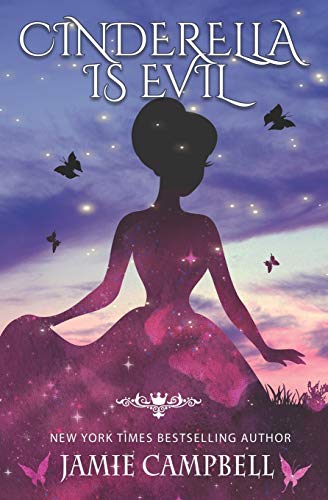
                • Fairy Tales Retold (Jamie Campbell)

                  series · 8 books · 2013

                  similar bywhimsicalotherworldfantasyshort story cycle

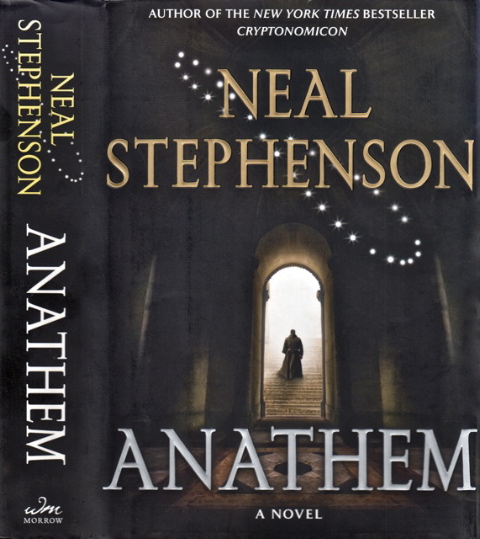
                • Anathem

                  Neal Stephenson · standalone novel · 2008

                  similar byaliensscience fiction

                  On a planet where quasi-monastic academic institutions have existed alongside the secular world for thousands of years, a young scholar from one such institution becomes part of a planetwide effort to muster an appropriate reaction to a shocking discovery.

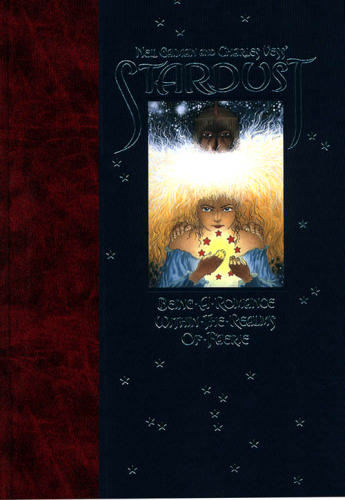
                • Stardust

                  Neil Gaiman · standalone novel · 1998

                  similar bywhimsicalfantasy

                  Stardust is a 1999 fantasy novel by British writer Neil Gaiman, usually published with illustrations by Charles Vess. Stardust has a different tone and style from most of Gaiman's prose fiction, being consciously written in the tradition of pre-Tolkien English fantasy, following in the footsteps of authors such as Lord Dunsany and Hope Mirrlees. It is concerned with the adventures of a young man from the village of Wall, which borders the magical land of Faerie.