More like Alpha Class: Engineering
but
- Kairos
series11 books1962
completed
similar byscience fictionyoung adult+3 more
The Time Quintet is a science fantasy series of five young adult novels written by American author Madeleine L'Engle and made up of A Wrinkle in Time (1962), A Wind in the Door (1973), A Swiftly Tilting Planet (1978), Many Waters (1986), and An Acceptable Time (1989).
- Earthsea Cycle
series18 books1964
completed
part of Earthsea
similar byfantasy+2 more
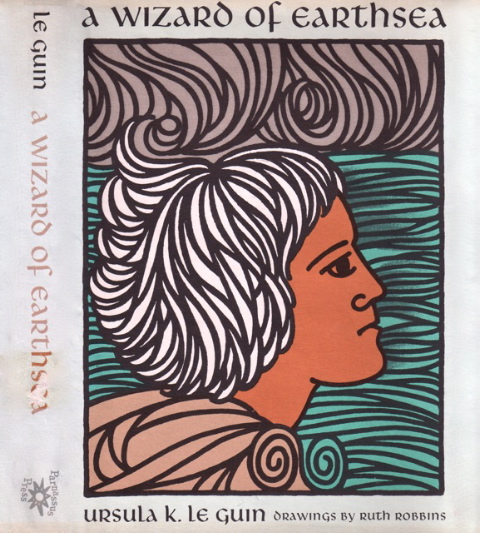
The Earthsea Cycle, also known as Earthsea, is a series of high fantasy books written by American author Ursula K. Le Guin. Beginning with A Wizard of Earthsea (1968), The Tombs of Atuan (1970), and The Farthest Shore (1972), the series was continued in Tehanu (1990), and Tales from Earthsea and The Other Wind. In 2018, all the novels and short stories were published in a single volume, The Books of Earthsea: The Complete Illustrated Edition, with artwork by Charles Vess.
- Five Children Universe
series27 books1902
completed
similar byfantasy+3 more
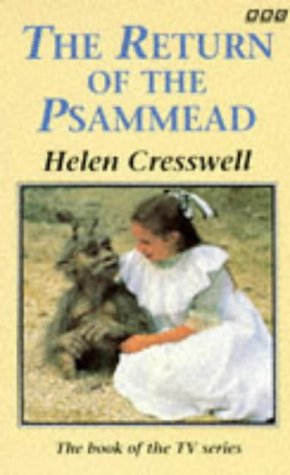
Two separate modern continuations of E. Nesbit's Psammead stories were written decades apart by different authors: Helen Cresswell's The Return of the Psammead (1992) brings the wish-granting sand fairy back for a new set of children, while Kate Saunders's Five Children on the Western Front (2014) follows the now-grown Lamb and his siblings as the First World War arrives, in a more somber sequel to Nesbit's original trilogy. Neither book is by Nesbit herself, and the two have no direct connection to each other beyond both drawing on her creation. Later writers have kept returning to Nesbit's premise long after her own trilogy ended.
- His Dark Materials
series8 books1995
part of His Dark Materials Universe
similar byadventurouscoming of ageyoung adultfantasy+1 more
His Dark Materials is a trilogy of fantasy novels by Philip Pullman consisting of Northern Lights, The Subtle Knife (1997), and The Amber Spyglass (2000). It follows the coming of age of two children, Lyra Belacqua and Will Parry, as they wander through a series of parallel universes. The novels have won a number of awards, including the Carnegie Medal in 1995 for Northern Lights and the 2001 Whitbread Book of the Year for The Amber Spyglass. In 2003, the trilogy was ranked third on the BBC's The Big Read poll.
- The Heroic Adventures of Kate
series3 books1990
similar byadventurousfantasy+3 more
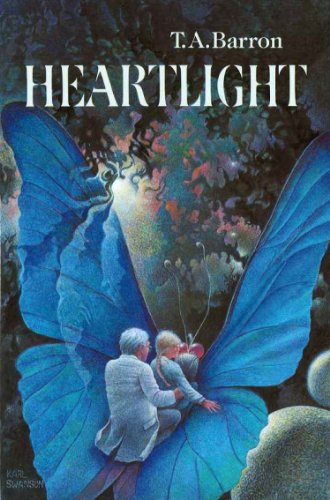
T. A. Barron links three standalone novels around a resourceful girl named Kate confronting environmental threats through fantastical means. In Heartlight, Kate and her inventor grandfather race across space to save a dying sun; in The Ancient One, she travels five centuries into the past to defend an old-growth forest from the destructive creature Gashra. The Merlin Effect completes the loosely connected set, published together as the omnibus The Heartlight Saga.
- Starship Troopers
Robert A. Heinleinstandalone novel1959
similar byadventurousscience fictioncoming of age+1 more
Starship Troopers is a military science fiction novel by American writer Robert A. Heinlein. Written in a few weeks in reaction to the US suspending nuclear tests, the story was first published as a two-part serial in The Magazine of Fantasy & Science Fiction as Starship Soldier, and published as a book by G. P. Putnam's Sons on November 5, 1959.
- Alderley
series4 books1960
similar byfantasy+1 more
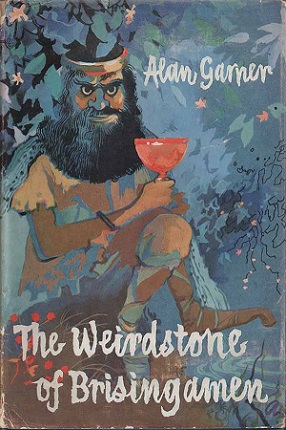
Alan Garner's Alderley books begin with The Weirdstone of Brisingamen (1960) and The Moon of Gomrath (1963), children's fantasies set around the real Cheshire hill of Alderley Edge and drawn from its local legends. Garner returned to the same setting and characters decades later in Boneland (2012), a far darker novel for adults in which the now-grown Colin, afflicted with amnesia covering his entire childhood, tries to piece together what really happened to him and his sister. The three books span most of Garner's writing life rather than forming one continuous trilogy.
- Down the Long Wind
series3 books1980
similar byfantasy+2 more
Gillian Bradshaw's Down the Long Wind trilogy retells the Arthurian legend from the perspective of Gwalchmai (Gawain), opening with Hawk of May and following him from a troubled, magic-touched childhood into Arthur's court and its wars. Kingdom of Summer and In Winter's Shadow carry the story through the reign's high point and into the betrayals that end it. Bradshaw favors a grounded, post-Roman Britain over the more overtly magical versions of the legend.
- Chrestomanci
series12 books1977
completed
similar byfantasy+3 more
Chrestomanci, sometimes branded The Worlds of Chrestomanci, is a heptalogy of children's fantasy books written by British author Diana Wynne Jones, published from 1977 to 2006. In the context of the parallel universe setting of the books, Chrestomanci refers to both the British government office that is responsible for supervising the use of magic and Chrestomanci Castle in southern England, which is both residence and headquarters.
- The Dark Is Rising
series5 books1965
similar byadventurousfantasy+2 more
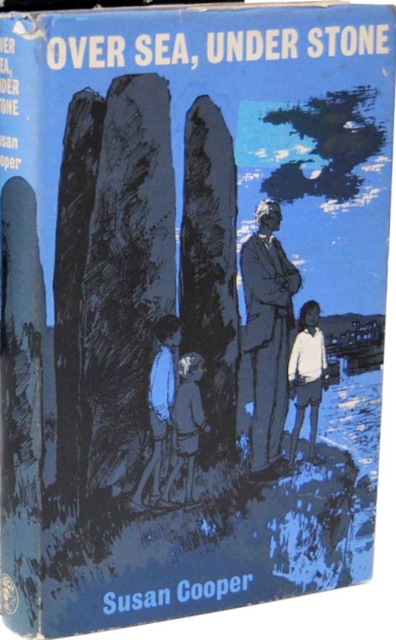
The Dark Is Rising Sequence is a series of five contemporary fantasy novels for older children and young adults that were written by the British author Susan Cooper and published from 1965 to 1977. The first book in the series, Over Sea, Under Stone, was originally conceived as a stand-alone novel, and the sequence gets its name from the second novel in the series, The Dark Is Rising. The Dark Is Rising Sequence is used as an overarching title in several omnibus, boxed-set, and coordinated editions; but the title of The Dark Is Rising is also used for the whole series.
- Howl's Castle
series3 books1986
completed
similar byadventurousfantasy+3 more
Howl's Moving Castle (1986) follows Sophie Hatter, cursed by the Witch of the Waste into an old woman's body, who takes refuge in the wandering castle of the wizard Howl and strikes an uneasy bargain with his fire demon Calcifer while trying to break the spell. Diana Wynne Jones returned to the same magical kingdom in Castle in the Air (1990), following a new lead character, Abdullah, with Sophie and Howl appearing in supporting roles, and again in House of Many Ways (2008).
- The Old Kingdom / Abhorsen milieu
series11 books1995
similar byyoung adultfantasy+1 more
The Old Kingdom, or Abhorsen in North America and the UK, is a fantasy series written by Australian author Garth Nix. It originated in 1995 with the novel Sabriel and has continued in the novels Lirael (2001), Abhorsen (2003), Goldenhand (2016), and Terciel & Elinor (2021), as well as a prequel novel titled Clariel (2014). The Old Kingdom also consists of the novella The Creature in the Case (2005) and various other short fiction.
- His Dark Materials Universe
universe13 books1995
Start hereHis Dark Materials · Start here
similar byadventurouscoming of ageyoung adultfantasy
In a world like ours and unlike it, every human soul walks outside the body in the shape of an animal — a daemon, who speaks, who cannot be lied to, and who settles into one fixed form only when childhood ends. This is the country of His Dark Materials: a company of parallel worlds across which an invisible dust of consciousness drifts down upon the waking mind; where a Church that calls itself the Magisterium would sooner sever a child's soul than let that Dust be understood; and where a golden instrument, the alethiometer, answers true questions for anyone with the patience to read it. Philip Pullman's design stands in two trilogies and a scatter of shorter tales. His Dark Materials — Northern Lights (published in America as The Golden Compass), The Subtle Knife, and The Amber Spyglass — carries Lyra Belacqua from the rooftops of a shadow Oxford across the borders between worlds. The Book of Dust returns to that same territory: La Belle Sauvage looks back to Lyra as an infant carried through a great flood, while The Secret Commonwealth follows her grown and less certain into adulthood, with a concluding volume closing the arc. Around them sit slim companion books — Lyra's Oxford, Once Upon a Time in the North, Serpentine — and Nicholas Wright's stage adaptation, made with Pullman's blessing. The register is grave and luminous at once, its title lifted from Milton and its quarrel drawn from Blake: a story that takes the side of curiosity, love, and the physical world against any authority that would forbid them. It reads as adventure — armoured bears, aeronauts, knife-cut windows between skies — yet reasons like philosophy. Begin with Northern Lights / The Golden Compass and read the first trilogy through before turning to The Book of Dust, which deepens everything the first has already made you feel.
- Podkayne of Mars
Robert A. Heinleinstandalone novel1963
similar byadventurousscience fictioncoming of ageyoung adult
From the back cover of the Baen 1995 edition: "Meet Podkayne Fries, a thoroughly modern Martian Ms. who thinks that Earth is not really fit for habitation and that humanity evolved in the now-exploded Fifth Planet. Poddy has one goal in life, to be the first female starship captain. She has her strategy all scoped out, and with her determination, looks and I.Q. she'll get there, never you doubt! But all work and no play would make Poddy a Dull Girl, so when a chance comes her way to travel to distant Earth via Venus with her elderly uncle, Poddy jumps at it, even if it does mean having her loathsome little brother along for the trip: Travel, Adventure, the chance to cuddle up (in a nice way) with real spaceship officers and ruthlessly pump their brains - she'll have it all. What Poddy doesn't know is that "Unca Tom" is more than her warmly supportive relative: he is also the Ambassador Plenipotentiary from Mars to the Three Planets Conference (travelling not quite incognito enough) and that certain people will stop at nothing to gain control of his vote - including kidnapping and doing terrible things to sweetly innocent Poddy Fries..."
- Windhaven
series4 books1975
similar byscience fiction+2 more
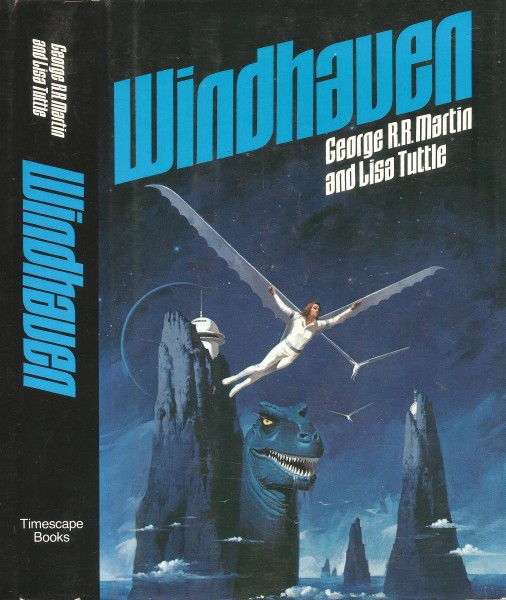
George R.R. Martin and Lisa Tuttle's Windhaven is set on a storm-wracked ocean world settled by shipwrecked colonists, whose descendants have adapted lightweight metal wings salvaged from their crashed ship into gliders used by a hereditary caste of flyers who carry messages and news between isolated island communities. The novel follows a commoner who fights to win a set of wings for herself against a tradition that says they should only pass down through flyer bloodlines. It was assembled as a fix-up from three novellas the authors wrote together across the 1970s.
- Starman Jones
Robert A. Heinleinstandalone novel1953
similar byadventurousscience fictioncoming of ageyoung adult
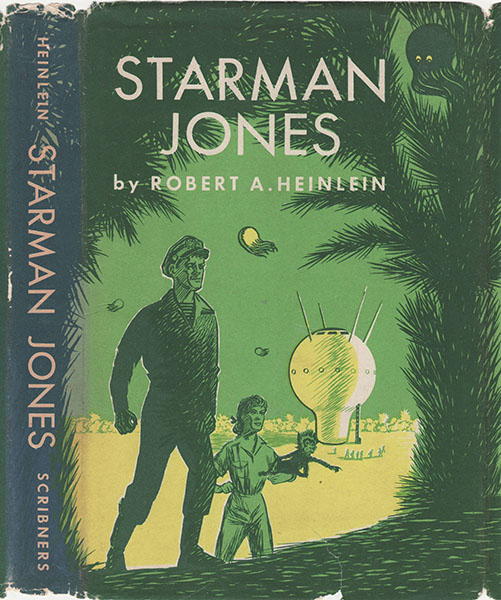
Starman Jones, a 1953 science fiction novel by Robert A. Heinlein, features a farm boy who wants to go to the stars. Charles Scribner's Sons published the book as part of the Heinlein juveniles series.
- Red Planet
Robert A. Heinleinstandalone novel1949
similar byadventurousscience fictioncoming of age
A boy colonist on Mars takes his bouncing ball Martian pet with him to boarding school, but the new Headmaster is a controlling tyrant. Things get worse when he discovers a plot that will jeopardize all of the colonists.
- Farmer in the Sky
Robert A. Heinleinstandalone novel1950
similar byadventurousscience fictioncoming of ageyoung adult
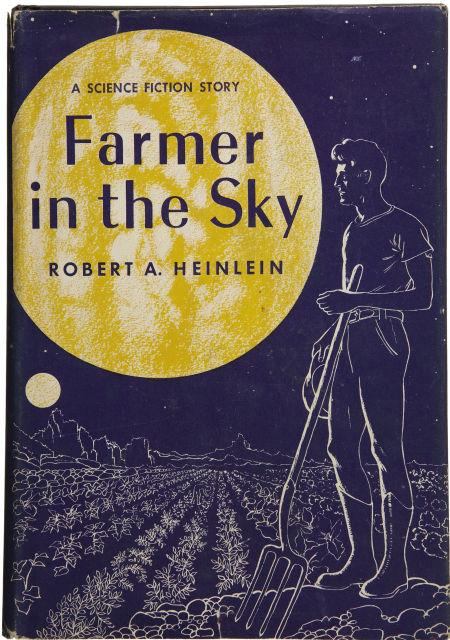
A family emigrates to the new colony on Ganymede, but the existing colonists do not have the resources to support a flood of immigrants. The teenage son, a boy scout, works to invigorate their barren holding without any technological support. Things come to a head when disaster strikes.
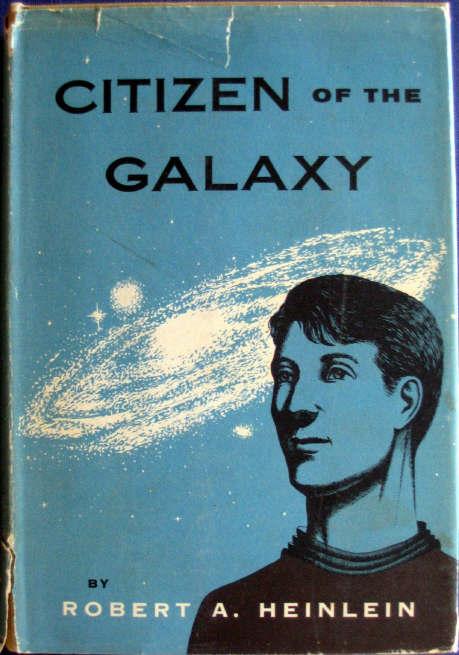
- Citizen of the Galaxy
Robert A. Heinleinstandalone novel1957
similar byadventurousscience fictioncoming of age+1 more
On a planet far distant from Earth, a lame beggar buys a young boy slave who has forgotten his origins. The beggar is more than he seems, and gives the boy an extensive education while employing him as an observer of activity in their city. Years later, the beggar is captured by the government, and the youth must escape the planet.
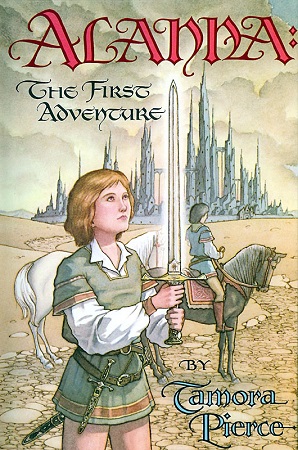
- Song of the Lioness
series5 books1983
part of Tortall
similar byadventurouscoming of ageyoung adultfantasy
The Song of the Lioness is a young adult series of fantasy novels published in the 1980s by Tamora Pierce. The series consists of four books: Alanna: The First Adventure (1983), In the Hand of the Goddess (1984), The Woman Who Rides Like a Man (1986) and Lioness Rampant (1988).
- Ready Player One
series3 books2011
similar byadventurousscience fiction+2 more
Ernest Cline's Ready Player One (2011) is set in a near-future dystopia where much of humanity escapes into the OASIS, a vast virtual-reality universe, and follows teenager Wade Watts as he chases an Easter egg hidden by the OASIS's late creator in a puzzle-based hunt worth a fortune. The 2020 sequel, Ready Player Two, picks up after Wade has gained control of the OASIS and follows him and his friends into a new quest built around a brain-computer interface the creator left behind.
- Damar
series6 books1982
similar byadventurouscoming of agefantasy+1 more
Robin McKinley's Damar novels are set in a desert kingdom threatened by invasion from the north. The Blue Sword follows Harry Crewe, an orphaned outsider drawn into the Hillfolk's magic and their war; The Hero and the Crown, a Newbery Medal-winning prequel, tells how the earlier book's legendary dragon-slayer Aerin earned her place in Damar's history. The two novels can be read in either order and were written eight years apart.
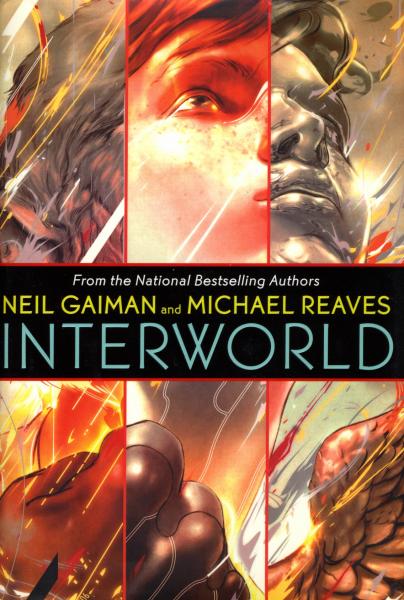
- InterWorld
series3 books2007
similar byadventurousscience fictioncoming of ageyoung adultfantasy
InterWorld follows Joey Harker, an ordinary teenager who discovers he can walk between parallel Earths and is recruited into a band of alternate versions of himself defending the multiverse from two rival forces, one of magic and one of science, that want to conquer every reality. Michael Reaves developed the story with Neil Gaiman, and Reaves's daughter Mallory Reaves co-wrote the two sequels. It's a fast-moving, portal-hopping adventure aimed at younger readers rather than a slow-burn epic.
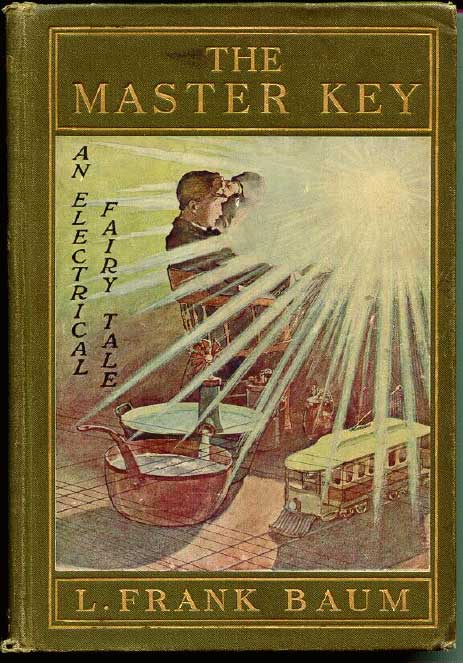
- The Master Key: An Electrical Fairy Tale
L. Frank Baumstandalone novel1901
similar byscience fictioncoming of age+3 more
Rob Joslyn is an amateur electrical tinkerer, wiring up batteries and motors with more enthusiasm than skill, when one bungled experiment does something no wiring diagram predicted: it summons the Demon of Electricity. Impressed rather than angry, the Demon offers Rob an extraordinary deal -- three gifts a week for three weeks, devices harnessing electrical power beyond anything on Earth -- and leaves the boy to decide what to do with power most adults could never be trusted with. What follows tests Rob's judgment as much as his ingenuity, gift by increasingly dangerous gift. L. Frank Baum's venture into science fiction, published between Oz books.