More like Ananke
anchored on:science fictionfar futurehard science fictionartificial intelligencemarstense
but
- Pandora
series4 books1966
similar byartificial intelligencefar futurescience fiction+2 more
The Pandora Sequence opens with Frank Herbert's solo novel Destination: Void, in which a starship crew must jury-rig a working artificial consciousness after their vessel's control systems fail. Bill Ransom co-writes the three novels that follow, carrying the survivors to the world Pandora, where they must contend with both a manipulative machine intelligence and the planet's own hostile ecology. Across its four books the series moves from a claustrophobic ship-bound crisis to a generations-long struggle over faith, control, and survival on a dangerous new world.
- Berserker (Fred Saberhagen)
series59 books1963
similar byartificial intelligencetensefar futurescience fiction
The Berserker series is a series of space opera science fiction short stories and novels by Fred Saberhagen, in which robotic self-replicating machines strive to destroy all life.
- Blindsight / Firefall
series3 books2006
similar byartificial intelligencetensescience fictionhard science fictionfar future
Blindsight sends a crew of radically modified posthumans (including a resurrected, genetically restored vampire) out to the Oort cloud after humanity detects an alien signal, only to make contact with something intelligent, wildly capable, and possibly not conscious at all — a first-contact story built around the question of whether self-awareness is actually useful. Peter Watts's Echopraxia is a same-timeframe "sidequel" rather than a direct sequel, following different characters through the fallout of the same first-contact event.
- Singularity Sky
series2 books2003
similar byartificial intelligencetensefar futurescience fiction+1 more
Singularity Sky and its sequel Iron Sunrise are collectively known as the Eschaton novels, after the godlike posthuman intelligence that seeded human colonies across space on the condition they never attempt time travel or threaten causality - rules tested when a low-tech colony world is destabilized by a group calling itself the Festival. Charles Stross uses the setup for a mix of space opera, economics, and diplomatic intrigue.
- The Moon Is a Harsh Mistress
Robert A. Heinleinstandalone novel1966
similar byartificial intelligencefar futurescience fiction+1 more
A technician discovers that the massive computer that operates everything on Luna (a prison colony) has become self-aware. He befriends it, but when he accompanied a beautiful girl to a dissident meeting, he encounters people who want to throw off the yoke of their Earth rulers.
- Ian Cormac
series6 books2001
part of Polity
similar byartificial intelligencetensefar futurescience fiction
Neal Asher's Ian Cormac novels (Gridlinked, The Line of Polity, Brass Man, Polity Agent, Line War, plus the earlier-set prequel Shadow of the Scorpion) follow Ian Cormac, an agent of Earth Central Security in Asher's Polity universe. Gridlinked opens with Cormac investigating a destroyed matter-transmitter on a remote colony while wrestling with the personality erosion caused by long-term neural linkage to the Polity's AI network; the following novels escalate into interstellar conflict with the alien Prador. Together they form the core action sequence of Asher's wider Polity series.
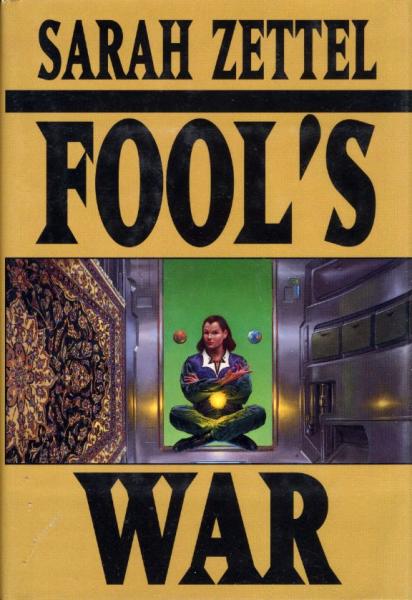
- Fool's War
Sarah Zettelstandalone novel1997
similar byartificial intelligencetensefar futurescience fictionspaceship+1 more
The Pasadena is a mail-packet ship, time-shared by two owners who alternate missions: the devout Muslim Al Shei, and her database hacker brother-in-law. While on a data-freight mission, Al Shei finds herself with a crew preoccupied by artificial intelligence: her comm chief Lipinksi has a deep fear and hatred for AI's as one of the few survivors of the rogue AI which devistated Kerensk; the new pilot Jemina Yerusha is a Freer who believes that rogue AIs form when a simple AI program captures a human soul; Master Fool Evelyn Dobbs is a Fools Guild member who has a secret agenda concerning rogue AIs; and Al Shei's brother-in-law, wanted by authorities concerning his last mission, may have accidentally left something dangerous in the data hold.
- Fifth Imperium
series3 books1991
similar byartificial intelligencetensefar futurescience fiction
David Weber's Fifth Imperium series opens with the discovery that Earth's Moon is in fact a disguised alien starship, the Dahak, that has orbited undetected for tens of thousands of years - a relic of the fallen Fourth Imperium, a multi-star civilization destroyed while defending against the genocidal Achuultani. Mutineers' Moon follows humanity's first contact with Dahak and the mutineers still aboard it; The Armageddon Inheritance and Heirs of Empire escalate from that discovery into interstellar war and dynastic politics as humanity inherits the old empire's legacy and its enemies. The three novels were later collected as the omnibus Empire from the Ashes.
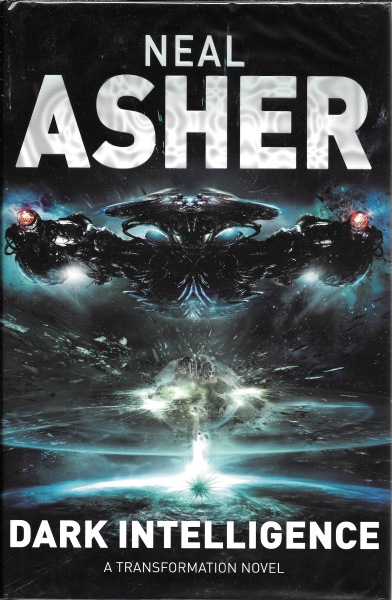
- Transformation
series3 books2015
part of Polity
similar byartificial intelligencetensefar futurescience fiction
Neal Asher's Transformation trilogy, set within his wider Polity universe, follows an AI mind investigating a black-ops project gone wrong, opening with Dark Intelligence. War Factory and Infinity Engine escalate the search into a hunt across a mechanized alien warzone left behind by an earlier conflict. As with Asher's other Polity fiction, the story favors large-scale, hard-edged space combat over character-driven drama.
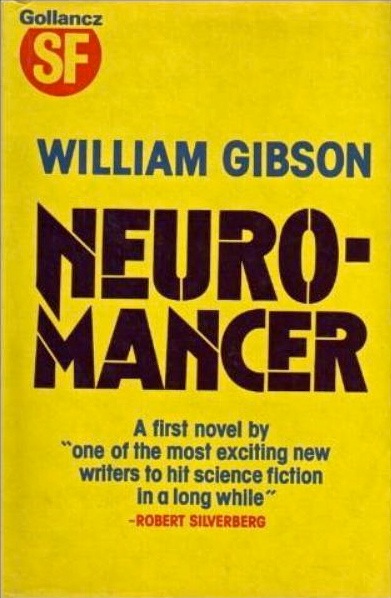
- Sprawl Trilogy
series10 books1981
similar byartificial intelligencetensescience fiction
The Sprawl Trilogy is William Gibson's foundational cyberpunk sequence: Neuromancer (1984), in which hacker Case is drawn into a high-stakes heist alongside an artificial intelligence and a damaged ex-soldier, followed by Count Zero (1986) and Mona Lisa Overdrive (1988), which widen the same near-future world of corporate power and networked cyberspace to new characters. Johnny Mnemonic, an early short story set in the same fictional milieu, predates the novels and introduces the courier Molly Millions before her role in the trilogy. Together these works established much of cyberpunk's visual and thematic vocabulary.
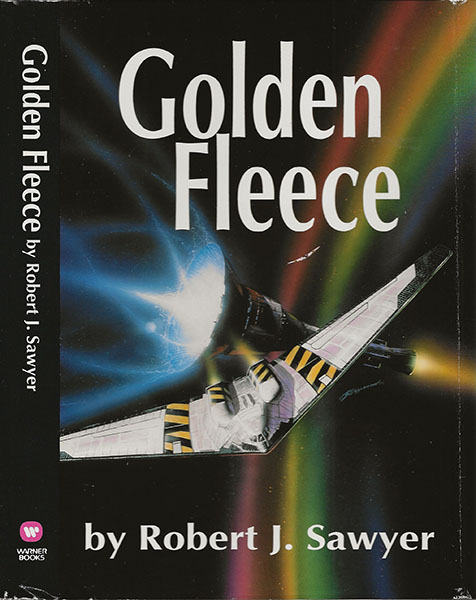
- Golden Fleece
Robert J. Sawyerstandalone novel1990
similar byartificial intelligencetensefar futurescience fictionspaceship
From the back cover of the Questar first edition: "Murder in space - Starcolony Argo. A superstarship on a mission to a distant world. Controlled by a monumental computer named Jason, the Argo proceeds flawlessly... until death strikes its sleek decks with sudden and mysterious precision. Astrophysicist Diana Chandler is dead of radiation. Her body lies in Argo's ramfield - where hydrogen ions are funneled into the engines. Chandler's death has been deemed suicide. But her ex-husband, Aaron Rossman, is so sure. As the probes further, he becomes certain that Diana's death is a matter of murder - and that the murderer is Jason! Now Rossman must face the unthinkable; why would an artificial intelligence conceive and execute the most heinous of human crimes? And if so, can a mortal mind take on a cunning computer... and survive?"
- Embers of War
series5 books2018
similar byartificial intelligencetensefar futurescience fiction+1 more
- Lightless
series3 books2015
similar byartificial intelligencetensefar futurescience fictionspaceship+1 more
- Imperial Radch
series7 books2012
part of Radchaai Universe
similar byartificial intelligencefar futurescience fiction+2 more
Ann Leckie's Imperial Radch trilogy (Ancillary Justice, Ancillary Sword, Ancillary Mercy, 2013-2015) follows Breq, the sole surviving fragment of an AI that once inhabited both a troop-transport starship and dozens of soldier bodies, now alone and hunting for revenge inside the vast, expansionist Radch empire. Breq's quest widens across the trilogy into a conflict with the empire's own fractured ruler, and the books use her alien difficulty perceiving gender to unsettle the space-opera conventions around her.
- Reclamation
Sarah Zettelstandalone novel1996
similar byartificial intelligencetensefar futurescience fiction
From the back cover of the Warner first edition: "Heretic priest turned data pirate, Eric Born has run from his past for years. Then his steady clients—a self-proclaimed master race called the Vitae—kidnap a mysterious pariah named Arla Stone from the Realm of the Nameless, the shattered, pre-technological planet Eric fled long ago. Priest and peasant plunge into a mystery mixing myth, genetics, artifacts, aliens, AIs, slavery, and Reclamation. Now Eric is on the run from his own masters, and even his telekinetic abilities and Arla's wits may not be enough to save them..."
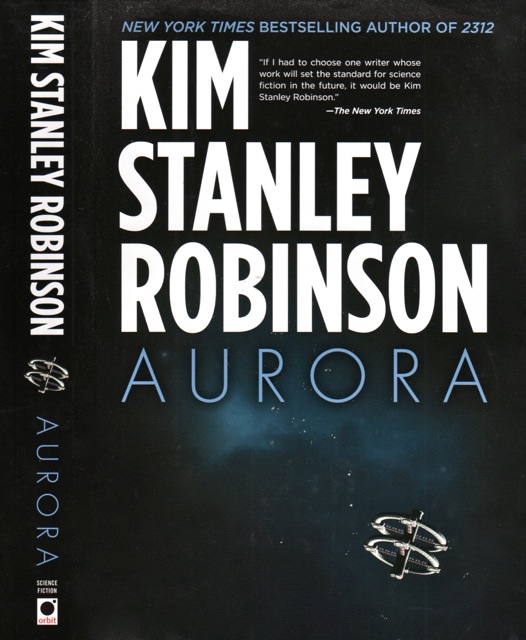
- Aurora
Kim Stanley Robinsonstandalone novel2015
similar byartificial intelligencefar futurescience fictionhard science fictionspaceship
Aurora is a 2015 novel by American science fiction author Kim Stanley Robinson. The novel concerns a generation ship built in the style of a Stanford torus, traveling to Tau Ceti to start a human colony. The novel's primary narrative voice is that of the starship's artificial intelligence. Aurora was well received by critics.
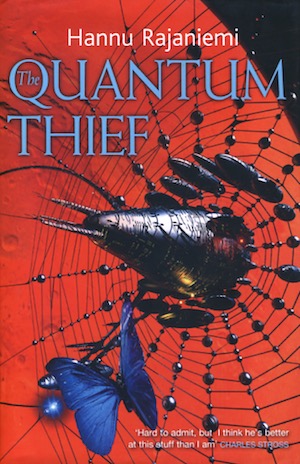
- Jean le Flambeur
series3 books2010
similar byartificial intelligencefar futurescience fictionhard science fiction+1 more
Jean le Flambeur is a master thief broken out of a virtual prison to pull off one more impossible heist, in a solar system reshaped by uploaded minds, post-human factions, and economies built on memory and privacy themselves. Hannu Rajaniemi's trilogy - The Quantum Thief, The Fractal Prince, The Causal Angel - is dense, idea-heavy hard SF that trusts readers to piece its future together from context rather than exposition.
- Rise of the Jain
series3 books2018
part of Polity
similar byartificial intelligencetensefar futurescience fiction
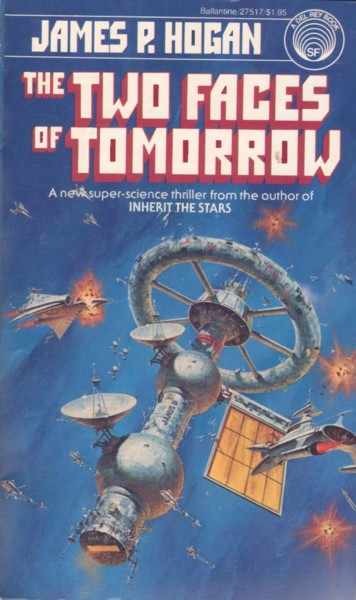
- The Two Faces of Tomorrow
James P. Hoganstandalone novel1979
similar byartificial intelligencetensescience fictionhard science fiction
From the back cover: SURVIVAL TEST Civilization had grown so complex that only a world-wide computer network could control everything. But the computer was only logical -- it lacked common sense. And its all-too-logical decisions were beginning to cause too many near fatal accidents. The solution was on the drawing boards -- a universal self-aware and self-programming computer, equipped with judgment. But... could it be controlled? Or would it attempt to take over, disregarding its creators? If so, could it be turned off? Raymond Dyer and his team of computer specialists knew they had to find answers to these questions, but the project was to dangerous to test on Earth. So they installed the super computer on an orbiting satellite and programmed it to survive at all costs. Then they sent a group of men to attack the computer... to goad it into trying to kill them. They they would turn it off. Obviously if things went wrong, they might lose a few men -- but the satellite and the computer could always be destroyed. Obviously... But the computer didn't quite see it that way!
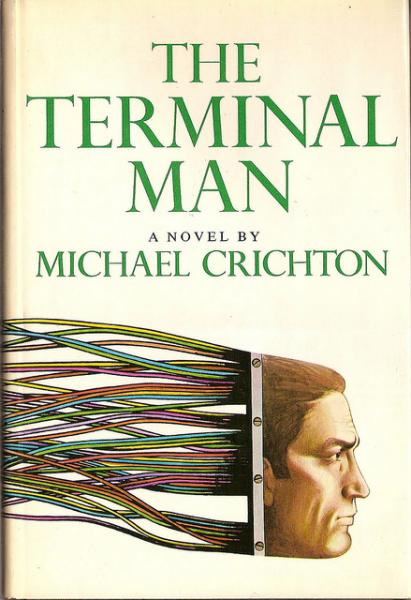
- The Terminal Man
Michael Crichtonstandalone novel1972
similar byartificial intelligencetensescience fiction
The Terminal Man is a novel by American writer Michael Crichton. It is his second novel under his own name, his 12th overall, and is about the dangers of mind control. It was published in April 1972 and also serialized in Playboy in March, April, and May 1972. In 1974, it was made into a film of the same name.
- Living Hell
Catherine Jinksstandalone novel2007
similar byartificial intelligencetensefar futurescience fictionspaceship
Chronicles the transformation of a spaceship into a living organism, as seventeen-year-old Cheney leads the hundreds of inhabitants in a fight for survival while machines turn on them, treating all humans as parasites.
- The Turing Option
Harry Harrison & Marvin Minskystandalone novel1992
similar byartificial intelligencetensescience fictionhard science fiction
Classic SF Harry Harrison enthralls with the discovery, loss and re-discovery of AI. Quaint but fairly accurate predictions of modern computing power. 24 style presentation.
- Unwise Child
Randall Garrettstandalone novel1962
similar byartificial intelligencetensescience fictionspaceship
"When a super-robot named Snookums discovers how to build his own superbombs, it becomes obvious that Earth is by no means the safest place for him to be. And so Dr. Fitzhugh, his designer, and Leda Crannon, a child psychologist acting as Snookums' nursemaid, agree to set up Operation Brainchild, a plan to transport the robot to a far distant planet. "... once into space, the Branchell becomes the scene of some frightening events—the medical officer is murdered, and Snookums appears to be the culprit. Mike the Angel indulges himself in a bit of sleuthing, and the facts he turns up lead to a most unusual climax." (From Project Gutenberg's version of the 1962 Doubleday edition, published 2007.)