More like Berbora
but
- The Lord of the Rings
series13 books1954
part of Tolkien's legendarium
similar by+2 more
The Lord of the Rings is an epic high fantasy novel written by the English author and scholar J. R. R. Tolkien. Set in Middle-earth, the story began as a sequel to Tolkien's 1937 children's book The Hobbit but eventually developed into a much larger work. Written in stages between 1937 and 1949, The Lord of the Rings is one of the best-selling books ever written, with over 150 million copies sold.
- The Hobbit
series2 books1937
completed
part of Tolkien's legendarium
similar byadventurousfantasy
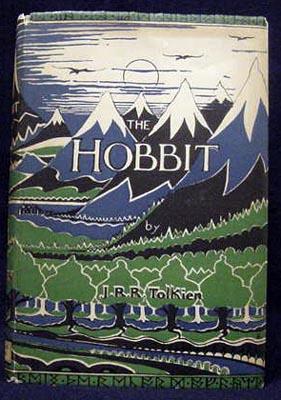
The Hobbit (1937) is J. R. R. Tolkien's children's fantasy novel following the reluctant burglar Bilbo Baggins, who joins a company of dwarves and the wizard Gandalf on a journey to reclaim treasure guarded by the dragon Smaug. It stands as a complete adventure on its own, but shares its setting with the rest of Tolkien's legendarium and leads into the events of The Lord of the Rings.
- Restoree
Anne McCaffreystandalone novel1967
similar byadventurousscience fiction+1 more
Torn from Earth by a bizarre and nameless black force, Sara has no idea where she is or why she inhabits a beautiful new body. Controlled by brutal guards and tamed by terror, she can not comprehend her role as a nurse for a man who appears to be an idiot. She discovers that the planet she had been brought to was Lothar and that the man she was caring for was its Regent, Sara knows the restorees had to escape. When they do, they become fugitives on a world of multiple evils. (adapted from the back cover of the Baen edition)
- Earthsea Cycle
series18 books1964
completed
part of Earthsea
similar byfantasy
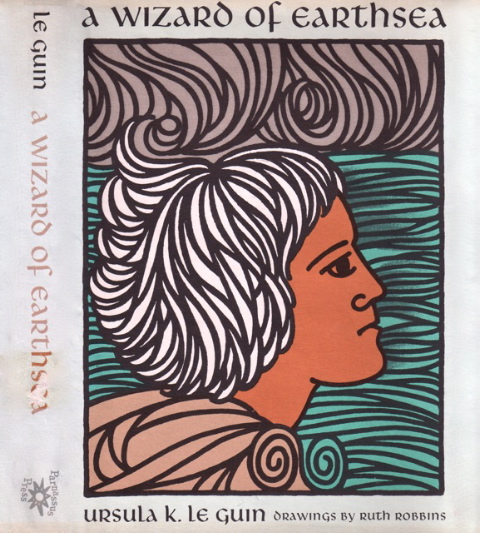
The Earthsea Cycle, also known as Earthsea, is a series of high fantasy books written by American author Ursula K. Le Guin. Beginning with A Wizard of Earthsea (1968), The Tombs of Atuan (1970), and The Farthest Shore (1972), the series was continued in Tehanu (1990), and Tales from Earthsea and The Other Wind. In 2018, all the novels and short stories were published in a single volume, The Books of Earthsea: The Complete Illustrated Edition, with artwork by Charles Vess.
- Narnia
series26 books1950
part of Narnia Universe
similar byadventurousfantasy
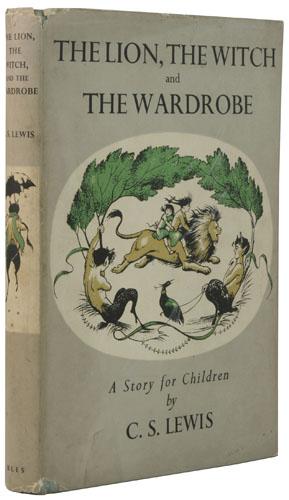
The Chronicles of Narnia is a series of seven portal fantasy novels by British author C. S. Lewis. Illustrated by Pauline Baynes and originally published between 1950 and 1956, the series is set in the fictional realm of Narnia, a fantasy world of magic, mythical beasts, and talking animals. It narrates the adventures of various children who play central roles in the unfolding history of the Narnian world. Except in The Horse and His Boy, the protagonists are all children from the real world who are magically transported to Narnia, where they are sometimes called upon by the lion Aslan to protect Narnia from evil. The books span the entire history of Narnia, from its creation in The Magician's Nephew to its eventual destruction in The Last Battle.
- Roadmarks
Roger Zelaznystandalone novel1979
similar byadventurousscience fiction+1 more
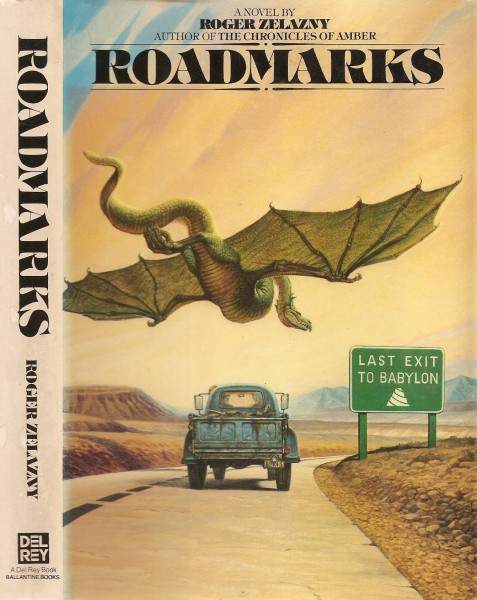
Roadmarks is a science fantasy novel by American author Roger Zelazny, written during the late 1970s and published in 1979.
- Barsoom
series53 books1917
similar byadventurousscience fiction
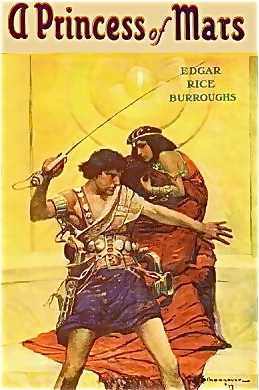
Barsoom is a fictional representation of the planet Mars created by American pulp fiction author Edgar Rice Burroughs. The first Barsoom tale was serialized as Under the Moons of Mars in pulp magazine The All-Story from February to July 1912 and published compiled as a novel as A Princess of Mars in 1917. It features John Carter, a late-19th-century American Confederate veteran who is mysteriously transported from Earth to the dying world of Mars where he meets and romances the beautiful Martian princess Dejah Thoris. Ten sequels followed over the next three decades, further extending his vision of Barsoom and adding other characters.
- A Song of Ice and Fire
series14 books1996
part of World of Ice and Fire
similar byfantasy
A Song of Ice and Fire is a series of high fantasy novels by the American author George R. R. Martin. Martin began writing the first volume, A Game of Thrones, in 1991, and published it in 1996. Martin, who originally envisioned the series as a trilogy, has released five out of seven planned volumes. The most recent entry in the series, A Dance with Dragons, was published in 2011. Since then, Martin has been working on the sixth novel, titled The Winds of Winter. A seventh novel, A Dream of Spring, is planned to follow.
- His Dark Materials Universe
universe13 books1995
Start hereHis Dark Materials · Start here
similar byadventurousfantasy
In a world like ours and unlike it, every human soul walks outside the body in the shape of an animal — a daemon, who speaks, who cannot be lied to, and who settles into one fixed form only when childhood ends. This is the country of His Dark Materials: a company of parallel worlds across which an invisible dust of consciousness drifts down upon the waking mind; where a Church that calls itself the Magisterium would sooner sever a child's soul than let that Dust be understood; and where a golden instrument, the alethiometer, answers true questions for anyone with the patience to read it. Philip Pullman's design stands in two trilogies and a scatter of shorter tales. His Dark Materials — Northern Lights (published in America as The Golden Compass), The Subtle Knife, and The Amber Spyglass — carries Lyra Belacqua from the rooftops of a shadow Oxford across the borders between worlds. The Book of Dust returns to that same territory: La Belle Sauvage looks back to Lyra as an infant carried through a great flood, while The Secret Commonwealth follows her grown and less certain into adulthood, with a concluding volume closing the arc. Around them sit slim companion books — Lyra's Oxford, Once Upon a Time in the North, Serpentine — and Nicholas Wright's stage adaptation, made with Pullman's blessing. The register is grave and luminous at once, its title lifted from Milton and its quarrel drawn from Blake: a story that takes the side of curiosity, love, and the physical world against any authority that would forbid them. It reads as adventure — armoured bears, aeronauts, knife-cut windows between skies — yet reasons like philosophy. Begin with Northern Lights / The Golden Compass and read the first trilogy through before turning to The Book of Dust, which deepens everything the first has already made you feel.
- Almuric
series1 book1964
similar byadventurousfantasy+1 more
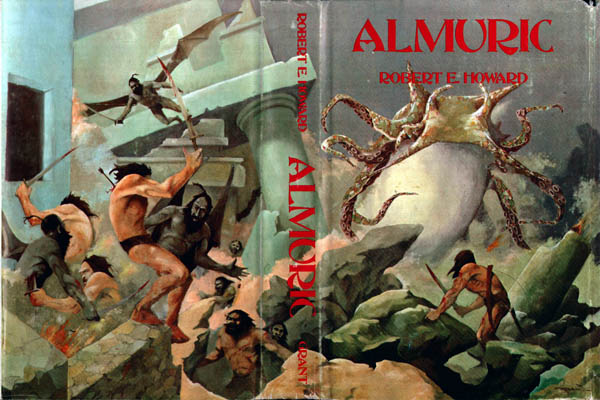
Published posthumously in 1964, Robert E. Howard's Almuric is a single planetary-romance novel rather than an ongoing series: Earthman Esau Cairn is transported to the savage world of Almuric, where he fights beast-men and wins the love of Altha, in a story indebted to Edgar Rice Burroughs' Barsoom books.
- His Dark Materials
series8 books1995
part of His Dark Materials Universe
similar byadventurousfantasy+1 more
His Dark Materials is a trilogy of fantasy novels by Philip Pullman consisting of Northern Lights, The Subtle Knife (1997), and The Amber Spyglass (2000). It follows the coming of age of two children, Lyra Belacqua and Will Parry, as they wander through a series of parallel universes. The novels have won a number of awards, including the Carnegie Medal in 1995 for Northern Lights and the 2001 Whitbread Book of the Year for The Amber Spyglass. In 2003, the trilogy was ranked third on the BBC's The Big Read poll.
- Stephen King multiverse
universe46 books1967
Start hereThe Gunslinger · Start here
similar by+1 more
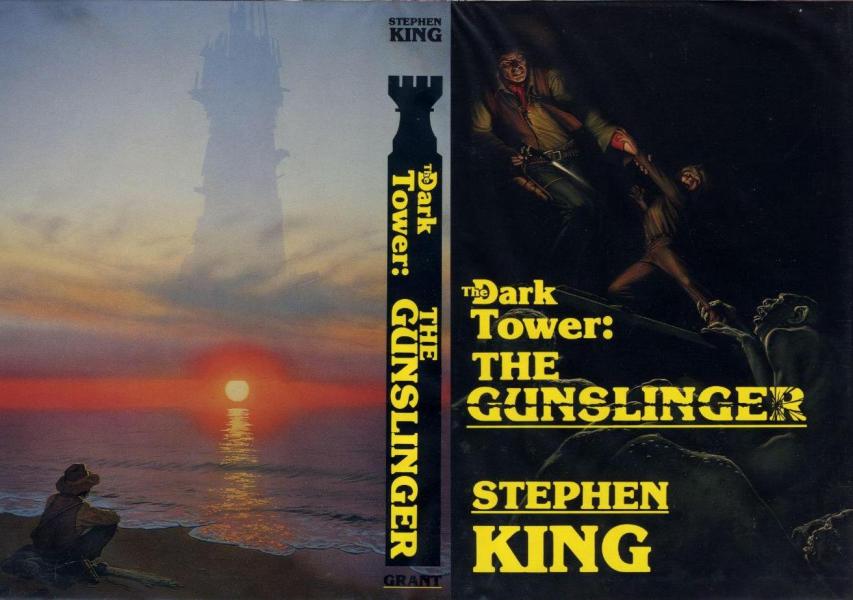
The man in black fled across the desert, and the gunslinger followed. So begins the long walk of Roland Deschain, last of an order of knight-errant pistoleers, across a land that has "moved on" — where the compass points drift, dead machines rot toward sentience, and the weave of what's real wears thin. His quest is the Dark Tower itself: a spire standing at the hub of every world that exists, the linchpin that holds all of them back from ruin. Roland's road runs eight volumes, from The Gunslinger through the closing Dark Tower, with the later, interleaved tale The Wind Through the Keyhole folding a story-within-a-story back into his youth. Along the way he draws a ka-tet — a fellowship bound by fate, not choosing — through doorways between worlds: a heroin-shackled New Yorker, a woman of two minds, a boy who dies twice. The Tower is also the secret axle around which the wider shelf of King's work turns; threads from The Stand, 'Salem's Lot and beyond wind quietly toward it. Expect a mongrel of Western, high fantasy, horror and decayed science fiction, told in a dusty, incantatory dialect all its own — ka, thankee-sai, the world that has moved on. This is King at his most mythic and most personal, a decades-spanning circle that rewards a patient reader. Begin at the beginning: The Gunslinger, then walk forward in publication order. There are other worlds than these — but this door opens first.
- Discworld
universe84 books1983
Start hereGuards! Guards! · Start here
similar byfantasy
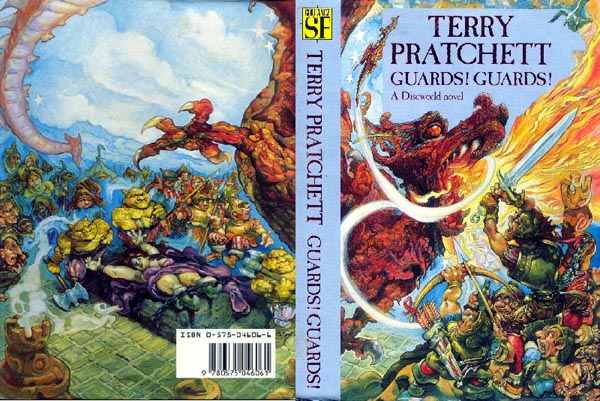
The Disc is flat. It rides on the backs of four elephants, who in turn stand on the shell of Great A'Tuin, a turtle ten thousand miles long, swimming through space toward nowhere in particular. Magic works here, usually badly. Death speaks IN SMALL CAPITALS and rides a horse called Binky. It looks like a fantasy world and behaves like ours with the safety catch off: a mirror held up to bureaucracy, belief, newspapers, money, war, and the ridiculous, stubborn business of being a person. One hand shaped all of it — Terry Pratchett — across forty-one novels and a shelf of companions, maps, and the Science of Discworld books. The world is braided from strands you can pick up on their own. Rincewind, the cowardly wizard, flees across the Disc (The Colour of Magic). The witches of Lancre, led by the formidable Granny Weatherwax, mind everyone's business (Equal Rites, Wyrd Sisters). Death takes on an apprentice (Mort). The City Watch polices grimy Ankh-Morpork under Commander Vimes (Guards! Guards!). A reformed swindler is given honest work at swordpoint (Going Postal), and young Tiffany Aching learns witching alongside the tiny, larcenous Nac Mac Feegle (The Wee Free Men). Standalones like Small Gods sit apart. The trick of it is that the farce turns, mid-joke, into something that catches in the throat, with footnotes that argue back at the page. Newcomers are gently steered away from the beginning: the early Rincewind books spoof a genre you needn't have read. Enter instead by whichever strand calls — Guards! Guards! for the Watch, Mort for Death, Wyrd Sisters for the witches, Small Gods entirely alone, or The Wee Free Men for the sharpest single thread. Open any door and the whole Disc opens with it.
- Estcarp
series8 books1963
completed
part of Witch World
similar by+2 more
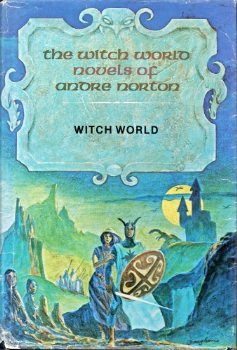
Estcarp is the founding cycle of Andre Norton's Witch World series, beginning with Witch World (1963) and continuing through books such as Web of the Witch World, Three Against the Witch World, and Sorceress of the Witch World. It is set on a world where magic long ago displaced science and, for centuries, was wielded almost exclusively by women, following outsiders and native witches who defend the ancient realm of Estcarp against rival powers from beyond its borders. Norton wrote most of the cycle alone before bringing in collaborators later in her career, as part of the wider Witch World universe.
- Birthgrave
series3 books1975
completed
similar byfantasy+1 more
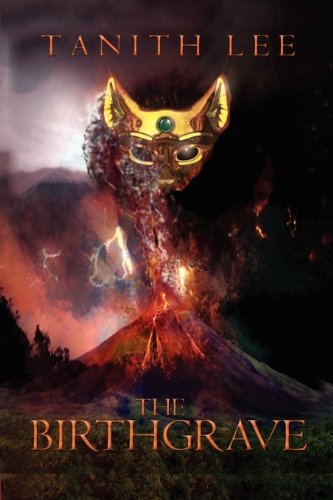
Tanith Lee's Birthgrave trilogy (The Birthgrave, Vazkor Son of Vazkor, Quest for the White Witch, 1975-1978) opens with an amnesiac woman waking inside a volcano with no memory of who she is, and follows her journey through a brutal, quasi-medieval world in search of her identity, wielding strange powers she doesn't understand along the way. She eventually learns she is one of the last of the Old Ones, an ancient, nearly extinct people, and must reckon with the harm her own vanished civilization once did.
- Zimiamvian Trilogy
series4 books1922
completed
similar byfantasy
The Zimiamvian Trilogy is a series of fantasy novels by English author E. R. Eddison.Mistress of Mistresses (1935) A Fish Dinner in Memison (1941) The Mezentian Gate (1958)
- Tailchaser's Song
Tad Williamsstandalone novel1985
similar byadventurousfantasy+1 more
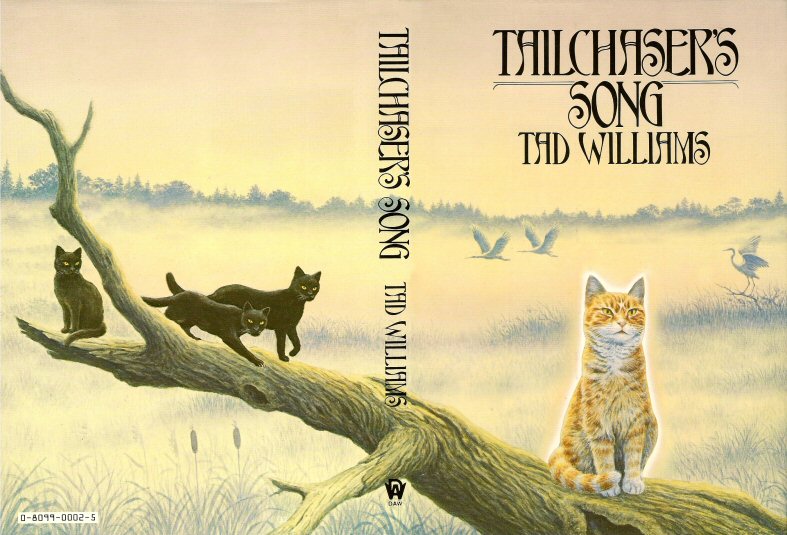
Tailchaser's Song is a fantasy novel by American writer Tad Williams. First released on November 21, 1985, it is Williams' first published work.
- Stardust
Neil Gaimanstandalone novel1998
similar byadventurousfantasy
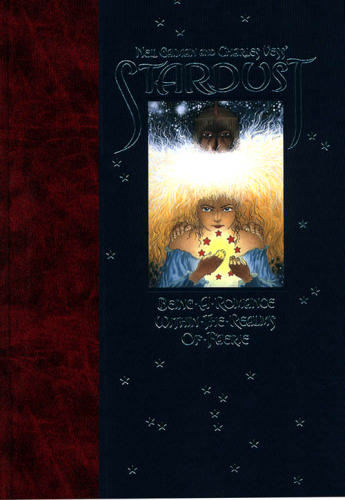
Stardust is a 1999 fantasy novel by British writer Neil Gaiman, usually published with illustrations by Charles Vess. Stardust has a different tone and style from most of Gaiman's prose fiction, being consciously written in the tradition of pre-Tolkien English fantasy, following in the footsteps of authors such as Lord Dunsany and Hope Mirrlees. It is concerned with the adventures of a young man from the village of Wall, which borders the magical land of Faerie.
- Dying Earth
series27 books1950
similar byfantasy+1 more
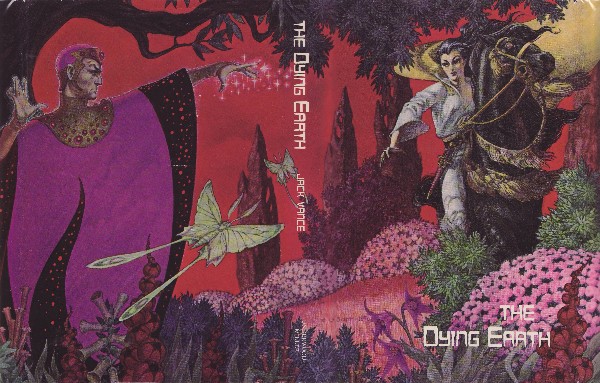
Dying Earth is a speculative fiction series by the American author Jack Vance, comprising four books originally published from 1950 to 1984. Some have been called picaresque. The series includes short story collections, fix-ups, and novels.
- Enchanted Pilgrimage
Clifford D. Simakstandalone novel1975
similar byadventurousfantasy+1 more
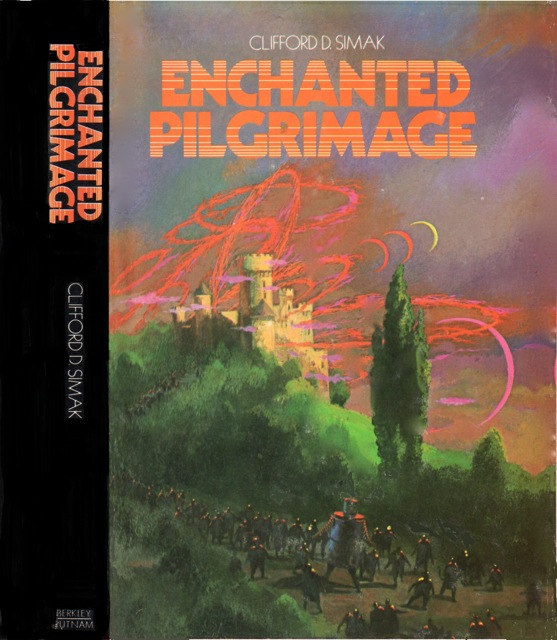
A scholar at a remote university stumbles onto a manuscript that hints at forgotten secrets buried in the Wasteland, a blighted region where magic and monsters still linger at the edge of an otherwise rational world. Setting out to track the manuscript's truth to its source, he gathers a company of odd fellow travelers along the way -- the kind of companions a quest like this tends to attract -- each with their own stake in what they might find. Clifford D. Simak folds his familiar pastoral, faintly melancholy tone into a full-blown fantasy quest, blending scholarly curiosity with old magic. A standalone fantasy novel by Clifford D. Simak.
- Peter Pan Universe
universe112 books1902
Start herePeter Pan · Start here
similar byfantasy
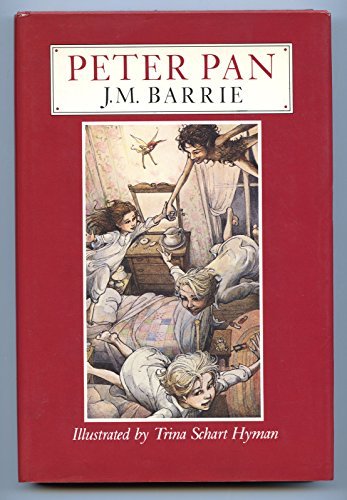
Second star to the right, and straight on till morning — and there it is, the island that every child dreams once and then, growing up, contrives to forget. Neverland: mermaids in the lagoon, a ticking crocodile with a clock in its belly, a pirate nursing his severed hand, and above it all the boy who will not grow up, forever flying, forever heartless in the lovely careless way that only children are. It begins with J. M. Barrie — the 1904 stage play, the chapters of Kensington Gardens, and the novel Peter and Wendy that fixed Peter, Wendy, Tinker Bell, Hook and the Lost Boys in place. From that small window a wide world has flown. Dave Barry and Ridley Pearson supply the how-it-all-began in their Starcatchers books, chasing falling starstuff aboard a doomed ship to explain why one orphan came to fly and never age. A whole bright shelf tends Tinker Bell's Pixie Hollow — the Disney Fairies and Fairy Haven tales, Kiki Thorpe's Never Girls — while Heidi Schulz hands the wheel to Hook's own daughter, and stranger, dimmer corners carry the island into far darker weather. Many hands, one archipelago; no single map governs them all. What sets it apart is the sweetness with a blade in it — wonder shadowed always by the ache of leaving, of mothers who keep the window open and children who fly home too late. Newcomers should begin where it began, with Barrie's Peter and Wendy, then, for the origin, take the Starcatchers books in their own order. The rest of Neverland waits, as it always does, for whoever still remembers how to reach it.
- The Princess Bride
William Goldmanstandalone novel1973
similar byadventurousfantasy
The Princess Bride: S. Morgenstern's Classic Tale of True Love and High Adventure, The "Good Parts" Version is a 1973 fantasy romance novel by American writer William Goldman. The book combines elements of comedy, adventure, fantasy, drama, romance, and fairy tale. It is metafictionally presented as an abridgment of a longer work by the fictional S. Morgenstern, and Goldman's commentary asides are constant throughout. It was originally published in the United States by Harcourt Brace, then later by Random House, while in the United Kingdom it was later published by Bloomsbury.