More like Beta Testers
anchored on:science fiction
but
- Culture
series15 books1987
completed
part of The Culture
similar byartificial intelligencescience fictionfar future+3 more
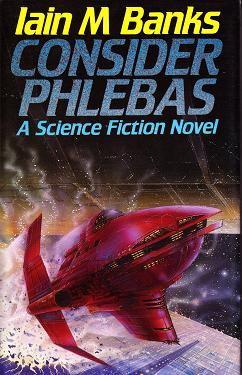
The Culture series is a science fiction series written by Scottish author Iain M. Banks and released from 1987 until 2012. The stories centre on The Culture, a utopian, post-scarcity space society of humanoid aliens and advanced superintelligent artificial intelligences living in artificial habitats spread across the Milky Way galaxy. The main themes of the series are the dilemmas that an idealistic, more-advanced civilization faces in dealing with smaller, less-advanced civilizations that do not share its ideals, and whose behaviour it sometimes finds barbaric. In some of the stories, action takes place mainly in non-Culture environments, and the leading characters are often on the fringes of the Culture, sometimes acting as agents of the Culture in its plans to civilize the galaxy. Each novel is a self-contained story with new characters, although reference is occasionally made to the events of previous novels.
- Heaven Chronicles / Zones of Thought
series8 books1976
similar byscience fictionfar futurespace+2 more
- Berserker (Fred Saberhagen)
series59 books1963
similar byartificial intelligencescience fictionfar futurespaceother star systems
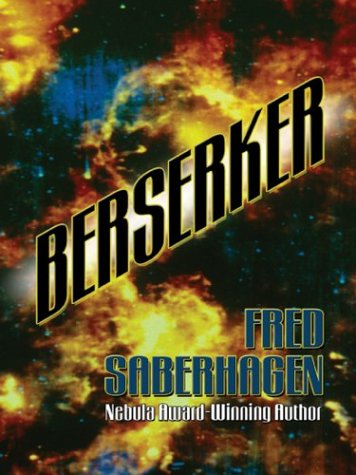
The Berserker series is a series of space opera science fiction short stories and novels by Fred Saberhagen, in which robotic self-replicating machines strive to destroy all life.
- Foundation Universe
universe123 books1940
Start hereFoundation · Start here
similar byscience fictionfar future+2 more
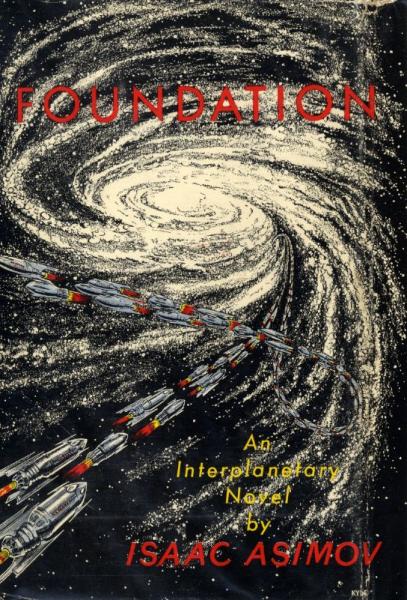
There is a science that reads the future of quadrillions the way an astronomer reads the orbits of stars. It is called psychohistory, and its equations foresee something the ruling Galactic Empire cannot admit: the throne is rotting, and thirty thousand years of barbarism are coming. One man, Hari Seldon, cannot stop the fall. He can only shorten it — by seeding a Foundation of scholars at the rim of the galaxy, a fragile institution built to carry knowledge across the dark and cut the interregnum to a single millennium. This is a universe told in the register of history itself: the long view, the calm of deep time, empires measured in centuries and men measured against them. The spine is Asimov's original trilogy — Foundation, Foundation and Empire, Second Foundation — followed decades later by the sequels Foundation's Edge and Foundation and Earth and the prequels Prelude to Foundation and Forward the Foundation. Late in life Asimov braided this in with his other future histories: the Robot novels of detective Elijah Baley and his humaniform partner R. Daneel Olivaw (The Caves of Steel, The Naked Sun, The Robots of Dawn, Robots and Empire) and the early Galactic Empire novels (Pebble in the Sky and its kin), until one continuous chronicle ran from the first thinking robots to the Second Empire. Other hands extend it — the Second Foundation Trilogy by Gregory Benford, Greg Bear, and David Brin, and shared-world spinoffs such as Robot City — so the corpus sprawls beyond a single author's tidy shelf. What distinguishes it is that the drama is intellectual: crises resolved by insight, nerve, and dialogue rather than fleets and blades, each turn hinging on the hidden logic of the Seldon Plan. Begin where readers have always begun — with Foundation, and the original trilogy in publication order. The rest opens outward from there.
- Ian Cormac
series6 books2001
part of Polity
similar byartificial intelligencescience fictionfar futurespaceother star systems+1 more
Neal Asher's Ian Cormac novels (Gridlinked, The Line of Polity, Brass Man, Polity Agent, Line War, plus the earlier-set prequel Shadow of the Scorpion) follow Ian Cormac, an agent of Earth Central Security in Asher's Polity universe. Gridlinked opens with Cormac investigating a destroyed matter-transmitter on a remote colony while wrestling with the personality erosion caused by long-term neural linkage to the Polity's AI network; the following novels escalate into interstellar conflict with the alien Prador. Together they form the core action sequence of Asher's wider Polity series.
- Harvest of Stars
series5 books1993
completed
similar byscience fictionfar futurespace+3 more
Harvest of Stars follows a spaceship captain and an interstellar power struggle across a near-future solar system where an authoritarian Earth government is losing its grip on off-world colonies and artificial intelligences with their own agendas. Poul Anderson's four-book sequence - Harvest of Stars, The Stars Are Also Fire, Harvest the Fire, The Fleet of Stars - was one of his last major works, extending across generations as its opening characters are succeeded by their descendants.
- Homecoming (Orson Scott Card)
series5 books1992
similar byscience fictionfar futureother star systems+3 more
The Homecoming Saga is a science fiction series by Orson Scott Card. The series is patterned on the Book of Mormon. Some of the names also come from the Book of Mormon.
- The Moon Is a Harsh Mistress
Robert A. Heinleinstandalone novel1966
similar byadventurousartificial intelligencescience fictionfar future
A technician discovers that the massive computer that operates everything on Luna (a prison colony) has become self-aware. He befriends it, but when he accompanied a beautiful girl to a dissident meeting, he encounters people who want to throw off the yoke of their Earth rulers.
- Hitchhiker's Guide to the Galaxy
series16 books1979
part of The Hitchhiker's Guide to the Galaxy Universe
similar byscience fictionfar futurespace+1 more
The Hitchhiker's Guide to the Galaxy is a comedy science fiction franchise created by Douglas Adams. Originally a radio sitcom broadcast over two series on BBC Radio 4 between 1978 and 1980, it was soon adapted to other formats, including both novels and comic books, a 1981 BBC television series, a 1984 text adventure game, stage shows and a 2005 feature film.
- Fifth Imperium
series3 books1991
similar byadventurousartificial intelligencescience fictionfar futurespace+1 more
David Weber's Fifth Imperium series opens with the discovery that Earth's Moon is in fact a disguised alien starship, the Dahak, that has orbited undetected for tens of thousands of years - a relic of the fallen Fourth Imperium, a multi-star civilization destroyed while defending against the genocidal Achuultani. Mutineers' Moon follows humanity's first contact with Dahak and the mutineers still aboard it; The Armageddon Inheritance and Heirs of Empire escalate from that discovery into interstellar war and dynastic politics as humanity inherits the old empire's legacy and its enemies. The three novels were later collected as the omnibus Empire from the Ashes.
- 2312
Kim Stanley Robinsonstandalone novel2012
similar byscience fictionfar futurespaceother star systems+2 more
In the eponymous year, when Earth's ecology is degraded and humanity has settled throughout the solar system by terraforming and genetic engineering, mysterious disasters strike some human communities and an assortment of human types from throughout the system seek to find and eliminate the cause.
- Poseidon's Children
series3 books2012
similar byscience fictionfar futurespaceother star systems+2 more
Alastair Reynolds' Poseidon's Children trilogy follows humanity — and its transhuman descendants — expanding into the galaxy over the course of centuries, beginning with Blue Remembered Earth (2012) and continuing through On the Steel Breeze and the concluding Poseidon's Wake (2015).
- Void Trilogy
series4 books2007
part of Commonwealth Universe
similar byadventurousscience fictionfar future+3 more
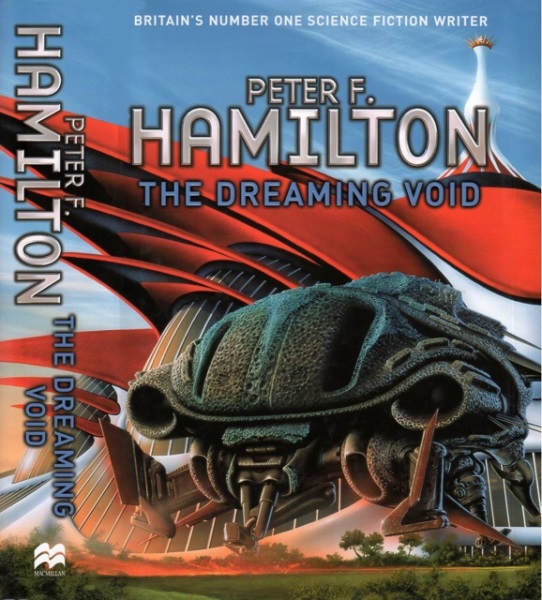
The Void Trilogy is a space opera series by British author Peter F. Hamilton. The series is set in the same universe as The Commonwealth Saga, 1,200 years after the end of Judas Unchained.
- Starstream
series2 books1989
completed
similar byscience fictionfar futurespaceother star systems+2 more
Starstream groups Jeffrey A. Carver's two linked science-fiction novels, From a Changeling Star (1989) and its direct sequel Down the Stream of Stars (1990). The two were published within a year of each other under the same author.
- The Lightspeed Trilogy
series4 books2016
similar byscience fictionspaceother star systems+3 more
Ken MacLeod's recent trilogy imagines the accidental discovery of faster-than-light travel by a present-day physicist and the political fallout once humanity gets access to a wider galaxy that turns out not to be empty. Beyond the Hallowed Sky opens on an Earth still riven by bloc politics as the discovery becomes a new front in great-power rivalry, with the sequels carrying the consequences off-world. It treats first contact as a geopolitical problem as much as a scientific one.
- Commonwealth Saga
series2 books2004
part of Commonwealth Universe
similar byscience fictionfar future+4 more
The Commonwealth Saga is a series of science fiction novels by British science fiction writer Peter F. Hamilton. This saga consists of the novels Pandora's Star (2004) and Judas Unchained (2005). Hamilton has also written several books set in the same literary universe. Misspent Youth (2002) takes place 340 years before the events of Pandora's Star. The Void Trilogy, consisting of The Dreaming Void (2008), The Temporal Void (2009), and The Evolutionary Void (2010), takes place 1,200 years after the events of Judas Unchained; several of the main characters from Judas Unchained and Pandora's Star also appear in the Void trilogy.
- Newton's Wake
Ken MacLeodstandalone novel2004
similar byscience fictionfar futurespaceother star systems+2 more
Newton's Wake: A Space Opera is a science fiction novel by British writer Ken MacLeod, published in 2004. Set in the 24th century, it follows human life after a partially cataclysmic Singularity, and in particular a conflict on a far-flung planet that upsets the prevailing order. It has elements of both transhumanism and satire and is written using the printed versions of common translation stereotypes. The novel was nominated for the British Science Fiction Award in 2004, and the John W. Campbell Memorial Award for Best Science Fiction Novel in 2005.
- Heechee
series19 books1972
completed
similar byscience fictionfar futurespaceother star systems+1 more
The Heechee Saga, also known as the Gateway series, is a series of science fiction novels and short stories by Frederik Pohl. The Heechee are an advanced alien race that visited the Solar System hundreds of millennia ago and then mysteriously disappeared. They left behind bases containing artifacts, including working starships, which are discovered and exploited by humanity.
- The Golden Oecumene
series3 books2002
similar byartificial intelligencescience fictionfar futurespace+3 more
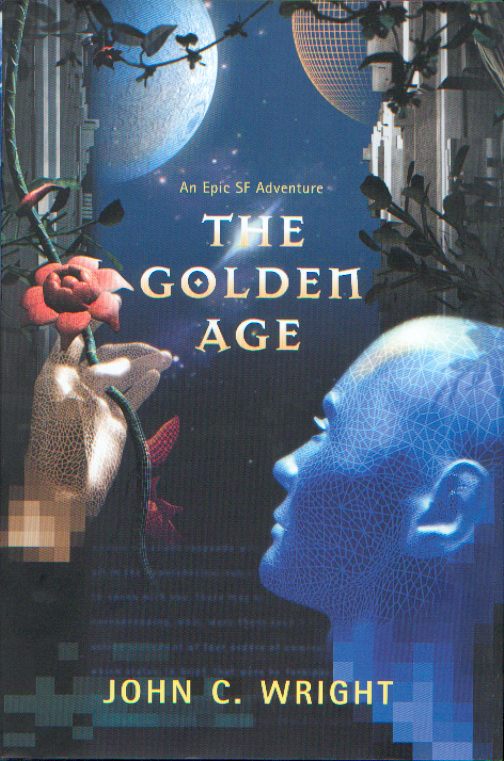
The Golden Oecumene is a science fiction trilogy by the American writer John C. Wright. It consists of three books, The Golden Age, The Phoenix Exultant and The Golden Transcendence.
- Forever War
series10 books1972
similar byscience fictionfar futurespace+1 more
Joe Haldeman's The Forever War (1974) follows a soldier conscripted into a centuries-long interstellar war against the alien Taurans, using relativistic space travel so that months spent in transit correspond to years or decades passing back on Earth. Haldeman later returned to the same conflict in Forever Peace (1997), a thematically connected but separate story, and Forever Free (1999), a direct sequel set years after the original war's end. The first novel won the Hugo, Nebula, and Locus awards and is considered a foundational work of military science fiction.
- Humanity's Fire
series5 books2009
similar byscience fictionfar futurespaceother star systems+2 more
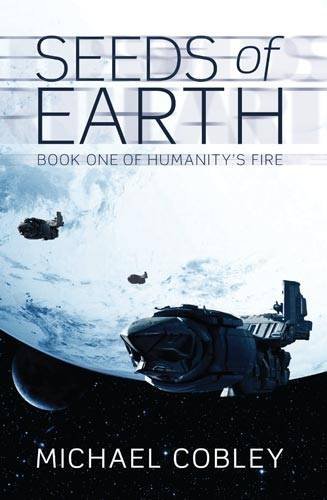
Michael Cobley's Humanity's Fire trilogy, opening with Seeds of Earth, follows the descendants of a human colony that lost contact with Earth generations earlier, who must contend with returning Earth authorities, alien empires, and a buried ancient danger beneath their adopted homeworld. Two further novels, Ancestral Machines and Splintered Suns, continue the setting afterward.
- Jak Rebo
series2 books2005
completed
similar byadventurousartificial intelligencescience fictionfar futurespaceother star systems
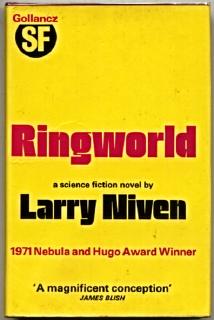
- Ringworld
series5 books1970
part of Known Space
similar byadventurousscience fictionfar futurespaceother star systems
The Ringworld series is a series of science fiction novels written by American author Larry Niven. It is part of his Known Space series of stories. Its backdrop is the Ringworld, a giant artifact 3 million times the surface area of Earth circling a star. The series is composed of four standalone science fiction novels, the original award-winning book and its three sequels:1970: Ringworld 1979: The Ringworld Engineers 1996: The Ringworld Throne 2004: Ringworld's Children