More like Beyond the Black River
anchored on:fantasysword and sorcerysecondary worldadventuroussurvivalwar
but
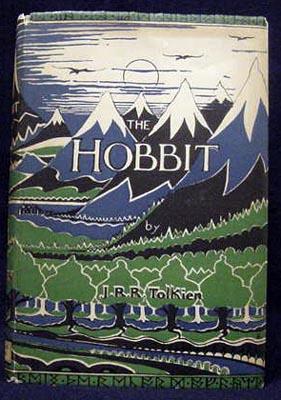
- The Hobbit
series2 books1937
completed
part of Tolkien's legendarium
similar byadventuroussecondary worldfantasy+1 more
The Hobbit (1937) is J. R. R. Tolkien's children's fantasy novel following the reluctant burglar Bilbo Baggins, who joins a company of dwarves and the wizard Gandalf on a journey to reclaim treasure guarded by the dragon Smaug. It stands as a complete adventure on its own, but shares its setting with the rest of Tolkien's legendarium and leads into the events of The Lord of the Rings.
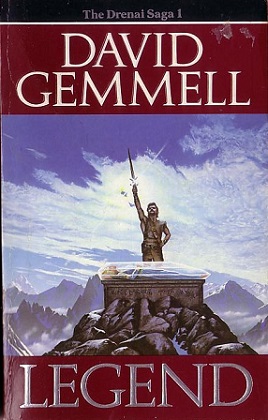
- The Drenai Saga
series15 books1984
completed
similar bysecondary worldadventurousfantasywar+2 more
David Andrew Gemmell was a British author of heroic fantasy, best known for his debut novel, Legend. A former journalist and newspaper editor, Gemmell had his first work of fiction published in 1984. He went on to write over thirty novels. Gemmell's works display violence, yet also explore themes of honour, loyalty and redemption. There is always a strong heroic theme but nearly always the heroes are flawed in some way. With over one million copies sold, his work continues to sell worldwide.
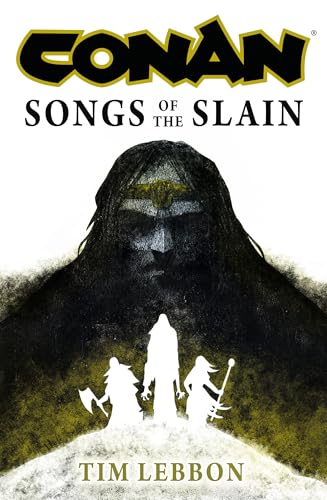
- Conan Universe
series205 books1932
part of Hyborian Age
similar bysecondary worldadventuroussword and sorceryfantasy
The Conan books are sword and sorcery fantasies featuring the character of Conan the Cimmerian originally created by Robert E. Howard. Written by numerous authors and issued by numerous publishers, they include both novels and short stories, the latter assembled in various combinations over the years by the several publishers. The character has proven durably popular, resulting in Conan stories being produced after Howard's death by such later writers as Poul Anderson, Leonard Carpenter, Lin Carter, L. Sprague de Camp, Roland J. Green, John C. Hocking, Robert Jordan, Sean A. Moore, Björn Nyberg, Andrew J. Offutt, Steve Perry, John Maddox Roberts, Harry Turtledove, and Karl Edward Wagner. Some of these writers finished incomplete Conan manuscripts by Howard, or rewrote Howard stories which originally featured different characters. Most post-Howard Conan stories, however, are completely original works. In total, more than fifty novels and dozens of short stories featuring the Conan character have been written by authors other than Howard. This article describes and discusses notable book editions of the Conan stories.
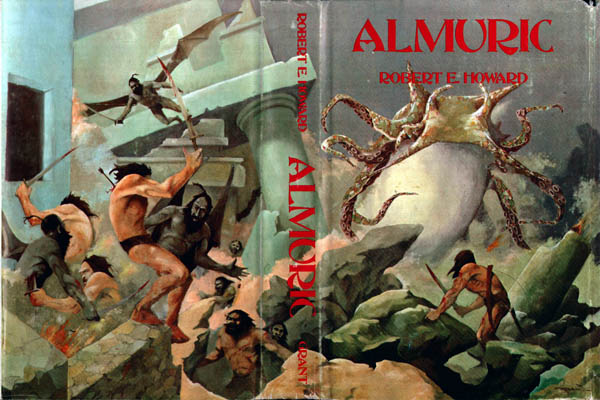
- Almuric
series1 book1964
similar byadventuroussecondary worldfantasysurvival
Published posthumously in 1964, Robert E. Howard's Almuric is a single planetary-romance novel rather than an ongoing series: Earthman Esau Cairn is transported to the savage world of Almuric, where he fights beast-men and wins the love of Altha, in a story indebted to Edgar Rice Burroughs' Barsoom books.
- Knight's Wyrd
Debra Doyle & James D. Macdonaldstandalone novel1992
similar byadventuroussecondary worldfantasysword and sorcery+2 more
Will Odosson sets out on a series of dangerous adventures after a wizard predicts that he will meet death before a year has passed.
- Redwall
series22 books1986
completed
part of Redwall Universe
similar byadventuroussecondary worldfantasy+1 more
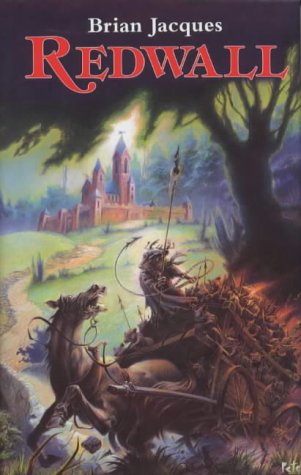
Redwall is Brian Jacques's long-running series of fantasy novels for young readers, set within the redwall-universe of Redwall Abbey and its community of anthropomorphic animals. It opened in 1986 with the mouse Matthias searching for the lost sword of the legendary Martin the Warrior to defend the abbey from the invading rat Cluny the Scourge, and grew across 22 largely stand-alone novels published through 2011, each set in a different generation of the abbey's history and following its mice, otters, badgers, and vermin adversaries.
- The Questing Road
Lyn McConchiestandalone novel2010
similar byadventuroussecondary worldfantasysurvivalwar+1 more
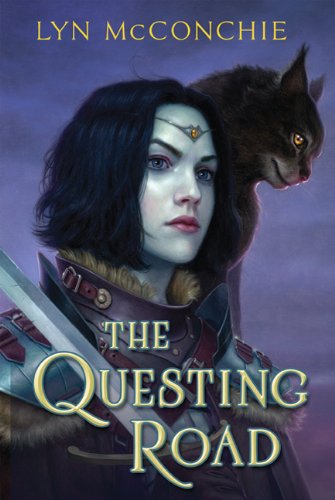
Acolytes to a dark god have crossed the gulf between worlds to abduct an innocent tariling, not even a year old, dooming it to become a sacrifice in a ceremony that will unleash an army of supernatural creatures upon an unsuspecting kingdom. Yoros and Kyrryl know that this is no mere animal, but to its own (felinoid) kind is a cherished child. With their warrior niece, Ashara, they follow its trail through a dimensional gate, little realizing their simple quest will become a desperate fight for survival in the middle of an all-out war. They can't know of the atrocities that decimated the plains tribes of the strange world beyond the gate. Nor can they know of the massive revenge that threatens an entire civilization. If they are to save themselves and their lost tariling, they must follow its magic through the unknown terrors of a bizarre world of alien creatures and mortal perils beyond their wildest imagining.
- Pusadian
series9 books1951
completed
similar byadventuroussecondary worldsword and sorceryfantasy+1 more
The Pusadian series is a sequence of fantasy stories by L. Sprague de Camp, begun in the early 1950s and written under the influence of Robert E. Howard's Conan stories. The series, also known as the Poseidonis series, prefigured the numerous sword & sorcery settings of the 1960s and 1970s.
- Riftwar Saga
series7 books1982
part of The Riftwar Universe
similar bysecondary worldadventurouswarfantasy+1 more
The Riftwar Saga is Raymond E. Feist's debut fantasy trilogy, opening with Magician, in which an orphaned apprentice named Pug is swept up when otherworldly invaders emerge through a dimensional rift into the frontier kingdom of Midkemia. Silverthorn and A Darkness at Sethanon carry the resulting war to its close, and the trilogy became the founding entry of Feist's much larger Riftwar Cycle.
- Sun Wolf and Starhawk
series7 books1984
similar bysecondary worldfantasyadventuroussword and sorcerywizards+1 more
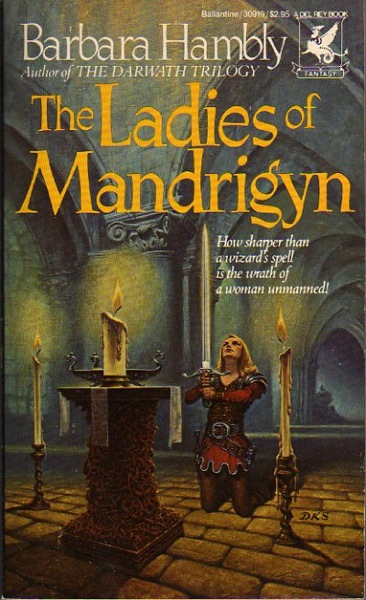
Barbara Hambly's series begins with the city of Mandrigyn conquered and its men enslaved in the mines of the wizard-king Altiokis, forcing surviving noblewoman Sheera Galernas to kidnap the mercenary captain Sun Wolf and press him into training the city's women as fighters. Sun Wolf's partnership with his lieutenant Starhawk carries across The Ladies of Mandrigyn, The Witches of Wenshar, and further volumes as both are drawn deeper into magic neither originally wanted.
- The Lord of the Rings
series13 books1954
part of Tolkien's legendarium
similar bysecondary world+4 more
The Lord of the Rings is an epic high fantasy novel written by the English author and scholar J. R. R. Tolkien. Set in Middle-earth, the story began as a sequel to Tolkien's 1937 children's book The Hobbit but eventually developed into a much larger work. Written in stages between 1937 and 1949, The Lord of the Rings is one of the best-selling books ever written, with over 150 million copies sold.
- Guardians of Ga'hoole
series17 books2003
similar bysecondary worldadventurousfantasywar
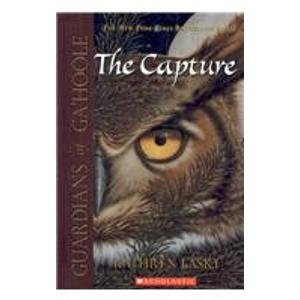
Guardians of Ga'Hoole is a fantasy book series written by Kathryn Lasky and published by Scholastic. The series contains a total of 16 books, and although it was originally intended to conclude with the 2008 publication of The War of the Ember, it has a prequel, The Rise of a Legend, published in 2013. Apart from the main series, there are a few more books and spin-offs set in the same universe. The first three books of the series were adapted into the 2010 animated 3D film Legend of the Guardians: The Owls of Ga'Hoole, directed by Zack Snyder.
- Brak the Barbarian
series16 books1963
completed
similar byadventuroussecondary worldsword and sorceryfantasy+1 more
John Jakes's Brak the Barbarian follows his own wandering barbarian swordsman, Brak, through sword-and-sorcery adventures modeled on the pulp tradition of the 1930s and '40s but original to Jakes rather than adapted from an earlier author. The character's stories were published across several collections and short novels from the 1960s into 1980.
- Narnia
series26 books1950
part of Narnia Universe
similar bysecondary worldadventurousfantasy+1 more
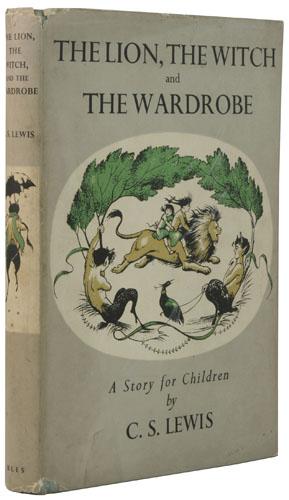
The Chronicles of Narnia is a series of seven portal fantasy novels by British author C. S. Lewis. Illustrated by Pauline Baynes and originally published between 1950 and 1956, the series is set in the fictional realm of Narnia, a fantasy world of magic, mythical beasts, and talking animals. It narrates the adventures of various children who play central roles in the unfolding history of the Narnian world. Except in The Horse and His Boy, the protagonists are all children from the real world who are magically transported to Narnia, where they are sometimes called upon by the lion Aslan to protect Narnia from evil. The books span the entire history of Narnia, from its creation in The Magician's Nephew to its eventual destruction in The Last Battle.
- Forgotten Realms: The Legend of Drizzt
series39 books1988
part of Forgotten Realms
similar bysecondary worldadventurousfantasy+3 more
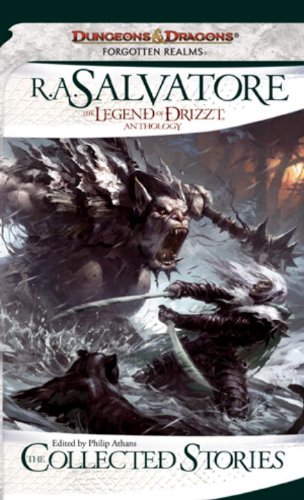
The Legend of Drizzt is a series of fantasy novels by R. A. Salvatore that began in 1988, and consists of 39 books as of August 15, 2023. They are based in the Forgotten Realms setting in the dimension of Abeir-Toril on the continent Faerûn in the Dungeons & Dragons universe currently published and owned by Wizards of the Coast. It combines the series The Dark Elf Trilogy, The Icewind Dale Trilogy, Legacy of the Drow, Paths of Darkness, The Hunter's Blades Trilogy, and other sets into an abridged compilation. Drizzt Do'Urden is the main character of most of the books.
- Corum
series6 books1971
part of Moorcock's Multiverse
similar bysecondary worldadventurousfantasy+2 more
- Flightless Falcon
Mickey Zucker Reichertstandalone novel2000
similar bysecondary worldadventurousfantasysurvivalsword and sorcery
From the flaps of the DAW first edition: "Set in a land of scattered rival cities, this is the story of a poignant and dangerous quest, the tale of a man manipulated into a mission against his will in the hopes of regaining the only thing of importance in his life - his family. Tamison had been a miner until the cave-in which killed his brother and father, and left him trapped behind a wall of rubble, cut off from light and life for what seemed like eternity. When he was finally rescued, Tamison was so traumatized by the experience that he was left with a paralyzing fear of venturing underground. With the passing years and the growth of his new family, Tamison was willing to turn his hand to any trade that would feed his wife and children. But in a realm where guilds ruled - and where his own guild could no longer support him - Tamison became more and more desperate as even jobs for unskilled guildless laborers became impossible to obtain. Eventually Tamison was forced to what once would have been unimaginable to him. But he had no other choice. Either he must steal food of see his family starve. Caught in the act, Tamison is sentenced to a chain gang. And when he was finally released, he discovered that his family had vanished. Searching for them, Tamison became so despondent that when a guard named Dallan claimed to know of their fate he was only too ready to listen. And when Dallan said that he, too, had had someone taken by the same villains, Tamison agreed to join forces with him. But before setting out on their quest, Tamison visited a fortune-teller, hoping to be told that his mission would prove successful. Instead of learning about his own destiny, Tamison found himself acquiring a new alley as Rifkah, the fortune-teller, suddenly discovered a pressing need to leave the city. Together the three set out for the rival trading town where Dallan was certain the people they sought were being held. Tamison's initial search had led him into an encounter with a thief, who now seemed determined to attach himself to their group, and the unlikely foursome soon concocted a daring plan to break into the seemingly impenetrable city. Yet even if they succeeded in this venture it might well prove their doom, for gaining entrance to the town did not mean that they would find what they sought - or survive to win free of the place again!"
- Ranger's Apprentice: The Early Years
series3 books2011
completed
part of Ranger's Apprentice
similar byadventuroussecondary worldfantasy+1 more
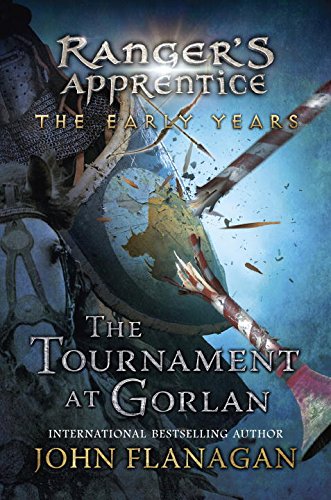
Ranger's Apprentice: The Early Years is a book series by John Flanagan. It is a prequel to the original Ranger's Apprentice series. The series follows Halt and Crowley and is preceded by the short story "The Hibernian" in the book The Lost Stories, which is the 11th installment to the Ranger's Apprentice series.
- Dilvish
series13 books1965
completed
similar bysecondary worldfantasyadventuroussword and sorcery+1 more
Centuries ago, the half-elf warrior Dilvish tried to stop a dark sorcerer named Jelerak from completing a terrible ritual, and paid for it by being turned to stone and having his soul cast into Hell. Roger Zelazny's Dilvish the Damned stories bring him back when the people he once protected need him again, reuniting him with his strange metal steed Black for a string of sword-and-sorcery adventures built around his long-delayed vengeance against Jelerak. The tales run as short, episodic quests rather than one continuous plot.
- The Crescent Moon Kingdoms
series1 book2012
similar bysecondary worldadventuroussword and sorceryfantasywizards+1 more
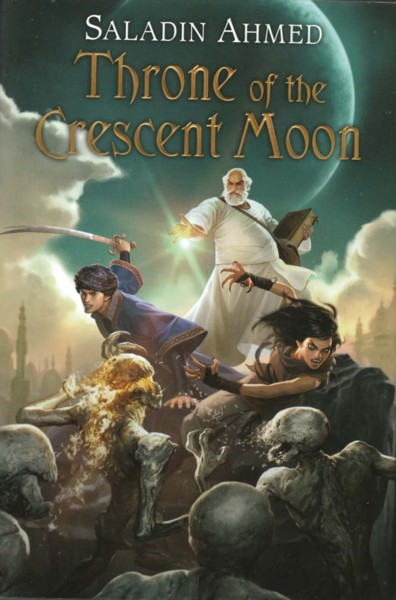
Saladin Ahmed's The Crescent Moon Kingdoms opens with Throne of the Crescent Moon, set in a realm of djenn and ghuls where a power struggle between an iron-fisted Khalif and a mysterious master thief called the Falcon Prince erupts alongside a series of brutal, supernatural murders. A handful of reluctant heroes must uncover the truth behind the killings before the kingdom tears itself apart.
- A Song of Ice and Fire
series14 books1996
part of World of Ice and Fire
similar bysecondary worldfantasywardark
A Song of Ice and Fire is a series of high fantasy novels by the American author George R. R. Martin. Martin began writing the first volume, A Game of Thrones, in 1991, and published it in 1996. Martin, who originally envisioned the series as a trilogy, has released five out of seven planned volumes. The most recent entry in the series, A Dance with Dragons, was published in 2011. Since then, Martin has been working on the sixth novel, titled The Winds of Winter. A seventh novel, A Dream of Spring, is planned to follow.
- Malazan Book of the Fallen
series20 books1999
part of Malazan
similar bysecondary worldwarfantasydark+2 more
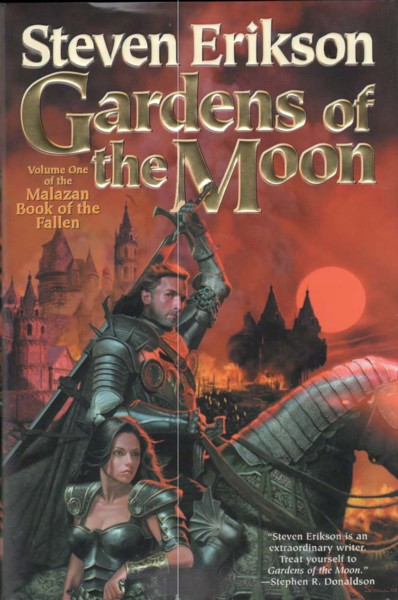
The Malazan Book of the Fallen is a series of epic fantasy novels written by the Canadian author Steven Erikson. The series, published by Bantam Books in the U.K. and Tor Books in the U.S., consists of ten volumes, beginning with Gardens of the Moon (1999) and concluding with The Crippled God (2011). Erikson's series presents the narratives of a large cast of characters spanning thousands of years across multiple continents.
- The Swordbearer
Glen Cookstandalone novel1982
similar bysecondary worldadventurousfantasysword and sorcery+1 more
The Swordbearer is a 1982 novel written by Glen Cook.
- Sir Hereward and Mister Fitz
series11 books2007
similar bysecondary worldadventurousfantasysword and sorcerywizards
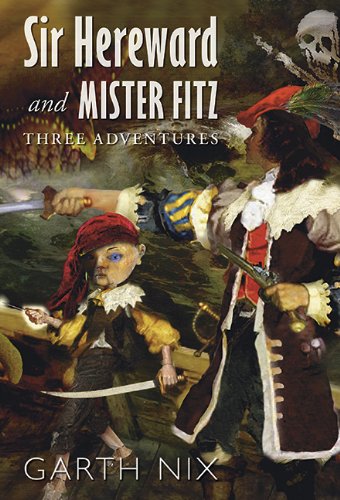
Garth Nix's Sir Hereward and Mister Fitz stories follow a scarred mercenary swordsman and his constant companion, a sentient puppet animated by the spirit of a formidable sorcerer, sent as agents to put down dangerous rogue gods across a wide fantasy world. Rather than one continuous novel, the series unfolds through linked novellas and short stories gathered into standalone collections, mixing swashbuckling action with dry, understated humor. The two collections compile stories published from 2007 into the early 2020s.