More like Bite This
but
- Bill, the Galactic Hero
series10 books1964
similar byscience fictionspace opera
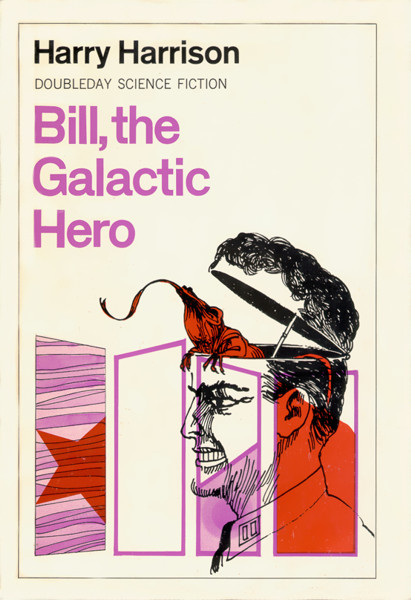
Harry Harrison's Bill, the Galactic Hero is a satire of militaristic science fiction, following a hapless draftee named Bill through a galactic war run by an absurd, dehumanizing military bureaucracy. Harrison expanded a 1965 novella into the novel and later co-wrote several tongue-in-cheek sequels with other writers in the 1980s-90s, sending Bill through increasingly ridiculous planetary settings. It's broad science-fiction comedy rather than the harder-edged satire of Harrison's other work.
- Out of the Dark (David Weber)
series3 books2010
similar byscience fiction
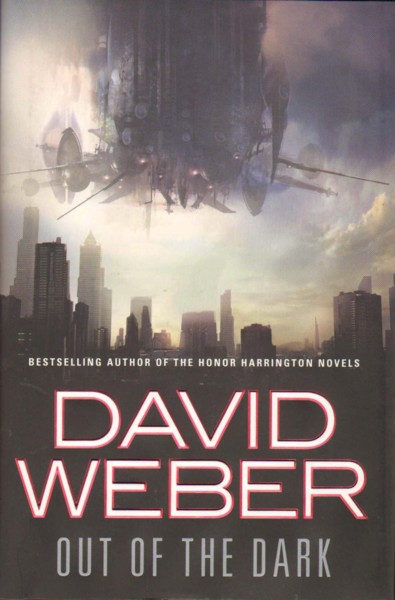
Out of the Dark begins when an overwhelming alien armada arrives to subjugate Earth, only for the invasion to run into unexpected resistance from an unlikely source within humanity itself. David Weber's trilogy, joined for its later volumes by Chris Kennedy, follows the human resistance and its strange allies as the war against the invaders escalates.
- Out of Their Minds
Clifford D. Simakstandalone novel1970
similar byadventurousscience fiction+1 more
From the back cover of the first DAW printing: "Out of their minds and the force of their imagination, men have created countless beings, from demons and dragons and monsters of legend to story-book heroes and comic strip characters. What if their world were real - if vampires, devils and Don Quixote hobnobbed with Dagwood Bumstead and Charlie Brown. Such a world would have its fascinations... and its dreadful perils - if it existed. Horton Smith found out that it did exist... and that he was right in the middle of it!"
- Barsoom
series53 books1917
similar byadventurousscience fiction
Barsoom is a fictional representation of the planet Mars created by American pulp fiction author Edgar Rice Burroughs. The first Barsoom tale was serialized as Under the Moons of Mars in pulp magazine The All-Story from February to July 1912 and published compiled as a novel as A Princess of Mars in 1917. It features John Carter, a late-19th-century American Confederate veteran who is mysteriously transported from Earth to the dying world of Mars where he meets and romances the beautiful Martian princess Dejah Thoris. Ten sequels followed over the next three decades, further extending his vision of Barsoom and adding other characters.
- The Dresden Files
series56 books2000
similar by+1 more
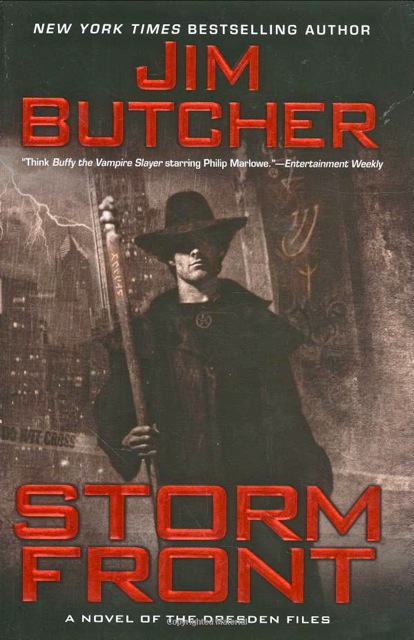
The Dresden Files is an urban fantasy series written by American author Jim Butcher. The novels are narrated from the first-person perspective of Harry Dresden, a private detective and wizard, as he investigates supernatural disturbances in contemporary Chicago. The first entry, Storm Front, was published in 2000 by Roc Books.
- The Vampire Earth
series12 books2003
similar byvampiresscience fiction
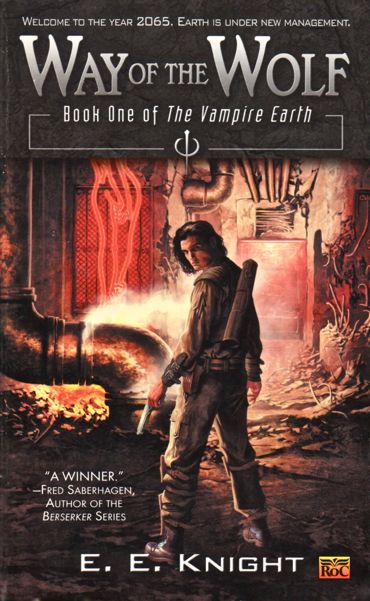
Vampire Earth is a series of science fiction/dark fantasy novels by American writer E. E. Knight.
- Foundation Universe
universe123 books1940
Start hereFoundation · Start here
similar byscience fiction
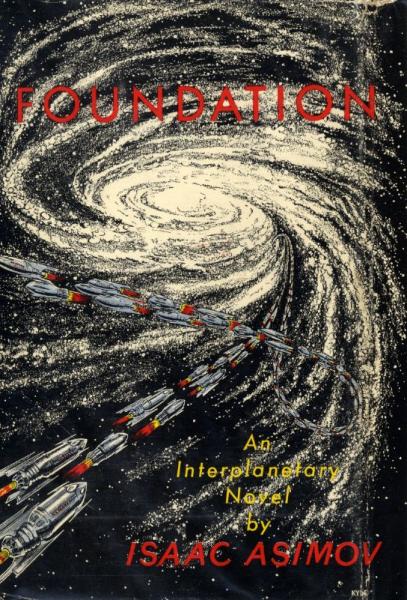
There is a science that reads the future of quadrillions the way an astronomer reads the orbits of stars. It is called psychohistory, and its equations foresee something the ruling Galactic Empire cannot admit: the throne is rotting, and thirty thousand years of barbarism are coming. One man, Hari Seldon, cannot stop the fall. He can only shorten it — by seeding a Foundation of scholars at the rim of the galaxy, a fragile institution built to carry knowledge across the dark and cut the interregnum to a single millennium. This is a universe told in the register of history itself: the long view, the calm of deep time, empires measured in centuries and men measured against them. The spine is Asimov's original trilogy — Foundation, Foundation and Empire, Second Foundation — followed decades later by the sequels Foundation's Edge and Foundation and Earth and the prequels Prelude to Foundation and Forward the Foundation. Late in life Asimov braided this in with his other future histories: the Robot novels of detective Elijah Baley and his humaniform partner R. Daneel Olivaw (The Caves of Steel, The Naked Sun, The Robots of Dawn, Robots and Empire) and the early Galactic Empire novels (Pebble in the Sky and its kin), until one continuous chronicle ran from the first thinking robots to the Second Empire. Other hands extend it — the Second Foundation Trilogy by Gregory Benford, Greg Bear, and David Brin, and shared-world spinoffs such as Robot City — so the corpus sprawls beyond a single author's tidy shelf. What distinguishes it is that the drama is intellectual: crises resolved by insight, nerve, and dialogue rather than fleets and blades, each turn hinging on the hidden logic of the Seldon Plan. Begin where readers have always begun — with Foundation, and the original trilogy in publication order. The rest opens outward from there.
- H. G. Wells' War of the Worlds
universe65 books1898
Start hereThe War of the Worlds · Start here
similar byscience fiction
No one would have believed, in the closing years of the nineteenth century, that human affairs were being watched keenly and closely from the timeless worlds of space. And then the cylinders fell. H. G. Wells' War of the Worlds opens in the quiet of the Surrey commons, where a falling star proves to be the first Martian craft — and from the pit rise the towering tripods, the Heat-Ray, the choking Black Smoke and the creeping red weed, wielded by minds that regard mankind much as we regard the creatures we boil for supper. This is invasion rendered as natural disaster: cold, methodical, and vast beyond argument. Wells' 1898 novel is the seed; everything else grows from that Martian soil. The catalogue gathers direct sequels and continuations alongside a wide field of other hands. In War of the Worlds: Global Dispatches the invasion is retold across the whole planet through the eyes of Twain, Verne, Tolstoy, Lowell and Kipling; in the Manly Wade and Wade Wellman crossover, Sherlock Holmes, Watson and Professor Challenger take the field against the machines; and Scott Washburn's Great Martian War stretches the fighting into a decades-long alternate history of steam, artillery and grinding attrition. It is a loose shared world — no single decreed sequence, many voices answering one calamity. What sets this world apart is its refusal of heroics: the invaders fall not to generals but to the smallest things of Earth, humbling and indifferent. Begin, always, with Wells' original novel — it is short, and it is the ground every later book stands upon. From there follow your appetite: Global Dispatches for the panorama, the Holmes campaign for adventure, Washburn for the long war.
- Monster Hunter International
series69 books2007
similar by+1 more
Larry Correia's Monster Hunter International follows accountant-turned-monster-hunter Owen Zastava Pitt after he's forced to kill his werewolf boss and is recruited into a private company that hunts supernatural threats for government bounty. The series has since expanded with sequels following other members of the company and a shared-world anthology, The Monster Hunters, contributed to by numerous other authors.
- Starship Troopers
Robert A. Heinleinstandalone novel1959
similar byadventurousscience fiction+1 more
Starship Troopers is a military science fiction novel by American writer Robert A. Heinlein. Written in a few weeks in reaction to the US suspending nuclear tests, the story was first published as a two-part serial in The Magazine of Fantasy & Science Fiction as Starship Soldier, and published as a book by G. P. Putnam's Sons on November 5, 1959.
- Ringworld
series5 books1970
part of Known Space
similar byadventurousscience fictionspace opera
The Ringworld series is a series of science fiction novels written by American author Larry Niven. It is part of his Known Space series of stories. Its backdrop is the Ringworld, a giant artifact 3 million times the surface area of Earth circling a star. The series is composed of four standalone science fiction novels, the original award-winning book and its three sequels:1970: Ringworld 1979: The Ringworld Engineers 1996: The Ringworld Throne 2004: Ringworld's Children
- Hitchhiker's Guide to the Galaxy
series16 books1979
part of The Hitchhiker's Guide to the Galaxy Universe
similar byscience fiction+1 more
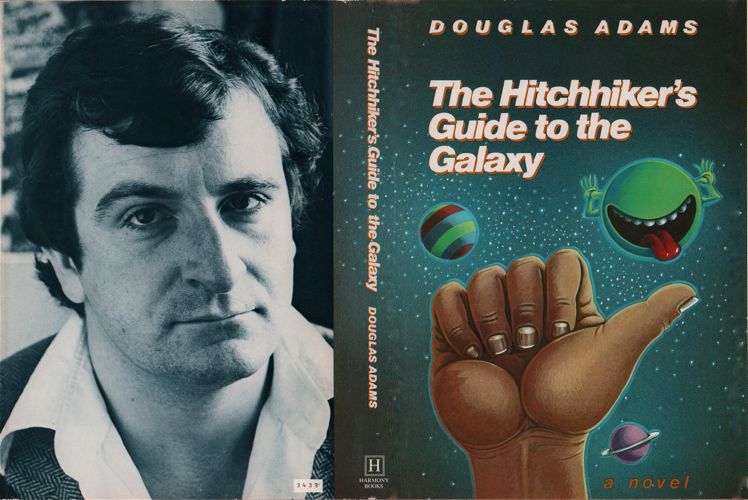
The Hitchhiker's Guide to the Galaxy is a comedy science fiction franchise created by Douglas Adams. Originally a radio sitcom broadcast over two series on BBC Radio 4 between 1978 and 1980, it was soon adapted to other formats, including both novels and comic books, a 1981 BBC television series, a 1984 text adventure game, stage shows and a 2005 feature film.
- Cosmic Trilogy (C. S. Lewis)
series4 books1938
completed
similar byscience fiction+2 more
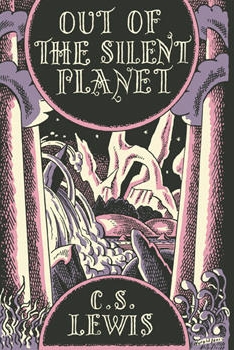
The Space Trilogy is a series of science fiction novels by British writer C. S. Lewis. The trilogy consists of Out of the Silent Planet (1938), Perelandra (1943), and That Hideous Strength (1945). A philologist named Elwin Ransom is the protagonist of the first two novels and an important character in the third.
- Forever War
series10 books1972
similar byscience fiction+1 more
Joe Haldeman's The Forever War (1974) follows a soldier conscripted into a centuries-long interstellar war against the alien Taurans, using relativistic space travel so that months spent in transit correspond to years or decades passing back on Earth. Haldeman later returned to the same conflict in Forever Peace (1997), a thematically connected but separate story, and Forever Free (1999), a direct sequel set years after the original war's end. The first novel won the Hugo, Nebula, and Locus awards and is considered a foundational work of military science fiction.
- The Hollows
series39 books2004
similar by+2 more
The Hollows is a series of urban fantasy novels by Kim Harrison, originally published by HarperCollins Publishers and by Ace Books since 2020. The series includes 18 novels, numerous novellas and short stories, two graphic novels, and one compendium resource; a 19th novel, Absolute Demon, is forthcoming in 2027.
- Dune
series20 books1963
part of Dune Universe
similar byscience fictionspace opera
Frank Herbert's Dune Chronicles opens with 1965's Dune, set on the desert planet Arrakis where House Atreides takes control of the only source of the vital spice melange and young Paul Atreides is pulled into a struggle over its politics and religion. Herbert carried the story forward across five further novels — Dune Messiah, Children of Dune, God Emperor of Dune, Heretics of Dune, and Chapterhouse: Dune — following Paul's line over the following millennia, before Brian Herbert and Kevin J. Anderson later extended the saga. Many other editions of these six novels are omnibus and box-set repackagings rather than separate stories.
- Fevre Dream
George R. R. Martinstandalone novel1982
similar byvampiresadventurous
Fevre Dream is a 1982 vampire novel written by American author George R. R. Martin. It is set on the antebellum Mississippi River, beginning in 1857, and has been described by critics and Martin himself as "Bram Stoker meets Mark Twain". About writing the novel, Martin said that "It was strongly influenced by the time I spent in Dubuque, Iowa, where river steamboats were once built".
- Moties
series4 books1974
part of CoDominium
similar byscience fictionspace opera+1 more
Larry Niven and Jerry Pournelle's The Mote in God's Eye (1974) depicts humanity's first contact with an alien species, the Moties, set within the far-future interstellar setting of Pournelle's codominium future history. The Gripping Hand continues that first-contact crisis years later, and Outies, written by J. R. Pournelle, carries the story forward into a new generation. Together the three books trace an escalating encounter between human and Motie civilizations within the codominium universe.
- Gil's All Fright Diner
A. Lee Martinezstandalone novel2005
similar byvampires+2 more
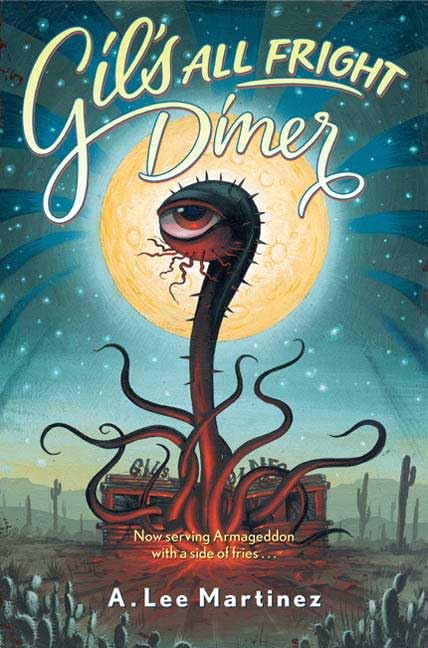
Gil's All Fright Diner is an urban fantasy novel by A. Lee Martinez first published in 2005.