More like Camp Alien
anchored on:science fictioncontemporary
but
- Mission Earth
series10 books1985
completed
similar byscience fictionpolitical intriguealiens+2 more
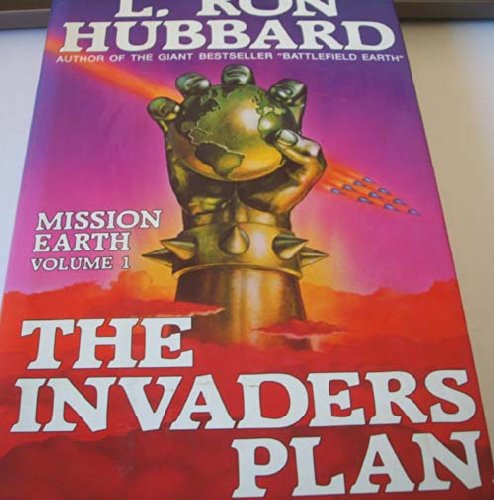
Mission Earth is a ten-volume science fiction novel series by L. Ron Hubbard. Hubbard died three months after the publication of volume 1, and other volumes were published posthumously.
- Galactic Milieu
series10 books1981
completed
similar byscience fictionaliens+3 more
Galactic Milieu is a series of science fiction novels by Julian May. It is linked to her previously published series, the Saga of Pliocene Exile; and through the fantastical device of time-travel, acts as both a prequel and a sequel to this earlier series. The "Galactic Milieu" of the title is an interplanetary federation, and Earth's membership of it is a central plot concern.
- D. O. D. O. (Department of Diachronic Operations)
series2 books2017
similar byscience fictionpolitical intrigueadventurousour world+1 more
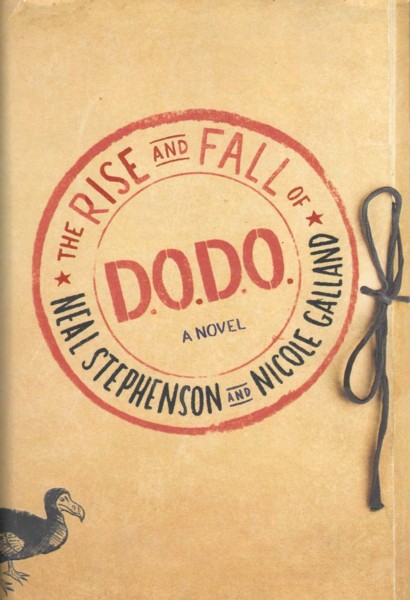
Neal Stephenson and Nicole Galland's D.O.D.O. novels center on the Department of Diachronic Operations, a covert U.S. government agency that discovers magic vanished from the world in the nineteenth century and sets out to use time travel to bring it back. The Rise and Fall of D.O.D.O. (2017) is followed by Master of the Revels, continuing the pair's earlier collaboration on The Mongoliad.
- The Themis Files
series3 books2015
similar byscience fictionour worldcontemporaryaliens+2 more
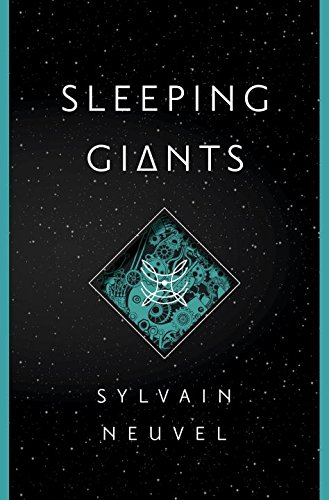
Sylvain Neuvel's Themis Files opens when a girl falls into a hole in South Dakota and lands on the palm of a giant metal hand buried underground; the trilogy picks up years later as she leads the team trying to determine what the hand is part of and why it's there. Sleeping Giants and its sequels are told almost entirely through interview transcripts conducted by an unnamed, evasive interrogator, giving the series a documentary, oral-history feel unusual for first-contact SF. The mystery escalates from an archaeological puzzle into a question of who else is looking for the same answer.
- 2312
Kim Stanley Robinsonstandalone novel2012
similar byscience fiction+3 more
In the eponymous year, when Earth's ecology is degraded and humanity has settled throughout the solar system by terraforming and genetic engineering, mysterious disasters strike some human communities and an assortment of human types from throughout the system seek to find and eliminate the cause.
- Lunar Chronicles
series15 books2011
similar byscience fictionpolitical intrigueadventurous+1 more
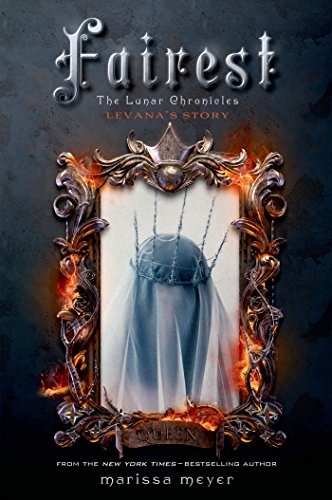
The Lunar Chronicles is a series of four young adult science fiction novels, a novella, and a short story collection written by American author Marissa Meyer and published by Feiwel & Friends. Each book entails a science fictional twist on a classic fairy tale, including "Cinderella", "Little Red Riding Hood", "Rapunzel", and "Snow White". Set in a futuristic world inhabited by various species and creatures, tensions are rising between Earth and its former colony Luna, while both attempt to manage an ongoing pandemic.
- Clane
series7 books1946
completed
similar bypolitical intriguescience fiction+1 more
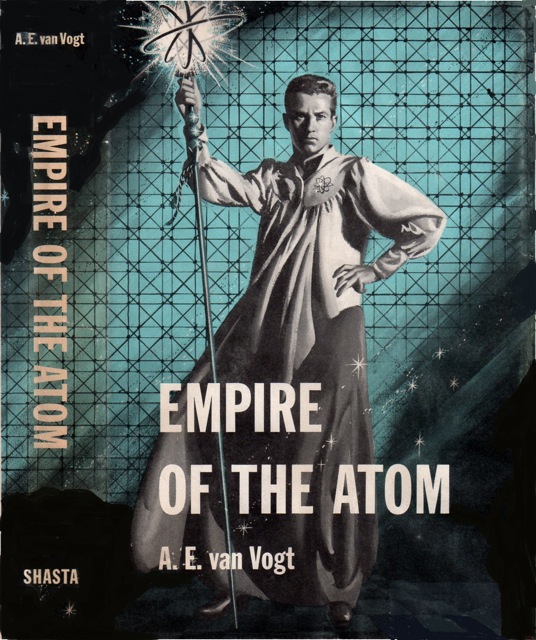
A. E. van Vogt's Clane duology reimagines the political intrigue behind ancient Rome (the same history that inspired Robert Graves's I, Claudius) roughly ten thousand years in the future, following the disfigured but brilliant Clane Linn as he navigates a dynasty ruled in the name of living 'Atom Gods.' Empire of the Atom, a fix-up of five 1946-47 Astounding novelettes, follows Clane's rise from despised outcast to power broker; The Wizard of Linn completes the story as he confronts a mysterious alien threat.
- Double Star
Robert A. Heinleinstandalone novel1956
similar byscience fictionpolitical intrigueadventurous+1 more
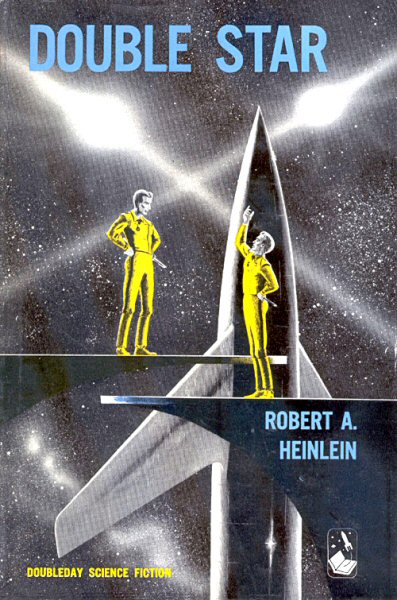
Lorenzo Smythe, the excellent yet unemployed actor, meets Dak Broadbent in a bar. Broadbent hires Lorenzo for an unspecified role, and hustles him onto a rocket ship. Broadbent turns out to be an assistant to the famous interplanetary politician and leader of the Expansionist party: John J. Bonforte. Bonforte, however, has been kidnapped by the political opposition on Mars, and due to Lorenzo's physical similarity to Bonforte, his staff wants Lorenzo to impersonate the politician for an important Martian ceremony.
- Footfall
Larry Niven & Jerry Pournellestandalone novel1985
similar byscience fictioncontemporaryour worldaliens+1 more
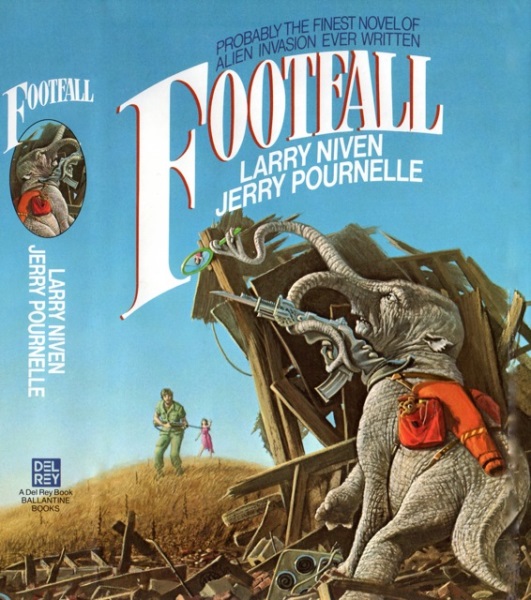
When aliens travel to Earth from Alpha Centauri, differences between alien and human psychology result in an unprovoked invasion, and the resulting resistance results in the aliens' use of a devastating weapon.
- The Puppet Masters
Robert A. Heinleinstandalone novel1951
similar byscience fictionaliens+2 more
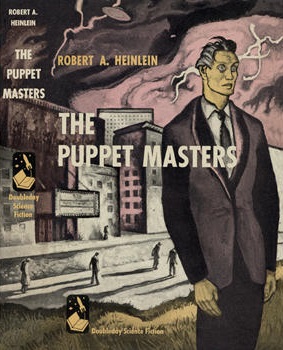
Parasitical aliens attach themselves to human hosts and take over their bodies. Two spies are sent to find out what's happening, but the extent is much farther than they knew. With access to the humans' memories, the aliens quietly invade the government and start taking over.
- Foundation Universe
universe123 books1940
Start hereFoundation · Start here
similar byscience fiction+2 more
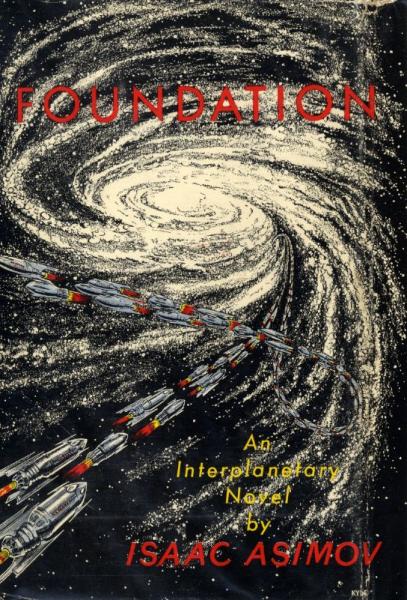
There is a science that reads the future of quadrillions the way an astronomer reads the orbits of stars. It is called psychohistory, and its equations foresee something the ruling Galactic Empire cannot admit: the throne is rotting, and thirty thousand years of barbarism are coming. One man, Hari Seldon, cannot stop the fall. He can only shorten it — by seeding a Foundation of scholars at the rim of the galaxy, a fragile institution built to carry knowledge across the dark and cut the interregnum to a single millennium. This is a universe told in the register of history itself: the long view, the calm of deep time, empires measured in centuries and men measured against them. The spine is Asimov's original trilogy — Foundation, Foundation and Empire, Second Foundation — followed decades later by the sequels Foundation's Edge and Foundation and Earth and the prequels Prelude to Foundation and Forward the Foundation. Late in life Asimov braided this in with his other future histories: the Robot novels of detective Elijah Baley and his humaniform partner R. Daneel Olivaw (The Caves of Steel, The Naked Sun, The Robots of Dawn, Robots and Empire) and the early Galactic Empire novels (Pebble in the Sky and its kin), until one continuous chronicle ran from the first thinking robots to the Second Empire. Other hands extend it — the Second Foundation Trilogy by Gregory Benford, Greg Bear, and David Brin, and shared-world spinoffs such as Robot City — so the corpus sprawls beyond a single author's tidy shelf. What distinguishes it is that the drama is intellectual: crises resolved by insight, nerve, and dialogue rather than fleets and blades, each turn hinging on the hidden logic of the Seldon Plan. Begin where readers have always begun — with Foundation, and the original trilogy in publication order. The rest opens outward from there.
- Red Planet
Robert A. Heinleinstandalone novel1949
similar byscience fictionadventurousaliens+1 more
A boy colonist on Mars takes his bouncing ball Martian pet with him to boarding school, but the new Headmaster is a controlling tyrant. Things get worse when he discovers a plot that will jeopardize all of the colonists.
- Moties
series4 books1974
part of CoDominium
similar byscience fictionpolitical intriguealiens+1 more
Larry Niven and Jerry Pournelle's The Mote in God's Eye (1974) depicts humanity's first contact with an alien species, the Moties, set within the far-future interstellar setting of Pournelle's codominium future history. The Gripping Hand continues that first-contact crisis years later, and Outies, written by J. R. Pournelle, carries the story forward into a new generation. Together the three books trace an escalating encounter between human and Motie civilizations within the codominium universe.
- Ballroom of the Skies
John D. MacDonaldstandalone novel1952
similar byscience fictionadventurousaliens+2 more
Ballroom of the Skies is a 1952 science fiction novel by American writer John D. MacDonald. Though MacDonald was primarily a mystery novelist famed for his Travis McGee series, he did write some science fiction short stories and novels. Other titles include Wine of the Dreamers (1951) and The Girl, the Gold Watch & Everything (1962).
- My Teacher Is an Alien
series4 books1989
similar byscience fictionadventurouscontemporaryaliens+1 more
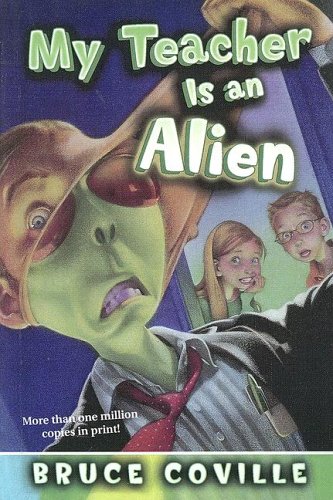
My Teacher Is an Alien is a four-book science fiction children's book series authored by Bruce Coville. The titles include:My Teacher Is an Alien (1989) My Teacher Fried My Brains (1991) My Teacher Glows in the Dark (1991) My Teacher Flunked the Planet (1992)
- Saucer
series3 books2002
similar byscience fictionadventurouscontemporaryour worldaliens
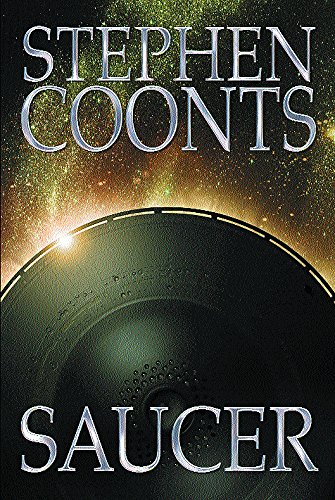
Saucer is Stephen Coonts's techno-thriller trilogy beginning with Saucer (2002), continued in Saucer: The Conquest and Saucer: Savage Planet. It follows the discovery of a functioning craft buried for millennia in the Sahara desert and the test pilots and adventurers who end up flying, and fighting over, it, escalating from a buried desert secret toward wider stakes involving hostile outside interests.
- Lest Darkness Fall
series4 books1941
similar byscience fiction+3 more
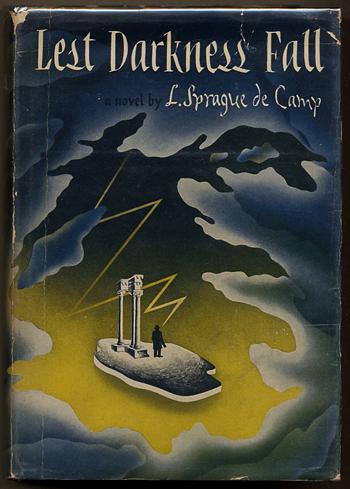
L. Sprague de Camp's Lest Darkness Fall (1939) is a single alternate-history novel in which archaeologist Martin Padway is thrown by a lightning strike from 1938 Rome back to Ostrogothic Italy in 535 AD, where he uses his knowledge of later history and technology -- distilling brandy, building a printing press, reworking military tactics -- to try to head off Europe's slide into the Dark Ages. David Drake's later novella To Bring the Light, sometimes packaged alongside it, borrows the same time-travel-to-Rome premise with a different protagonist.
- Null-A
series4 books1948
similar byscience fiction+2 more
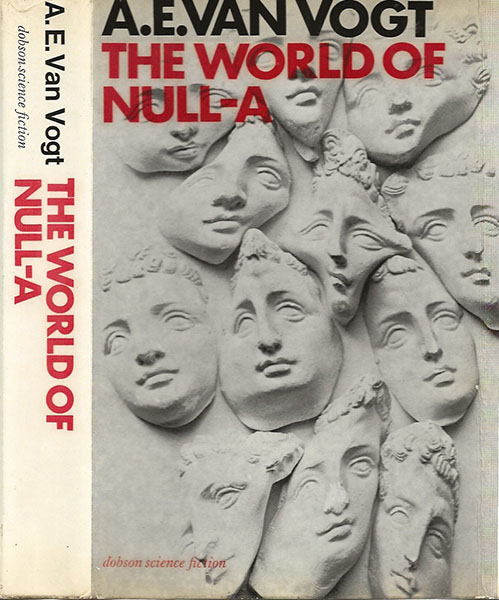
A. E. van Vogt's Null-A novels follow Gilbert Gosseyn, a man whose memories keep proving false, through a future society organized around the non-Aristotelian logic ('Null-A') of General Semantics. The World of Null-A and The Pawns of Null-A form the classic 1940s-50s core, with Null-A Three added decades later; John C. Wright's Null-A Continuum closes out the storyline after van Vogt's death. It's dense, puzzle-box science fiction built around identity and perception.
- Ender's Shadow
series5 books1999
part of Ender's Game Universe
similar byscience fictionpolitical intrigue
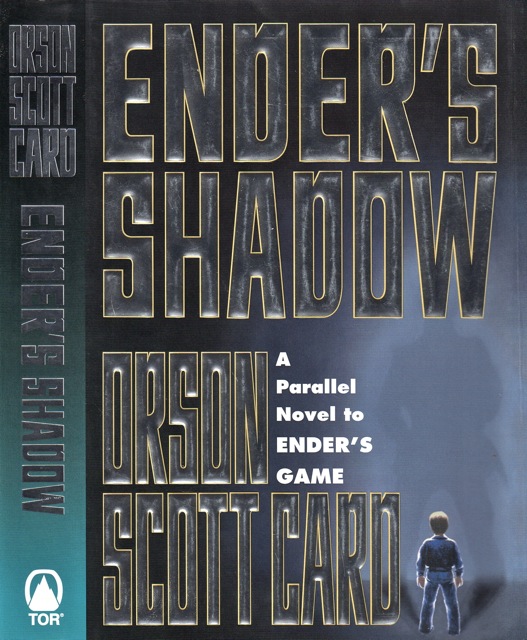
Orson Scott Card's Ender's Shadow retells the events of Ender's Game from the perspective of Bean, a physically stunted but ferociously intelligent street child recruited into the same Battle School program as Ender Wiggin. It launches the Shadow series, which follows Bean and other secondary Battle School characters into the political aftermath of the Formic Wars back on Earth, running parallel to and eventually past the timeline of Card's main Ender Quintet.
- The Merchant Princes
series14 books2004
similar bypolitical intriguescience fictioncontemporaryour world
The Merchant Princes is a science fantasy and alternate history series of nine novels by British writer Charles Stross. In the series, there exist a number of parallel worlds, all of which are on the same geographical Earth but with different societies at different points of development. Members of a certain bloodline can travel between these worlds along with their immediate possessions. The series largely follows Miriam Beckstein, a technology journalist raised in a familiar "normal" Earth, who discovers she was born in a parallel world and is a member of this bloodline. She quickly becomes entangled in political maneuvering and assassination plots with her estranged family. Miriam uses modern technology and investigative journalism to attempt to stay a step ahead.
- Culture
series15 books1987
completed
part of The Culture
similar byscience fiction+2 more
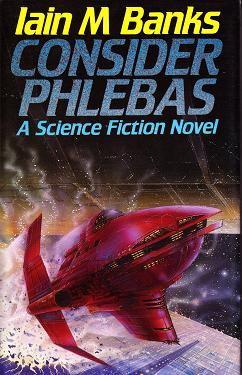
The Culture series is a science fiction series written by Scottish author Iain M. Banks and released from 1987 until 2012. The stories centre on The Culture, a utopian, post-scarcity space society of humanoid aliens and advanced superintelligent artificial intelligences living in artificial habitats spread across the Milky Way galaxy. The main themes of the series are the dilemmas that an idealistic, more-advanced civilization faces in dealing with smaller, less-advanced civilizations that do not share its ideals, and whose behaviour it sometimes finds barbaric. In some of the stories, action takes place mainly in non-Culture environments, and the leading characters are often on the fringes of the Culture, sometimes acting as agents of the Culture in its plans to civilize the galaxy. Each novel is a self-contained story with new characters, although reference is occasionally made to the events of previous novels.
- Cavor
series2 books1901
similar byscience fictionadventurousaliens
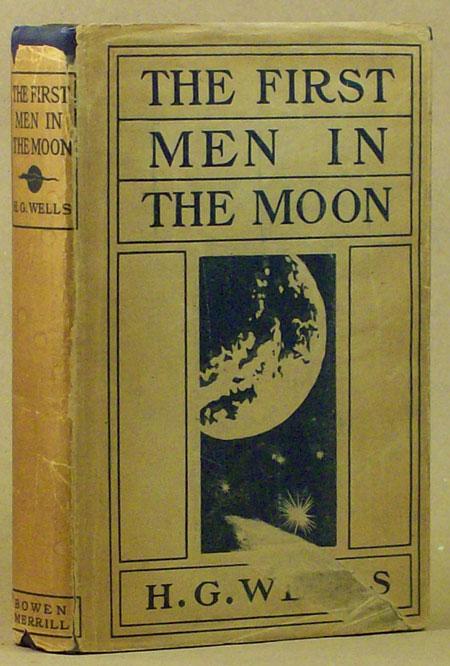
H. G. Wells's 1901 novel The First Men in the Moon is narrated by the businessman Bedford, who joins the reclusive scientist Cavor after Cavor invents cavorite, a gravity-blocking substance that carries the two men to the Moon. There they discover a vast underground civilization of insect-like Selenites, and the expedition that began as a hunt for lunar minerals turns into an encounter with an alien society. It is a standalone novel; later editions crediting Stephen Baxter add an introduction or afterword rather than a continuing story.
- Whipping Star
Frank Herbertstandalone novel1970
similar byscience fictionpolitical intrigueadventurousaliens
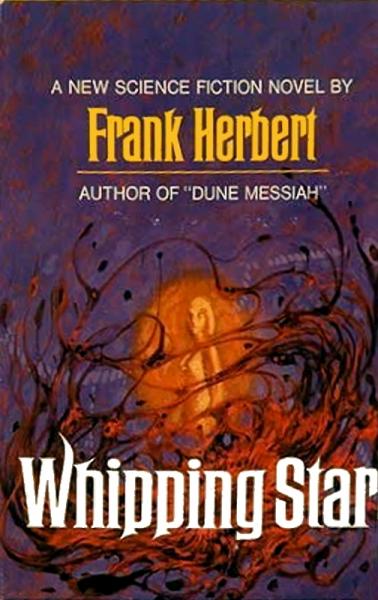
From Amazon: In the far future, humankind has made contact with numerous other species: Gowachin, Laclac, Wreaves, Pan Spechi, Taprisiots, and Caleban, and has helped to form the ConSentiency to govern among the species. After suffering under a tyrannous pure democracy, the sentients of the galaxy find the need for a Bureau of Sabotage (BuSab) to slow the wheels of government, thereby preventing it from legislating recklessly. BuSab is allowed to sabotage and harass the governmental, administrative, and economic powers in the ConSentiency. Private citizens must not be harassed, and vital functions of society are also exempt. Jorj X. McKie is a born troublemaker who has become one of BuSab's best agents. Drafted for the impossible task of establishing meaningful communication with an utterly alien entity who defies understanding, McKie finds himself racing against time to prevent a mad billionairess from wiping out all life in the ConSentiency.