Loreful
HomeDiscover
Search series, authors…⌘K
Loreful

Reading orders for SF/F series and shared universes — with your place kept in every one.

Explore

UniversesSeriesWorksAuthorsAtlas

Help

FAQAboutSite map

Account & legal

Sign inCreate accountPrivacyTerms

Data

Built on ISFDB, Wikipedia, Wikidata and Open Library. Curated reading orders carry their reasoning on the page; the rest follow publication order. Data sources & licenses

© Loreful · data: ISFDB · CC BY

More like Cleopatra

anchored on:historical fantasymiddle eastancient worldadventurerevengepolitical intrigue+1 more

but

Mood

The mood the book leaves you in.

  • The reading experience is propelled by journeys, exploration, and physical risk; excitement and forward momentum dominate over dread or introspection.
  • Joy and loss are deliberately mixed; the resolution grants characters something real while taking something else away, leaving warmth and sorrow together.
  • The book demands work from the reader — dense prose, difficult structure, unfamiliar ideas, or morally uncomfortable material — as part of its intended effect.
  • Grim events, cruelty, or despair dominate the atmosphere, and the book does not soften them with comfort or comic relief.
  • The atmosphere is quietly unsettling — wrongness, unease, and the uncanny pervade the book without necessarily escalating into overt horror.
  • The book is built to move the reader; character feeling is foregrounded and major scenes aim at a strong emotional response.
  • Humor is a primary aim and the prose plays for laughs — comic situations, wit, or dialogue produce sustained comedy, not occasional levity.
  • The book insists that things can improve; effort and decency are shown to matter, and the arc bends toward better outcomes even through hardship.
  • The book teaches as it goes — real facts, history, science, or craft are conveyed in enough depth that learning is part of the reading experience.
  • The book is designed to uplift and motivate, presenting perseverance or achievement in a way that invites the reader to aspire or act.
  • The overall register is cheerful and easygoing; stakes are kept gentle and the book avoids dwelling on pain or dread.
  • Withheld information drives the experience; the book sustains enigmas and secrets the reader wants resolved, whatever its genre.
  • The book is contemplative and inward-looking, giving more weight to thought, memory, and meaning than to external events.
  • The book works as comfort reading — low tension, a soothing pace, and an atmosphere the reader can unwind in.
  • Grief, loss, or melancholy set the dominant register, and the book lets sorrow stand rather than resolving it into comfort.
  • Sustained suspense is the point; the book keeps the reader braced for what happens next through danger, pressure, or impending revelation.
  • Playful invention and charm define the register — fanciful conceits, light absurdity, and a narration that delights in its own oddity.

About

What the story runs on.

  • Stories in which extraterrestrial beings are central — as characters, cultures, or the object of the plot.
  • Stories about venturing into space to explore — survey missions, astronauts, and the frontier of the unknown beyond Earth.
  • Stories structured as a quest — a journey undertaken to find, deliver, or destroy something of great import.
  • Stories in which staying alive against nature, catastrophe, or scarcity is the central problem.
  • Stories of lovers kept apart by law, family, faith, or station, where the obstacle to love is the plot.
  • Stories in which a friendship — its making, testing, or loss — is the emotional center.
  • Stories of growing up — a young protagonist crossing from childhood into adult knowledge and responsibility.
  • Stories about who a character truly is — self-discovery, doubled lives, and the search for a self.
  • Stories in which a buried family truth — hidden parentage, crimes, or shames — surfaces and reorders the present.
  • Stories driven by maneuvering for power — factions, conspiracies, and statecraft conducted in shadow.
  • Stories in which war itself is the subject — combat, occupation, and what warfare does to soldiers and civilians.
  • Stories organized around investigating a killing — the case, the clues, and the pursuit of the killer, in any genre's clothing.

Shelf

Where it sits in the library.

    • Fiction built on magic or other supernatural elements that have no scientific explanation.
    • Secondary-world fantasy at large scale, where the fate of nations or the world turns on the protagonists' struggle.
    • Fantasy set in a recognizably modern city or contemporary world where the supernatural intrudes on everyday life.
    • Fantasy that blends in horror's atmosphere and imagery, keeping a fantastical frame around grim or frightening material.
    • Action-driven fantasy following warriors or rogues with personal stakes against sorcerous threats, rather than world-spanning conflicts.
    • Fantasy set in a real historical period or a close analogue of one, with magic woven into the era.
    • Fantasy in which protagonists cross from the ordinary world into another world through a portal or similar passage.
    • Fiction that retells or reworks a traditional fairy tale in a new form or setting.
    • Fantasy drawing directly on myths, legends, and folklore, retelling them or building on their figures and logic.
    • Fantasy of ghosts, vampires, shapeshifters, psychics, and similar phenomena, usually set in an otherwise ordinary world.
    • Fiction mixing science-fictional trappings with overtly magical or impossible elements in one setting.
    • Low-stakes fantasy emphasizing comfort, community, and everyday pleasures over conflict and peril.
    • Speculative fiction of pervasive moral ambiguity, violence, and cynicism that rejects heroic conventions — fantasy and SF alike.
      • Fiction that extrapolates from science and technology — future societies, space travel, or speculative inventions — within at least nominally natural laws.
      • Science fiction of interstellar scope — starships, galactic polities, and adventure across star systems.
      • Science fiction committed to scientific rigor, where technical plausibility constrains the story.
      • Science fiction centered on armed forces and warfare, told largely from a military point of view.
      • Science fiction of networked, corporate-dominated near futures, pairing high technology with social decay.
      • Science fiction styled on nineteenth-century steam-powered technology, often in a Victorian or pseudo-Victorian setting.
      • Fiction depicting an oppressive or catastrophic society, presented as a warning.
      • Fiction set after civilization's collapse, following survivors in the ruins of the old world.
      • Fiction in which characters move between past and future, and the mechanics or consequences of that travel drive the plot.
      • Fiction exploring a world where a historical event went differently and history diverged from ours.
      • Science fiction about humanity's first encounter and communication with an alien intelligence.
      • Science fiction in which extraterrestrial forces attack or occupy Earth and humanity resists.
      • Fiction whose primary aim is to frighten or unsettle the reader through dread, menace, or the monstrous.
      • Horror of vast, indifferent, incomprehensible entities before which humanity is insignificant, in the Lovecraft tradition.
      • Horror of decaying houses, buried family secrets, and oppressive atmosphere in the Gothic literary tradition.
      • Horror centered on hauntings and the returning dead.
      • Horror located in the mind — paranoia, obsession, and unreliable perception rather than external monsters.
      • Horror built around the reanimated dead and survival amid their outbreaks.
      • Horror defined by explicit, transgressive gore that refuses to cut away from violence.
      • Speculative fiction of the strange and uncanny that resists both natural explanation and standard genre categories.
      • Fiction organized around solving a crime or puzzle, typically following an investigator toward the identification of a culprit.
      • A puzzle-first mystery that lays out clues so the culprit's identity can be deduced before the reveal.
      • Crime fiction of moral ambiguity, fatalism, and hard-edged style, set among the corrupt and the doomed.
      • A mystery following the realistic routines of police work — forensics, interviews, and case-building.
      • A gentle mystery with an amateur sleuth, a small community, and violence kept off the page.
      • A mystery set in a past era, where the investigation works within that period's methods and society.
      • Fast-paced fiction driven by imminent danger, pursuit, or high-stakes conspiracy, built to sustain tension.
      • A thriller of espionage — agents, tradecraft, and intelligence services in conflict.
      • A thriller centered on lawyers and the courtroom, where litigation carries the suspense.
      • A thriller driven by detailed contemporary or near-future technology, often military or scientific.
      • A thriller whose tension comes from mental states and manipulation between characters rather than external action.
      • Fiction whose central plot is a romantic relationship and its development toward an emotionally satisfying resolution.
      • Romance in which one or both partners are supernatural beings, blending fantasy elements into the love story.
      • A fantasy-romance hybrid in which the romantic arc and the fantasy plot carry equal weight.
      • Romance set in a past era, with courtship shaped by the period's society and manners.
      • Romance set in the present day, without supernatural or historical elements.
      • Fiction set in a real past period, where the historical setting materially shapes characters and events.
        • General and literary fiction emphasizing prose style, character interiority, or formal ambition over genre plot conventions.
        • Fiction in a realistic world where magical events occur and are treated as ordinary, in the tradition of Latin American literature.
        • Fiction that ridicules people, institutions, or society in order to criticize them.
        • Fiction of dreamlike, irrational imagery and logic that breaks from realistic representation.
        • Fiction that plays with narrative convention through metafiction, fragmentation, and self-reference.
        • Fiction propelled by journeys, exploration, and physical peril, where action and survival carry the plot.
        • Adventure fiction of ships and seafaring — naval engagements, voyages, and life at sea.
        • Fiction of the American frontier West — gunmen, ranchers, and lawmen, typically in the late nineteenth century.
        • Fiction centered on soldiers, campaigns, and the experience of warfare, historical or imagined.
          • Fiction written primarily to amuse, using comedic situations, wit, or parody as its organizing principle.
            • Multi-generational fiction following a family or dynasty across decades, with inheritance and kinship as the through-line.
              • Fiction whose world runs on explicit game mechanics — levels, stats, and skills that characters can see and exploit.
                • Fiction about costumed or superpowered heroes and their conflicts with comparable villains.

                Practical

                How long a commitment, whether it stands alone, and whether it has finished.

                Tap a chip to ask for it · tap again to rule it out · once more to clear. Numbers show what would be left.

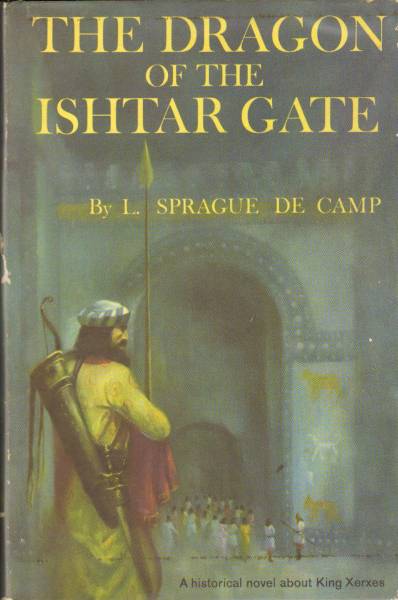
                • Cover of The Dragon of the Ishtar Gate
                  The Dragon of the Ishtar Gate

                  L. Sprague de Camp · standalone novel · 1961

                  similar byadventurousmiddle eastancient worldhistorical fantasygods+1 more

                  Tagged as an historical romance, but notes 'gods, demons and sorcerors' in a superstitious context

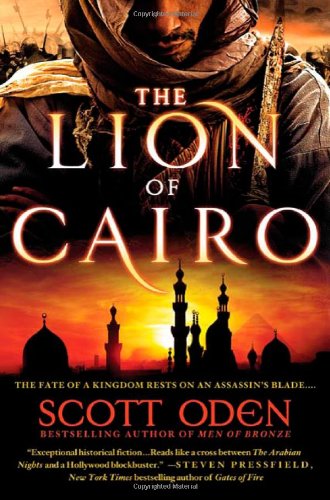
                • Cover of The Lion of Cairo
                  The Lion of Cairo

                  Scott Oden · standalone novel · 2010

                  similar byadventurousmiddle eastancient worldadventurehistorical fiction+1 more

                  Scott Oden is an American writer best known for his historical novels set in Ancient Egypt and Ancient Greece. His work imitates the styles and themes of the 1930s pulps, most notably the historical fiction and fantasy of Texan author Robert E. Howard.

                • Cover of Ancient Egyptian
                  Ancient Egyptian

                  series · 9 books · 1993

                  similar byancient worldadventurousmiddle easthistorical fiction+2 more

                  Wilbur Smith's Ancient Egypt novels open with River God (1993), narrated by the loyal eunuch slave Taita as he guides the royal family's flight from the Hyksos invasion and their eventual return to power. The series, later continued by Smith with co-author Mark Chadbourn, follows Taita and Egypt's rulers across further installments including The Seventh Scroll, Warlock, and Desert God, spanning three decades of publication.

                • Cover of Moon of Israel: A Tale of the Exodus
                  Moon of Israel: A Tale of the Exodus

                  H. Rider Haggard · standalone novel · 1918

                  similar byadventurousmiddle eastancient worldhistorical fantasyhistorical fiction

                  Moon of Israel is a novel by English writer H. Rider Haggard, first published in 1918 by John Murray. Moon of Israel is a historical novel with fantasy elements. The novel narrates the events of the Biblical Exodus from Egypt told from the perspective of a scribe named Ana. Moon of Israel is set during the reign of the Pharaoh Amenmeses, identified in the novel as the Pharaoh of the Exodus.

                • Cover of The Brethren
                  The Brethren

                  H. Rider Haggard · standalone novel · 1904

                  similar byadventurousmiddle eastadventurehistorical fiction+2 more

                  "... a tale ... of that pregnant and mysterious epoch, when men by thousands were glad to lay down their lives for visions and spiritual hopes, could find a picture, however faint and broken, of the long war between Cross and Crescent waged among the Syrian plains and deserts. Of Christian knights and ladies also, and their loves and sufferings in England and the East; of the fearful lord of the Assassins whom the Franks called Old Man of the Mountain, and his fortress city, Masyaf. Of the great-hearted, if at times cruel Saladin and his fierce Saracens; of the rout at Hattin itself, on whose rocky height the Holy Rood was set up as a standard and captured, to be seen no more by Christian eyes; and of the last surrender, whereby the Crusaders lost Jerusalem forever." (From the Author's Note)

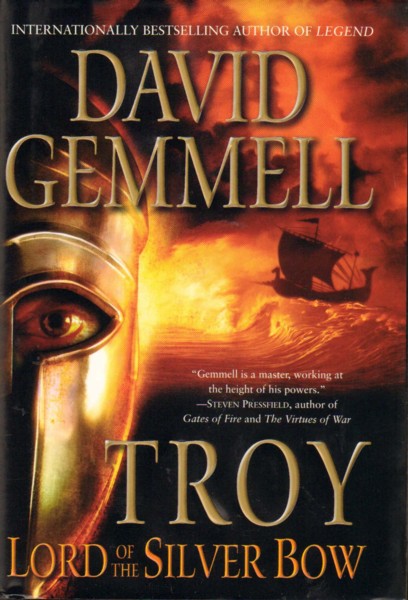
                • Cover of Troy
                  Troy

                  series · 3 books · 2005

                  similar byancient worldhistorical fantasy+4 more

                  David Gemmell's retelling of the Trojan War, completed by his wife Stella Gemmell after his death, follows a traumatized young prince, an independent priestess, and a vengeance-driven warrior as their lives converge on a city consumed by betrayal, ambition, and the armies gathering beyond its walls. Lord of the Silver Bow, Shield of Thunder, and Fall of Kings strip away Homer's gods in favor of a grounded, character-driven war story.

                • Cover of The Jaguar Princess
                  The Jaguar Princess

                  Clare Bell · standalone novel · 1993

                  similar byadventurousancient worldhistorical fantasy+2 more

                  Mixcati's people are descended from the Olmec Jaguar Gods and she is fated for great things—both wonderful and dangerous. She can, unexpectedly and without warning, turn into a living, wild Jaguar, just as her ancestors have done since time immemorial. Once stolen into slavery, she must struggle to survive and to learn to fulfill her destiny in an Aztec culture that understands her strength, fears her power and wants her dead. She must face destruction at their hands—or come into her true power as The Jaguar Princess.

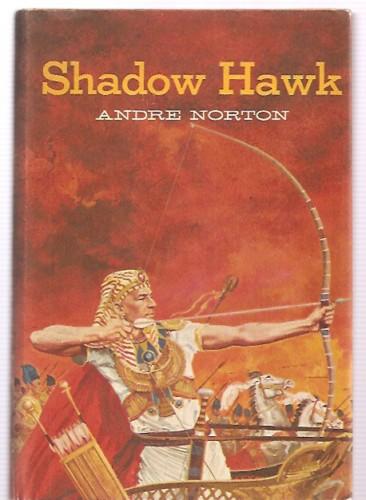
                • Cover of Shadow Hawk
                  Shadow Hawk

                  Andre Norton · standalone novel · 1960

                  similar byadventurousmiddle eastancient worldhistorical fiction

                  When his position at court is usurped by his half brother, a young Egyptian nobleman seeks to regain his standing through military victories against the enemy.

                • Cover of The Firebrand
                  The Firebrand

                  Marion Zimmer Bradley · standalone novel · 1987

                  similar byancient worldhistorical fantasygods+2 more

                  The Firebrand is a 1987 historical fantasy novel by American author Marion Zimmer Bradley. Set in the ancient city of Troy, the novel is a retelling of Homer's epic poem the Iliad. The Firebrand is written from the point of view of Kassandra, the prophet daughter of King Priam of Troy, and also features other prominent characters from Greek mythology. As in the Iliad, Kassandra foresees catastrophe for her city, but few pay heed to her warnings. In Bradley's story, Kassandra is presented as a strong and insightful woman rather than as a sufferer of insanity.

                • Cover of Eric Brighteyes
                  Eric Brighteyes

                  series · 2 books · 1891

                  similar byadventurous+5 more

                  H. Rider Haggard's Eric Brighteyes is a Viking-age saga set in 10th-century Iceland, following the golden-eyed warrior Eric Thorgrimursson's doomed love for Gudruda against a backdrop of clan rivalry, sorcery, and blood feud after the sorceress Swanhild and the chieftain Ospakar both move against the match. Written in 1891 in the style of the Old Norse sagas Haggard admired, it stood alone for nearly a century until Mildred Downey Broxon, writing under a Norse pen name, continued the story in the 1979 sequel Eric Brighteyes #2: A Witch's Welcome.

                • Cover of The Shards of Heaven
                  The Shards of Heaven

                  series · 5 books · 2015

                  similar byancient worldhistorical fantasypolitical intrigue+2 more

                • Cover of Egyptian stories
                  Egyptian stories

                  series · 3 books · 1993

                  similar byancient worldmiddle easthistorical fantasy+2 more

                • Cover of The Pagan King
                  The Pagan King

                  Edison Marshall · standalone novel · 1959

                  similar byadventurousancient worldpolitical intriguedarkhistorical fiction+1 more

                  A historical retelling of King Arthur's rise to power. "The Pagan King" is set in a world where the Romans' departure, now some generations past, has left civilisation crumbling in England and all sorts of factions and races at each other's throats. Vortigern, a ruthless tyrant, has kept himself in power and the land fairly peaceful by playing his enemies one against the other, but is universally hated, and faltering. However, but nobody has the guts to stand up to him. Ambrose, as he is first called, goes to the pagan fertility feast of Beltane at Vortigern's court with his cousin and trainer Gerald, a young man of Roman ancestry. There the young Ambrose meets the love of his life, Elian of the Lake, daughter of Llewelan of the Lake (Lancelot). But here, unlike the courtly Arthur of medieval romance, this teenager is just plain horny, and hopes to take Elian off to the bushes for some traditional Beltane fun. However, Mordred, the suave aristocratic playboy arrives and nothing is consummated. After the next day, when Ambrose defeats Mordred in combat, and his true identity is revealed, Arthur and Gerald must escape Vortigern's assassins on the way home to Cambria. There begins Arthur's ascent to power according to the prophecies of the Song of Camlon. But Arthur, while a great warrior, is neither a politician nor a bastion of morality. While betrothed to Wander of Cornwall (Guinevere) for political reasons, Arthur beds the exciting but dangerous witch Vivain, while in his heart remaining desirous of Elian. (from the review at sf site)

                • Cover of The Princess Bride
                  The Princess Bride

                  William Goldman · standalone novel · 1973

                  similar byadventurousrevengeadventureforbidden love

                  The Princess Bride: S. Morgenstern's Classic Tale of True Love and High Adventure, The "Good Parts" Version is a 1973 fantasy romance novel by American writer William Goldman. The book combines elements of comedy, adventure, fantasy, drama, romance, and fairy tale. It is metafictionally presented as an abridgment of a longer work by the fictional S. Morgenstern, and Goldman's commentary asides are constant throughout. It was originally published in the United States by Harcourt Brace, then later by Random House, while in the United Kingdom it was later published by Bloomsbury.

                • Cover of Beloved of the Gods
                  Beloved of the Gods

                  series · 1 book · 2000

                  similar byancient worldhistorical fantasydarkgods+1 more

                • Cover of Gods and Warriors
                  Gods and Warriors

                  series · 5 books · 2012

                  similar byadventurousancient worldadventure+2 more

                • Cover of Earth Giant
                  Earth Giant

                  Edison Marshall · standalone novel · 1960

                  similar byadventurousancient worldhistorical fantasyadventuregods

                  The hero of this novel is Heracles, who in Roman myth was Hercules - born in the first year of the Trojan War, fated to become the greatest figure of the heroic age when Greece was ruled by scores of jealous kings, when weapons were made of gleaming bronze and diadems made of gold. At the age of five, Heracles crushed in his chubby fists the spade-shaped heads of two messengers of death that had invaded his bed of sheepskins. Who was this child? What was the source of his seemingly supernatural strength? Here the reader divines Heracles as a force compared to nature's, yet one who worshiped beauty with the typical passion of the ancient Greek, whose strength and greatness stemmed from the vital earth he loved. The twelve great labors Heracles undertook in order to free his countrymen from the yoke of a tyrant king are portrayed as entirely believable, none transcending the humanly possible, despite their strangeness. They are labors which embrace high adventure, feats of primitive engineering, long voyages - once a ghastly conflict with an evil force horrible almost beyond telling, again a search for the Augean Stables that unearthed instead a lost temple of ineffable beauty. There is a descent into an extinct volcano, where a woman wails "for her demon lover", and finally what seemed to be a passage into dim silent Hades. As the climax of this novel, Heracles performs a thirteenth labor, resolving his deeply personal story - the thrilling mystery of his paternity, the right or wrong of his choice between two sisters, the unmasking of a Medusa close to his life, and the unfolding of the prophecies of a wild-eyed young shepherdess, Ismene, who hard bargained with him for his love. (adapted from the flaps of the first edition dust jacket)

                • Cover of Ben-Hur: A Tale of the Christ
                  Ben-Hur: A Tale of the Christ

                  Lew Wallace · standalone novel · 1880

                  similar byancient worldmiddle eastrevengehistorical fiction+1 more

                  Ben-Hur: A Tale of the Christ is a novel by Lew Wallace, published by Harper and Brothers on November 12, 1880, and considered "the most influential Christian book of the nineteenth century". It became a best-selling American novel, surpassing Harriet Beecher Stowe's Uncle Tom's Cabin (1852) in sales. The book also inspired other novels with biblical settings and was adapted for the stage and motion picture productions.

                • Cover of Kamose the Magician
                  Kamose the Magician

                  series · 12 books · 1999

                  similar byancient worldmiddle easthistorical fantasygods+1 more

                • Cover of Morning Star
                  Morning Star

                  H. Rider Haggard · standalone novel · 1910

                  similar bymiddle eastancient worldhistorical fantasygods

                  From the Back Cover of the Zebra Books paperback: "How can a man fight against a God?" Prince Abi asked the astrologer in an awed voice. "Say rather against two gods, for with the Star of Amen goes the Star of Hathor, Queen of Love. Not for many periods of thousands of years have they been together, but now they draw near to each other, and so will remain for all of your life. An evil influence is at work in your House of Life. Another star crosses and recrosses your path, and though for a long time you seem to swallow it up, yet at the last it eclipses you." The astrologer continued his prophecy for the prince of Egypt. "Amen and Hathor are against you. See where they eat you up, yes, yonder over the Valley of Dead Kings, though twenty years and more must go by ere then. And take this for your comfort: during those years you shine alone." As they watched the Eastern Horizon a faint rosy glow melted, and there in the pure heavens lying just where it met the distant land, seeming to rest upon the land, appeared a bright and beautiful star, and so close to that that, to the eye, they almost touched, a twin star. For a few minutes only they were seen; then they vanished beneath the line of the horizon. "The Star of Hathor," said the astrologer, "and with it The Morning Star of Amen".

                • Cover of The Hittite
                  The Hittite

                  Ben Bova · standalone novel · 2010

                  similar bymiddle eastancient worlddarkhistorical fiction+1 more

                  Returning home from a long, brutal campaign against the Armenian army, the Hittite soldier Lukka finds the once magnificent Hatti empire in chaos, its capital city Hattusa engulfed in fire and terrorized by marauding gangs. His wife and young sons have been taken by slave traders.

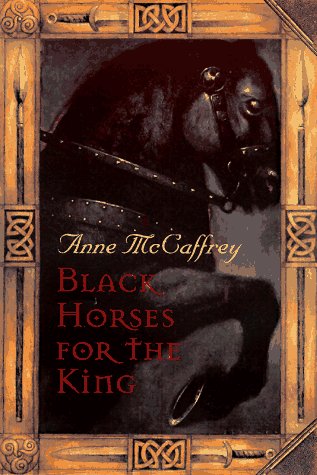
                • Cover of Black Horses for the King
                  Black Horses for the King

                  Anne McCaffrey · standalone novel · 1996

                  similar byadventurousancient worldhistorical fantasyhistorical fiction

                  Galwyn, son of a Roman Celt, escapes from his tyrannical uncle and joins Lord Artos, later know as King Arthur, using his talent with languages and way with horses to help secure and care for the Libyan horses that Artos hopes to use in battle against the Saxons.

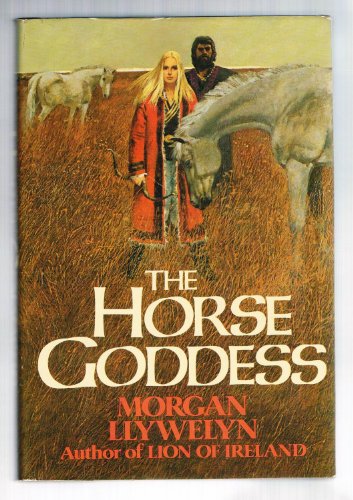
                • Cover of The Horse Goddess
                  The Horse Goddess

                  Morgan Llywelyn · standalone novel · 1982

                  similar byancient worldhistorical fantasygodsforbidden lovehistorical fiction+1 more

                  Epona, a golden Celtic beauty, commanded wind, fire, all the bests of the earth. But she could not resist Kazhak, the sensual Nomad Prince whose stallion swept her away to the farthest reaches of the strange Black Sea. Even as their passion forged a white-hot bond mightier than Celtic bronze, the Druid Priest of Epona's tribe pursued them. No mortal man, no earthly love, had yet withstood his awesome force. Published: Nov. 1983 469 pages Inside book jacket: With her national best-selling novel, Lion of Ireland: The Legend of Brian Boru, Morgan Llywelyn was hailed for her combination of brilliance and authenticity in bringing Celtic history to life. ... And now with The Horse Goddess she brings us a stormy love story that sweeps across the ancient world of the 8th century before Christ. Its heroine is Epona, whose legends finally made her a goddess; its hero, Kazhak, a Scythian warrior, a prince of the wild horsemen of the eastern plains. A woman of the west meets a man of the east in a world still swirling with elemental spirits. As their story opens, Troy is a crumbling ruin and Athens is rising far to the south. Mortal men and women are being turned into gods as tales are told and retold of their extraordinary adventures, and above all looms the awesome figure of Kernunnos, the Druid priest - the Shapechanger - who will become the prototype of the first werewolf as he pursues Epona and Kazhak from the Alps to the Ukraine. If this is not actual history, it has the ring of truth. Based on Morgan Llywelyn's painstaking research, it leads readers to say, "Yes, this is how it must have been." Epona and her people are destined to become part of the permanent landscape of memory.

                • Cover of Ministry of Alchemy
                  Ministry of Alchemy

                  series · 5 books · 2016

                  similar bymiddle eastadventuroushistorical fantasypolitical intrigue