More like Commando
anchored on:science fictionfar future
but
- Dune Universe
universe78 books1963
Start hereDune · Start here
similar byscience fictionfar future
Arrakis. Dune. The desert planet, where empire runs on a single substance: the spice melange, which folds space, prolongs life, and unlocks prescience, and which exists nowhere else in the known universe. Frank Herbert's saga is a meditation dressed as an adventure — feudal houses and a secret sisterhood, engineered messiahs and the patient ecology of a world without water, all turning on the terrible gravity of who commands the spice. It reads like scripture and schemes like a war room, ten thousand years hence, among people who have outlawed the thinking machine and made instruments of themselves instead. At its heart stand Herbert's original six — Dune, Dune Messiah, Children of Dune, God Emperor of Dune, Heretics of Dune, Chapterhouse: Dune — a single deepening arc across millennia, arguing the whole way between prophecy and free will. Around that spine his son Brian Herbert and Kevin J. Anderson have raised a vast prequel architecture: Prelude to Dune, tracing the great houses a generation before Paul; Legends of Dune, reaching back to the crusade that broke the machines; the Schools of Dune cycle on the founding of Bene Gesserit, Mentat, and Navigator; the Caladan Trilogy and Heroes of Dune filling years the originals left in shadow. Many hands, dozens of volumes, one desert. What sets Dune apart is its refusal of the simple: religion is manufactured, heroes are hazards, and the sand itself — worm, water, ecology — acts as a political power. Begin where the universe did, with Frank Herbert's Dune (1965), and read the original six in order; you need nothing else to feel the full weight. The prequels are a country to explore afterward, taken by era. Beginnings are delicate times.
- Dune
series20 books1963
part of Dune Universe
similar byscience fictionfar future
Frank Herbert's Dune Chronicles opens with 1965's Dune, set on the desert planet Arrakis where House Atreides takes control of the only source of the vital spice melange and young Paul Atreides is pulled into a struggle over its politics and religion. Herbert carried the story forward across five further novels — Dune Messiah, Children of Dune, God Emperor of Dune, Heretics of Dune, and Chapterhouse: Dune — following Paul's line over the following millennia, before Brian Herbert and Kevin J. Anderson later extended the saga. Many other editions of these six novels are omnibus and box-set repackagings rather than separate stories.
- Ender Wiggin
series14 books1977
part of Ender's Game Universe
similar byscience fictionfar future+1 more
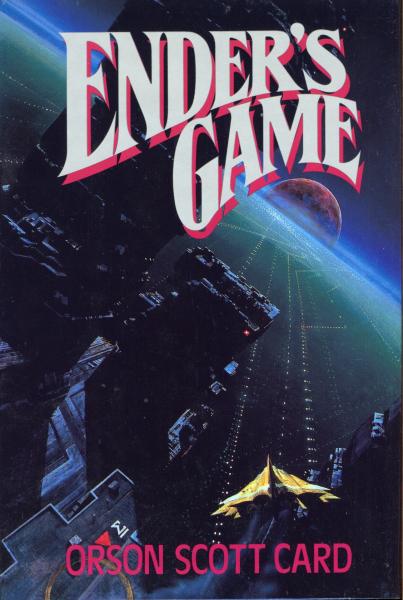
Orson Scott Card's Ender's Game (1985, expanded from his 1977 novella) follows child prodigy Andrew "Ender" Wiggin as he is recruited into a military training program built to prepare Earth's defenses for an anticipated third war against an insectoid alien species known as the Formics. The saga continues years later through Speaker for the Dead and Xenocide, following an older Ender as he confronts the moral weight of his role in that earlier conflict, and concludes the core arc in Children of the Mind, with Ender in Exile filling in the years between the first two books. Set within the wider Ender's Game universe, the series shifts from military coming-of-age story to slower, more philosophical science fiction as it progresses.
- Moties
series4 books1974
part of CoDominium
similar byscience fictionspacefar future
Larry Niven and Jerry Pournelle's The Mote in God's Eye (1974) depicts humanity's first contact with an alien species, the Moties, set within the far-future interstellar setting of Pournelle's codominium future history. The Gripping Hand continues that first-contact crisis years later, and Outies, written by J. R. Pournelle, carries the story forward into a new generation. Together the three books trace an escalating encounter between human and Motie civilizations within the codominium universe.
- Ringworld
series5 books1970
part of Known Space
similar byscience fictionspacefar future
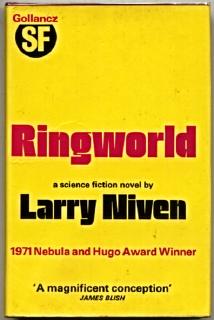
The Ringworld series is a series of science fiction novels written by American author Larry Niven. It is part of his Known Space series of stories. Its backdrop is the Ringworld, a giant artifact 3 million times the surface area of Earth circling a star. The series is composed of four standalone science fiction novels, the original award-winning book and its three sequels:1970: Ringworld 1979: The Ringworld Engineers 1996: The Ringworld Throne 2004: Ringworld's Children
- Starman Jones
Robert A. Heinleinstandalone novel1953
similar byscience fictionspacefar future+1 more
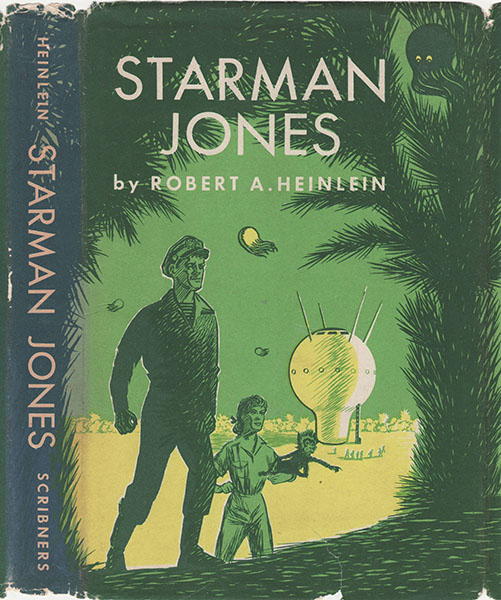
Starman Jones, a 1953 science fiction novel by Robert A. Heinlein, features a farm boy who wants to go to the stars. Charles Scribner's Sons published the book as part of the Heinlein juveniles series.
- Forever War
series10 books1972
similar byscience fictionspacefar futuremilitary science fiction
Joe Haldeman's The Forever War (1974) follows a soldier conscripted into a centuries-long interstellar war against the alien Taurans, using relativistic space travel so that months spent in transit correspond to years or decades passing back on Earth. Haldeman later returned to the same conflict in Forever Peace (1997), a thematically connected but separate story, and Forever Free (1999), a direct sequel set years after the original war's end. The first novel won the Hugo, Nebula, and Locus awards and is considered a foundational work of military science fiction.
- Double Star
Robert A. Heinleinstandalone novel1956
similar byscience fictionfar future+1 more
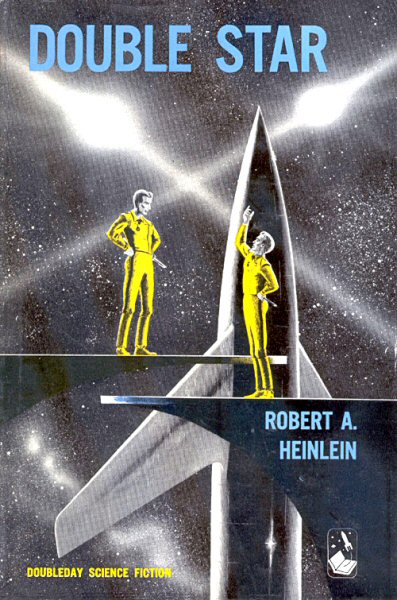
Lorenzo Smythe, the excellent yet unemployed actor, meets Dak Broadbent in a bar. Broadbent hires Lorenzo for an unspecified role, and hustles him onto a rocket ship. Broadbent turns out to be an assistant to the famous interplanetary politician and leader of the Expansionist party: John J. Bonforte. Bonforte, however, has been kidnapped by the political opposition on Mars, and due to Lorenzo's physical similarity to Bonforte, his staff wants Lorenzo to impersonate the politician for an important Martian ceremony.
- The Sirens of Titan
Kurt Vonnegut & Jr.standalone novel1959
similar byscience fictionspacefar future
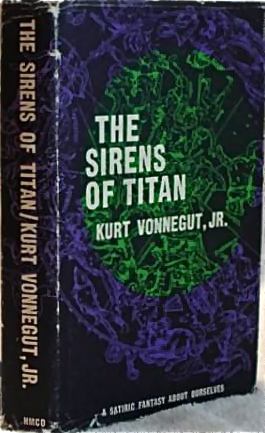
The Sirens of Titan is a comic science fiction novel by Kurt Vonnegut Jr., first published in 1959. His second novel, it involves issues of free will, omniscience, and the overall purpose of human history, with much of the story revolving around a Martian invasion of Earth.
- Old Man's War
series16 books2005
similar byscience fictionspacefar futuremilitary science fiction
The Old Man's War series is a series of science fiction novels by John Scalzi. The first book in the series, Old Man's War, was first published in 2005 by Tor Books, and was nominated for the Hugo Award for Best Novel in 2006. In 2026 it was a finalist for the Hugo Award for Best Series.
- The Gods Themselves
Isaac Asimovstandalone novel1972
similar byscience fictionfar future+1 more
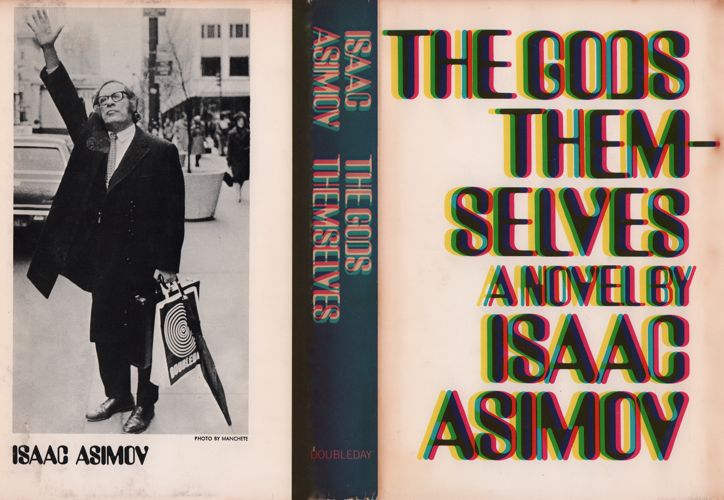
The Gods Themselves is a 1972 science fiction novel written by Isaac Asimov, and his first original novel in fifteen years. It won the Nebula Award for Best Novel in 1972, and the Hugo Award for Best Novel in 1973.
- Hitchhiker's Guide to the Galaxy
series16 books1979
part of The Hitchhiker's Guide to the Galaxy Universe
similar byscience fictionspacefar future
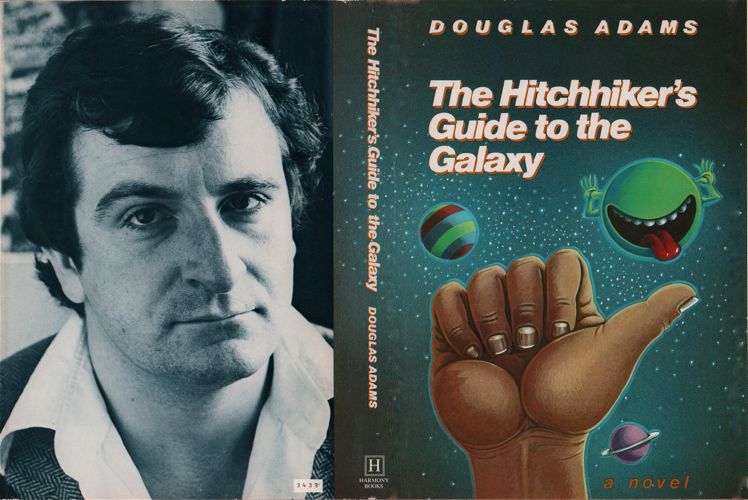
The Hitchhiker's Guide to the Galaxy is a comedy science fiction franchise created by Douglas Adams. Originally a radio sitcom broadcast over two series on BBC Radio 4 between 1978 and 1980, it was soon adapted to other formats, including both novels and comic books, a 1981 BBC television series, a 1984 text adventure game, stage shows and a 2005 feature film.
- Company Wars
series7 books1981
part of Alliance-Union Universe
similar byscience fictionspacefar future+1 more
Company Wars gathers the novels C. J. Cherryh set during the breakaway conflict between Earth's colonial Company and the newly independent Union, within her wider Alliance-Union future history. Anchored by the Hugo Award-winning Downbelow Station, the books follow different ships, stations, and crews caught on either side, from merchanter traders to military spacers, rather than a single continuing cast. Read in any order, they build up a picture of the political and economic pressure that reshapes Cherryh's larger Alliance-Union universe.
- Citizen of the Galaxy
Robert A. Heinleinstandalone novel1957
similar byscience fictionspacefar future
On a planet far distant from Earth, a lame beggar buys a young boy slave who has forgotten his origins. The beggar is more than he seems, and gives the boy an extensive education while employing him as an observer of activity in their city. Years later, the beggar is captured by the government, and the youth must escape the planet.
- The Stainless Steel Rat
series21 books1957
completed
similar byscience fictionspacefar future
James Bolivar diGriz, alias "Slippery Jim" and "The Stainless Steel Rat", is a fictional character and a series of comic science fiction novels written by Harry Harrison.
- Imperial Earth
Arthur C. Clarkestandalone novel1975
similar byscience fictionspacefar future
Imperial Earth is a science fiction novel by British writer Sir Arthur C. Clarke, published in 1975 by Gollancz Books. The plot follows the protagonist, Duncan Makenzie, on a trip to Earth from his home on Titan, in large part as a diplomatic visit to the U.S. for its quincentennial in 2276, but also to have a clone of himself produced. The book was published in time for the U.S. bicentennial in 1976.
- Terro-Human Future History
universe48 books1952
Start hereFuzzy Sequence · Start here
similar byscience fictionfar future+1 more
History does not repeat, Piper's chroniclers are fond of saying — it rhymes, and it rhymes in iron. Reckon the years from the first atomic pile, 1942, Year One of the Atomic Era, and follow the ledger forward some six thousand years: out of a nuclear war that nearly ended everything, up through the Terran Federation and its reach into the stars, down again through collapse and a long neobarbaric dark, and back up into the enlightened empires that rise from the ruins. It is one continuous future history — not a plot but a chronicle, worlds and centuries sharing a single unbroken timeline. H. Beam Piper assembled it in pieces through the 1950s and 60s, novels and novellas bound by chronology rather than by recurring heroes. The anchors are Little Fuzzy, a courtroom argument over whether a small golden native of Zarathustra is a person; Space Viking, raid and revenge amid the wreckage of the interregnum; and the Federation-era Four-Day Planet, The Cosmic Computer, and Uller Uprising. The eras sort cleanly — Federation, the System States War, the Space Vikings of the long dark, the Empire. After Piper's death in 1964 other hands took up the ledger: John F. Carr, who arranged the short fiction into the chronological Federation and Empire collections and carried on the Tanith and Space Viking line, plus Wolfgang Diehr's Fuzzy sequels and Dietmar Arthur Wehr's additions. The register is sober and engineer-eyed — competent men solving hard problems, empires ruled by benign despots, the cool conviction that civilizations rise and fall to the same recurring script. It ranges from the sunlit warmth of the Fuzzy books to the cold steel of a Viking raid. Newcomers start with Little Fuzzy, the warmest and most self-contained, or with Space Viking.
- Honorverse
universe83 books1993
Start hereHonor Harrington · Start here
similar byscience fictionspacefar futuremilitary science fiction
The wedge comes up, the sidewalls burn to life, and two walls of battle close across light-minutes of empty vacuum trading missile broadsides — because in the Honorverse, war is still fought by the doctrine of the age of sail, only the ocean is the interstellar void and the ships-of-the-line are dreadnoughts. This is David Weber's future, two millennia on: a galaxy of star nations bound by treaty, trade, and old grudges, where the small, wealthy Star Kingdom of Manticore holds a wormhole junction the commerce of humanity runs through, and the expansionist People's Republic of Haven means to take it. At the center stands one officer, Honor Harrington — captain, then something far larger — and the six-limbed empathic treecat who rides her shoulder. The spine is the Honor Harrington novels, more than a dozen books that carry her from an overlooked frontier picket up through fleet command and the knife-politics of a monarchy at war. Around that spine branch parallel lines, several written with collaborators: the Saganami Island books follow a younger generation of officers in the contested Talbott Cluster; the Wages of Sin novels, with Eric Flint, chase the genetic-slave trade to its source on Mesa; Manticore Ascendant, with Timothy Zahn, reaches back centuries to the Navy's shaky founding; and the Star Kingdom books, with Jane Lindskold, tell how humans and treecats first met. Anthologies fill the seams. Weber writes competence and consequence — dense hardware, denser politics, victories that cost, and a heroine whose defining virtue is her refusal to spend lives cheaply or duck the ones she must. Begin with On Basilisk Station: one ship, one thankless posting, one impossible situation. Read the main line in publication order; the collaborating branches reward you later, once the map of Manticore is yours.
- Heechee
series19 books1972
completed
similar byscience fictionspacefar future
The Heechee Saga, also known as the Gateway series, is a series of science fiction novels and short stories by Frederik Pohl. The Heechee are an advanced alien race that visited the Solar System hundreds of millennia ago and then mysteriously disappeared. They left behind bases containing artifacts, including working starships, which are discovered and exploited by humanity.
- The Fountains of Paradise
Arthur C. Clarkestandalone novel1979
similar byscience fictionspacefar future
The Fountains of Paradise is a 1979 science fiction novel by British writer Arthur C. Clarke. Set in the 22nd century, it describes the construction of a space elevator. This "orbital tower" is a giant structure rising from the ground and linking with a satellite in geostationary orbit at the height of approximately 36,000 kilometres. Such a structure would be used to raise payloads to orbit without the expense of using rockets. The novel won both the Hugo and Nebula Awards for Best Novel.
- Childe Cycle
series19 books1957
similar byscience fictionfar futuremilitary science fiction+1 more
The Childe Cycle is an unfinished series of science fiction novels by American writer Gordon R. Dickson. The name Childe Cycle is an allusion to "Childe Roland to the Dark Tower Came", a poem by Robert Browning, which provided inspiration for elements in the work. The series is sometimes referred to as the Dorsai series, after the Dorsai people who are central to it. The related short stories and novellas all center on the Dorsai, primarily members of the Graeme and Morgan families.
- Tower and the Hive
series7 books1959
completed
part of The Talents
similar byscience fictionspacefar future
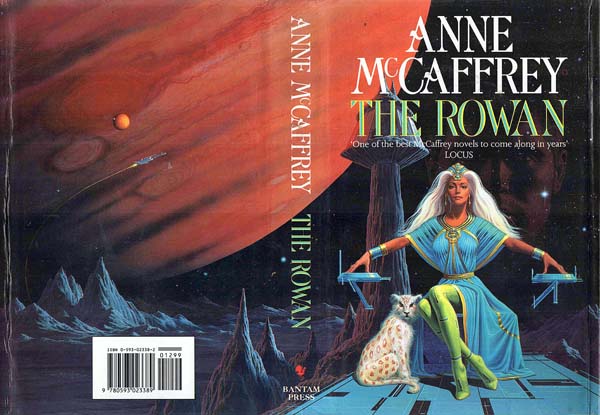
The Tower and the Hive series opens with The Rowan (1990), following an isolated but powerful telepath who is drawn out of her loneliness by a psychic call for help from a distant Talent facing an alien threat. Anne McCaffrey continued the story across four more novels, Damia, Damia's Children, Lyon's Pride, and the concluding The Tower and the Hive (1999), following later generations of a telepathic family staffing the Prime Towers that give a starfaring human civilization instant communication. The series is set later in the same Talents universe as McCaffrey's earlier Pegasus books.