More like Conflagration
anchored on:science fictionfar future
but
- Dune
series20 books1963
part of Dune Universe
similar byscience fictionfar futureother star systemsspace opera+1 more
Frank Herbert's Dune Chronicles opens with 1965's Dune, set on the desert planet Arrakis where House Atreides takes control of the only source of the vital spice melange and young Paul Atreides is pulled into a struggle over its politics and religion. Herbert carried the story forward across five further novels — Dune Messiah, Children of Dune, God Emperor of Dune, Heretics of Dune, and Chapterhouse: Dune — following Paul's line over the following millennia, before Brian Herbert and Kevin J. Anderson later extended the saga. Many other editions of these six novels are omnibus and box-set repackagings rather than separate stories.
- Dune Universe
universe78 books1963
Start hereDune · Start here
similar byscience fictionfar futureother star systemsspace opera
Arrakis. Dune. The desert planet, where empire runs on a single substance: the spice melange, which folds space, prolongs life, and unlocks prescience, and which exists nowhere else in the known universe. Frank Herbert's saga is a meditation dressed as an adventure — feudal houses and a secret sisterhood, engineered messiahs and the patient ecology of a world without water, all turning on the terrible gravity of who commands the spice. It reads like scripture and schemes like a war room, ten thousand years hence, among people who have outlawed the thinking machine and made instruments of themselves instead. At its heart stand Herbert's original six — Dune, Dune Messiah, Children of Dune, God Emperor of Dune, Heretics of Dune, Chapterhouse: Dune — a single deepening arc across millennia, arguing the whole way between prophecy and free will. Around that spine his son Brian Herbert and Kevin J. Anderson have raised a vast prequel architecture: Prelude to Dune, tracing the great houses a generation before Paul; Legends of Dune, reaching back to the crusade that broke the machines; the Schools of Dune cycle on the founding of Bene Gesserit, Mentat, and Navigator; the Caladan Trilogy and Heroes of Dune filling years the originals left in shadow. Many hands, dozens of volumes, one desert. What sets Dune apart is its refusal of the simple: religion is manufactured, heroes are hazards, and the sand itself — worm, water, ecology — acts as a political power. Begin where the universe did, with Frank Herbert's Dune (1965), and read the original six in order; you need nothing else to feel the full weight. The prequels are a country to explore afterward, taken by era. Beginnings are delicate times.
- Forever War
series10 books1972
similar byscience fictionfar futurespacemilitary science fiction+3 more
Joe Haldeman's The Forever War (1974) follows a soldier conscripted into a centuries-long interstellar war against the alien Taurans, using relativistic space travel so that months spent in transit correspond to years or decades passing back on Earth. Haldeman later returned to the same conflict in Forever Peace (1997), a thematically connected but separate story, and Forever Free (1999), a direct sequel set years after the original war's end. The first novel won the Hugo, Nebula, and Locus awards and is considered a foundational work of military science fiction.
- Tower and the Hive
series7 books1959
completed
part of The Talents
similar byscience fictionpsychic powersfar futurespaceother star systemsspace opera+2 more
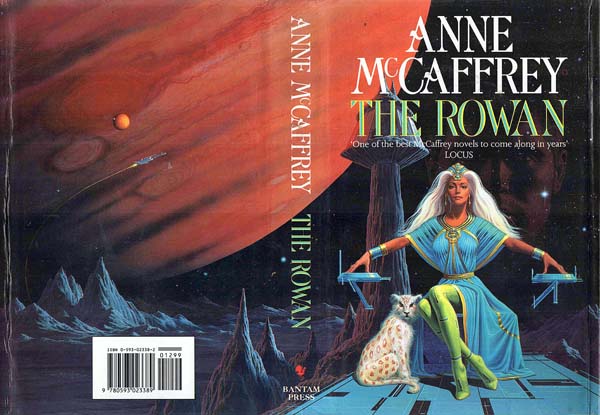
The Tower and the Hive series opens with The Rowan (1990), following an isolated but powerful telepath who is drawn out of her loneliness by a psychic call for help from a distant Talent facing an alien threat. Anne McCaffrey continued the story across four more novels, Damia, Damia's Children, Lyon's Pride, and the concluding The Tower and the Hive (1999), following later generations of a telepathic family staffing the Prime Towers that give a starfaring human civilization instant communication. The series is set later in the same Talents universe as McCaffrey's earlier Pegasus books.
- Ender's Shadow
series5 books1999
part of Ender's Game Universe
similar byscience fictionwarfar future+3 more
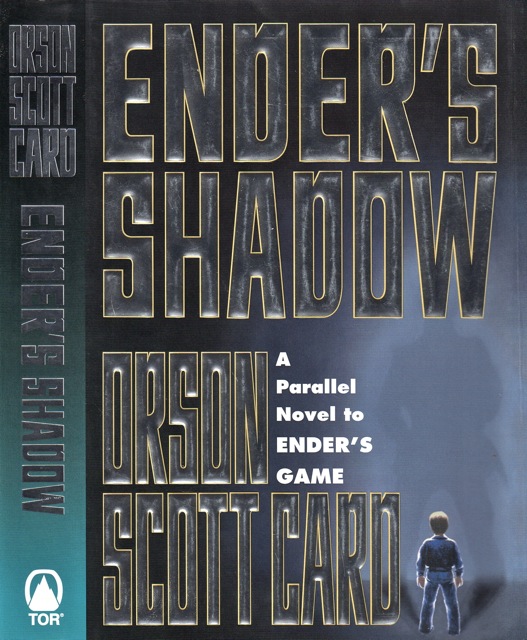
Orson Scott Card's Ender's Shadow retells the events of Ender's Game from the perspective of Bean, a physically stunted but ferociously intelligent street child recruited into the same Battle School program as Ender Wiggin. It launches the Shadow series, which follows Bean and other secondary Battle School characters into the political aftermath of the Formic Wars back on Earth, running parallel to and eventually past the timeline of Card's main Ender Quintet.
- Moties
series4 books1974
part of CoDominium
similar byscience fictionfar futurespaceother star systemsspace opera+2 more
Larry Niven and Jerry Pournelle's The Mote in God's Eye (1974) depicts humanity's first contact with an alien species, the Moties, set within the far-future interstellar setting of Pournelle's codominium future history. The Gripping Hand continues that first-contact crisis years later, and Outies, written by J. R. Pournelle, carries the story forward into a new generation. Together the three books trace an escalating encounter between human and Motie civilizations within the codominium universe.
- Skolian Empire Universe
series36 books1994
similar byscience fictionfar futureother star systemsspace opera+3 more
- Starship Troopers
Robert A. Heinleinstandalone novel1959
similar byadventurousscience fictionwarfar futurespaceother star systemsmilitary science fiction+1 more
Starship Troopers is a military science fiction novel by American writer Robert A. Heinlein. Written in a few weeks in reaction to the US suspending nuclear tests, the story was first published as a two-part serial in The Magazine of Fantasy & Science Fiction as Starship Soldier, and published as a book by G. P. Putnam's Sons on November 5, 1959.
- Deathworld
series4 books1960
completed
similar byadventurousscience fictionfar futureother star systems+3 more
Deathworld is the name of a series of science fiction novels by American writer Harry Harrison, including the books Deathworld, Deathworld 2 and Deathworld 3, plus the short story "The Mothballed Spaceship". The central hero is a gambler who becomes involved with colonists of an extremely hostile planet.
- Skyward
series9 books2018
part of Cytoverse
similar byscience fictionfar futurespaceother star systems+2 more
On the ruined world of Detritus, humanity lives underground beneath near-constant aerial bombardment from an alien force called the Krell, and Spensa Nightshade wants nothing more than to fly a starfighter, despite her father's reputation as a coward who fled battle. Brandon Sanderson's Skyward follows her fight to earn her wings and clear her father's name, uncovering secrets about her own strange abilities and the planet's buried past across Starsight, Cytonic, and Defiant. Co-author Janci Patterson contributes companion novellas that widen the view to supporting characters.
- Old Man's War
series16 books2005
similar byadventurousscience fictionfar futurewarspaceother star systemsspace operamilitary science fiction
The Old Man's War series is a series of science fiction novels by John Scalzi. The first book in the series, Old Man's War, was first published in 2005 by Tor Books, and was nominated for the Hugo Award for Best Novel in 2006. In 2026 it was a finalist for the Hugo Award for Best Series.
- Terro-Human Future History
universe48 books1952
Start hereFuzzy Sequence · Start here
similar byscience fictionfar futureother star systems+3 more
History does not repeat, Piper's chroniclers are fond of saying — it rhymes, and it rhymes in iron. Reckon the years from the first atomic pile, 1942, Year One of the Atomic Era, and follow the ledger forward some six thousand years: out of a nuclear war that nearly ended everything, up through the Terran Federation and its reach into the stars, down again through collapse and a long neobarbaric dark, and back up into the enlightened empires that rise from the ruins. It is one continuous future history — not a plot but a chronicle, worlds and centuries sharing a single unbroken timeline. H. Beam Piper assembled it in pieces through the 1950s and 60s, novels and novellas bound by chronology rather than by recurring heroes. The anchors are Little Fuzzy, a courtroom argument over whether a small golden native of Zarathustra is a person; Space Viking, raid and revenge amid the wreckage of the interregnum; and the Federation-era Four-Day Planet, The Cosmic Computer, and Uller Uprising. The eras sort cleanly — Federation, the System States War, the Space Vikings of the long dark, the Empire. After Piper's death in 1964 other hands took up the ledger: John F. Carr, who arranged the short fiction into the chronological Federation and Empire collections and carried on the Tanith and Space Viking line, plus Wolfgang Diehr's Fuzzy sequels and Dietmar Arthur Wehr's additions. The register is sober and engineer-eyed — competent men solving hard problems, empires ruled by benign despots, the cool conviction that civilizations rise and fall to the same recurring script. It ranges from the sunlit warmth of the Fuzzy books to the cold steel of a Viking raid. Newcomers start with Little Fuzzy, the warmest and most self-contained, or with Space Viking.
- Heaven Chronicles / Zones of Thought
series8 books1976
similar byscience fictionfar futurespacespace opera+1 more
- Company Wars
series7 books1981
part of Alliance-Union Universe
similar byscience fictionfar futurespacespace opera+1 more
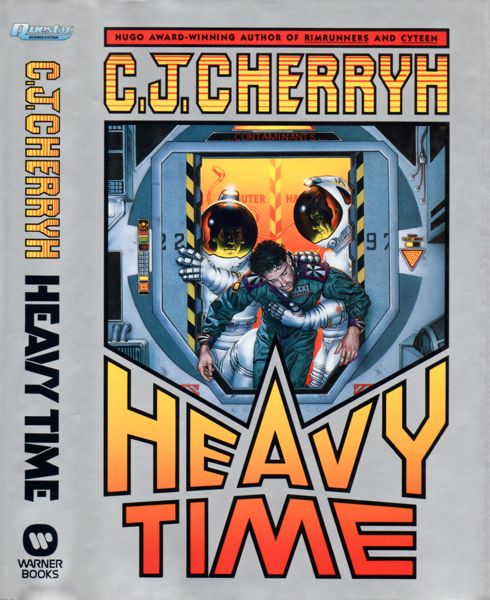
Company Wars gathers the novels C. J. Cherryh set during the breakaway conflict between Earth's colonial Company and the newly independent Union, within her wider Alliance-Union future history. Anchored by the Hugo Award-winning Downbelow Station, the books follow different ships, stations, and crews caught on either side, from merchanter traders to military spacers, rather than a single continuing cast. Read in any order, they build up a picture of the political and economic pressure that reshapes Cherryh's larger Alliance-Union universe.
- Uplift
series5 books1980
part of Uplift Universe
similar byadventurousscience fictionfar futurespaceother star systemsspace opera
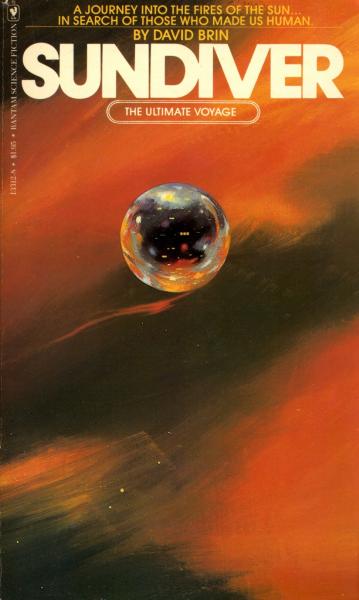
David Brin's Uplift trilogy opens with Sundiver, sending human explorers into the Sun itself, then follows a dolphin-crewed starship on the run from hostile aliens in Startide Rising and a fight over the colony world Garth in The Uplift War. The books sit inside Brin's wider Uplift Universe, built on the idea that spacefaring "patron" species genetically engineer younger "client" species into full sapience, with humanity an anomaly that reached the stars without a patron of its own.
- Childe Cycle
series19 books1957
similar byscience fictionwarfar futureother star systemsmilitary science fiction+2 more
The Childe Cycle is an unfinished series of science fiction novels by American writer Gordon R. Dickson. The name Childe Cycle is an allusion to "Childe Roland to the Dark Tower Came", a poem by Robert Browning, which provided inspiration for elements in the work. The series is sometimes referred to as the Dorsai series, after the Dorsai people who are central to it. The related short stories and novellas all center on the Dorsai, primarily members of the Graeme and Morgan families.
- The Stars My Destination
Alfred Besterstandalone novel1956
similar byadventurousscience fictionfar futurespaceother star systemsspace opera+1 more
When a passing spaceship refuses to rescue the lone survivor from the drifting wreck of another ship, he dedicates his life to discovering who made that decision and exacting his revenge, in the process altering human history and his own character.
- Hellhole
series3 books2011
similar byadventurousscience fictionfar futurespaceother star systemsspace opera+2 more
Brian Herbert and Kevin J. Anderson's Hellhole trilogy follows the settlers of a harsh penal-colony planet who discover it hides a far stranger secret beneath its surface, even as a former general turned governor plots rebellion against the ruling Constellation. Hellhole: Awakening and Hellhole: Inferno escalate both the political revolt and the planet's own hidden nature. It's an original setting for the two authors, separate from their Dune continuation work.
- Honorverse
universe83 books1993
Start hereHonor Harrington · Start here
similar byscience fictionfar futurespaceother star systemsspace operamilitary science fiction+2 more
The wedge comes up, the sidewalls burn to life, and two walls of battle close across light-minutes of empty vacuum trading missile broadsides — because in the Honorverse, war is still fought by the doctrine of the age of sail, only the ocean is the interstellar void and the ships-of-the-line are dreadnoughts. This is David Weber's future, two millennia on: a galaxy of star nations bound by treaty, trade, and old grudges, where the small, wealthy Star Kingdom of Manticore holds a wormhole junction the commerce of humanity runs through, and the expansionist People's Republic of Haven means to take it. At the center stands one officer, Honor Harrington — captain, then something far larger — and the six-limbed empathic treecat who rides her shoulder. The spine is the Honor Harrington novels, more than a dozen books that carry her from an overlooked frontier picket up through fleet command and the knife-politics of a monarchy at war. Around that spine branch parallel lines, several written with collaborators: the Saganami Island books follow a younger generation of officers in the contested Talbott Cluster; the Wages of Sin novels, with Eric Flint, chase the genetic-slave trade to its source on Mesa; Manticore Ascendant, with Timothy Zahn, reaches back centuries to the Navy's shaky founding; and the Star Kingdom books, with Jane Lindskold, tell how humans and treecats first met. Anthologies fill the seams. Weber writes competence and consequence — dense hardware, denser politics, victories that cost, and a heroine whose defining virtue is her refusal to spend lives cheaply or duck the ones she must. Begin with On Basilisk Station: one ship, one thankless posting, one impossible situation. Read the main line in publication order; the collaborating branches reward you later, once the map of Manticore is yours.
- Psychotechnic League
series29 books1949
similar byscience fictionfar future+2 more
The Psychotechnic League is Poul Anderson's earliest future history, tracing humanity's recovery from a devastating third world war under the guidance of a scientific institute trying to steer civilization away from repeating its mistakes, and eventually expanding into interstellar exploration. Anderson wrote it before his better-known Technic History and later adjusted its internal chronology to fit later work; it has been collected across several anthologies, including a three-volume Complete Psychotechnic League set.
- Uplift Universe
universe13 books1980
Start hereUplift · Start here
similar byadventurousscience fictionfar futurespaceother star systemsspace opera
No species, the Galactics insist, ever climbs to sapience alone. For a billion years the elder races have "uplifted" their chosen clients — reshaping some promising animal, gene by patient gene, into a thinking being, then binding it through long ages of indenture. Patron lifts client; client one day becomes patron; and every lineage traces back through the vast Galactic Library to the vanished Progenitors who began it all. Then a ragged band of primates arrives at the stars with no patron to claim them — wolflings, self-made, an affront to a hundred thousand years of law — and worse, these humans have already started uplifting neighbors of their own: the neo-dolphins and neo-chimpanzees of Earthclan. David Brin builds this galaxy across two trilogies. The first — Sundiver, the Hugo- and Nebula-winning Startide Rising, and the Hugo-winning The Uplift War — sends an expedition into the Sun, then follows the dolphin-crewed survey ship Streaker as it flees a discovery that sets fanatical star-clans at war, and a chimp-led resistance on an invaded colony world. The second sequence, Uplift Storm — Brightness Reef, Infinity's Shore, Heaven's Reach — descends to Jijo, a forbidden world where six fallen races hide as illegal settlers, and draws every loose thread toward a reckoning. Short fiction fills the margins. This is space opera with an ecologist's conscience: teeming with invented biologies, wry cross-species banter, and real unease about what we owe the minds we make. Begin with Startide Rising — the saga's beating heart, and readable on its own — or take Sundiver first and read straight through in publication order.
- Pip & Flinx
series18 books1972
part of Humanx Commonwealth
similar byadventurousscience fictionfar futurespaceother star systemsspace opera+1 more
The Pip & Flinx novels follow Flinx, a young man with an unusual, mysterious origin, and his ever-present animal companion Pip, across Alan Dean Foster's Humanx Commonwealth setting. Beginning with The Tar-Aiym Krang (1972) — chronologically the second entry, since Foster later filled in Flinx's earlier life — the series grew to fifteen novels published between 1972 and 2017, mixing planetary adventure with a slowly unfolding personal mystery.
- Solar Queen
series7 books1955
similar byscience fictionfar futurespacespace opera+1 more
Andre Norton's Solar Queen novels follow the crew of a free-trader starship under Captain Jellico as they scrape by hauling cargo and making first contact on the fringes of settled space. The first three books appeared in the 1950s; Norton returned to the series decades later and, from the 1990s on, completed it in collaboration with P. M. Griffin and Sherwood Smith. Across its seven novels the series keeps its ensemble trading-crew premise rather than following one continuous plot.