Loreful
HomeDiscover
Search series, authors…⌘K
Loreful

Reading orders for SF/F series and shared universes — with your place kept in every one.

Explore

UniversesSeriesWorksAuthorsAtlas

Help

FAQAboutSite map

Account & legal

Sign inCreate accountPrivacyTerms

Data

Built on ISFDB, Wikipedia, Wikidata and Open Library. Curated reading orders carry their reasoning on the page; the rest follow publication order. Data sources & licenses

© Loreful · data: ISFDB · CC BY

More like Devil's Horseman

anchored on:historical fantasyimmortalityour worldmedievalwar & militarycurses+2 more

but

Mood

The mood the book leaves you in.

  • The reading experience is propelled by journeys, exploration, and physical risk; excitement and forward momentum dominate over dread or introspection.
  • Joy and loss are deliberately mixed; the resolution grants characters something real while taking something else away, leaving warmth and sorrow together.
  • The book demands work from the reader — dense prose, difficult structure, unfamiliar ideas, or morally uncomfortable material — as part of its intended effect.
  • Grim events, cruelty, or despair dominate the atmosphere, and the book does not soften them with comfort or comic relief.
  • The atmosphere is quietly unsettling — wrongness, unease, and the uncanny pervade the book without necessarily escalating into overt horror.
  • The book is built to move the reader; character feeling is foregrounded and major scenes aim at a strong emotional response.
  • Humor is a primary aim and the prose plays for laughs — comic situations, wit, or dialogue produce sustained comedy, not occasional levity.
  • The book insists that things can improve; effort and decency are shown to matter, and the arc bends toward better outcomes even through hardship.
  • The book teaches as it goes — real facts, history, science, or craft are conveyed in enough depth that learning is part of the reading experience.
  • The book is designed to uplift and motivate, presenting perseverance or achievement in a way that invites the reader to aspire or act.
  • The overall register is cheerful and easygoing; stakes are kept gentle and the book avoids dwelling on pain or dread.
  • Withheld information drives the experience; the book sustains enigmas and secrets the reader wants resolved, whatever its genre.
  • The book is contemplative and inward-looking, giving more weight to thought, memory, and meaning than to external events.
  • The book works as comfort reading — low tension, a soothing pace, and an atmosphere the reader can unwind in.
  • Grief, loss, or melancholy set the dominant register, and the book lets sorrow stand rather than resolving it into comfort.
  • Sustained suspense is the point; the book keeps the reader braced for what happens next through danger, pressure, or impending revelation.
  • Playful invention and charm define the register — fanciful conceits, light absurdity, and a narration that delights in its own oddity.

About

What the story runs on.

  • Stories in which extraterrestrial beings are central — as characters, cultures, or the object of the plot.
  • Stories structured as a quest — a journey undertaken to find, deliver, or destroy something of great import.
  • Stories in which staying alive against nature, catastrophe, or scarcity is the central problem.
  • Stories of lovers kept apart by law, family, faith, or station, where the obstacle to love is the plot.
  • Stories in which a friendship — its making, testing, or loss — is the emotional center.
  • Stories of growing up — a young protagonist crossing from childhood into adult knowledge and responsibility.
  • Stories about who a character truly is — self-discovery, doubled lives, and the search for a self.
  • Stories about mourning — living through the death of a loved one and what loss does to the survivors.
  • Stories in which a buried family truth — hidden parentage, crimes, or shames — surfaces and reorders the present.
  • Stories driven by maneuvering for power — factions, conspiracies, and statecraft conducted in shadow.
  • Stories in which war itself is the subject — combat, occupation, and what warfare does to soldiers and civilians.
  • Stories organized around investigating a killing — the case, the clues, and the pursuit of the killer, in any genre's clothing.

Shelf

Where it sits in the library.

    • Fiction built on magic or other supernatural elements that have no scientific explanation.
    • Secondary-world fantasy at large scale, where the fate of nations or the world turns on the protagonists' struggle.
    • Fantasy set in a recognizably modern city or contemporary world where the supernatural intrudes on everyday life.
    • Fantasy that blends in horror's atmosphere and imagery, keeping a fantastical frame around grim or frightening material.
    • Action-driven fantasy following warriors or rogues with personal stakes against sorcerous threats, rather than world-spanning conflicts.
    • Fantasy set in a real historical period or a close analogue of one, with magic woven into the era.
    • Fantasy in which protagonists cross from the ordinary world into another world through a portal or similar passage.
    • Fiction that retells or reworks a traditional fairy tale in a new form or setting.
    • Fantasy drawing directly on myths, legends, and folklore, retelling them or building on their figures and logic.
    • Fantasy of ghosts, vampires, shapeshifters, psychics, and similar phenomena, usually set in an otherwise ordinary world.
    • Fiction mixing science-fictional trappings with overtly magical or impossible elements in one setting.
    • Low-stakes fantasy emphasizing comfort, community, and everyday pleasures over conflict and peril.
    • Speculative fiction of pervasive moral ambiguity, violence, and cynicism that rejects heroic conventions — fantasy and SF alike.
      • Fiction that extrapolates from science and technology — future societies, space travel, or speculative inventions — within at least nominally natural laws.
      • Science fiction of interstellar scope — starships, galactic polities, and adventure across star systems.
      • Science fiction committed to scientific rigor, where technical plausibility constrains the story.
      • Science fiction centered on armed forces and warfare, told largely from a military point of view.
      • Science fiction of networked, corporate-dominated near futures, pairing high technology with social decay.
      • Science fiction styled on nineteenth-century steam-powered technology, often in a Victorian or pseudo-Victorian setting.
      • Fiction depicting an oppressive or catastrophic society, presented as a warning.
      • Fiction set after civilization's collapse, following survivors in the ruins of the old world.
      • Fiction in which characters move between past and future, and the mechanics or consequences of that travel drive the plot.
      • Fiction exploring a world where a historical event went differently and history diverged from ours.
      • Science fiction about humanity's first encounter and communication with an alien intelligence.
      • Science fiction in which extraterrestrial forces attack or occupy Earth and humanity resists.
      • Fiction whose primary aim is to frighten or unsettle the reader through dread, menace, or the monstrous.
      • Horror of vast, indifferent, incomprehensible entities before which humanity is insignificant, in the Lovecraft tradition.
      • Horror of decaying houses, buried family secrets, and oppressive atmosphere in the Gothic literary tradition.
      • Horror centered on hauntings and the returning dead.
      • Horror located in the mind — paranoia, obsession, and unreliable perception rather than external monsters.
      • Horror built around the reanimated dead and survival amid their outbreaks.
      • Horror defined by explicit, transgressive gore that refuses to cut away from violence.
      • Speculative fiction of the strange and uncanny that resists both natural explanation and standard genre categories.
      • Fiction organized around solving a crime or puzzle, typically following an investigator toward the identification of a culprit.
      • A puzzle-first mystery that lays out clues so the culprit's identity can be deduced before the reveal.
      • Crime fiction of moral ambiguity, fatalism, and hard-edged style, set among the corrupt and the doomed.
      • A mystery following the realistic routines of police work — forensics, interviews, and case-building.
      • A gentle mystery with an amateur sleuth, a small community, and violence kept off the page.
      • A mystery set in a past era, where the investigation works within that period's methods and society.
      • Fast-paced fiction driven by imminent danger, pursuit, or high-stakes conspiracy, built to sustain tension.
      • A thriller of espionage — agents, tradecraft, and intelligence services in conflict.
      • A thriller centered on lawyers and the courtroom, where litigation carries the suspense.
      • A thriller driven by detailed contemporary or near-future technology, often military or scientific.
      • A thriller whose tension comes from mental states and manipulation between characters rather than external action.
      • Fiction whose central plot is a romantic relationship and its development toward an emotionally satisfying resolution.
      • Romance in which one or both partners are supernatural beings, blending fantasy elements into the love story.
      • A fantasy-romance hybrid in which the romantic arc and the fantasy plot carry equal weight.
      • Romance set in a past era, with courtship shaped by the period's society and manners.
      • Romance set in the present day, without supernatural or historical elements.
      • Fiction set in a real past period, where the historical setting materially shapes characters and events.
        • General and literary fiction emphasizing prose style, character interiority, or formal ambition over genre plot conventions.
        • Fiction in a realistic world where magical events occur and are treated as ordinary, in the tradition of Latin American literature.
        • Fiction that ridicules people, institutions, or society in order to criticize them.
        • Fiction of dreamlike, irrational imagery and logic that breaks from realistic representation.
        • Fiction that plays with narrative convention through metafiction, fragmentation, and self-reference.
        • Fiction propelled by journeys, exploration, and physical peril, where action and survival carry the plot.
        • Adventure fiction of ships and seafaring — naval engagements, voyages, and life at sea.
        • Fiction of the American frontier West — gunmen, ranchers, and lawmen, typically in the late nineteenth century.
        • Fiction centered on soldiers, campaigns, and the experience of warfare, historical or imagined.
          • Fiction written primarily to amuse, using comedic situations, wit, or parody as its organizing principle.
            • Multi-generational fiction following a family or dynasty across decades, with inheritance and kinship as the through-line.
              • Fiction whose world runs on explicit game mechanics — levels, stats, and skills that characters can see and exploit.
                • Fiction about costumed or superpowered heroes and their conflicts with comparable villains.

                Practical

                How long a commitment, whether it stands alone, and whether it has finished.

                Tap a chip to ask for it · tap again to rule it out · once more to clear. Numbers show what would be left.

                • Cover of Casca
                  Casca

                  series · 60 books · 1979

                  similar byadventurousour worldhistorical fantasyimmortalitycurseswar+2 more

                  Casca is a series of historical fantasy novels created by American author Barry Sadler in 1979. The series follows Casca Rufio Longinus, a Roman legionary who pierces the side of Jesus during the Crucifixion and is cursed with immortality, condemned to wander through history as a soldier until the Second Coming. The character draws upon traditions associated with Longinus and the Wandering Jew.

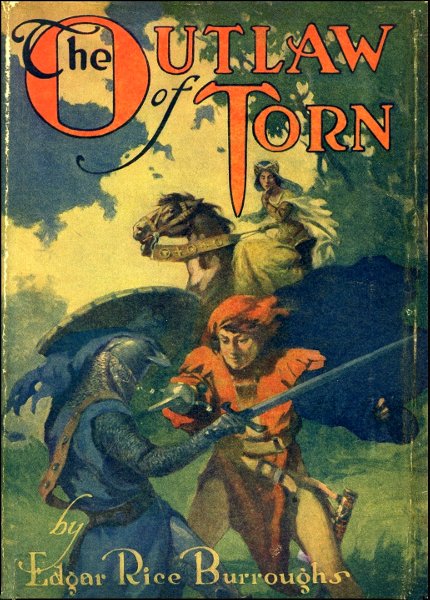
                • Cover of The Outlaw of Torn
                  The Outlaw of Torn

                  Edgar Rice Burroughs · standalone novel · 1927

                  similar byadventurousour worldmedieval

                  Raised from childhood by a vengeful royal fencing master who wants him turned into a weapon against the English crown, Norman of Torn grows up in 13th-century England knowing only combat and contempt for the nobility. By nineteen he leads the kingdom's largest band of outlaws and carries a king's ransom on his head, yet a priest's influence has left him with a streak of chivalry. Amid rebellion against King Henry III, Norman joins Simon de Montfort's rebels, and finds himself drawn to de Montfort's daughter despite a startling resemblance to the crown prince. An early adventure novel from Edgar Rice Burroughs.

                • Cover of Temeraire
                  Temeraire

                  series · 48 books · 2006

                  similar byadventuroushistorical fantasywar+1 more

                  Temeraire is a series of nine alternate history fantasy novels written by American author Naomi Novik. The novels follow the adventures of Captain William Laurence and his dragon, the eponymous Temeraire, and reimagine events of the Napoleonic Wars with "an air force of dragons, manned by crews of aviators". His Majesty's Dragon, the first entry in the series, won the Compton Crook Award in 2007 and was nominated for the Hugo Award for Best Novel the same year. Temeraire: In the Service of the King, an omnibus volume collecting the first three novels, won the Locus Award for Best First Novel in 2007. Temeraire was nominated for the Hugo Award for Best Series in 2017.

                • Cover of This Immortal
                  This Immortal

                  series · 2 books · 1966

                  similar byadventurousour worldimmortality

                  This Immortal is a single science fiction novel by Roger Zelazny, expanded from his 1965 serial ...And Call Me Conrad. In a depopulated future Earth largely toured by an alien race, its long-lived, secretive protagonist Conrad Nomikos is assigned to guide and protect a visiting alien across the ruins of Greece and Egypt, uncovering old grudges and assassination plots along the way. The novel shared the 1966 Hugo Award for Best Novel with Frank Herbert's Dune.

                • Cover of Red Eve
                  Red Eve

                  H. Rider Haggard · standalone novel · 1911

                  similar bymedievalhistorical fantasywardark+1 more

                  Red Eve is a historical novel with fantasy elements, by British writer H. Rider Haggard, set in the reign of Edward III. Red Eve depicts the Battle of Crécy and the Black Death, and also features a supernatural personification of Death called Murgh.

                • Cover of The Outlaws of Sherwood
                  The Outlaws of Sherwood

                  Robin McKinley · standalone novel · 1988

                  similar byadventurousmedievalhistorical fantasy

                  The Outlaws of Sherwood is a retelling of the legend of Robin Hood by Robin McKinley. In McKinley's afterword, she says, "The retellings through the centuries have echoed concurrent preoccupations." The story includes both the traditional Robin Hood characters — Little John, Much, Friar Tuck, Marian and Alan-a-dale — and characters of McKinley's own invention. Notably, three of the most important characters are women, all of whom escape marriage to prospective spouses chosen by their fathers.

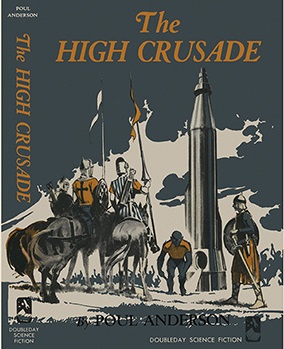
                • Cover of The High Crusade
                  The High Crusade

                  Poul Anderson · standalone novel · 1960

                  similar byadventurousmedievalwar+1 more

                  The High Crusade is a science fiction novel by American writer Poul Anderson, about the consequences of an extraterrestrial scoutship landing in medieval England. Poul Anderson described the novel as "one of the most popular things I've ever done, going through many book editions in several languages."

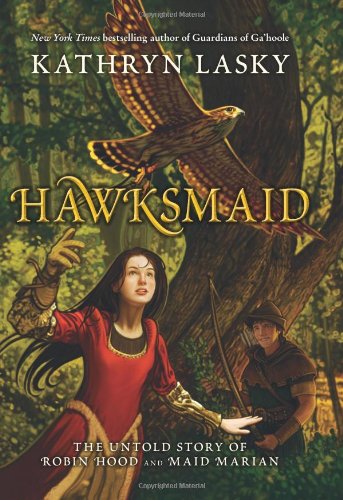
                • Cover of Hawksmaid: The Untold Story of Robin Hood and Maid Marian
                  Hawksmaid: The Untold Story of Robin Hood and Maid Marian

                  Kathryn Lasky · standalone novel · 2010

                  similar byadventurousour worldmedievalhistorical fantasy

                  A retelling of the Robin Hood & Maid Marian story, with Marian ("Matty") as the one who uses her hawks to steal from the rich and give to the poor. "Daughter of one of England's most famous falconers, Matty knows her destiny lies with her father's magnificent birds even before she begins to hear their thoughts and speak their language."

                • Cover of The Black Douglas
                  The Black Douglas

                  S. R. Crockett · standalone novel · 1899

                  similar byadventurousmedievalhistorical fantasydark

                  The Black Douglas is a historical fantasy novel by the Scottish author Samuel Rutherford Crockett published in 1899. It features the historical figures William Douglas, 6th Earl of Douglas, and Gilles de Retz ("Bluebeard"), though in reality they never met. It is set in Scotland and France in the fifteenth century and blends history with supernatural elements. The novel is cited as an influence for J.R.R. Tolkien's The Hobbit and The Lord of the Rings.

                • Cover of Eric Brighteyes
                  Eric Brighteyes

                  series · 2 books · 1891

                  similar byadventurousmedieval+2 more

                  H. Rider Haggard's Eric Brighteyes is a Viking-age saga set in 10th-century Iceland, following the golden-eyed warrior Eric Thorgrimursson's doomed love for Gudruda against a backdrop of clan rivalry, sorcery, and blood feud after the sorceress Swanhild and the chieftain Ospakar both move against the match. Written in 1891 in the style of the Old Norse sagas Haggard admired, it stood alone for nearly a century until Mildred Downey Broxon, writing under a Norse pen name, continued the story in the 1979 sequel Eric Brighteyes #2: A Witch's Welcome.

                • Cover of Flame in the Mist
                  Flame in the Mist

                  series · 4 books · 2017

                  similar byour worldmedievalhistorical fantasy+1 more

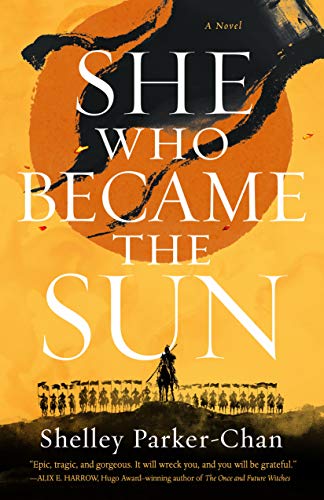
                • Cover of The Radiant Emperor
                  The Radiant Emperor

                  series · 2 books · 2021

                  similar bymedievalhistorical fantasywardark

                  The Radiant Emperor reimagines the rise of the founder of a Chinese dynasty as a peasant girl who takes on her dead brother's identity and destiny to survive famine and war, rising through ambition and deception toward the throne. Shelley Parker-Chan's duology, beginning with She Who Became the Sun, follows her against a rival commander on the opposing side of a civil war, concluding in He Who Drowned the World.

                • Cover of The Valhalla Saga
                  The Valhalla Saga

                  series · 4 books · 2013

                  similar bymedieval+6 more

                • Cover of Gentlemen of the Road
                  Gentlemen of the Road

                  Michael Chabon · standalone novel · 2007

                  similar byadventurousour worldmedieval

                  Gentlemen of the Road is a 2007 serial novel by American author Michael Chabon. It is a "swashbuckling adventure" set in the khaganate of Khazaria around AD 950. It follows two Jewish bandits who become embroiled in a rebellion and a plot to restore a displaced Khazar prince to the throne.

                • Cover of Until Forever
                  Until Forever

                  Johanna Lindsey · standalone novel · 1995

                  similar byadventurousour worldmedievalcurses

                  Rosleen White, professor of medieval history and collector of Antique weapons gets more than she counted on when she acquires a sword named "Blooddrinker's Curse". For when she cuts her finger on the blade (feeding her blood to the blade) an ancient accursed Viking appears in her lecture hall and sweeps her back in time with him to the Viking past.

                • Cover of Yamada Monogatari
                  Yamada Monogatari

                  series · 23 books · 2005

                  similar bymedievaladventuroushistorical fantasy+1 more

                • Cover of Henry Sturges
                  Henry Sturges

                  series · 2 books · 2010

                  similar byadventuroushistorical fantasydark

                • Cover of The Brethren
                  The Brethren

                  H. Rider Haggard · standalone novel · 1904

                  similar byadventurousmedievalwar+1 more

                  "... a tale ... of that pregnant and mysterious epoch, when men by thousands were glad to lay down their lives for visions and spiritual hopes, could find a picture, however faint and broken, of the long war between Cross and Crescent waged among the Syrian plains and deserts. Of Christian knights and ladies also, and their loves and sufferings in England and the East; of the fearful lord of the Assassins whom the Franks called Old Man of the Mountain, and his fortress city, Masyaf. Of the great-hearted, if at times cruel Saladin and his fierce Saracens; of the rout at Hattin itself, on whose rocky height the Holy Rood was set up as a standard and captured, to be seen no more by Christian eyes; and of the last surrender, whereby the Crusaders lost Jerusalem forever." (From the Author's Note)

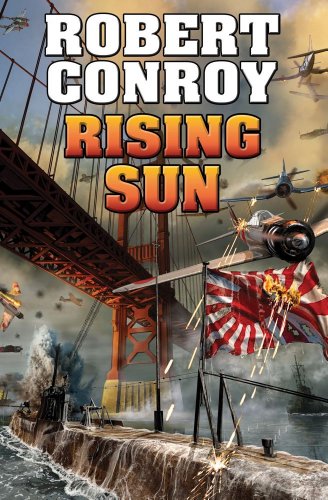
                • Cover of Rising Sun
                  Rising Sun

                  Robert Conroy · standalone novel · 2012

                  similar byadventurousour worldwar & militarywar

                  "1942: what should have been a decisive victory for the Allies in the Battle of Midway has become a horrendous disaster instead. America's handful of carriers in the Pacific have blundered into a Japanese submarine picket line and most have been sunk. The United States has only one carrier remaining, while the ragtag remnants of U.S. battleships - an armada still reeling from the defeat at Pearl Harbor - are in even worse shape. The Pacific belongs to the Japanese. Yet, despite disaster, the U.S. is determined to strike back. And now a grand plan is put forth to lure the Japanese into an ambush that could restore the balance in the Pacific and give the forces of freedom a fighting chance once more." Goodreads Oct 20, 2022

                • Cover of The Secrets of the Immortal Nicholas Flamel
                  The Secrets of the Immortal Nicholas Flamel

                  series · 15 books · 2007

                  similar byadventurousour worldimmortality

                  The Secrets of the Immortal Nicholas Flamel is a series of six fantasy novels written by Irish author Michael Scott, completed in 2012. The first book in the series, The Alchemyst, was released in 2007, and the sequels were released at the rate of one per year, concluding with The Enchantress in 2012. The cover artist for the series is Michael Wagner.

                • Cover of The Gone-Away World
                  The Gone-Away World

                  Nick Harkaway · standalone novel · 2008

                  similar byadventurousour worldwar+1 more

                  The Gone-Away World is the debut novel of British author Nick Harkaway, a science fiction story set in a post-apocalyptic world crippled by the 'Go-Away War'. The book was first published in June 2008 by Heinemann.

                • Cover of The Healer's War
                  The Healer's War

                  Elizabeth Ann Scarborough · standalone novel · 1988

                  similar byour worldwar & militarywardark

                  The Healer's War is a 1988 science fiction novel by American writer Elizabeth Ann Scarborough. It won the Nebula Award for Best Novel in 1989. The story is about a military nurse during the Vietnam War.

                • Cover of The Broken Sword
                  The Broken Sword

                  Poul Anderson · standalone novel · 1954

                  similar bymedievalcursesdark+1 more

                  The Broken Sword is a fantasy novel by American writer Poul Anderson, originally published on 5 November 1954. A revised edition was issued by Ballantine Books in January 1971 as the twenty-fourth volume of their Ballantine Adult Fantasy series. The original text was reissued by Gollancz in 2002. Set during the Viking Age, the novel features numerous references to Norse mythology.

                • Cover of King Raven
                  King Raven

                  series · 3 books · 2006

                  similar byadventurousmedieval+3 more

                  The King Raven Trilogy is a series of historical novels by American writer Stephen R. Lawhead, based on the Robin Hood legend. Lawhead relocates Robin Hood from Sherwood Forest in Nottingham to Wales, and sets the story in the late eleventh century, after the Battle of Hastings and to coincide with the Norman invasion of Wales and the struggles the Cymry (Welsh) people against the Normans, and the political intrigue of medieval Britain. The trilogy consists of three books named Hood, Scarlet, and Tuck. The King Raven series continued his themes of reimagining popular mythology into more authentic and gritty settings, which began with his Pendragon Cycle.