More like Discworld
anchored on:fantasysecondary worldfunny
but
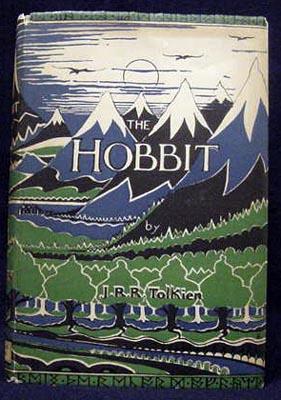
- The Hobbit
series2 books1937
completed
part of Tolkien's legendarium
similar byfantasysecondary worldwhimsicaladventurousmiddle gradequestsfairy tale retelling+4 more
The Hobbit (1937) is J. R. R. Tolkien's children's fantasy novel following the reluctant burglar Bilbo Baggins, who joins a company of dwarves and the wizard Gandalf on a journey to reclaim treasure guarded by the dragon Smaug. It stands as a complete adventure on its own, but shares its setting with the rest of Tolkien's legendarium and leads into the events of The Lord of the Rings.
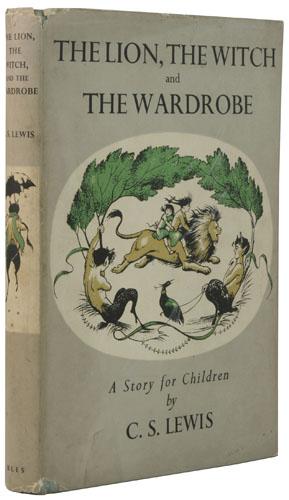
- Narnia
series26 books1950
part of Narnia Universe
similar byfantasysecondary worldcoming of ageadventurouschildrenportal fantasy+4 more
The Chronicles of Narnia is a series of seven portal fantasy novels by British author C. S. Lewis. Illustrated by Pauline Baynes and originally published between 1950 and 1956, the series is set in the fictional realm of Narnia, a fantasy world of magic, mythical beasts, and talking animals. It narrates the adventures of various children who play central roles in the unfolding history of the Narnian world. Except in The Horse and His Boy, the protagonists are all children from the real world who are magically transported to Narnia, where they are sometimes called upon by the lion Aslan to protect Narnia from evil. The books span the entire history of Narnia, from its creation in The Magician's Nephew to its eventual destruction in The Last Battle.
- The Princess Bride
William Goldmanstandalone novel1973
similar byfantasyfunnysecondary worldwhimsicalhumoradventurousquests
The Princess Bride: S. Morgenstern's Classic Tale of True Love and High Adventure, The "Good Parts" Version is a 1973 fantasy romance novel by American writer William Goldman. The book combines elements of comedy, adventure, fantasy, drama, romance, and fairy tale. It is metafictionally presented as an abridgment of a longer work by the fictional S. Morgenstern, and Goldman's commentary asides are constant throughout. It was originally published in the United States by Harcourt Brace, then later by Random House, while in the United Kingdom it was later published by Bloomsbury.
- His Dark Materials Universe
universe13 books1995
Start hereHis Dark Materials · Start here
similar byfantasycoming of ageyoung adultadventurousparallel universe+6 more
In a world like ours and unlike it, every human soul walks outside the body in the shape of an animal — a daemon, who speaks, who cannot be lied to, and who settles into one fixed form only when childhood ends. This is the country of His Dark Materials: a company of parallel worlds across which an invisible dust of consciousness drifts down upon the waking mind; where a Church that calls itself the Magisterium would sooner sever a child's soul than let that Dust be understood; and where a golden instrument, the alethiometer, answers true questions for anyone with the patience to read it. Philip Pullman's design stands in two trilogies and a scatter of shorter tales. His Dark Materials — Northern Lights (published in America as The Golden Compass), The Subtle Knife, and The Amber Spyglass — carries Lyra Belacqua from the rooftops of a shadow Oxford across the borders between worlds. The Book of Dust returns to that same territory: La Belle Sauvage looks back to Lyra as an infant carried through a great flood, while The Secret Commonwealth follows her grown and less certain into adulthood, with a concluding volume closing the arc. Around them sit slim companion books — Lyra's Oxford, Once Upon a Time in the North, Serpentine — and Nicholas Wright's stage adaptation, made with Pullman's blessing. The register is grave and luminous at once, its title lifted from Milton and its quarrel drawn from Blake: a story that takes the side of curiosity, love, and the physical world against any authority that would forbid them. It reads as adventure — armoured bears, aeronauts, knife-cut windows between skies — yet reasons like philosophy. Begin with Northern Lights / The Golden Compass and read the first trilogy through before turning to The Book of Dust, which deepens everything the first has already made you feel.
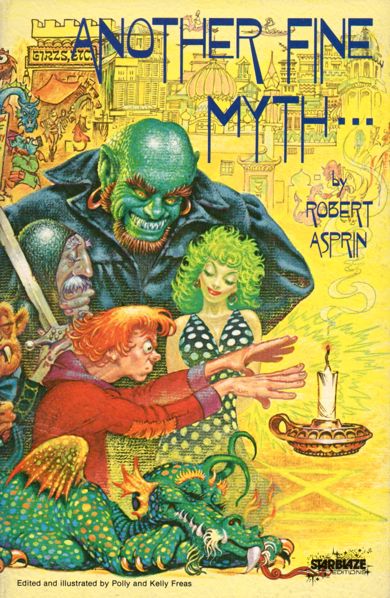
- Myth Adventures
series33 books1978
similar byfantasyfunnysecondary worldhumor+3 more
MythAdventures or Myth Adventures is a fantasy series created by Robert Lynn Asprin. After twelve novels by Asprin, published 1978 to 2002, he and Jody Lynn Nye continued the series with seven more books that they wrote together. After his death in May 2008, Nye has continued the series on her own.
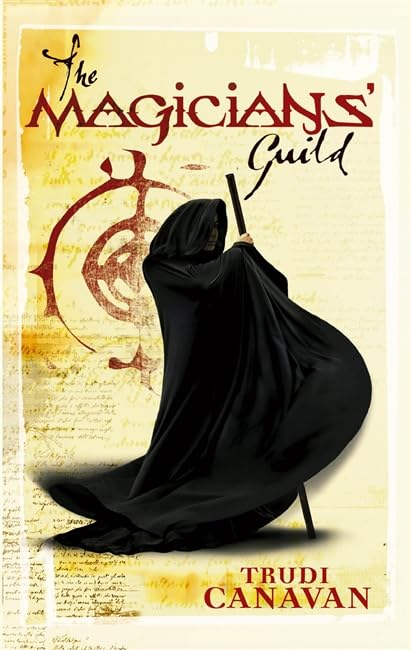
- The Black Magician Trilogy
series3 books2001
part of Kyralia series
similar byfantasysecondary worldmagic schools+6 more
Trudi Canavan's Black Magician Trilogy (The Magicians' Guild, The Novice, The High Lord, 2001-2003) opens in the city of Imardin, where the ruling magicians' guild's annual purge of the slums goes wrong when a street girl named Sonea unknowingly shatters their protective shield with raw, untrained power. The guild must hunt her down and decide whether to control her or train her, and the trilogy follows Sonea's forced initiation into magical society and the guild's internal politics. It's Canavan's best-known trilogy and the founding story of her Kyralia setting.
- Enchanted Forest
series7 books1985
similar byfantasysecondary worldmiddle gradelighthearted+6 more
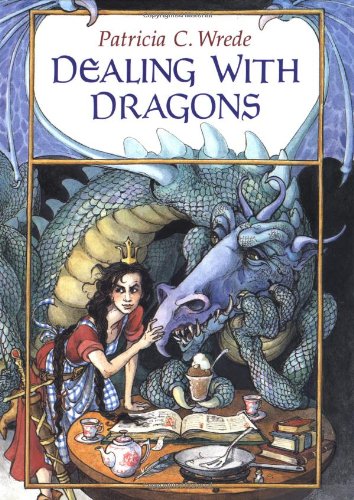
Patricia Collins Wrede is an American author of fantasy literature. She is known for her Enchanted Forest Chronicles series for young adults, which was voted number 84 in NPR's 100 Best-Ever Teen Novels list.
- Howl's Castle
series3 books1986
completed
similar byfantasysecondary worldwhimsicaladventurous+7 more
Howl's Moving Castle (1986) follows Sophie Hatter, cursed by the Witch of the Waste into an old woman's body, who takes refuge in the wandering castle of the wizard Howl and strikes an uneasy bargain with his fire demon Calcifer while trying to break the spell. Diana Wynne Jones returned to the same magical kingdom in Castle in the Air (1990), following a new lead character, Abdullah, with Sophie and Howl appearing in supporting roles, and again in House of Many Ways (2008).
- Bored of the Rings
Henry N. Beard & Douglas C. Kenneystandalone novel1969
similar byfantasyfunnysecondary worldhumorsatirequests+1 more
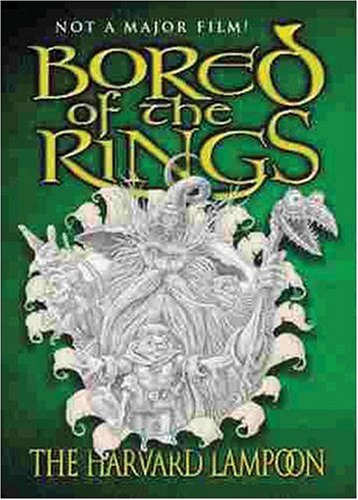
Bored of the Rings is a 1969 parody of J. R. R. Tolkien's The Lord of the Rings. This short novel was written by Henry Beard and Douglas Kenney, who later founded National Lampoon. It was published in 1969 by Signet for The Harvard Lampoon, and, unusually for a parody, has remained in print for over 50 years. It has been translated into at least twelve languages.
- The Immortals
series6 books1992
part of Tortall
similar byfantasysecondary worldcoming of ageyoung adultwizardsadventurous+2 more
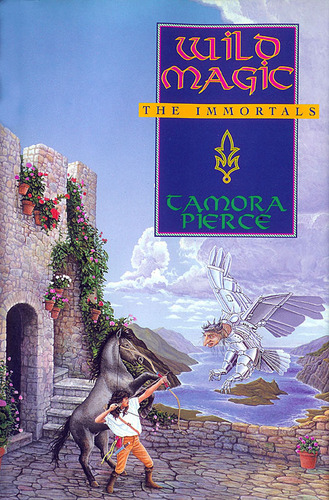
Tamora Pierce's Immortals quartet follows Daine, a young woman whose 'wild magic' lets her communicate with and shapeshift among animals, as she's drawn into the kingdom of Tortall's defense against immortal creatures -- griffins, dragons and darker things -- released back into the world after centuries sealed away. Beginning with Wild Magic, the four books pair Daine's personal coming-of-age with an escalating magical threat, and connect to Pierce's earlier Song of the Lioness quartet through several shared characters.
- Derkholm
series2 books1998
completed
similar byfantasysecondary worldwhimsicalmagic schools+3 more
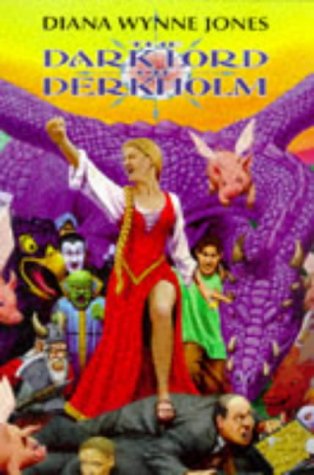
Diana Wynne Jones's two-book sequence needles the conventions of package-tour fantasy: in The Dark Lord of Derkholm, an ordinary, animal-loving wizard named Derk is conscripted to play the world's compulsory "Dark Lord" role for a businessman running exploitative guided tours of the fantasy world for outside tourists. Year of the Griffin follows one of Derk's griffin children years later, enrolled at a chronically underfunded wizards' university with a band of misfit students. Both books satirize familiar fantasy-quest tropes rather than playing them straight.
- Earthsea Cycle
series18 books1964
completed
part of Earthsea
similar byfantasysecondary worldwizardsreflective+4 more
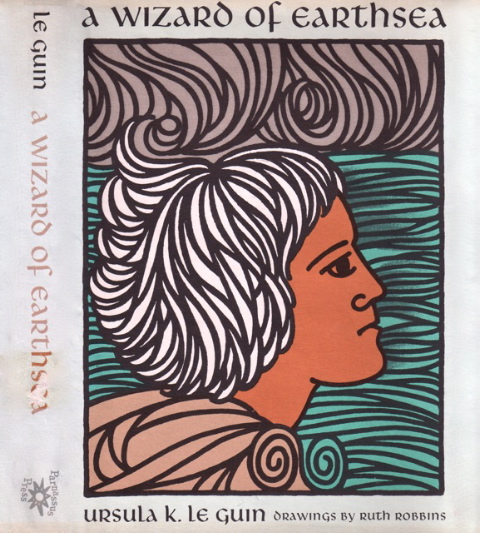
The Earthsea Cycle, also known as Earthsea, is a series of high fantasy books written by American author Ursula K. Le Guin. Beginning with A Wizard of Earthsea (1968), The Tombs of Atuan (1970), and The Farthest Shore (1972), the series was continued in Tehanu (1990), and Tales from Earthsea and The Other Wind. In 2018, all the novels and short stories were published in a single volume, The Books of Earthsea: The Complete Illustrated Edition, with artwork by Charles Vess.
- The Carpet People
series4 books1971
completed
similar byfantasysecondary worldadventurous+2 more
The Carpet People imagines an entire civilization of tiny peoples living among the towering fibers of a carpet, where different tribes must set aside old rivalries and unite against a shared threat sweeping through their world. Terry Pratchett wrote the original version at seventeen, then substantially rewrote it in 1992, famously noting that the book 'had two authors, and they were both the same person.' It reads as an early, more straightforward dry run for the comic invention Pratchett would later bring to Discworld.
- Cosmere
universe54 books2005
Start hereThe Final Empire · Start here
similar bysecondary worldfantasy+3 more
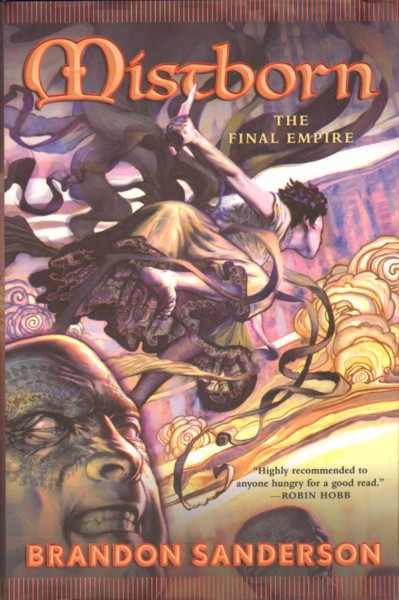
Before the worlds, there was Adonalsium, and then there was not. A god shattered into sixteen Shards of raw creative power, and those who seized them carried their fragments across the void to seed new planets, new peoples, new ways of working the impossible. The Cosmere is the one universe those Shards made: a scattering of worlds that seem, at first, to share nothing but a sky, until you notice the same law running quietly beneath each of them, and the same silent traveler passing through their margins. Every world keeps its own book and its own magic. On Scadrial, the Mistborn cycle burns metals into power: a self-contained trilogy of thieves and tyranny, followed by a second era that drags the same world into gunslinging early industry. On storm-battered Roshar, The Stormlight Archive raises its vast, ongoing epic around knights, spren, and oaths spoken aloud. Elsewhere stand the shorter keystones: Elantris, a city of fallen gods; Warbreaker, a tale of returned dead and living color; White Sand, told in graphic-novel form under the twin suns of Taldain. Threaded between them run the novellas, from Tress of the Emerald Sea and Yumi and the Nightmare Painter to The Sunlit Man and the pieces gathered in Arcanum Unbounded, where the hidden connections surface most plainly. All of it is the design of one hand, Brandon Sanderson, working a single pattern across two decades. What sets this universe apart is its faith in rules: magic here is a system, lawful and learnable, so discovery feels less like wonder handed down than like physics worked out. The cross-connections reward the patient reader, a symbol here, a name there, one immortal wanderer everywhere, but no book demands you have read another first. Newcomers do best entering through Mistborn: The Final Empire, the most self-contained doorway, or the standalone Elantris or Warbreaker; readers who prefer their epics vast can begin with The Way of Kings. The deeper links, and the novellas that expose them, wait for whenever you are ready to look.
- Tales of the Frog Princess
series9 books2002
similar byfantasysecondary worldmiddle gradelightheartedfairy tale retelling+4 more
- The Princess and the Goblin
series2 books1871
completed
similar byfantasysecondary worldcoming of ageadventurousquests+1 more
- The Old Kingdom / Abhorsen milieu
series11 books1995
similar byfantasysecondary worldyoung adult+1 more
The Old Kingdom, or Abhorsen in North America and the UK, is a fantasy series written by Australian author Garth Nix. It originated in 1995 with the novel Sabriel and has continued in the novels Lirael (2001), Abhorsen (2003), Goldenhand (2016), and Terciel & Elinor (2021), as well as a prequel novel titled Clariel (2014). The Old Kingdom also consists of the novella The Creature in the Case (2005) and various other short fiction.
- World of Septimus Heap
series12 books2005
similar byfantasysecondary worldwizardsadventurousmiddle grade+4 more
- Dragonlance
universe436 books1984
Start hereDragons of Autumn Twilight · Start here
similar bysecondary worldfantasy+1 more
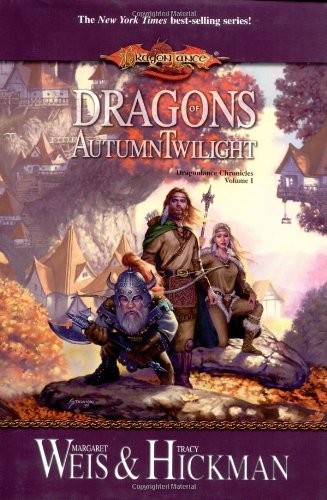
The gods have kept their silence over Krynn for three hundred years, and the world has learned to make do without them: the dragons are a nursery tale, the old clerics gone, faith worn down to superstition. Then strangers bearing a blue crystal staff cross an autumn road, and shadows with wings blot out the three moons. This is a world where magic answers to those moons—white, red, and black—where a lance is the only weapon a dragon fears, and where the fate of nations turns on a handful of friends who meet again at a tavern table and find the age of legend has come for them. At its heart stand Margaret Weis and Tracy Hickman's twin trilogies. Chronicles—Dragons of Autumn Twilight, Winter Night, and Spring Dawning—follows the Heroes of the Lance through the War of the Lance; Legends turns inward to the twins, the frail mage Raistlin and his warrior brother Caramon, and the bargain a man will strike for power. Around this core Krynn sprawls across five ages and hundreds of volumes by many hands: The Raistlin Chronicles, The War of Souls, the Preludes and Meetings cycles, the Tales anthologies, with Richard A. Knaak, Douglas Niles, Jean Rabe, and Chris Pierson each adding elf-kingdoms, dragon-overlords, and long-buried history. It is a shared world—vast, uneven, honestly enormous. What sets Dragonlance apart is its warmth. This is heroic fantasy of fellowship and hard choices rather than grimness—the companionship of the road, courage measured against temptation, gods who watch to see whether mortals deserve them back. Begin with Chronicles, then read Legends; that pairing is the doorway every reader and both creators point newcomers through.
- The Phantom Tollbooth
Norton Justerstandalone novel1961
similar byfantasyfunnywhimsicalcoming of agechildrenquestsportal fantasy+2 more
A journey through a land where Milo learns the importance of words and numbers provides a cure for his boredom.
- A Wizard in Rhyme
series8 books1986
completed
similar byfantasysecondary worldwizardsadventurousportal fantasy+3 more
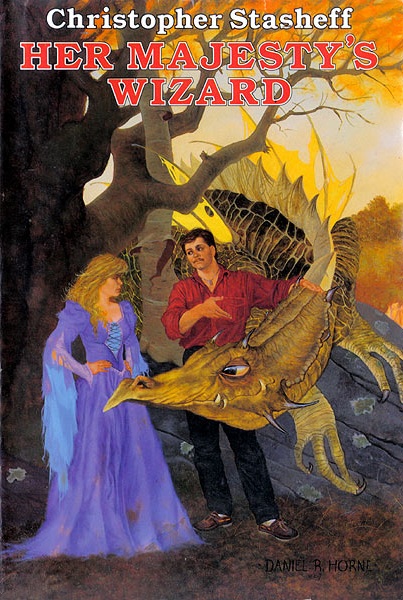
A Wizard in Rhyme is a series of fantasy novels by American writer Christopher Stasheff. The series follows the character of Matthew Mantrell, an English literature Ph.D. student, who is transported to a magical world where poetry is used to cast spells. There his knowledge of poetry, gained through his literature studies, establishes him as a powerful wizard and positions him as "lord wizard of the realm". The series consists of eight novels, and is said to have hints of L. Sprague de Camp and Fletcher Pratt.
- A Song of Ice and Fire
series14 books1996
part of World of Ice and Fire
similar bysecondary worldfantasypolitical intriguemultiple pov
A Song of Ice and Fire is a series of high fantasy novels by the American author George R. R. Martin. Martin began writing the first volume, A Game of Thrones, in 1991, and published it in 1996. Martin, who originally envisioned the series as a trilogy, has released five out of seven planned volumes. The most recent entry in the series, A Dance with Dragons, was published in 2011. Since then, Martin has been working on the sixth novel, titled The Winds of Winter. A seventh novel, A Dream of Spring, is planned to follow.
- The Last Unicorn
series8 books1968
similar byfantasysecondary worldquestsbittersweet+1 more
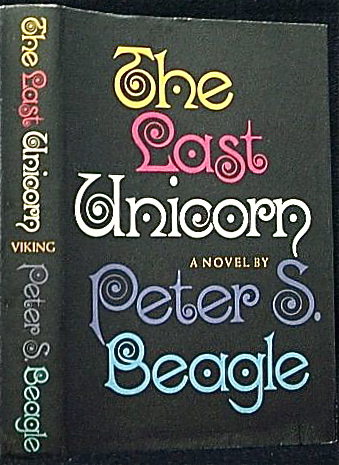
The Last Unicorn is Peter S. Beagle's 1968 fantasy novel about a unicorn who, believing herself the last of her kind, sets out to learn what became of the others. Beagle later returned to her world twice more: The Last Unicorn: The Lost Version prints an early draft of the original novel, and The Way Home (2023) collects two novellas continuing the story decades on. Together the books trace one novel's long afterlife rather than a conventional multi-book series.