More like Doppelganger
anchored on:science fictionfar futurespaceother star systems
but
- Ender Wiggin
series14 books1977
part of Ender's Game Universe
similar byscience fictionaliensfar futureother star systems+2 more
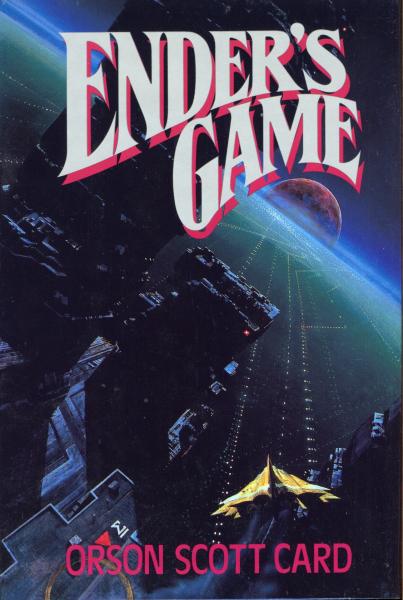
Orson Scott Card's Ender's Game (1985, expanded from his 1977 novella) follows child prodigy Andrew "Ender" Wiggin as he is recruited into a military training program built to prepare Earth's defenses for an anticipated third war against an insectoid alien species known as the Formics. The saga continues years later through Speaker for the Dead and Xenocide, following an older Ender as he confronts the moral weight of his role in that earlier conflict, and concludes the core arc in Children of the Mind, with Ender in Exile filling in the years between the first two books. Set within the wider Ender's Game universe, the series shifts from military coming-of-age story to slower, more philosophical science fiction as it progresses.
- Ringworld
series5 books1970
part of Known Space
similar byscience fictionaliensfar futurespaceother star systemsspace opera+1 more
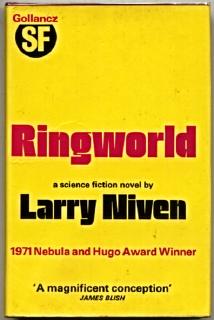
The Ringworld series is a series of science fiction novels written by American author Larry Niven. It is part of his Known Space series of stories. Its backdrop is the Ringworld, a giant artifact 3 million times the surface area of Earth circling a star. The series is composed of four standalone science fiction novels, the original award-winning book and its three sequels:1970: Ringworld 1979: The Ringworld Engineers 1996: The Ringworld Throne 2004: Ringworld's Children
- Culture
series15 books1987
completed
part of The Culture
similar byscience fictionfar futurespace opera+2 more
The Culture series is a science fiction series written by Scottish author Iain M. Banks and released from 1987 until 2012. The stories centre on The Culture, a utopian, post-scarcity space society of humanoid aliens and advanced superintelligent artificial intelligences living in artificial habitats spread across the Milky Way galaxy. The main themes of the series are the dilemmas that an idealistic, more-advanced civilization faces in dealing with smaller, less-advanced civilizations that do not share its ideals, and whose behaviour it sometimes finds barbaric. In some of the stories, action takes place mainly in non-Culture environments, and the leading characters are often on the fringes of the Culture, sometimes acting as agents of the Culture in its plans to civilize the galaxy. Each novel is a self-contained story with new characters, although reference is occasionally made to the events of previous novels.
- Hainish
series33 books1964
completed
similar byscience fictionfar futureother star systems+1 more
The Hainish Cycle consists of a number of science fiction novels and stories by Ursula K. Le Guin. The cycle is set in a future history that features civilizations of human beings on planets orbiting a number of nearby stars, including Terra ("Earth"); these humans are contacting each other for the first time and establishing diplomatic relations, as well as setting up a confederacy under the guidance of the oldest of the human worlds, the peaceful planet Hain. In this history, human beings did not evolve on Earth, but they were instead the result of interstellar colonies planted by Hain in the distant past, after which interstellar travel ceased for an extended period. Some of the human races have new genetic traits, a result of ancient Hainish experiments in genetic engineering; this includes people who can dream while awake, and a world of hermaphroditic people who only enter active sexuality once per month, not knowing which sex will manifest in them. In keeping with Le Guin's narrative approach, she uses varied social and environmental settings to explore the anthropological and sociological outcomes of human evolution in those environments. The author often discounted the characterization of a so-called "Hainish Cycle".
- Against the Fall of Night
series2 books1953
similar byscience fictionfar futureother star systems+1 more
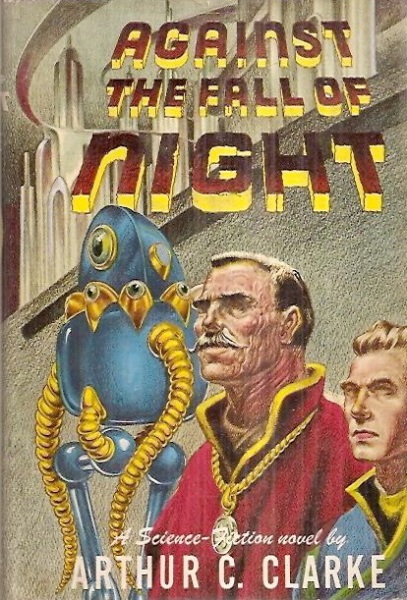
Against the Fall of Night is Arthur C. Clarke's 1953 novel of a stagnant, climate-controlled city called Diaspar a billion years in Earth's future, where a young man named Alvin becomes the first in living memory to want to leave it. Clarke later rewrote the book more expansively as The City and the Stars, and in 1990 Gregory Benford wrote Beyond the Fall of Night, an authorized sequel continuing on from this original, shorter version's ending.
- Heechee
series19 books1972
completed
similar byscience fictionfar futurealiensspaceother star systemsspace opera+1 more
The Heechee Saga, also known as the Gateway series, is a series of science fiction novels and short stories by Frederik Pohl. The Heechee are an advanced alien race that visited the Solar System hundreds of millennia ago and then mysteriously disappeared. They left behind bases containing artifacts, including working starships, which are discovered and exploited by humanity.
- Well World
series11 books1977
similar byscience fictionfar futureother star systemsspacespace opera+2 more
- Embassytown
China Miévillestandalone novel2011
similar bymysteriousscience fictionfar futurealiensidentityspaceother star systems+1 more
In the far future, humans have colonized a distant planet, home to the enigmatic Ariekei, sentient beings famed for a language unique in the universe, one that only a few altered human ambassadors can speak. Avice Benner Cho, a human colonist, has returned to Embassytown after years of deep-space adventure. She cannot speak the Ariekei tongue, but she is an indelible part of it, having long ago been made a figure of speech, a living simile in their language. When distant political machinations deliver a new ambassador to Arieka, the fragile equilibrium between humans and aliens is violently upset. Catastrophe looms, and Avice is torn between competing loyalties—to a husband she no longer loves, to a system she no longer trusts, and to her place in a language she cannot speak yet speaks through her.
- The Trade Pact Universe
series26 books1997
similar byscience fictionfar futurealiensspaceother star systems+1 more
- Teixcalaan
series2 books2019
similar byscience fictionfar futureidentityother star systemsspace opera+3 more
Arkady Martine's space opera duology follows Mahit Dzmare, ambassador from the small, independent Lsel Station, as she arrives in the vast Teixcalaanli Empire to investigate her predecessor's death and finds herself caught up in the empire's own succession crisis. A Memory Called Empire and A Desolation Called Peace pair court intrigue with Mahit's conflicted, outsider fascination with an empire she can't help admiring.
- Foundation Universe
universe123 books1940
Start hereFoundation · Start here
similar byscience fictionfar future+2 more
There is a science that reads the future of quadrillions the way an astronomer reads the orbits of stars. It is called psychohistory, and its equations foresee something the ruling Galactic Empire cannot admit: the throne is rotting, and thirty thousand years of barbarism are coming. One man, Hari Seldon, cannot stop the fall. He can only shorten it — by seeding a Foundation of scholars at the rim of the galaxy, a fragile institution built to carry knowledge across the dark and cut the interregnum to a single millennium. This is a universe told in the register of history itself: the long view, the calm of deep time, empires measured in centuries and men measured against them. The spine is Asimov's original trilogy — Foundation, Foundation and Empire, Second Foundation — followed decades later by the sequels Foundation's Edge and Foundation and Earth and the prequels Prelude to Foundation and Forward the Foundation. Late in life Asimov braided this in with his other future histories: the Robot novels of detective Elijah Baley and his humaniform partner R. Daneel Olivaw (The Caves of Steel, The Naked Sun, The Robots of Dawn, Robots and Empire) and the early Galactic Empire novels (Pebble in the Sky and its kin), until one continuous chronicle ran from the first thinking robots to the Second Empire. Other hands extend it — the Second Foundation Trilogy by Gregory Benford, Greg Bear, and David Brin, and shared-world spinoffs such as Robot City — so the corpus sprawls beyond a single author's tidy shelf. What distinguishes it is that the drama is intellectual: crises resolved by insight, nerve, and dialogue rather than fleets and blades, each turn hinging on the hidden logic of the Seldon Plan. Begin where readers have always begun — with Foundation, and the original trilogy in publication order. The rest opens outward from there.
- Heaven Chronicles / Zones of Thought
series8 books1976
similar byscience fictionfar futurespacespace opera+2 more
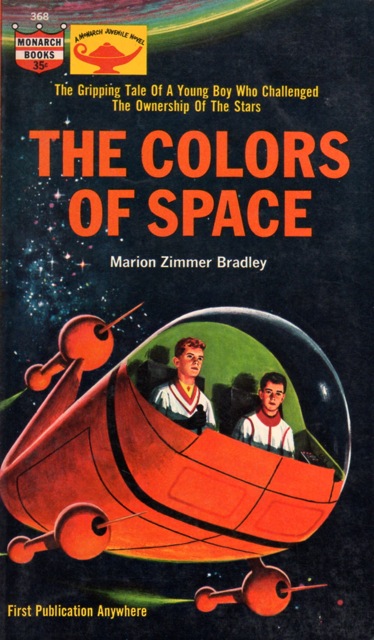
- The Colors of Space
Marion Zimmer Bradleystandalone novel1963
similar bymysteriousscience fictionfar futurealiensspaceother star systemsspace opera
The Lhari seem peaceful and friendly, but they go to some lengths to protect their monopoly on faster-than-light travel. One young man is sent to discover their secrets.
- Dipple
series2 books1961
completed
similar byscience fictionfar futureother star systems+2 more
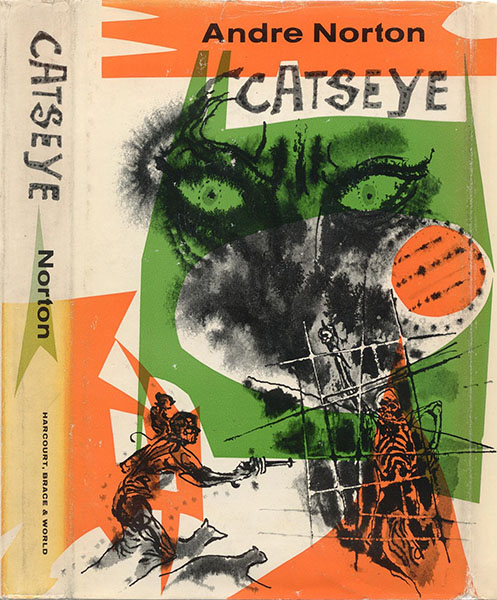
Andre Norton's Dipple books are linked by a shared setting rather than a continuing plot: the Dipple, a squalid refugee slum for displaced aliens and humans on a distant colony world, first introduced in Catseye (1961). Night of Masks (1964), grouped here alongside it, follows a different, disfigured young protagonist drawn into his own separate adventure that also touches the Dipple, rather than continuing Catseye's story. Each book stands alone, connected mainly by Norton's recurring interest in outcasts finding purpose off-world.
- First Foreigner Sequence
series4 books1994
part of Foreigner
similar byscience fictionfar futureother star systems+2 more
C. J. Cherryh's original Foreigner trilogy opens the larger Foreigner series, following Bren Cameron, the sole human translator-diplomat (paidhi) permitted contact with the atevi, an alien people whose loyalties run on a hierarchical bond called man'chi rather than human emotions like love or friendship. Generations after a lost human ship stranded its descendants on the atevi's world, Bren must manage the fraught exchange of human technology just as the starship Phoenix unexpectedly returns, throwing both human and atevi society into crisis. Foreigner, Invader, and Inheritor lay the groundwork for the decades of political intrigue the wider series continues.
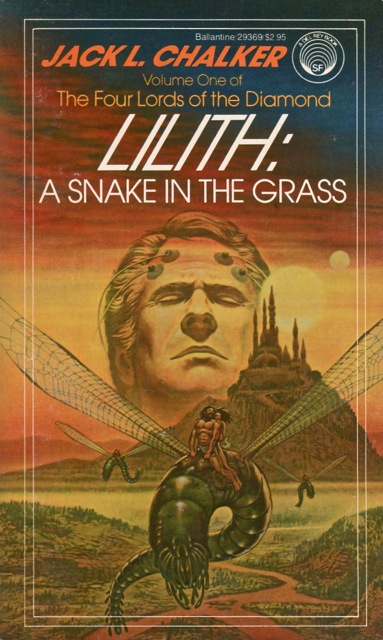
- The Four Lords of the Diamond
series4 books1981
completed
similar byscience fictionfar futureidentityother star systemsspace opera+1 more
Jack L. Chalker's Four Lords of the Diamond sends a single infiltrator, reconstructed with a new identity each time, onto four different prison planets ruled by despotic 'Lords' within a star system called the Warden Diamond, hunting a traitor who could be hiding as any one of them. Each novel follows the same mission through a different one of the four worlds before the tetralogy's conclusion.
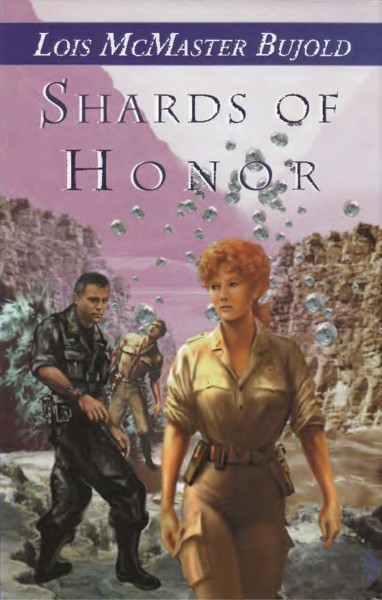
- Vorkosigan
universe27 books1986
Start hereShards of Honor · Chronological start
similar byscience fictionfar futureother star systemsspace opera+1 more
On Barrayar they will tell you that a man is measured by his forebears and the straightness of his spine — which is a difficulty for Miles Vorkosigan, born brittle-boned and half-height into the highest military caste of a planet that not long ago left such infants on the hillside to die. Beyond his backwater lies the wormhole nexus: a scatter of human worlds strung along unstable jump-routes, where a blood-and-honor warrior aristocracy, a coolly egalitarian utopia, and a hundred lesser polities trade, spy, and go to war. Miles cannot pass the physicals. So he builds himself a fleet, a false name, and a career out of sheer talky brilliance and a constitutional refusal to sit still. Lois McMaster Bujold has spent decades on this future, and it reads as one long life more than a franchise. It opens a generation early with Miles's mother, Cordelia — a level-headed survey captain from Beta Colony who marries into Barrayaran politics — before handing the saga to Miles himself, from teenage con-artist admiral to Imperial troubleshooter, and eventually to the next generation. Around that spine stand companion novels set elsewhere in the nexus: Falling Free, among the engineered zero-gee "quaddies"; Ethan of Athos; and the later books. Many volumes are gathered into omnibuses; several have taken Hugo Awards. The pleasure is voice and heart more than hardware — comedies of intrigue that turn, without warning, into hard questions about disability, ambition, biology as destiny, and what honor costs the people who keep it. Newcomers have two clean doors: Shards of Honor (paired with Barrayar as Cordelia's Honor) for the chronological start, or The Warrior's Apprentice to meet Miles at full velocity.
- Eversion
Alastair Reynoldsstandalone novel2022
similar byscience fictionfar futureother star systemsspace opera+1 more
A small group of intrepid explorers are in search of a remote and mysterious artefact. It's a well-funded expedition, well organised, which is lucky as they're sailing north of Bergen on the schooner Demeter, searching for a narrow inlet which will lead them to a vast uncharted lake - and their goal — Until disaster strikes. Doctor Silas Coade wakes from disturbing dreams, on the steamship Demeter, in pursuit of an extraordinary find almost too incredible and too strange to believe, secreted within a lagoon in the icy inlets of Patagonia. But as they come in sight of their prize he and the crew see they are not the first to come so far: there is a wreck ahead, and whatever ruined it may threaten them as well— Shaking off his nightmares, Doctor Silas Coade joins his fellow exploders on the deck of the zeppelin Demeter and realises something has already gone dangerously wrong with their mission. If any of them are to survive, then he will have to take the exploration - and their lives - into his own hands …
- Academy / Priscilla (Hutch) Hutchins
series16 books1983
similar byscience fictionaliensfar futurespaceother star systems+2 more
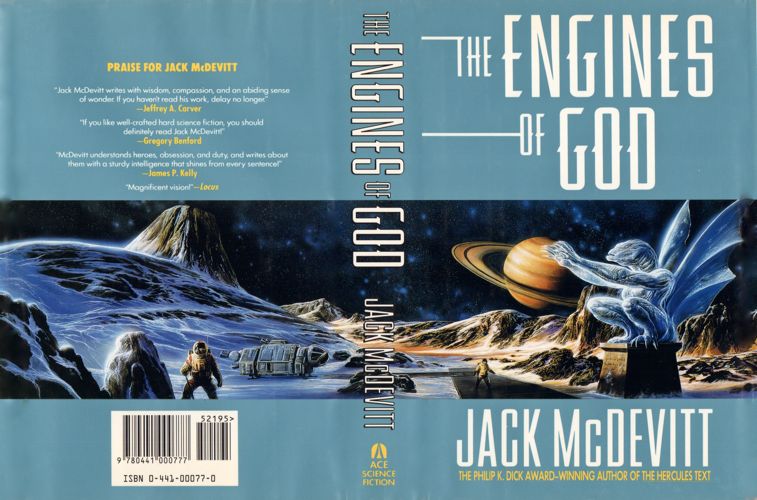
Jack McDevitt's Academy novels follow Priscilla 'Hutch' Hutchins, a starship pilot turned administrator, across a series of archaeological mysteries involving vanished alien civilizations and inexplicable ancient artifacts scattered through human space. Beginning with The Engines of God, the series treats deep time and the near-total absence of intelligent alien life as its central mystery, favoring slow-burn discovery over action. McDevitt returned to Hutch across three decades of publication.
- The Avatar
Poul Andersonstandalone novel1978
similar bymysteriousscience fictionfar futurealiensspaceother star systemsspace opera
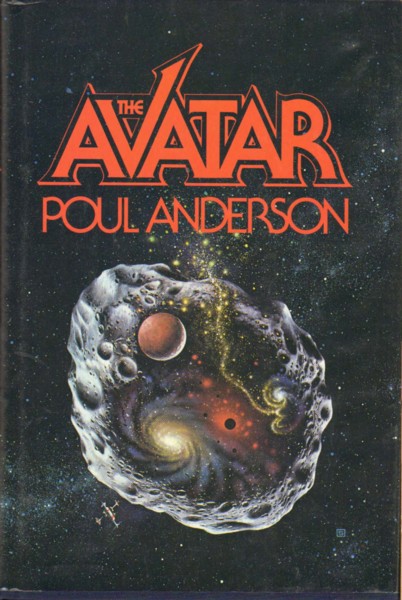
After humanity discovers portals that transport a space vessel through time and space, a crew which has visited the planet of another species returns to Earth, only to find a political faction in power which seeks to conceal this knowledge in the name of social stability. With the aid of the political opposition, they escape and journey through the portal in search of knowledge, and perhaps even to meet those who created the portal system.
- Far Future History
series4 books1982
completed
part of Birthright
similar byscience fictionfar futurespace opera+4 more
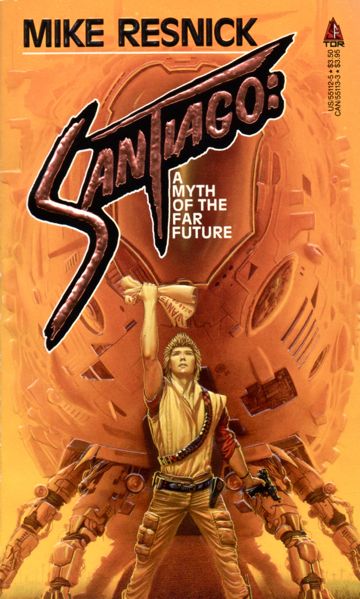
Far Future History collects Mike Resnick's Birthright-universe far-future Western sequence, told as a series of tall tales in the style of the Old West relocated into deep space, complete with lonely heroes, shoot-outs, and faithless companions. Santiago: A Myth of the Far Future anchors the sequence, building its own outlaw legend the way frontier folklore mythologized gunslingers. The related volumes extend the same Birthright history across the far future rather than forming one continuous plot.
- Pip & Flinx
series18 books1972
part of Humanx Commonwealth
similar byscience fictionfar futurealiensspaceother star systemsspace opera
The Pip & Flinx novels follow Flinx, a young man with an unusual, mysterious origin, and his ever-present animal companion Pip, across Alan Dean Foster's Humanx Commonwealth setting. Beginning with The Tar-Aiym Krang (1972) — chronologically the second entry, since Foster later filled in Flinx's earlier life — the series grew to fifteen novels published between 1972 and 2017, mixing planetary adventure with a slowly unfolding personal mystery.
- Alex Benedict
series13 books1987
similar bymysteriousscience fictionfar futurespaceother star systems+1 more
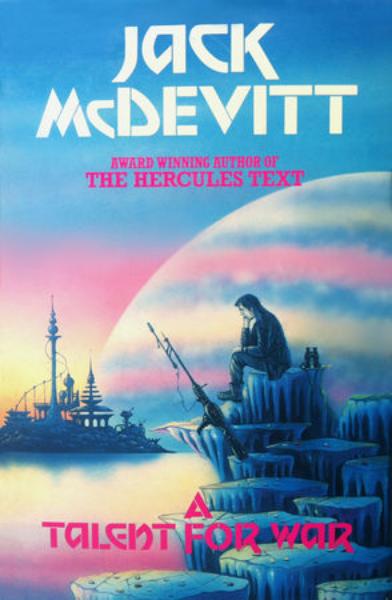
Alex Benedict is an antiques dealer and part-time interstellar investigator, generations removed from Earth's first starfaring age, who keeps stumbling into forgotten history through the objects and ruins he trades in. A Talent for War opens the series with his search for what his vanished uncle was really investigating before a doomed voyage, uncovering a buried chapter of an old human-alien war. Jack McDevitt built a long-running series, narrated by Benedict's pilot and partner Chase Kolpath, around this mix of archaeology, mystery, and deep time.
- Jean le Flambeur
series3 books2010
similar byscience fictionfar futurespaceother star systemsspace opera+1 more
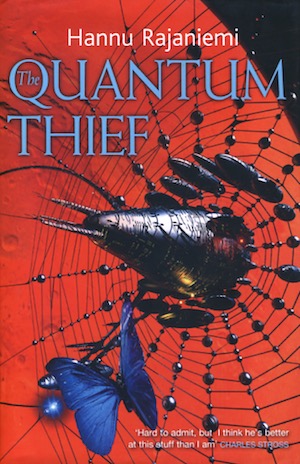
Jean le Flambeur is a master thief broken out of a virtual prison to pull off one more impossible heist, in a solar system reshaped by uploaded minds, post-human factions, and economies built on memory and privacy themselves. Hannu Rajaniemi's trilogy - The Quantum Thief, The Fractal Prince, The Causal Angel - is dense, idea-heavy hard SF that trusts readers to piece its future together from context rather than exposition.