More like Drafted
anchored on:science fiction
but
- H. G. Wells' War of the Worlds
universe65 books1898
Start hereThe War of the Worlds · Start here
similar byscience fiction+3 more
No one would have believed, in the closing years of the nineteenth century, that human affairs were being watched keenly and closely from the timeless worlds of space. And then the cylinders fell. H. G. Wells' War of the Worlds opens in the quiet of the Surrey commons, where a falling star proves to be the first Martian craft — and from the pit rise the towering tripods, the Heat-Ray, the choking Black Smoke and the creeping red weed, wielded by minds that regard mankind much as we regard the creatures we boil for supper. This is invasion rendered as natural disaster: cold, methodical, and vast beyond argument. Wells' 1898 novel is the seed; everything else grows from that Martian soil. The catalogue gathers direct sequels and continuations alongside a wide field of other hands. In War of the Worlds: Global Dispatches the invasion is retold across the whole planet through the eyes of Twain, Verne, Tolstoy, Lowell and Kipling; in the Manly Wade and Wade Wellman crossover, Sherlock Holmes, Watson and Professor Challenger take the field against the machines; and Scott Washburn's Great Martian War stretches the fighting into a decades-long alternate history of steam, artillery and grinding attrition. It is a loose shared world — no single decreed sequence, many voices answering one calamity. What sets this world apart is its refusal of heroics: the invaders fall not to generals but to the smallest things of Earth, humbling and indifferent. Begin, always, with Wells' original novel — it is short, and it is the ground every later book stands upon. From there follow your appetite: Global Dispatches for the panorama, the Holmes campaign for adventure, Washburn for the long war.
- Tripods
series4 books1967
completed
similar byscience fictionaliensour worldtense+2 more
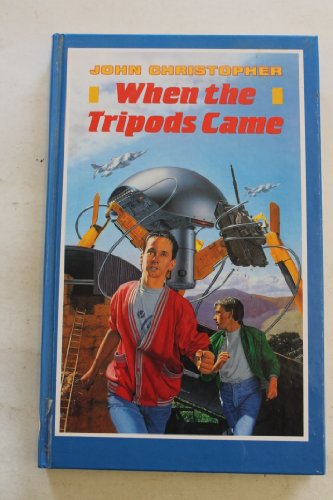
The Tripods is a series of young adult science fiction novels by John Christopher. The series takes place in a post-apocalyptic world where humanity is enslaved by "Tripods"—gigantic three-legged walking machines piloted by an alien race later identified as the "Masters". The first two books were the basis of a science fiction TV series, produced in the United Kingdom in the 1980s.
- Pax / Astra
series2 books1954
completed
similar byscience fictionsurvivaladventuroustense+2 more
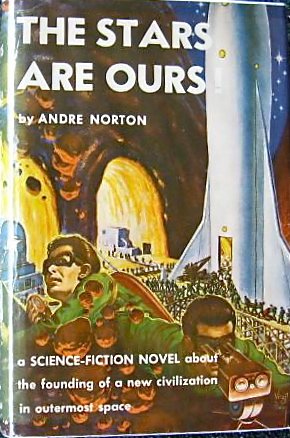
Andre Norton's The Stars Are Ours! (1954) and its sequel Star Born (1957) follow a group of scientists and their families who flee a repressive future Earth to colonize a distant world they name Astra, and then the next generation, who must contend with that world's original inhabitants. Star Flight appears to be a later omnibus or reissue rather than a third original novel.
- Cavor
series2 books1901
similar byscience fictionaliensadventurous+1 more
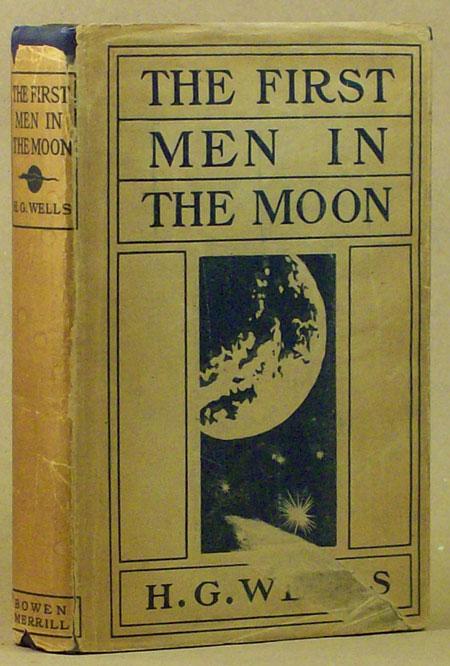
H. G. Wells's 1901 novel The First Men in the Moon is narrated by the businessman Bedford, who joins the reclusive scientist Cavor after Cavor invents cavorite, a gravity-blocking substance that carries the two men to the Moon. There they discover a vast underground civilization of insect-like Selenites, and the expedition that began as a hunt for lunar minerals turns into an encounter with an alien society. It is a standalone novel; later editions crediting Stephen Baxter add an introduction or afterword rather than a continuing story.
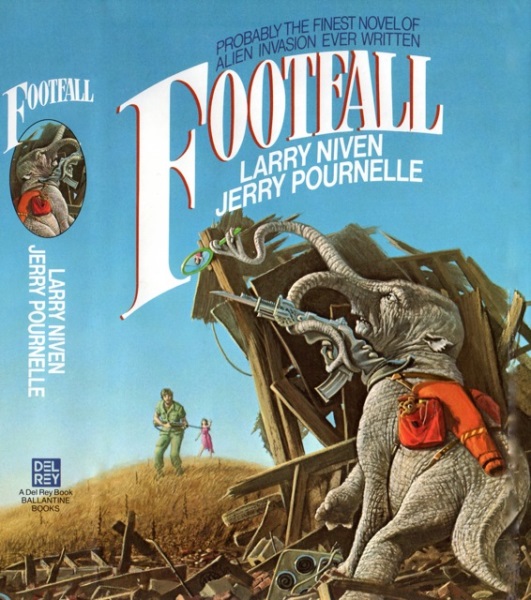
- Footfall
Larry Niven & Jerry Pournellestandalone novel1985
similar byscience fictionalienssurvivalour worldtense+1 more
When aliens travel to Earth from Alpha Centauri, differences between alien and human psychology result in an unprovoked invasion, and the resulting resistance results in the aliens' use of a devastating weapon.
- Hainish
series33 books1964
completed
similar byscience fiction+1 more
The Hainish Cycle consists of a number of science fiction novels and stories by Ursula K. Le Guin. The cycle is set in a future history that features civilizations of human beings on planets orbiting a number of nearby stars, including Terra ("Earth"); these humans are contacting each other for the first time and establishing diplomatic relations, as well as setting up a confederacy under the guidance of the oldest of the human worlds, the peaceful planet Hain. In this history, human beings did not evolve on Earth, but they were instead the result of interstellar colonies planted by Hain in the distant past, after which interstellar travel ceased for an extended period. Some of the human races have new genetic traits, a result of ancient Hainish experiments in genetic engineering; this includes people who can dream while awake, and a world of hermaphroditic people who only enter active sexuality once per month, not knowing which sex will manifest in them. In keeping with Le Guin's narrative approach, she uses varied social and environmental settings to explore the anthropological and sociological outcomes of human evolution in those environments. The author often discounted the characterization of a so-called "Hainish Cycle".
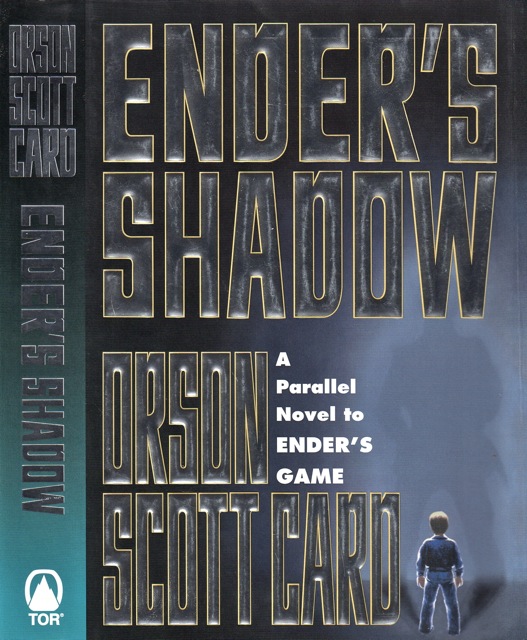
- Ender's Shadow
series5 books1999
part of Ender's Game Universe
similar byscience fictiontense
Orson Scott Card's Ender's Shadow retells the events of Ender's Game from the perspective of Bean, a physically stunted but ferociously intelligent street child recruited into the same Battle School program as Ender Wiggin. It launches the Shadow series, which follows Bean and other secondary Battle School characters into the political aftermath of the Formic Wars back on Earth, running parallel to and eventually past the timeline of Card's main Ender Quintet.
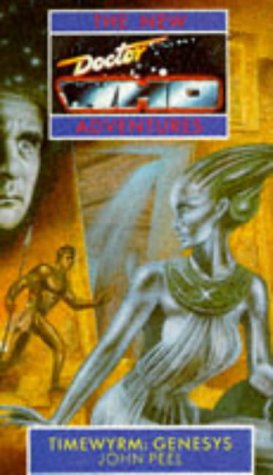
- Whoniverse
universe2034 books1964
Start hereTimewyrm: Genesys · Start here
similar byscience fiction+1 more
Somewhere a blue police box that has no business existing folds a whole world in behind one door, and an old traveller wearing a brand-new face steps out onto a beach, a battlefield, the last warm afternoon of a dying sun. The Whoniverse is all of time and space and the wanderer who refuses to sit still inside it — the Doctor, who dies only to change shape and carry on, gathering friends across every century and losing rather more of them than the adventures like to admit. It runs on curiosity, mercy, and the unshakeable conviction that no one small should be left to the monsters. On the page it is vast and gloriously many-handed. It begins with the Target novelizations, pocket retellings of the television serials — Terrance Dicks alone wrote scores of them — that taught a generation to hear the show in prose. When the screen went dark the books carried the story on: the Virgin New Adventures walked the Seventh Doctor into darker, stranger country and gave the world the archaeologist Bernice Summerfield; BBC Books answered with ranges for the Eighth Doctor and every past incarnation, before the 2005 revival brought the New Series Adventures. Around the edges cluster the spin-offs — Bernice's own long saga, Paul Magrs's gin-soaked interdimensional diva Iris Wildthyme, the pharaoh-companion Erimem, the grown-up Cardiff shadows of Torchwood — steered across decades by hands like Justin Richards and Stephen Cole. Nothing here demands to be read in order, and that is rather the point: it is a world you drop into, not a staircase you climb. The register shifts with every author and every Doctor — high adventure, cosmic dread, farce, elegy, sometimes inside one book — bound together only by that restless kindness. Begin with the Doctor you already half-remember: a Target novelization of a favourite serial, or a New Series Adventure for whichever face first caught you. Then just leave the door open.
- The Andromeda Strain
series2 books1969
similar byscience fictionsurvivaltense+1 more
Michael Crichton's 1969 novel The Andromeda Strain follows a team of scientists racing to contain a lethal extraterrestrial microorganism that crash-lands in Arizona, told in the clinical, document-driven style that helped establish the techno-thriller genre. Daniel H. Wilson's authorized 2019 sequel The Andromeda Evolution revisits the same threat five decades later. Together the two books form a two-part outbreak story separated by a fifty-year gap in publication.
- Needle
series2 books1950
completed
similar byscience fictionalienssurvivalour worldadventurous+1 more
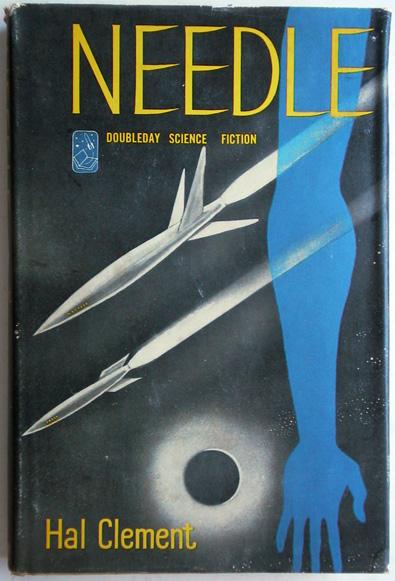
Hal Clement's Needle follows an alien detective nicknamed the Hunter, a shapeless symbiotic being that can live inside a host body, as it crash-lands on Earth pursuing a fugitive of its own kind and takes refuge inside an American teenager, Robert Kinnaird. Together the mismatched pair must learn to communicate and cooperate, first to survive and later to track down the second alien, which has hidden inside another human in the same Pacific island community. The sequel, Through the Eye of a Needle, published nearly three decades later, continues the Hunter's story.
- Foundation Universe
universe123 books1940
Start hereFoundation · Start here
similar byscience fiction+1 more
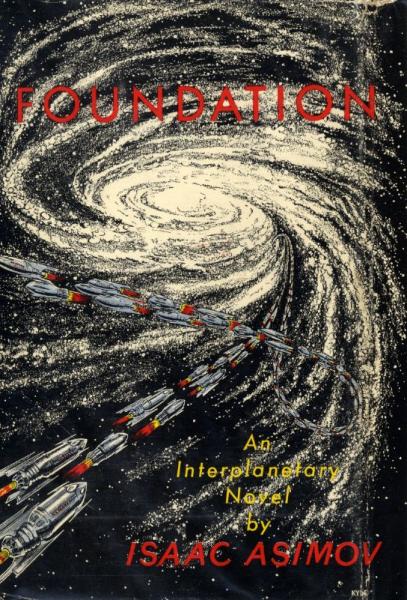
There is a science that reads the future of quadrillions the way an astronomer reads the orbits of stars. It is called psychohistory, and its equations foresee something the ruling Galactic Empire cannot admit: the throne is rotting, and thirty thousand years of barbarism are coming. One man, Hari Seldon, cannot stop the fall. He can only shorten it — by seeding a Foundation of scholars at the rim of the galaxy, a fragile institution built to carry knowledge across the dark and cut the interregnum to a single millennium. This is a universe told in the register of history itself: the long view, the calm of deep time, empires measured in centuries and men measured against them. The spine is Asimov's original trilogy — Foundation, Foundation and Empire, Second Foundation — followed decades later by the sequels Foundation's Edge and Foundation and Earth and the prequels Prelude to Foundation and Forward the Foundation. Late in life Asimov braided this in with his other future histories: the Robot novels of detective Elijah Baley and his humaniform partner R. Daneel Olivaw (The Caves of Steel, The Naked Sun, The Robots of Dawn, Robots and Empire) and the early Galactic Empire novels (Pebble in the Sky and its kin), until one continuous chronicle ran from the first thinking robots to the Second Empire. Other hands extend it — the Second Foundation Trilogy by Gregory Benford, Greg Bear, and David Brin, and shared-world spinoffs such as Robot City — so the corpus sprawls beyond a single author's tidy shelf. What distinguishes it is that the drama is intellectual: crises resolved by insight, nerve, and dialogue rather than fleets and blades, each turn hinging on the hidden logic of the Seldon Plan. Begin where readers have always begun — with Foundation, and the original trilogy in publication order. The rest opens outward from there.
- The Black Cloud
Fred Hoylestandalone novel1957
similar byscience fictionalienssurvivalour worldtense
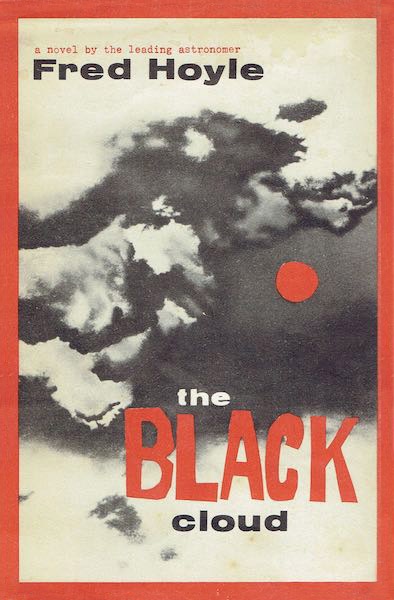
The Black Cloud is a 1957 science fiction novel by British astrophysicist Fred Hoyle. It details the arrival of an enormous cloud of gas that enters the Solar System and appears about to destroy most of the life on Earth by blocking the Sun's radiation.
- Culture
series15 books1987
completed
part of The Culture
similar byscience fiction+1 more
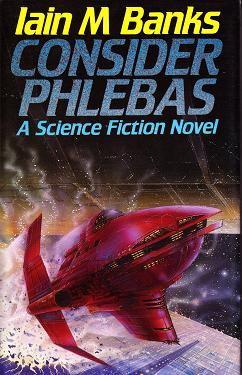
The Culture series is a science fiction series written by Scottish author Iain M. Banks and released from 1987 until 2012. The stories centre on The Culture, a utopian, post-scarcity space society of humanoid aliens and advanced superintelligent artificial intelligences living in artificial habitats spread across the Milky Way galaxy. The main themes of the series are the dilemmas that an idealistic, more-advanced civilization faces in dealing with smaller, less-advanced civilizations that do not share its ideals, and whose behaviour it sometimes finds barbaric. In some of the stories, action takes place mainly in non-Culture environments, and the leading characters are often on the fringes of the Culture, sometimes acting as agents of the Culture in its plans to civilize the galaxy. Each novel is a self-contained story with new characters, although reference is occasionally made to the events of previous novels.
- The Kraken Wakes
John Wyndhamstandalone novel1953
similar byscience fictionalienssurvivalour worldtense
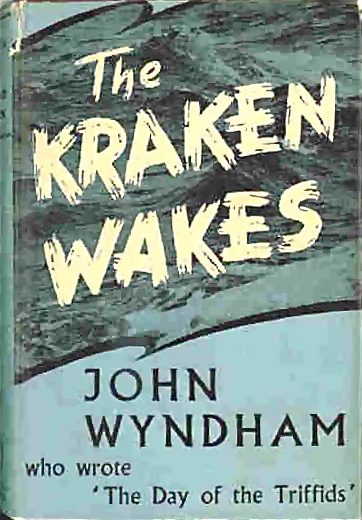
" Behind a spectacular meteor shower actually hides the beginning of an invasion by a mysterious and powerful alien race. Earth's life is disrupted by the attacks of extraterrestrials whose war machines, emerging from the depths of the oceans, seem indestructible. The coalitioned forces of the whole world are worthless, powerless in the face of the indecipherable and deadly plans of a superior intelligence, capable of bringing the entire planet to the brink of catastrophe" Goodreads May 20, 2022
- The Puppet Masters
Robert A. Heinleinstandalone novel1951
similar byscience fictionalienssurvivaltense+1 more
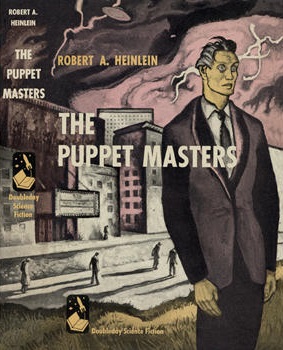
Parasitical aliens attach themselves to human hosts and take over their bodies. Two spies are sent to find out what's happening, but the extent is much farther than they knew. With access to the humans' memories, the aliens quietly invade the government and start taking over.
- Time Storm
Gordon R. Dicksonstandalone novel1977
similar byscience fictionsurvivalour worldadventuroustense+1 more
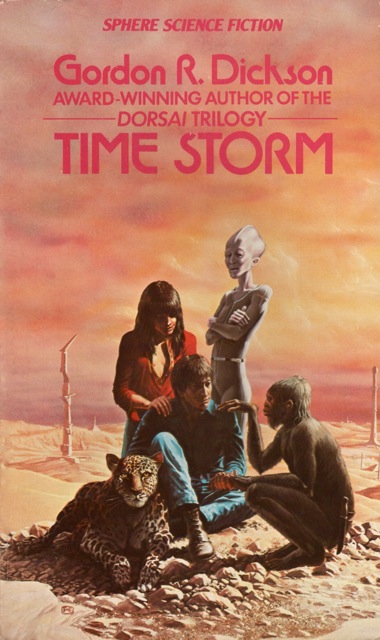
A time storm has devastated the Earth, and only a small fraction of humankind remains. From the rubble, three survivors form an unlikely alliance: a young man, a young woman, and a leopard. "A masterful science fiction story told by a masterful science fiction writer". -- Milwaukee Journal. A time storm strikes the Earth. The Earth remains, but different parts of the Earth are in different eras. Travel between the different zones is thought to be impossible. The main character, Marc Despard, resolves to fight the time storm. After some struggles, he assembles a small band of people, including one alien, to help him try to understand what has happened and to stop the time storm. He has 2 extraordinary relationships with a older teenaged girl who is speechless for the first part of the book (she was "struck dumb" by the time storm) and with, believe it or not, a leopard. Dickson's writing makes the extraordinary seem quite normal. Ultimately, after being harried by a Mad Max-like group of survivors, he uses a machine found in a different era of time to bring his small band of followers into the future so that he can find those who are trying to fight the time storm. He convinces those future beings that he is capable of fighting the time storm, and ultimately stops it, and gets the girl in the end.
- Blackcollar
series3 books1983
similar byscience fictionour worldtense+3 more
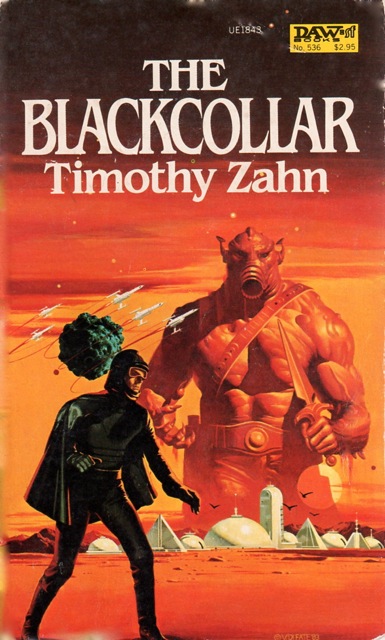
Timothy Zahn's Blackcollar trilogy, his debut work, follows survivors of Earth's underground resistance against the Ryqril, an alien empire that conquered the planet a generation earlier. The Blackcollars themselves are elite commando-agents trained before the invasion, presumed a spent, aging force until circumstances pull survivors back into action against their occupiers. The Backlash Mission and The Judas Solution continue the resistance's fight as the underground network is drawn deeper into interstellar politics beyond Earth.
- Fifth Imperium
series3 books1991
similar byscience fictionaliensadventuroustense
David Weber's Fifth Imperium series opens with the discovery that Earth's Moon is in fact a disguised alien starship, the Dahak, that has orbited undetected for tens of thousands of years - a relic of the fallen Fourth Imperium, a multi-star civilization destroyed while defending against the genocidal Achuultani. Mutineers' Moon follows humanity's first contact with Dahak and the mutineers still aboard it; The Armageddon Inheritance and Heirs of Empire escalate from that discovery into interstellar war and dynastic politics as humanity inherits the old empire's legacy and its enemies. The three novels were later collected as the omnibus Empire from the Ashes.
- Future History
series42 books1939
completed
similar byscience fiction+2 more
The Future History is a series of science fiction stories written by American author Robert A. Heinlein (1907–1988). It describes a projected future of the human race from the middle of the 20th century through the early 23rd century. The term Future History was coined by John W. Campbell Jr. in the February 1941 issue of Astounding Science Fiction. Campbell published an early draft of Heinlein's chart of the series in the May 1941 issue.
- Lucky Starr
series8 books1952
completed
similar byscience fictionadventurous+1 more
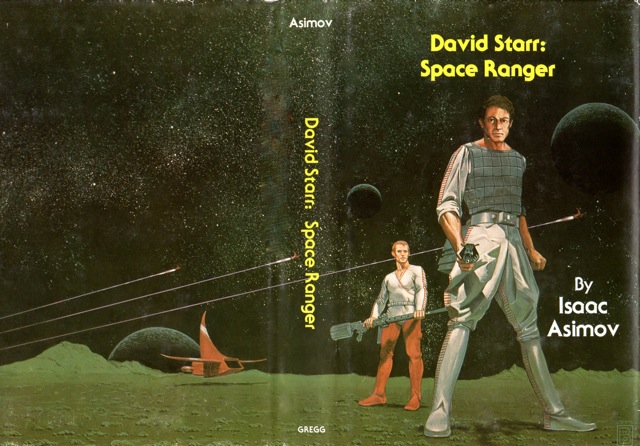
The Lucky Starr books, published under the pseudonym Paul French, are Isaac Asimov's juvenile science-fiction series following David "Lucky" Starr, an agent of an interplanetary Council of Science, as he and his sidekick Bigman Jones investigate crimes and conspiracies across the solar system — starting with a poisoned-food-shipment plot from Mars in the debut, David Starr: Space Ranger. Conceived partly as a science-fictional take on the Lone Ranger, the six-book series lets Asimov work real planetary science into old-fashioned adventure plots.