More like Dual Memory
anchored on:science fiction
but
- Ender Wiggin
series14 books1977
part of Ender's Game Universe
similar byscience fictionother star systemsfar future+2 more
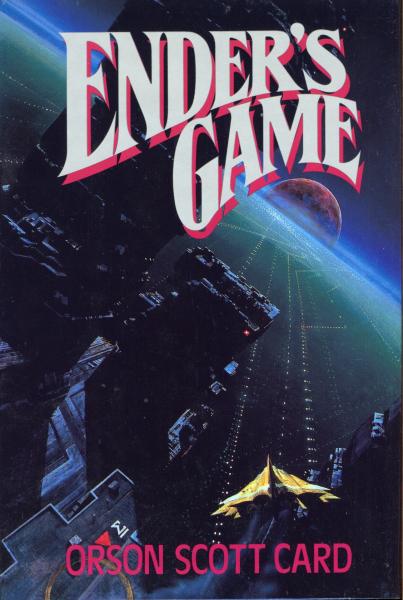
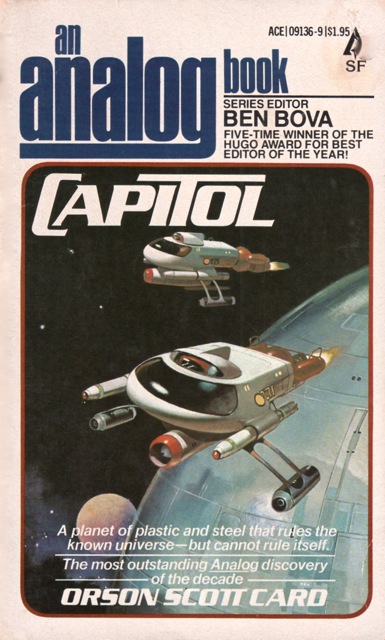
Orson Scott Card's Ender's Game (1985, expanded from his 1977 novella) follows child prodigy Andrew "Ender" Wiggin as he is recruited into a military training program built to prepare Earth's defenses for an anticipated third war against an insectoid alien species known as the Formics. The saga continues years later through Speaker for the Dead and Xenocide, following an older Ender as he confronts the moral weight of his role in that earlier conflict, and concludes the core arc in Children of the Mind, with Ender in Exile filling in the years between the first two books. Set within the wider Ender's Game universe, the series shifts from military coming-of-age story to slower, more philosophical science fiction as it progresses.
- Against the Fall of Night
series2 books1953
similar byscience fictionreflectiveother star systemsfar future
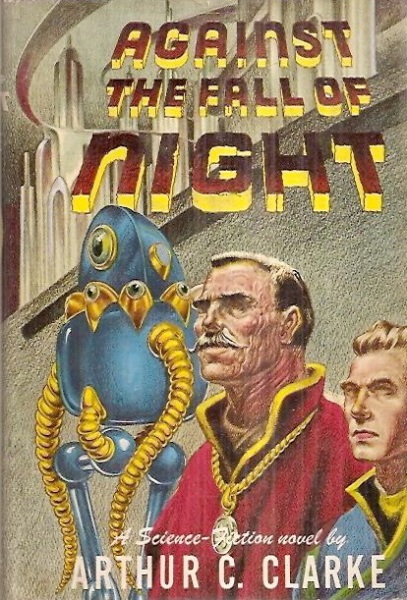
Against the Fall of Night is Arthur C. Clarke's 1953 novel of a stagnant, climate-controlled city called Diaspar a billion years in Earth's future, where a young man named Alvin becomes the first in living memory to want to leave it. Clarke later rewrote the book more expansively as The City and the Stars, and in 1990 Gregory Benford wrote Beyond the Fall of Night, an authorized sequel continuing on from this original, shorter version's ending.
- Culture
series15 books1987
completed
part of The Culture
similar byscience fictionartificial intelligencefar future+2 more
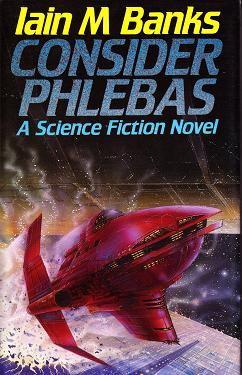
The Culture series is a science fiction series written by Scottish author Iain M. Banks and released from 1987 until 2012. The stories centre on The Culture, a utopian, post-scarcity space society of humanoid aliens and advanced superintelligent artificial intelligences living in artificial habitats spread across the Milky Way galaxy. The main themes of the series are the dilemmas that an idealistic, more-advanced civilization faces in dealing with smaller, less-advanced civilizations that do not share its ideals, and whose behaviour it sometimes finds barbaric. In some of the stories, action takes place mainly in non-Culture environments, and the leading characters are often on the fringes of the Culture, sometimes acting as agents of the Culture in its plans to civilize the galaxy. Each novel is a self-contained story with new characters, although reference is occasionally made to the events of previous novels.
- Hainish
series33 books1964
completed
similar byscience fictionreflectiveother star systemsfar future
The Hainish Cycle consists of a number of science fiction novels and stories by Ursula K. Le Guin. The cycle is set in a future history that features civilizations of human beings on planets orbiting a number of nearby stars, including Terra ("Earth"); these humans are contacting each other for the first time and establishing diplomatic relations, as well as setting up a confederacy under the guidance of the oldest of the human worlds, the peaceful planet Hain. In this history, human beings did not evolve on Earth, but they were instead the result of interstellar colonies planted by Hain in the distant past, after which interstellar travel ceased for an extended period. Some of the human races have new genetic traits, a result of ancient Hainish experiments in genetic engineering; this includes people who can dream while awake, and a world of hermaphroditic people who only enter active sexuality once per month, not knowing which sex will manifest in them. In keeping with Le Guin's narrative approach, she uses varied social and environmental settings to explore the anthropological and sociological outcomes of human evolution in those environments. The author often discounted the characterization of a so-called "Hainish Cycle".
- Imperial Radch
series7 books2012
part of Radchaai Universe
similar byscience fictionartificial intelligenceidentityother star systemsfar future+1 more
Ann Leckie's Imperial Radch trilogy (Ancillary Justice, Ancillary Sword, Ancillary Mercy, 2013-2015) follows Breq, the sole surviving fragment of an AI that once inhabited both a troop-transport starship and dozens of soldier bodies, now alone and hunting for revenge inside the vast, expansionist Radch empire. Breq's quest widens across the trilogy into a conflict with the empire's own fractured ruler, and the books use her alien difficulty perceiving gender to unsettle the space-opera conventions around her.
- The City and the Stars
Arthur C. Clarkestandalone novel1956
similar byscience fictionreflectiveother star systemsfar future+1 more
The City and the Stars is a science fiction novel by British writer Arthur C. Clarke, published in 1956. This novel is a complete rewrite of Clarke's earlier Against the Fall of Night, his first novel, which had been published in Startling Stories magazine in 1948 after being rejected by the editor of Astounding Science-Fiction, according to the author.
- Foundation Universe
universe123 books1940
Start hereFoundation · Start here
similar byscience fictionfar future+2 more
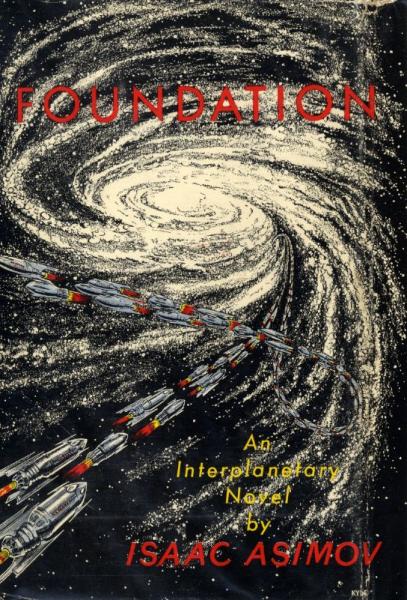
There is a science that reads the future of quadrillions the way an astronomer reads the orbits of stars. It is called psychohistory, and its equations foresee something the ruling Galactic Empire cannot admit: the throne is rotting, and thirty thousand years of barbarism are coming. One man, Hari Seldon, cannot stop the fall. He can only shorten it — by seeding a Foundation of scholars at the rim of the galaxy, a fragile institution built to carry knowledge across the dark and cut the interregnum to a single millennium. This is a universe told in the register of history itself: the long view, the calm of deep time, empires measured in centuries and men measured against them. The spine is Asimov's original trilogy — Foundation, Foundation and Empire, Second Foundation — followed decades later by the sequels Foundation's Edge and Foundation and Earth and the prequels Prelude to Foundation and Forward the Foundation. Late in life Asimov braided this in with his other future histories: the Robot novels of detective Elijah Baley and his humaniform partner R. Daneel Olivaw (The Caves of Steel, The Naked Sun, The Robots of Dawn, Robots and Empire) and the early Galactic Empire novels (Pebble in the Sky and its kin), until one continuous chronicle ran from the first thinking robots to the Second Empire. Other hands extend it — the Second Foundation Trilogy by Gregory Benford, Greg Bear, and David Brin, and shared-world spinoffs such as Robot City — so the corpus sprawls beyond a single author's tidy shelf. What distinguishes it is that the drama is intellectual: crises resolved by insight, nerve, and dialogue rather than fleets and blades, each turn hinging on the hidden logic of the Seldon Plan. Begin where readers have always begun — with Foundation, and the original trilogy in publication order. The rest opens outward from there.
- Elysium Cycle
series5 books1986
similar byscience fictionother star systemsfar future+1 more
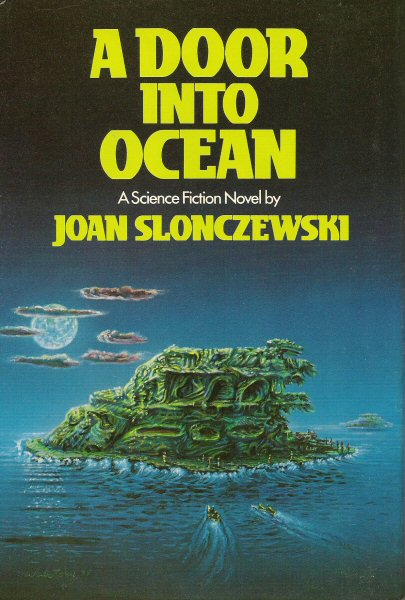
On the ocean-covered moon Shora, the Sharers -- an all-female society skilled in genetic engineering and committed to strict nonviolence -- face invasion by the militaristic Patriarchy, which cannot fathom a people who refuse to fight back with force. Joan Slonczewski's A Door into Ocean opens the Elysium Cycle by testing whether a philosophy built on the idea that 'to hurt is to be hurt' can actually survive violent occupation. Later books in the cycle, including Daughter of Elysium, The Children Star, and Brain Plague, carry the same interest in biology, pacifism, and alien societies into new settings.
- A Time of Changes
Robert Silverbergstandalone novel1971
similar byscience fictionreflectiveidentityother star systemsfar future
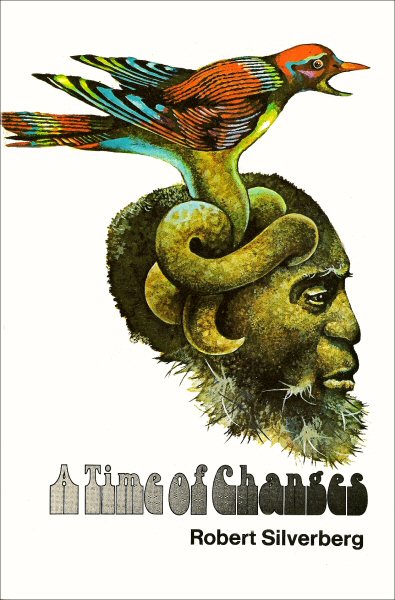
A Time of Changes is a 1971 science fiction novel by American writer Robert Silverberg. It won the Nebula Award for that year, and was also nominated for the 1972 Hugo and Locus Awards.
- Implied Spaces
Walter Jon Williamsstandalone novel2008
similar byscience fictionreflectiveartificial intelligenceother star systemsfar future+1 more
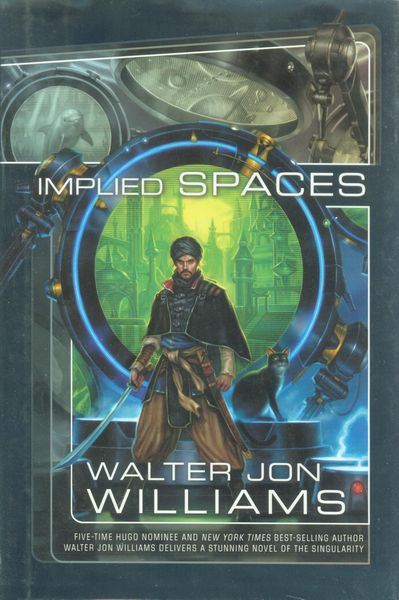
Implied Spaces is a 2008 space opera novel by American author Walter Jon Williams. It explores themes of transhumanism, artificial intelligence and ontology.
- 2312
Kim Stanley Robinsonstandalone novel2012
similar byscience fictionreflectiveother star systemsfar future+1 more
In the eponymous year, when Earth's ecology is degraded and humanity has settled throughout the solar system by terraforming and genetic engineering, mysterious disasters strike some human communities and an assortment of human types from throughout the system seek to find and eliminate the cause.
- Dune Universe
universe78 books1963
Start hereDune · Start here
similar byscience fictionother star systemsfar future
Arrakis. Dune. The desert planet, where empire runs on a single substance: the spice melange, which folds space, prolongs life, and unlocks prescience, and which exists nowhere else in the known universe. Frank Herbert's saga is a meditation dressed as an adventure — feudal houses and a secret sisterhood, engineered messiahs and the patient ecology of a world without water, all turning on the terrible gravity of who commands the spice. It reads like scripture and schemes like a war room, ten thousand years hence, among people who have outlawed the thinking machine and made instruments of themselves instead. At its heart stand Herbert's original six — Dune, Dune Messiah, Children of Dune, God Emperor of Dune, Heretics of Dune, Chapterhouse: Dune — a single deepening arc across millennia, arguing the whole way between prophecy and free will. Around that spine his son Brian Herbert and Kevin J. Anderson have raised a vast prequel architecture: Prelude to Dune, tracing the great houses a generation before Paul; Legends of Dune, reaching back to the crusade that broke the machines; the Schools of Dune cycle on the founding of Bene Gesserit, Mentat, and Navigator; the Caladan Trilogy and Heroes of Dune filling years the originals left in shadow. Many hands, dozens of volumes, one desert. What sets Dune apart is its refusal of the simple: religion is manufactured, heroes are hazards, and the sand itself — worm, water, ecology — acts as a political power. Begin where the universe did, with Frank Herbert's Dune (1965), and read the original six in order; you need nothing else to feel the full weight. The prequels are a country to explore afterward, taken by era. Beginnings are delicate times.
- The Man in the Maze
Robert Silverbergstandalone novel1969
similar byscience fictionreflectiveidentityother star systemsfar future
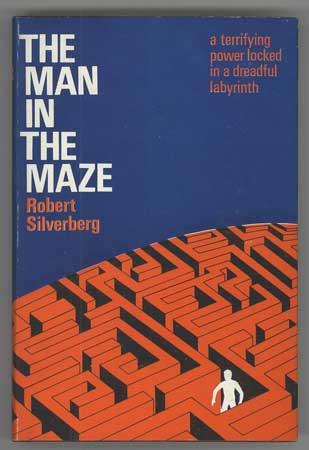
The Man in the Maze is a science fiction novel by American writer Robert Silverberg, originally serialized in the magazine Worlds of If in April and May 1968, and published in bookstores the following year. It tells the tale of a man rendered incapable of interacting normally with other human beings by his uncontrollable psychic abilities. The novel is inspired by Sophocles' play Philoctetes, with the roles of Odysseus, Neoptolemus and Philoctetes played by Boardman, Rawlins, and Muller, respectively.
- Whileaway
series4 books1972
completed
similar byscience fictionreflective+2 more
Joanna Russ's The Female Man (1975) is a single feminist science fiction novel, not a multi-book series, built around four women from parallel timelines with very different gender arrangements. One of them, Janet, comes from Whileaway, an all-female utopian Earth ten centuries in the future where men died out in a plague; the other three come from realities closer to Russ's own, and their collisions are used to interrogate what womanhood and equality could mean under different social rules.
- Last and First Men
series14 books1930
completed
part of Last Men Universe
similar byscience fictionreflectivefar future+1 more
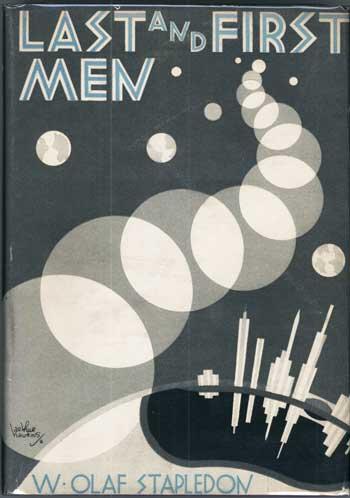
Olaf Stapledon's Last and First Men (1930) traces two billion years of human evolution through eighteen successive species, framed as a text somehow dictated back to the author by the last of those species; civilizations rise and fall across the span, marked by genetic engineering and interplanetary colonization, before the final humans are wiped out by a supernova. Stapledon followed it with the more obscure Last Men in London (1932), which revisits similar far-future material from a narrower, more personal angle.
- The Worthing Chronicle
series17 books1978
similar byscience fictionreflectiveother star systemsfar future+1 more
The Worthing series is a series of science fiction works by American writer Orson Scott Card. It consists of two anthologies and two novels. The first three books in this series are currently out of print.
- Triton
Samuel R. Delanystandalone novel1976
similar byscience fictionreflectiveidentityother star systemsfar future
Trouble on Triton: An Ambiguous Heterotopia (1976) is a science fiction novel by American writer Samuel R. Delany. It was nominated for the 1976 Nebula Award for Best Novel, and was shortlisted for a retrospective James Tiptree, Jr. Award in 1995. It was originally published under the shorter title Triton.
- The Hugo Winners
series15 books1962
similar byscience fictionfar future+1 more
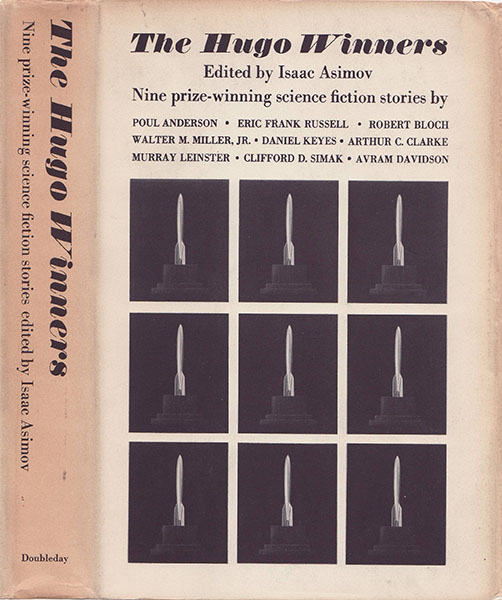
The Hugo Winners was a series of books which collected science fiction and fantasy stories that won a Hugo Award for Short Story, Novelette or Novella at the World Science Fiction Convention between 1955 and 1982. Each volume was edited by American writer Isaac Asimov, who wrote the introduction and a short essay about each author featured in the book. Through these essays, Asimov shared personal anecdotes, revealing the authors he was jealous of, and how other writers winning awards ahead of him made him angry. Additionally, he discussed his political beliefs, friendships, and his affinity for writers of "hard science fiction". The first two volumes were collected by Doubleday into a single book, which lacks a publishing date and ISBN.
- Sirius Five
series2 books1969
completed
similar byscience fictionother star systemsfar future+2 more
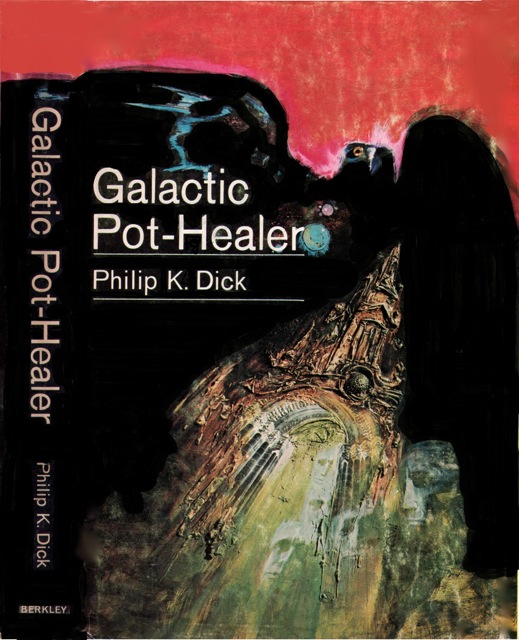
Philip K. Dick's Galactic Pot-Healer (1969) follows Joe Fernwright, an unemployed pot-mender on a future Earth, recruited by the alien Glimmung to help raise a sunken cathedral on the planet Sirius 5, mixing surreal comic adventure with questions about fate and the value of effort when success is never guaranteed. Dick's earlier young-adult manuscript Nick and the Glimmung, unpublished until 1988, shares the Glimmung character and other elements with it, suggesting he reworked the same creature across two very different books.
- Alpha (Robert Silverberg)
series9 books1970
similar byscience fiction+2 more
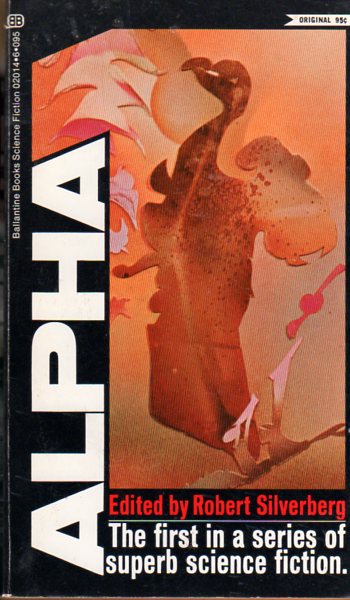
Alpha is a series of reprint science fiction anthologies edited by Robert Silverberg, published as paperback originals from 1970 to 1978 by Ballantine Books and Berkley Publishing. Ballantine published volumes annually from 1970 through 1974, while Berkley resumed the series with four volumes from 1976 through 1978. All five of the Ballantine volumes placed in the top ten in an anthology category in the annual Locus Poll, as did the final Berkley volume. Theodore Sturgeon and Gerald Jonas reviewed books in the series for The New York Times Book Review.Alpha 1 - Ballantine, September 1970; Corgi, December 1971 (UK) Alpha 2 - Ballantine, November 1971 Alpha 3 - Ballantine, October 1972 Alpha 4 - Ballantine, October 1973 Alpha 5 - Ballantine, August 1974 Alpha 6 - Berkley, April 1976 Alpha 7 - Berkley, July 1977 Alpha 8 - Berkley, November 1977 Alpha 9 - Berkley, October 1978
- Aurora
Kim Stanley Robinsonstandalone novel2015
similar byscience fictionreflectiveartificial intelligenceother star systemsfar future
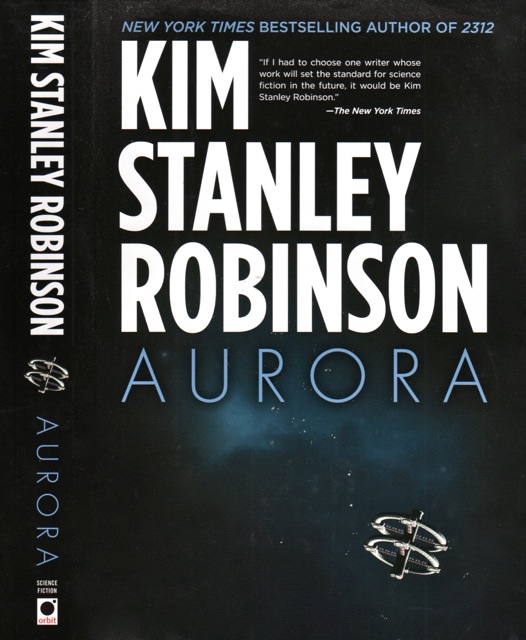
Aurora is a 2015 novel by American science fiction author Kim Stanley Robinson. The novel concerns a generation ship built in the style of a Stanford torus, traveling to Tau Ceti to start a human colony. The novel's primary narrative voice is that of the starship's artificial intelligence. Aurora was well received by critics.