More like Evolution
but
- The Lord of the Rings
series13 books1954
part of Tolkien's legendarium
similar bysecondary world+4 more
The Lord of the Rings is an epic high fantasy novel written by the English author and scholar J. R. R. Tolkien. Set in Middle-earth, the story began as a sequel to Tolkien's 1937 children's book The Hobbit but eventually developed into a much larger work. Written in stages between 1937 and 1949, The Lord of the Rings is one of the best-selling books ever written, with over 150 million copies sold.
- The Hobbit
series2 books1937
completed
part of Tolkien's legendarium
similar byfantasyadventurousquestssecondary world+1 more
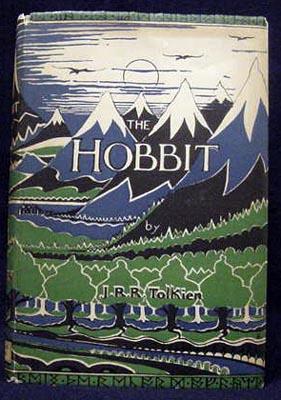
The Hobbit (1937) is J. R. R. Tolkien's children's fantasy novel following the reluctant burglar Bilbo Baggins, who joins a company of dwarves and the wizard Gandalf on a journey to reclaim treasure guarded by the dragon Smaug. It stands as a complete adventure on its own, but shares its setting with the rest of Tolkien's legendarium and leads into the events of The Lord of the Rings.
- Earthsea Cycle
series18 books1964
completed
part of Earthsea
similar byfantasywizardssecondary world
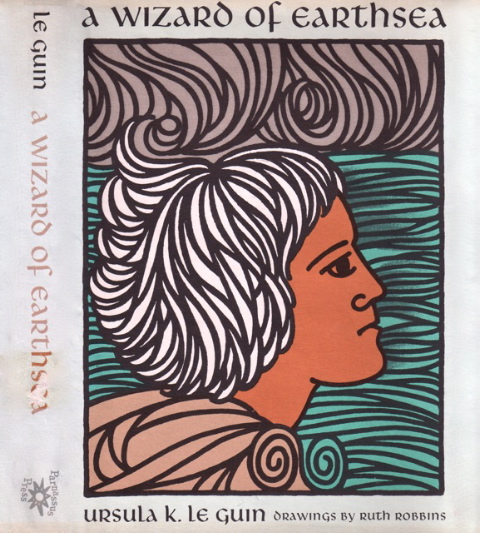
The Earthsea Cycle, also known as Earthsea, is a series of high fantasy books written by American author Ursula K. Le Guin. Beginning with A Wizard of Earthsea (1968), The Tombs of Atuan (1970), and The Farthest Shore (1972), the series was continued in Tehanu (1990), and Tales from Earthsea and The Other Wind. In 2018, all the novels and short stories were published in a single volume, The Books of Earthsea: The Complete Illustrated Edition, with artwork by Charles Vess.
- Shannara
universe50 books1977
Start hereWord and the Void · The very beginning of the timeline
similar byfantasysecondary world+2 more
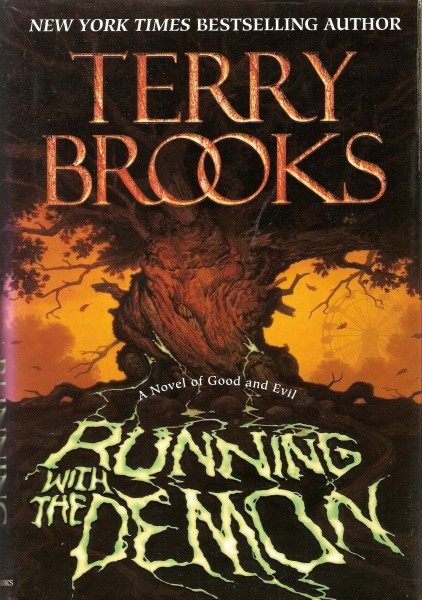
Long after the world we know has burned itself to slag in the Great Wars, the Four Lands rise green over the bones of the old age. Science is a forbidden memory; magic has come back into the world, and with it the old divisions — Men, Elves, Dwarves, Trolls, and Gnomes, each Race a splinter of what humanity became. This is the far-future Earth of Shannara, where the ruins buried beneath the soil are ours, and the only keepers of the vanished knowledge are the Druids of Paranor, who wake once a generation to meet the darkness rising again. Terry Brooks opened the Four Lands in 1977 with The Sword of Shannara and has charted its history for four decades since — a legendarium ordered not by throne but by a single bloodline, the Ohmsfords, each generation inheriting an Elfstone, a blade, or a wishsong when the age demands a hero. The original trilogy gives way to the Heritage of Shannara, the Voyage of the Jerle Shannara, the High Druid, Dark Legacy, Defenders, and the concluding Fall of Shannara; the Genesis of Shannara books reach back to the apocalypse itself, and the Word and the Void trilogy back further still, into a demon-haunted version of our own present that is the root of everything after. In 2025 Brooks passed the histories to Delilah S. Dawson to carry forward. What sets these books apart is their long memory: a world where every triumph is provisional, where the same evil returns wearing a fresh shape each age, and magic always exacts its price. The reading is warm and headlong — questing companies, old talismans, journeys across a mapped and named wilderness — shadowed by the knowledge that all of it stands on the wreckage of a former world. Enter as readers first did: with The Sword of Shannara, then onward in publication order. The chronological path, beginning with Word and the Void, rewards a second journey, once the Four Lands already feel like home.
- Narnia
series26 books1950
part of Narnia Universe
similar byfantasyadventuroussecondary world+1 more
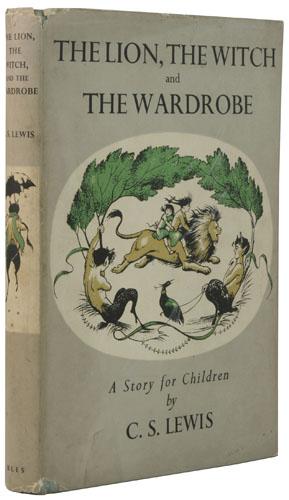
The Chronicles of Narnia is a series of seven portal fantasy novels by British author C. S. Lewis. Illustrated by Pauline Baynes and originally published between 1950 and 1956, the series is set in the fictional realm of Narnia, a fantasy world of magic, mythical beasts, and talking animals. It narrates the adventures of various children who play central roles in the unfolding history of the Narnian world. Except in The Horse and His Boy, the protagonists are all children from the real world who are magically transported to Narnia, where they are sometimes called upon by the lion Aslan to protect Narnia from evil. The books span the entire history of Narnia, from its creation in The Magician's Nephew to its eventual destruction in The Last Battle.
- Howl's Castle
series3 books1986
completed
similar byfantasyadventuroussecondary world+2 more
Howl's Moving Castle (1986) follows Sophie Hatter, cursed by the Witch of the Waste into an old woman's body, who takes refuge in the wandering castle of the wizard Howl and strikes an uneasy bargain with his fire demon Calcifer while trying to break the spell. Diana Wynne Jones returned to the same magical kingdom in Castle in the Air (1990), following a new lead character, Abdullah, with Sophie and Howl appearing in supporting roles, and again in House of Many Ways (2008).
- The Riftwar Universe
universe44 books1982
Start hereRiftwar Saga · Start here
similar byfantasysecondary world+1 more
On the world of Midkemia a tear opens in the air itself, a rift hung between stars, and through it march the armies of an empire from another world entirely. So begins the chronicle Raymond E. Feist has kept for three decades: the tale of Pug, a castle kitchen boy apprenticed to a magician on the very day the invasion lands, and of Tomas, his friend, who inherits the armor and the ancient fury of a dead dragon-lord. Around these two the Riftwar Cycle turns, widening book by book from one besieged frontier keep into the whole history of a world of kingdoms, guilds, thieves' dens and mage-towers. The cycle runs to roughly thirty novels, gathered into arcs a newcomer can enter and finish on their own. The founding Riftwar Saga (Magician, Silverthorn, A Darkness at Sethanon) sets the board; the Serpentwar Saga, Krondor's Sons and the Conclave of Shadows carry the story down the generations; the Darkwar, Demonwar and Chaoswar sagas bring it toward its close. Crossing the rift to the rival world of Kelewan, Feist and Janny Wurts wrote the Empire trilogy, opening with Daughter of the Empire, a court intrigue told wholly from the invaders' side and for many the finest thing here. Shorter Legends of the Riftwar and the game-born Riftwar Legacy fill the corners; later still, Feist opens an altogether new world in the Firemane books. Feist writes fantasy in its most companionable key: apprentices who grow into archmages, tavern boys who become spies and dukes, a world you return to the way you return to an old inn. The mood is adventure before dread, friendship and rank and hard-won craft, wars that cost something, all of it rendered plainly and at a gallop. Begin where it began, with Magician, then follow the arcs in the order they were written, and the rift will carry you the rest of the way.
- The Old Kingdom / Abhorsen milieu
series11 books1995
similar byfantasysecondary world
The Old Kingdom, or Abhorsen in North America and the UK, is a fantasy series written by Australian author Garth Nix. It originated in 1995 with the novel Sabriel and has continued in the novels Lirael (2001), Abhorsen (2003), Goldenhand (2016), and Terciel & Elinor (2021), as well as a prequel novel titled Clariel (2014). The Old Kingdom also consists of the novella The Creature in the Case (2005) and various other short fiction.
- Three Hearts and Three Lions
series3 books1961
similar byfantasyadventuroussecondary world+1 more
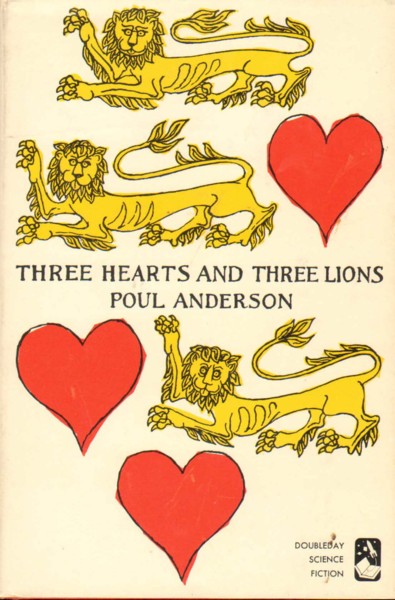
Three Hearts and Three Lions (1961, expanded from a 1953 novella) follows Holger Carlsen, a Danish resistance fighter wounded fighting the Nazis, who wakes in a medieval world of knights, dragons, and sorcery drawn from Carolingian legend. Poul Anderson wrote it as a self-contained portal fantasy; the later story Three Lilies and Three Leopards, by Harry Turtledove and Tad Williams, is a tribute piece published in an anniversary anthology rather than a true narrative sequel.
- Riftwar Saga
series7 books1982
part of The Riftwar Universe
similar byfantasyadventuroussecondary world+1 more
The Riftwar Saga is Raymond E. Feist's debut fantasy trilogy, opening with Magician, in which an orphaned apprentice named Pug is swept up when otherworldly invaders emerge through a dimensional rift into the frontier kingdom of Midkemia. Silverthorn and A Darkness at Sethanon carry the resulting war to its close, and the trilogy became the founding entry of Feist's much larger Riftwar Cycle.
- Dying Earth
series27 books1950
similar byfantasywizardssecondary world+2 more
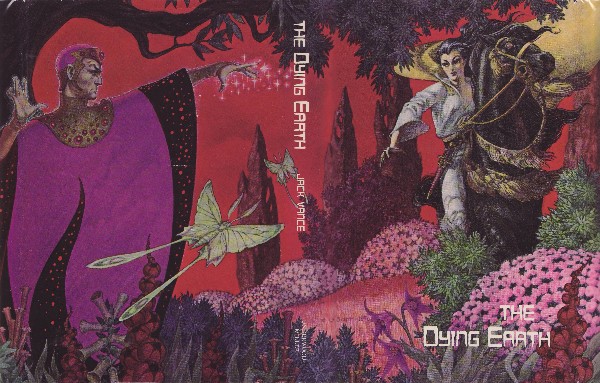
Dying Earth is a speculative fiction series by the American author Jack Vance, comprising four books originally published from 1950 to 1984. Some have been called picaresque. The series includes short story collections, fix-ups, and novels.
- Elenium
series3 books1989
completed
part of Sparhawk
similar byfantasyadventurousquestssecondary world
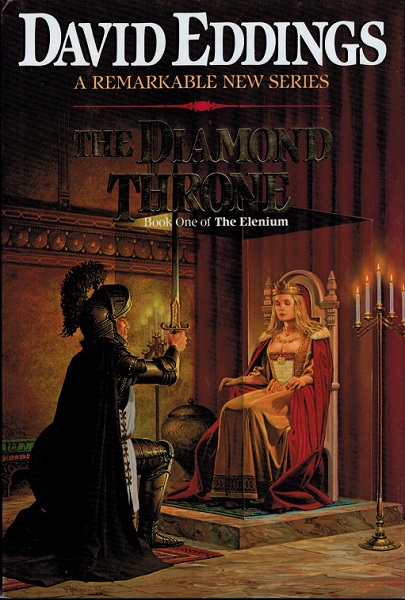
The Elenium is a series of fantasy novels by American writer David Eddings. The series consists of three volumes: The Diamond Throne, The Ruby Knight, and The Sapphire Rose. The series is followed by The Tamuli. The Elenium is Eddings' third fantasy series.
- The Elric Saga
series72 books1961
part of Moorcock's Multiverse
similar byfantasysecondary world+1 more
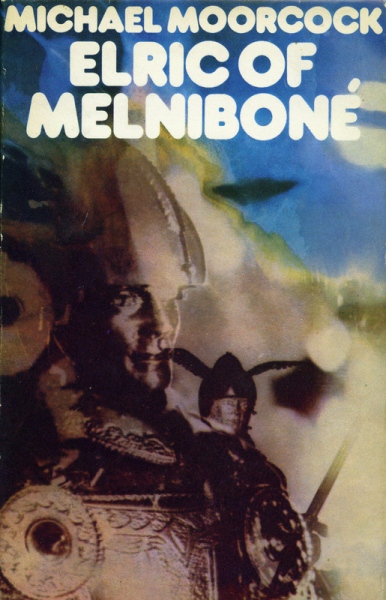
The Elric Saga is Michael Moorcock's sequence of sword-and-sorcery novels about Elric, the frail, sorcery-dependent last emperor of the ancient island empire of Melniboné, who abandons his throne to wander a violent, magic-soaked world carrying a sentient, soul-drinking black sword. Core entries such as Elric of Melniboné, The Sailor on the Seas of Fate, and Stormbringer trace his path toward a self-destructive destiny, and Elric was later folded into Moorcock's wider Eternal Champion multiverse, of which this saga is one strand.
- The Kingkiller Chronicle
series8 books2002
similar byfantasysecondary world+3 more
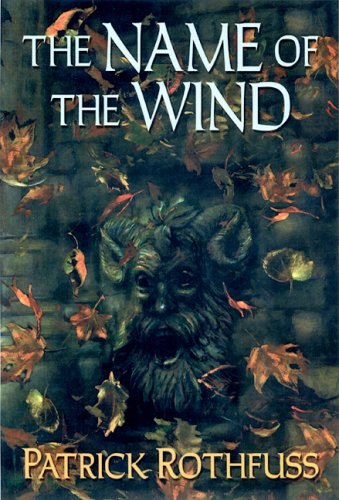
The Kingkiller Chronicle is a planned fantasy trilogy by the American writer Patrick Rothfuss. The first two books, The Name of the Wind and The Wise Man's Fear, were released in 2007 and 2011. The books released in the series have sold over 10 million copies.
- Forgotten Realms
universe526 books1987
Start hereForgotten Realms: The Legend of Drizzt · Start here
similar byfantasysecondary world+1 more
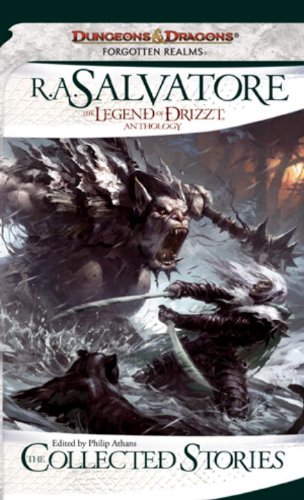
Come in from the cold and mind the door — the wind off the Sword Coast has teeth. Faerûn is a lived-in world, the best-charted of the many lands that share the sky of Toril: a continent of walled cities and haunted wilds where the gods are near enough to answer, magic is a craft with rules and a cost, and every tavern hearth throws light on someone with a blade, a grudge, or a tale worth the telling. Beneath it all lies the Underdark, that black underland where the drow raise their spider-city of Menzoberranzan; above, the merchant towers of Waterdeep, the frost of Icewind Dale, the ruin-strewn North. This is the sword-and-sorcery world of Dungeons & Dragons rendered into prose — grand, generous, and endlessly walkable. It is a world of many hands, and the shelf shows it: some five hundred novels across eighty-odd cycles, uneven as any long telling but rich past counting. R. A. Salvatore's dark-elf ranger Drizzt Do'Urden anchors the whole — the Icewind Dale and Dark Elf trilogies and the long saga that follows. Ed Greenwood, who first dreamed the Realms, chronicles the Old Mage in the Elminster books. Around them turn the god-walking Avatar cycle and its Time of Troubles, the six-author War of the Spider Queen, Salvatore's Cleric Quintet, and Elaine Cunningham's elf-and-drow songs; Troy Denning and a company of others fill the marches between. What holds it together is warmth — the register of a bard who wants you fed and seated before the tale turns. Newcomers should follow Drizzt first: read Homeland and the Dark Elf trilogy for his beginning, or The Crystal Shard as first readers met him. Either door opens the Realms; the other eighty cycles wait past it.
- Magic Kingdom of Landover
series8 books1986
similar byfantasysecondary world+2 more
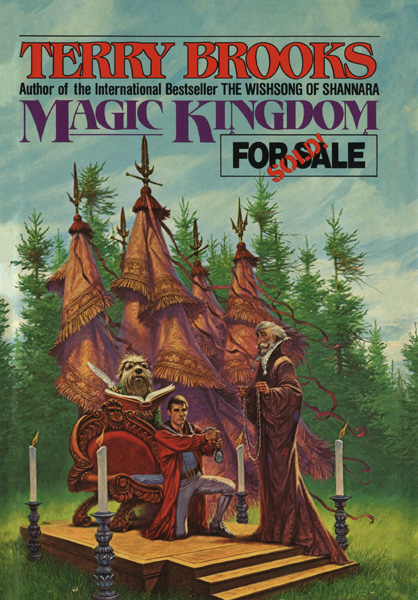
The Magic Kingdom of Landover is a series of six fantasy novels by Terry Brooks following the adventures of a former trial lawyer named Ben Holiday, who purchases a magical kingdom.
- High Hallack
series11 books1965
completed
part of Witch World
similar bysecondary world+1 more
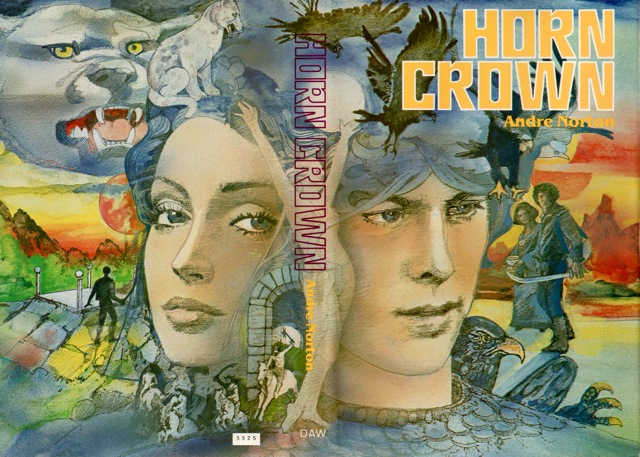
Andre Norton's High Hallack cycle is set within her larger Witch World, a parallel planet where ancient magic supplanted technology and was long practiced only by women. The High Hallack novels follow various protagonists -- outcasts, shape-changers, refugees -- navigating the region's witches, invaders and old magic, mostly independent of each other beyond the shared setting. A. C. Crispin later collaborated with Norton on further entries in the cycle.
- Dragonlance
universe436 books1984
Start hereDragons of Autumn Twilight · Start here
similar byfantasysecondary world+1 more
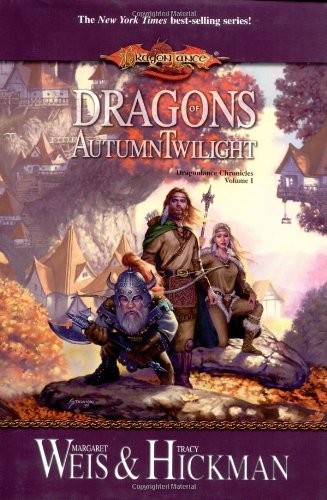
The gods have kept their silence over Krynn for three hundred years, and the world has learned to make do without them: the dragons are a nursery tale, the old clerics gone, faith worn down to superstition. Then strangers bearing a blue crystal staff cross an autumn road, and shadows with wings blot out the three moons. This is a world where magic answers to those moons—white, red, and black—where a lance is the only weapon a dragon fears, and where the fate of nations turns on a handful of friends who meet again at a tavern table and find the age of legend has come for them. At its heart stand Margaret Weis and Tracy Hickman's twin trilogies. Chronicles—Dragons of Autumn Twilight, Winter Night, and Spring Dawning—follows the Heroes of the Lance through the War of the Lance; Legends turns inward to the twins, the frail mage Raistlin and his warrior brother Caramon, and the bargain a man will strike for power. Around this core Krynn sprawls across five ages and hundreds of volumes by many hands: The Raistlin Chronicles, The War of Souls, the Preludes and Meetings cycles, the Tales anthologies, with Richard A. Knaak, Douglas Niles, Jean Rabe, and Chris Pierson each adding elf-kingdoms, dragon-overlords, and long-buried history. It is a shared world—vast, uneven, honestly enormous. What sets Dragonlance apart is its warmth. This is heroic fantasy of fellowship and hard choices rather than grimness—the companionship of the road, courage measured against temptation, gods who watch to see whether mortals deserve them back. Begin with Chronicles, then read Legends; that pairing is the doorway every reader and both creators point newcomers through.
- Estcarp
series8 books1963
completed
part of Witch World
similar bysecondary world+3 more
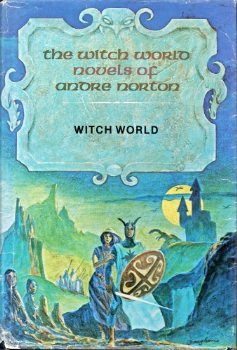
Estcarp is the founding cycle of Andre Norton's Witch World series, beginning with Witch World (1963) and continuing through books such as Web of the Witch World, Three Against the Witch World, and Sorceress of the Witch World. It is set on a world where magic long ago displaced science and, for centuries, was wielded almost exclusively by women, following outsiders and native witches who defend the ancient realm of Estcarp against rival powers from beyond its borders. Norton wrote most of the cycle alone before bringing in collaborators later in her career, as part of the wider Witch World universe.
- Kairos
series11 books1962
completed
similar by+2 more
The Time Quintet is a science fantasy series of five young adult novels written by American author Madeleine L'Engle and made up of A Wrinkle in Time (1962), A Wind in the Door (1973), A Swiftly Tilting Planet (1978), Many Waters (1986), and An Acceptable Time (1989).
- Fillory
series7 books2009
similar byfantasysecondary world+3 more
Lev Grossman's Magicians trilogy (The Magicians, The Magician King, The Magician's Land, 2009-2014) follows Quentin Coldwater from a secretive college of magic in upstate New York into Fillory, a fantasy world he grew up reading about in a series of children's books that turns out to be real. As Quentin, his classmates, and his old friend Julia become entangled in ruling and defending Fillory, the trilogy pushes past the wish-fulfillment of a classic portal fantasy to ask what happens once getting everything you wanted stops being enough.
- Spellsinger
series9 books1983
similar byfantasyadventurousquestssecondary world+1 more
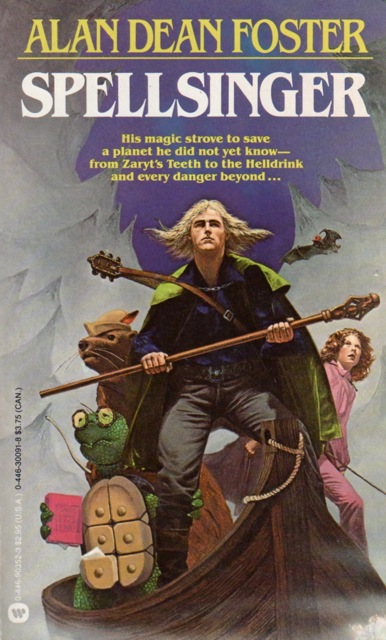
Alan Dean Foster's Spellsinger series follows Jon-Tom, a UCLA law student pulled into a fantasy world by the wizard Clothahump, where he discovers he can cast spells by singing along with his guitar. That world is populated almost entirely by anthropomorphic animals -- otters, rabbits, turtles -- with humans a rare minority, and across eight books published between 1983 and 2004, Jon-Tom and his companions repeatedly clash with the insectoid Plated Folk raiding the western territories.
- Magic Goes Away
series22 books1969
similar byfantasysecondary world+2 more
The Magic Goes Away began as a Larry Niven novella imagining a prehistoric Earth where magic is a finite, minable resource — an explicit response, by Niven's own account, to the 1973 oil shock — in which sorcerers who draw too hard on the world's dwindling mana bring on catastrophe. Niven opened the setting to other writers for follow-up anthologies (The Magic May Return, More Magic) and let Fred Saberhagen write a solo novel in it, The Time of the Warlock, making it a shared-world series about the last age of magic rather than one continuous story.