More like Exile
anchored on:science fictionfar futurespaceother star systems
but
- Ringworld
series5 books1970
part of Known Space
similar byscience fictionadventurousfar futurespaceother star systemsaliensspace exploration
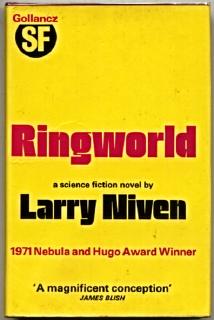
The Ringworld series is a series of science fiction novels written by American author Larry Niven. It is part of his Known Space series of stories. Its backdrop is the Ringworld, a giant artifact 3 million times the surface area of Earth circling a star. The series is composed of four standalone science fiction novels, the original award-winning book and its three sequels:1970: Ringworld 1979: The Ringworld Engineers 1996: The Ringworld Throne 2004: Ringworld's Children
- Ian Cormac
series6 books2001
part of Polity
similar byscience fictionfar futurespaceother star systems+3 more
Neal Asher's Ian Cormac novels (Gridlinked, The Line of Polity, Brass Man, Polity Agent, Line War, plus the earlier-set prequel Shadow of the Scorpion) follow Ian Cormac, an agent of Earth Central Security in Asher's Polity universe. Gridlinked opens with Cormac investigating a destroyed matter-transmitter on a remote colony while wrestling with the personality erosion caused by long-term neural linkage to the Polity's AI network; the following novels escalate into interstellar conflict with the alien Prador. Together they form the core action sequence of Asher's wider Polity series.
- Moties
series4 books1974
part of CoDominium
similar byscience fictionfar futurespaceother star systemsaliens+2 more
Larry Niven and Jerry Pournelle's The Mote in God's Eye (1974) depicts humanity's first contact with an alien species, the Moties, set within the far-future interstellar setting of Pournelle's codominium future history. The Gripping Hand continues that first-contact crisis years later, and Outies, written by J. R. Pournelle, carries the story forward into a new generation. Together the three books trace an escalating encounter between human and Motie civilizations within the codominium universe.
- Heaven Chronicles / Zones of Thought
series8 books1976
similar byscience fictionfar futurespace+2 more
- Commonwealth Saga
series2 books2004
part of Commonwealth Universe
similar byscience fictionfar futurealiens+5 more
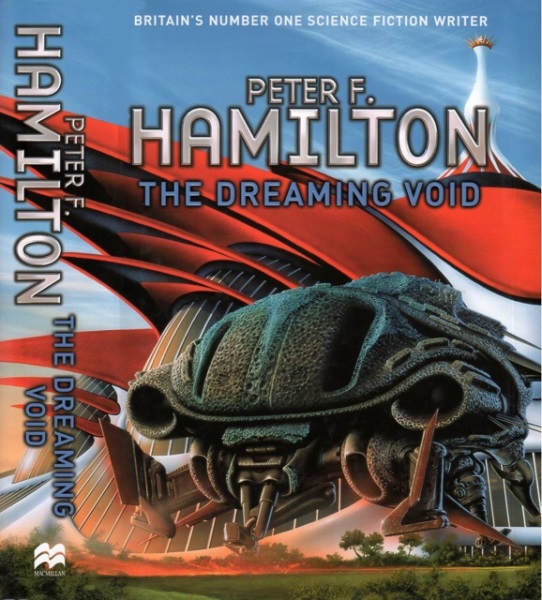
The Commonwealth Saga is a series of science fiction novels by British science fiction writer Peter F. Hamilton. This saga consists of the novels Pandora's Star (2004) and Judas Unchained (2005). Hamilton has also written several books set in the same literary universe. Misspent Youth (2002) takes place 340 years before the events of Pandora's Star. The Void Trilogy, consisting of The Dreaming Void (2008), The Temporal Void (2009), and The Evolutionary Void (2010), takes place 1,200 years after the events of Judas Unchained; several of the main characters from Judas Unchained and Pandora's Star also appear in the Void trilogy.
- Starman Jones
Robert A. Heinleinstandalone novel1953
similar byscience fictionadventurousfar futurespaceother star systemsspace exploration+1 more
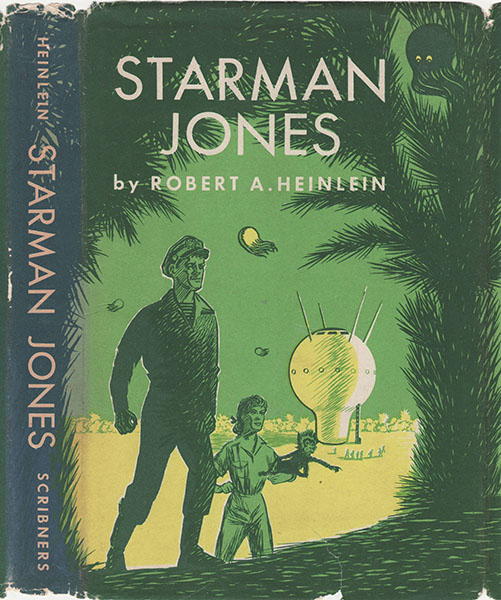
Starman Jones, a 1953 science fiction novel by Robert A. Heinlein, features a farm boy who wants to go to the stars. Charles Scribner's Sons published the book as part of the Heinlein juveniles series.
- The Algebraist
Iain M. Banksstandalone novel2004
similar byscience fictionadventurousfar futurespaceother star systemsaliens+1 more
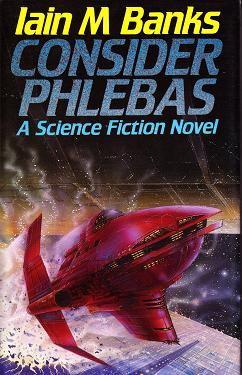
The Algebraist is a science fiction novel by Scottish writer Iain M. Banks, published in print in 2004. It was nominated for a Hugo Award for Best Novel in 2005.
- Void Trilogy
series4 books2007
part of Commonwealth Universe
similar byscience fictionadventurousfar future+4 more
The Void Trilogy is a space opera series by British author Peter F. Hamilton. The series is set in the same universe as The Commonwealth Saga, 1,200 years after the end of Judas Unchained.
- Heechee
series19 books1972
completed
similar byscience fictionfar futurespaceother star systemsaliensspace exploration+1 more
The Heechee Saga, also known as the Gateway series, is a series of science fiction novels and short stories by Frederik Pohl. The Heechee are an advanced alien race that visited the Solar System hundreds of millennia ago and then mysteriously disappeared. They left behind bases containing artifacts, including working starships, which are discovered and exploited by humanity.
- Hitchhiker's Guide to the Galaxy
series16 books1979
part of The Hitchhiker's Guide to the Galaxy Universe
similar byscience fictionfar futurespace+3 more
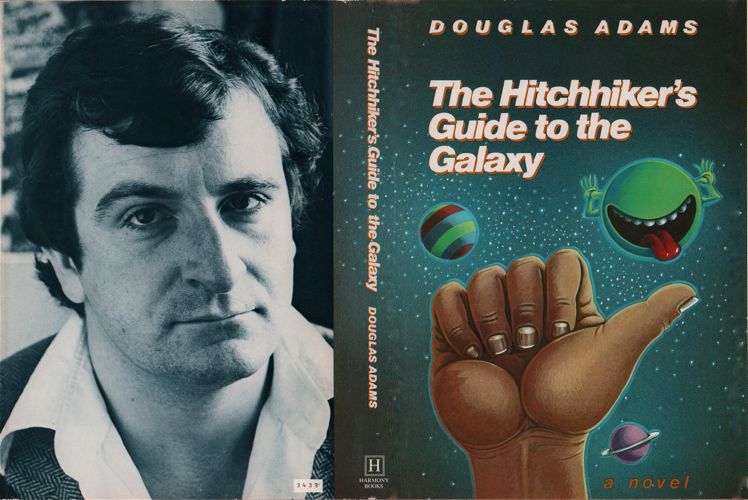
The Hitchhiker's Guide to the Galaxy is a comedy science fiction franchise created by Douglas Adams. Originally a radio sitcom broadcast over two series on BBC Radio 4 between 1978 and 1980, it was soon adapted to other formats, including both novels and comic books, a 1981 BBC television series, a 1984 text adventure game, stage shows and a 2005 feature film.
- Uplift Universe
universe13 books1980
Start hereUplift · Start here
similar byscience fictionadventurousfar futurespaceother star systemsaliens+1 more
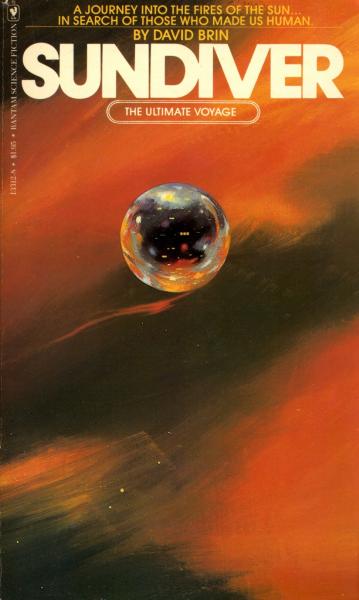
No species, the Galactics insist, ever climbs to sapience alone. For a billion years the elder races have "uplifted" their chosen clients — reshaping some promising animal, gene by patient gene, into a thinking being, then binding it through long ages of indenture. Patron lifts client; client one day becomes patron; and every lineage traces back through the vast Galactic Library to the vanished Progenitors who began it all. Then a ragged band of primates arrives at the stars with no patron to claim them — wolflings, self-made, an affront to a hundred thousand years of law — and worse, these humans have already started uplifting neighbors of their own: the neo-dolphins and neo-chimpanzees of Earthclan. David Brin builds this galaxy across two trilogies. The first — Sundiver, the Hugo- and Nebula-winning Startide Rising, and the Hugo-winning The Uplift War — sends an expedition into the Sun, then follows the dolphin-crewed survey ship Streaker as it flees a discovery that sets fanatical star-clans at war, and a chimp-led resistance on an invaded colony world. The second sequence, Uplift Storm — Brightness Reef, Infinity's Shore, Heaven's Reach — descends to Jijo, a forbidden world where six fallen races hide as illegal settlers, and draws every loose thread toward a reckoning. Short fiction fills the margins. This is space opera with an ecologist's conscience: teeming with invented biologies, wry cross-species banter, and real unease about what we owe the minds we make. Begin with Startide Rising — the saga's beating heart, and readable on its own — or take Sundiver first and read straight through in publication order.
- Uplift
series5 books1980
part of Uplift Universe
similar byscience fictionadventurousfar futureother star systemsspacealiens+1 more
David Brin's Uplift trilogy opens with Sundiver, sending human explorers into the Sun itself, then follows a dolphin-crewed starship on the run from hostile aliens in Startide Rising and a fight over the colony world Garth in The Uplift War. The books sit inside Brin's wider Uplift Universe, built on the idea that spacefaring "patron" species genetically engineer younger "client" species into full sapience, with humanity an anomaly that reached the stars without a patron of its own.
- Old Man's War
series16 books2005
similar byscience fictionadventurousfar futurespaceother star systems+1 more
The Old Man's War series is a series of science fiction novels by John Scalzi. The first book in the series, Old Man's War, was first published in 2005 by Tor Books, and was nominated for the Hugo Award for Best Novel in 2006. In 2026 it was a finalist for the Hugo Award for Best Series.
- Pip & Flinx
series18 books1972
part of Humanx Commonwealth
similar byscience fictionadventurousfar futurespaceother star systemsaliens+1 more
The Pip & Flinx novels follow Flinx, a young man with an unusual, mysterious origin, and his ever-present animal companion Pip, across Alan Dean Foster's Humanx Commonwealth setting. Beginning with The Tar-Aiym Krang (1972) — chronologically the second entry, since Foster later filled in Flinx's earlier life — the series grew to fifteen novels published between 1972 and 2017, mixing planetary adventure with a slowly unfolding personal mystery.
- Starstream
series2 books1989
completed
similar byscience fictionfar futurespaceother star systems+3 more
Starstream groups Jeffrey A. Carver's two linked science-fiction novels, From a Changeling Star (1989) and its direct sequel Down the Stream of Stars (1990). The two were published within a year of each other under the same author.
- Forever War
series10 books1972
similar byscience fictionfar futurespace+1 more
Joe Haldeman's The Forever War (1974) follows a soldier conscripted into a centuries-long interstellar war against the alien Taurans, using relativistic space travel so that months spent in transit correspond to years or decades passing back on Earth. Haldeman later returned to the same conflict in Forever Peace (1997), a thematically connected but separate story, and Forever Free (1999), a direct sequel set years after the original war's end. The first novel won the Hugo, Nebula, and Locus awards and is considered a foundational work of military science fiction.
- Thistledown
series5 books1978
completed
similar byscience fictionfar futurespacespace exploration+2 more
- Culture
series15 books1987
completed
part of The Culture
similar byscience fictionfar future+3 more
The Culture series is a science fiction series written by Scottish author Iain M. Banks and released from 1987 until 2012. The stories centre on The Culture, a utopian, post-scarcity space society of humanoid aliens and advanced superintelligent artificial intelligences living in artificial habitats spread across the Milky Way galaxy. The main themes of the series are the dilemmas that an idealistic, more-advanced civilization faces in dealing with smaller, less-advanced civilizations that do not share its ideals, and whose behaviour it sometimes finds barbaric. In some of the stories, action takes place mainly in non-Culture environments, and the leading characters are often on the fringes of the Culture, sometimes acting as agents of the Culture in its plans to civilize the galaxy. Each novel is a self-contained story with new characters, although reference is occasionally made to the events of previous novels.
- The Colors of Space
Marion Zimmer Bradleystandalone novel1963
similar byscience fictionadventurousfar futurespaceother star systemsaliensspace exploration
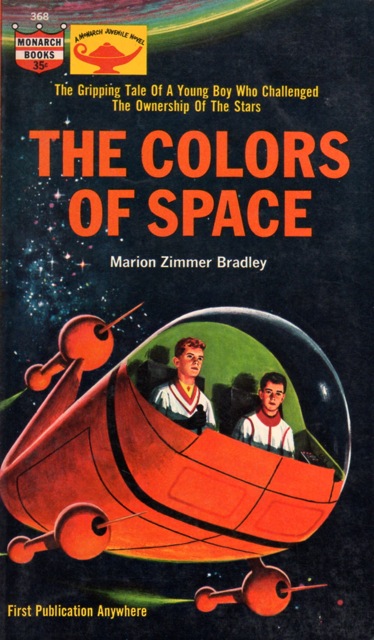
The Lhari seem peaceful and friendly, but they go to some lengths to protect their monopoly on faster-than-light travel. One young man is sent to discover their secrets.
- Citizen of the Galaxy
Robert A. Heinleinstandalone novel1957
similar byscience fictionadventurousfar futurespaceother star systems+1 more
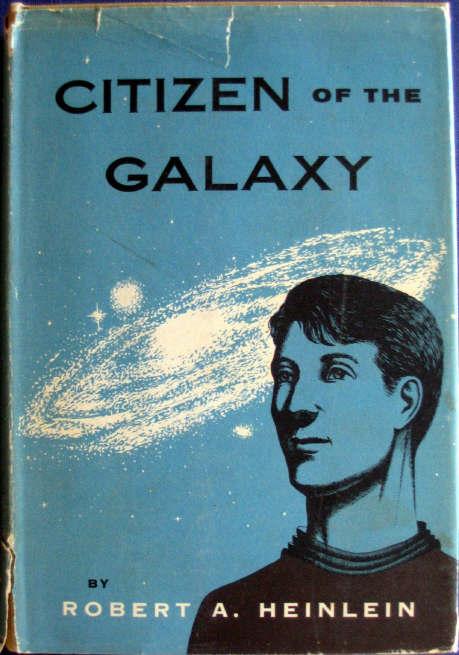
On a planet far distant from Earth, a lame beggar buys a young boy slave who has forgotten his origins. The beggar is more than he seems, and gives the boy an extensive education while employing him as an observer of activity in their city. Years later, the beggar is captured by the government, and the youth must escape the planet.
- Genesis Quest
series2 books1986
completed
similar byscience fictionadventurousfar futureother star systemsaliens+3 more
- Night's Dawn Trilogy
series9 books1996
part of Confederation Universe
similar byscience fictionfar futurespace+2 more
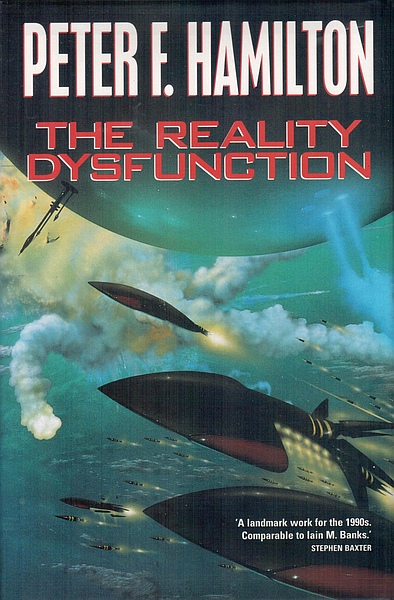
British author Peter F. Hamilton's The Night's Dawn Trilogy consists of three science fiction novels: The Reality Dysfunction (1996), The Neutronium Alchemist (1997), and The Naked God (1999). A collection of short stories, A Second Chance at Eden, shares the same universe, and The Confederation Handbook documents that universe in non-fiction style.
- Cities in Flight
series10 books1950
completed
similar byscience fictionfar futurespace+3 more
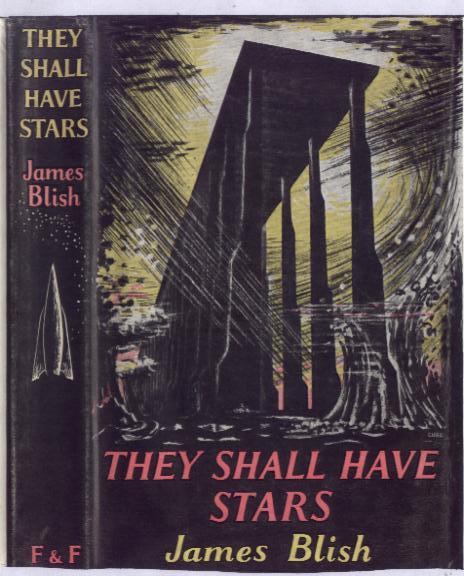
Cities in Flight is a four-volume series of science fiction novels and short stories by American writer James Blish, originally published between 1950 and 1962, which were first known collectively as the "Okie" novels. The series features entire cities that are able to fly through space using an anti-gravity device, the spindizzy. The stories cover roughly two thousand years, from the very near future to the end of the universe. One story, "Earthman, Come Home", won a Retro Hugo Award in 2004 for Best Novelette. Since 1970, the primary edition has been the omnibus volume first published in paperback by Avon Books. Over the years James Blish made many changes to these stories in response to points raised in letters from readers.