More like Extractor
anchored on:science fictiontime travelour world
but
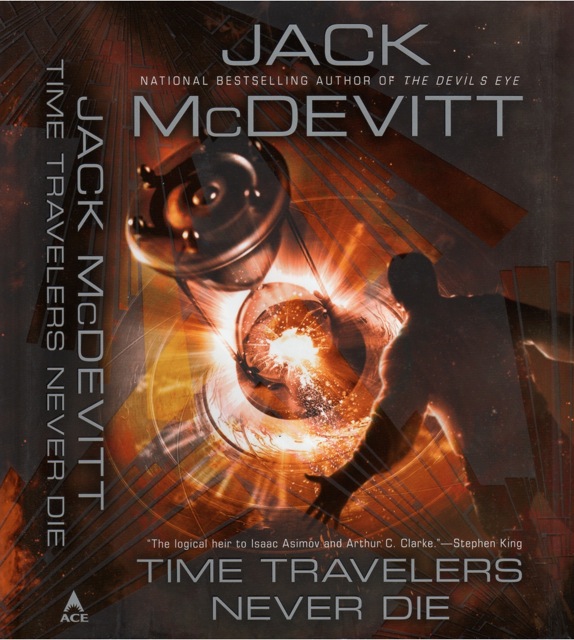
- Time Travelers Never Die
series2 books1996
similar byour worldcontemporaryscience fictiontime travel+2 more
Time Travelers Never Die started life as a Jack McDevitt novella in the mid-1990s (Hugo- and Nebula-nominated) before he expanded it into a full novel over a decade later; the novella and novel are two forms of the same story rather than a sequel. It follows a small circle of people who gain access to working time travel and use it to step into the past, in McDevitt's characteristic register of curious, history-minded science fiction.
- The Chronos Files Universe
series15 books2014
similar byour worldcontemporaryscience fictiontime travel+1 more
- Foundation Universe
universe123 books1940
Start hereFoundation · Start here
similar byscience fiction+1 more
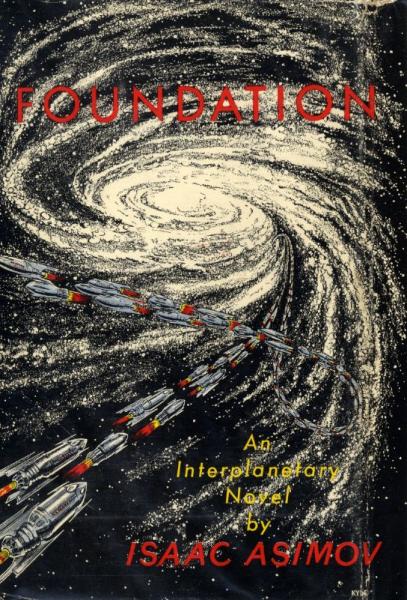
There is a science that reads the future of quadrillions the way an astronomer reads the orbits of stars. It is called psychohistory, and its equations foresee something the ruling Galactic Empire cannot admit: the throne is rotting, and thirty thousand years of barbarism are coming. One man, Hari Seldon, cannot stop the fall. He can only shorten it — by seeding a Foundation of scholars at the rim of the galaxy, a fragile institution built to carry knowledge across the dark and cut the interregnum to a single millennium. This is a universe told in the register of history itself: the long view, the calm of deep time, empires measured in centuries and men measured against them. The spine is Asimov's original trilogy — Foundation, Foundation and Empire, Second Foundation — followed decades later by the sequels Foundation's Edge and Foundation and Earth and the prequels Prelude to Foundation and Forward the Foundation. Late in life Asimov braided this in with his other future histories: the Robot novels of detective Elijah Baley and his humaniform partner R. Daneel Olivaw (The Caves of Steel, The Naked Sun, The Robots of Dawn, Robots and Empire) and the early Galactic Empire novels (Pebble in the Sky and its kin), until one continuous chronicle ran from the first thinking robots to the Second Empire. Other hands extend it — the Second Foundation Trilogy by Gregory Benford, Greg Bear, and David Brin, and shared-world spinoffs such as Robot City — so the corpus sprawls beyond a single author's tidy shelf. What distinguishes it is that the drama is intellectual: crises resolved by insight, nerve, and dialogue rather than fleets and blades, each turn hinging on the hidden logic of the Seldon Plan. Begin where readers have always begun — with Foundation, and the original trilogy in publication order. The rest opens outward from there.
- Kairos
series11 books1962
completed
similar byscience fiction+4 more
The Time Quintet is a science fantasy series of five young adult novels written by American author Madeleine L'Engle and made up of A Wrinkle in Time (1962), A Wind in the Door (1973), A Swiftly Tilting Planet (1978), Many Waters (1986), and An Acceptable Time (1989).
- Richard Forthrast
series2 books2011
similar byour worldscience fiction+3 more
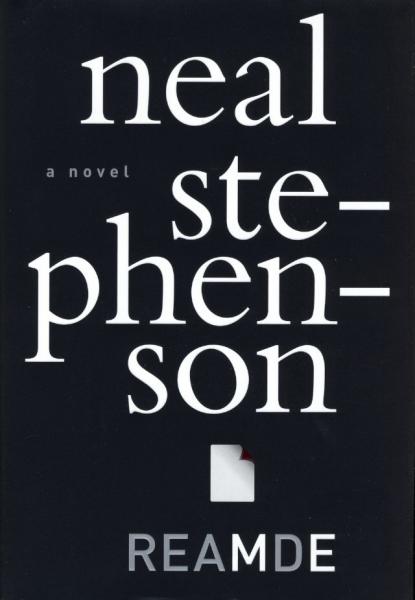
Neal Stephenson's Richard 'Dodge' Forthrast novels open with Reamde, a globe-spanning thriller that starts when ransomware inside an MMORPG economy pulls Richard's extended family into a real-world hostage crisis involving hackers, jihadists and Russian mobsters. The sequel Fall; or, Dodge in Hell shifts registers entirely, following Richard's digitally preserved mind after death into an afterlife simulation built from his scanned brain. The two books share a protagonist and family but differ sharply in genre and scale.
- Recursion
Blake Crouchstandalone novel2019
similar bytime loopidentityour worldcontemporaryscience fictiontensetime travel
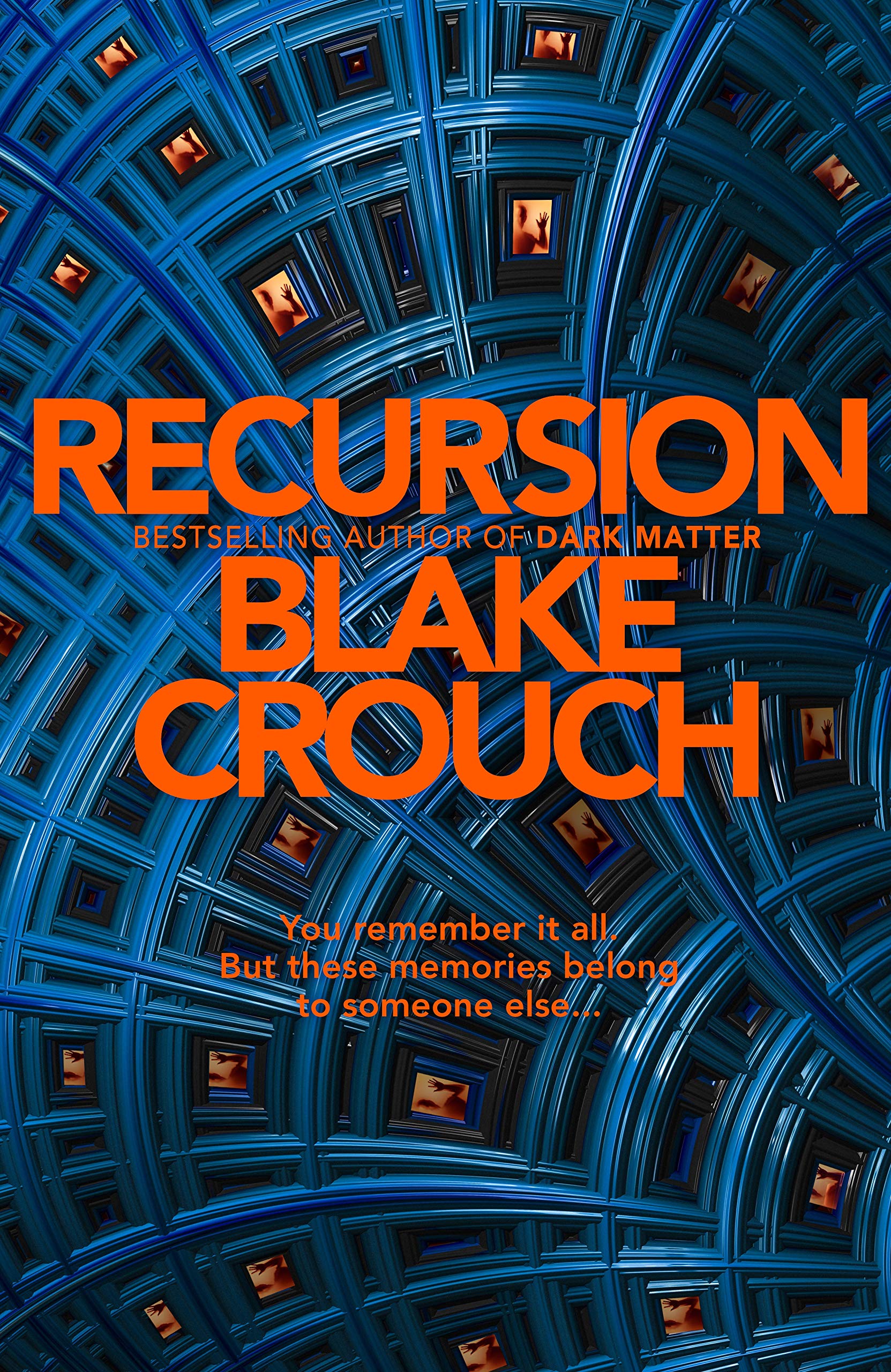
Recursion is a thriller science fiction novel by American writer Blake Crouch, first published in the United States in June 2019 by the Crown Publishing Group, a subsidiary of Penguin Random House. The novel explores themes of memory, identity, and time.
- The Missing
series10 books2008
similar byidentitycontemporaryscience fictiontime travel+3 more
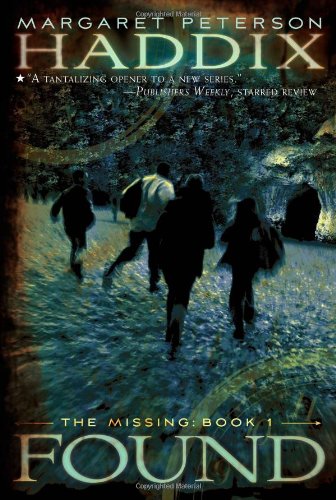
The Missing is a series of young adult novels written by Margaret Peterson Haddix. It tells the story of famous children from history stolen from their place in time by futuristic time travelers and accidentally sent to the 21st century as babies. Jonah Skidmore is one of the stolen children, and he, along with his non-adopted sister Katherine, must help return the missing kids to their rightful places in history and fix time before it is destroyed. The first book in the series, Found, was published on April 22, 2008. The series continued with book titles Sent, Sabotaged, Torn, Caught, Risked, and Revealed. The eighth and final book, Redeemed, was released on September 8, 2015. There are also two ebook short stories, Sought and Rescued . Haddix originally intended the series to consist of only seven books. However, she stated that she had trouble closing out the series in seven books; leading to her decision to write Redeemed.
- The Corridors of Time
Poul Andersonstandalone novel1965
similar byour worldadventurousscience fictiontime travel+2 more
The Corridors of Time is a science fiction novel by the American writer Poul Anderson that was first published in 1965 as a serial in Amazing Stories, and as a book by Doubleday.
- Dr. Futurity
Philip K. Dickstandalone novel1960
similar byour worldadventurousscience fictiontime travel+2 more
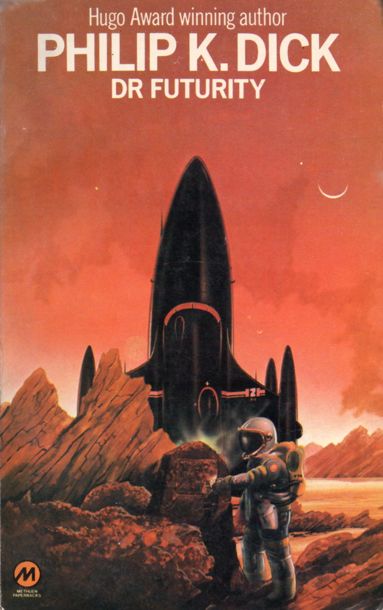
Dr. Futurity is a 1960 science fiction novel by American writer Philip K. Dick. It is an expansion of his earlier short story "Time Pawn", which first saw publication in the summer 1954 issue of Thrilling Wonder Stories. Dr. Futurity was first published as a novel by Ace Books as one half of Ace Double D-421, bound dos-à-dos with John Brunner's Slavers of Space.
- H. G. Wells' Time Machine
universe51 books1888
Start hereThe Time Machine · Start here
similar byscience fictiontime travel+1 more
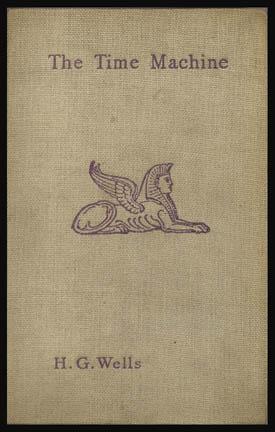
The Time Traveller throws his lever, and the laboratory dissolves into grey — day and night beating like a pulse, the sun streaking into a band of fire, the years falling away by the thousand. When the machine stops he stands in the year 802,701, among the gentle, idle Eloi who dance in the ruins of paradise, and the pale Morlocks who tend the machines below and climb, in the dark, to feed. This is the seed from which every tale of time travel grew: one Victorian evening's fireside account of a fourth dimension a man might walk down. At its centre stands H. G. Wells's slim 1895 romance, complete in itself. Around it has grown a long canopy of retellings — abridged and illustrated editions that carry the Eloi and Morlocks to younger readers, shaped by hands such as Betty Ren Wright and Chris Sasaki — and a strand of homage that treats Wells's invention as fact: Karl Alexander's Time After Time, in which Wells himself pursues Jack the Ripper through his own machine into a startled modern age, and David J. Lake's return to the Morlock world. It is honestly one work and its echoes, not a saga of equals. What lingers is the cool, reasoning voice of a gentleman-scientist watching wonder curdle into dread — for the machine does not stop at 802,701, but runs on to a still shore beneath a swollen, dying sun. Begin where all of it begins: with Wells's original. It is short, it is whole, and nothing after it is required.
- The Chronicles of St. Mary's
series46 books2013
similar bycontemporaryour worldtime travelscience fiction+1 more
Jodi Taylor's Chronicles of St Mary's follows the disaster-prone historians of St Mary's Institute of Historical Research, who insist they don't 'time travel' but merely 'investigate major historical events in contemporary time' — usually while narrowly avoiding death and causing chaos. Beginning with Just One Damned Thing After Another, the comic time-travel series has grown to nineteen novels ranging across historical periods from the Cretaceous to the twentieth century.
- Renegades (Marissa Meyer)
series3 books2017
similar byidentityour worldtensescience fiction+2 more
Renegades is set in Gatlon City after a civil war between the superheroic Renegades and the villainous Anarchists, and follows Nova, a young woman with the power to put people to sleep by touch, as she infiltrates the Renegades as a spy for her uncle's Anarchists and falls for Adrian, the adopted son of the Renegades' leaders. Marissa Meyer's trilogy, continuing through Archenemies and Supernova, plays the two factions' history against the leads' divided loyalties; Meyer has said she doesn't plan to extend the series further.
- Jumper
series6 books1992
similar bycontemporaryadventurousscience fictiontense+2 more
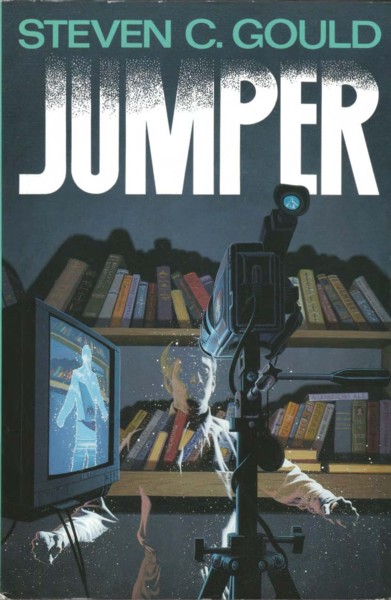
Jumper follows David Rice, a teenager who discovers he can teleport anywhere he's been and uses the power to escape an abusive home, only to find that ability alone doesn't solve the harder problems of finding his absent mother, building an honest relationship, or staying off the radar of people who'd exploit him. Steven Gould's series continues across Reflex, Impulse, and Exo, later following his and his wife's daughter as a second-generation jumper. A 2008 film loosely adapted the first novel.
- Cas Russell / Russell's Attic
series5 books2014
similar byidentityour worldadventurousscience fictiontense+1 more
- The Merchant Princes
series14 books2004
similar bycontemporaryour worldtensescience fiction
The Merchant Princes is a science fantasy and alternate history series of nine novels by British writer Charles Stross. In the series, there exist a number of parallel worlds, all of which are on the same geographical Earth but with different societies at different points of development. Members of a certain bloodline can travel between these worlds along with their immediate possessions. The series largely follows Miriam Beckstein, a technology journalist raised in a familiar "normal" Earth, who discovers she was born in a parallel world and is a member of this bloodline. She quickly becomes entangled in political maneuvering and assassination plots with her estranged family. Miriam uses modern technology and investigative journalism to attempt to stay a step ahead.
- The Lincoln Hunters
Wilson Tuckerstandalone novel1958
similar byour worldadventurousscience fictiontime travel+2 more
The Lincoln Hunters is a 1958 science fiction novel by American writer Wilson Tucker.
- Svetz
series9 books1969
similar byscience fictiontime travel+1 more
Larry Niven's Svetz stories follow Hanville Svetz, a dimension-traveling agent sent to retrieve unusual specimens and creatures, with titles like The Flight of the Horse (1971) and Leviathan! built around individual retrieval missions gone strange. The separate tales were later gathered together with new material into the novel Rainbow Mars (1999).