Loreful
HomeDiscover
Search series, authors…⌘K
Loreful

Reading orders for SF/F series and shared universes — with your place kept in every one.

Explore

UniversesSeriesWorksAuthorsAtlas

Help

FAQAboutSite map

Account & legal

Sign inCreate accountPrivacyTerms

Data

Built on ISFDB, Wikipedia, Wikidata and Open Library. Curated reading orders carry their reasoning on the page; the rest follow publication order. Data sources & licenses

© Loreful · data: ISFDB · CC BY

More like Fable

anchored on:adventureat seacontemporaryadventurousyoung adultsurvival+4 more

but

Mood

The mood the book leaves you in.

  • The reading experience is propelled by journeys, exploration, and physical risk; excitement and forward momentum dominate over dread or introspection.
  • Joy and loss are deliberately mixed; the resolution grants characters something real while taking something else away, leaving warmth and sorrow together.
  • The book demands work from the reader — dense prose, difficult structure, unfamiliar ideas, or morally uncomfortable material — as part of its intended effect.
  • Grim events, cruelty, or despair dominate the atmosphere, and the book does not soften them with comfort or comic relief.
  • The atmosphere is quietly unsettling — wrongness, unease, and the uncanny pervade the book without necessarily escalating into overt horror.
  • The book is built to move the reader; character feeling is foregrounded and major scenes aim at a strong emotional response.
  • Humor is a primary aim and the prose plays for laughs — comic situations, wit, or dialogue produce sustained comedy, not occasional levity.
  • The book insists that things can improve; effort and decency are shown to matter, and the arc bends toward better outcomes even through hardship.
  • The book teaches as it goes — real facts, history, science, or craft are conveyed in enough depth that learning is part of the reading experience.
  • The book is designed to uplift and motivate, presenting perseverance or achievement in a way that invites the reader to aspire or act.
  • The overall register is cheerful and easygoing; stakes are kept gentle and the book avoids dwelling on pain or dread.
  • Withheld information drives the experience; the book sustains enigmas and secrets the reader wants resolved, whatever its genre.
  • The book is contemplative and inward-looking, giving more weight to thought, memory, and meaning than to external events.
  • The book works as comfort reading — low tension, a soothing pace, and an atmosphere the reader can unwind in.
  • Grief, loss, or melancholy set the dominant register, and the book lets sorrow stand rather than resolving it into comfort.
  • Sustained suspense is the point; the book keeps the reader braced for what happens next through danger, pressure, or impending revelation.
  • Playful invention and charm define the register — fanciful conceits, light absurdity, and a narration that delights in its own oddity.

About

What the story runs on.

  • Stories in which extraterrestrial beings are central — as characters, cultures, or the object of the plot.
  • Stories structured as a quest — a journey undertaken to find, deliver, or destroy something of great import.
  • Stories in which staying alive against nature, catastrophe, or scarcity is the central problem.
  • Stories of lovers kept apart by law, family, faith, or station, where the obstacle to love is the plot.
  • Stories in which a friendship — its making, testing, or loss — is the emotional center.
  • Stories of growing up — a young protagonist crossing from childhood into adult knowledge and responsibility.
  • Stories about who a character truly is — self-discovery, doubled lives, and the search for a self.
  • Stories about mourning — living through the death of a loved one and what loss does to the survivors.
  • Stories in which a buried family truth — hidden parentage, crimes, or shames — surfaces and reorders the present.
  • Stories driven by maneuvering for power — factions, conspiracies, and statecraft conducted in shadow.
  • Stories in which war itself is the subject — combat, occupation, and what warfare does to soldiers and civilians.
  • Stories organized around investigating a killing — the case, the clues, and the pursuit of the killer, in any genre's clothing.

Shelf

Where it sits in the library.

    • Fiction built on magic or other supernatural elements that have no scientific explanation.
    • Secondary-world fantasy at large scale, where the fate of nations or the world turns on the protagonists' struggle.
    • Fantasy set in a recognizably modern city or contemporary world where the supernatural intrudes on everyday life.
    • Fantasy that blends in horror's atmosphere and imagery, keeping a fantastical frame around grim or frightening material.
    • Action-driven fantasy following warriors or rogues with personal stakes against sorcerous threats, rather than world-spanning conflicts.
    • Fantasy set in a real historical period or a close analogue of one, with magic woven into the era.
    • Fantasy in which protagonists cross from the ordinary world into another world through a portal or similar passage.
    • Fiction that retells or reworks a traditional fairy tale in a new form or setting.
    • Fantasy drawing directly on myths, legends, and folklore, retelling them or building on their figures and logic.
    • Fantasy of ghosts, vampires, shapeshifters, psychics, and similar phenomena, usually set in an otherwise ordinary world.
    • Fiction mixing science-fictional trappings with overtly magical or impossible elements in one setting.
    • Low-stakes fantasy emphasizing comfort, community, and everyday pleasures over conflict and peril.
    • Speculative fiction of pervasive moral ambiguity, violence, and cynicism that rejects heroic conventions — fantasy and SF alike.
      • Fiction that extrapolates from science and technology — future societies, space travel, or speculative inventions — within at least nominally natural laws.
      • Science fiction of interstellar scope — starships, galactic polities, and adventure across star systems.
      • Science fiction committed to scientific rigor, where technical plausibility constrains the story.
      • Science fiction centered on armed forces and warfare, told largely from a military point of view.
      • Science fiction of networked, corporate-dominated near futures, pairing high technology with social decay.
      • Science fiction styled on nineteenth-century steam-powered technology, often in a Victorian or pseudo-Victorian setting.
      • Fiction depicting an oppressive or catastrophic society, presented as a warning.
      • Fiction set after civilization's collapse, following survivors in the ruins of the old world.
      • Fiction in which characters move between past and future, and the mechanics or consequences of that travel drive the plot.
      • Fiction exploring a world where a historical event went differently and history diverged from ours.
      • Science fiction about humanity's first encounter and communication with an alien intelligence.
      • Science fiction in which extraterrestrial forces attack or occupy Earth and humanity resists.
      • Fiction whose primary aim is to frighten or unsettle the reader through dread, menace, or the monstrous.
      • Horror of vast, indifferent, incomprehensible entities before which humanity is insignificant, in the Lovecraft tradition.
      • Horror of decaying houses, buried family secrets, and oppressive atmosphere in the Gothic literary tradition.
      • Horror centered on hauntings and the returning dead.
      • Horror located in the mind — paranoia, obsession, and unreliable perception rather than external monsters.
      • Horror built around the reanimated dead and survival amid their outbreaks.
      • Horror defined by explicit, transgressive gore that refuses to cut away from violence.
      • Speculative fiction of the strange and uncanny that resists both natural explanation and standard genre categories.
      • Fiction organized around solving a crime or puzzle, typically following an investigator toward the identification of a culprit.
      • A puzzle-first mystery that lays out clues so the culprit's identity can be deduced before the reveal.
      • Crime fiction of moral ambiguity, fatalism, and hard-edged style, set among the corrupt and the doomed.
      • A mystery following the realistic routines of police work — forensics, interviews, and case-building.
      • A gentle mystery with an amateur sleuth, a small community, and violence kept off the page.
      • A mystery set in a past era, where the investigation works within that period's methods and society.
      • Fast-paced fiction driven by imminent danger, pursuit, or high-stakes conspiracy, built to sustain tension.
      • A thriller of espionage — agents, tradecraft, and intelligence services in conflict.
      • A thriller centered on lawyers and the courtroom, where litigation carries the suspense.
      • A thriller driven by detailed contemporary or near-future technology, often military or scientific.
      • A thriller whose tension comes from mental states and manipulation between characters rather than external action.
      • Fiction whose central plot is a romantic relationship and its development toward an emotionally satisfying resolution.
      • Romance in which one or both partners are supernatural beings, blending fantasy elements into the love story.
      • A fantasy-romance hybrid in which the romantic arc and the fantasy plot carry equal weight.
      • Romance set in a past era, with courtship shaped by the period's society and manners.
      • Romance set in the present day, without supernatural or historical elements.
      • Fiction set in a real past period, where the historical setting materially shapes characters and events.
        • General and literary fiction emphasizing prose style, character interiority, or formal ambition over genre plot conventions.
        • Fiction in a realistic world where magical events occur and are treated as ordinary, in the tradition of Latin American literature.
        • Fiction that ridicules people, institutions, or society in order to criticize them.
        • Fiction of dreamlike, irrational imagery and logic that breaks from realistic representation.
        • Fiction that plays with narrative convention through metafiction, fragmentation, and self-reference.
        • Fiction propelled by journeys, exploration, and physical peril, where action and survival carry the plot.
        • Adventure fiction of ships and seafaring — naval engagements, voyages, and life at sea.
        • Fiction of the American frontier West — gunmen, ranchers, and lawmen, typically in the late nineteenth century.
        • Fiction centered on soldiers, campaigns, and the experience of warfare, historical or imagined.
          • Fiction written primarily to amuse, using comedic situations, wit, or parody as its organizing principle.
            • Multi-generational fiction following a family or dynasty across decades, with inheritance and kinship as the through-line.
              • Fiction whose world runs on explicit game mechanics — levels, stats, and skills that characters can see and exploit.
                • Fiction about costumed or superpowered heroes and their conflicts with comparable villains.

                Practical

                How long a commitment, whether it stands alone, and whether it has finished.

                Tap a chip to ask for it · tap again to rule it out · once more to clear. Numbers show what would be left.

                • Cover of Fable (Adrienne Young)
                  Fable (Adrienne Young)

                  series · 3 books · 2020

                  similar byadventurecontemporaryadventurousat seayoung adult+6 more

                • Cover of Airman
                  Airman

                  Eoin Colfer · standalone novel · 2008

                  similar byadventureadventuroustensesurvivalcoming of age

                  Airman, by Eoin Colfer, is a best-selling historical adventure novel set in the 19th century. It was released in the UK, Ireland and US in January 2008. The novel was shortlisted for the 2009 Carnegie Medal.

                • Cover of Alexander Cold
                  Alexander Cold

                  series · 3 books · 2002

                  similar byadventurecontemporaryadventurousyoung adultcoming of age+1 more

                • Cover of Kalahari
                  Kalahari

                  Jessica Khoury · standalone novel · 2015

                  similar byadventurecontemporaryadventuroustenseyoung adultsurvival

                  Sarah and her father have lived in the Kalahari as researchers for years, and have created a home there. Ever since Sarah's mother had died, her part in the family has grown. In need of money for research, Sarah and her father agree to take 5 chosen students to take on a week trip in the Kalahari Desert. Poachers invade the area, chasing after a lion that seems to be the colour of finest mercury, a virus created called metallcium, the living metal. This animal hasn't been seen before and makes everyone question. Sarah's father heads out for a little bit to stop the hunters, but doesn't return. The colour of that lion though makes Sarah question everything she has ever known.

                • Cover of Watchers
                  Watchers

                  Dean R. Koontz · standalone novel · 1987

                  similar byadventurecontemporaryadventuroustensesurvival

                  This probably qualifies as a science-based adventure rather than a science fiction novel. The premise, and only speculative fiction element, is that a U.S. government funded laboratory creates a golden retriever that's as intelligent as a human for use in intelligence gathering and also creates a monkey hybrid that's intended for a military police dog role and as a killing machine on battlefields. The animals escape and the story plays out as a straight adventure novel with a good chunk of romance thrown in.

                • RS
                  Roland Smith's Cryptid Series

                  series · 5 books · 1998

                  similar byadventurecontemporaryadventuroustense+1 more

                • Cover of The Lost Ark
                  The Lost Ark

                  J. R. Rain · standalone novel · 2010

                  similar byadventurecontemporaryadventuroustensesurvival

                  In a lonely bar in eastern Turkey, ex-National Geographic photojournalist Sam Ward is hired to find an eccentric professor who disappeared high atop Mount Ararat, fabled resting spot of Noah's Ark. Accompanied by the professor's beautiful daughter, archaeologist Faye Roberts, Sam soon stumbles upon a secret stronghold—a base of operation for unleashing hell on earth. Now running for their lives, Sam and company are about to come face-to-face with the greatest archaeological discovery of all tiime...

                • Cover of The Black Pearl
                  The Black Pearl

                  Scott O'Dell · standalone novel · 1967

                  similar byadventureadventuroustenseyoung adultsurvivalcoming of ageat sea

                  The Black Pearl is a young adult novel by American author Scott O'Dell. The novel was first published in 1967 and describes the coming of age of the son of a pearl dealer.

                • Cover of Dirk Pitt
                  Dirk Pitt

                  series · 12 books · 1973

                  completed

                  similar byadventureadventurouscontemporarytense+1 more

                  Clive Cussler's Dirk Pitt novels follow the title character, a two-fisted marine engineer and de facto field agent for the fictional National Underwater and Marine Agency, through globe-spanning adventures mixing undersea salvage, historical mystery, and international conspiracy. The run collected here spans The Mediterranean Caper (1973) through Valhalla Rising (2001), the earlier stretch of a series Cussler continued for decades with later co-authors.

                • Cover of Lost Republic
                  Lost Republic

                  Paul B. Thompson · standalone novel · 2014

                  similar byadventureadventuroustenseyoung adultsurvivalcoming of ageislands+1 more

                  In 2055, eight teens board the S.S. Sir Guy Carleton, the world's last steamship on its final voyage. Once far out in the Atlantic, all modern technology fails. Each teen must rely on their own special skills to survive on a strange island that should not exist and escape the Lost Republic"--Provided by publisher.

                • Cover of Jack Howard
                  Jack Howard

                  series · 8 books · 2005

                  similar byadventurecontemporaryadventuroustense

                • Cover of Tarzan
                  Tarzan

                  series · 50 books · 1912

                  part of Tarzan Universe

                  similar byadventureadventurous+1 more

                  Tarzan is a series of 24 adventure novels written by Edgar Rice Burroughs (1875–1950) and published between 1912 and 1966, followed by several novels either co-written by Burroughs, or officially authorized by his estate. There are also two works written by Burroughs especially for children that are not related to the main series.

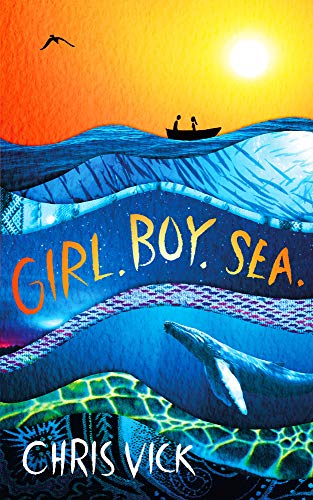
                • Cover of Girl. Boy. Sea.
                  Girl. Boy. Sea.

                  Chris Vick · standalone novel · 2019

                  similar byadventurecontemporarytenseat seasurvivalislands

                  "A British boy narrowly survives the sinking of his yacht in a huge storm off the coast of Morocco. After days alone at sea in a tiny rowing boat Bill rescues a girl clinging for her life to a barrel. Aya, from the nomadic Berber tribe, was escaping to Europe when her migrant ship was destroyed in the same storm. Through endless days and star-spangled nights, they drift – mere specks on the vast, empty ocean – weakened by fear, hunger, and burned by the unforgiving sun. Aya tells Bill about The Arabian Nights, and Shahrazad, who told 1001 stories to save her life. As hope of rescue begins to fade, they find strength in these tales of magic, brave heroes, wily thieves, greedy sultans, and courageous girls. When they land on a desert island, they're surprised to be confronted by a stranger who is not what he seems... and back out on the waves once more in the dark deep, a shadow follows..." (toppsta.com)

                • Cover of The Copernicus Legacy
                  The Copernicus Legacy

                  series · 6 books · 2014

                  similar byadventurecontemporaryadventurous+2 more

                  The Copernicus Legacy is a book series written by Tony Abbott. It is about the adventures of Wade Kaplan, Darrell Kaplan, Lily, Becca Moore, Roald Kaplan, and Sara Kaplan as they try to destroy a time machine made by Ptolemy but discovered and used by Nicolaus Copernicus, from the dangerous Teutonic Order of Ancient Prussia. It currently has four books in the main series, but two are in a series diverted from The Copernicus Legacy called Copernicus Archives. While a work of fiction, it does incorporate some facts about Copernicus's history.

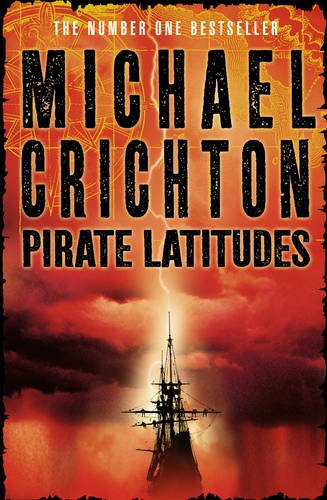
                • Cover of Pirate Latitudes
                  Pirate Latitudes

                  Michael Crichton · standalone novel · 2009

                  similar byadventureadventuroustenseat sea+1 more

                  Pirate Latitudes is an action-adventure novel by Michael Crichton, the sixteenth novel to be published under his own name and first to be published after his death, concerning 17th-century piracy in the Caribbean. HarperCollins published the book posthumously on November 26, 2009. The story stars the fictional privateer Captain Charles Hunter who, hired by Jamaica's governor Sir James Almont, plots to raid a Spanish galleon for its treasure.

                • Cover of Tunnel in the Sky
                  Tunnel in the Sky

                  Robert A. Heinlein · standalone novel · 1955

                  similar byadventuroustenseyoung adultsurvivalcoming of age+1 more

                  As the final test of a survivalist/explorer class, teenagers are dumped on an alien planet to use their skills while awaiting pickup. But something has gone wrong, and they find they are on their own.

                • Cover of The Kaiju Preservation Society
                  The Kaiju Preservation Society

                  John Scalzi · standalone novel · 2022

                  similar byadventurecontemporaryadventuroussurvival+1 more

                  Covid lands Jamie with no job, no money and a lot of obligations. She'll take pretty much any job. After a detour through pizza deliveries, she says yes to a job handling large animals, that need protection. But when it comes to further details, everybody's very secretive. First stop: Greenland.

                • Cover of Living
                  Living

                  series · 2 books · 2013

                  similar byadventurecontemporarytenseadventurousyoung adultsurvival+1 more

                • Cover of The Hobbit
                  The Hobbit

                  series · 2 books · 1937

                  completed

                  part of Tolkien's legendarium

                  similar byadventureadventurous+3 more

                  The Hobbit (1937) is J. R. R. Tolkien's children's fantasy novel following the reluctant burglar Bilbo Baggins, who joins a company of dwarves and the wizard Gandalf on a journey to reclaim treasure guarded by the dragon Smaug. It stands as a complete adventure on its own, but shares its setting with the rest of Tolkien's legendarium and leads into the events of The Lord of the Rings.

                • Cover of The Joshua Files
                  The Joshua Files

                  series · 6 books · 2008

                  similar bycontemporaryadventureadventuroustenseyoung adult

                  The Joshua Files is a thriller book series aimed at pre-teens/teenagers written by British author M. G. Harris. The mythology of the series includes a fictional prophecy of the ancient Maya of a catastrophic event that will occur in December 2012.

                • Cover of Maximum Ride
                  Maximum Ride

                  series · 12 books · 2005

                  similar byadventurousyoung adultsurvivalfound family+3 more

                  Maximum Ride is a series of young adult science fantasy novels by American author James Patterson. The series centers on the adventures of Maximum "Max" Ride and her family, called the Flock, who are winged human-avian hybrids created at a lab called The School. The series was inspired by Patterson's earlier novels When the Wind Blows and The Lake House, which were intended for older readers.

                • Cover of Congo
                  Congo

                  Michael Crichton · standalone novel · 1980

                  similar byadventureadventuroustensesurvival

                  WorldCat: On an expedition to return Amy, his talking gorilla, to her home in the Congo, Professor Peter Elliot is joined by others who hope to find a legendary diamond mine guarded by mutant gorillas.

                • Cover of Philip Mercer
                  Philip Mercer

                  series · 2 books · 1998

                  similar byadventurecontemporaryadventuroustense

                • Cover of The Thief Lord
                  The Thief Lord

                  Cornelia Funke · standalone novel · 2000

                  similar byadventurecontemporaryadventurouscoming of agefound family+1 more

                  Orphaned and unwilling to be separated, brothers Prosper and Boniface Hartleib run away to Venice where they are taken in by a group of street children led by a proud orphan named Scipio, also known as "The Thief Lord". (adapted from the Wikipedia entry)