More like Galactic Startup
anchored on:science fictionspaceother star systems
but
- Cities in Flight
series10 books1950
completed
similar byspace colonizationscience fictionspacespace opera+2 more
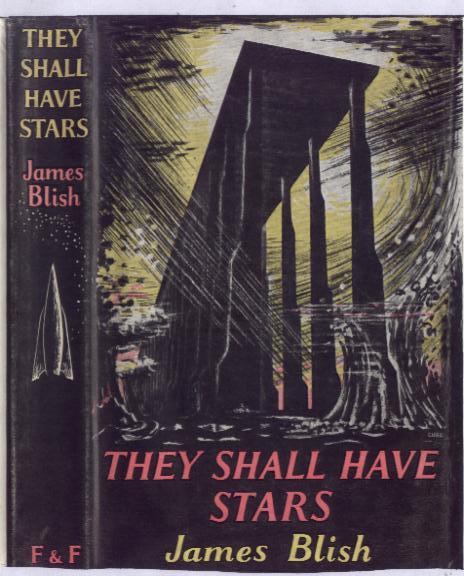
Cities in Flight is a four-volume series of science fiction novels and short stories by American writer James Blish, originally published between 1950 and 1962, which were first known collectively as the "Okie" novels. The series features entire cities that are able to fly through space using an anti-gravity device, the spindizzy. The stories cover roughly two thousand years, from the very near future to the end of the universe. One story, "Earthman, Come Home", won a Retro Hugo Award in 2004 for Best Novelette. Since 1970, the primary edition has been the omnibus volume first published in paperback by Avon Books. Over the years James Blish made many changes to these stories in response to points raised in letters from readers.
- Future History
series42 books1939
completed
similar byscience fiction+3 more
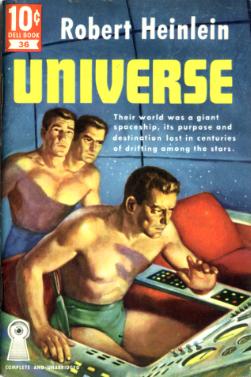
The Future History is a series of science fiction stories written by American author Robert A. Heinlein (1907–1988). It describes a projected future of the human race from the middle of the 20th century through the early 23rd century. The term Future History was coined by John W. Campbell Jr. in the February 1941 issue of Astounding Science Fiction. Campbell published an early draft of Heinlein's chart of the series in the May 1941 issue.
- Bronson Beta
series5 books1933
similar byscience fictionother star systems+4 more
When Worlds Collide (1933) and its sequel After Worlds Collide (1934), written together by Edwin Balmer and Philip Wylie, follow a small group of survivors who escape a doomed Earth as the rogue planet Bronson Alpha destroys it, landing on its companion world Bronson Beta to begin again. The two novels form a self-contained disaster-and-survival duology.
- Islands in the Sky
Arthur C. Clarkestandalone novel1952
similar byspace colonizationadventurousscience fictionnear futurespace
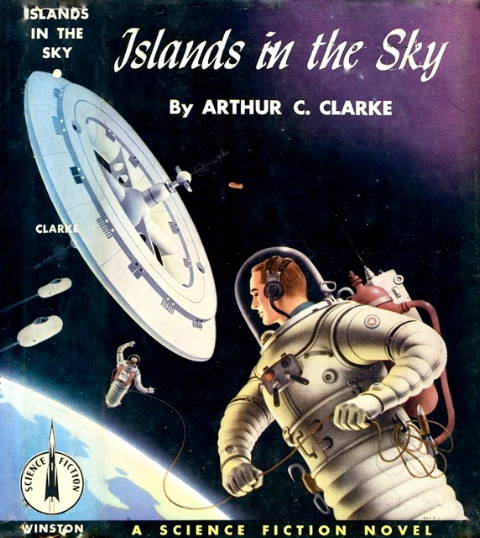
Islands in the Sky is a 1952 science fiction novel by British writer Arthur C. Clarke. It is one of his earliest works. Clarke wrote the story as a travelogue of human settlement of cislunar space in the last half of the twenty-first century.
- Tower and the Hive
series7 books1959
completed
part of The Talents
similar byscience fictionspaceother star systemsspace opera+1 more
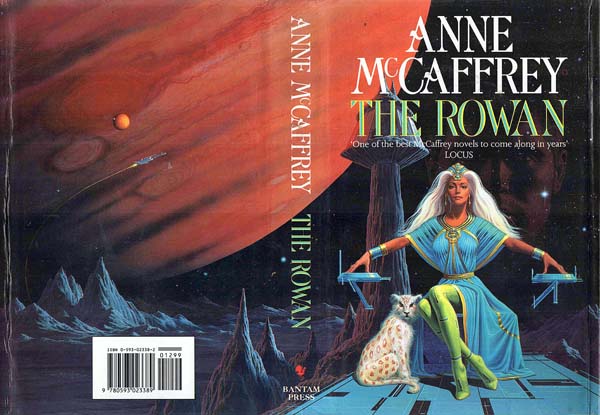
The Tower and the Hive series opens with The Rowan (1990), following an isolated but powerful telepath who is drawn out of her loneliness by a psychic call for help from a distant Talent facing an alien threat. Anne McCaffrey continued the story across four more novels, Damia, Damia's Children, Lyon's Pride, and the concluding The Tower and the Hive (1999), following later generations of a telepathic family staffing the Prime Towers that give a starfaring human civilization instant communication. The series is set later in the same Talents universe as McCaffrey's earlier Pegasus books.
- Uplift Universe
universe13 books1980
Start hereUplift · Start here
similar byadventurousscience fictionspaceother star systemsspace opera
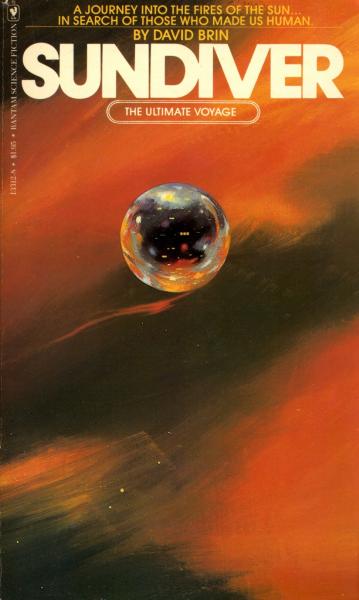
No species, the Galactics insist, ever climbs to sapience alone. For a billion years the elder races have "uplifted" their chosen clients — reshaping some promising animal, gene by patient gene, into a thinking being, then binding it through long ages of indenture. Patron lifts client; client one day becomes patron; and every lineage traces back through the vast Galactic Library to the vanished Progenitors who began it all. Then a ragged band of primates arrives at the stars with no patron to claim them — wolflings, self-made, an affront to a hundred thousand years of law — and worse, these humans have already started uplifting neighbors of their own: the neo-dolphins and neo-chimpanzees of Earthclan. David Brin builds this galaxy across two trilogies. The first — Sundiver, the Hugo- and Nebula-winning Startide Rising, and the Hugo-winning The Uplift War — sends an expedition into the Sun, then follows the dolphin-crewed survey ship Streaker as it flees a discovery that sets fanatical star-clans at war, and a chimp-led resistance on an invaded colony world. The second sequence, Uplift Storm — Brightness Reef, Infinity's Shore, Heaven's Reach — descends to Jijo, a forbidden world where six fallen races hide as illegal settlers, and draws every loose thread toward a reckoning. Short fiction fills the margins. This is space opera with an ecologist's conscience: teeming with invented biologies, wry cross-species banter, and real unease about what we owe the minds we make. Begin with Startide Rising — the saga's beating heart, and readable on its own — or take Sundiver first and read straight through in publication order.
- Talents (Anne McCaffrey)
series9 books1969
completed
part of The Talents
similar byscience fiction+3 more
The Talent series opens with To Ride Pegasus (1973), a linked collection of stories introducing people born with parapsychic gifts such as telepathy, telekinesis, and precognition, as society first learns to organize and rely on them. Pegasus in Flight (1990) and Pegasus in Space (2000) complete the trilogy, following the training and growing use of these Talents through near-Earth crises. Anne McCaffrey set the series earlier in the same Talents universe that her later Tower and Hive novels continue.
- Academy / Priscilla (Hutch) Hutchins
series16 books1983
similar byscience fictionspaceother star systems+2 more
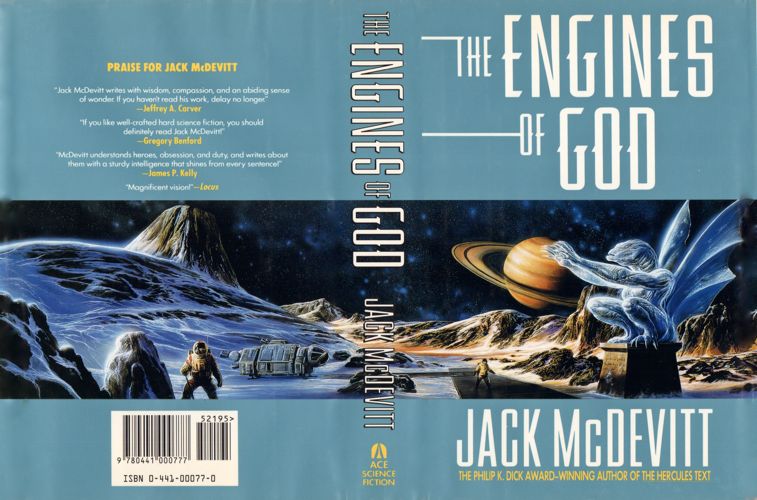
Jack McDevitt's Academy novels follow Priscilla 'Hutch' Hutchins, a starship pilot turned administrator, across a series of archaeological mysteries involving vanished alien civilizations and inexplicable ancient artifacts scattered through human space. Beginning with The Engines of God, the series treats deep time and the near-total absence of intelligent alien life as its central mystery, favoring slow-burn discovery over action. McDevitt returned to Hutch across three decades of publication.
- Poseidon's Children
series3 books2012
similar byspace colonizationscience fictionspaceother star systemsspace opera+2 more
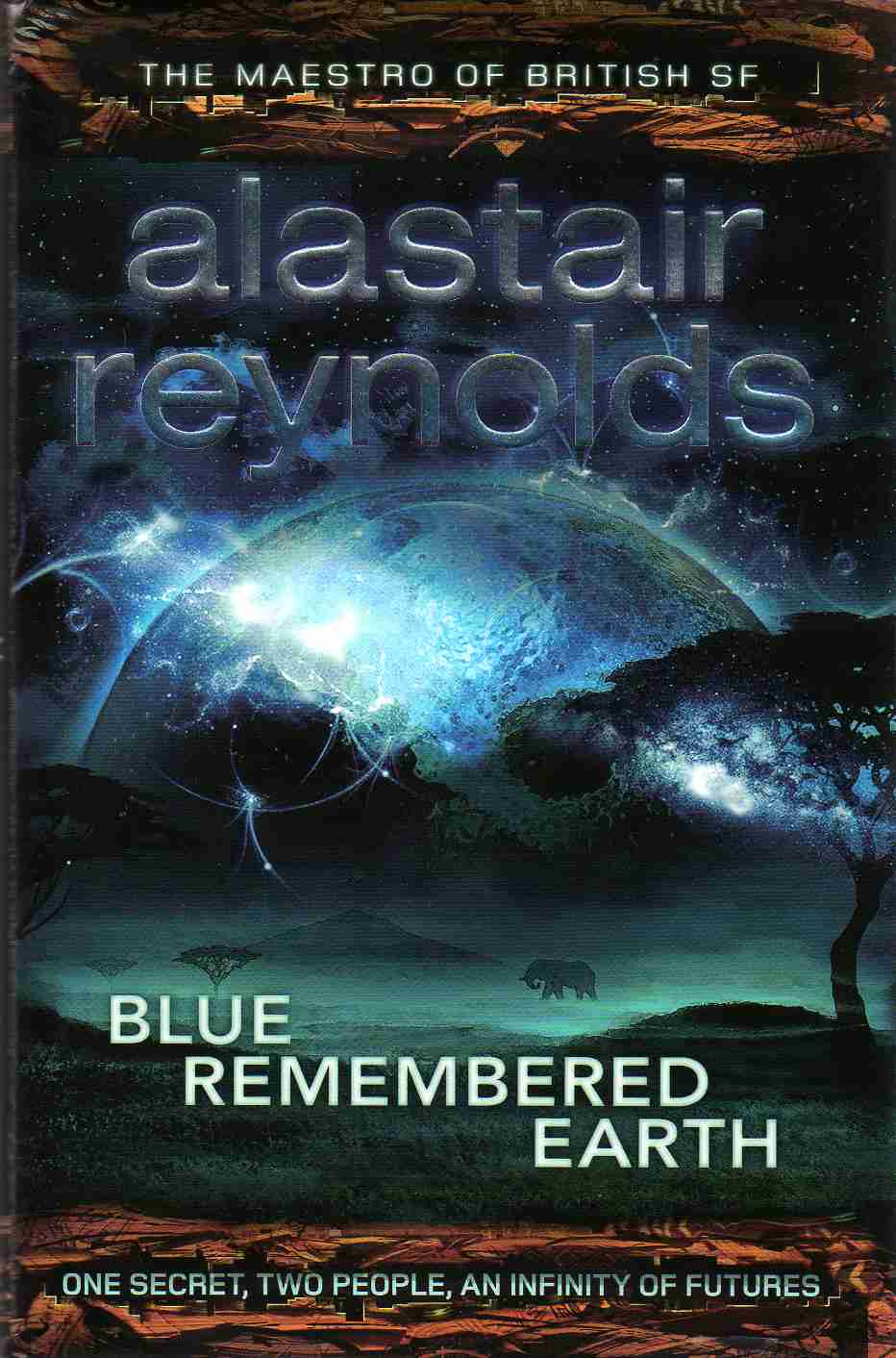
Alastair Reynolds' Poseidon's Children trilogy follows humanity — and its transhuman descendants — expanding into the galaxy over the course of centuries, beginning with Blue Remembered Earth (2012) and continuing through On the Steel Breeze and the concluding Poseidon's Wake (2015).
- Old Man's War
series16 books2005
similar byadventurousscience fictionspaceother star systemsspace opera+1 more
The Old Man's War series is a series of science fiction novels by John Scalzi. The first book in the series, Old Man's War, was first published in 2005 by Tor Books, and was nominated for the Hugo Award for Best Novel in 2006. In 2026 it was a finalist for the Hugo Award for Best Series.
- Psychotechnic League
series29 books1949
similar byscience fiction+2 more
The Psychotechnic League is Poul Anderson's earliest future history, tracing humanity's recovery from a devastating third world war under the guidance of a scientific institute trying to steer civilization away from repeating its mistakes, and eventually expanding into interstellar exploration. Anderson wrote it before his better-known Technic History and later adjusted its internal chronology to fit later work; it has been collected across several anthologies, including a three-volume Complete Psychotechnic League set.
- To the Stars (Harrison)
series3 books1980
completed
similar byscience fictionother star systems+4 more
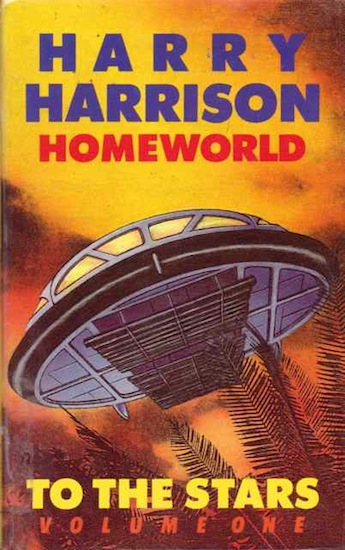
The To the Stars trilogy is a series of science fiction novels by Harry Harrison, first published in 1980 (Homeworld) and 1981. The three books were re-published in an omnibus edition in 1981.
- Proxima (Stephen Baxter)
series6 books2011
similar byscience fictionother star systems+2 more
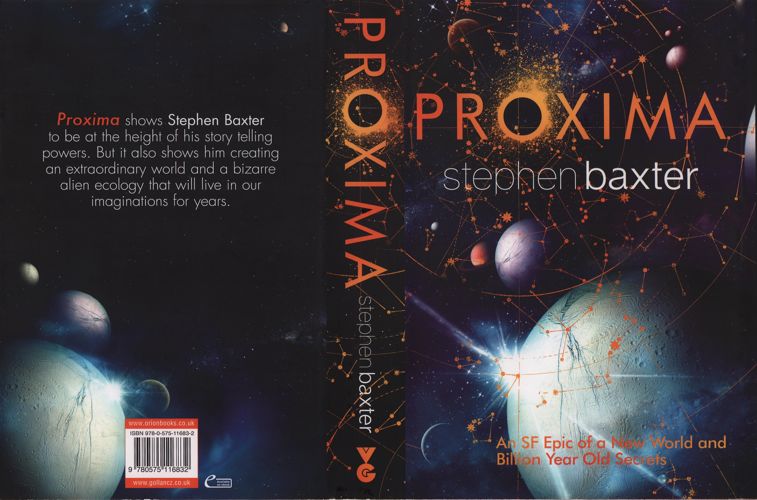
Stephen Baxter's Proxima follows a reluctant human colonist settled on a world orbiting Proxima Centauri as part of a secretive, one-way colonization program, intercut with political maneuvering back in a transformed solar system. Its sequel Ultima follows the discovery of alien technology on that world into a far stranger turn involving alternate versions of history. Both are hard science fiction concerned with the practicalities and politics of colonizing an alien world across interstellar distances.
- Troy Rising
series4 books2010
similar byadventurousscience fictionspacespace opera+3 more
Troy Rising begins after an alien first-contact attempt nearly destroys Earth, prompting an entrepreneur to trade a valuable alien commodity in order to fund the construction of a massive orbital defense station guarding the planet from further attack. John Ringo's military science fiction trilogy, joined for a later volume by Gray Rinehart, follows the buildup and battles around that station as humanity arms itself against alien threats.
- 2312
Kim Stanley Robinsonstandalone novel2012
similar byspace colonizationscience fictionspaceother star systems+2 more
In the eponymous year, when Earth's ecology is degraded and humanity has settled throughout the solar system by terraforming and genetic engineering, mysterious disasters strike some human communities and an assortment of human types from throughout the system seek to find and eliminate the cause.
- Terro-Human Future History
universe48 books1952
Start hereFuzzy Sequence · Start here
similar byscience fictionother star systems+3 more
History does not repeat, Piper's chroniclers are fond of saying — it rhymes, and it rhymes in iron. Reckon the years from the first atomic pile, 1942, Year One of the Atomic Era, and follow the ledger forward some six thousand years: out of a nuclear war that nearly ended everything, up through the Terran Federation and its reach into the stars, down again through collapse and a long neobarbaric dark, and back up into the enlightened empires that rise from the ruins. It is one continuous future history — not a plot but a chronicle, worlds and centuries sharing a single unbroken timeline. H. Beam Piper assembled it in pieces through the 1950s and 60s, novels and novellas bound by chronology rather than by recurring heroes. The anchors are Little Fuzzy, a courtroom argument over whether a small golden native of Zarathustra is a person; Space Viking, raid and revenge amid the wreckage of the interregnum; and the Federation-era Four-Day Planet, The Cosmic Computer, and Uller Uprising. The eras sort cleanly — Federation, the System States War, the Space Vikings of the long dark, the Empire. After Piper's death in 1964 other hands took up the ledger: John F. Carr, who arranged the short fiction into the chronological Federation and Empire collections and carried on the Tanith and Space Viking line, plus Wolfgang Diehr's Fuzzy sequels and Dietmar Arthur Wehr's additions. The register is sober and engineer-eyed — competent men solving hard problems, empires ruled by benign despots, the cool conviction that civilizations rise and fall to the same recurring script. It ranges from the sunlit warmth of the Fuzzy books to the cold steel of a Viking raid. Newcomers start with Little Fuzzy, the warmest and most self-contained, or with Space Viking.
- Peacekeepers
Ben Bovastandalone novel1988
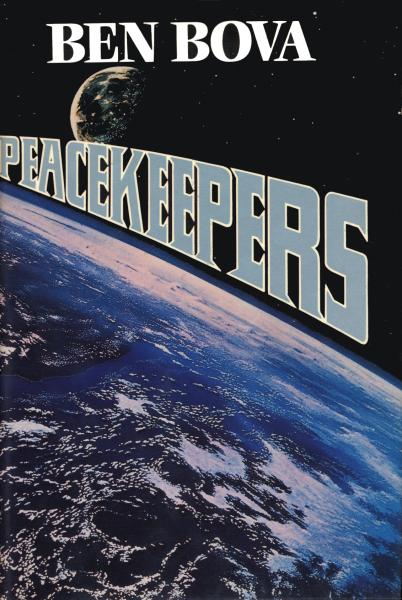
similar byscience fictionnear futurespaceother star systems+2 more
- Laurie Jo Hansen
series10 books1971
completed
part of CoDominium
similar byspace colonizationscience fictionnear futurespace+1 more
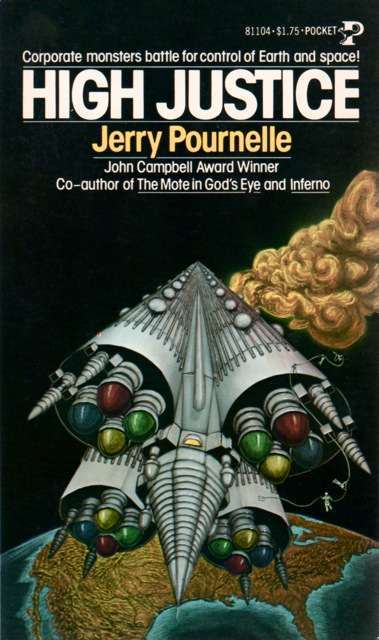
Laurie Jo Hansen groups Jerry Pournelle's early CoDominium-universe stories and the novel Exiles to Glory (1978), part of the same future history that produced his Falkenberg's Legion novels.
- Matter Transmitter
series10 books1968
completed
similar byscience fictionnear futurespaceother star systems+1 more
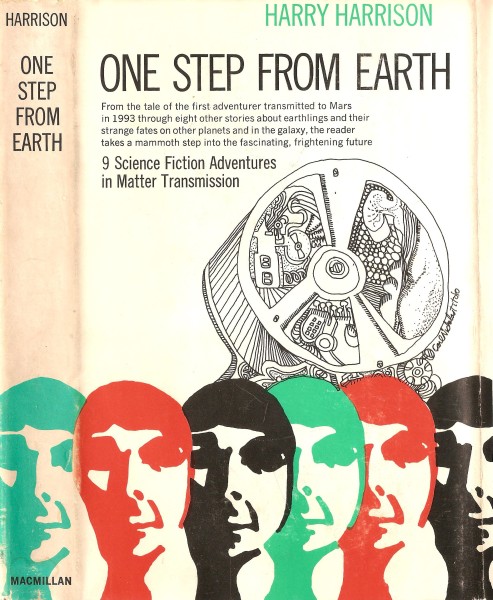
One Step from Earth collects Harry Harrison's linked stories about matter-transmission technology, following the social and personal fallout as instantaneous 'stepper' travel remakes work, colonization, and crime across the solar system. Each story stands alone but shares the same near-future premise and inventive extrapolation of a single new technology. It was published as one volume in 1970.
- Fallen Dragon
Peter F. Hamiltonstandalone novel2001
similar byspace colonizationadventurousscience fictionspaceother star systemsspace opera
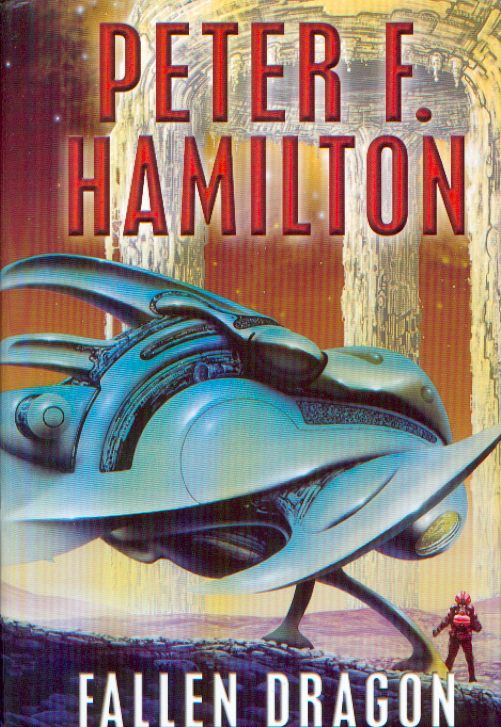
Fallen Dragon is a science fiction novel by British writer Peter F. Hamilton. It was first published in 2001 by Macmillan. It follows the adventures of the mercenary Lawrence Newton as he attempts to capture what he believes is a fabulous treasure, only to find something of much greater importance.
- Frontlines / Andrew Grayson
series12 books2013
similar byscience fictionspace+1 more
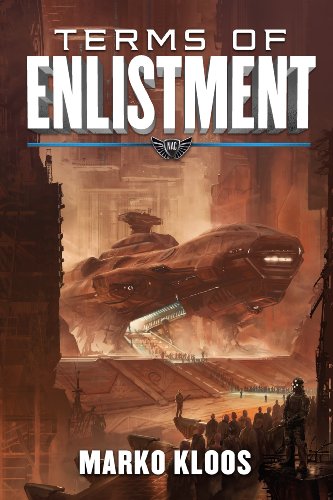
Marko Kloos' Frontlines series opens with Terms of Enlistment in 2108: for people like Andrew Grayson, trapped in the crime-ridden welfare tenements of the North American Commonwealth, escape means either winning a lottery ticket off-world or joining the military — so Andrew enlists, only to find the service demands far more than the better food and medical care it promises. The series follows Grayson's career across eight further novels, from Lines of Departure through Centers of Gravity, as interstellar war and internal politics escalate around him.
- Near Space
series30 books1988
similar byscience fictionnear futurespace+1 more
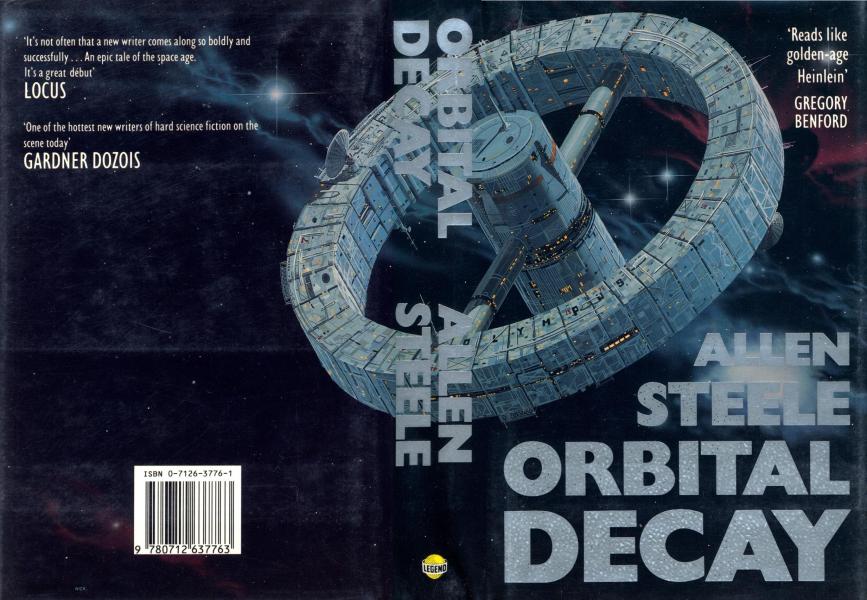
Allen Steele's Near Space novels are near-future, blue-collar hard SF set during the early decades of space industrialization, following working astronauts, engineers, and colonists rather than explorers or soldiers. Orbital Decay follows construction workers on an orbital satellite-assembly project who stumble into an espionage plot; later entries such as Clarke County, Space and Lunar Descent move outward to an orbital colony and a lunar mining operation. The loosely connected novels and story collections share a plausible, unglamorous near-future setting that predates Steele's later Coyote sequence.
- Man Plus
series2 books1976
similar byspace colonizationscience fictionnear future
Frederik Pohl's Man Plus follows Roger Torraway, who is surgically and cybernetically rebuilt into a post-human organism able to survive unprotected on the Martian surface, as part of a crash program to colonize Mars ahead of a predicted global crisis. The 1976 novel, which won the Nebula Award, is a clinical, unsentimental look at what such a transformation costs a person's sense of self. Thomas T. Thomas wrote the sequel Mars Plus, continuing the story of the Martian colony years later.
- Time Traders
series7 books1958
similar byadventurousscience fictionother star systems+1 more
The Time Traders opens Andre Norton's Cold War-flavored science fiction series, following an American agent recruited to travel into the past and counter a Soviet operation built around ancient technology unearthed from a vanished civilization. Norton, later joined by collaborators Sherwood Smith and P. M. Griffin, expanded the sequence to seven novels published between 1958 and 2002, and revised the opening book herself in 2000. Like several of Norton's other series, it treats leftover technology from a long-gone ancient culture as its central plot engine.