More like Ha'mara
anchored on:science fictionfaith and religionother star systemsfar futurespace operafriendship+2 more
but
- Dune
series20 books1963
part of Dune Universe
similar byfar futurescience fictionspace operaother star systemsfaith and religion+2 more
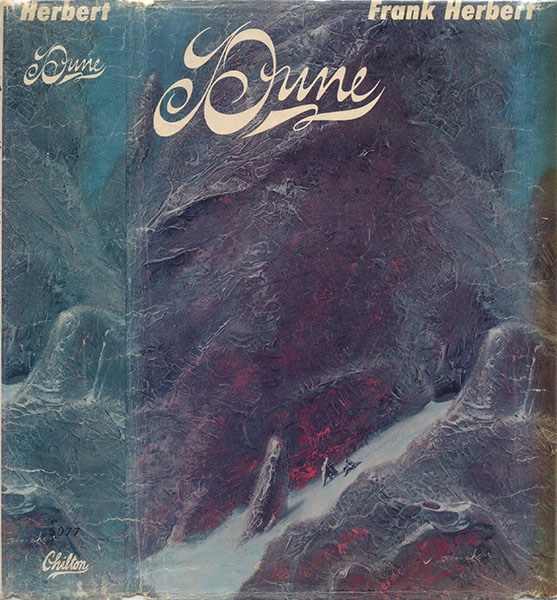
Frank Herbert's Dune Chronicles opens with 1965's Dune, set on the desert planet Arrakis where House Atreides takes control of the only source of the vital spice melange and young Paul Atreides is pulled into a struggle over its politics and religion. Herbert carried the story forward across five further novels — Dune Messiah, Children of Dune, God Emperor of Dune, Heretics of Dune, and Chapterhouse: Dune — following Paul's line over the following millennia, before Brian Herbert and Kevin J. Anderson later extended the saga. Many other editions of these six novels are omnibus and box-set repackagings rather than separate stories.
- Dune Universe
universe78 books1963
Start hereDune · Start here
similar byfar futurescience fictionspace operaother star systems+1 more
Arrakis. Dune. The desert planet, where empire runs on a single substance: the spice melange, which folds space, prolongs life, and unlocks prescience, and which exists nowhere else in the known universe. Frank Herbert's saga is a meditation dressed as an adventure — feudal houses and a secret sisterhood, engineered messiahs and the patient ecology of a world without water, all turning on the terrible gravity of who commands the spice. It reads like scripture and schemes like a war room, ten thousand years hence, among people who have outlawed the thinking machine and made instruments of themselves instead. At its heart stand Herbert's original six — Dune, Dune Messiah, Children of Dune, God Emperor of Dune, Heretics of Dune, Chapterhouse: Dune — a single deepening arc across millennia, arguing the whole way between prophecy and free will. Around that spine his son Brian Herbert and Kevin J. Anderson have raised a vast prequel architecture: Prelude to Dune, tracing the great houses a generation before Paul; Legends of Dune, reaching back to the crusade that broke the machines; the Schools of Dune cycle on the founding of Bene Gesserit, Mentat, and Navigator; the Caladan Trilogy and Heroes of Dune filling years the originals left in shadow. Many hands, dozens of volumes, one desert. What sets Dune apart is its refusal of the simple: religion is manufactured, heroes are hazards, and the sand itself — worm, water, ecology — acts as a political power. Begin where the universe did, with Frank Herbert's Dune (1965), and read the original six in order; you need nothing else to feel the full weight. The prequels are a country to explore afterward, taken by era. Beginnings are delicate times.
- Cycle of Fire
Hal Clementstandalone novel1957
similar byreflectivefar futurescience fictionfriendshipother star systemstensesurvival
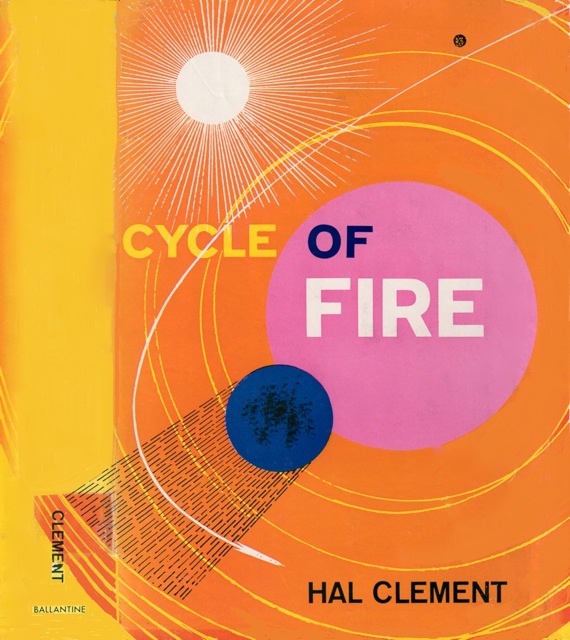
After his ship crashed on the inhospitable planet Abyorman, Nils Kruger had spent weeks wandering across the face of the planet.suffering from blistering heat, the searing cold of an alien climate. Now he had found a fellow wanderer, Dar, an alien castaway. They may both die. The human opts to do something about it. Dar, who knows the time of his death in advance, opts to do nothing. Which of them is right? Perhaps both
- The Chrysalids
John Wyndhamstandalone novel1955
similar byreflectivefar futurescience fictiontensesurvival+1 more
The Chrysalids is a science fiction novel by British writer John Wyndham, first published in 1955 by Michael Joseph. It is the least typical of Wyndham's major novels, but regarded by some as his best. An early manuscript version was entitled Time for a Change.
- Teixcalaan
series2 books2019
similar byreflectivefar futurescience fictionspace operaother star systemstense
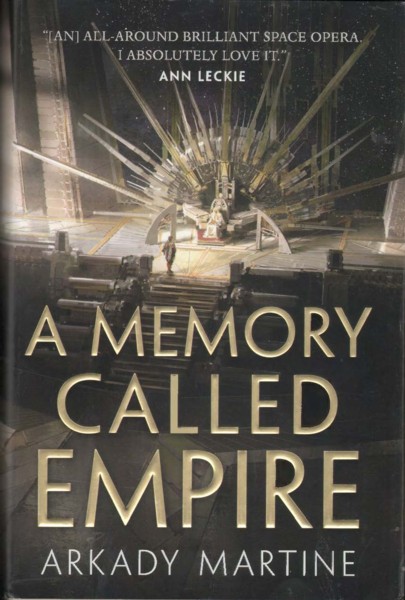
Arkady Martine's space opera duology follows Mahit Dzmare, ambassador from the small, independent Lsel Station, as she arrives in the vast Teixcalaanli Empire to investigate her predecessor's death and finds herself caught up in the empire's own succession crisis. A Memory Called Empire and A Desolation Called Peace pair court intrigue with Mahit's conflicted, outsider fascination with an empire she can't help admiring.
- A Time of Changes
Robert Silverbergstandalone novel1971
similar byreflectivefar futurescience fictionfaith and religionother star systems
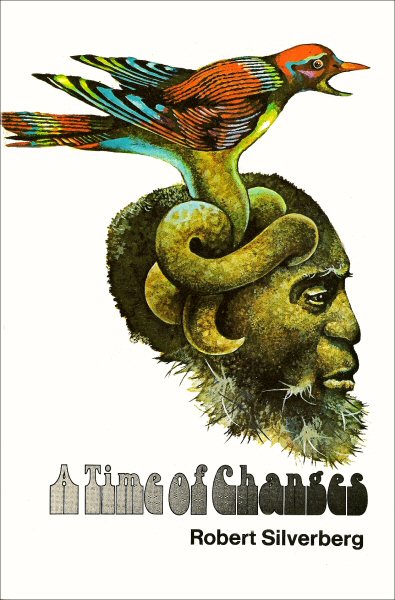
A Time of Changes is a 1971 science fiction novel by American writer Robert Silverberg. It won the Nebula Award for that year, and was also nominated for the 1972 Hugo and Locus Awards.
- Ender Wiggin
series14 books1977
part of Ender's Game Universe
similar byfar futurescience fictionother star systems+3 more
Orson Scott Card's Ender's Game (1985, expanded from his 1977 novella) follows child prodigy Andrew "Ender" Wiggin as he is recruited into a military training program built to prepare Earth's defenses for an anticipated third war against an insectoid alien species known as the Formics. The saga continues years later through Speaker for the Dead and Xenocide, following an older Ender as he confronts the moral weight of his role in that earlier conflict, and concludes the core arc in Children of the Mind, with Ender in Exile filling in the years between the first two books. Set within the wider Ender's Game universe, the series shifts from military coming-of-age story to slower, more philosophical science fiction as it progresses.
- Moties
series4 books1974
part of CoDominium
similar byfar futurescience fictionspace operaother star systems+1 more
Larry Niven and Jerry Pournelle's The Mote in God's Eye (1974) depicts humanity's first contact with an alien species, the Moties, set within the far-future interstellar setting of Pournelle's codominium future history. The Gripping Hand continues that first-contact crisis years later, and Outies, written by J. R. Pournelle, carries the story forward into a new generation. Together the three books trace an escalating encounter between human and Motie civilizations within the codominium universe.
- Imperial Radch
series7 books2012
part of Radchaai Universe
similar byfar futurescience fictionspace operaother star systems+2 more
Ann Leckie's Imperial Radch trilogy (Ancillary Justice, Ancillary Sword, Ancillary Mercy, 2013-2015) follows Breq, the sole surviving fragment of an AI that once inhabited both a troop-transport starship and dozens of soldier bodies, now alone and hunting for revenge inside the vast, expansionist Radch empire. Breq's quest widens across the trilogy into a conflict with the empire's own fractured ruler, and the books use her alien difficulty perceiving gender to unsettle the space-opera conventions around her.
- The Dosadi Experiment
Frank Herbertstandalone novel1977
similar byfar futurescience fictionspace operaother star systemstensesurvival
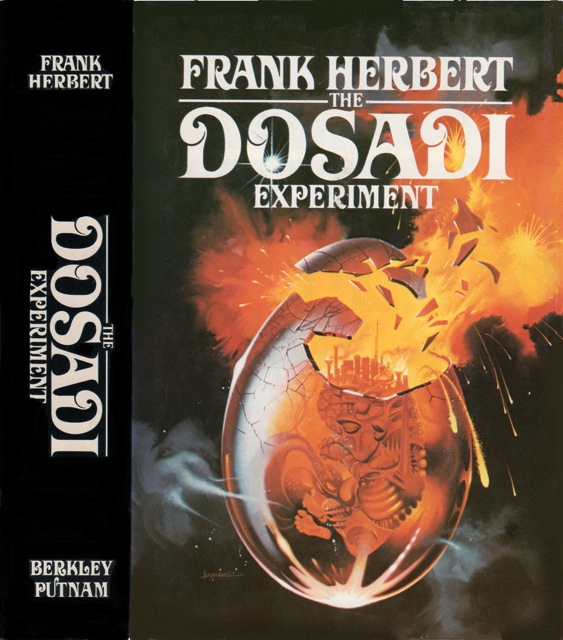
From the flaps of the Berkley Putnam first edition: "In his first new work of science fiction since the best-selling Children of Dune, Frank Herbert returns to his world of Whipping Star, and involves Jorj X. McKie, Saboteur Extraordinary, in a new intrigue. In Whipping Star, McKie discovered that some of the stars in the universe are actually intelligent, super-powerful beings, and was able to befriend one of them, the star Alcyone - affectionately known as Fannie Mae. As The Dosadi Experiment opens, McKie is assigned to investigate the planet Dosadi, which is isolated from the rest of the galaxy by a "god-wall," a barrier set up by one of the intelligent stars. Dosadi is rumored to be an experimental planet, and the experimenters are the froglike Gowachin, whose culture is founded upon a strange legal system in which McKie is the only human ever trained. He learns that humans and Gowachin have been placed on Dosadi, without their consent, for an experiment that could last centuries: an experiment in extreme overcrowding. But this monstrous plot is apparently out of control, and it seems the Gowachin may be prepared to destroy Dosadi rather than expose its secret, thus breaking the peace among the races, and starting the first interstellar war. But this is just the beginning. When McKie finally reaches Dosadi he discovers that the Dosadis have taken control of their own evolution and produced a competitive, highly evolved elite, of both humans and Gowachin, who have been able to extrapolate the existence of a universe beyond the god-wall and hate whoever has imprisoned them like this. They plan to break out and avenge themselves on the galaxy."
- Tau Zero
Poul Andersonstandalone novel1970
similar byreflectivefar futurescience fictionspace operasurvival
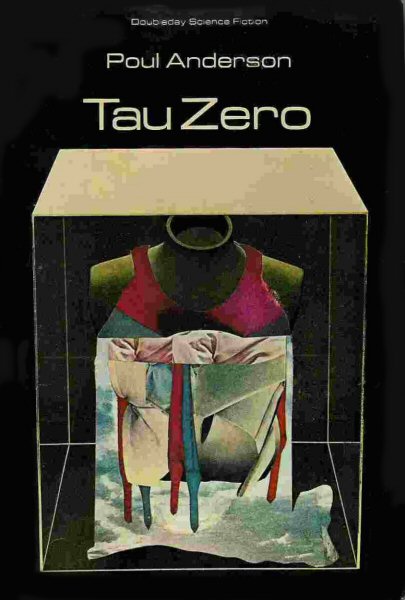
During an epic voyage to a planet 30 light years away, the engines of the starship the 'Leonora Christine' are damaged. Unable to slow down, it attains light speed (the tau zero of the title). The disparity between time for those on board and external time becomes impossibly great. Eons and galaxies hurtle by, as the crew speed helplessly into the great unknown.
- Hainish
series33 books1964
completed
similar byfar futurescience fictionreflectiveother star systems
The Hainish Cycle consists of a number of science fiction novels and stories by Ursula K. Le Guin. The cycle is set in a future history that features civilizations of human beings on planets orbiting a number of nearby stars, including Terra ("Earth"); these humans are contacting each other for the first time and establishing diplomatic relations, as well as setting up a confederacy under the guidance of the oldest of the human worlds, the peaceful planet Hain. In this history, human beings did not evolve on Earth, but they were instead the result of interstellar colonies planted by Hain in the distant past, after which interstellar travel ceased for an extended period. Some of the human races have new genetic traits, a result of ancient Hainish experiments in genetic engineering; this includes people who can dream while awake, and a world of hermaphroditic people who only enter active sexuality once per month, not knowing which sex will manifest in them. In keeping with Le Guin's narrative approach, she uses varied social and environmental settings to explore the anthropological and sociological outcomes of human evolution in those environments. The author often discounted the characterization of a so-called "Hainish Cycle".
- Saint Leibowitz
series6 books1955
completed
similar byfar futurescience fictionfaith and religion+2 more
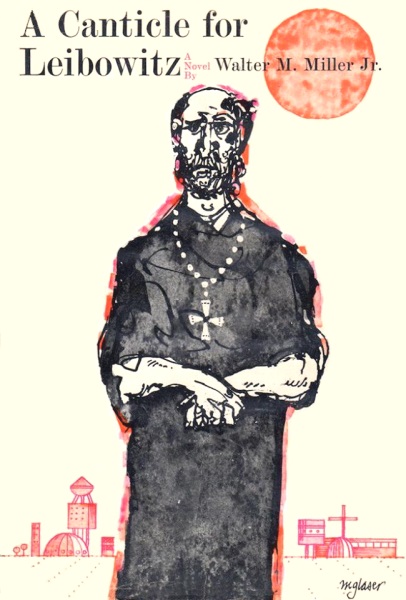
Walter M. Miller Jr.'s A Canticle for Leibowitz (1959), assembled from three novellas he had published earlier in the decade, follows the monks of a Catholic monastery in the post-nuclear American Southwest as they preserve fragments of scientific knowledge across centuries, watching civilization slowly rebuild itself and edge back toward the mistakes that destroyed it. Miller's posthumous sequel, Saint Leibowitz and the Wild Horse Woman, completed by Terry Bisson from his notes after his death and published in 1997, returns to the same abbey and its world decades later. Together the two novels form a sparse, decades-spanning series about memory, faith, and the cycles of civilization.
- Nemesis
Isaac Asimovstandalone novel1989
similar byfar futurescience fictionspace operaother star systems+2 more
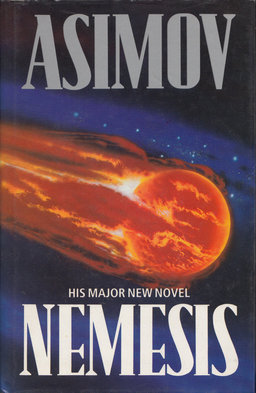
The expanding population and ensuing ecological degradation of Earth leads to the establishment of orbital habitats which continue to compete with each other as well as with Earth, leading one of them to abandon the Solar System entirely, to establish itself around a neighboring star.
- The Face of the Waters
Robert Silverbergstandalone novel1991
similar byreflectivefar futurescience fictionother star systemssurvival+1 more
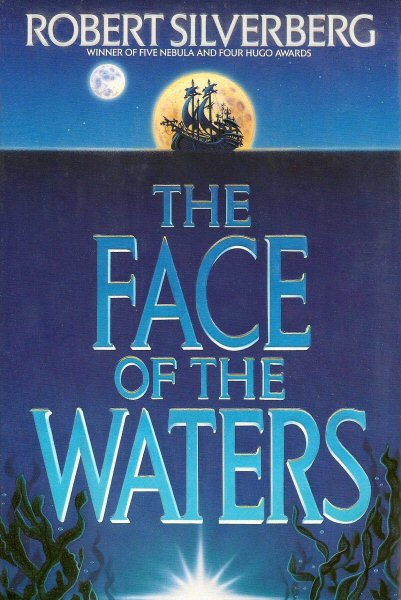
On the ocean world of Hydros -- a planet with no land beyond a scatter of artificial floating islands -- the human settlers of Sorve commit an offense against the native aquatic Hydrans serious enough to get their community banished, forbidden from settling on any other island. With nowhere else to go, Sorve's people set out across the water in a makeshift flotilla, chasing rumors of a mythical island called the Face of the Waters that may or may not exist, forced to reckon with what they owe the world they've spent generations treating as theirs. A Robert Silverberg novel of exile and search, told through Sorve's displaced islanders.
- The City and the Stars
Arthur C. Clarkestandalone novel1956
similar byreflectivefar futurescience fictionother star systems
The City and the Stars is a science fiction novel by British writer Arthur C. Clarke, published in 1956. This novel is a complete rewrite of Clarke's earlier Against the Fall of Night, his first novel, which had been published in Startling Stories magazine in 1948 after being rejected by the editor of Astounding Science-Fiction, according to the author.
- Project Pope
Clifford D. Simakstandalone novel1981
similar byreflectivefar futurefaith and religionscience fictionother star systems
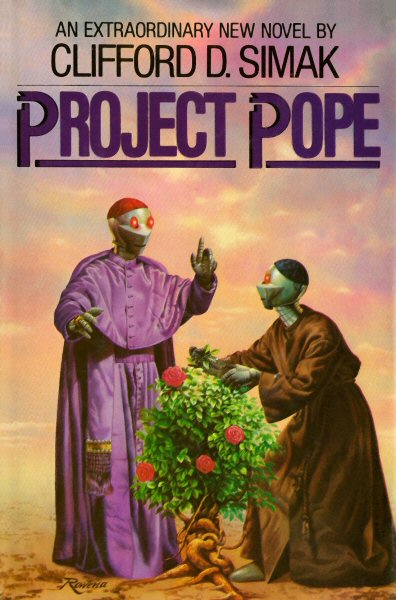
Project Pope is a science fiction novel by the American author Clifford Simak, published in 1981 by Ballantine Books. The novel is about a group of robots and humans living on a planet called the End of Nothing. Their mission is to search the universe and other dimensions to seek out true religion and knowledge. They add the information they gather to their Pope, a robotic supercomputer, in order to make an infallible authority of all knowledge and religion. The novel was nominated for both a Hugo Award for Best Novel and a Locus Award for Best SF novel in 1982.
- Parafaith
series2 books1996
similar byfar futurescience fictionfaith and religiontenseother star systems+2 more
- Catteni Sequence
series5 books1970
completed
similar byfar futurescience fictionspace operaother star systems+2 more
The Catteni series is a tetralogy of science fiction novels by American writer Anne McCaffrey. In this universe, humans are slaves of aliens, the humanoid Catteni. Woven through all four of the books are details of the relationship between Kristin Bjornsen, a former slave, and Zainal, a renegade Catteni.
- Safehold
series11 books2006
similar byfar futurescience fictionfaith and religionother star systemstense+1 more
Safehold is a science fiction book series by David Weber, currently consisting of ten titles, the latest released in January 2019. The series is mostly set around the 31st century, on a distant world dubbed "Safehold" where a group of humans are in hiding from the Gbaba, an alien enemy responsible for the end of all other human civilization.
- Remnant Population
Elizabeth Moonstandalone novel1996
similar byreflectivefar futurescience fictionother star systemssurvival+1 more
From the dust jacket front flap of the Baen first edition: Alone at last... People had always told Ofelia what to do; for once she was going to do what she wanted. She refused to get on the cryo ships, refused to leave the only world she could call home. And when they finally came for her, she hid, not that the authorities looked all that hard for one crazy old woman. Now Ofelia is alone, content to live with no more demands on her self or her time, the only remaining settler on an abandoned planet. The new settlers arrive. At first she fears that they have come to reoccupy the settlement she has come to think of as hers - but they land far away. And as Ofelia secretly listens, they are slaughtered to the last child by stone-age aliens no one knew were there. Now it will be up to Ofelia to save the aliens from Earth's wrath...
- Berserker (Fred Saberhagen)
series59 books1963
similar byfar futurescience fictionspace operatenseother star systems+1 more
The Berserker series is a series of space opera science fiction short stories and novels by Fred Saberhagen, in which robotic self-replicating machines strive to destroy all life.
- The Outposter
Gordon R. Dicksonstandalone novel1972
similar byfar futurescience fictionspace operaother star systemstensesurvival
From the flap of the Lippincott first edition: "Rich man, poor man, beggarman, thief - the lottery played no favorites. If your number came up, you joined the rest of the losers marked for exile from overcrowded Earth. Shipped to a raw new outpost in space, you were officially called a colonist. But your whispered name was "garbage," your destination was oblivion, and you had few illusions about your chances of survival. The Outposters - a token band of specially trained personnel - were given the impossible task of guiding and protecting these outcasts in their harsh new environment. Will indifferent support from Earth, supply lines ran thin and raids by hostile aliens were increasing unchecked. Only one young Outposter, Mark Ten Roos, dared to challenge the system and change the odds. To help him, Mark hand-picked a strange assortment of allies from the new shipment of colonists: a brash opportunist, every instinct honed for personal survival; a midget woman with a professorship in philosophy; a widowed mathematician, expert in position astrophysics; an ex-marine with a dishonorable discharge. And help came to Mark from a source he had not expected - the daughter of the Outer Navy's ranking officer. When Mark Ten Roo put his plan into action, he knew he was also putting his life on the line."
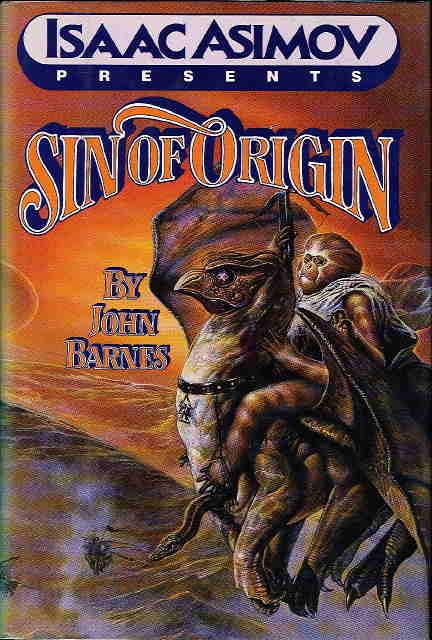
- Sin of Origin
John Barnesstandalone novel1988
similar byreflectivefar futurefaith and religionscience fictionfriendshipother star systems
From the front flap of the Congdon & Weed first printing: "In the distant future, the planet Randall becomes the focus of human exploration. Not even Earth before its end boasted the existence of three such highly developed intelligent species. Forming an interdependent triumvirate being, the griffinlike "wingpersons," the multiarmed "handpersons," and the telepathic "handsnakes" find their ancient alliance threatened by missionaries who want to bring the Randallans peacefully into the Christian commonwealth. After more than a millennium of peaceful coexistence, the Randallans once again begin to fight among themselves because the human teachings undermine key cultural doctrines that united them. Brother Hauskyld Gomez and Dr. Clio Yeremenko, a Communist xenist stowaway, join forces with a captain of the Templars (whose reputation for planetary "domestication" is infamous) and with the High Kings of Randall to bring about a tenuous peace Thus begins their remarkable friendship with Kuf, a xhu'gha griffin, one who is not part of a triple. Kuf converts to Christianity after being commanded to meet with the missionaries; he later becomes a prisoner because of his newfound beliefs, then is appointed ambassador. And that is only the beginning for this wise, sad creature."