Loreful
HomeDiscover
Search series, authors…⌘K
Loreful

Reading orders for SF/F series and shared universes — with your place kept in every one.

Explore

UniversesSeriesWorksAuthorsAtlas

Help

FAQAboutSite map

Account & legal

Sign inCreate accountPrivacyTerms

Data

Built on ISFDB, Wikipedia, Wikidata and Open Library. Curated reading orders carry their reasoning on the page; the rest follow publication order. Data sources & licenses

© Loreful · data: ISFDB · CC BY

More like Hidden Current

anchored on:secondary world

but

Mood

The mood the book leaves you in.

  • The reading experience is propelled by journeys, exploration, and physical risk; excitement and forward momentum dominate over dread or introspection.
  • Joy and loss are deliberately mixed; the resolution grants characters something real while taking something else away, leaving warmth and sorrow together.
  • The book demands work from the reader — dense prose, difficult structure, unfamiliar ideas, or morally uncomfortable material — as part of its intended effect.
  • Grim events, cruelty, or despair dominate the atmosphere, and the book does not soften them with comfort or comic relief.
  • The atmosphere is quietly unsettling — wrongness, unease, and the uncanny pervade the book without necessarily escalating into overt horror.
  • The book is built to move the reader; character feeling is foregrounded and major scenes aim at a strong emotional response.
  • Humor is a primary aim and the prose plays for laughs — comic situations, wit, or dialogue produce sustained comedy, not occasional levity.
  • The book insists that things can improve; effort and decency are shown to matter, and the arc bends toward better outcomes even through hardship.
  • The book teaches as it goes — real facts, history, science, or craft are conveyed in enough depth that learning is part of the reading experience.
  • The book is designed to uplift and motivate, presenting perseverance or achievement in a way that invites the reader to aspire or act.
  • The overall register is cheerful and easygoing; stakes are kept gentle and the book avoids dwelling on pain or dread.
  • Withheld information drives the experience; the book sustains enigmas and secrets the reader wants resolved, whatever its genre.
  • The book is contemplative and inward-looking, giving more weight to thought, memory, and meaning than to external events.
  • The book works as comfort reading — low tension, a soothing pace, and an atmosphere the reader can unwind in.
  • Grief, loss, or melancholy set the dominant register, and the book lets sorrow stand rather than resolving it into comfort.
  • Sustained suspense is the point; the book keeps the reader braced for what happens next through danger, pressure, or impending revelation.
  • Playful invention and charm define the register — fanciful conceits, light absurdity, and a narration that delights in its own oddity.

About

What the story runs on.

  • Stories in which extraterrestrial beings are central — as characters, cultures, or the object of the plot.
  • Stories about venturing into space to explore — survey missions, astronauts, and the frontier of the unknown beyond Earth.
  • Stories structured as a quest — a journey undertaken to find, deliver, or destroy something of great import.
  • Stories in which staying alive against nature, catastrophe, or scarcity is the central problem.
  • Stories of lovers kept apart by law, family, faith, or station, where the obstacle to love is the plot.
  • Stories in which a friendship — its making, testing, or loss — is the emotional center.
  • Stories of growing up — a young protagonist crossing from childhood into adult knowledge and responsibility.
  • Stories about who a character truly is — self-discovery, doubled lives, and the search for a self.
  • Stories in which a buried family truth — hidden parentage, crimes, or shames — surfaces and reorders the present.
  • Stories driven by maneuvering for power — factions, conspiracies, and statecraft conducted in shadow.
  • Stories in which war itself is the subject — combat, occupation, and what warfare does to soldiers and civilians.
  • Stories organized around investigating a killing — the case, the clues, and the pursuit of the killer, in any genre's clothing.

Shelf

Where it sits in the library.

    • Fiction built on magic or other supernatural elements that have no scientific explanation.
    • Secondary-world fantasy at large scale, where the fate of nations or the world turns on the protagonists' struggle.
    • Fantasy set in a recognizably modern city or contemporary world where the supernatural intrudes on everyday life.
    • Fantasy that blends in horror's atmosphere and imagery, keeping a fantastical frame around grim or frightening material.
    • Action-driven fantasy following warriors or rogues with personal stakes against sorcerous threats, rather than world-spanning conflicts.
    • Fantasy set in a real historical period or a close analogue of one, with magic woven into the era.
    • Fantasy in which protagonists cross from the ordinary world into another world through a portal or similar passage.
    • Fiction that retells or reworks a traditional fairy tale in a new form or setting.
    • Fantasy drawing directly on myths, legends, and folklore, retelling them or building on their figures and logic.
    • Fantasy of ghosts, vampires, shapeshifters, psychics, and similar phenomena, usually set in an otherwise ordinary world.
    • Fiction mixing science-fictional trappings with overtly magical or impossible elements in one setting.
    • Low-stakes fantasy emphasizing comfort, community, and everyday pleasures over conflict and peril.
    • Speculative fiction of pervasive moral ambiguity, violence, and cynicism that rejects heroic conventions — fantasy and SF alike.
      • Fiction that extrapolates from science and technology — future societies, space travel, or speculative inventions — within at least nominally natural laws.
      • Science fiction of interstellar scope — starships, galactic polities, and adventure across star systems.
      • Science fiction committed to scientific rigor, where technical plausibility constrains the story.
      • Science fiction centered on armed forces and warfare, told largely from a military point of view.
      • Science fiction of networked, corporate-dominated near futures, pairing high technology with social decay.
      • Science fiction styled on nineteenth-century steam-powered technology, often in a Victorian or pseudo-Victorian setting.
      • Fiction depicting an oppressive or catastrophic society, presented as a warning.
      • Fiction set after civilization's collapse, following survivors in the ruins of the old world.
      • Fiction in which characters move between past and future, and the mechanics or consequences of that travel drive the plot.
      • Fiction exploring a world where a historical event went differently and history diverged from ours.
      • Science fiction about humanity's first encounter and communication with an alien intelligence.
      • Science fiction in which extraterrestrial forces attack or occupy Earth and humanity resists.
      • Fiction whose primary aim is to frighten or unsettle the reader through dread, menace, or the monstrous.
      • Horror of vast, indifferent, incomprehensible entities before which humanity is insignificant, in the Lovecraft tradition.
      • Horror of decaying houses, buried family secrets, and oppressive atmosphere in the Gothic literary tradition.
      • Horror centered on hauntings and the returning dead.
      • Horror located in the mind — paranoia, obsession, and unreliable perception rather than external monsters.
      • Horror built around the reanimated dead and survival amid their outbreaks.
      • Horror defined by explicit, transgressive gore that refuses to cut away from violence.
      • Speculative fiction of the strange and uncanny that resists both natural explanation and standard genre categories.
      • Fiction organized around solving a crime or puzzle, typically following an investigator toward the identification of a culprit.
      • A puzzle-first mystery that lays out clues so the culprit's identity can be deduced before the reveal.
      • Crime fiction of moral ambiguity, fatalism, and hard-edged style, set among the corrupt and the doomed.
      • A mystery following the realistic routines of police work — forensics, interviews, and case-building.
      • A gentle mystery with an amateur sleuth, a small community, and violence kept off the page.
      • A mystery set in a past era, where the investigation works within that period's methods and society.
      • Fast-paced fiction driven by imminent danger, pursuit, or high-stakes conspiracy, built to sustain tension.
      • A thriller of espionage — agents, tradecraft, and intelligence services in conflict.
      • A thriller centered on lawyers and the courtroom, where litigation carries the suspense.
      • A thriller driven by detailed contemporary or near-future technology, often military or scientific.
      • A thriller whose tension comes from mental states and manipulation between characters rather than external action.
      • Fiction whose central plot is a romantic relationship and its development toward an emotionally satisfying resolution.
      • Romance in which one or both partners are supernatural beings, blending fantasy elements into the love story.
      • A fantasy-romance hybrid in which the romantic arc and the fantasy plot carry equal weight.
      • Romance set in a past era, with courtship shaped by the period's society and manners.
      • Romance set in the present day, without supernatural or historical elements.
      • Fiction set in a real past period, where the historical setting materially shapes characters and events.
        • General and literary fiction emphasizing prose style, character interiority, or formal ambition over genre plot conventions.
        • Fiction in a realistic world where magical events occur and are treated as ordinary, in the tradition of Latin American literature.
        • Fiction that ridicules people, institutions, or society in order to criticize them.
        • Fiction of dreamlike, irrational imagery and logic that breaks from realistic representation.
        • Fiction that plays with narrative convention through metafiction, fragmentation, and self-reference.
        • Fiction propelled by journeys, exploration, and physical peril, where action and survival carry the plot.
        • Adventure fiction of ships and seafaring — naval engagements, voyages, and life at sea.
        • Fiction of the American frontier West — gunmen, ranchers, and lawmen, typically in the late nineteenth century.
        • Fiction centered on soldiers, campaigns, and the experience of warfare, historical or imagined.
          • Fiction written primarily to amuse, using comedic situations, wit, or parody as its organizing principle.
            • Multi-generational fiction following a family or dynasty across decades, with inheritance and kinship as the through-line.
              • Fiction whose world runs on explicit game mechanics — levels, stats, and skills that characters can see and exploit.
                • Fiction about costumed or superpowered heroes and their conflicts with comparable villains.

                Practical

                How long a commitment, whether it stands alone, and whether it has finished.

                Tap a chip to ask for it · tap again to rule it out · once more to clear. Numbers show what would be left.

                • Cover of Narnia
                  Narnia

                  series · 26 books · 1950

                  part of Narnia Universe

                  similar bysecondary worldcoming of agefantasyportal fantasyadventurous+2 more

                  The Chronicles of Narnia is a series of seven portal fantasy novels by British author C. S. Lewis. Illustrated by Pauline Baynes and originally published between 1950 and 1956, the series is set in the fictional realm of Narnia, a fantasy world of magic, mythical beasts, and talking animals. It narrates the adventures of various children who play central roles in the unfolding history of the Narnian world. Except in The Horse and His Boy, the protagonists are all children from the real world who are magically transported to Narnia, where they are sometimes called upon by the lion Aslan to protect Narnia from evil. The books span the entire history of Narnia, from its creation in The Magician's Nephew to its eventual destruction in The Last Battle.

                • Cover of The Hobbit
                  The Hobbit

                  series · 2 books · 1937

                  completed

                  part of Tolkien's legendarium

                  similar bysecondary worldfantasyadventurous+3 more

                  The Hobbit (1937) is J. R. R. Tolkien's children's fantasy novel following the reluctant burglar Bilbo Baggins, who joins a company of dwarves and the wizard Gandalf on a journey to reclaim treasure guarded by the dragon Smaug. It stands as a complete adventure on its own, but shares its setting with the rest of Tolkien's legendarium and leads into the events of The Lord of the Rings.

                • Cover of Circle of Magic (Tamora Pierce)
                  Circle of Magic (Tamora Pierce)

                  series · 4 books · 1997

                  part of Circle of Magic

                  similar byhopefulsecondary worldfound familycoming of agefantasy+2 more

                  Four children who don't fit in anywhere else -- Sandry, Tris, Daja, and Briar -- are brought together at the Winding Circle temple community, where each discovers a form of magic no one recognized in them: thread, weather, smithcraft, and plants. Tamora Pierce's Circle of Magic quartet follows their training under unconventional teachers and their growing bond as chosen family, as they learn to turn overlooked, everyday skills into real power. Set in the world of Emelan, it treats craft-based magic as seriously as any wizard's spellbook.

                • Cover of The Princess and the Goblin
                  The Princess and the Goblin

                  series · 2 books · 1871

                  completed

                  similar bysecondary worldcoming of agefantasyadventurous+1 more

                • Cover of Damar
                  Damar

                  series · 6 books · 1982

                  similar bycoming of agesecondary worldfantasyadventurous+2 more

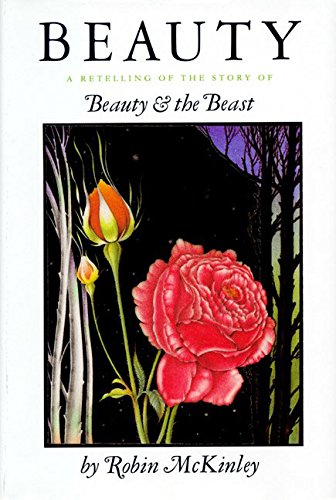
                  Robin McKinley's Damar novels are set in a desert kingdom threatened by invasion from the north. The Blue Sword follows Harry Crewe, an orphaned outsider drawn into the Hillfolk's magic and their war; The Hero and the Crown, a Newbery Medal-winning prequel, tells how the earlier book's legendary dragon-slayer Aerin earned her place in Damar's history. The two novels can be read in either order and were written eight years apart.

                • Cover of Princess Academy
                  Princess Academy

                  series · 3 books · 2005

                  similar byhopefulsecondary worldcoming of agefantasy+1 more

                  Shannon Hale's Princess Academy trilogy (Princess Academy, 2005; Palace of Stone, 2009; The Forgotten Sisters, 2015) begins with Miri, a mountain quarry girl sent to a school built to prepare local girls for the chance that the prince will choose one of them as his bride. The sequels follow Miri to the capital, where she navigates court intrigue while studying, and then out to a remote swamp kingdom as tutor to three sisters caught up in a succession crisis.

                • Cover of The Ropemaker
                  The Ropemaker

                  series · 2 books · 2001

                  completed

                  similar bysecondary worldcoming of agefantasyadventurous+1 more

                • Cover of Howl's Castle
                  Howl's Castle

                  series · 3 books · 1986

                  completed

                  similar bysecondary worldfantasyadventurous+3 more

                  Howl's Moving Castle (1986) follows Sophie Hatter, cursed by the Witch of the Waste into an old woman's body, who takes refuge in the wandering castle of the wizard Howl and strikes an uneasy bargain with his fire demon Calcifer while trying to break the spell. Diana Wynne Jones returned to the same magical kingdom in Castle in the Air (1990), following a new lead character, Abdullah, with Sophie and Howl appearing in supporting roles, and again in House of Many Ways (2008).

                • Cover of Protector of the Small
                  Protector of the Small

                  series · 4 books · 1999

                  part of Tortall

                  similar byhopefulsecondary worldcoming of agefantasyyoung adultadventurous

                  The Protector of the Small quartet is a series of young adult fantasy books by American writer Tamora Pierce. The novels explore themes of adolescence, as well as feminism and multiculturalism.

                • Cover of Earthsea Cycle
                  Earthsea Cycle

                  series · 18 books · 1964

                  completed

                  part of Earthsea

                  similar bysecondary worldfantasy+2 more

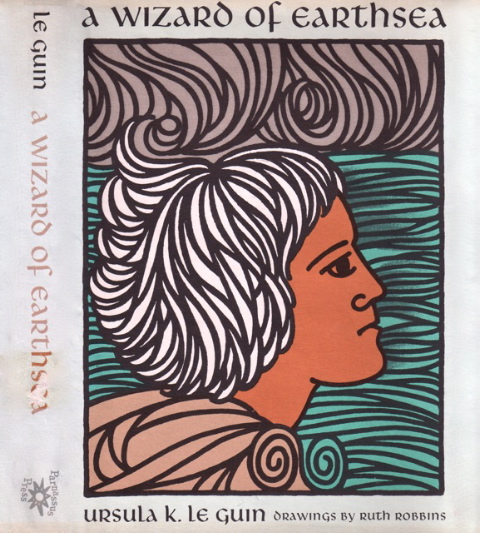
                  The Earthsea Cycle, also known as Earthsea, is a series of high fantasy books written by American author Ursula K. Le Guin. Beginning with A Wizard of Earthsea (1968), The Tombs of Atuan (1970), and The Farthest Shore (1972), the series was continued in Tehanu (1990), and Tales from Earthsea and The Other Wind. In 2018, all the novels and short stories were published in a single volume, The Books of Earthsea: The Complete Illustrated Edition, with artwork by Charles Vess.

                • Cover of Folktales
                  Folktales

                  series · 3 books · 1978

                  similar bysecondary worldfantasy+3 more

                • Cover of Enchanted (Gail Carson Levine)
                  Enchanted (Gail Carson Levine)

                  series · 5 books · 1997

                  similar bysecondary worldcoming of agefantasy+3 more

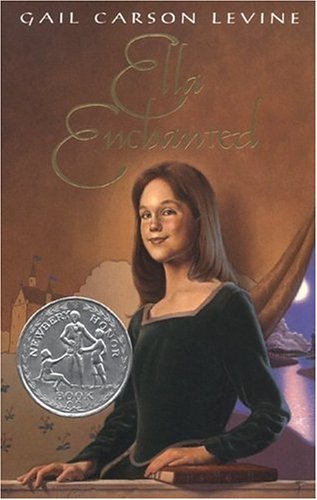
                  Gail Carson Levine's fairy-tale retellings are set in a shared kingdom and its neighbors, beginning with Ella Enchanted's spin on Cinderella, in which a girl cursed at birth with unnatural obedience fights to reclaim control of her own choices. Fairest moves to the neighboring kingdom of Ayortha for a take on Snow White, with later volumes continuing to draw on other tales within the same connected world.

                • Cover of The Circle Opens
                  The Circle Opens

                  series · 4 books · 2000

                  part of Circle of Magic

                  similar bysecondary worldcoming of agefantasyyoung adult+1 more

                  The Circle Opens is a quartet of novels written by Tamora Pierce and set in a pseudo-medieval/renaissance era. It mainly revolves around four teenage mages, each specializing in a different kind of magic, as they find that they are forced to deal with mages whose powers are similarly unusual to their own. The series consists of the books Magic Steps (2000), Street Magic (2001), Cold Fire (2002), and Shatterglass (2003). The Circle Opens Quartet is the sequel quartet to The Circle Of Magic Quartet, and is followed by "Battle Magic" and The Will of the Empress.

                • Cover of Redwall
                  Redwall

                  series · 22 books · 1986

                  completed

                  part of Redwall Universe

                  similar bysecondary worldfantasyadventurous+1 more

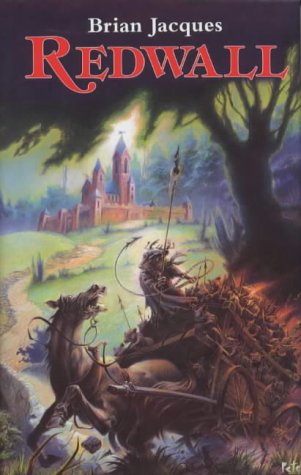
                  Redwall is Brian Jacques's long-running series of fantasy novels for young readers, set within the redwall-universe of Redwall Abbey and its community of anthropomorphic animals. It opened in 1986 with the mouse Matthias searching for the lost sword of the legendary Martin the Warrior to defend the abbey from the invading rat Cluny the Scourge, and grew across 22 largely stand-alone novels published through 2011, each set in a different generation of the abbey's history and following its mice, otters, badgers, and vermin adversaries.

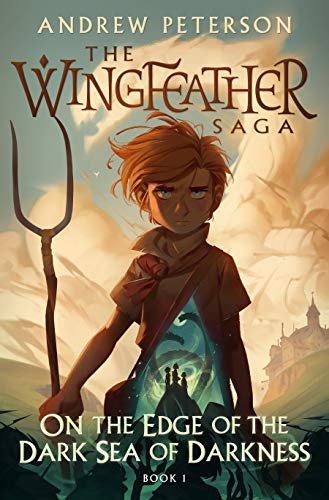
                • Cover of The Wingfeather Saga
                  The Wingfeather Saga

                  series · 7 books · 2008

                  similar bysecondary worldfound familycoming of agefantasyadventurous+1 more

                  The Wingfeather Saga is a series of nine children's fantasy novels written by singer-songwriter Andrew Peterson. It is being adapted into a seven-season animated television series by Angel Studios, with Peterson as an executive producer along with J. Chris Wall. Production of the show has been funded by equity crowdfunding. The first season aired from December 2, 2022 to March 10, 2023. The second season aired from April 5, 2024 to May 17, 2024. The third season started airing on November 12, 2025. The series proper consists of On the Edge of the Dark Sea of Darkness, North! Or Be Eaten, The Monster in the Hollows, and The Warden and the Wolf King.

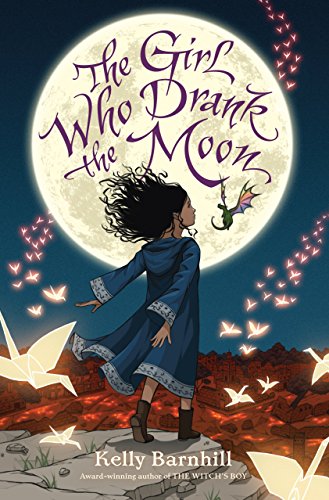
                • Cover of The Girl Who Drank the Moon
                  The Girl Who Drank the Moon

                  Kelly Barnhill · standalone novel · 2016

                  similar byhopefulsecondary worldfound familycoming of agefantasy

                  From the Copyright page: An epic fantasy about a young girl raised by a witch, a swamp monster, and a Perfectly Tiny Dragon, who must unlock the powerful magic buried deep inside her.

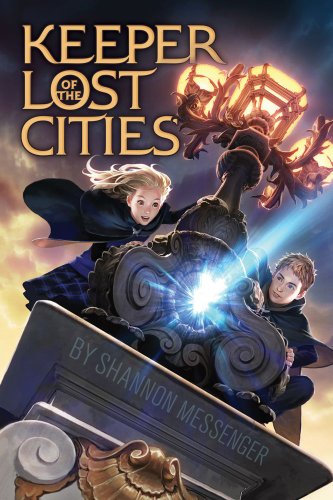
                • Cover of Keeper of the Lost Cities
                  Keeper of the Lost Cities

                  series · 11 books · 2012

                  similar bysecondary worldfantasyadventurous+3 more

                  Keeper of the Lost Cities is an upper-middle-grade fantasy series by Shannon Messenger that has appeared on the New York Times Best Seller list for a total of ten weeks.

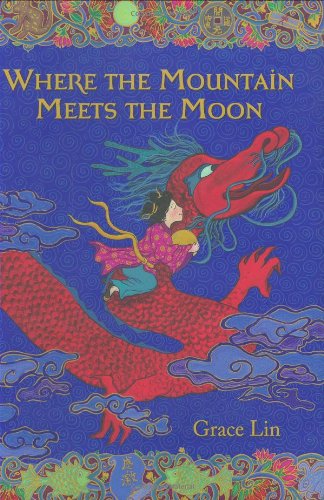
                • Cover of Where the Mountain Meets the Moon Universe
                  Where the Mountain Meets the Moon Universe

                  series · 3 books · 2009

                  similar byhopefulsecondary worldcoming of agefantasy+1 more

                • Cover of His Dark Materials Universe
                  His Dark Materials Universe

                  universe · 13 books · 1995

                  Start hereHis Dark Materials · Start here

                  similar bycoming of agefantasyyoung adultadventurous+2 more

                  In a world like ours and unlike it, every human soul walks outside the body in the shape of an animal — a daemon, who speaks, who cannot be lied to, and who settles into one fixed form only when childhood ends. This is the country of His Dark Materials: a company of parallel worlds across which an invisible dust of consciousness drifts down upon the waking mind; where a Church that calls itself the Magisterium would sooner sever a child's soul than let that Dust be understood; and where a golden instrument, the alethiometer, answers true questions for anyone with the patience to read it. Philip Pullman's design stands in two trilogies and a scatter of shorter tales. His Dark Materials — Northern Lights (published in America as The Golden Compass), The Subtle Knife, and The Amber Spyglass — carries Lyra Belacqua from the rooftops of a shadow Oxford across the borders between worlds. The Book of Dust returns to that same territory: La Belle Sauvage looks back to Lyra as an infant carried through a great flood, while The Secret Commonwealth follows her grown and less certain into adulthood, with a concluding volume closing the arc. Around them sit slim companion books — Lyra's Oxford, Once Upon a Time in the North, Serpentine — and Nicholas Wright's stage adaptation, made with Pullman's blessing. The register is grave and luminous at once, its title lifted from Milton and its quarrel drawn from Blake: a story that takes the side of curiosity, love, and the physical world against any authority that would forbid them. It reads as adventure — armoured bears, aeronauts, knife-cut windows between skies — yet reasons like philosophy. Begin with Northern Lights / The Golden Compass and read the first trilogy through before turning to The Book of Dust, which deepens everything the first has already made you feel.

                • Cover of Riftwar Saga
                  Riftwar Saga

                  series · 7 books · 1982

                  part of The Riftwar Universe

                  similar bysecondary worldfantasyadventurous+1 more

                  The Riftwar Saga is Raymond E. Feist's debut fantasy trilogy, opening with Magician, in which an orphaned apprentice named Pug is swept up when otherworldly invaders emerge through a dimensional rift into the frontier kingdom of Midkemia. Silverthorn and A Darkness at Sethanon carry the resulting war to its close, and the trilogy became the founding entry of Feist's much larger Riftwar Cycle.

                • Cover of The Lord of the Rings
                  The Lord of the Rings

                  series · 13 books · 1954

                  part of Tolkien's legendarium

                  similar bysecondary world+2 more

                  The Lord of the Rings is an epic high fantasy novel written by the English author and scholar J. R. R. Tolkien. Set in Middle-earth, the story began as a sequel to Tolkien's 1937 children's book The Hobbit but eventually developed into a much larger work. Written in stages between 1937 and 1949, The Lord of the Rings is one of the best-selling books ever written, with over 150 million copies sold.

                • Cover of Earthaven
                  Earthaven

                  series · 2 books · 2000

                  similar bysecondary worldfantasy+4 more

                • Cover of Spellhorn
                  Spellhorn

                  Berlie Doherty · standalone novel · 1989

                  similar bysecondary worldcoming of agefantasyportal fantasyadventuroustransported to another world+1 more

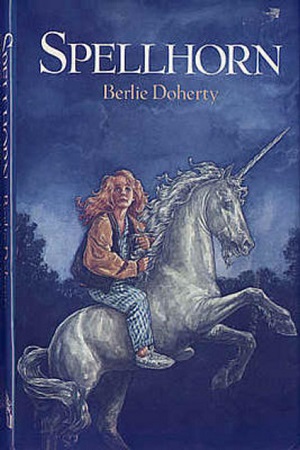
                  Laura, who is blind, is a very perceptive child. After climbing onto the unicorn's back she is hurled into a wild and magical world where she is considered the leader. Spellhorn and the Wild Ones rely on Laura to guide them to the Bright Wilderness.

                • Cover of Tredana
                  Tredana

                  series · 3 books · 1975

                  completed

                  similar bysecondary worldfantasyportal fantasyadventuroustransported to another world+3 more