More like Hostile
anchored on:science fiction
but
- H. G. Wells' War of the Worlds
universe65 books1898
Start hereThe War of the Worlds · Start here
similar byscience fiction+1 more
No one would have believed, in the closing years of the nineteenth century, that human affairs were being watched keenly and closely from the timeless worlds of space. And then the cylinders fell. H. G. Wells' War of the Worlds opens in the quiet of the Surrey commons, where a falling star proves to be the first Martian craft — and from the pit rise the towering tripods, the Heat-Ray, the choking Black Smoke and the creeping red weed, wielded by minds that regard mankind much as we regard the creatures we boil for supper. This is invasion rendered as natural disaster: cold, methodical, and vast beyond argument. Wells' 1898 novel is the seed; everything else grows from that Martian soil. The catalogue gathers direct sequels and continuations alongside a wide field of other hands. In War of the Worlds: Global Dispatches the invasion is retold across the whole planet through the eyes of Twain, Verne, Tolstoy, Lowell and Kipling; in the Manly Wade and Wade Wellman crossover, Sherlock Holmes, Watson and Professor Challenger take the field against the machines; and Scott Washburn's Great Martian War stretches the fighting into a decades-long alternate history of steam, artillery and grinding attrition. It is a loose shared world — no single decreed sequence, many voices answering one calamity. What sets this world apart is its refusal of heroics: the invaders fall not to generals but to the smallest things of Earth, humbling and indifferent. Begin, always, with Wells' original novel — it is short, and it is the ground every later book stands upon. From there follow your appetite: Global Dispatches for the panorama, the Holmes campaign for adventure, Washburn for the long war.
- Dune Universe
universe78 books1963
Start hereDune · Start here
similar byscience fiction+1 more
Arrakis. Dune. The desert planet, where empire runs on a single substance: the spice melange, which folds space, prolongs life, and unlocks prescience, and which exists nowhere else in the known universe. Frank Herbert's saga is a meditation dressed as an adventure — feudal houses and a secret sisterhood, engineered messiahs and the patient ecology of a world without water, all turning on the terrible gravity of who commands the spice. It reads like scripture and schemes like a war room, ten thousand years hence, among people who have outlawed the thinking machine and made instruments of themselves instead. At its heart stand Herbert's original six — Dune, Dune Messiah, Children of Dune, God Emperor of Dune, Heretics of Dune, Chapterhouse: Dune — a single deepening arc across millennia, arguing the whole way between prophecy and free will. Around that spine his son Brian Herbert and Kevin J. Anderson have raised a vast prequel architecture: Prelude to Dune, tracing the great houses a generation before Paul; Legends of Dune, reaching back to the crusade that broke the machines; the Schools of Dune cycle on the founding of Bene Gesserit, Mentat, and Navigator; the Caladan Trilogy and Heroes of Dune filling years the originals left in shadow. Many hands, dozens of volumes, one desert. What sets Dune apart is its refusal of the simple: religion is manufactured, heroes are hazards, and the sand itself — worm, water, ecology — acts as a political power. Begin where the universe did, with Frank Herbert's Dune (1965), and read the original six in order; you need nothing else to feel the full weight. The prequels are a country to explore afterward, taken by era. Beginnings are delicate times.
- Dune
series20 books1963
part of Dune Universe
similar byscience fiction+1 more
Frank Herbert's Dune Chronicles opens with 1965's Dune, set on the desert planet Arrakis where House Atreides takes control of the only source of the vital spice melange and young Paul Atreides is pulled into a struggle over its politics and religion. Herbert carried the story forward across five further novels — Dune Messiah, Children of Dune, God Emperor of Dune, Heretics of Dune, and Chapterhouse: Dune — following Paul's line over the following millennia, before Brian Herbert and Kevin J. Anderson later extended the saga. Many other editions of these six novels are omnibus and box-set repackagings rather than separate stories.
- Ender Wiggin
series14 books1977
part of Ender's Game Universe
similar byscience fiction+1 more
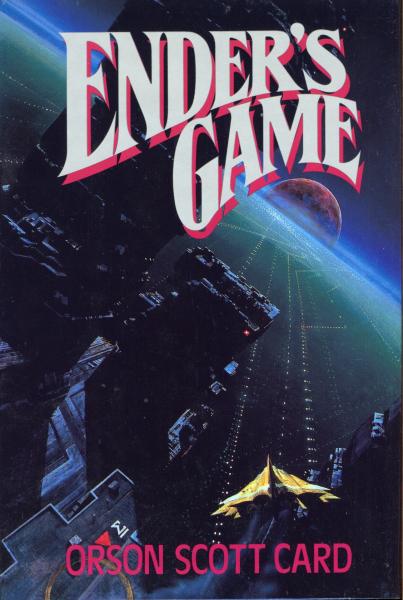
Orson Scott Card's Ender's Game (1985, expanded from his 1977 novella) follows child prodigy Andrew "Ender" Wiggin as he is recruited into a military training program built to prepare Earth's defenses for an anticipated third war against an insectoid alien species known as the Formics. The saga continues years later through Speaker for the Dead and Xenocide, following an older Ender as he confronts the moral weight of his role in that earlier conflict, and concludes the core arc in Children of the Mind, with Ender in Exile filling in the years between the first two books. Set within the wider Ender's Game universe, the series shifts from military coming-of-age story to slower, more philosophical science fiction as it progresses.
- Forever War
series10 books1972
similar byscience fiction+2 more
Joe Haldeman's The Forever War (1974) follows a soldier conscripted into a centuries-long interstellar war against the alien Taurans, using relativistic space travel so that months spent in transit correspond to years or decades passing back on Earth. Haldeman later returned to the same conflict in Forever Peace (1997), a thematically connected but separate story, and Forever Free (1999), a direct sequel set years after the original war's end. The first novel won the Hugo, Nebula, and Locus awards and is considered a foundational work of military science fiction.
- Moties
series4 books1974
part of CoDominium
similar byscience fiction+2 more
Larry Niven and Jerry Pournelle's The Mote in God's Eye (1974) depicts humanity's first contact with an alien species, the Moties, set within the far-future interstellar setting of Pournelle's codominium future history. The Gripping Hand continues that first-contact crisis years later, and Outies, written by J. R. Pournelle, carries the story forward into a new generation. Together the three books trace an escalating encounter between human and Motie civilizations within the codominium universe.
- The Hunger Games
series3 books2008
part of The Hunger Games Universe
similar byscience fictiontense+1 more
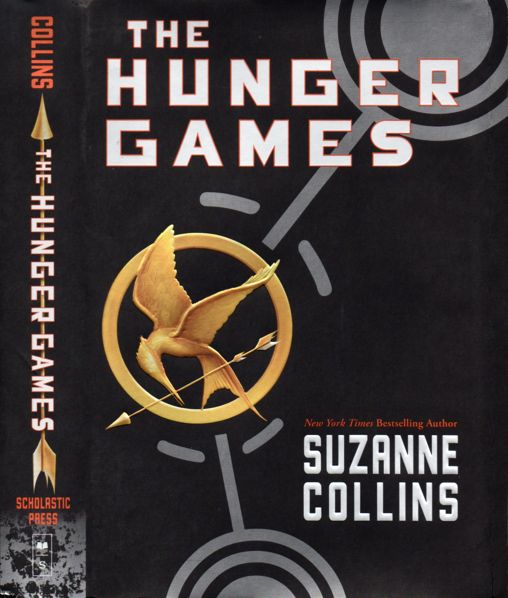
The Hunger Games is a series of young adult dystopian novels written by American author Suzanne Collins. The series consists of a trilogy that follows teenage protagonist Katniss Everdeen, as well as two prequels. The Hunger Games universe is a dystopia set in Panem, a post-apocalyptic North American country consisting of the wealthy Capitol and 12 districts in varying states of poverty. As punishment for rebellion, the Capitol hosts an annual battle royale competition called The Hunger Games. Each of the 12 districts must send two children between the ages of 12 and 18 to participate, and the last surviving child is dubbed the victor.
- The Kraken Wakes
John Wyndhamstandalone novel1953
similar bywarscience fictiontense
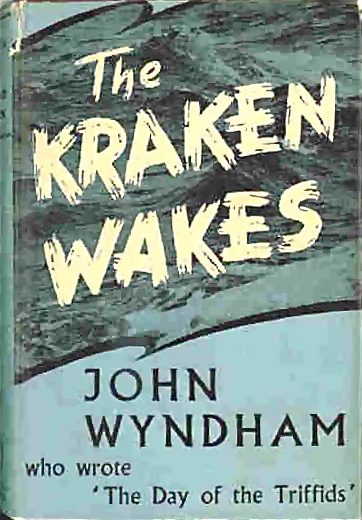
" Behind a spectacular meteor shower actually hides the beginning of an invasion by a mysterious and powerful alien race. Earth's life is disrupted by the attacks of extraterrestrials whose war machines, emerging from the depths of the oceans, seem indestructible. The coalitioned forces of the whole world are worthless, powerless in the face of the indecipherable and deadly plans of a superior intelligence, capable of bringing the entire planet to the brink of catastrophe" Goodreads May 20, 2022
- Uplift
series5 books1980
part of Uplift Universe
similar byscience fiction+1 more
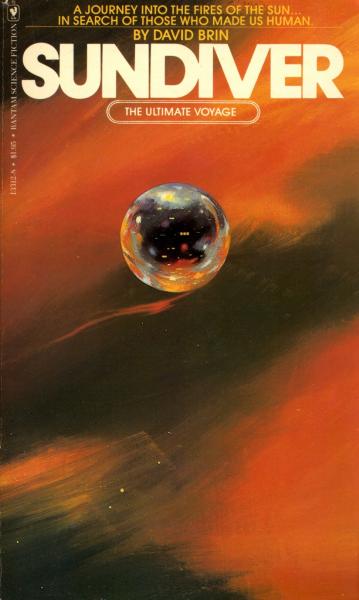
David Brin's Uplift trilogy opens with Sundiver, sending human explorers into the Sun itself, then follows a dolphin-crewed starship on the run from hostile aliens in Startide Rising and a fight over the colony world Garth in The Uplift War. The books sit inside Brin's wider Uplift Universe, built on the idea that spacefaring "patron" species genetically engineer younger "client" species into full sapience, with humanity an anomaly that reached the stars without a patron of its own.
- Childe Cycle
series19 books1957
similar bywarscience fiction+1 more
The Childe Cycle is an unfinished series of science fiction novels by American writer Gordon R. Dickson. The name Childe Cycle is an allusion to "Childe Roland to the Dark Tower Came", a poem by Robert Browning, which provided inspiration for elements in the work. The series is sometimes referred to as the Dorsai series, after the Dorsai people who are central to it. The related short stories and novellas all center on the Dorsai, primarily members of the Graeme and Morgan families.
- The Hunger Games Universe
universe5 books2008
Start hereThe Hunger Games · Start here
similar bytensescience fiction+1 more
Panem, they call it now — a nation raised on the drowned bones of North America, a glittering Capitol ringed by twelve districts it once starved into obedience. Every year the Capitol collects its debt in children: two tributes from each district, drawn by lottery, dropped into an engineered arena, and made to kill one another on live television while the whole country is required to watch. This is the Hunger Games — entertainment, punishment, and government at once. Suzanne Collins tells it in a compact, unified body of work. The founding trilogy — The Hunger Games, Catching Fire, and Mockingjay — follows Katniss Everdeen, a girl from the coal-mining District 12 who volunteers in her sister's place and becomes something the Capitol never scripted. Two prequels reach back into the same machinery: The Ballad of Songbirds and Snakes traces a young Coriolanus Snow long before he is President, and Sunrise on the Reaping returns to District 12 a generation ahead of Katniss. Begin with the trilogy, in order — it is Katniss's voice, close and present-tense, that makes Panem breathe, and the prequels land hardest once you know how her story ends. Beneath the spectacle sits one steady, uncomfortable question: who profits when we agree to look away.
- Oxford Time Travel
series6 books1982
similar byscience fictiontense+1 more
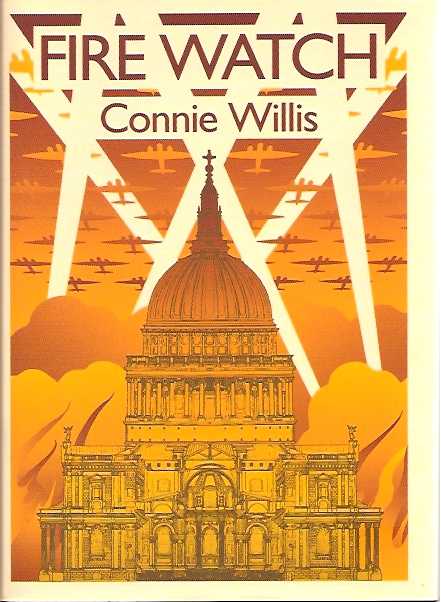
Connie Willis's Oxford Time Travel novels are set at a near-future Oxford University where historians travel into the past as observers, constrained by a version of history that resists any change large enough to alter real events. Doomsday Book sends a medieval historian to what should be 1320 but turns out to be the Black Death year of 1348, intercut with a present-day epidemic at Oxford; To Say Nothing of the Dog returns to the same time-travel program for a lighter, Victorian-set story with different characters. The two novels share their setting and rules rather than a directly continuing plot.
- Old Man's War
series16 books2005
similar bywarscience fiction+1 more
The Old Man's War series is a series of science fiction novels by John Scalzi. The first book in the series, Old Man's War, was first published in 2005 by Tor Books, and was nominated for the Hugo Award for Best Novel in 2006. In 2026 it was a finalist for the Hugo Award for Best Series.
- Culture
series15 books1987
completed
part of The Culture
similar byscience fiction+1 more
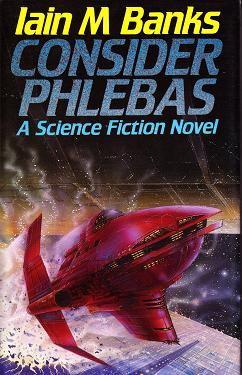
The Culture series is a science fiction series written by Scottish author Iain M. Banks and released from 1987 until 2012. The stories centre on The Culture, a utopian, post-scarcity space society of humanoid aliens and advanced superintelligent artificial intelligences living in artificial habitats spread across the Milky Way galaxy. The main themes of the series are the dilemmas that an idealistic, more-advanced civilization faces in dealing with smaller, less-advanced civilizations that do not share its ideals, and whose behaviour it sometimes finds barbaric. In some of the stories, action takes place mainly in non-Culture environments, and the leading characters are often on the fringes of the Culture, sometimes acting as agents of the Culture in its plans to civilize the galaxy. Each novel is a self-contained story with new characters, although reference is occasionally made to the events of previous novels.
- Change War
series16 books1958
completed
similar byscience fiction+2 more
The Big Time is Fritz Leiber's Hugo Award-winning novel set in his Change War future history, where two rival powers called the Spiders and the Snakes recruit soldiers out of history to fight by altering past events, with the novel itself confined to a neutral recovery station suspended outside normal time. Leiber followed it with a string of shorter Change War stories, later gathered into collections such as Changewar, exploring other soldiers and other flashpoints in the same endless, mutable conflict.
- Company Wars
series7 books1981
part of Alliance-Union Universe
similar byscience fictiontense
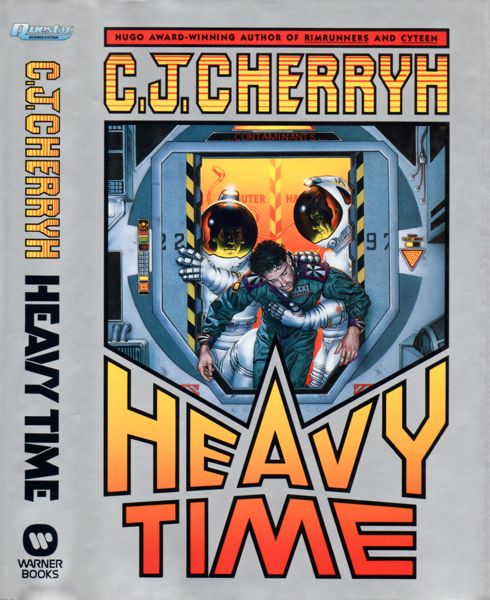
Company Wars gathers the novels C. J. Cherryh set during the breakaway conflict between Earth's colonial Company and the newly independent Union, within her wider Alliance-Union future history. Anchored by the Hugo Award-winning Downbelow Station, the books follow different ships, stations, and crews caught on either side, from merchanter traders to military spacers, rather than a single continuing cast. Read in any order, they build up a picture of the political and economic pressure that reshapes Cherryh's larger Alliance-Union universe.
- Tower and the Hive
series7 books1959
completed
part of The Talents
similar byscience fiction+2 more
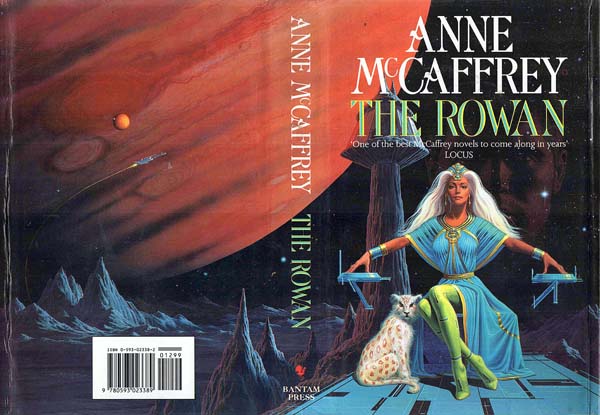
The Tower and the Hive series opens with The Rowan (1990), following an isolated but powerful telepath who is drawn out of her loneliness by a psychic call for help from a distant Talent facing an alien threat. Anne McCaffrey continued the story across four more novels, Damia, Damia's Children, Lyon's Pride, and the concluding The Tower and the Hive (1999), following later generations of a telepathic family staffing the Prime Towers that give a starfaring human civilization instant communication. The series is set later in the same Talents universe as McCaffrey's earlier Pegasus books.
- Time and Again
series2 books1970
completed
similar byscience fiction
Time and Again (1970) follows Si Morley, a commercial artist recruited into a secret government project that sends him back to Manhattan in 1882, where he falls for a woman named Julia while weighing whether he can, or should, alter the past; Jack Finney illustrates the story with period photographs and engravings. The sequel, From Time to Time (1995), continues Si's story with a further trip into the past.
- Honorverse
universe83 books1993
Start hereHonor Harrington · Start here
similar byscience fiction+2 more
The wedge comes up, the sidewalls burn to life, and two walls of battle close across light-minutes of empty vacuum trading missile broadsides — because in the Honorverse, war is still fought by the doctrine of the age of sail, only the ocean is the interstellar void and the ships-of-the-line are dreadnoughts. This is David Weber's future, two millennia on: a galaxy of star nations bound by treaty, trade, and old grudges, where the small, wealthy Star Kingdom of Manticore holds a wormhole junction the commerce of humanity runs through, and the expansionist People's Republic of Haven means to take it. At the center stands one officer, Honor Harrington — captain, then something far larger — and the six-limbed empathic treecat who rides her shoulder. The spine is the Honor Harrington novels, more than a dozen books that carry her from an overlooked frontier picket up through fleet command and the knife-politics of a monarchy at war. Around that spine branch parallel lines, several written with collaborators: the Saganami Island books follow a younger generation of officers in the contested Talbott Cluster; the Wages of Sin novels, with Eric Flint, chase the genetic-slave trade to its source on Mesa; Manticore Ascendant, with Timothy Zahn, reaches back centuries to the Navy's shaky founding; and the Star Kingdom books, with Jane Lindskold, tell how humans and treecats first met. Anthologies fill the seams. Weber writes competence and consequence — dense hardware, denser politics, victories that cost, and a heroine whose defining virtue is her refusal to spend lives cheaply or duck the ones she must. Begin with On Basilisk Station: one ship, one thankless posting, one impossible situation. Read the main line in publication order; the collaborating branches reward you later, once the map of Manticore is yours.
- Uplift Universe
universe13 books1980
Start hereUplift · Start here
similar byscience fiction+1 more
No species, the Galactics insist, ever climbs to sapience alone. For a billion years the elder races have "uplifted" their chosen clients — reshaping some promising animal, gene by patient gene, into a thinking being, then binding it through long ages of indenture. Patron lifts client; client one day becomes patron; and every lineage traces back through the vast Galactic Library to the vanished Progenitors who began it all. Then a ragged band of primates arrives at the stars with no patron to claim them — wolflings, self-made, an affront to a hundred thousand years of law — and worse, these humans have already started uplifting neighbors of their own: the neo-dolphins and neo-chimpanzees of Earthclan. David Brin builds this galaxy across two trilogies. The first — Sundiver, the Hugo- and Nebula-winning Startide Rising, and the Hugo-winning The Uplift War — sends an expedition into the Sun, then follows the dolphin-crewed survey ship Streaker as it flees a discovery that sets fanatical star-clans at war, and a chimp-led resistance on an invaded colony world. The second sequence, Uplift Storm — Brightness Reef, Infinity's Shore, Heaven's Reach — descends to Jijo, a forbidden world where six fallen races hide as illegal settlers, and draws every loose thread toward a reckoning. Short fiction fills the margins. This is space opera with an ecologist's conscience: teeming with invented biologies, wry cross-species banter, and real unease about what we owe the minds we make. Begin with Startide Rising — the saga's beating heart, and readable on its own — or take Sundiver first and read straight through in publication order.
- Terro-Human Future History
universe48 books1952
Start hereFuzzy Sequence · Start here
similar byscience fiction
History does not repeat, Piper's chroniclers are fond of saying — it rhymes, and it rhymes in iron. Reckon the years from the first atomic pile, 1942, Year One of the Atomic Era, and follow the ledger forward some six thousand years: out of a nuclear war that nearly ended everything, up through the Terran Federation and its reach into the stars, down again through collapse and a long neobarbaric dark, and back up into the enlightened empires that rise from the ruins. It is one continuous future history — not a plot but a chronicle, worlds and centuries sharing a single unbroken timeline. H. Beam Piper assembled it in pieces through the 1950s and 60s, novels and novellas bound by chronology rather than by recurring heroes. The anchors are Little Fuzzy, a courtroom argument over whether a small golden native of Zarathustra is a person; Space Viking, raid and revenge amid the wreckage of the interregnum; and the Federation-era Four-Day Planet, The Cosmic Computer, and Uller Uprising. The eras sort cleanly — Federation, the System States War, the Space Vikings of the long dark, the Empire. After Piper's death in 1964 other hands took up the ledger: John F. Carr, who arranged the short fiction into the chronological Federation and Empire collections and carried on the Tanith and Space Viking line, plus Wolfgang Diehr's Fuzzy sequels and Dietmar Arthur Wehr's additions. The register is sober and engineer-eyed — competent men solving hard problems, empires ruled by benign despots, the cool conviction that civilizations rise and fall to the same recurring script. It ranges from the sunlit warmth of the Fuzzy books to the cold steel of a Viking raid. Newcomers start with Little Fuzzy, the warmest and most self-contained, or with Space Viking.