More like iD
anchored on:science fictionrobotsfar futurecyberpunkartificial intelligenceidentity+4 more
but
- Takeshi Kovacs
series3 books2002
similar byfar futurescience fictiondarktenseother star systemscyberpunkidentity+1 more
Takeshi Kovacs is a former elite soldier turned freelance troubleshooter in a future where human consciousness can be digitized and transferred between bodies, or sleeves, making death an inconvenience for those who can afford new ones. Richard Morgan's trilogy - Altered Carbon, Broken Angels, Woken Furies - moves Kovacs through noir-inflected mysteries on different worlds, using the resleeving premise to interrogate class, violence, and what, if anything, survives a person's original body. It became the basis for a Netflix series.
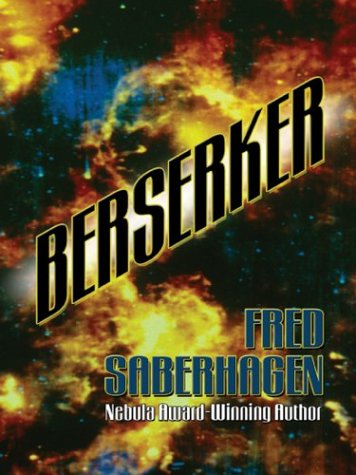
- Berserker (Fred Saberhagen)
series59 books1963
similar byfar futurescience fictiontenseother star systemsrobotsartificial intelligence+1 more
The Berserker series is a series of space opera science fiction short stories and novels by Fred Saberhagen, in which robotic self-replicating machines strive to destroy all life.
- Blade Runner Universe
series6 books1968
similar byscience fictiondarkrobotscyberpunkidentity+2 more
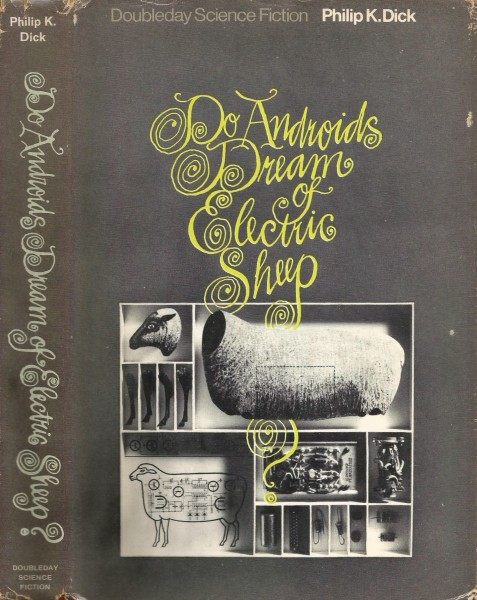
Philip K. Dick's 1968 novel Do Androids Dream of Electric Sheep? follows bounty hunter Rick Deckard as he tracks escaped androids through an irradiated, near-abandoned San Francisco, using the hunt to probe questions of empathy and what separates human from machine. The novel became the basis for Ridley Scott's 1982 film Blade Runner, and Marvel Comics later published an illustrated adaptation of that film. Together the two trace the story's path from prose original to screen and comic-page adaptation.
- Dune Universe
universe78 books1963
Start hereDune · Start here
similar byfar futurescience fictionother star systems+2 more
Arrakis. Dune. The desert planet, where empire runs on a single substance: the spice melange, which folds space, prolongs life, and unlocks prescience, and which exists nowhere else in the known universe. Frank Herbert's saga is a meditation dressed as an adventure — feudal houses and a secret sisterhood, engineered messiahs and the patient ecology of a world without water, all turning on the terrible gravity of who commands the spice. It reads like scripture and schemes like a war room, ten thousand years hence, among people who have outlawed the thinking machine and made instruments of themselves instead. At its heart stand Herbert's original six — Dune, Dune Messiah, Children of Dune, God Emperor of Dune, Heretics of Dune, Chapterhouse: Dune — a single deepening arc across millennia, arguing the whole way between prophecy and free will. Around that spine his son Brian Herbert and Kevin J. Anderson have raised a vast prequel architecture: Prelude to Dune, tracing the great houses a generation before Paul; Legends of Dune, reaching back to the crusade that broke the machines; the Schools of Dune cycle on the founding of Bene Gesserit, Mentat, and Navigator; the Caladan Trilogy and Heroes of Dune filling years the originals left in shadow. Many hands, dozens of volumes, one desert. What sets Dune apart is its refusal of the simple: religion is manufactured, heroes are hazards, and the sand itself — worm, water, ecology — acts as a political power. Begin where the universe did, with Frank Herbert's Dune (1965), and read the original six in order; you need nothing else to feel the full weight. The prequels are a country to explore afterward, taken by era. Beginnings are delicate times.
- Pandora
series4 books1966
similar byfar futurescience fictionother star systemsartificial intelligence+2 more
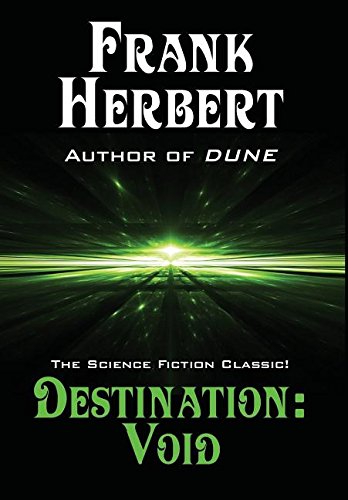
The Pandora Sequence opens with Frank Herbert's solo novel Destination: Void, in which a starship crew must jury-rig a working artificial consciousness after their vessel's control systems fail. Bill Ransom co-writes the three novels that follow, carrying the survivors to the world Pandora, where they must contend with both a manipulative machine intelligence and the planet's own hostile ecology. Across its four books the series moves from a claustrophobic ship-bound crisis to a generations-long struggle over faith, control, and survival on a dangerous new world.
- The Artificial Kid
Bruce Sterlingstandalone novel1980
similar byfar futurescience fictiondarkother star systemscyberpunk+3 more
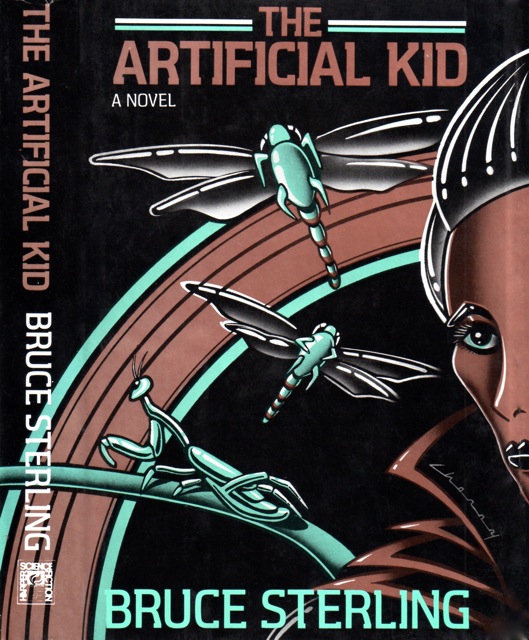
WorldCat: A popular home-video star and ultimate warrior on a planet dangerously divided by class and wealth distinctions discovers the lethal truth about his world and its origins in this satiric science fiction masterwork Founded centuries ago by the enigmatic genius Moses Moses, the planet Reverie can either be heaven or hell, depending on whether you live on or above it.
- Dune
series20 books1963
part of Dune Universe
similar byfar futurescience fictionother star systems+2 more
Frank Herbert's Dune Chronicles opens with 1965's Dune, set on the desert planet Arrakis where House Atreides takes control of the only source of the vital spice melange and young Paul Atreides is pulled into a struggle over its politics and religion. Herbert carried the story forward across five further novels — Dune Messiah, Children of Dune, God Emperor of Dune, Heretics of Dune, and Chapterhouse: Dune — following Paul's line over the following millennia, before Brian Herbert and Kevin J. Anderson later extended the saga. Many other editions of these six novels are omnibus and box-set repackagings rather than separate stories.
- The Stars My Destination
Alfred Besterstandalone novel1956
similar byfar futurescience fictiondarkother star systemsidentity+1 more
When a passing spaceship refuses to rescue the lone survivor from the drifting wreck of another ship, he dedicates his life to discovering who made that decision and exacting his revenge, in the process altering human history and his own character.
- Armor
John Steakleystandalone novel1984
similar byfar futurescience fictiondarktenseother star systems
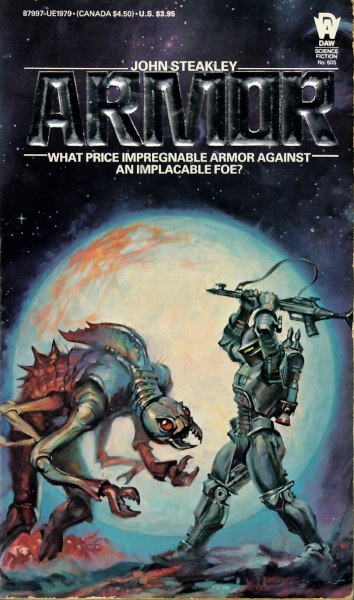
Armor is a military science fiction novel by John Steakley. It features the military use of exoskeletons and insect-like alien enemies but concentrates on the psychological effects of violence on human beings.
- Sprawl Trilogy
series10 books1981
similar byscience fictiontensedarkcyberpunkartificial intelligence
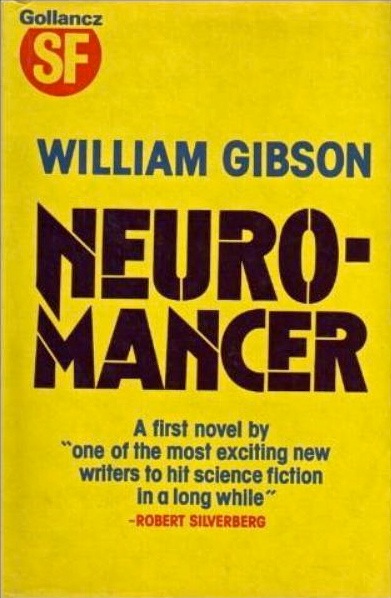
The Sprawl Trilogy is William Gibson's foundational cyberpunk sequence: Neuromancer (1984), in which hacker Case is drawn into a high-stakes heist alongside an artificial intelligence and a damaged ex-soldier, followed by Count Zero (1986) and Mona Lisa Overdrive (1988), which widen the same near-future world of corporate power and networked cyberspace to new characters. Johnny Mnemonic, an early short story set in the same fictional milieu, predates the novels and introduces the courier Molly Millions before her role in the trilogy. Together these works established much of cyberpunk's visual and thematic vocabulary.
- The Status Civilization
Robert Sheckleystandalone novel1960
similar byfar futurescience fictiondarktenseother star systems
"Will Barrent had no memory of his crime ... but he found himself shipped across space to a brutal prison-planet. On Omega, his only chance to advance himself -- and stay alive -- is to commit an endless series of violent crimes. The average inmate's life expectancy from time of arrival is three years. Can Barrett survive, escape, and return to Earth to clear his name?" - From the cover of the 2007 Wildside paperback edition.
- Dancers in the Afterglow
Jack L. Chalkerstandalone novel1978
similar byfar futurescience fictiontenseother star systemsrobotsidentity+1 more
From the back cover: FIRST CAME THE TOURISTS... Ondine was a resort planet. Sixteen million tourists traveled there from just about every world you could think of to live and love in sixteen million different ways. THEN CAME THE MACHISTS... They had gobbled up world after world, spreading their culture to thousands of different races with a brutal, vicious, but most effective system. They were inhuman, unthinking... uncaring. The Combine had already seen what they had done on other worlds, seen whole populations converted into something horrible... something not quite human, non-thinking and no longer caring. Now they had captured Ondine, and no human could save the planet. AND THEN DANIEL CAME TO JUDGMENT Daniel was a cyborg, a former fighter pilot now wedded to a master computer and life-support system housed in a flying golden egg. He was the Combine scientists' finest creation, a spaceship that could control twenty-two robot slaves. He was the perfect savior for Ondine, but for one thing. Everyone seemed to forget that somewhere deep inside that golden egg was a very human being...
- Transformation
series3 books2015
part of Polity
similar byfar futurescience fictiontenseartificial intelligence+3 more
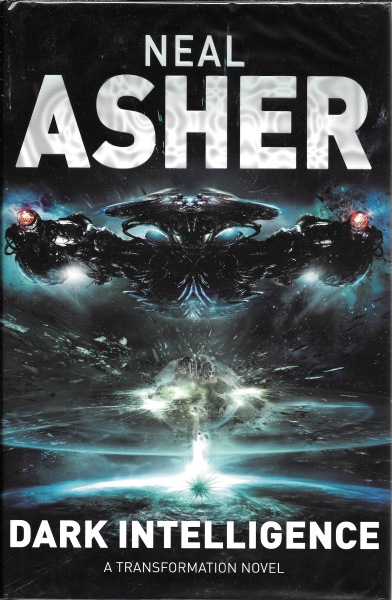
Neal Asher's Transformation trilogy, set within his wider Polity universe, follows an AI mind investigating a black-ops project gone wrong, opening with Dark Intelligence. War Factory and Infinity Engine escalate the search into a hunt across a mechanized alien warzone left behind by an earlier conflict. As with Asher's other Polity fiction, the story favors large-scale, hard-edged space combat over character-driven drama.
- Angel Station
Walter Jon Williamsstandalone novel1989
similar byfar futurescience fictiontenseother star systemscyberpunk+1 more
Angel Station is a 1990 cyberpunk space opera science fiction novel by Walter Jon Williams.
- Forge of God
series2 books1987
completed
similar byscience fictiondarktense+4 more
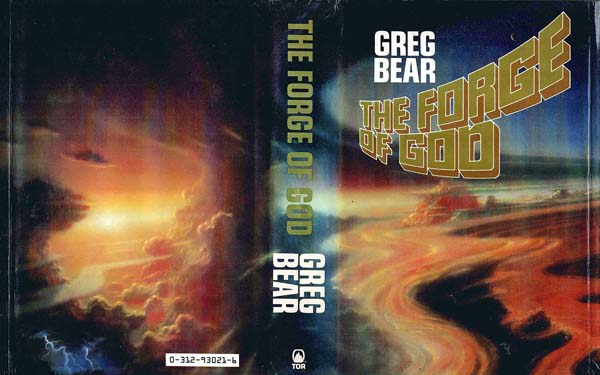
The Forge of God (1987) is Greg Bear's science fiction novel about Earth's discovery that it is the target of an incomprehensible, overwhelming alien attack, following scientists and ordinary people as they try to understand what is destroying the planet. Its 1992 sequel, Anvil of Stars, follows a group of young survivors sent on a mission of interstellar retaliation, continuing directly from the first book's ending.
- Blindsight / Firefall
series3 books2006
similar byscience fictiontensedarkfar futureartificial intelligencehard science fiction+2 more
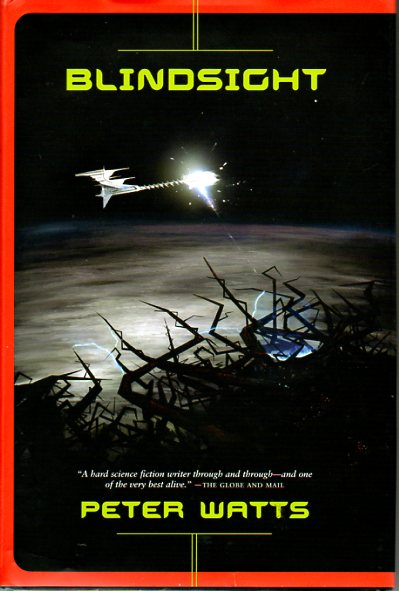
Blindsight sends a crew of radically modified posthumans (including a resurrected, genetically restored vampire) out to the Oort cloud after humanity detects an alien signal, only to make contact with something intelligent, wildly capable, and possibly not conscious at all — a first-contact story built around the question of whether self-awareness is actually useful. Peter Watts's Echopraxia is a same-timeframe "sidequel" rather than a direct sequel, following different characters through the fallout of the same first-contact event.
- Imperial Radch
series7 books2012
part of Radchaai Universe
similar byfar futurescience fictionother star systemsartificial intelligenceidentity+2 more
Ann Leckie's Imperial Radch trilogy (Ancillary Justice, Ancillary Sword, Ancillary Mercy, 2013-2015) follows Breq, the sole surviving fragment of an AI that once inhabited both a troop-transport starship and dozens of soldier bodies, now alone and hunting for revenge inside the vast, expansionist Radch empire. Breq's quest widens across the trilogy into a conflict with the empire's own fractured ruler, and the books use her alien difficulty perceiving gender to unsettle the space-opera conventions around her.
- Ian Cormac
series6 books2001
part of Polity
similar byfar futurescience fictiontenseother star systemsartificial intelligence
Neal Asher's Ian Cormac novels (Gridlinked, The Line of Polity, Brass Man, Polity Agent, Line War, plus the earlier-set prequel Shadow of the Scorpion) follow Ian Cormac, an agent of Earth Central Security in Asher's Polity universe. Gridlinked opens with Cormac investigating a destroyed matter-transmitter on a remote colony while wrestling with the personality erosion caused by long-term neural linkage to the Polity's AI network; the following novels escalate into interstellar conflict with the alien Prador. Together they form the core action sequence of Asher's wider Polity series.
- The Dosadi Experiment
Frank Herbertstandalone novel1977
similar byfar futurescience fictiontenseother star systems+1 more
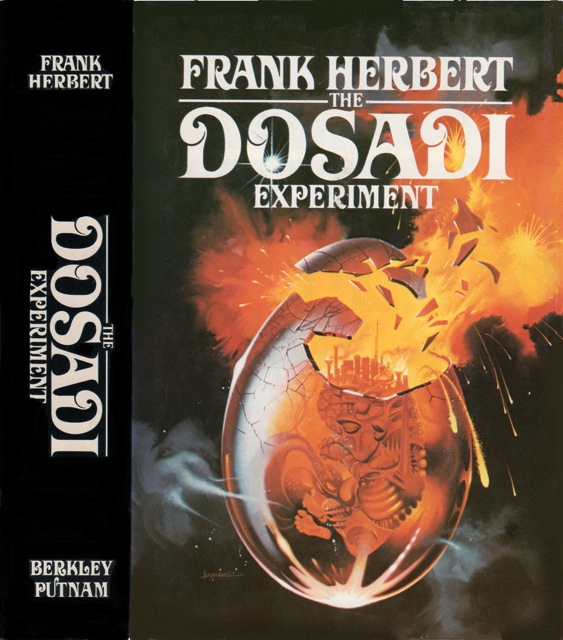
From the flaps of the Berkley Putnam first edition: "In his first new work of science fiction since the best-selling Children of Dune, Frank Herbert returns to his world of Whipping Star, and involves Jorj X. McKie, Saboteur Extraordinary, in a new intrigue. In Whipping Star, McKie discovered that some of the stars in the universe are actually intelligent, super-powerful beings, and was able to befriend one of them, the star Alcyone - affectionately known as Fannie Mae. As The Dosadi Experiment opens, McKie is assigned to investigate the planet Dosadi, which is isolated from the rest of the galaxy by a "god-wall," a barrier set up by one of the intelligent stars. Dosadi is rumored to be an experimental planet, and the experimenters are the froglike Gowachin, whose culture is founded upon a strange legal system in which McKie is the only human ever trained. He learns that humans and Gowachin have been placed on Dosadi, without their consent, for an experiment that could last centuries: an experiment in extreme overcrowding. But this monstrous plot is apparently out of control, and it seems the Gowachin may be prepared to destroy Dosadi rather than expose its secret, thus breaking the peace among the races, and starting the first interstellar war. But this is just the beginning. When McKie finally reaches Dosadi he discovers that the Dosadis have taken control of their own evolution and produced a competitive, highly evolved elite, of both humans and Gowachin, who have been able to extrapolate the existence of a universe beyond the god-wall and hate whoever has imprisoned them like this. They plan to break out and avenge themselves on the galaxy."
- This Perfect Day
Ira Levinstandalone novel1970
similar byfar futurescience fictiondarktenseidentity
This Perfect Day is a science fiction novel by American writer Ira Levin, about a technocratic dystopia. Levin won a Prometheus Award in 1992 for this novel. This Perfect Day is one of two Levin novels yet to be adapted to film.
- Chaos Walking
series5 books2008
similar byfar futuretensescience fictiondarkother star systems
Chaos Walking is a young adult science fiction series written by American-British novelist Patrick Ness. It is set in a dystopian world where all living creatures can hear each other's thoughts in a stream of images, words, and sounds called Noise. The series is named after a line in the first book: "The Noise is a man unfiltered, and without a filter, a man is just chaos walking." The series consists of a trilogy of novels and three short stories.
- The Exile Waiting
Vonda N. McIntyrestandalone novel1975
similar byfar futurescience fictiondarktenseother star systems
From the front flap of the Gollancz first printing: The time is the distant future and Earth has been rendered uninhabitable for much of the year by terrible storms during which its only city, Center, constructed around a natural cave system, is closed off from the outside. Mischa, a young thief whose capabilities are enhanced by hereditary mutation, is trying to escape with her drug-addicted brother from the dominance of her uncle. So when a starship arrives commanded by the twin alien pseudosibs, Subone and Subtwo, Mischa seizes her chance. She is soon assigned for training to Jan Hikaru, who quickly realises that Mischa has immense abilities. All goes well until Subone, in a moment of cruelty, lures Mischa's brother into a fight and then kills him. Mischa attacks Subone and both she and Jan have to flee the wrath of the brothers and take refuge n the deep cave system underneath the city.
- Aton/Piers Anthony's Worlds of Chthon
series4 books1967
similar byfar futurescience fictiondark+3 more
Piers Anthony's Chthon (1967) follows Aton Five, imprisoned in a sentient underground mineral world after his obsession with a beautiful, dangerous woman leads him to attempted murder; escaping, he pursues the truth about her and about his own mixed human and alien nature across the galaxy. Its sequel Phthor continues Aton's story and the mythology of the living prison-planet Chthon.
- The Eyes of Heisenberg
Frank Herbertstandalone novel1966
similar byfar futurescience fictiondarktense+1 more
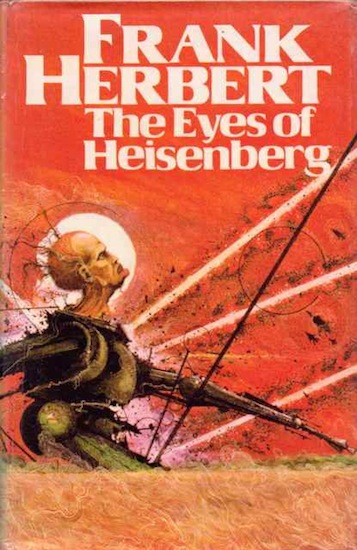
Tens of thousands of years in the future, Earth is ruled by the Optimen, a genetically engineered aristocracy that has made itself functionally immortal, while ordinary people, the Folk, live under strict reproductive control. When Harvey and Lizbeth Durant arrive to have their embryo genetically screened, the examining doctor finds something in the child no one has seen in a very long time: real potential for both fertility and life span, traits the Optimen have arrogated to themselves. Rather than destroy the embryo as policy demands, the doctor hesitates, setting off a chain of surveillance, suspicion and resistance. A tightly wound Frank Herbert thriller about genetic caste and rebellion.